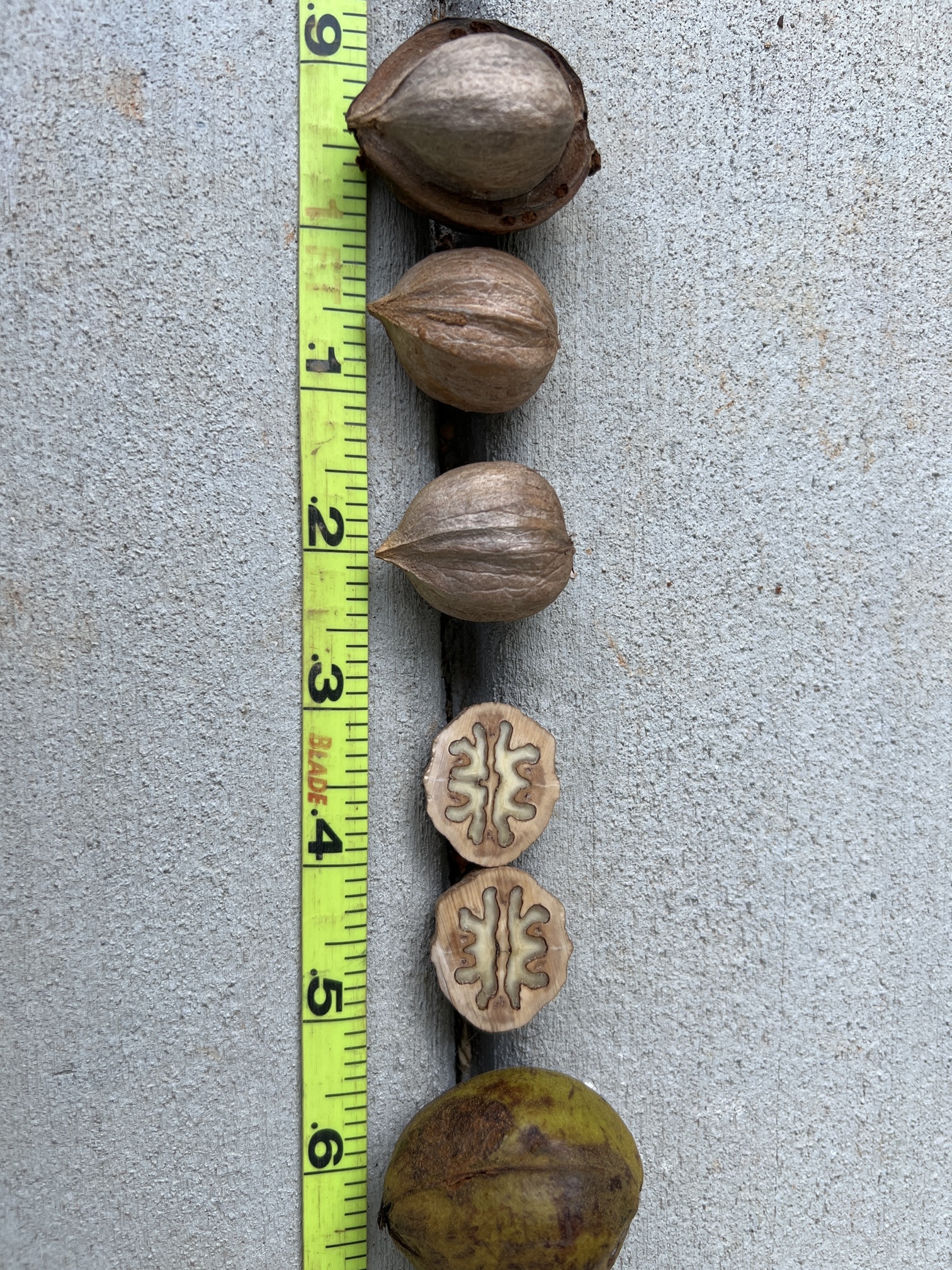
Can anyone ID the hickory type. Northern Georgia. Thought they were shagbark but have thick shells.
Maybe shellbark? Hard to crack
did you get a look at how many leaflets the leaves have?
No. Given a box of nuts. Didn’t see tree
1 Like

3 Likes
A few more pics of shagbark hckory…


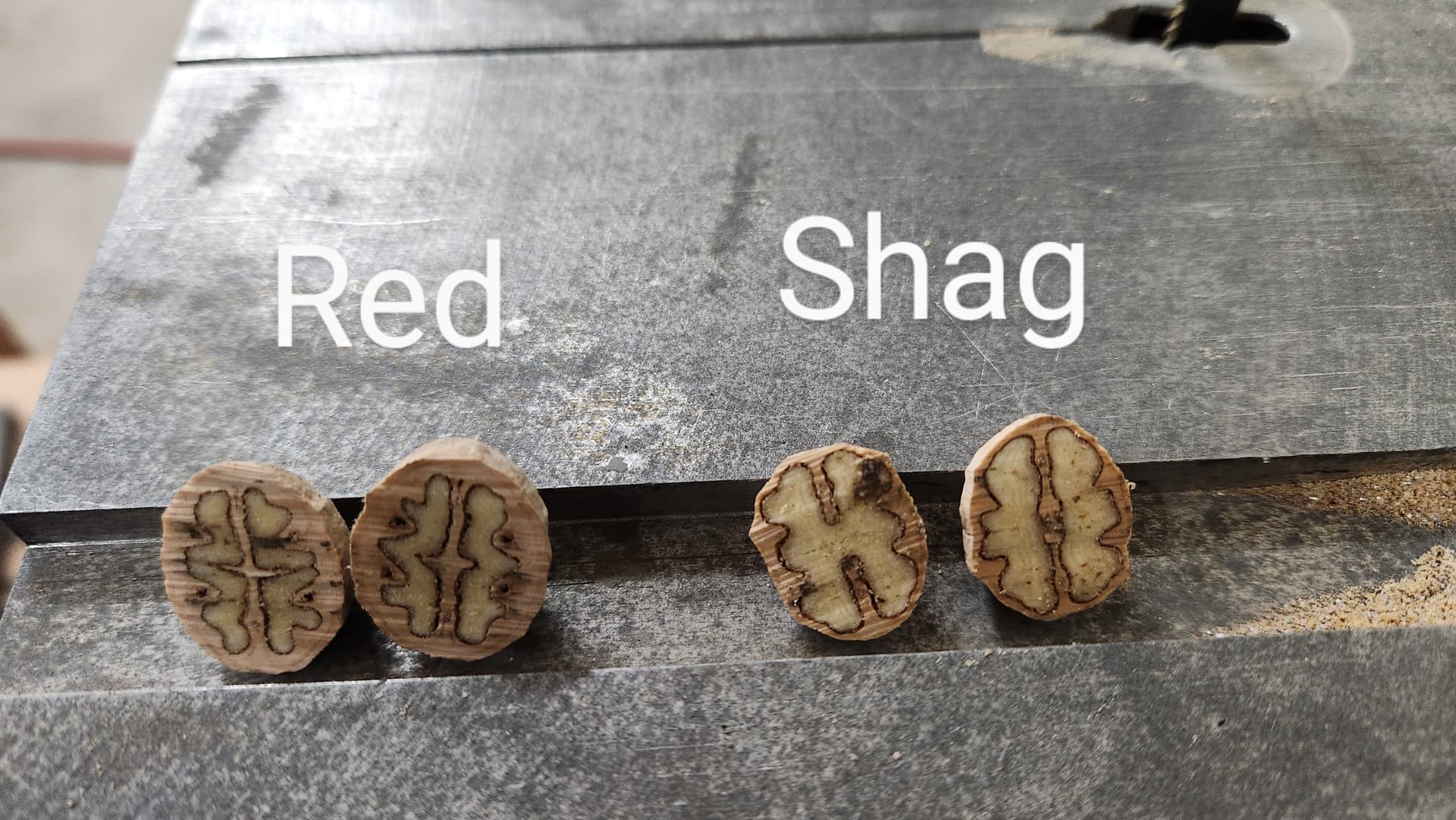
Red hickory does not crack out that well… all you can get out is small thin pieces… it taste good… but really not worth messing with compared to shag or shell.
1 Like
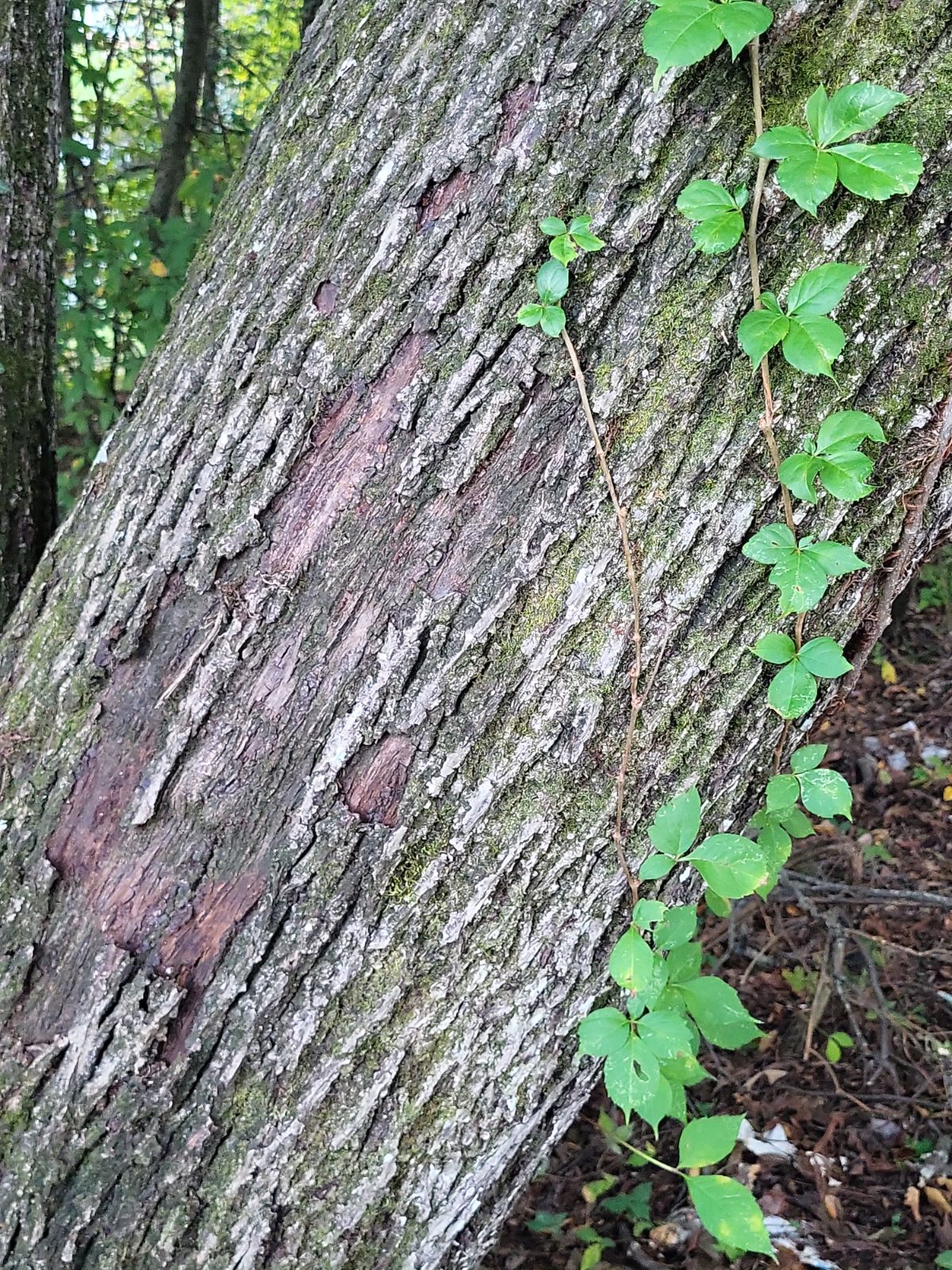
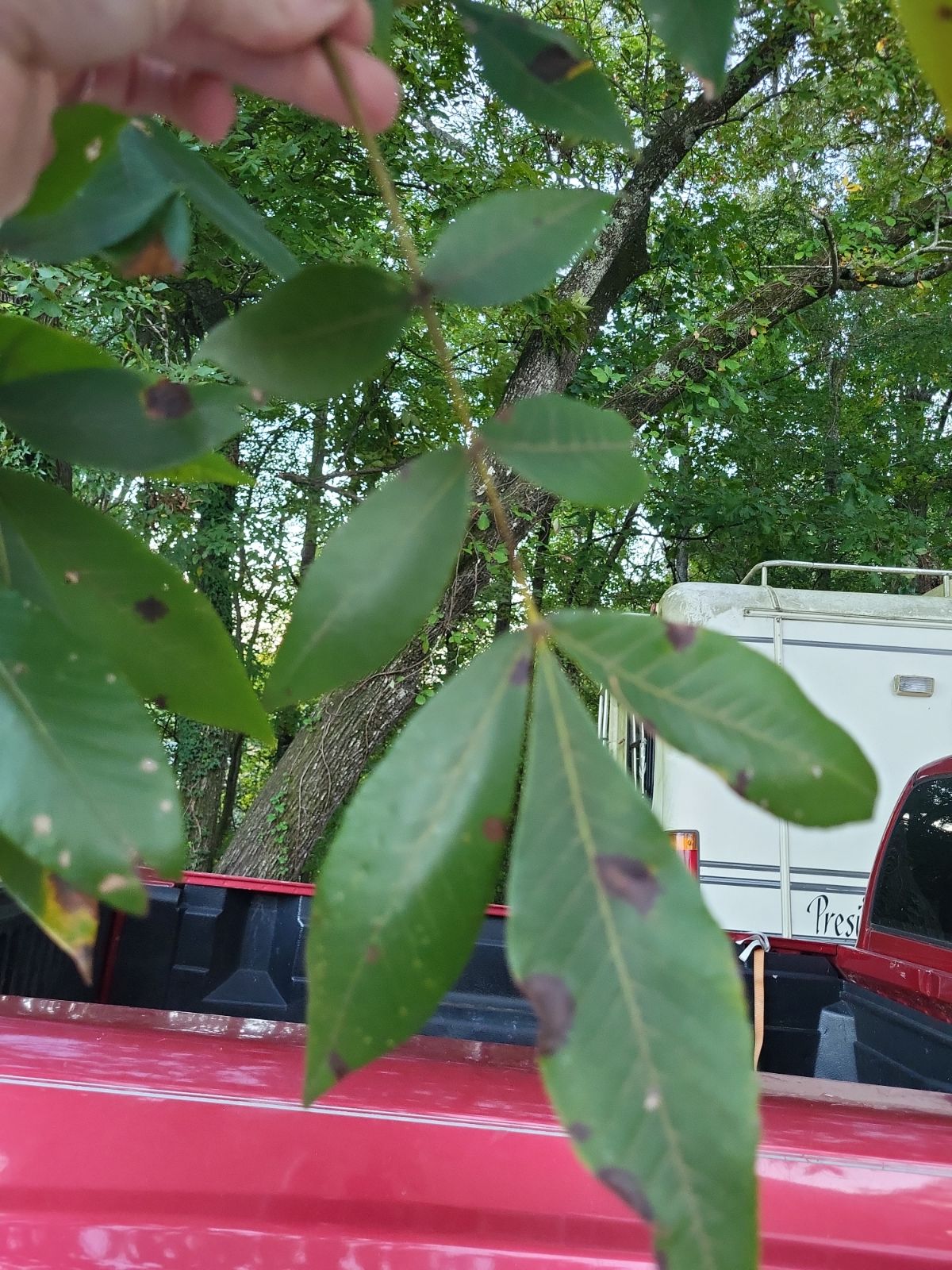
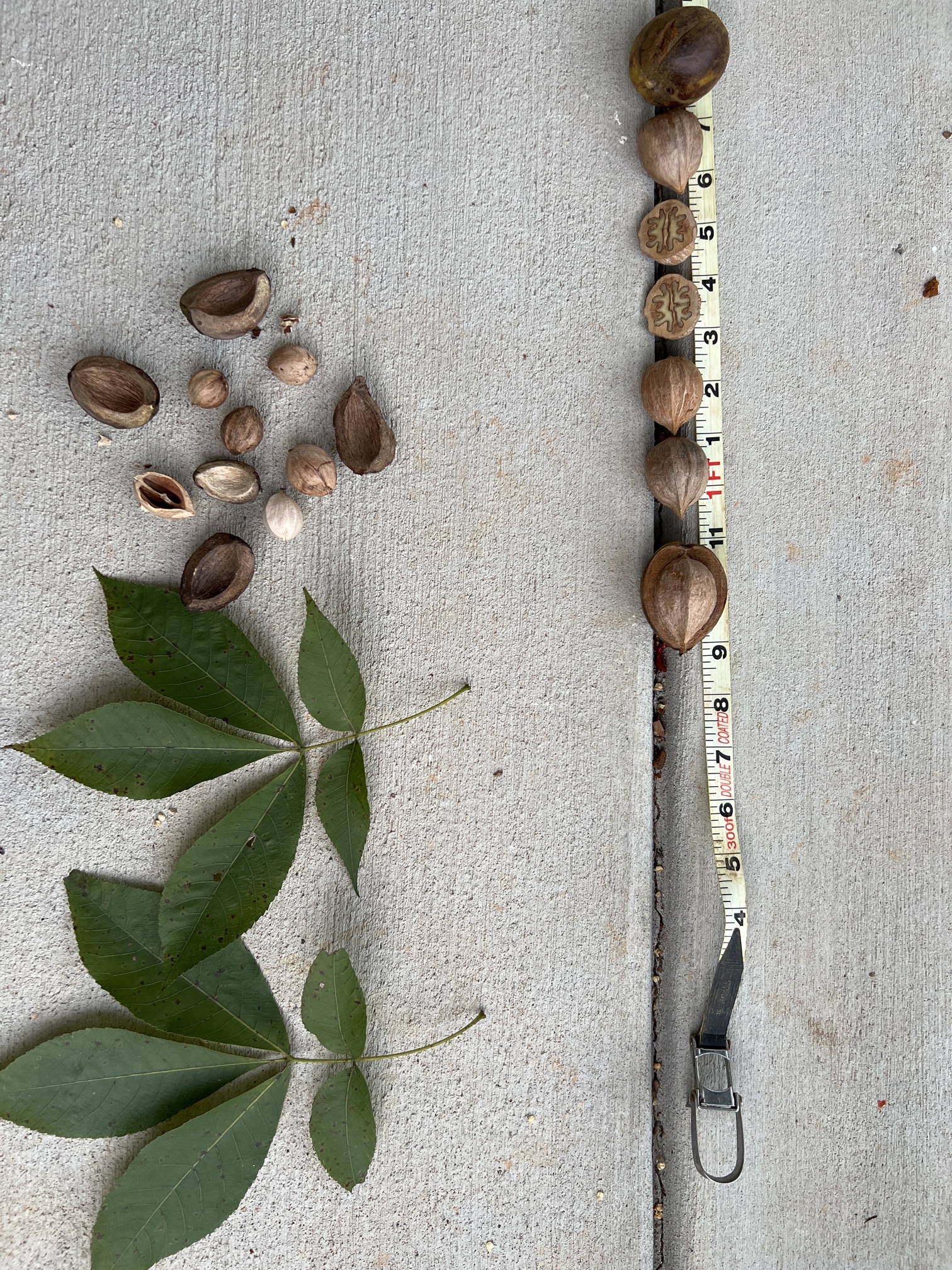
Thick shell plus very convoluted kernel allows elimination of several possibilities. Location found eliminates several more.
We can eliminate nutmeg, bitternut, pecan, Mexican hickory, sand hickory, scrub hickory, water hickory, and black hickory. Based on thick shell, I would eliminate shagbark (C. Ovata).
We are left with shellbark (C. laciniosa), red hickory (C. ovalis), mockernut (C. tomentosa), and possibly pignut (C. Glabra). Pignut and red hickory are often considered the same species with different phenotype. Based on 7 leaflets as shown in the picture, this looks more like shellbark but since husks are not very thick, would suggest red hickory at this point. Bark type is consistent with red hickory.
1 Like
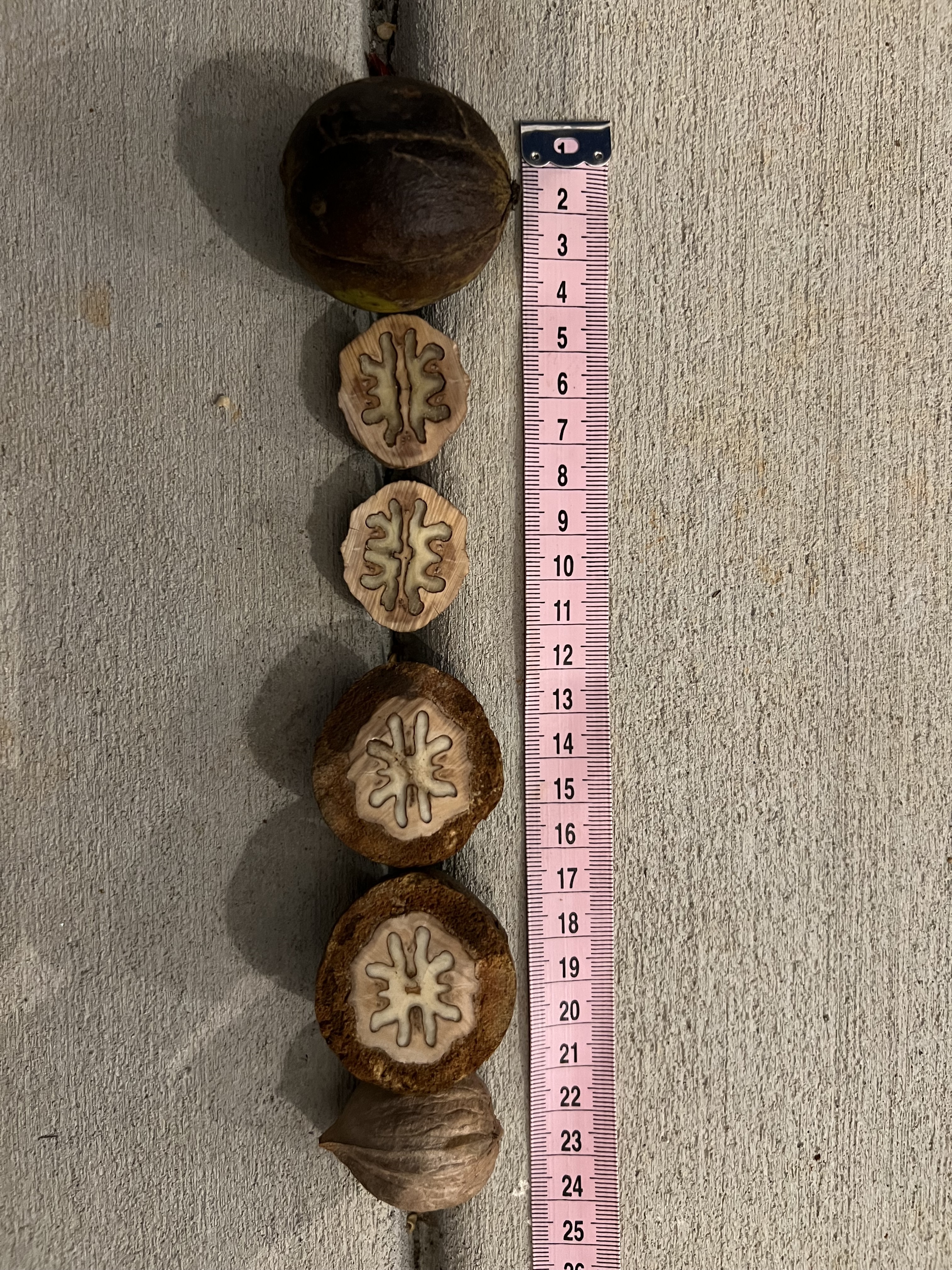

The nut looks like my red hickory nuts. 7 leaflets agrees with red hickory. But, my red hickory in MI has much thinner husks, and the bark on trees that size has become slightly rougher and more cris-crossed pattern with a hint of shaggyness.
My red hickory (pretty sure)
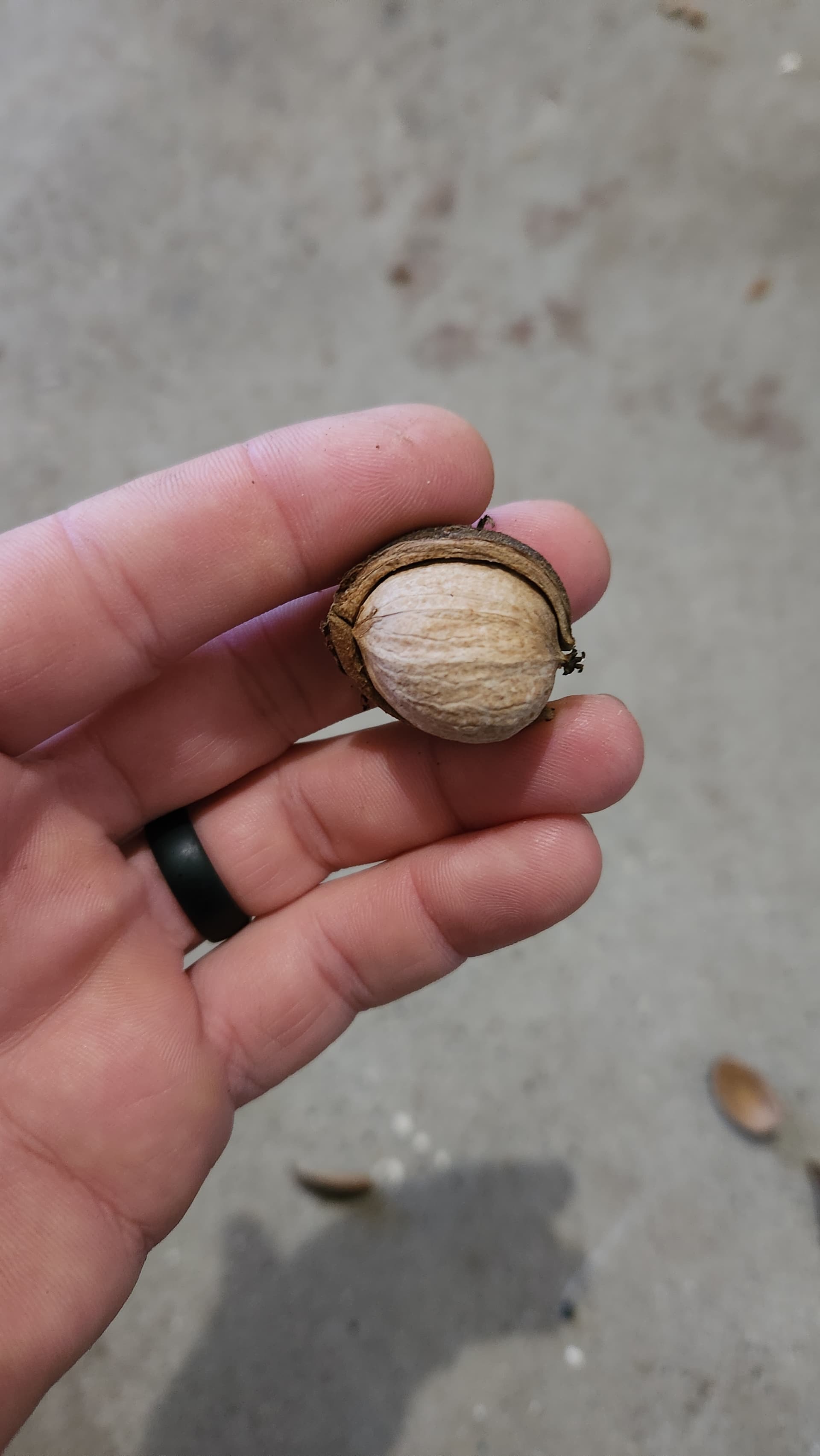
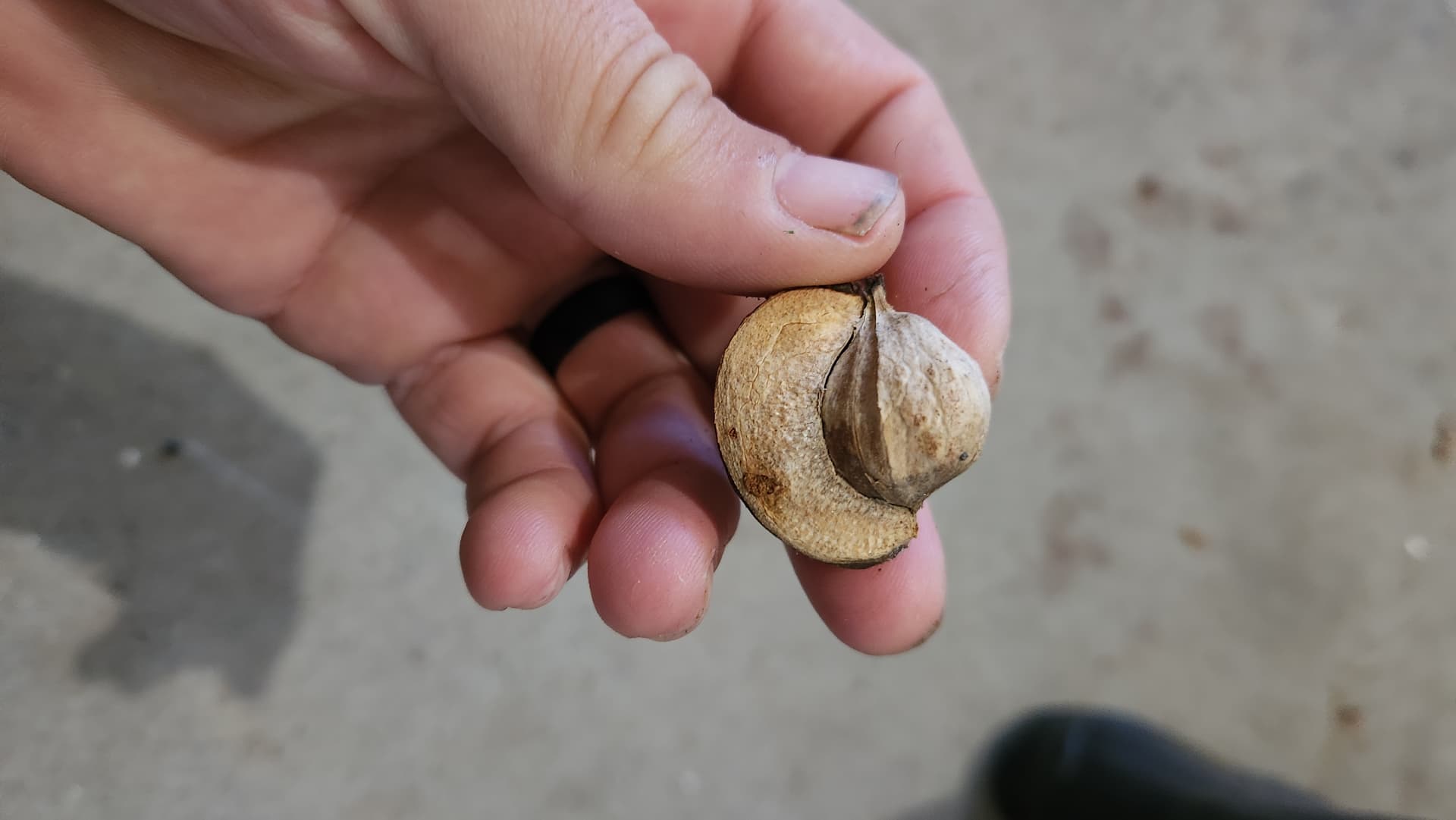
Shagbark:
2 Likes
Initial photo… In my mind, there’s no question that that is mockernut hickory.
Red Hickory, C.ovalis - or at least the one I’ve tentatively IDed (misidentified?) here on my farm has husks similar to shagbark, and nuts resemble local shagbarks, but are brown, like the nearby mockernuts… but nutshell thickness is comparable to an average, run-of-the-mill shagbark. This one cracks out reasonable quarters and larger pieces. Not as good as my State Fair winners, which crack out intact halves/quarters, but worth me bothering to pick them up when I’m in that part of the pasture.
When I first noticed this tree, I was thinking it was a mockernutXshagbark hybrid (which probably don’t occur, due to differing chromosome counts - 64 vs 32) Bark on lower trunk is fairly typical ‘diamond’ checkering I associate with mockernut, but the farther up the trunk you go, there are more exfoliating strips of bark (actually more reminiscent of shellbark than most shagbarks.
1 Like
@Lucky_P … I have lots of red hickory here… also pig nut and mocker nut (on my place).
But I am too high elevation wise for shagbark. In my deepest hollow there is one shagbark and I have checked it several years and no nuts yet. I cant find another anywhere near it… so perhaps it does not get pollinated ?
I can drive 10 miles down on the creek or river… and find plenty of nice shagbarks at lower elevations.
The red hickory I have here has a rather thin husk… about 1/8 inch or less.
Mocker and shag have pretty thick husk… around 1/4 inch or more.
The husk on reds will split up in quarters once it dries out some… pignut does not split up in quarters… it is more like a solid skin… with a snout like a pig on the stem end.
1 Like
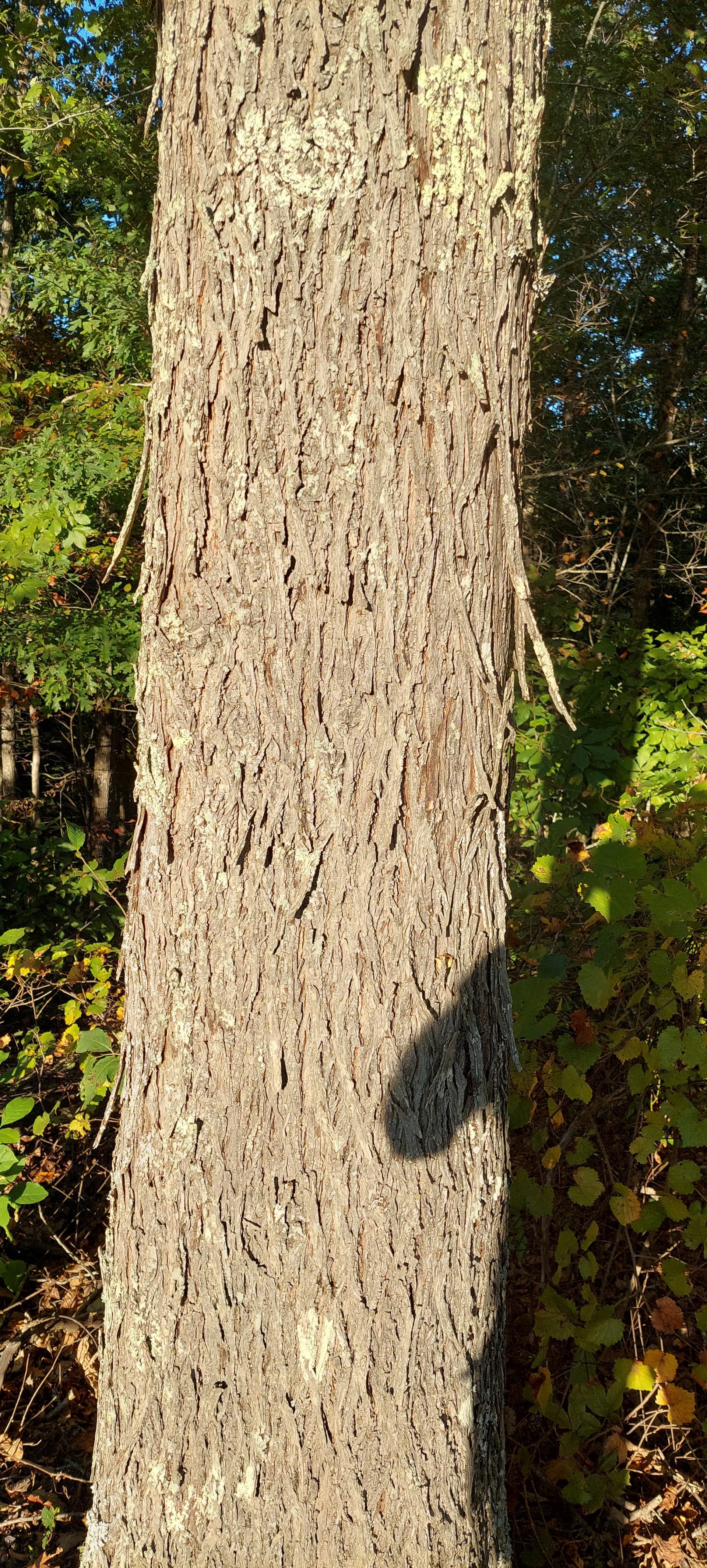
I have several red hickories in the edge of my back yard… that is what the bark looks like on most… they can vary some… some can get a little shaggy.
None of my backyard reds are producing nuts this year… they all did last year.

Now this is a nice shagbark… produces some very nice nuts.
TNHunter
2 Likes
I’m convinced now that the tree in question is mockernut. Had to look up some info since i wasnt familiar with mockernut. I Found this webpage very helpful: NameThatPlant.net: Carya tomentosa
It all seems to match mockernut. The husk thickness and tree bark just arent the same as red hickory.
@TNHunter re using red hickory - last year I made nut broth by smashing them and simmering both nutmeat and shell bits in water, then straining. It was fantastic. I mostly used it for soups. It is worth the effort and I’ll be doing it again soon.
1 Like
Bark on the tree is still wrong. Mockernut has tight diamond pattern with little or no bark peeling. I don’t see enough to prove conclusively this is mockernut. A picture of the underside of one of the leaf rachises would settle this quickly as mockernut is very fuzzy (tomentose, source of name). Also, please note the picture of nut still in shucks clearly shows slight wings which is a red hickory trait. I can’t prove conclusively it is red hickory either. I would like to raise a qualified exception that we may be looking at a hybrid tree of some sort.
JusI to add some to the mix, a few hickory species have high variance in nut shape and in bark type. I’ve seen nutmeg hickory with diamond pattern bark similar to mockernut. I’ve also seen nutmeg hickory nuts that are quadrangular. I would love to see this tree in person. It looks very unusual.
1 Like
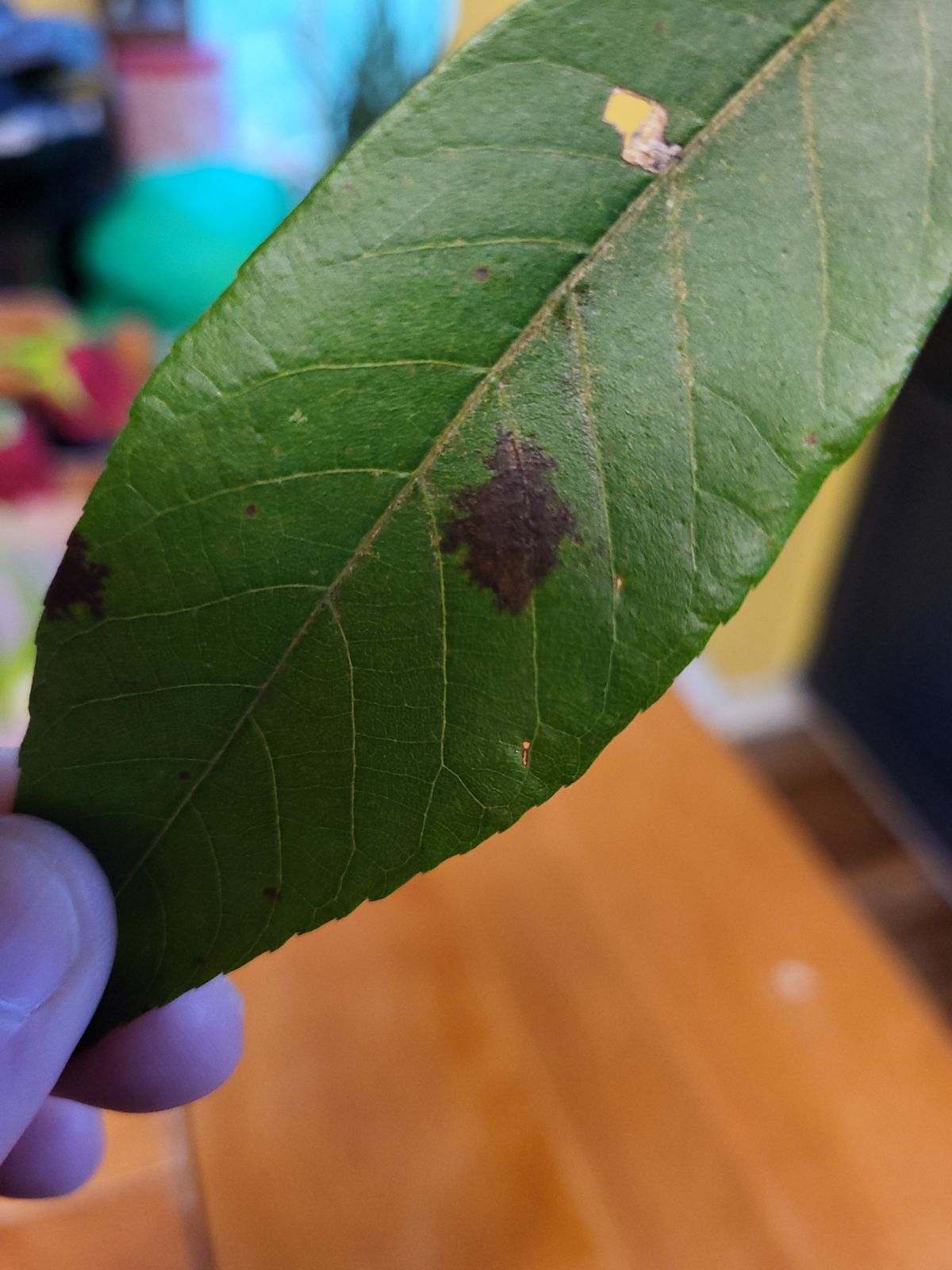
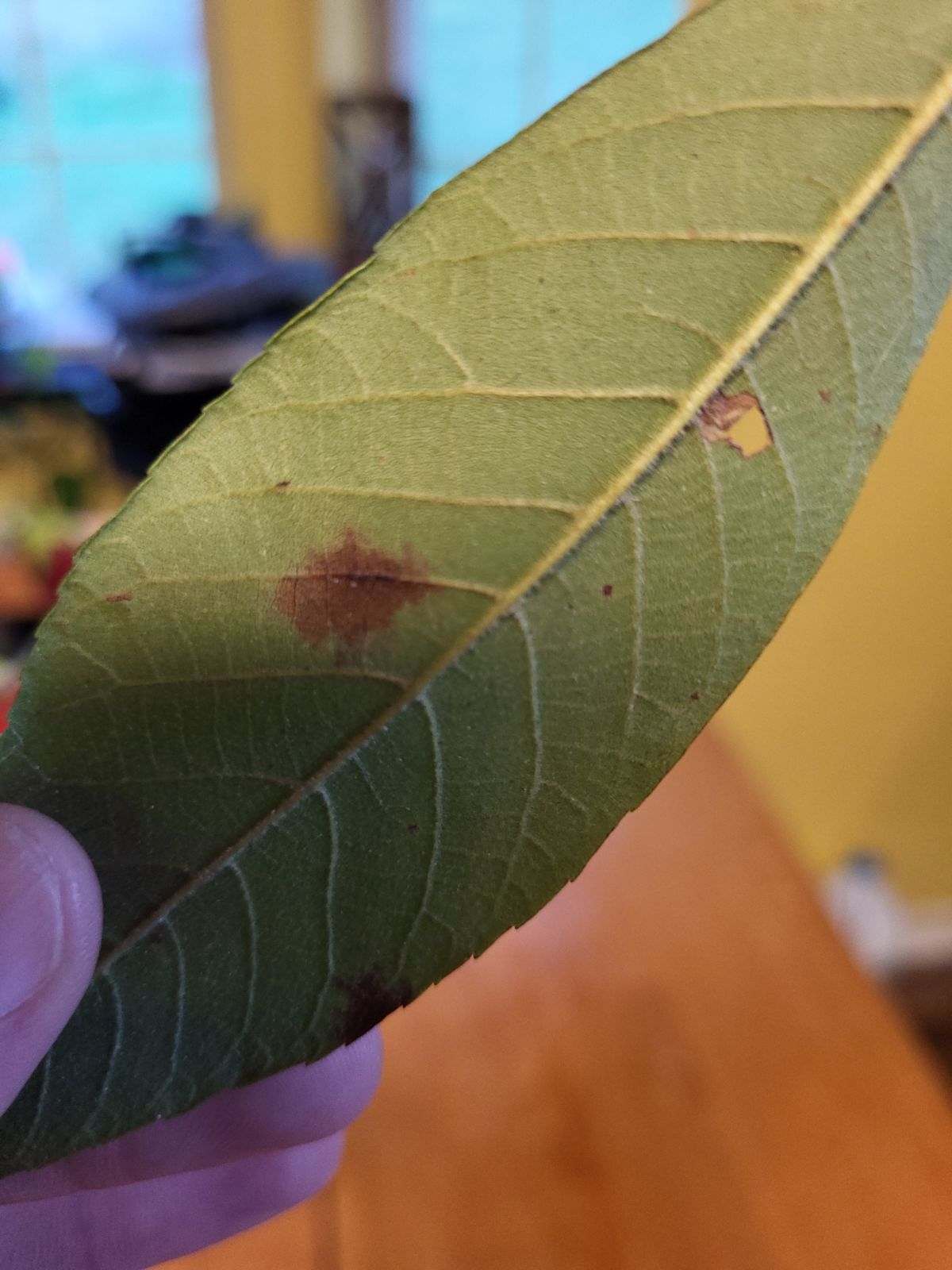
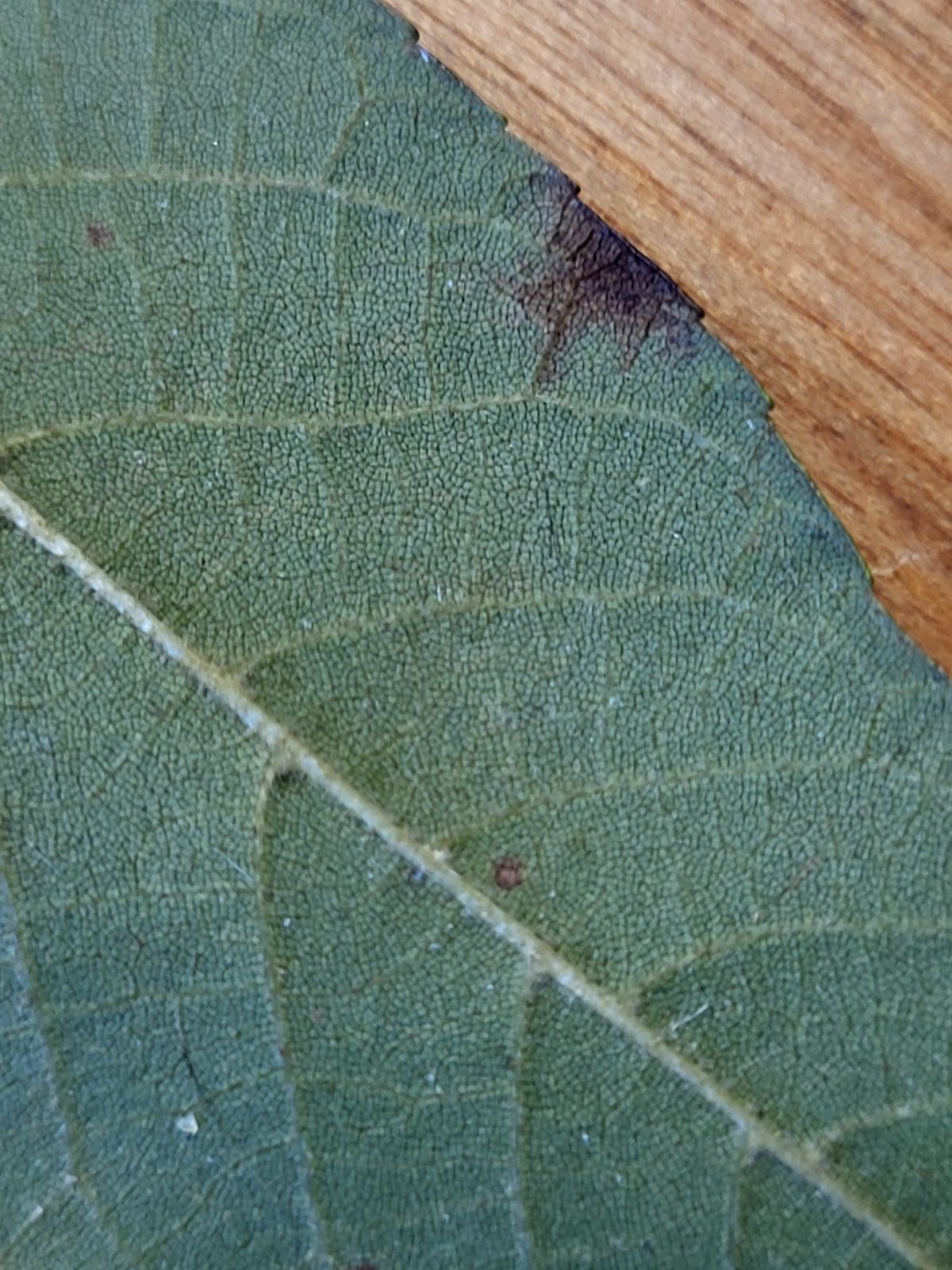
Mockernut as proven by the tomentose underside of a leaf.
Shellbark and shagbark are eliminated by the relatively thin husk on the nuts.
Pignut is eliminated by nut husk shape.
Red hickory is eliminated by the fuzzy underside of leaves.
Carya tomentosa (mockernut) is the only possibility left with a qualification the bark is not typical of mockernut and the slight wings on husk sutures also is not typical. I’ve had both very bland and very good flavored mockernuts. From a guess, this tree is growing on relatively high ground which also is typical of mockernut. As a kid, I collected tow sacks full of nuts in the fall to crack for hickory nut cakes.
2 Likes
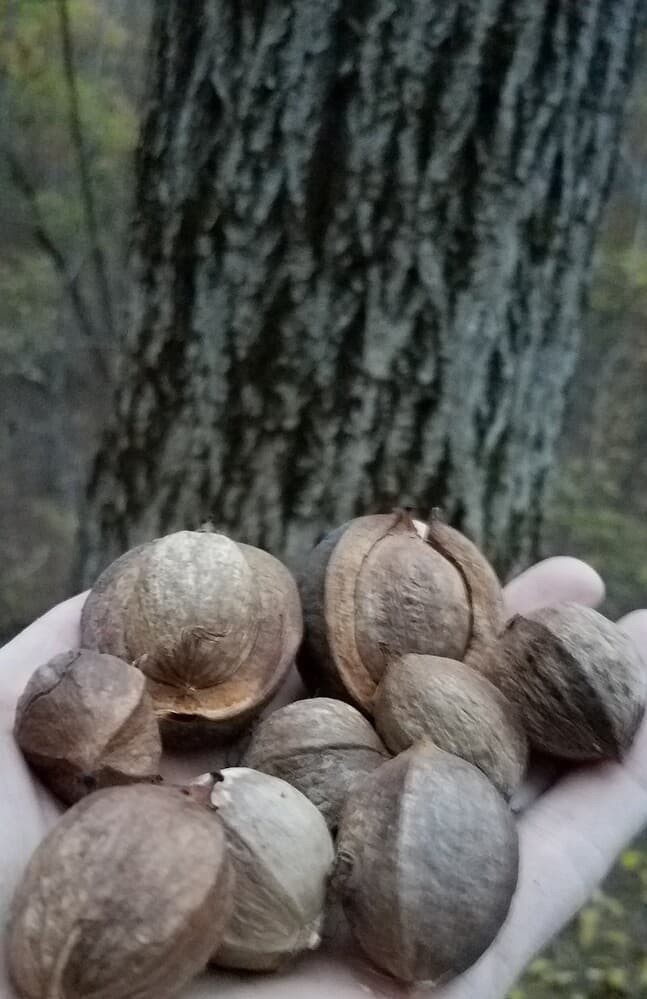
These are mocker nuts from a tree here on my place. I have several nice mockers here… some grow up near the ridge top but produce small to no nuts… but as you go down in elevation… near the bottom of the hollow the mockernut trees there are larger and produce lots of nice size nuts.
You can see that classic diamond pattern in the bark… and the large blocky nuts… and that the husk is quite thick… similar to shag bark…


This is what a mockernut looks like when split open… and the somewhat shreadded appearance to the nutmeat you can extract.
Notice how thick the shell is on that mocker.
I had a cast iron nut cracker… and broke it on a mockernut… they can be tuf to crack.
The nut meat you do get out is a bit shreaded.
Above is a shagbark nut split open… the hull is not hardly as thick as mocker… and the cavities in the nut for the nutmeat to develop in are larger. This gives you a nice chunk of nut when you extract it. I can normally get shag nut meat out in quarters.
Your tree bark picture does not look like mocker…
But hickories can cross and do odd things… I had a pignut hickory in my field (by the nut obviously pignut) but it had extra shaggy bark like a shag. Pignut hickory normally have a smoother bark… but this one did not.
TNHunter
2 Likes