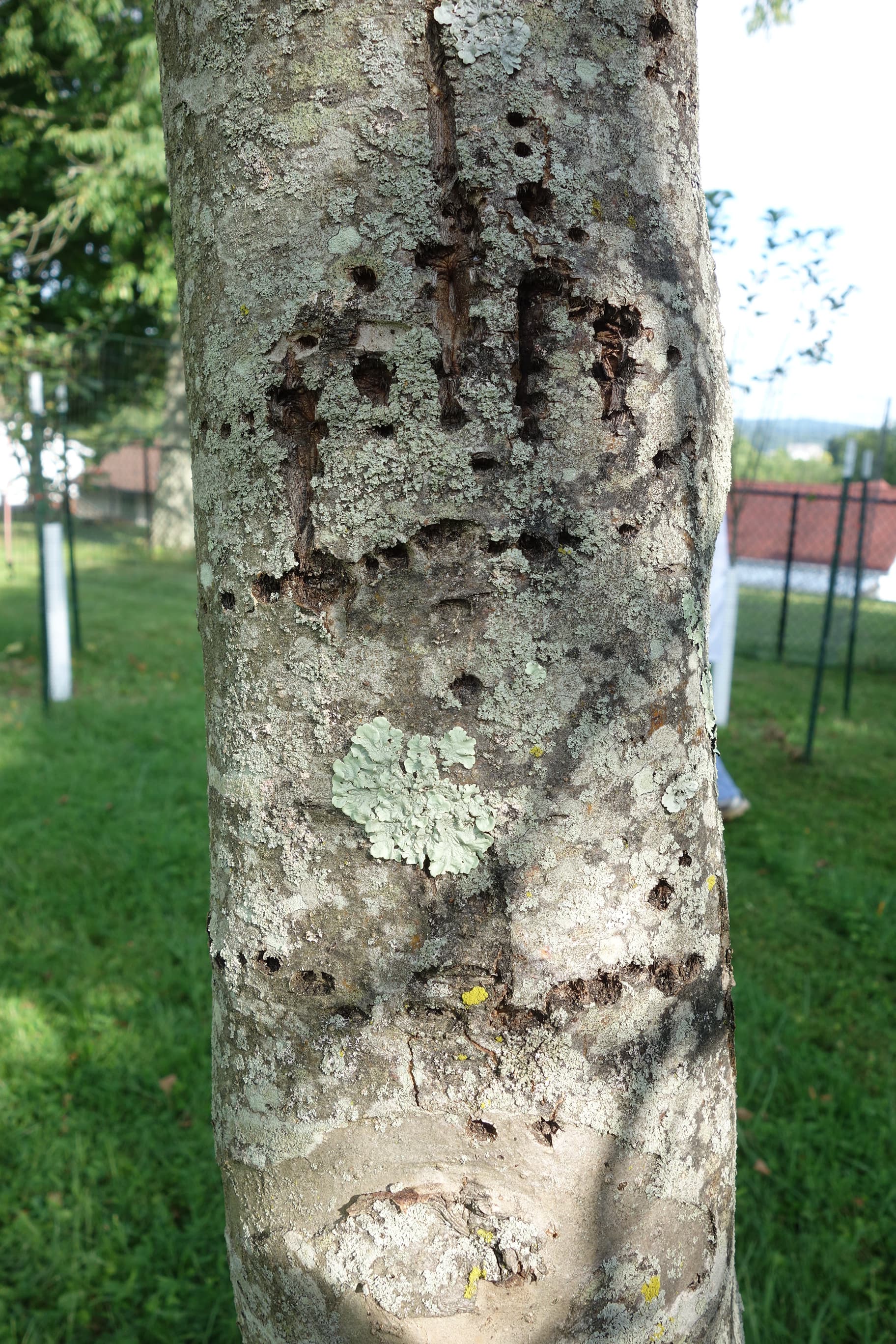
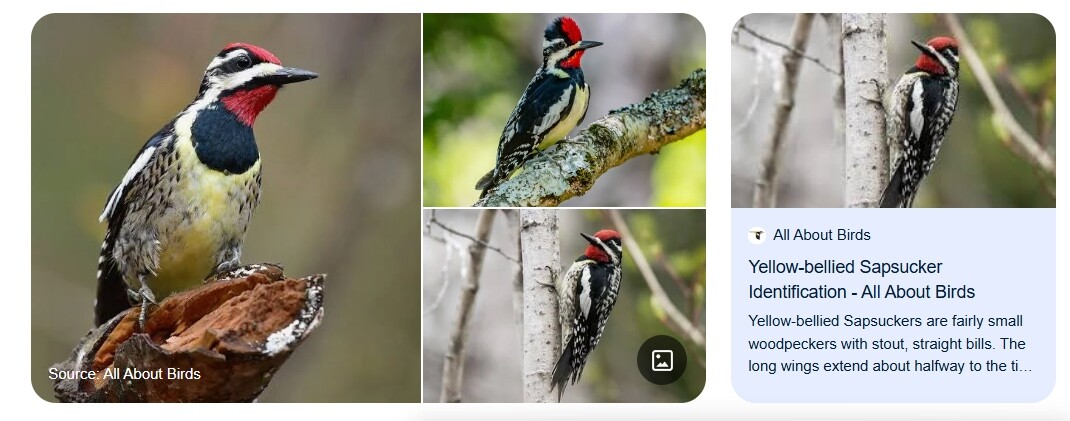
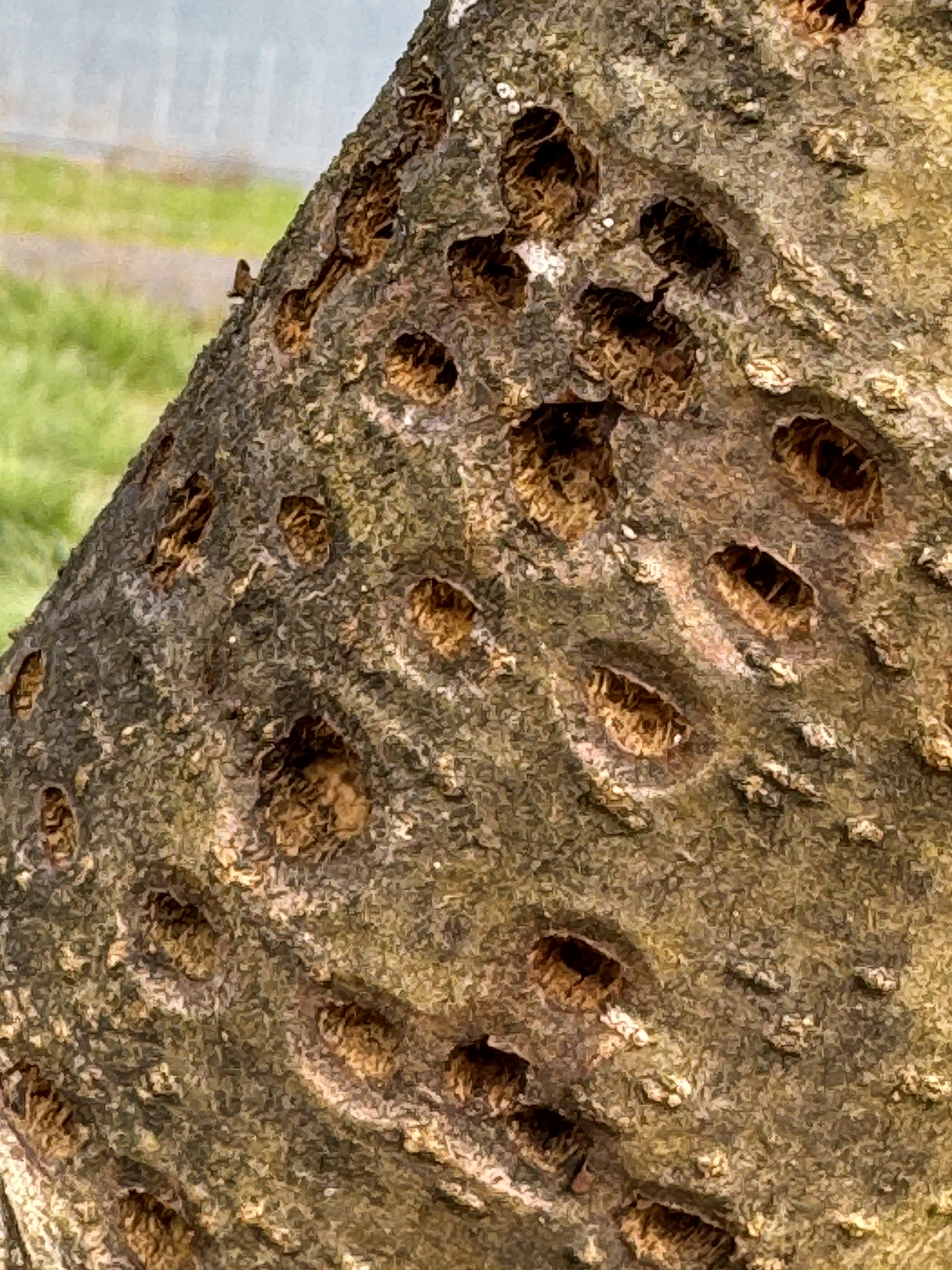
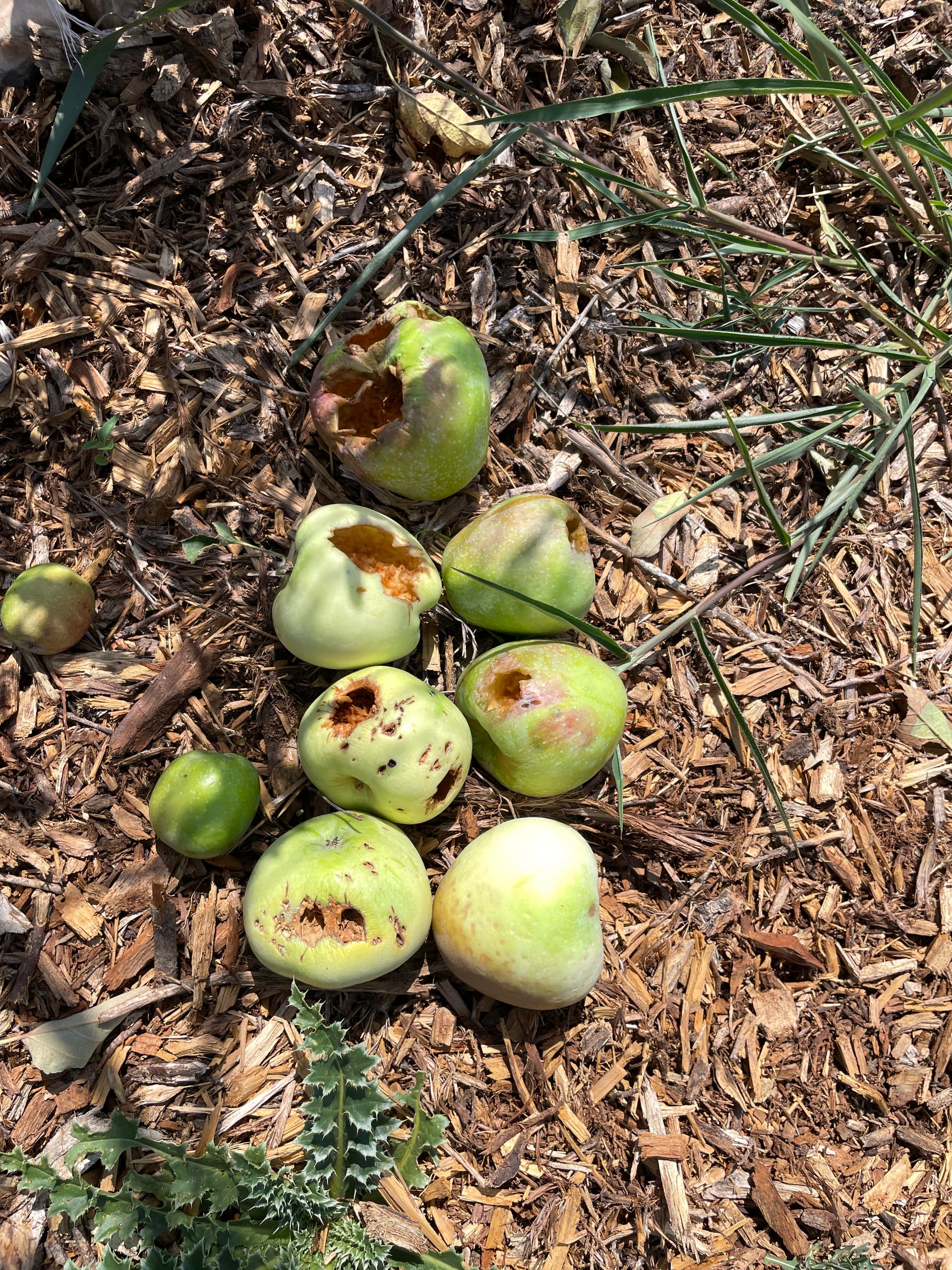
Looks like the work of a sapsucker. Our wild trees here are covered in those holes but the trees seem unaffected. I can understand why you wouldn’t like it on your tree though.
I’ve had sapsuckers nearly kill sections of apple and pear trees due to girdling. I wrap the target areas with aluminum window screen using a household stapler to hold it in place. Problem solved
I looked it up and apparently acorn woodpeckers mooch off the work of sapsuckers. They aren’t at all afraid of people. In fact, they’ll gather in a noisy group to scold people! So my seeing them on the Hudson may just mean the red-bellied sapsucker already left. Sapsuckers are here - I have seen them. Few times over the years, but I can’t ever get a picture.
Sap suckers, based on my understanding, will continue to visit the same trees each year on their migration route. Generally it looks bad but they don’t damage the tree in a way that will cause it to decline.
My approach on this challenge is to be thankful to provide habitat over worrying about tree health. If it was my only tree I might think about it differently, but the environmental improvement from diversity is probably more important. They would also be eating insects while they are around to limit your pest pressure.
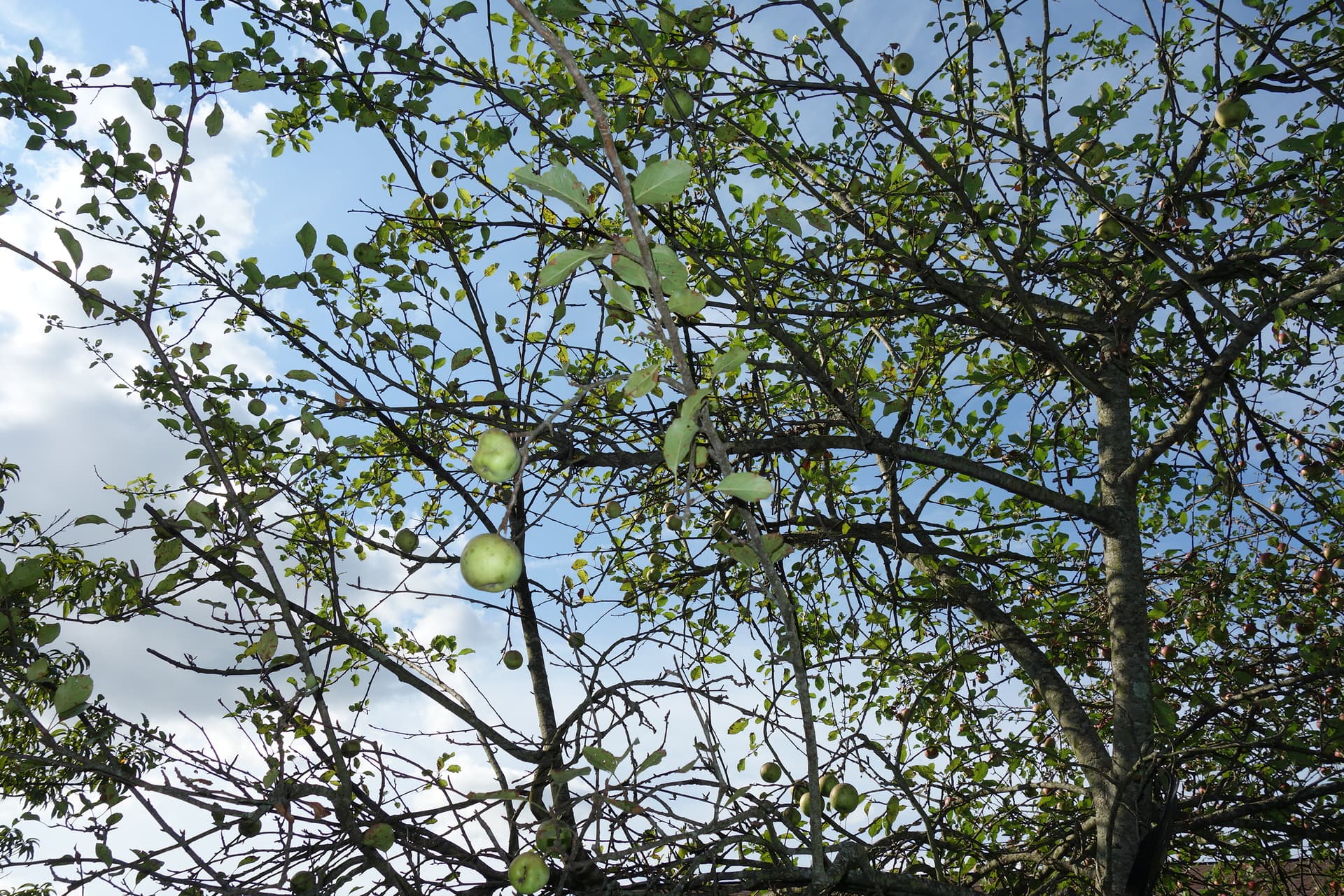
You should see my crabapple tree out front. It looks like it was shot with a BB gun a million times. But it’s stil alive and produces fruit every year. Nature tends to know its limits. The sapsuckers have learned over thousands of years to not totally girdle the cambium layer and leave it gridded instead. Of course you could have other issues wrong with the tree on top of the sapsucker damage that can result in faster mortality. Anyway, here is said tree…