How do you protect or prevent your trees from ambrosia beetles attack.
You can spray with permethrin every 2-3 weeks during spring. Anything below shoulder height or so. It’s better for the pollinators if you mix it into white latex paint but also less effective against the beetles
1 Like
Preventative spraying with permethrin as @Phlogopite described is the best way to be sure they’re protected - once they have started boring into your trees it’s too late. Cliff England used to sell lures that you can use to bait traps and monitor for ambrosia beetles so you know exactly when to start spraying. Otherwise you just need to start spraying early in the spring, well before your trees have started leafing out to be sure to protect them. I used to prune my fig bushes in the early spring to about 5 main branches, but I found that pruning then attracts ambrosia beetles. Avoid pruning any trees in the late winter/early spring for this reason. Figs will usually recover and grow back from the ground, but other trees usually die once they’re attacked. I haven’t sprayed my trees consistently, but if I have a bad late frost that sets back most of my orchard, then I would spray to protect them from ambrosia beetles.
1 Like
Are you interested in moving to CT? 
No, it is a single family house in an expensive town. The ROI for renting such houses is far lower than multi family in the less expensive (not cheap) neighboring towns. It’s best to take advantage of the current high prices and sell. We’ll do that once we finish renovations of the new place and move. Probably this fall, with a small chance of late winter/early spring at the latest (if we finish in December, I’m not sure it would be worth it to list over the holidays when things are slow). I am planning to move some more plants in the fall, particularly apples, blackberries, kiwi, and a few of the jujubes. This includes some suckers which have come up after transplants this spring. Regrettably, I don’t think that most of the trees on their own roots haven’t sent anything up, other than one Autumn Beauty sucker. But, there are a few jujube which are just too big.
For anyone who lives nearby, let me know and we can probably arrange for you to come by and dig up some suckers, as there are quite a few.
I think one of the times this happened to Cliff the trees came back. Another time, he had two frosts, separated by a few weeks. After the tree started recovering from the 1st one, the 2nd one killed them. I think many didn’t come back.
Bob, @BobVance
I meant to ask you earlier but I forgot. I have two 4 feet Early Golden Crispy jujube. I noticed this Spring that one of the EGC looks sad and starting to die. I then noticed there are 3 large suckers that sprouted from the understock. Ithink the suckers took all the nutrients from the EGC and killed it. Is this ever happened to your jujube trees?
Tony
I get suckers at the base sometimes, but try to get rid of them due to just this concern. Though I haven’t actually lost a tree due to this.
I’ve never noticed a problem with a suckers growing 10’ away causing an issue for the mother tree. At one rental there were several around a big So and I grafted them this spring. They have all put on some growth. I’ll probably transplant at least 1 or 2 of the 4 to my house this fall/spring, as they are varieties I don’t have more than grafts of (Apple and 2nd Generation Dong).
3 Likes
Tony
I don’t know if this has any correlation but when my 7-8 years old HJ is in decline, there were numerous suckers came up at the base. My other trees of the same age have not had as many suckers at the base.(they show up 3-5 ft away instead).
By the way, I thought this HJ was dead but I did not have time to remove it. This spring, some branches have leafed out and flowered. Not sure if the tree will be able to hold on to any fruit.
Because it is not quite dead, I removed all suckers at the base to help it.
2 Likes
From now on if I see a sucker near the base of the tree then I will remove it.
Tony
2 Likes
Im not to far off your location and in 5 years never had any cold damage on mine. My trees are between 3-7 years old. In our climate all fruit trees wake up very early but jujubes are usually the last ones.
2 Likes
I took some time to examine the trees today and a surprising amount of them (more than half) now have fruit. It looks like some just took a bit longer to get started with the move. Or, maybe we are having good enough weather that it overcomes some of the transplant shock.
Several Honey Jar have quite a few fruit:
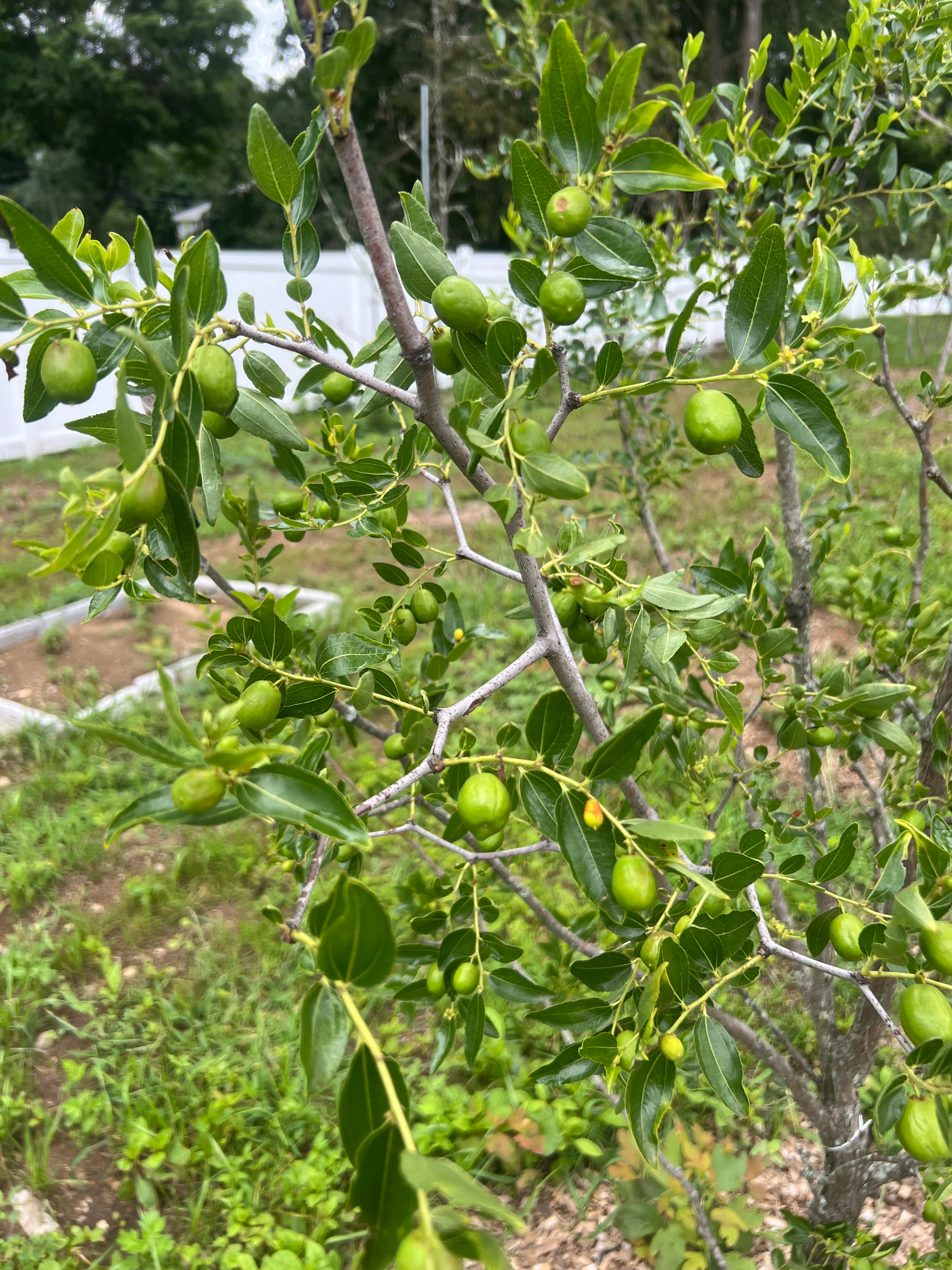
After seeing the Honey Jar pic, this one might not look like much. But to me it is more impressive. This is a Fucuimi that I originally planted in 2019, before moving it this spring. This is the first time it has had fruit. I took wood from this tree to graft back in 2021, and that graft produced fruit from 2022 on, which is where I’ve picked most of my Fucuimi from. I’m not sure why transplanting a tree would cause it to start producing for the first time. Maybe it thinks I was root-pruning it?
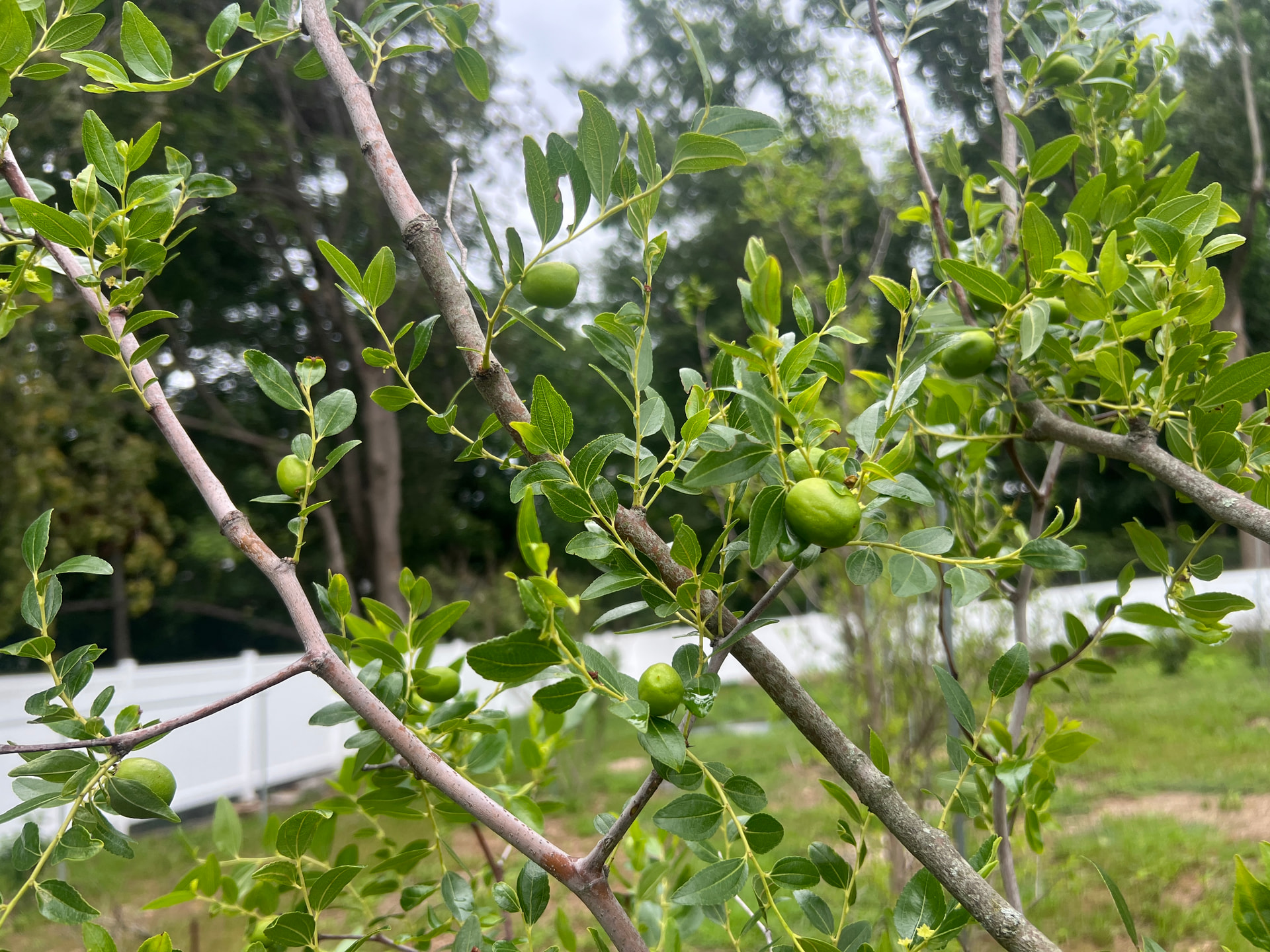
Autumn Beauty is often not very productive for me, especially in off years like last year. But, this pic captures that there is at least some good sized fruit on it right after the transplant.
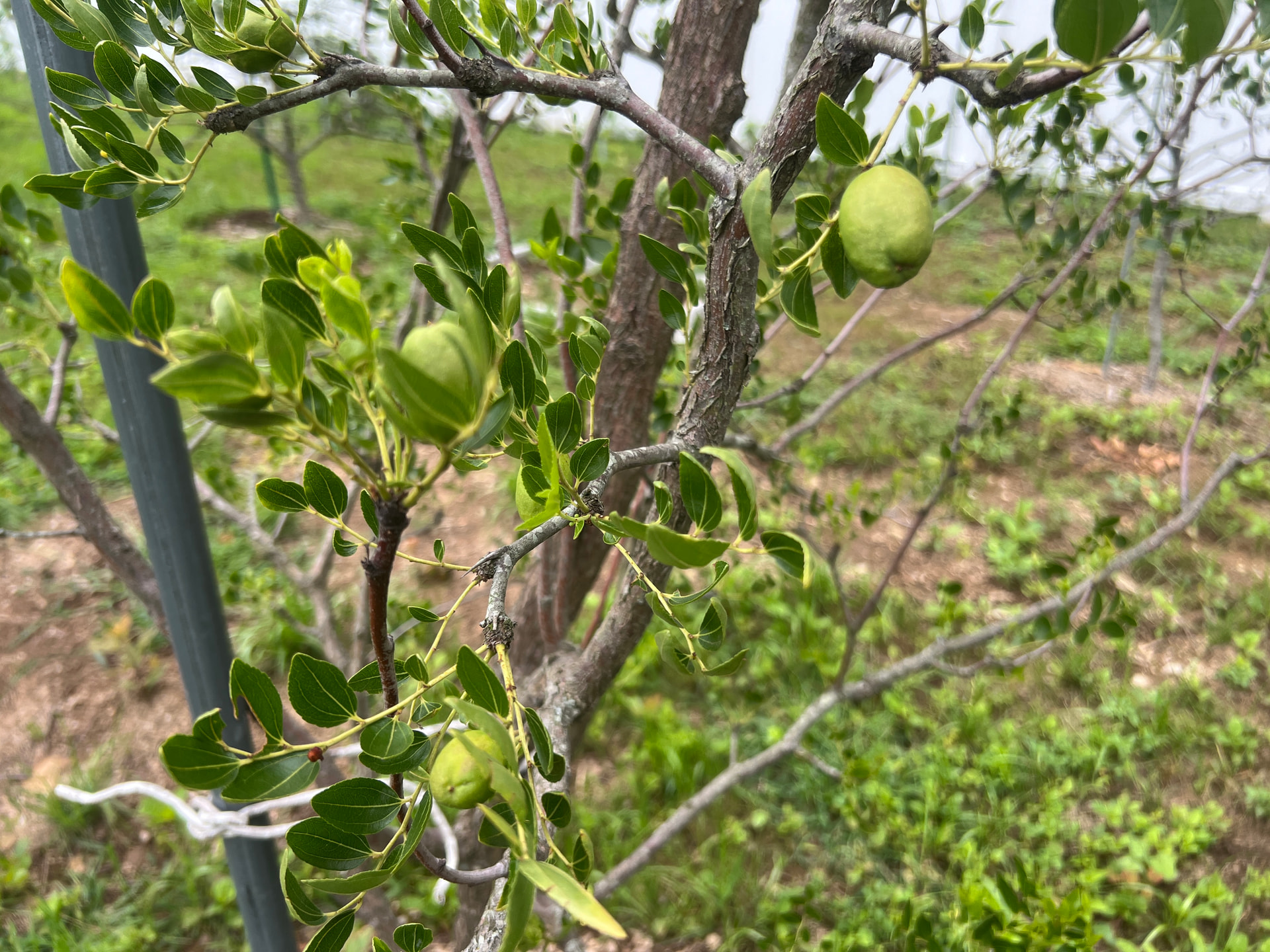
Some of the So don’t have much fruit, but this one has some, as well as 3 successful grafts (of one of the Jinsi varieties).
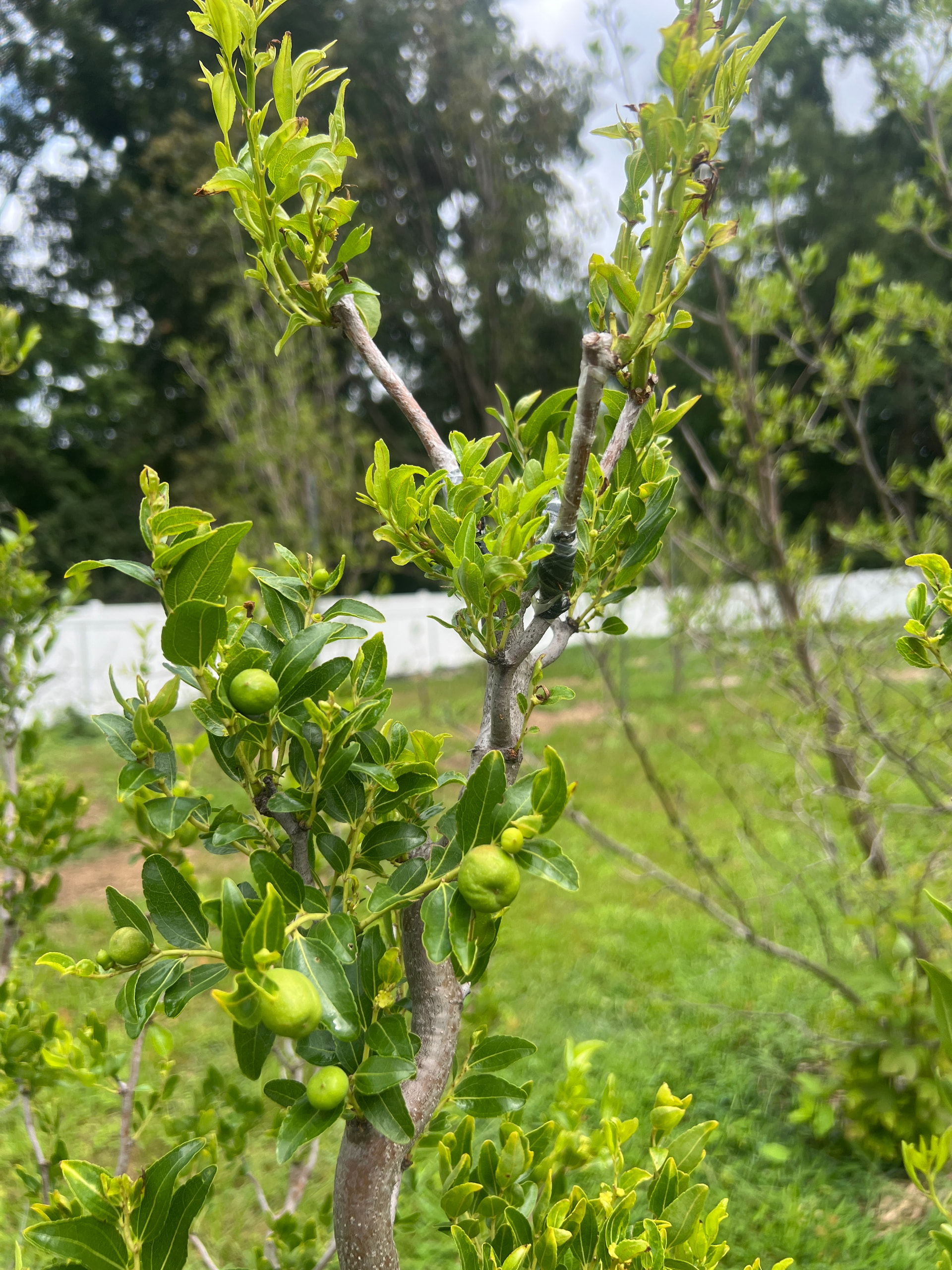
As you can see in the backgrounds of some of these pics, there isn’t perfect sun at this site. Most of the neighbors weren’t thrilled with my idea of making the area into a flat open prairie… The big tree you see in the background is to the E, about 80-100 feet away. So there is some shade in the early/mid morning and sun for most of the rest of the day. I’ve got a few jujubes in a better area, which gets sun for all but the early morning and late evening, but I used most of that area for peaches, plums, and pluots.
5 Likes
I am hoping it was a one off combination of unusual weather, and my trees being very young yet to be fully established in the ground (they had been 8-10 months, not even a full season in).
Thanks for the reply
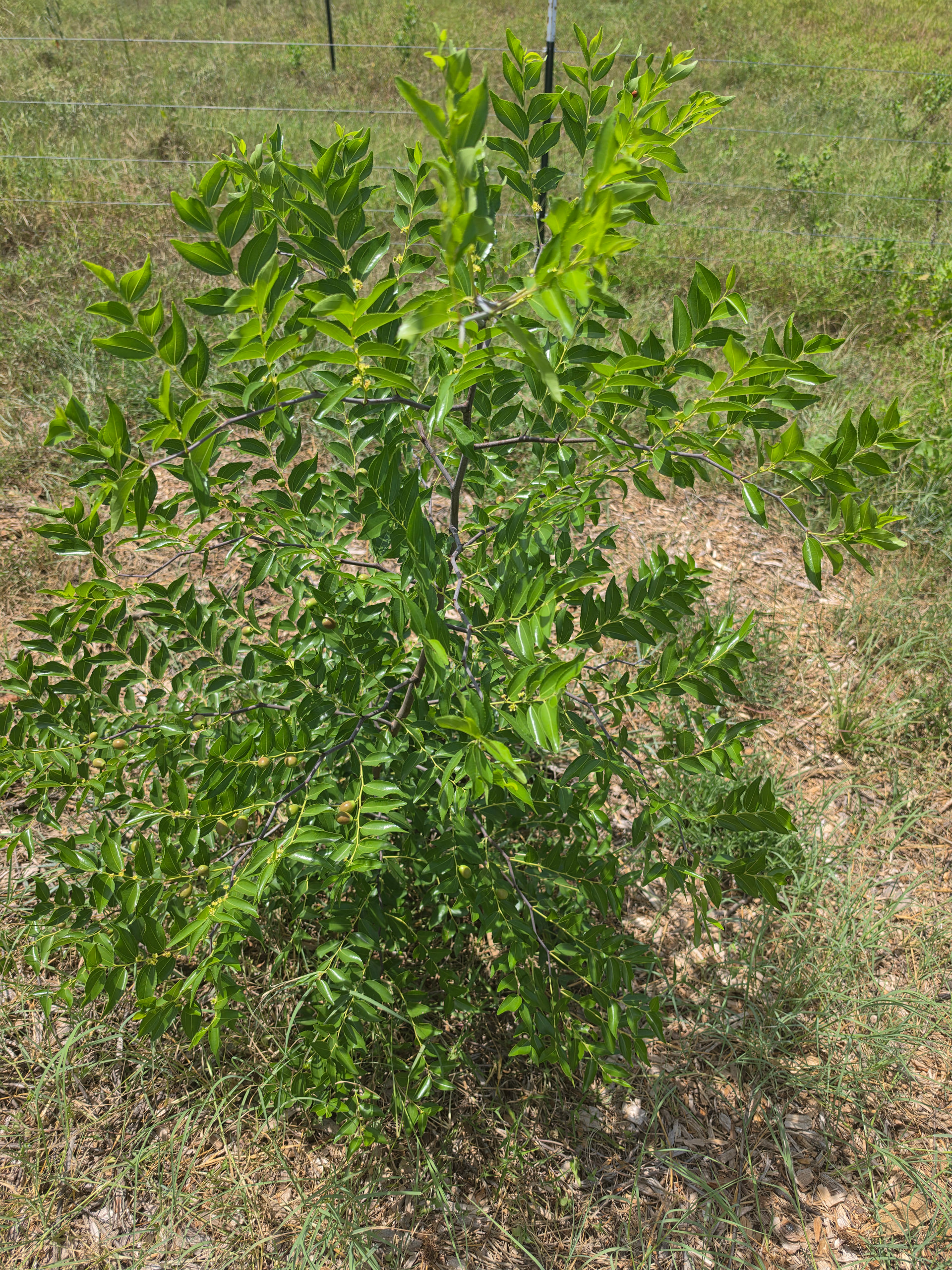
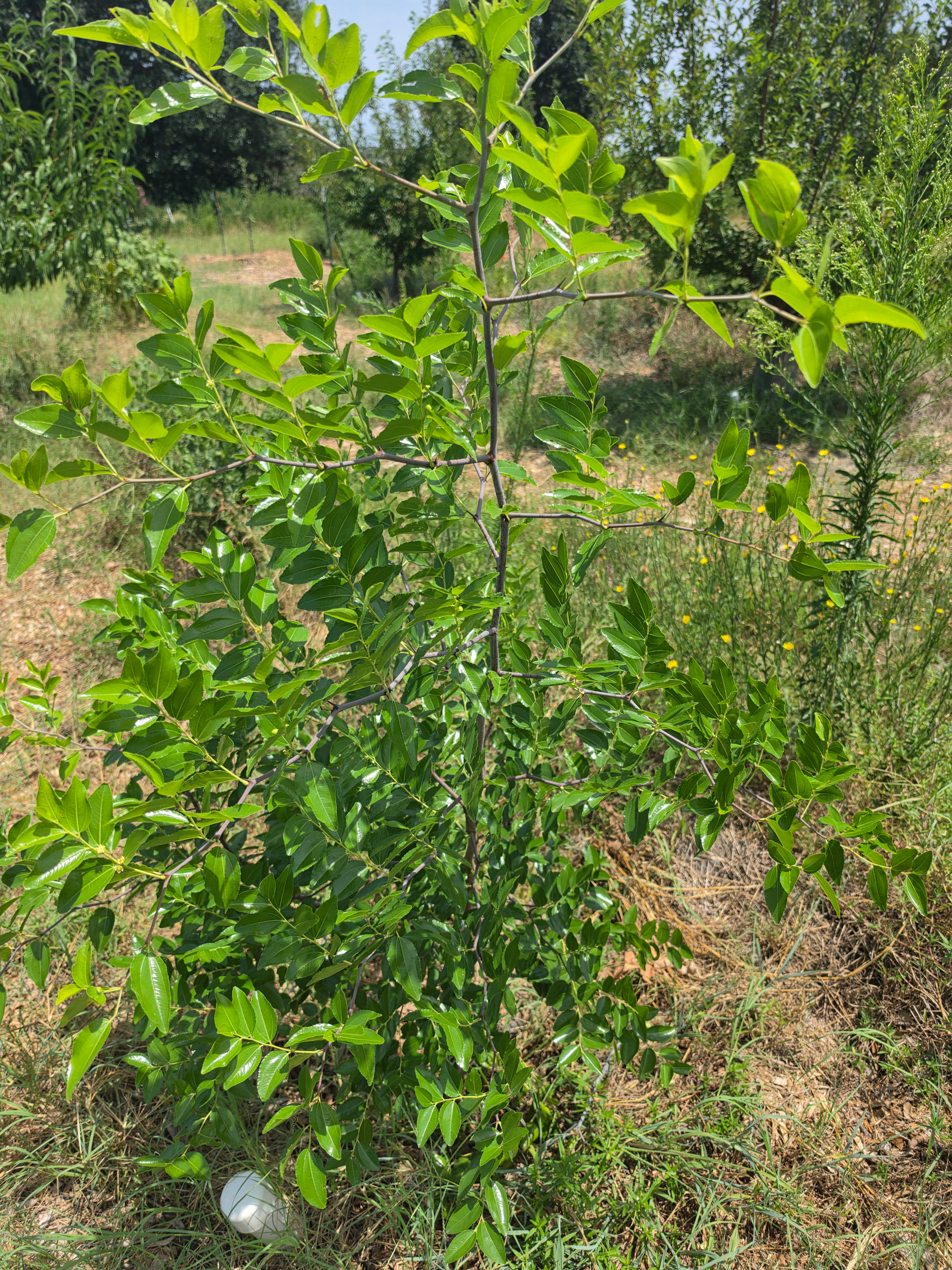
BTW, this is how strongly they came back from just a few inches above graft:
Sugarcane, Sugarcane fruitlets, and then Li:

1 Like
Thanks Bob, I must say it’s been better than the GA866 I’ve tried from 3 different trees now but it’s definitely not as sweet as the Honey Jar figs so far. Still great. My darn Sugar Cane are still just sitting there not changing color. Many are pretty large can’t wait.
I’m surprised they are keeping you waiting so long. They are near the start of the season for me.
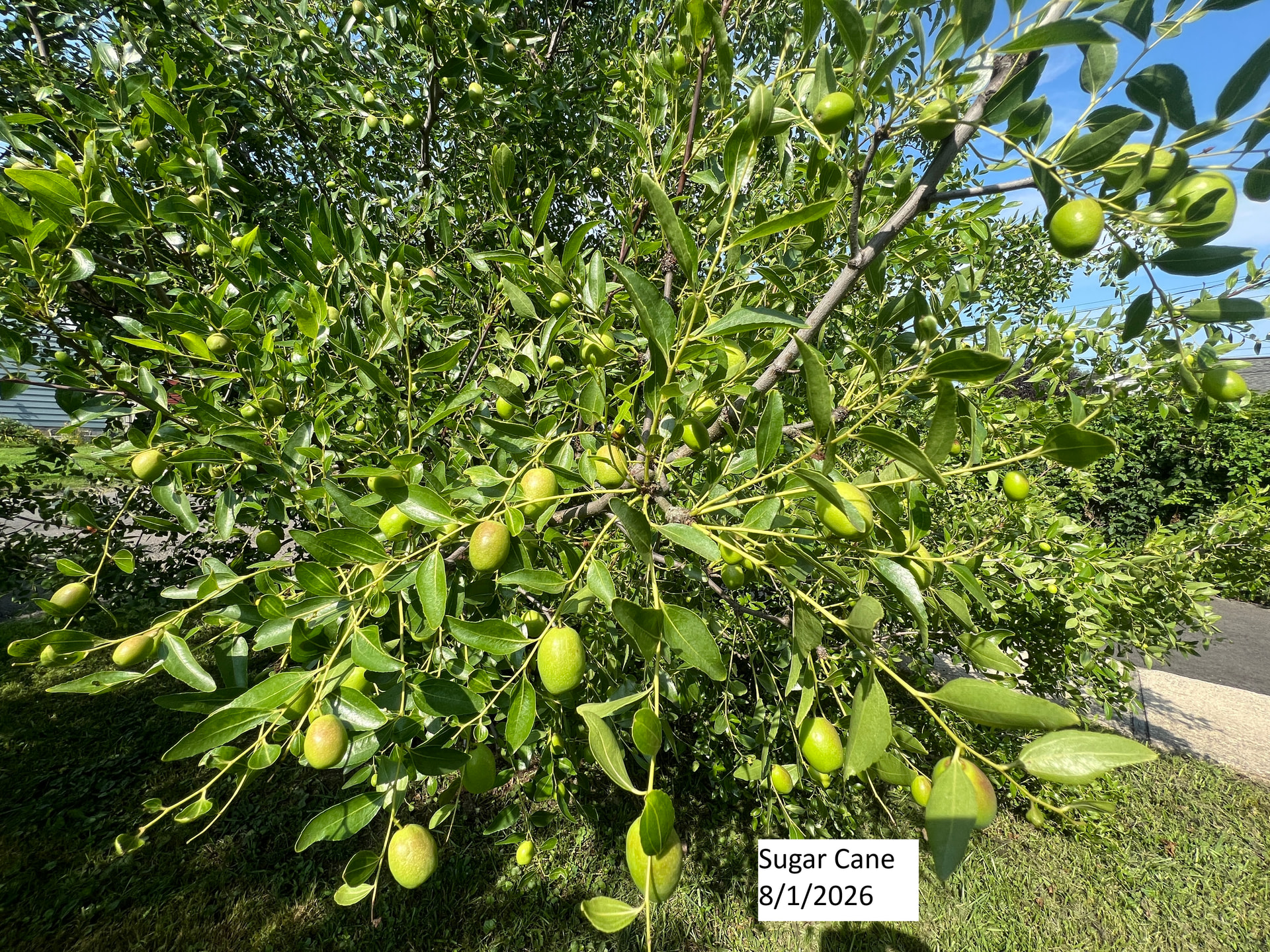
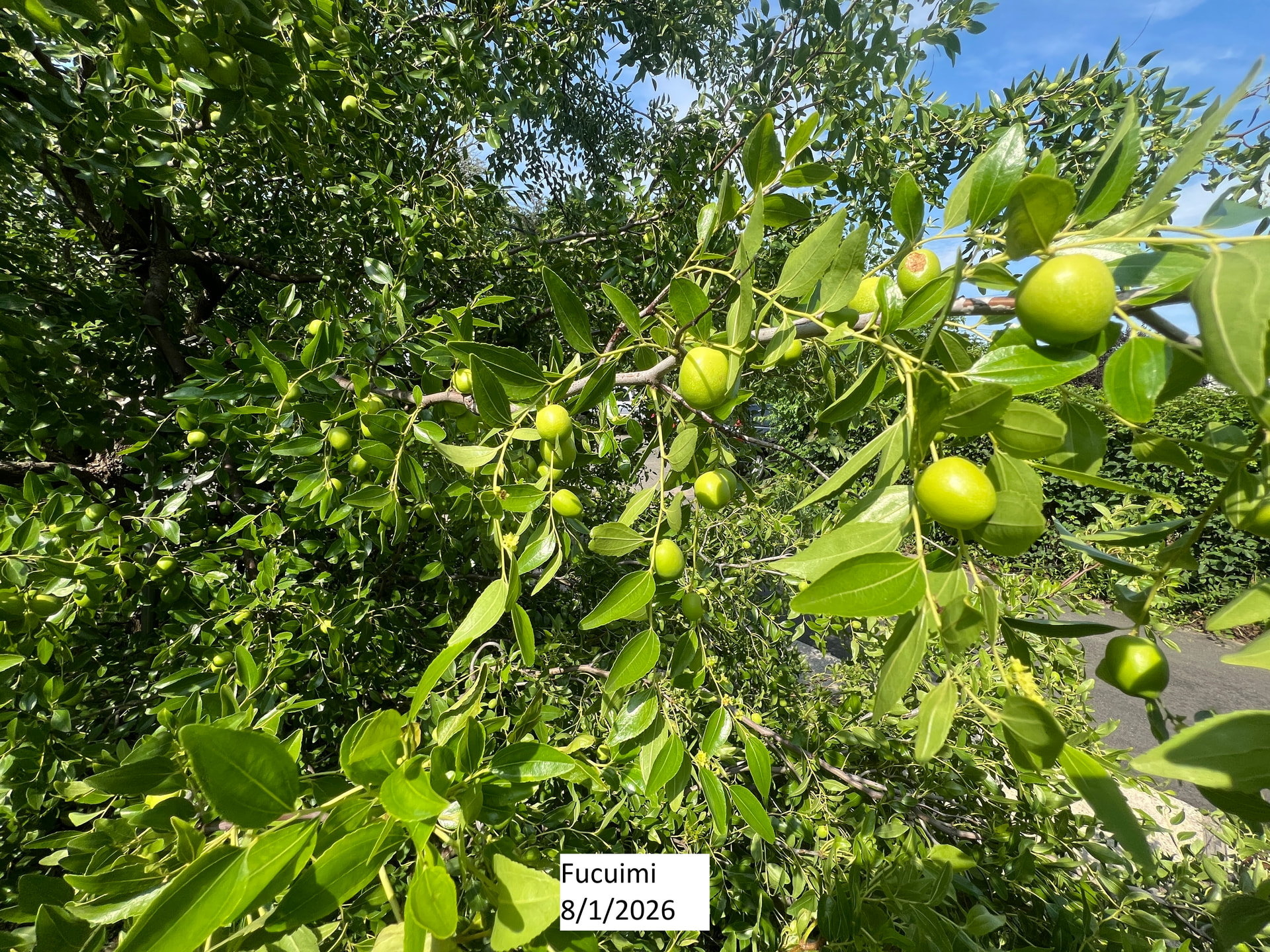
In my previous post, I had pics of the transplanted trees. Here are some pics from established trees at the most productive site.

The little bushes on the right are sour cherries. The one on the left has a cage to protect it, while the one on the right is just a trunk with some leaves at the top, due to rabbits chowing down on it.
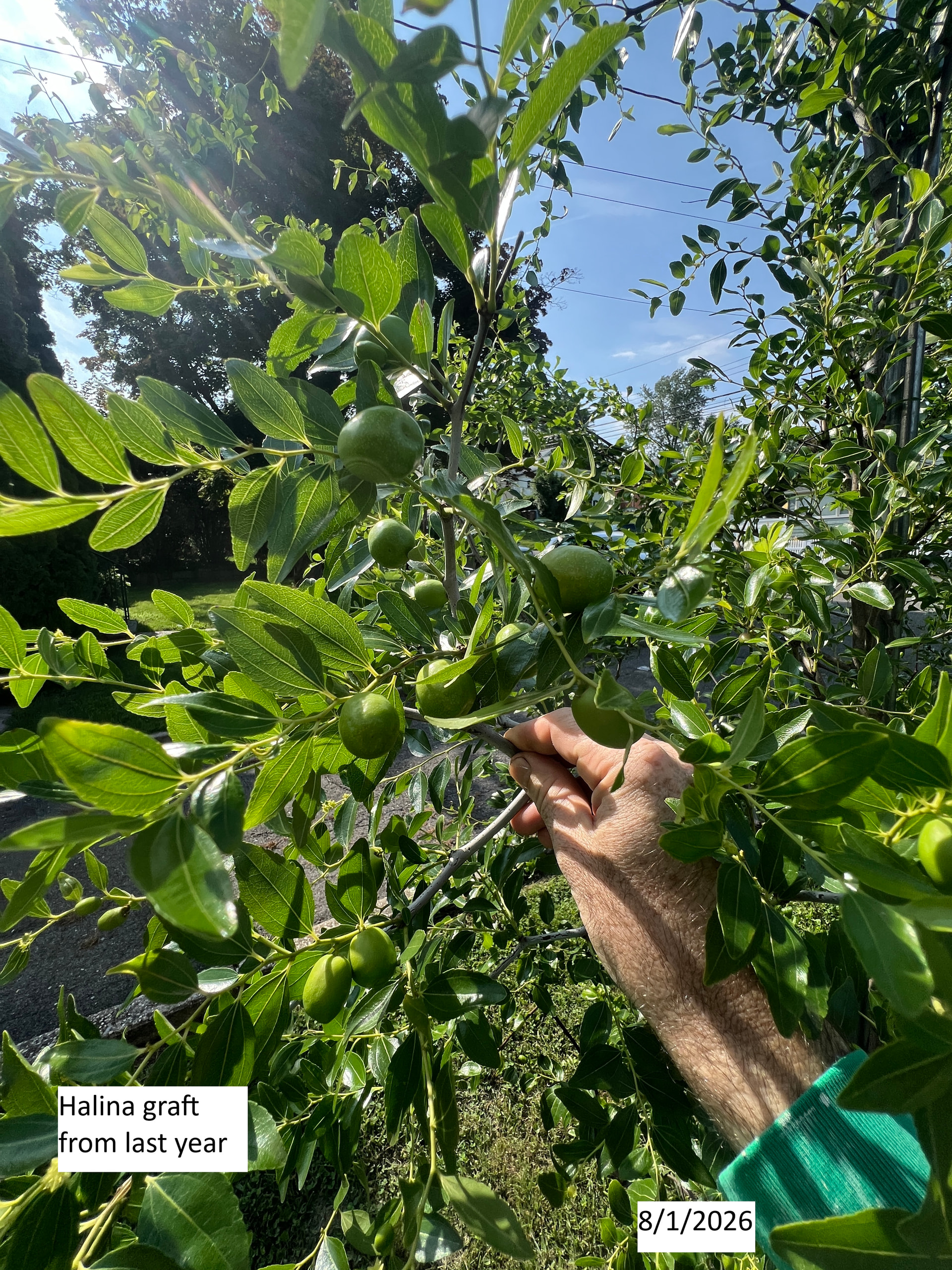
Here’s a Halina graft from last year. This will be the first year of production for me of this variety.
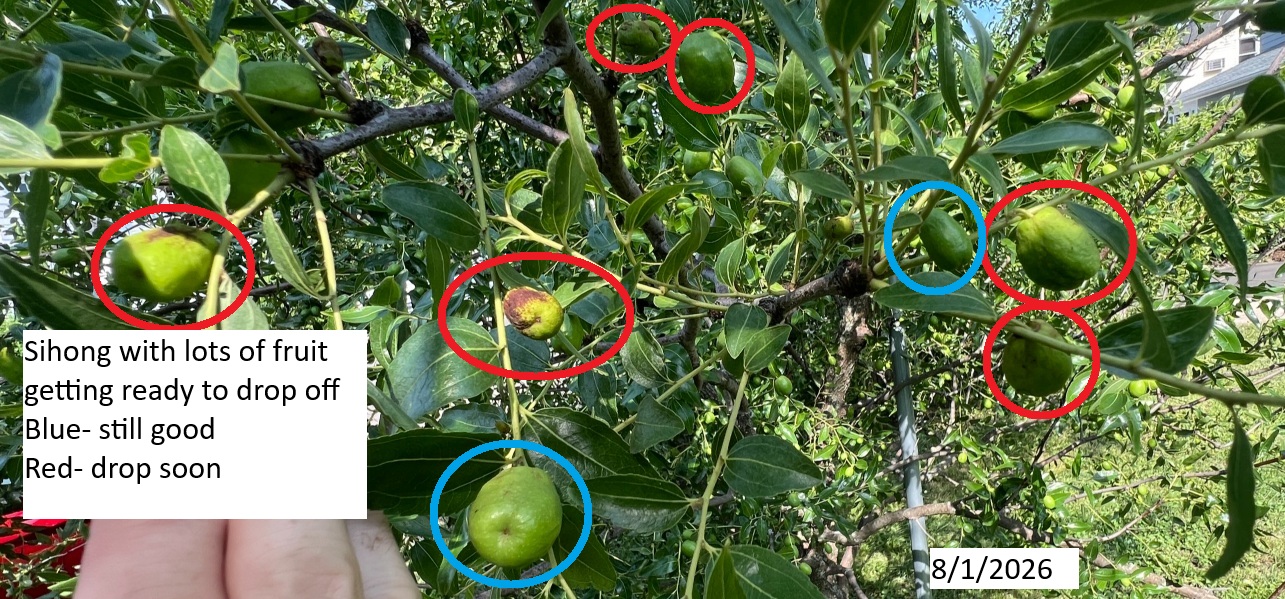
Just because there is fruitset now, doesn’t mean it will make it to ripe. While most varieties can drop fruit, Sihong and Shanxi Li make a habit of dropping a large amount. Just looking at the branch, I can see some fruit whose days are numbered (shriveled and sometimes turning dark).
At my old house, there are still some grafts of seedlings on the large old So. Two Bing Tang seedlings are promising, 9.2 and 8.2. They made some fruit last year, but there year both are really covered.
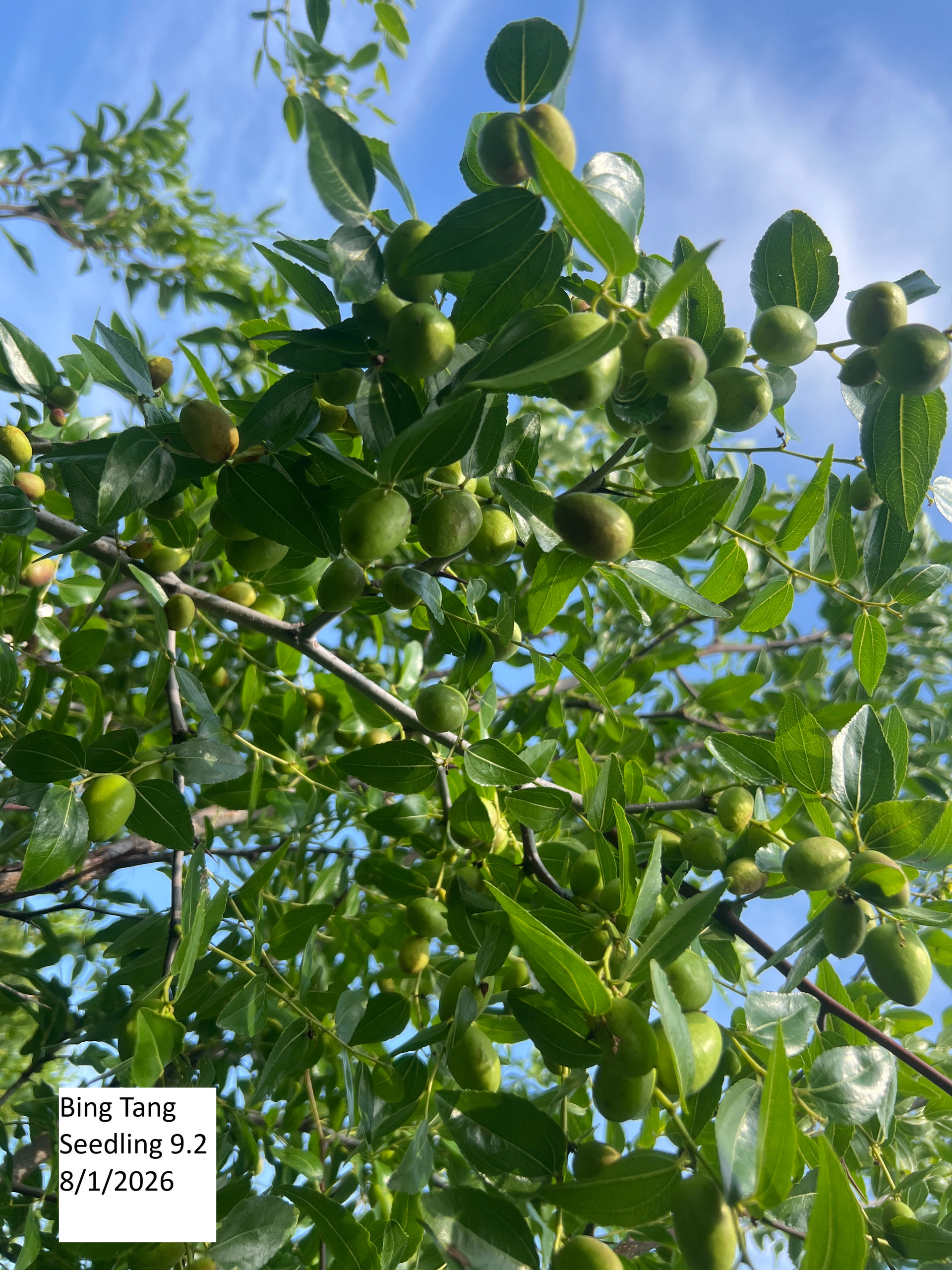
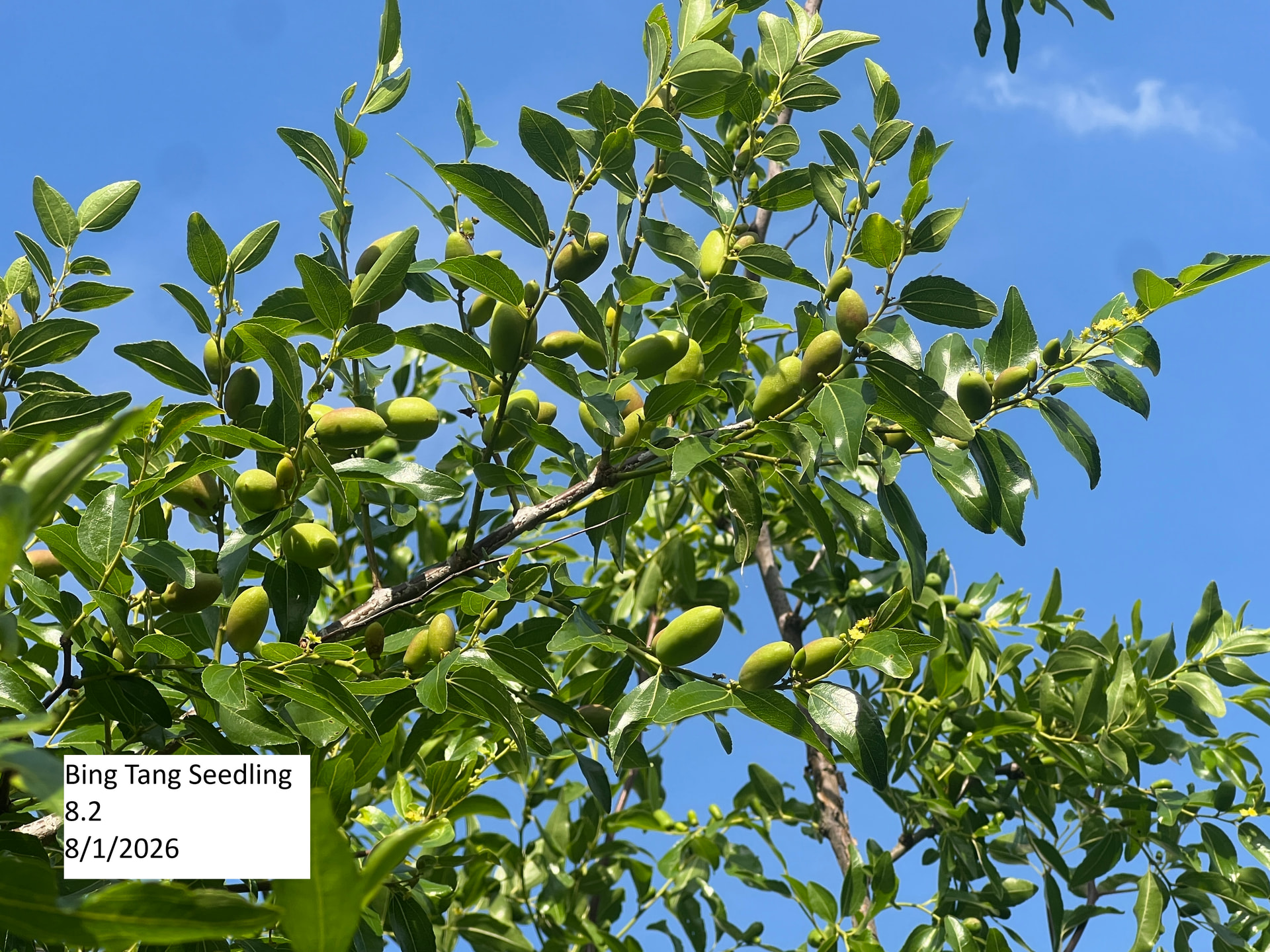
I think 9.2 is the one which made larger (an later season) fruit. At least, bigger than Bing Tang. And 8.2 was pretty crisp/high quality, though I need another sample.
I’m not sure if I’ll still have access to the So when grafting season comes next year, so I made a few backups at both a rental and at the new house.
6 Likes
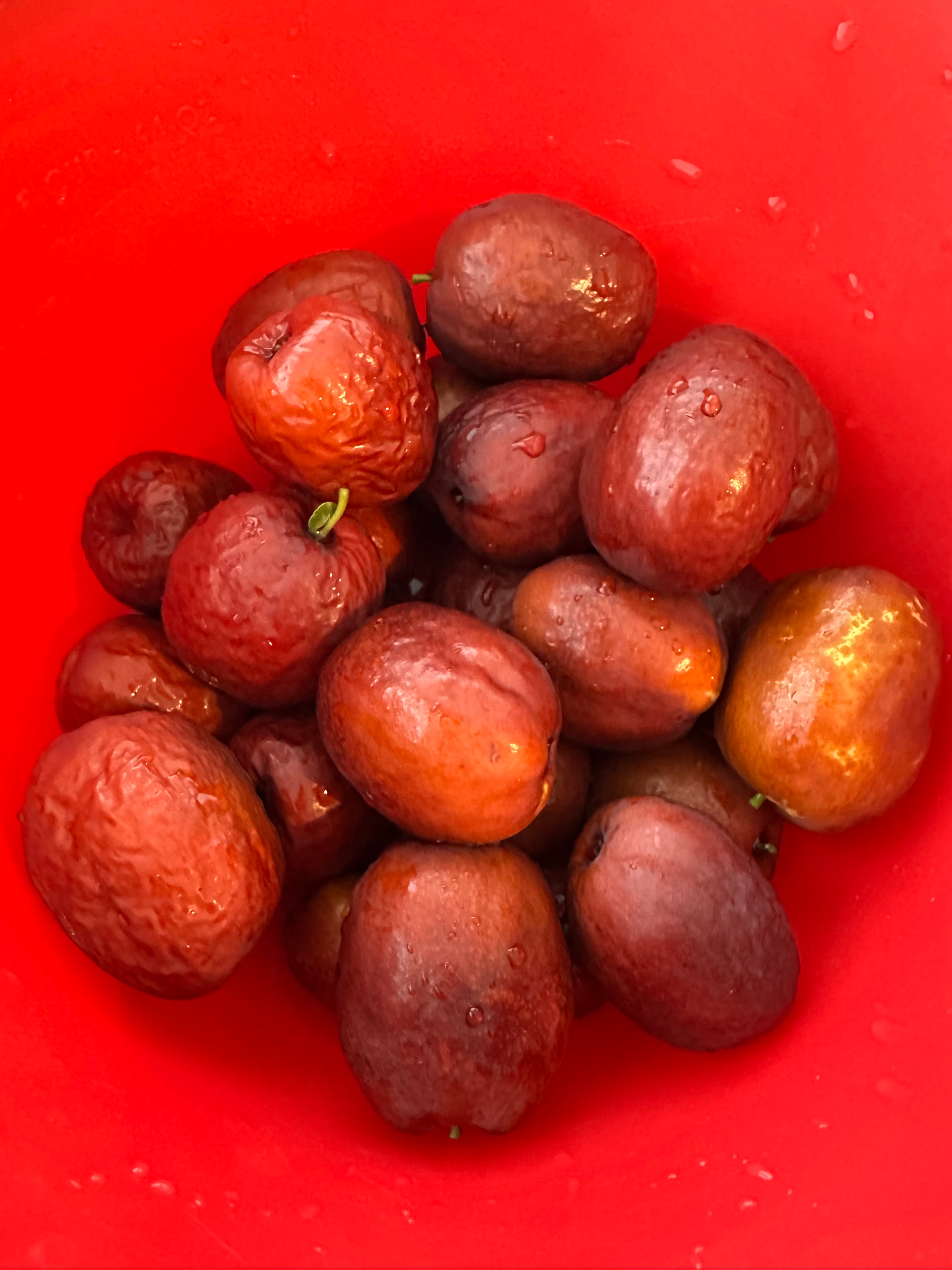
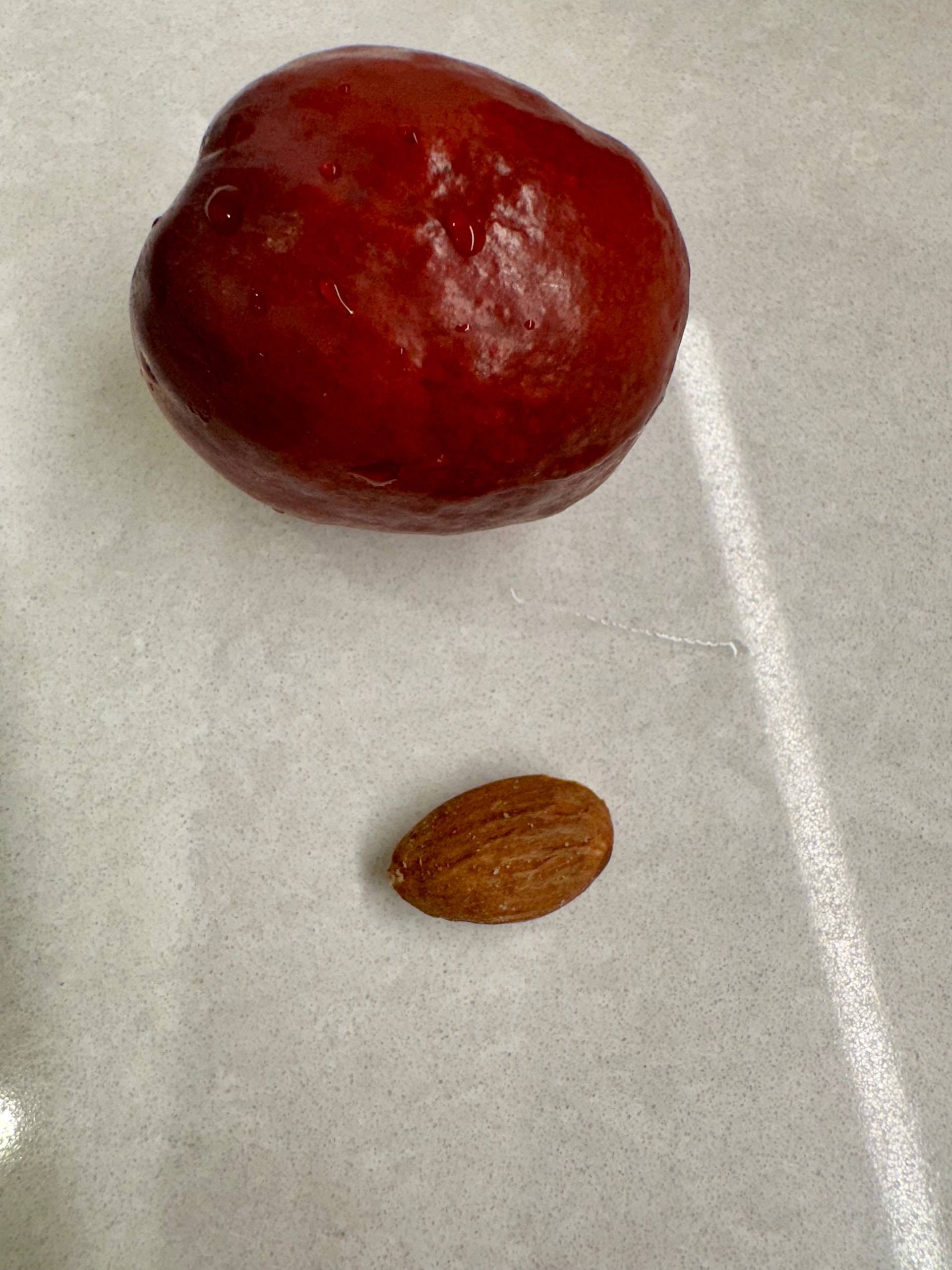
I previously thought Li was mediocre but this year it produced much larger and sweeter jujube (albeit fewer due to weather conditions in spring). This is an excellent cultivar. The sweetness when properly ripe is intense.
4 Likes
Most (all?) of those jujubes look too ripe. Once they get wrinkled they’ve lost their texture. They are still good for drying, but I find them much better when crunchy like apples.
The vast majority of jujubes (with a few exceptions) get quite sweet, not just Li. Some like Xu Zhou tend to be a bit lower brix, though still pretty high compared to most fruits. And there are some high acid tart varieties like Texas Tart which get high brix but are still sour. But how well they ripen while still maintaining texture is the most important differentiator (IMO).
1 Like
Yes me too! They’re pretty large and the tree just keeps growing and putting out more flowers. It will be over 106° in the yard tomorrow so hoping that helps speed things up a little.
OMG. This is too funny. A few days ago I did an ai search to ask if the “Chicken Heart” jujube really looks like a chicken heart (it does, in terms of shape). Look at the ad I was just served. Ugh

1 Like
Bob @BobVance,
Let’s go over your previous top fresh eating jujube varieties as I remembered just to see if there are room for improvement: Honey Jar, Sugarcane, So, Bing Tang, KFC, Early Golden Crispy, Panzao, Bok Jo, Black Sea, Sandia, Express Gee, Baby red, Chico, and possibly a few new varieties like Grand Honey Jar, Youpancui, Zhangdong Jujube #3, Gold silk….
Tony
1 Like
I suppose it’s a matter of taste. I do enjoy them when they’re crunchy and firm, but they also develop a wonderfully complex flavor when they get wrinkled which I seem to appreciate more than most.
1 Like