Thanks I added your observations to the table above. Also @marten I just noticed yours and added as well.
My guess is there is both partial resistance and environmental factors playing into the data. My JT-02 is on a rootstock that took no kakis for five years trying (I thought I was just a bad persimmon grafter) and it’s been a champ. So it definitely has some resistance. My 20th Century was fairly resistant, showing only minor signs for several years. I took it out last winter just to “get it over with”, but it probably would have lasted for several more years.
I’m definitely a noob, since I just started growing kakis a year ago.
My approach in the orchard is to not spray anything, and to mulch them well in sandy soil with Woodchips and hay.
I do this to try to boost soil microbiology as much as I can naturally, hoping it will shield my trees against disease and make them more resistant. I wonder if anyone is trying this approach already with kakis?
I pray that my 7 kakis don’t get it. I have Jiro, Fuyu, Maekawa Jiro, Ichi Ki Kei Jiro, and Saijo.
I will report results in the year to come. Thanks for all the responses and experiences here.
I do the same with all my potted Kaki, in ground Hybrids, and in ground DV. I added 1 layer of wood chips and everything months one layer of grass clippings from my lawn. I have lots of Mushrooms came up from the broken down wood chips. I think I had one case KSDS in last 20 years of growing persimmons. I have more persimmons died from the -33F cold than disease. Most of my rootstocks were from Missouri Department of Conservation.
One of the challenges is that these three varieties are very similar and many nurseries sell Jiro as Fuyu, Fuyu as Jiro, or any non-astringent kaki as Fuyu. So many growers may not know what they are actually growing with any confidence. I doubt any kakis are immune to KSDS based on my experience of grafting to what I assume are infected D. virginiana root suckers from the big male American persimmon tree in my backyard. But some kaki varieties may be more susceptible than others. Saijo seems to be a frequently affected variety, for example. I don’t think there’s as much genetic diversity among non-astringent (PCNA) kakis as there is among the astringent varieties. The fact that some non-astringents have succumbed to KSDS and they are all genetically so similar makes me suspect that they are all probably equally vulnerable to KSDS.
Growing healthy trees is always a good idea, but KSDS doesn’t seem to affect only weak trees. I’ve had it kill highly productive mature trees that showed no previous signs of poor health. I haven’t heard any reports of KSDS from TX. If as suspected it’s caused by the pathogen Xylella fastidiosa and transmitted by particular insects, then maybe we have a lot more of those insect vectors in GA, NC, VA, MD, and states where we get the most frequent KSDS reports.
I expect that is true and as long as you are outside that area and have stable trees you may be okay for the long term. I also think that sourcing trees from areas that have a lot of reports might be problematic, since it is possible they get infected while at the nursery. For instance, while I really like Edible Landscaping for a lot of things, I probably wouldn’t get another persimmon from them based on my experience and others. The Missouri rootstocks on the other hand seem to have fewer reports.
Since I’m in an area where it is an issue, I guess I shouldn’t be surprised that I’ve had 2 out of 3 large seedling trees I’ve grafted over turn out to have had issues.
I bought most of my original kaki collection from Edible Landscaping, and many have ultimately died of KSDS. But most of those grew well for several years, so I suspect they may have been infected in my yard from the native persimmons all around me. However, I do agree that if you live outside of the high KSDS pressure area, you’re probably better off buying your persimmons from somewhere else to avoid the chance that you get an infected tree. It’s interesting that I haven’t had the same issue yet with trees from Just Fruits and Exotics, so maybe FL is outside of the high pressure zone? I’ve also had very good success with grafting to Missouri Dept of Conservation seedlings, so they presumably aren’t infected with KSDS.
It was rainy and cold this Spring, and my potted Giombo was starting to show black splotches on top of the leaves. I did not check under the leaves. I took turns treating it with copper and Daconil between rainy spells. It seems to have cleared up.
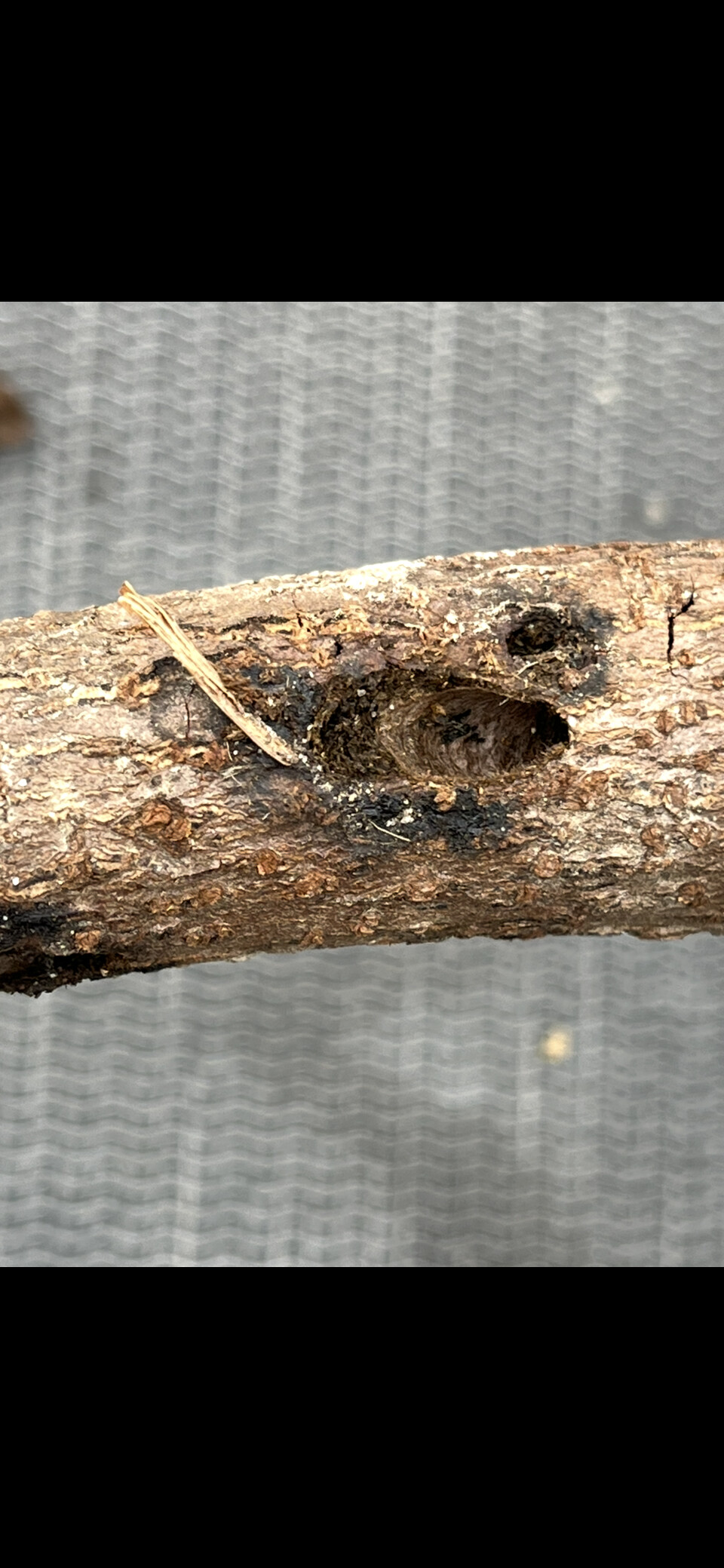
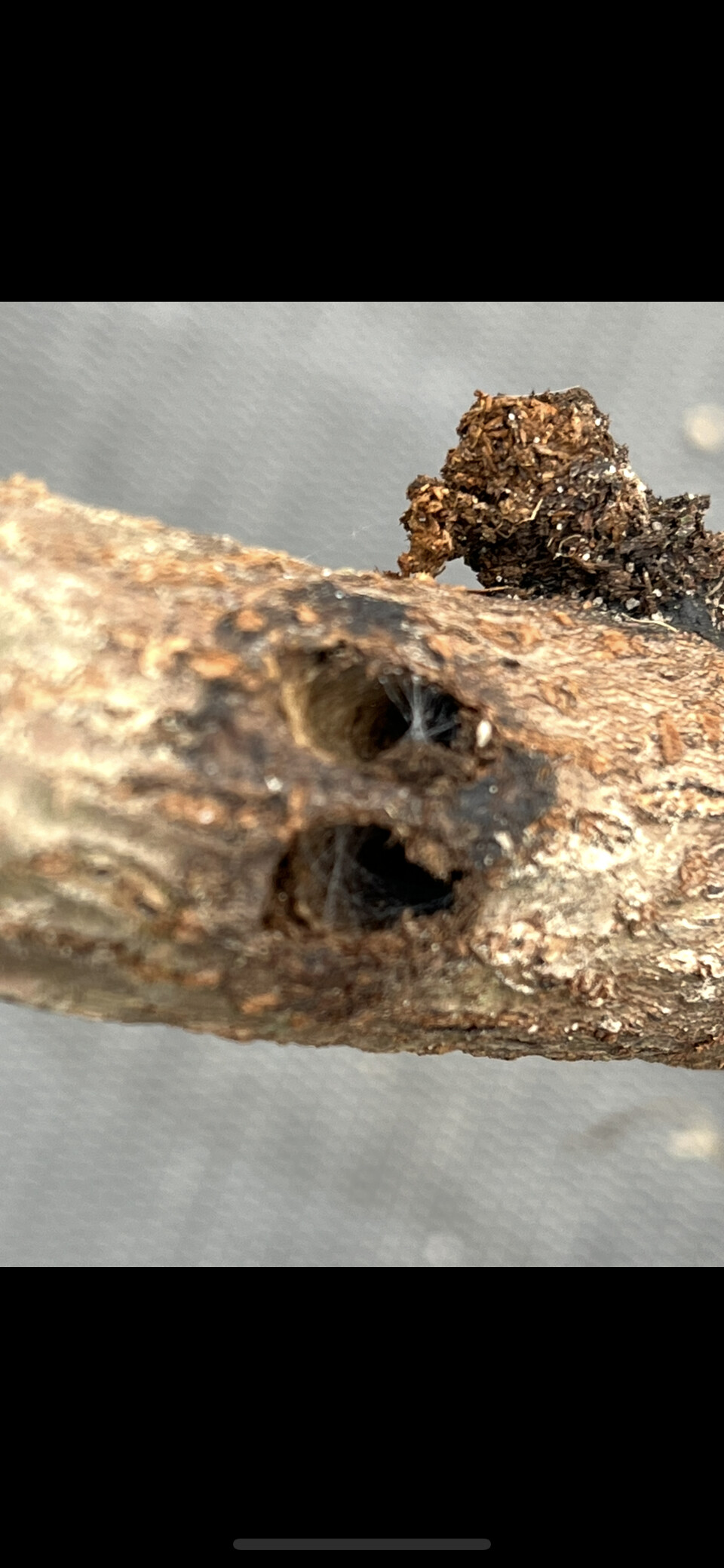
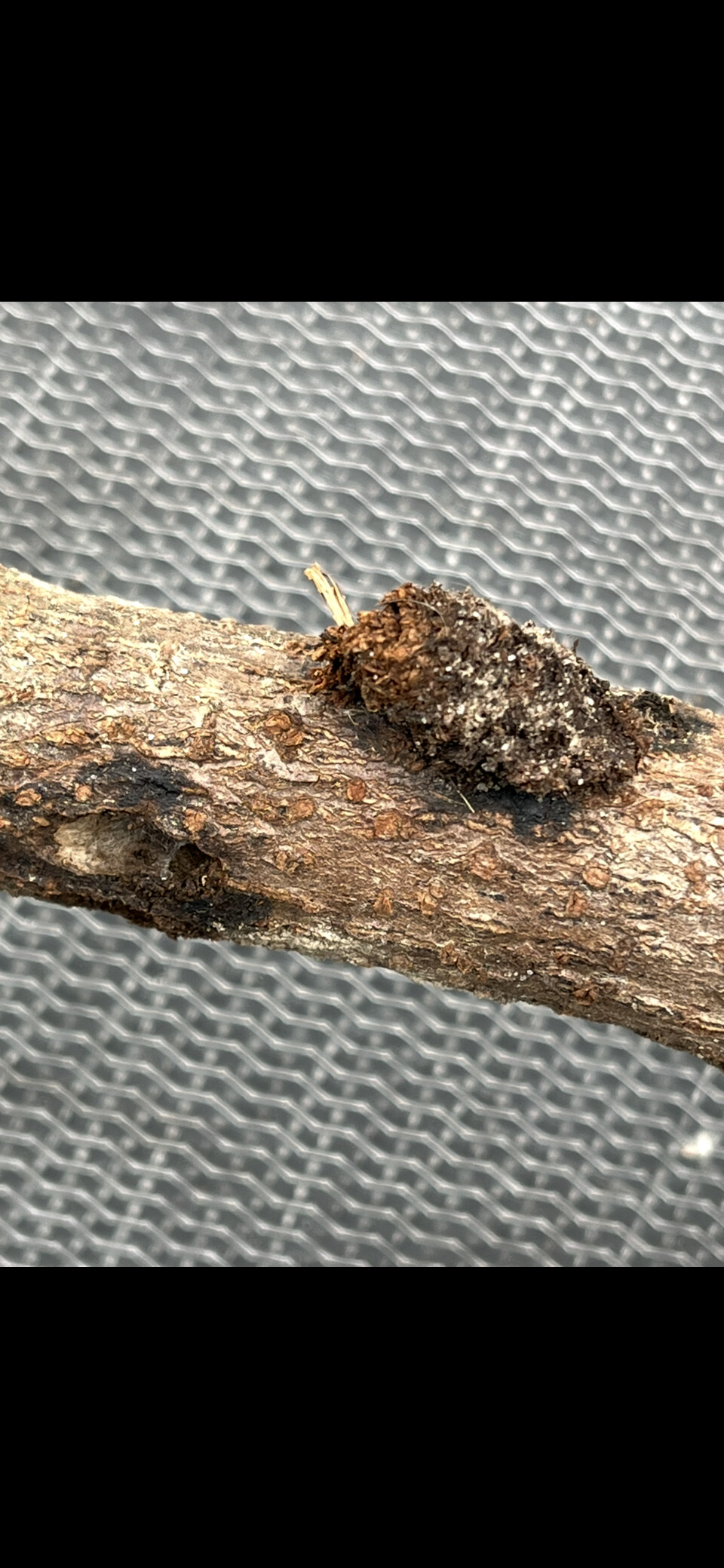
Besides KSDS losses I have lost about 4 trees with a single variety each due to persimmon borers (Sannina uroceriformis) and have about 6-8 with severe damage with multiple tunnels at the bottom of the trunk. And maybe end up loosing a few of those.
This is another issue that to me is worse than KSDS and I wasn’t aware of this pest borer, also I think would be good to have awareness about this since I haven’t heard, seen nobody talking about it.
Here are a few pics with the damage, the diameter of the holes is about 1/4”.
I’m a big fan of ChatGPT, but I have to ask – How would it know? What sources would it search, other than this forum?
One problem using ChatGPT is that it does not tell you its certainty. A visiting fried just raised this issue this morning. We asked ChatGPT about it and it responded that it will express degree of certainty only if asked. Otherwise, it talks like it knows everything for sure.
Can you go back to ChatGPT and ask (1) source, and (2) certainty?
Sources are a combo of Georgia field trials 1990, several Growing Fruit.org observations and a couple others. It’s clearly in early stages of accuracy as you can spot errors in things you’re familiar with, but overall it’s very interesting to check.
Dar sofiivky and journey appears to be resistant for me. Grafted to a rootstock that had a 3 year old fuyu top die with ksds symptoms and had rejected cardinal, fuyu imoto, and hachiya earlier this spring.
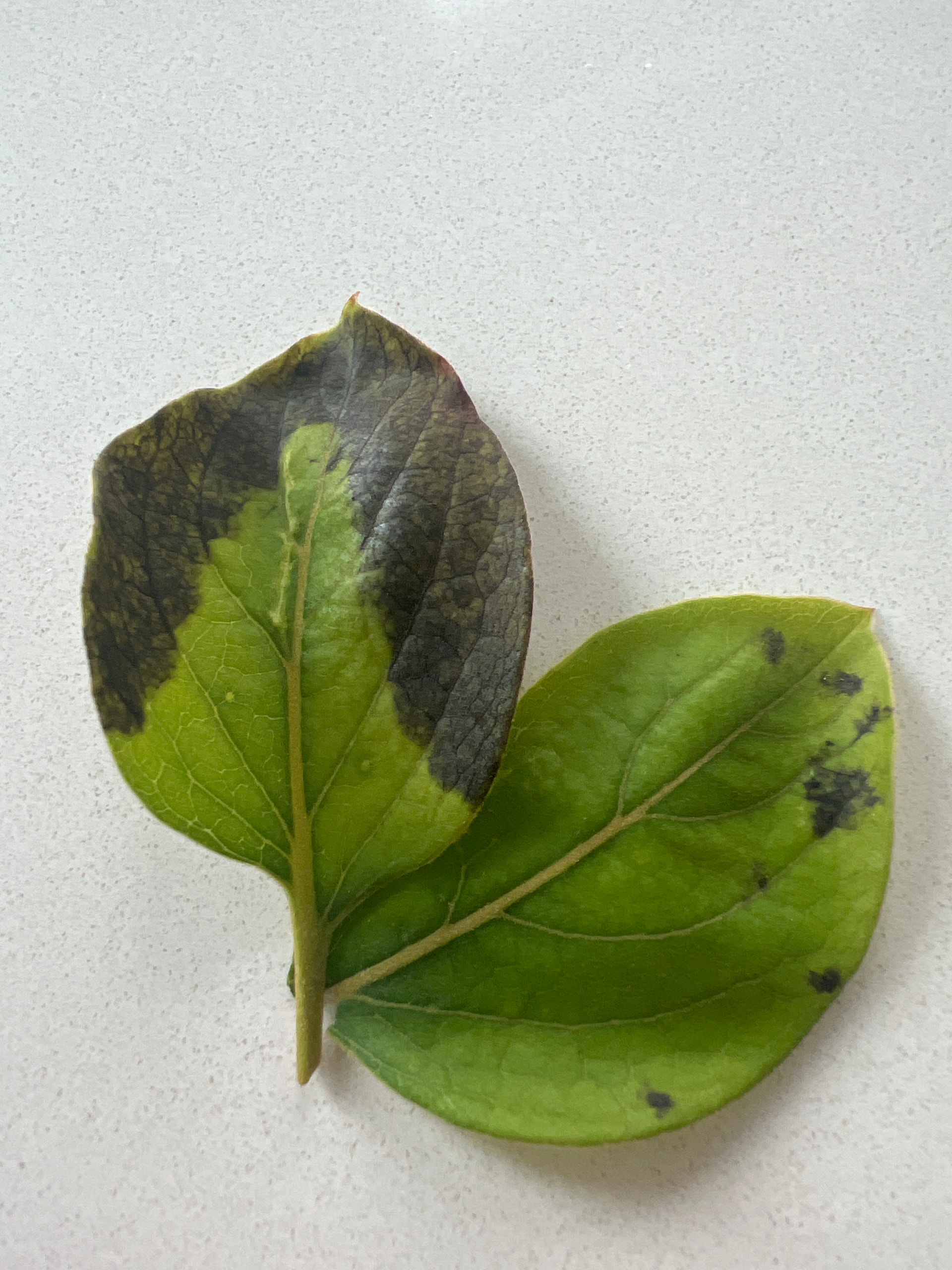
I agree with @tonyOmahaz5 this could be anything but doesn’t look like characteristic KSDS. When you have that, you will know it. It starts at the tip of a branch and works its way down quickly with the leaves all dropping and the branch wilting. Sometimes I’ve had individual leaves have dark veins for other reasons, but if it’s KSDS you won’t have any doubt because it isn’t a subtle condition