My black Pakistan did not make it in the garage while my fig made it in my garage. I had morus nigra make it in my garage before but it was not as cold of a winter as it was last winter.
Most Zone 5 sites would be a cakewalk for most of the rubraXalba hybrids, and probably a lot of pure alba selections.
Buzz Ferver, at Perfect Circle Farm, in VT, offers a number of selections that have proven themselves hardy at his Zone 4 site.
A.J. Bullard and Mike McConkey (Edible Landscaping Nursery) made the initial importation of ‘Pakistan’ from Islamabad… where the coldest recorded temperature is 28F. Dr. Bullard advocated planting with graft union below grade, so that WHEN it froze back, it could resprout from the graft, and not just the rootstock.
I talked to Cliff England at the KyNGA meeting a week or so back… he has been planting almost everything (not just mulberries) he grafts, with graft union below ground, for years.
3 Likes
would that still apply for things not grafted too low?
For example a pawpaw gratfted at about 12 inches?
Scott
I keep my Pakistan Mulberry tree in my garage over winter, right next to my house. It has done well for three years now. I’m in zone 7A.
1 Like
In my experience you can push 2 zones and maybe 3 inside the garage. With my morus nigra I noticed even at -1 with water under the pots it froze inside the garage. If water is freezing Pakistan will be at its limits since some say Pakistan won’t make it past zone 9. I have actually heard reports of Pakistan not making it in zone 9 though. I had mine in the garage zone 5 and it looked like it started to leaf out super early on and then appeared to just stop early on too.
1 Like
In my experience, Silk hope is better tasting than Pakistan. More tart-sweet balanced flavor. Pakistan is mostly sweet with just a hint of tart.
A perfectly ripened Morus Nigra is very hard to beat but they are also hard to pick without squishing while picking. 
Of course, Pakistan has the wow factor in terms of size. I am sure there are some good alba-rubra selections that are similarly as good as Silk Hope.
3 Likes
With my morus nigra they were slow growing which I had an issue with. Also I had to bring them in the garage for them to survive which can get hard if soil is wet. Also it will restrict the size a lot as you will have a very small morus nigra in a pot that is actually movable. I have 100 gallon pots but those all stay outside. Silk hope would only be an option a zone above me. If I moved to the very south of CO I could do that or the Grand Junction area I could do that as southern CO is zone 6 and Grand Junction is zone 7. Those higher zones are in the south or places like Washington and Oregon for some reason. People debate if Illinois Everbearing is a pure Rubra or a Rubra Alba mix and that is what us colder zone folks can grow outside without heavy protection.
1 Like
I think I have a few Illinois Everbearing trees (small ones) in pots here in SoCal. I have a question for you, can you post a few photos of what the fruit is supposed to look like. Since I depend on the seller to send me the correct variety, I’m not sure which one is the right one. I have most of the varieties (22).
Mine are too new for berries sadly.
I should note that Illinois Everbearing is quite the popular variety so these are many pictures of it online such as YouTube.
1 Like
That’s the problem, can’t tell which photos are the real ones.
They vary a bit, but here are some nice specimens.
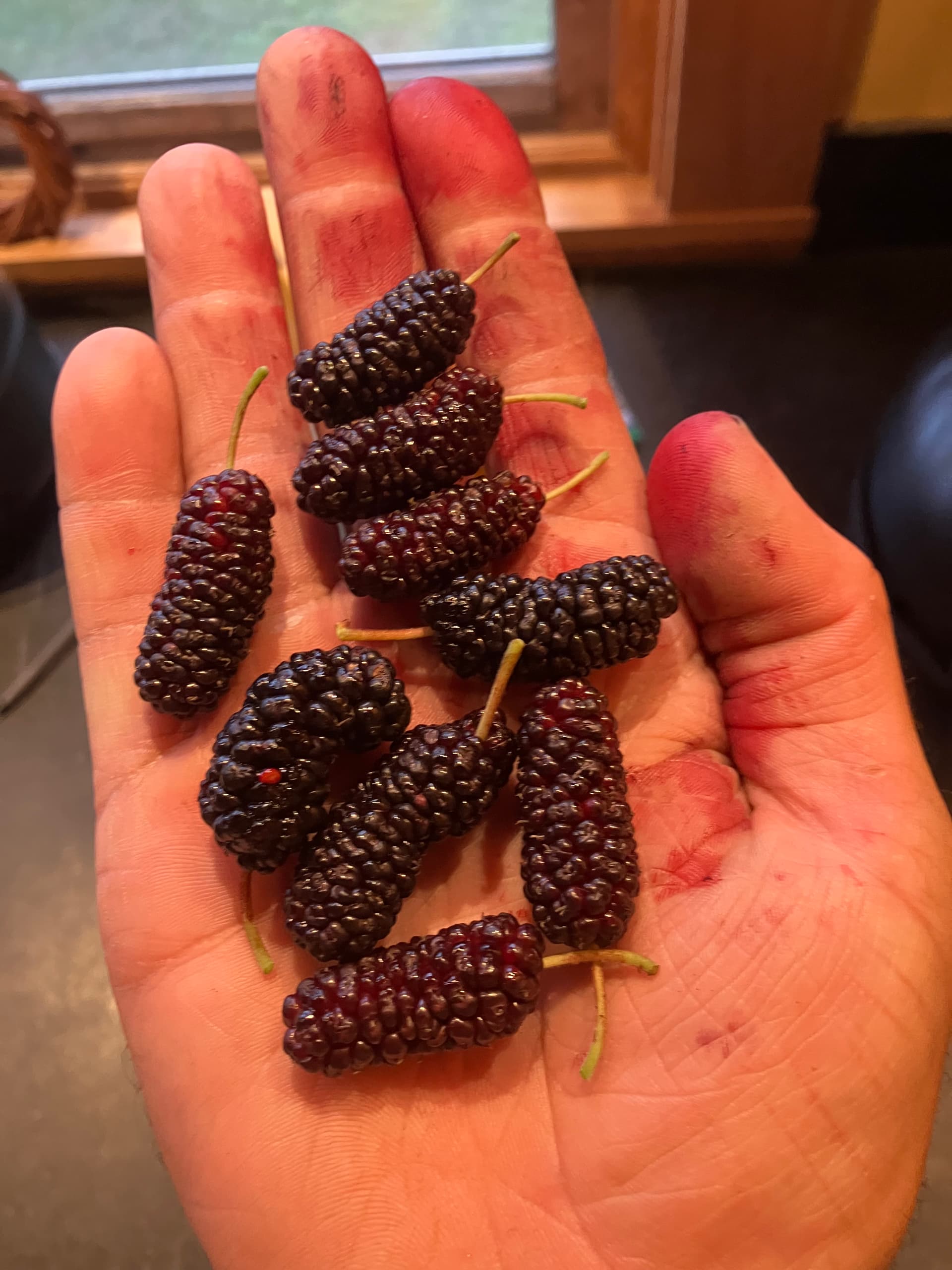
One distinguishing feature is that the berries are a bit stemier than a lot of other cultivars. Maybe it’s the rubra in it, dunno. But when I eat others, I notice the stem a lot less than IE. You can actually eat the droplets right off of the stem, which you can also do with Pakistan, IME. You just bite down lightly and pull the stem and the drupelets come right off. Also the way the drupelets are arranged is somewhat distinct. They’re dense and kind of flattened in one axis.
4 Likes
I noticed you could do that with my Girardi as well. The mulberry fruit would just pull off the stem.
Thanks hobilus. Now I know for sure which is correct. Good to know about the stem. Yes, I eat the Black Pakistan like that. The size of the fruit seems a little longer than the Tice, not as fat as the World’s Best. My Contorted mulberry fruits I picked looked similar but much smaller size.
1 Like
@Chills - IDK. Perhaps Cliff grafts really low to facilitate burying the graft union. I don’t think I’d want to bury 12 inches of stem.
I had Pakistan(from Edible Landscaping) years ago - grafted low, and I followed Dr. Bullard’s advice and planted it below grade. Froze to the ground three winters in a row… would regrow 8-10 ft - and set fruit in fall, far too late to ripen before winter. I dug it up, stuck it in a pot, with the intent of taking it to my Dad, who lived on the z7/8 interface… but misplaced it somewhere.
Silk Hope has been my favorite rubraXalba hybrid for a number of years, but Illinois Everbearing, Lawson Dawson, Stearns, and my own ‘Corral’(which may be an IE seedling) are all quite good.
I eat mulberries stem and all. Life’s too short for me to worry about that tiny little thing. ONE time I set out pinching/snipping stems from berries to make a pie…quickly decided that was for the birds.
Oh, and those little ants that I frequently find on my berries lend a minty, tingly taste sensation.
7 Likes
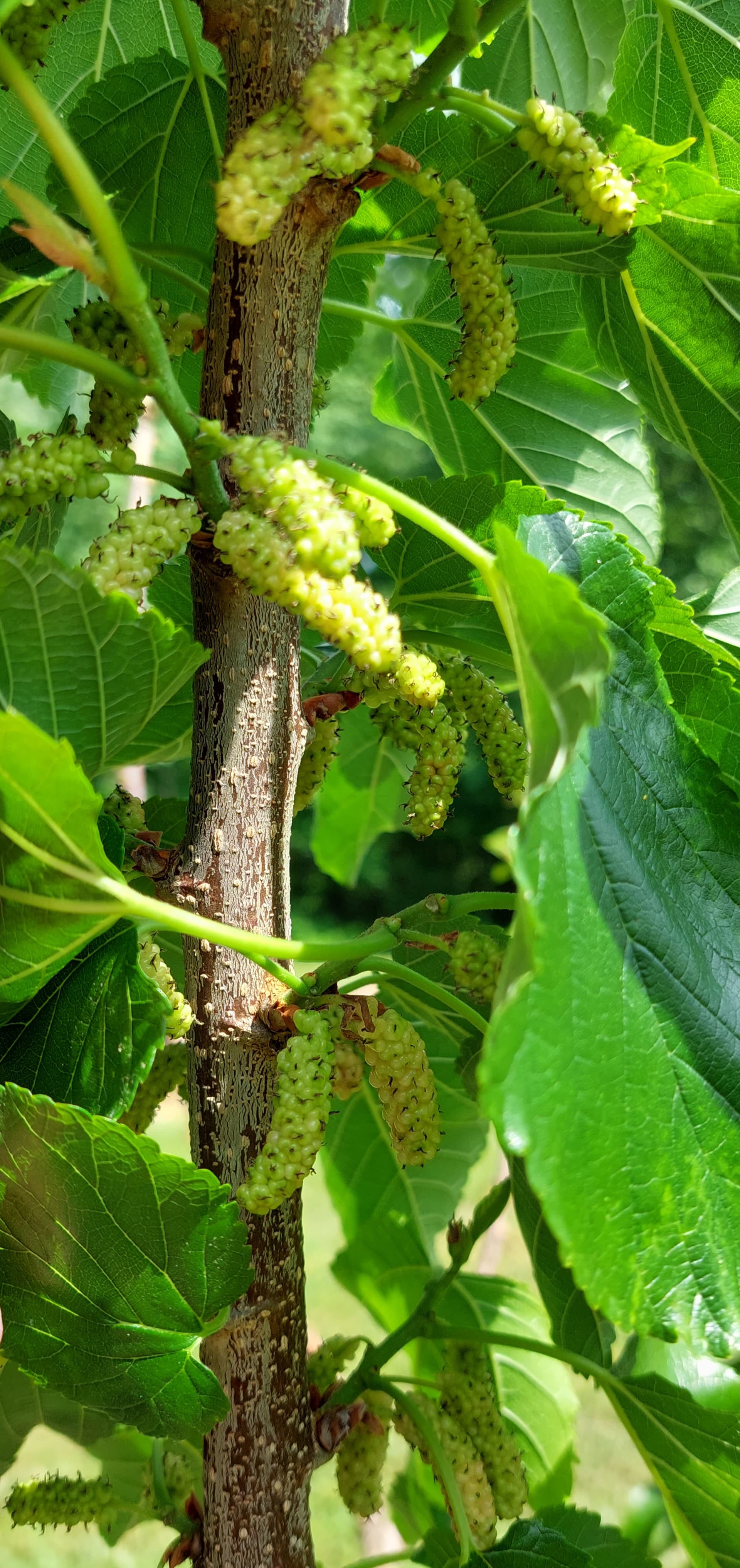
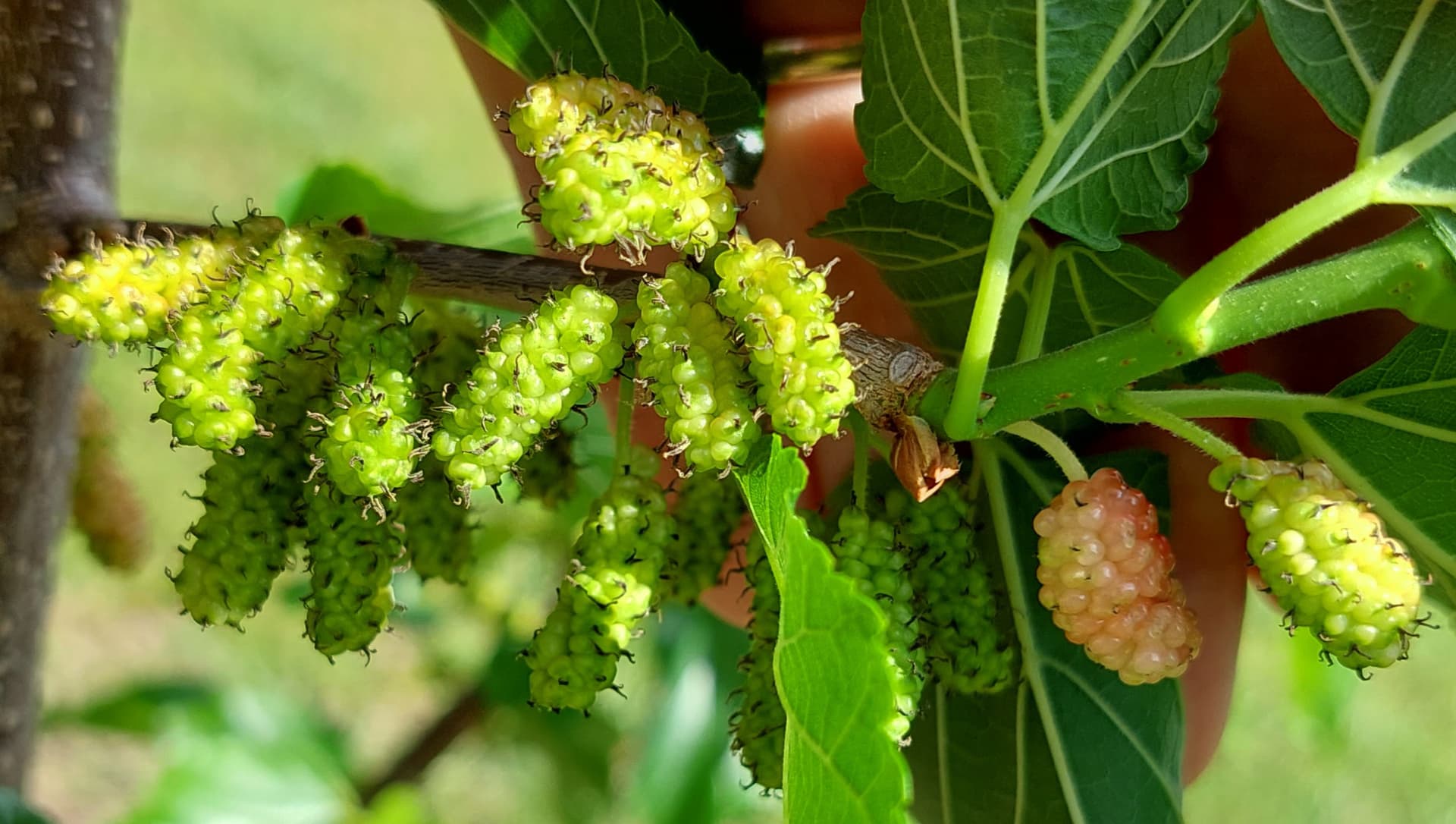
Formic acid is quite tart.
1 Like
being in zone 6 mine are just leafing out. here’s rubra, my personal favorite despite everything.
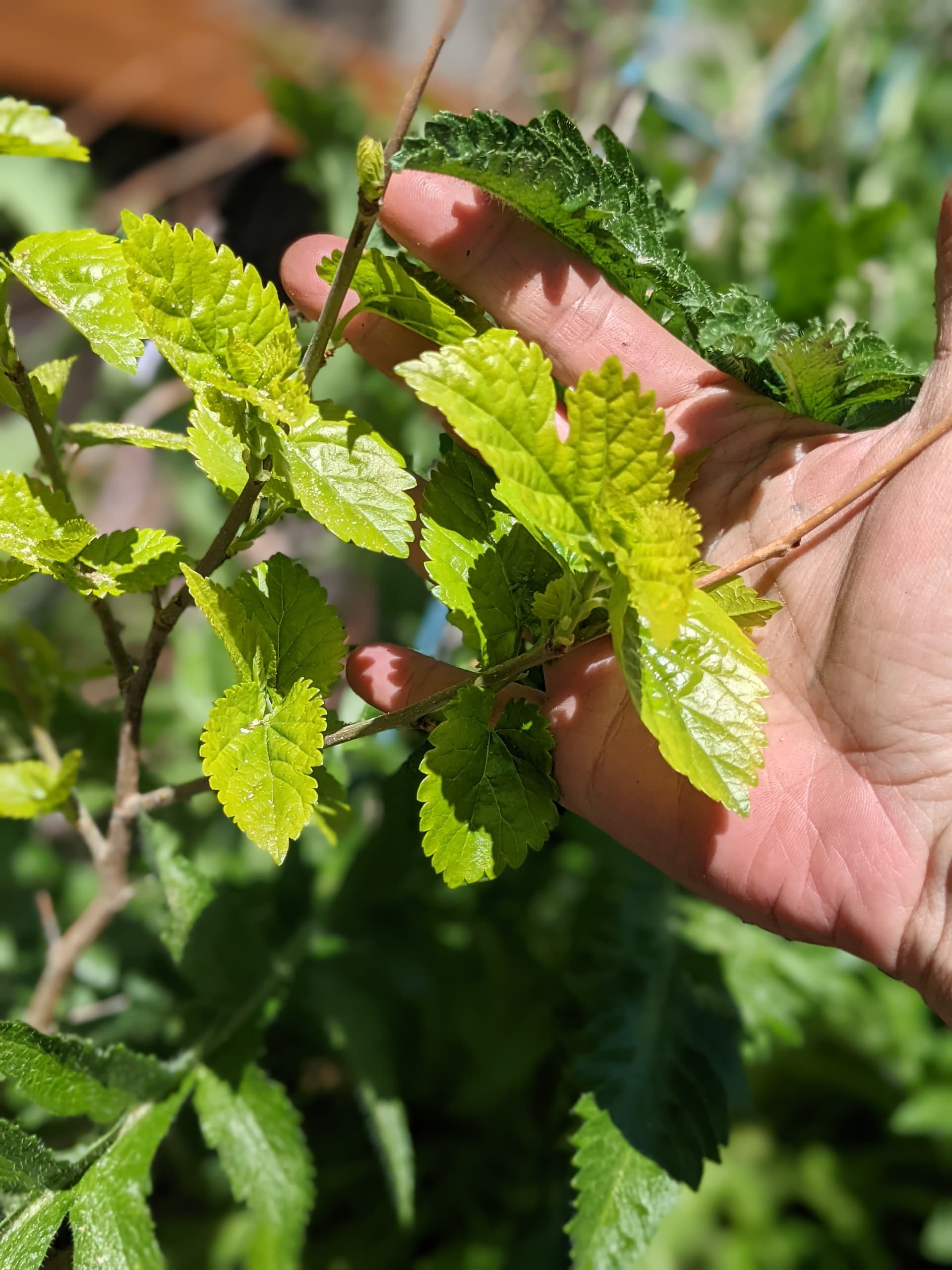
it’s a sucker from a very old tree from the house I grew up in- kindly allowed to be dug out by my sister, by the current occupants. the house is next to a stone Big House from 1650 ish. that house was owned by a man who put in alba trees to try to grow silk. the house I grew up in was once slave quarters- the house foundation dates back to the 1600s (house itself is from the 50s) and there’s orchards of all sort around it. the slaves were given all the native trees they could dig up, to replant by this house and get them away from the “pure” alba orchard he started. they had a lot of stuff like this that they were allowed to salvage, to have their own food crops.
the patch of rubra there has been there as long as anyone can remember. they’re certainly crossed in with some alba at this point but the guy was adamant that slaves couldn’t pollinate or use anything from that orchard, so I assume it’s all from natural pollination (the big house orchard was cut down in the 1700s, when the silk failed and a Quaker bought the property)
the red mulberries, pawpaw, persimmon and hickory trees at the slave houses are all old lines and delicious- I grew up eating these and to me they’re the best. childhood bias there.
just a little bit of history on alba/rubra. a little link explaining the region’s mulberry: https://philadelphiaencyclopedia.org/essays/silk-and-silk-makers/
I grew up well away from Philly as a kid, very rural until I was a teen. coal country, carbon county. but the rich people up into that area were still caught up in the silk frenzy.
4 Likes
I got a big Pakistan mulberry and it died back to a few inches above the graft the first winter. I don’t think there has been any damage in the few years since though.
1 Like
I have some zone 3 property and interested in Mulberry varieties that might grow there. I found Trader variety and would like to find others.