I’m curious if there are any new varieties low in annonacin
1 Like
General consensus is this doesnt matter. The amounts are already very low
1 Like
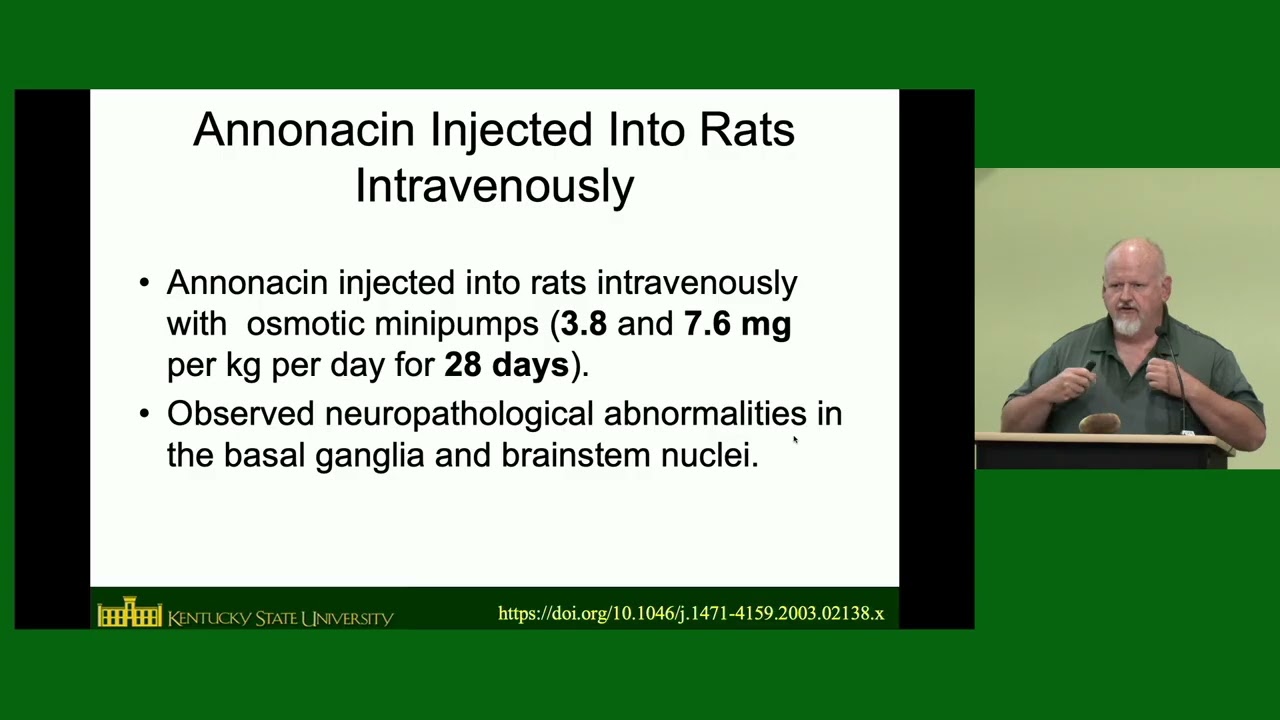
Annonacin concentration in pawpaw (Asimina triloba) can be accurately determined by spectrometry. The health risk can then be determined by comparing the average quantity per fruit to the lifetime limit prescribed in the treatment of cancer cells injected with annonacin [Frost, 2022].
To date there is no publication that details annonacin concentration in more than two A. triloba cultivars. This might be an interesting project to carry out with the cultivars being amassed at @AFFN .
6 Likes
I’ve been curious how much our taste buds can guide us to low annonacin varieties. Some wild pawpaws have bitter skin, others have non-bitter skin like an apple you can just bite into. I assume the non-bitter skins are very low in annonacin.
2 Likes
@carya
The Annona Genus is characterized by the production of annonacins in the metabolic pathway of sugars. By species (not shown for cultivars), sweeter fruit pulps are correlated with higher annonacin concentration. I’ve not read anything regarding the proportion of annonacin to alkalines in A. triloba fruit skin, nor the relationship between annonacins and bitter flavors in A. triloba.
5 Likes
That’s sad, I’ve long hoped with no basis that carya’s hypothesis that the annonacin might correlate with the unpleasant flavors might be true.
At least I’m not planning to be drinking Annona tea.
5 Likes
@Richard
I could have sworn KSU published an article claiming to show the concentration of acetogenins in at least a dozen varieties of pawpaw. I’ll see if I can dig that up…
However! All this talk of “low toxin” varieties is probably moot, as rootstocks influence phytochemical production, & we have no standardized pawpaw rootstocks. The reported concentration of toxins for pawpaw varies wildly even between trees grafted with the same variety.
We need to compare varieties grafted to the same stocks to identify the low toxicity ones, as well as whether that truly correlates with any particular flavor.
Edit: struggling to access the article atm, but I think it’s cited in this mortality test pdf from some of the same authors (which I recommend taking with a HUGE chunk of salt):
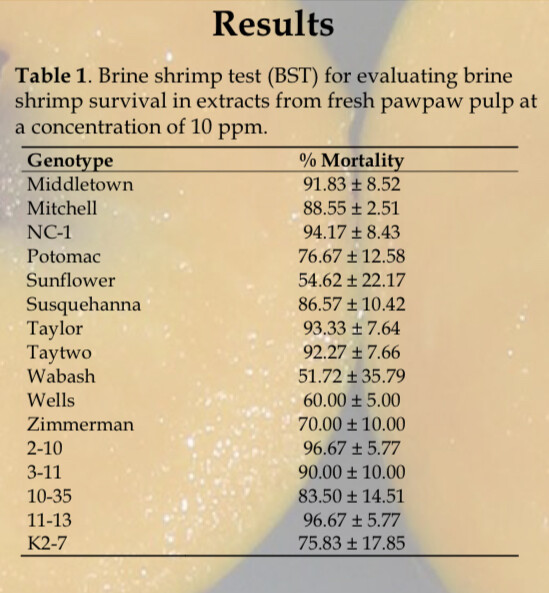
https://www.kysu.edu/wp-content/uploads/2017/10/Lowe-KAS-2008-Cultivar-Aceto-Variation5.pdf
4 Likes
This doesn’t help much, because the cell-toxin annonacins are a subgroup of them.
There’s no viable publication on this subject. The results of all KSU studies on pawpaw have been abandoned by leaders in the research community, and efforts to establish new reference data began at the USDA about 2 years ago.
4 Likes
That’s good to know. Sounds like we were skeptical of KSU’s work for different reasons. Is the USDA addressing the rootstock-limitations of pawpaw research I brought up above?
@DijonG
Since there are no viable studies of annonacin concentrations in pawpaw cultivars, how can there be viable information on concentration variation by rootstock?
1 Like
@snarfing
The data regarding annonacin concentrations in Annona species comes from the pharmaceutical industry. It is not a statement about human health risks, but rather which species are cost-effective for the production of the drug.
3 Likes
yeah but from what ive heard the amount we digest from the fruit is pretty low, no data ive seen on leaves/skin.
When it comes to human health risk, I’ve no interest in gossip. The data on pawpaw are inconclusive. Regardless, whether or not to eat the fruit will always be a personal choice.
3 Likes
Its from the ksu presentation at this uears paw paw conference…hardly gossip
@snarfing
We’ll see. I’ll wait for the peer reviewed publication in a medical journal.
Same.
I’ve only eaten small amounts of pawpaw because of the toxin. There are other fruits that contain annonacin (like soursop) and in countries that consume them frequently there are health issues.
Graviola is also known as soursop and guanábana. The vast majority of the scientific literature on graviola describes its potential health effects—especially its anticancer activity. However, overconsumption of graviola fruit and products made from it has been linked to an atypical form of Parkinson’s disease that does not respond to the standard treatment (l-3,4-dihydroxyphenylalanine or l-DOPA)
More recently, it was shown that chronic consumption of graviola juice can trigger and aggravate the phosphorylation of cerebral tau protein, leading to tau pathologies, including Parkinson’s disease (Rottcholl et al., 2016). This is due to the presence of a class of neurotoxic compounds called acetogenins (Smith et al., 2015). They are present in not just graviola fruit, seeds, and leaves, but also the fruit, seeds, and leaves of other plants in the Annonaceae family (Höllerhage et al., 2015).
I do hope one day there will be a new variety of pawpaw low in this neurotoxin.
2 Likes
4 Likes
It’s true that the data is very limited in basically every respect. I’ll try to list what I can think of
Very few varieties have been tested at all
Very few samples of any variety has been tested and very little discrimination between compounds has been done
Rootstock, soil, and climate may all change concentrations
As others have pointed out, absorbance into the bloodstream is very low and dosages would have to be very high
With all that being said I personally only plan on growing ones that are both good fruit quality and have been measured as being low in these compounds with all the caveats above
Shenandoah, Mango, Potomac, Wabash, Sunflower
These have a variety of different flavors, textures, and ripening times across most of the pawpaw spectrum and I’m content with this
2 Likes
One of the KSU studies showed varying levels of acetogenins even within the same cultivar. I can’t seem to find the full text for it right now.
1 Like
What is the nominal concentration of annonacins in an A. triloba fruit?
What mass of A. triloba fruit is typically eaten in a single consumption event?
What is the expected rate of annonacin absorbance from A. triloba fruit by a USA consumer?
What is the concentration of annonacins in serums injected into human cancer cells of a live patient?
What are the life-time dosages of injectable human annonacin serums for human cancer?