are the varieties up to date or last years?
I had some fruit from Timothy Lane.
The Susquehannas and Atwoods were great. Maria’s Joy were a little smaller, but still tasty. I know some complain about uneven ripening with Atwood, but these had consistent texture throughout.
As for my trees, I had a lot of successful grafts this year, but my Susquehanna and Regulus were most vigorous.
Something that is interesting though…
My two trees that showed signs of blue stem this spring were late to lignify and go dormant last fall. The Lehman’s Delight put out small leaves and croaked, but shot up a vigorous sucker. The Carmelo put out small leaves on the top, but the bottom 2/3 grew out normally. It put a few large suckers out as well that I let grow for now.
Anyway…this fall both trees (Carmelo+suckers and the Lehman Delight rootstock sucker) were very slow to go dormant and yellow again. Most of my trees are completely defoliated now, but those two still have greenish/yellow leaves and they were deep green until a week or so ago.
I wonder if there’s something genetic there that is leading to late lignification, cambium damage, and then blue stem disease symptoms in the spring.
Just found it all interesting.
4 Likes
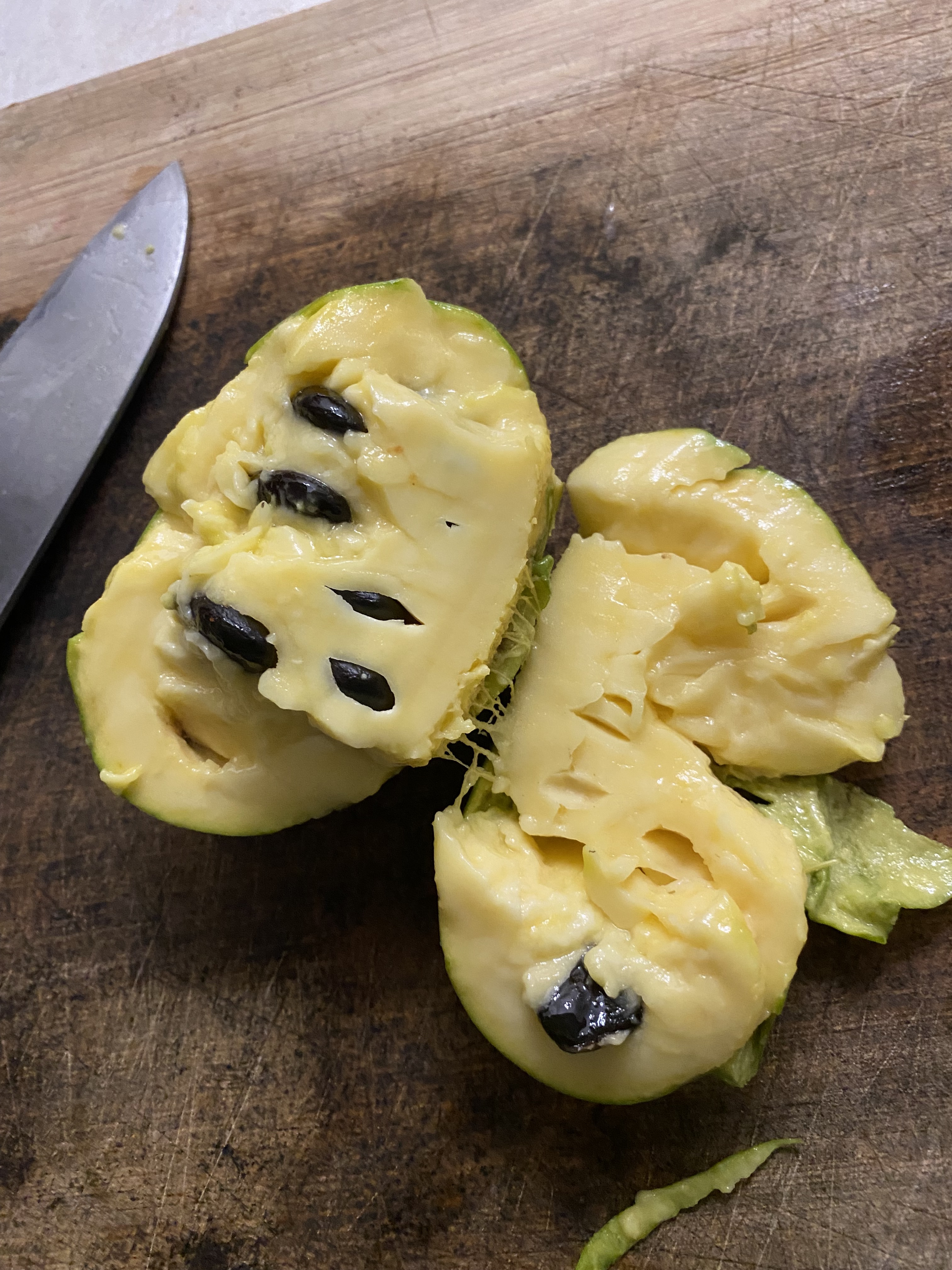
Sole Prince Caspian of the season. It has been my favorite variety of the season. Ripens fully in the PNW. But all varieties I grow ripen here.
The seeds are freestone.
7 Likes
Documented phyllosticta susceptibility
|Cultivar|Status|source|
|Atwood|little|Greenawalt|
|Benson|little|Lowe, Crabtree|
|Chappell|susceptible|Crabtree, Lowe, Powell|
|Mango|somewhat|Lowe, Crabtree|
|NC-1|susceptible|Greenawalt|
|Potomac|susceptible|Greenawalt|
|Shawnee Trail|susceptible|Francino|
|Shenandoah|somewhat|Greenawalt|
|Sunflower|susceptible|Crabtree, Lowe, Powell|
|Susquehanna|somewhat|Lowe, Crabtree|
2 Likes
I have not updated the scion page yet and may have new varieties, will keep you all posted. I am waiting for the trees to defoliate before inventorying.
2 Likes
This is useful, did you compile this?
1 Like
Looks good! Average size around…?
1 Like
We have to figure this BSD issue out. The Universities seem to not care, including KSU.
One grower in GA told me he cuts down BSD symptomatic trees and then topworks the suckers, to good effect. Not sure if the roost system carries BSD or just the stems. Likely the roots also, but we still don’t understand BSD in pawpaw.
4 Likes
Are there any clones which show at least partial resistance to BSD ? If I’m right Willson or Wells was fully resistant but the original cultivar is lost.
1 Like
BSD seems like it is probably multiple different diseases which makes it more complex. Since the symptoms are just that of an immune response
2 Likes
I neglected to weigh it. I’d estimate 250-300g or so. It is still a young tree.
1 Like
BSD is believed to be caused by pseudomonas (bacteria).
1 Like
I think this problem starts with the roots. When the roots begin to rot. Then the problem goes to the stem.
Excess moisture. I have a big problem with the roots of seedlings that I bought from people for further grafting. Almost 50% of the roots have rotted. At first glance, the soil on the surface of the pot is dry and needs to be watered, I water it and this one watering becomes unnecessary and fatal - the leaves turn brown and fall off completely. The plant falls asleep for a whole season or dies completely.
For example, initially the plant grew in packages 10 by 20 cm. The roots are already long and start to climb out from the bottom. Therefore, I transplanted into deeper pots or packages, for example 20 by 50 cm. Such narrow and very high pots of about 1:3 or 1:4 in the ratio of width to height are not sold here, the maximum is 1:2.
Therefore, the narrowest and deepest in height is 20*50 cm. But in such bags or pots the root suffocates (probably). Additionally, I make about 50 punctures with a pencil on all sides of the bag, but even that is not enough…
Perhaps the reason was that I did not use my substrate from the store, but added local soil, perlite and vermicompost to this professional substrate (as well as Osmokot fertilizers and chicken droppings). Where vermicompost can be a source of infection… Now I try to transplant only into a homogeneous professional substrate. Either chicken droppings can also be a source of infection, or its amount was large, which caused a chemical burn to the roots…
And also, about 90% of the seedlings that were dug out of open ground and transplanted into pots fell asleep or died…
2 Likes
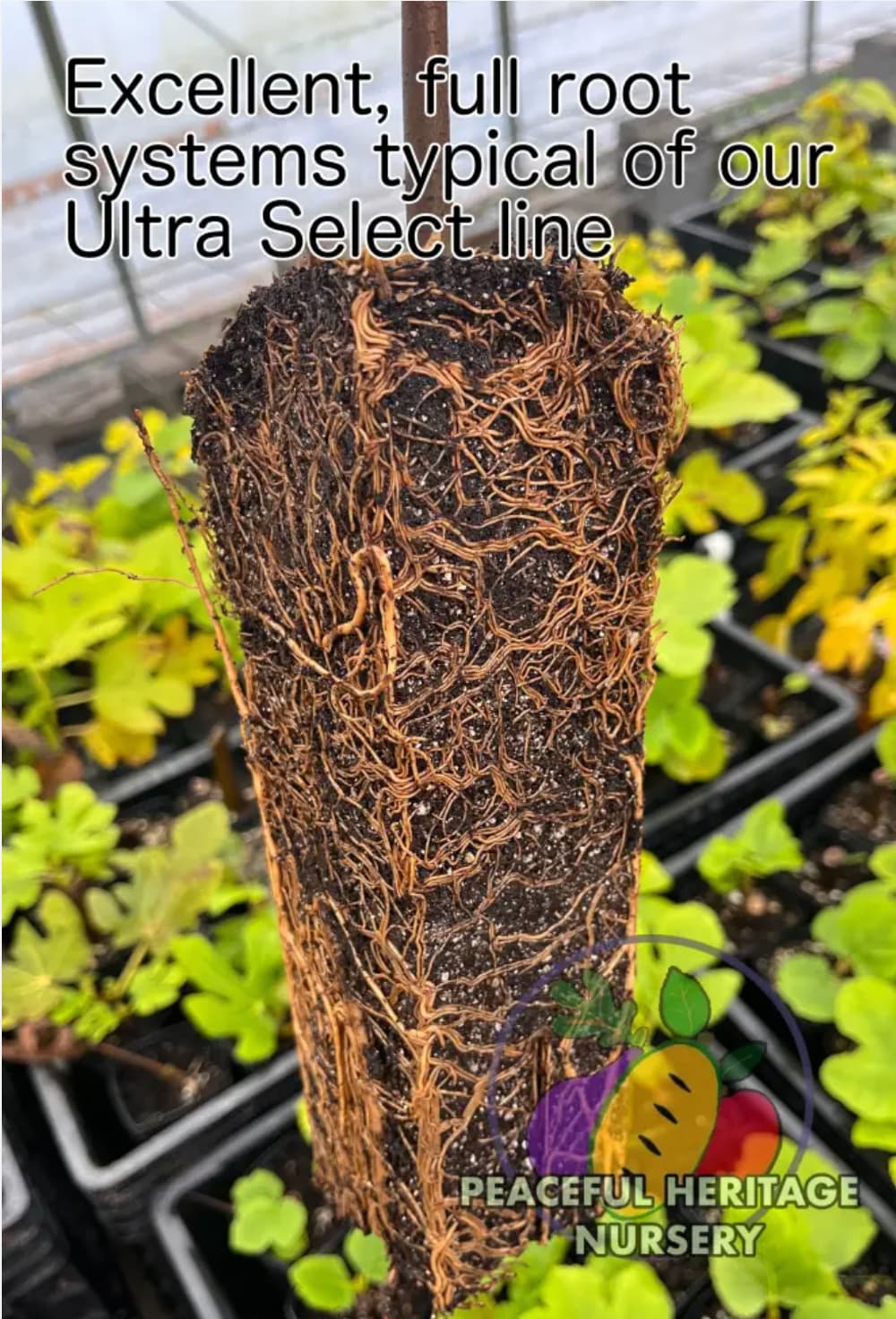
Having excellent soil drainage, both in the nursery and in the field is crucial for pawpaws to have healthy roots. I pulled one of my Ultra Select seedlings out of the pot and shot a photo yesterday. This is what excellent pawpaw roots look like:
14 Likes
BSD bacteria still has to be present somehow for an infection to occur. Poor root health could be a contributing factor that creates vulnerability to infection.
1 Like
What’s everyone’s thoughts on planting holes next to deeper rocks?
We have a lot of ledge and rocks here and my grove is in an 8’x8’ grid. Usually I dig down and can manage to pull out all small to medium (about a foot around) rocks before planting. Today I got into a spot where there’s possibly a huge one on one side…it’s probably about 8-10” down from the surface. I could plant a little off to the side and let the roots go over and eventually around it, but I’m not sure how much of a wall it’s creating below the top of it.
I could move it inside a foot, but I just know the OCD in me is going to drive me wild seeing this tree offset. 
5 Likes
how deep does the rock go? id just dig down further and if it ends not too far its nbd.
If your OCD is ok going vertically out of line that’s what I would do I think, plant the rootball shallow on top of the rock and mound good around it so it has plenty of soil
In a couple years it will have sucked down into the ground and that rock won’t mean anything to it
It’s pretty deep. I was losing light last night and got down to about a foot of rock and there was no sign of me being able to get under it. If I could do that, I’d probably try to make a huge hole and tackle it.
I’d plant over it, but I don’t really want to mound up the surface for a planting at this point in the season. I’ve had new plantings washed out before from excessive rain and snow melt. I have actually never planted pawpaws this late before, but I figured I’d give it a go.
This is all 1st world problems, but I’ll probably go out there later and dig up half the yard and have the wife wondering what the hell I’m doing.
1 Like
…where I use to live, you needed a pick axe to dig any hole…I have a huge 5 foot (maybe 50lb) digging bar I used to pound the rocks in the hole to get them to move (dislodge)…since I moved to my current location, I’ve never had to use it…I recall when I planted my pawpaw patch, I was delighted how easy it was to dig the holes in the location I chose…went down 24 inches with no problems…not like that everywhere on my property but no where like my old location…I think site location plays a large role in future prospects…of course, you have to settle for what you have
1 Like