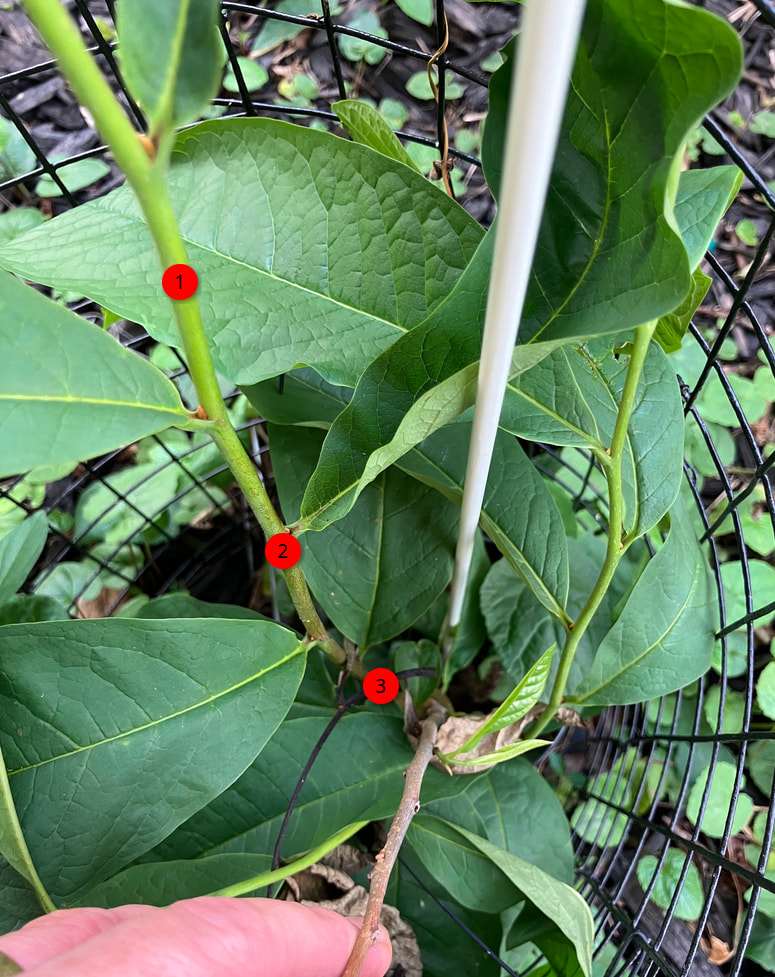
how green(1, 2, or 3) are you grafting to? or do you consider all of this years growth green? i dont know that i can chip bud that new and thin of growth. what would be your next graft of choice on new growth with dormant scion? i still need to park some scion.
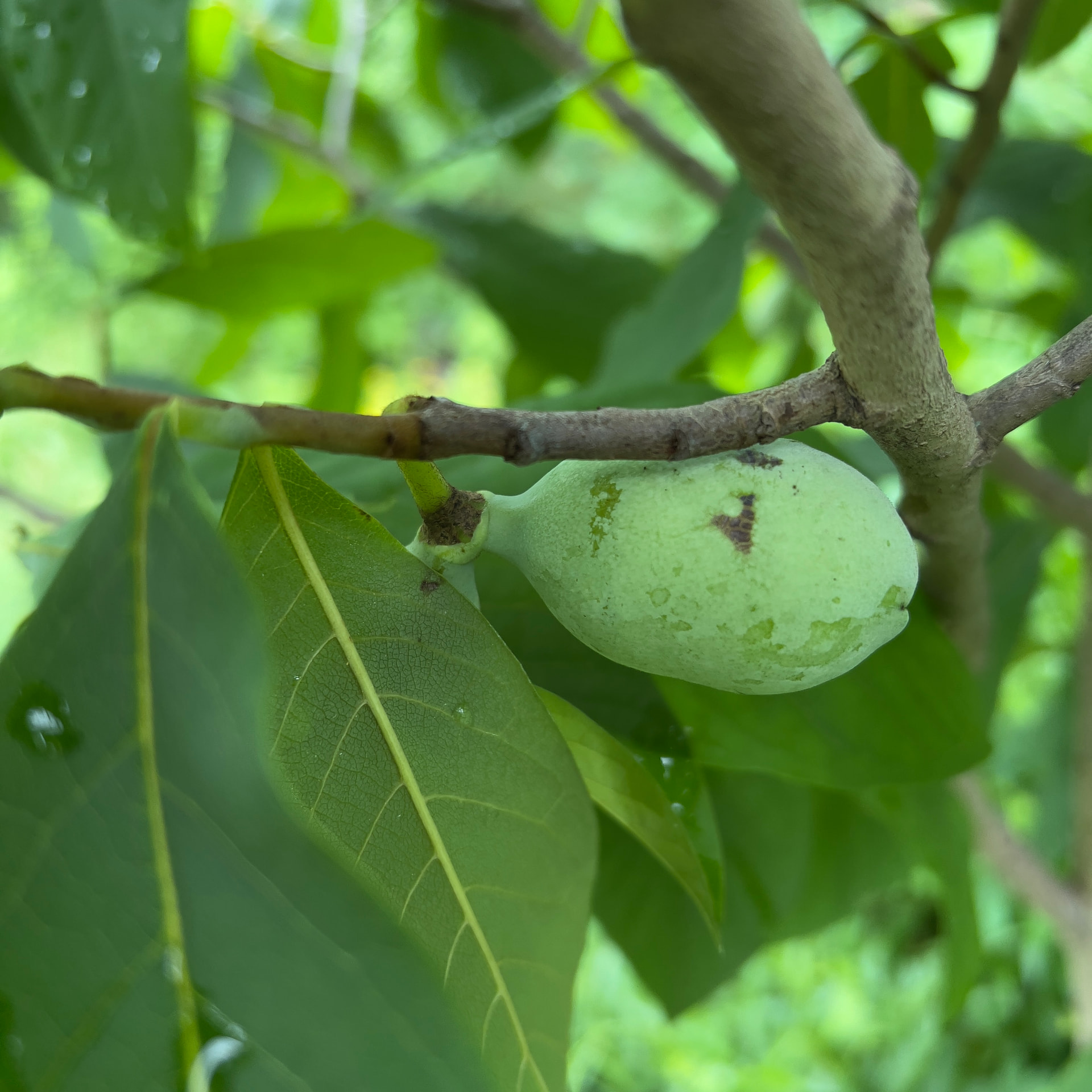
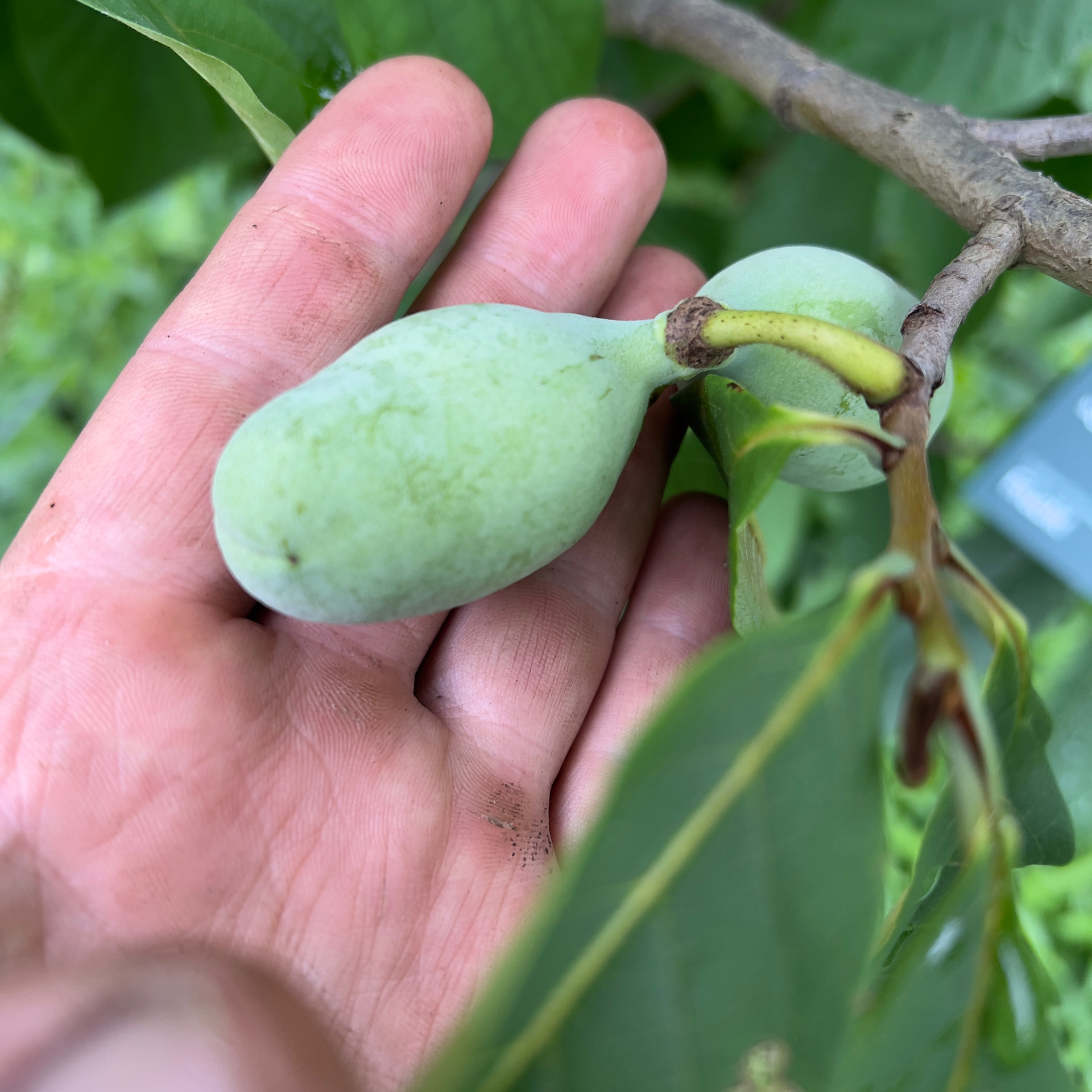
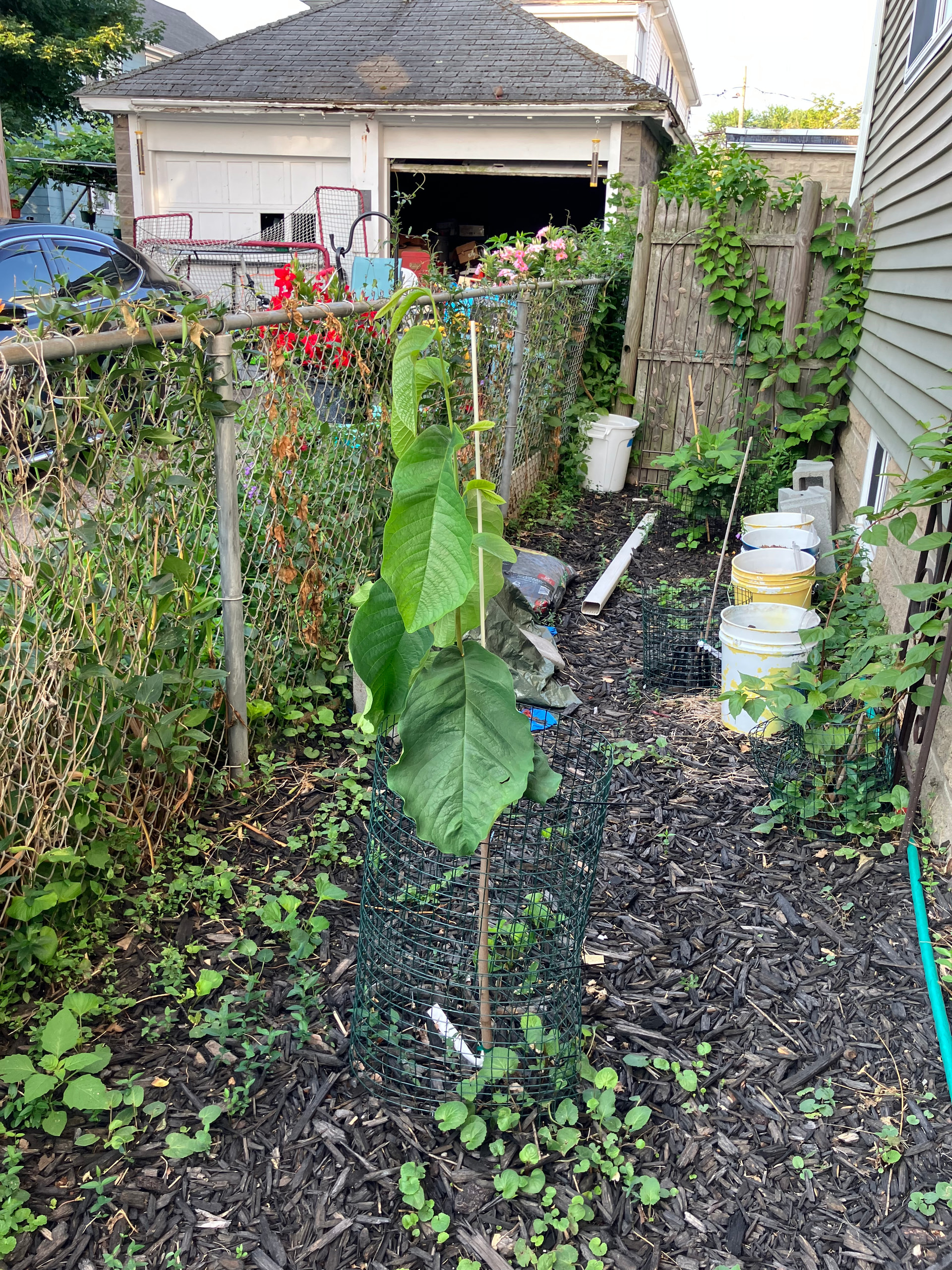
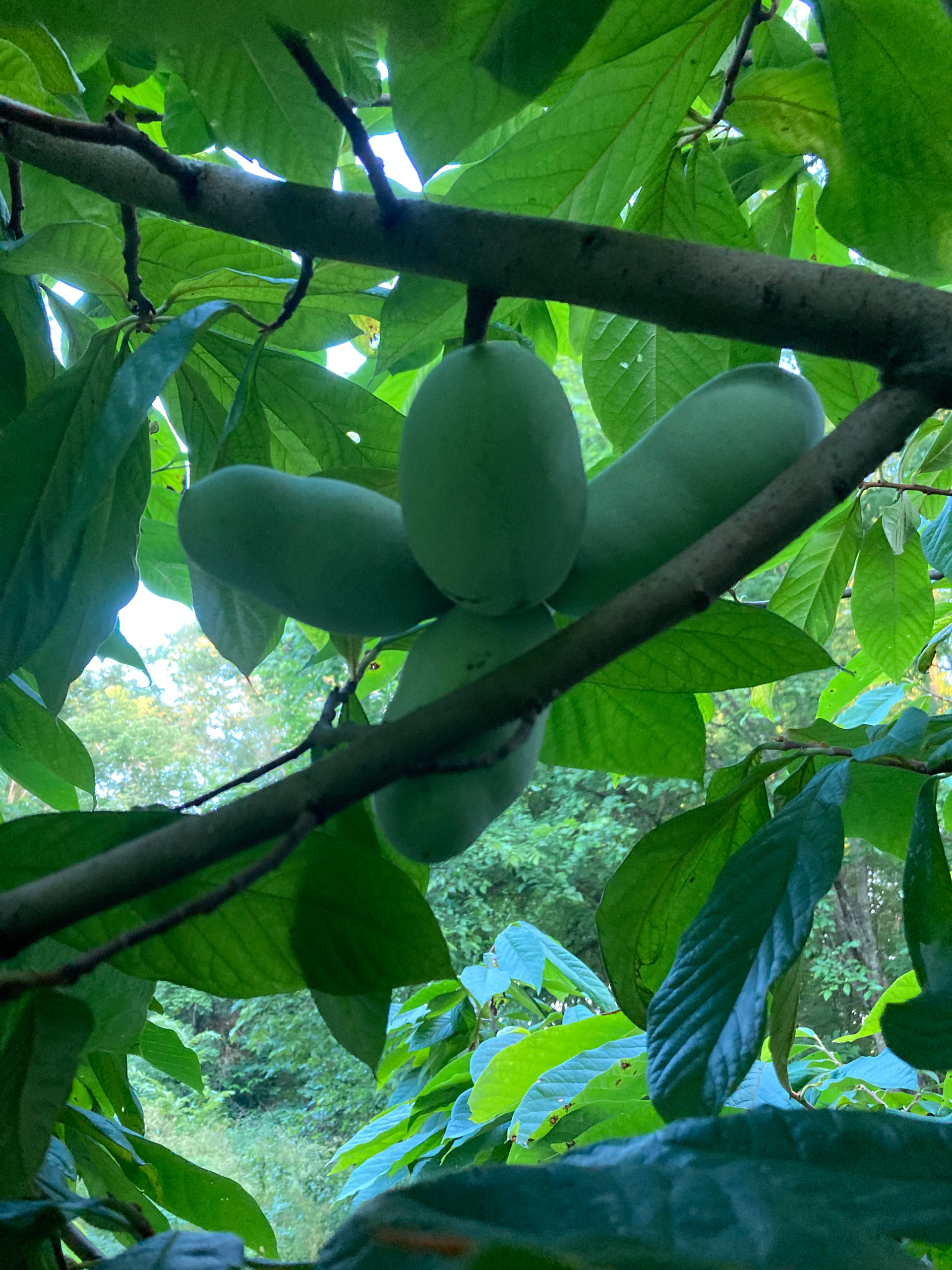
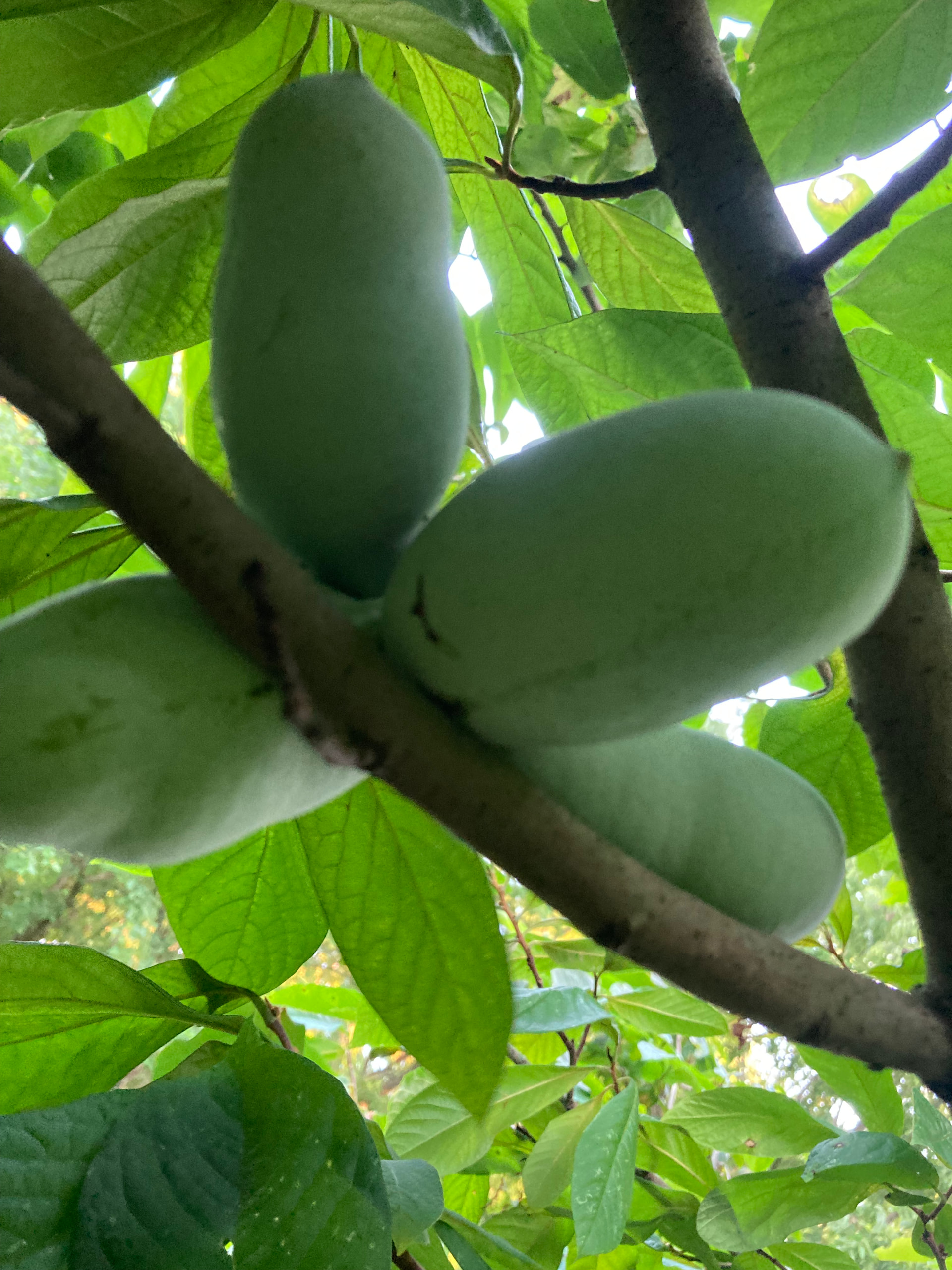
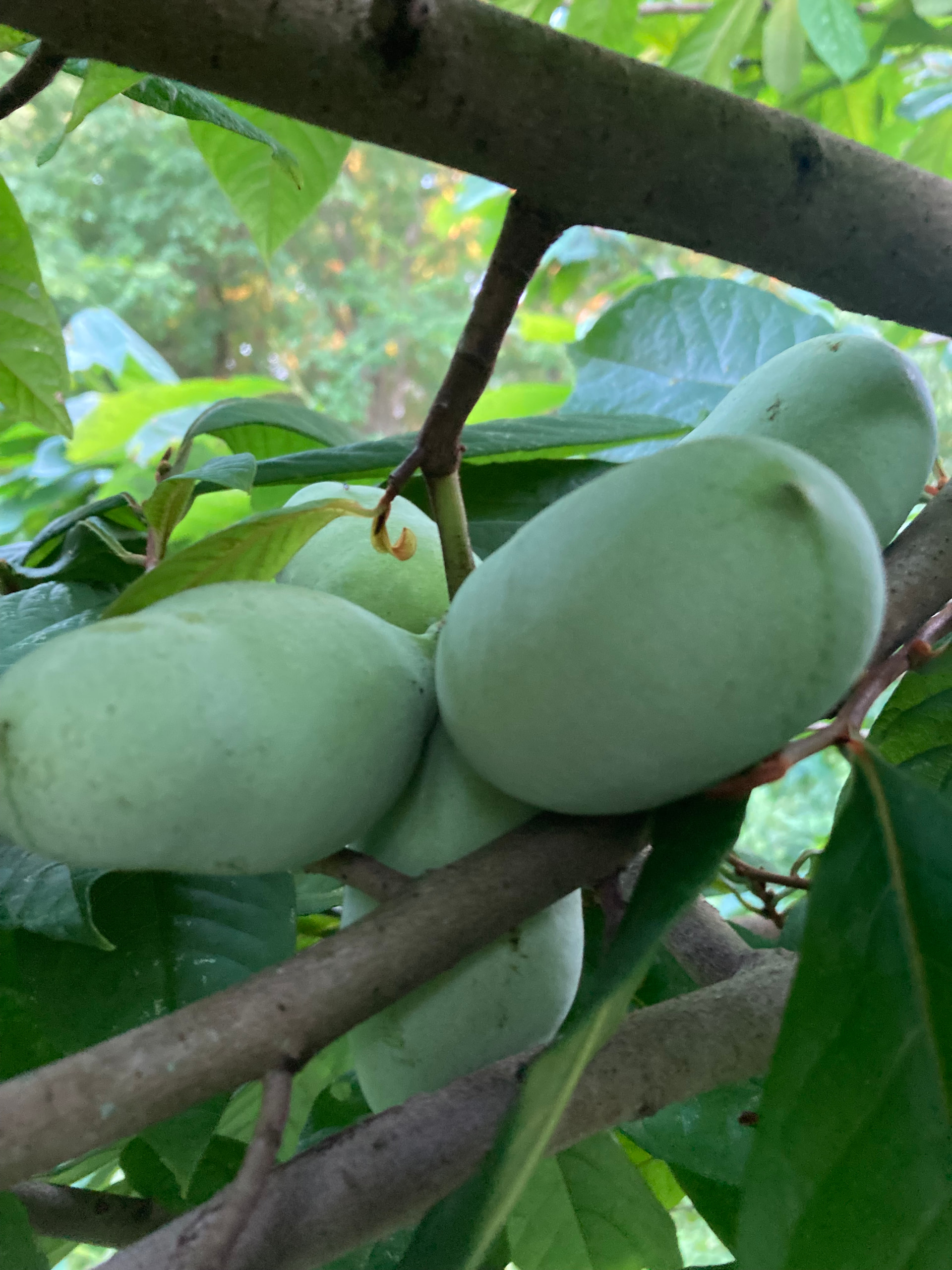
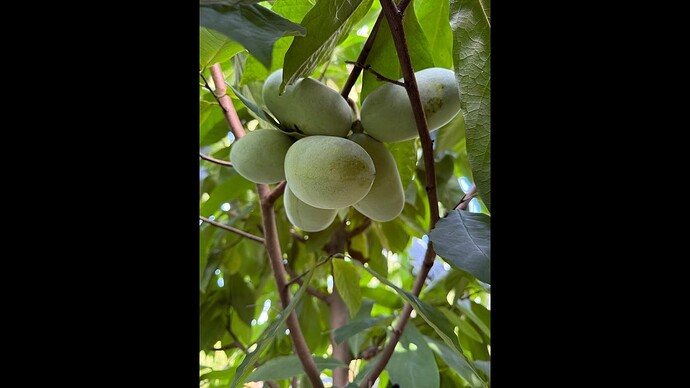
Looking at my potential first pawpaw harvest here, 5 years after planting them.
This one is a sunflower, I also have a prima of same age and size, which hasn’t fruited yet
Those shoots look good to graft to. Do some practice cuts to make the slot to fit the chip on it. Any green shoot you can practice on, not just pawpaw. The main problem is overdoing it and cutting all the way through the scion. Think more gently slicing off bits at a time, not one from cut. It’s ok if it’s a bit too shallow. Also make the chips really thin, as thin as you can. If you cut too deep splint it with a popsicle stick or similar.
All I mean about the calendar is to mark two weeks from the day you do the grafts, that will be the day you can force it. If you are just parking them you can skip that step. It’s not hard to park buds now and force next spring if needed.
@scottfsmith was that advice for grafting dormant scion buds onto green shoots or is that with grafting buds cut from this current year’s growth? Thanks.
I’ve done it for both. For this years buds at leaf bases the bud needs to be plump enough that it is approaching maturity. At least I have not tried with earlier buds. By this time of year there should be some this years buds which can work. The key is using this years green wood, it is much more happy to accept grafts than lignified wood. In June/July I have not had much luck at all budding dormant wood to lignified wood. My rate on greenwood budding on the other hand has been very high, with either last seasons or this season’s buds. Also a green bud to lignified wood will have better odds than last years bud to lignified wood in summer. The more green the merrier in other words.
Dutchess County NY Z6A…effect of April 21 (25F) devastating frost…surprisingly enough, I still have a reasonable pawpaw set… my sweet cherries would not have pollinated anyway as I experienced yet another (8th) year of ZERO cherries due to a Hudson on Mazzard which still has not got thru the vegetative stage to start to make a significant # of blossoms (chose perhaps the worse combination of variety / rootstock) for precocity…yet my Asian pears, which were in full bloom the night of the frost, lost at least 95% of the blossoms leaving a near ideal # of well spaced fruit …go figure…as for apples…gave up on them long ago…way too labor intensive
…
Deep Freeze Caused $30M Crop Loss — Now Hudson Valley Farmers Pushing For Federal Disaster Aid
Hudson Valley farmers who lost much or all of their crops during a devastating spring freeze are renewing calls for the federal government to declare an agricultural disaster, saying millions of dollars in emergency relief are urgently needed to keep many family farms afloat.
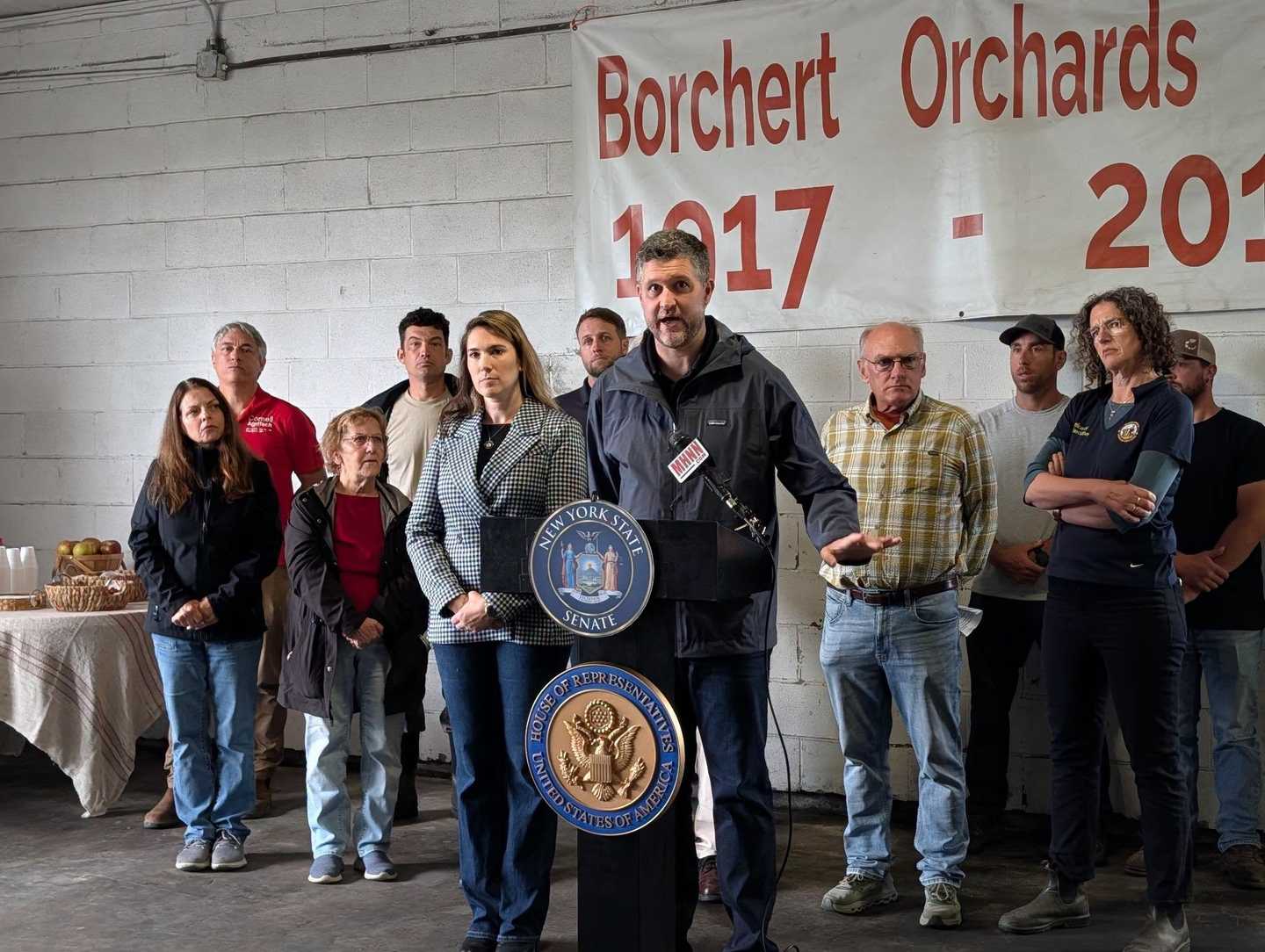
Rep. Pat Ryan speaks during an event held Tuesday, July 7, at Borchert Orchards in Marlboro to urge the federal government to approve disaster funding for Hudson Valley farmers.
Famers from the region gathered Tuesday, July 7, at a third-generation orchard in Ulster County to relay a message to the federal government that without immediate disaster relief, many farms may struggle to recover from a spring freeze that destroyed millions of dollars worth of crops.
Congressman Pat Ryan, State Sen. Michelle Hinchey, Ulster County Executive Jen Metzger, local lawmakers, and growers from more than 20 farms held the press conference Tuesday at Borchert Orchards in Marlboro, calling on the US Department of Agriculture to approve a Secretarial Disaster Designation for New York.
The designation would allow farmers to access low-interest emergency loans and other federal assistance after an unprecedented late-April freeze caused an estimated more than $30 million in agricultural losses statewide.
The damage stretched across the Hudson Valley, including farms in Dutchess, Orange, Ulster, Putnam, Sullivan, Westchester, and Rockland counties, with many orchards and specialty crop operations losing between 15 and 100 percent of their harvest.
“The frost this spring was absolutely devastating to our farmers and growers in the Hudson Valley. Hearing and seeing the damage firsthand makes clear we need urgent action,” Ryan said, adding, “One of our apple growers told me they lost close to 90 percent of their crop.”
At Borchert Orchards, owner Stephen Borchert said between 70 and 90 percent of the farm’s orchards were damaged by the freeze.
“If you’ve farmed long enough, you know every season brings its challenges. But what happened on April 21st wasn’t just another tough year. In more than 40 years of farming, we’ve never seen a freeze event cause this kind of widespread damage,” Borchert said, continuing, “Walking through our orchards the next morning was one of the hardest days we’ve ever experienced on this farm.”
Farmers said the freeze arrived after an unusually warm start to spring caused fruit trees and other crops to bloom weeks earlier than normal, leaving them especially vulnerable when temperatures plunged below freezing.
Jeff Crist, owner of Crist Brothers Orchards in Walden, said some varieties suffered complete losses despite using frost protection equipment.
“The damage ranges by site and variety from 100 percent loss, to a partial crop with frost scarred apples,” Crist said, also adding, "A dedicated state fund like this would give farms an important safety net when weather events like this one hit.”
Meanwhile, Porpiglia Farms in Marlboro said it expects to harvest only about 25 percent of a normal crop this year.
Owner Domenic Porpiglia said expenses such as irrigation, pest control, pruning, and labor remain largely unchanged despite dramatically lower production.
“The farm faces substantially reduced revenue while many of the same operating costs continue,” Porpiglia said.
He went on to say, “While low-interest loan programs may provide temporary assistance, they are not the solution many growers need. Taking on additional debt does not address the losses already incurred and only increases the financial burden on family farms. Farmers need direct disaster relief and immediate financial assistance to recover from this catastrophic event and continue producing food for our communities.”
Hinchey said the freeze exposed gaps in existing federal assistance programs, particularly for small and mid-sized specialty crop growers who often lack adequate crop insurance.
She is also pushing legislation to create New York’s Farm Security Resiliency Grant Program, which would establish a state grant fund to help farmers recover from extreme weather events that are becoming more frequent.
The event came after Ryan, alongside US Sens. Chuck Schumer and Kirsten Gillibrand, sent a letter to USDA Secretary Brooke Rollins urging her to quickly approve New York’s disaster request. Gov. Kathy Hochul, Dutchess County Executive Sue Serino, Orange County Executive Steve Neuhaus, and other local leaders have also backed the designation.
Lawmakers are asking the USDA to approve New York’s request for a disaster designation covering primary disaster counties including Dutchess, Orange, Putnam, Sullivan, Ulster, Westchester, Albany, Columbia, Erie, Greene, Niagara, Onondaga, Schuyler, Chautauqua, and Yates, along with numerous neighboring counties.
According to the USDA’s 2022 Census of Agriculture, New York ranks second in the nation for apple production and third for grapes, making specialty crops a major part of the state’s agricultural economy.
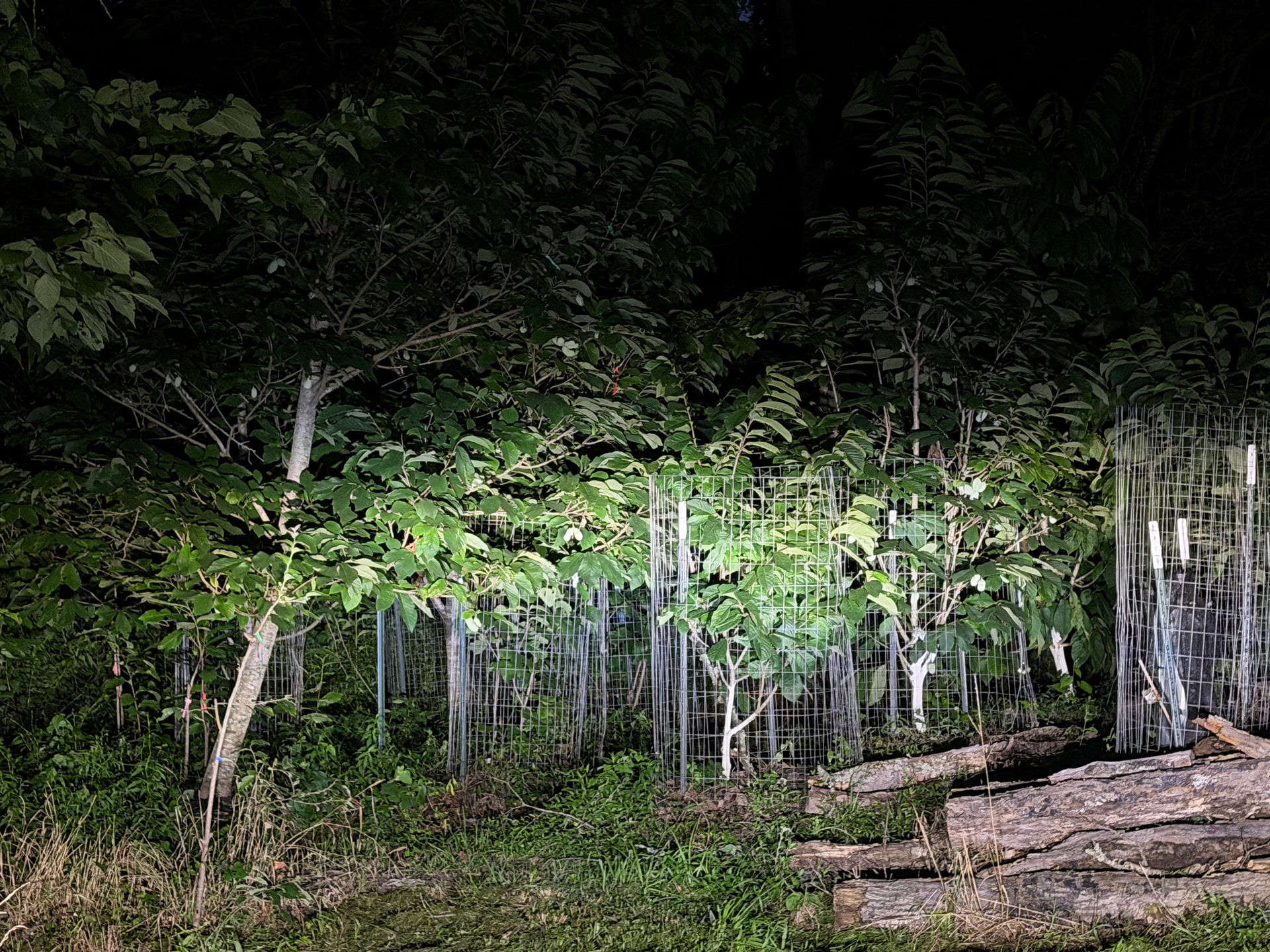
I noticed that the LED lights from my ATV light up the fruit on my Pawpaw trees at night. I even found hidden fruit on bushy tress I didn’t know were fruiting. Pretty.
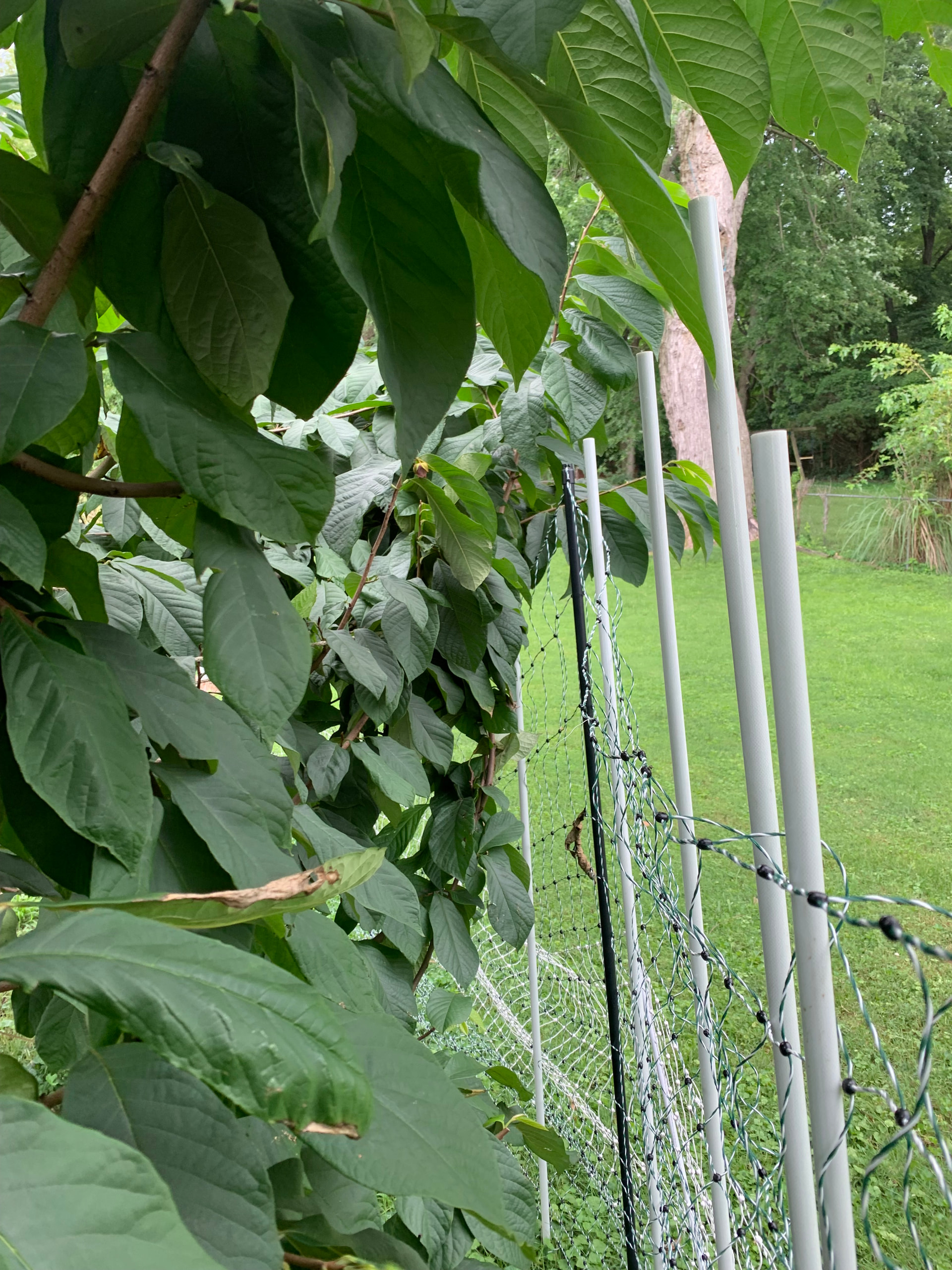
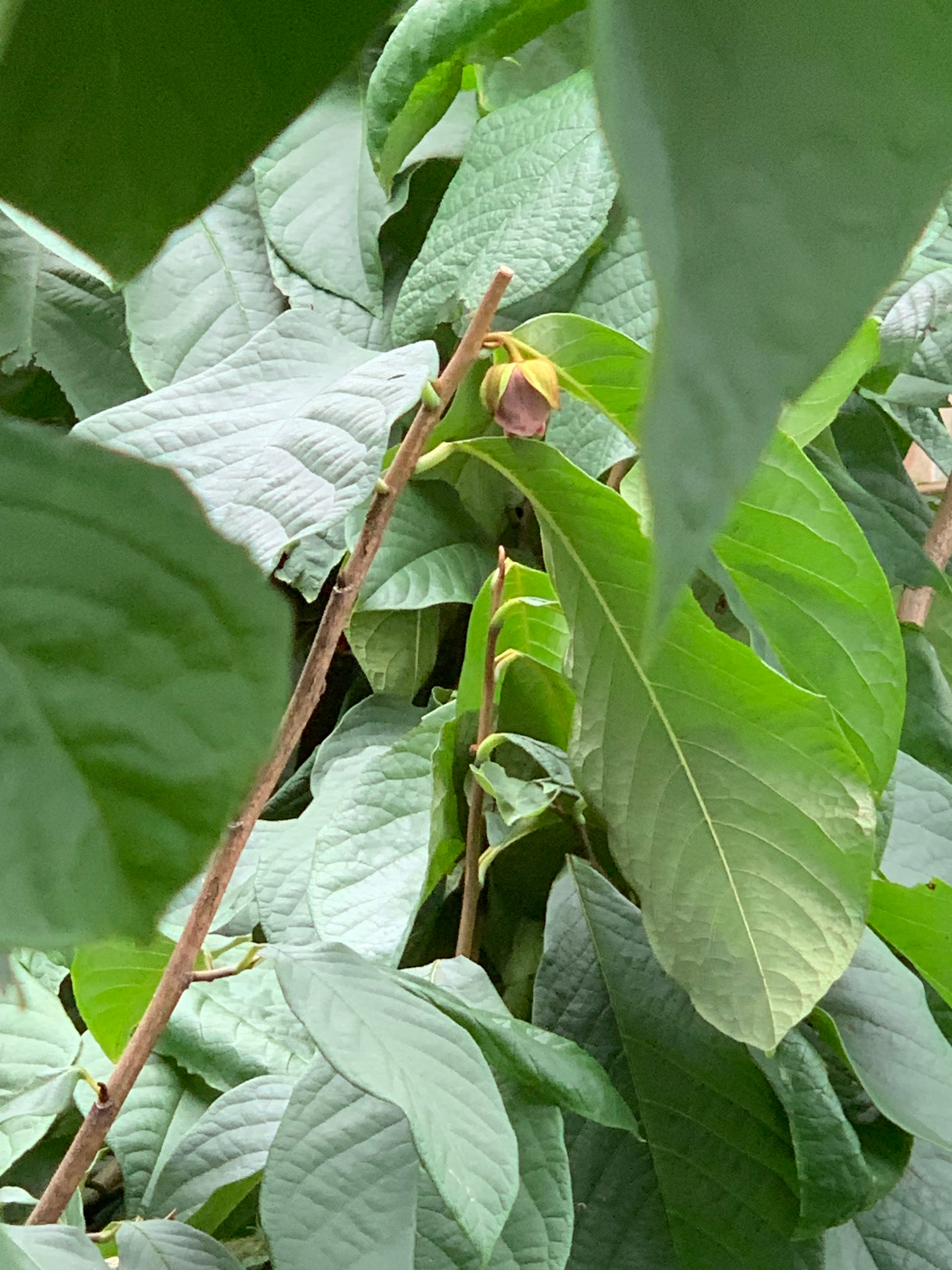
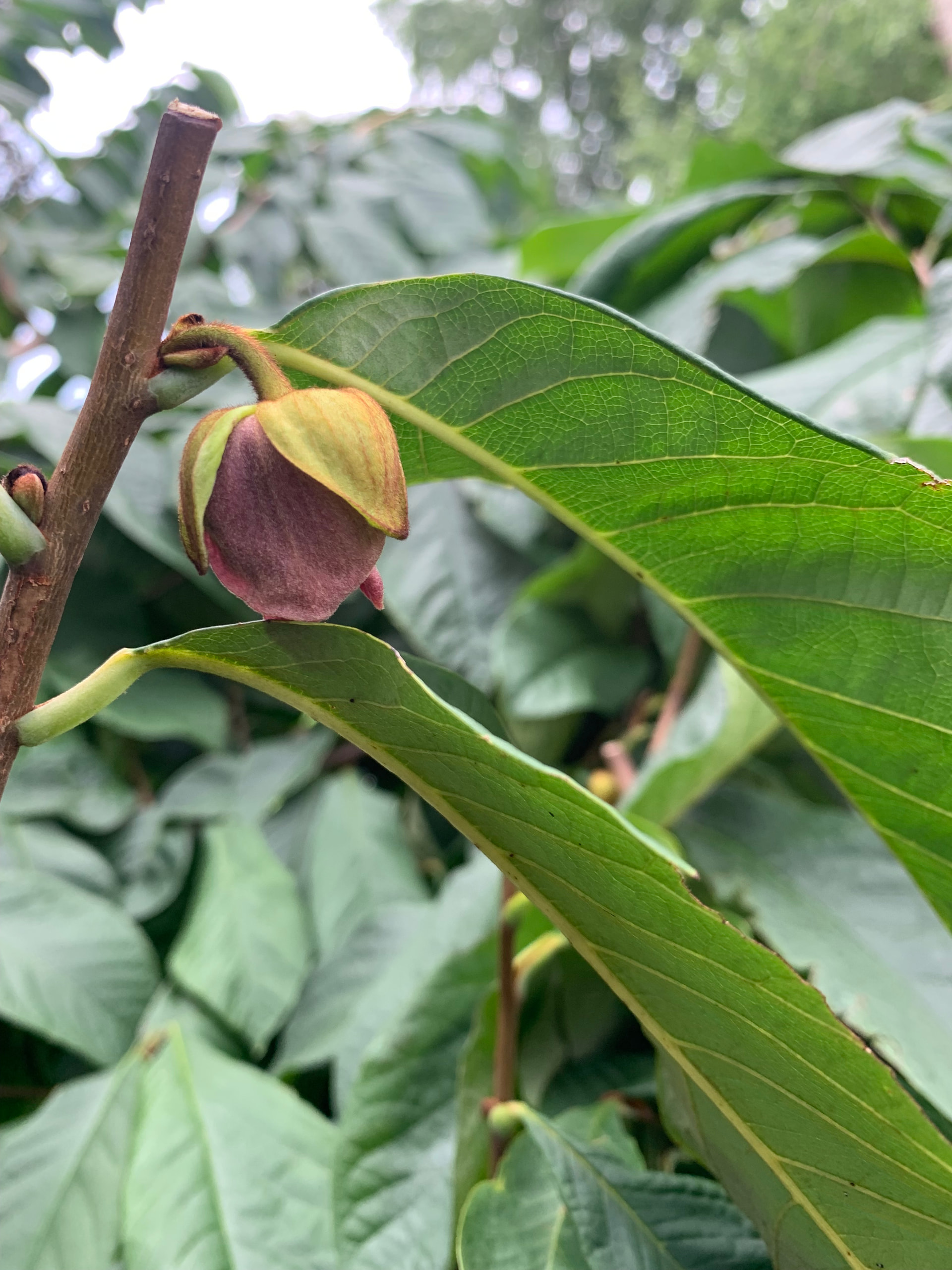
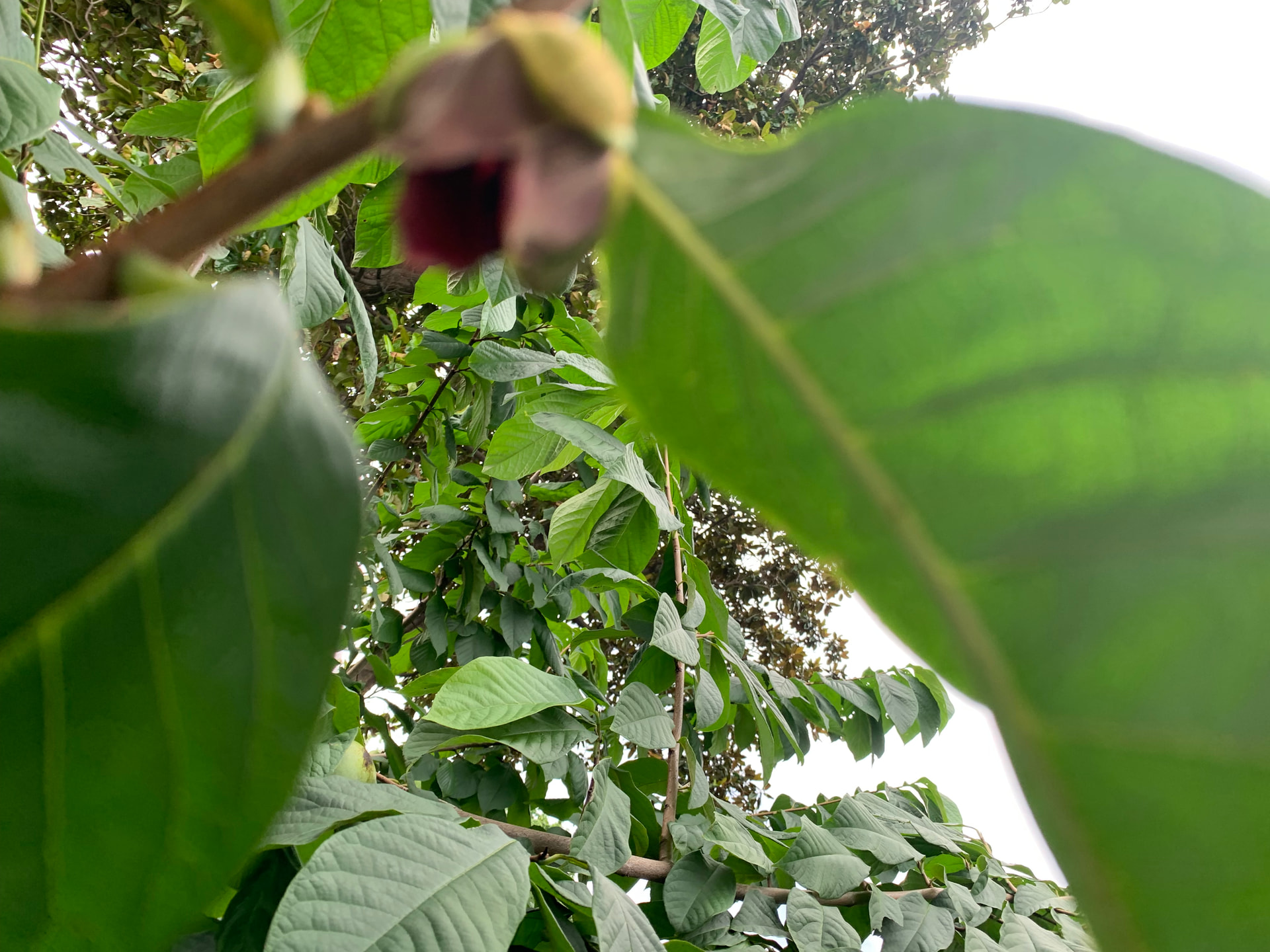
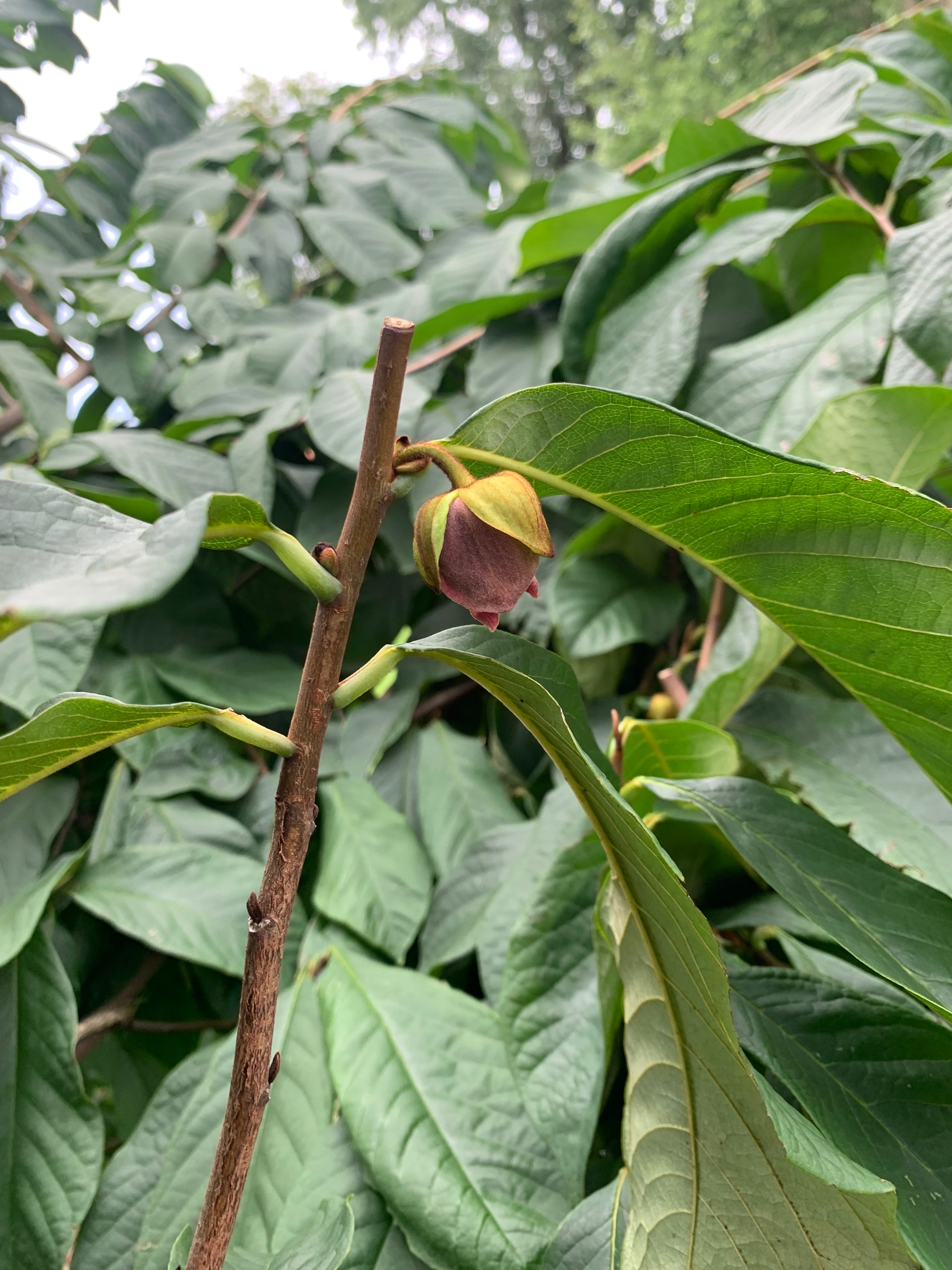
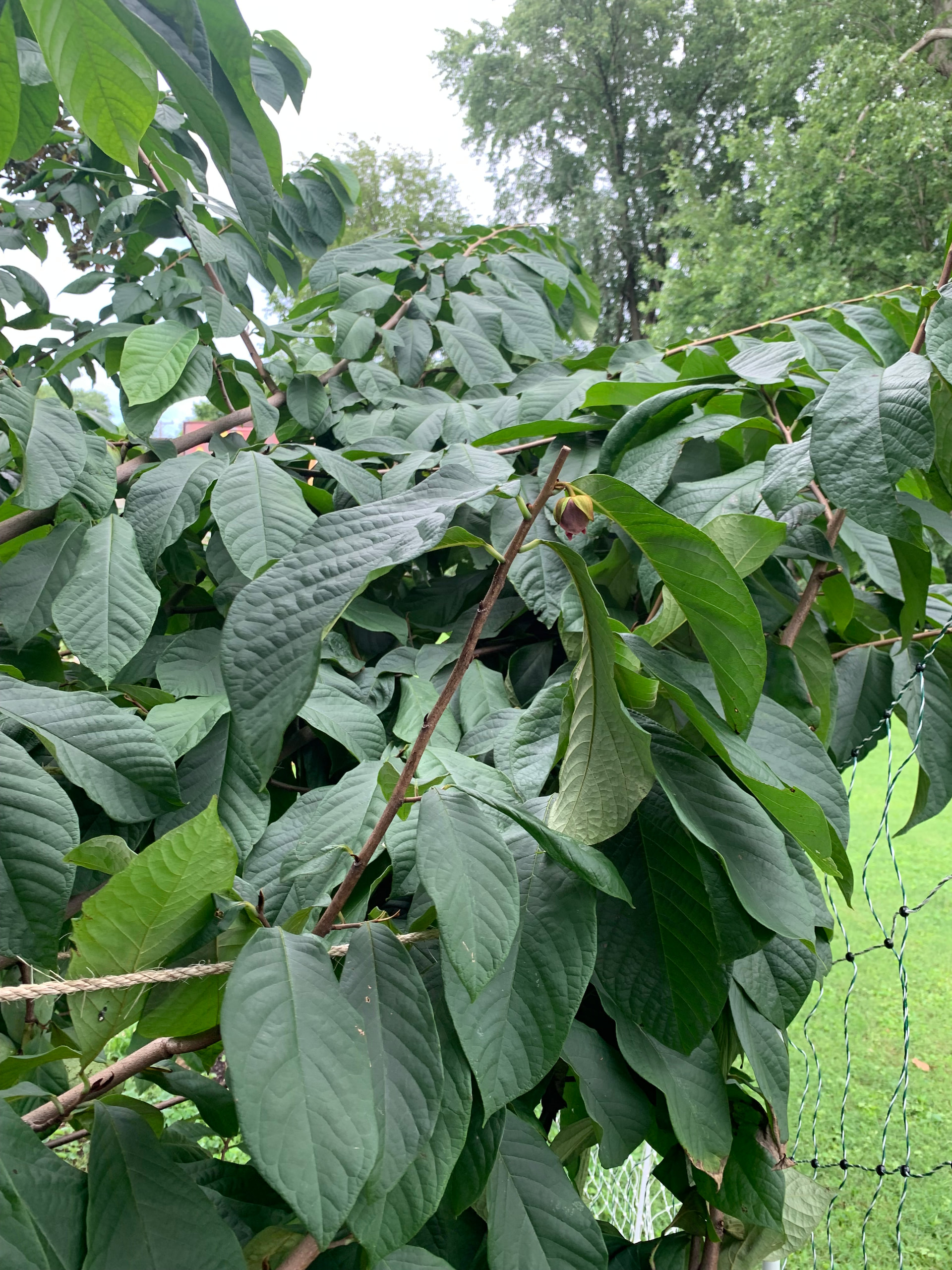
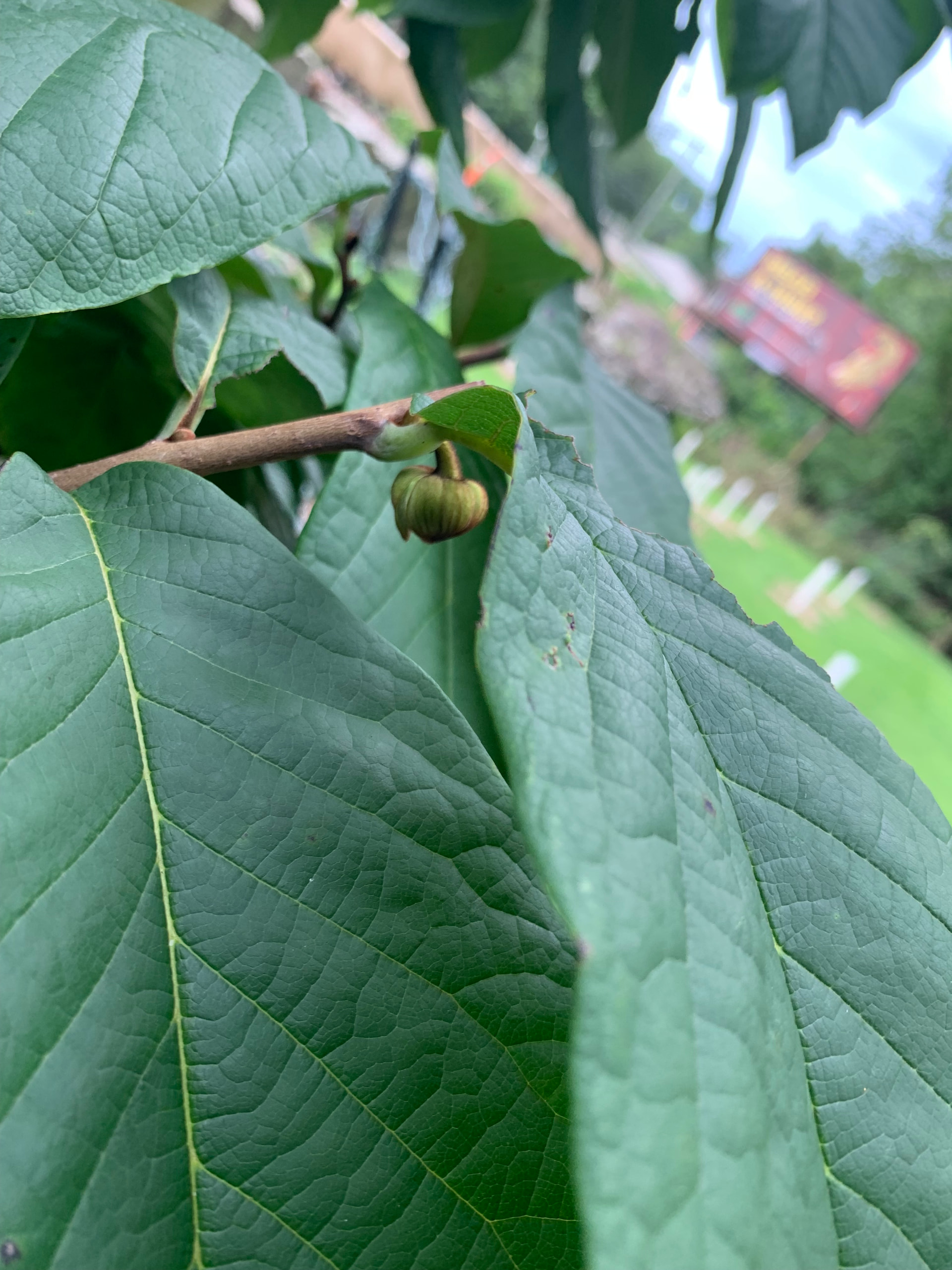
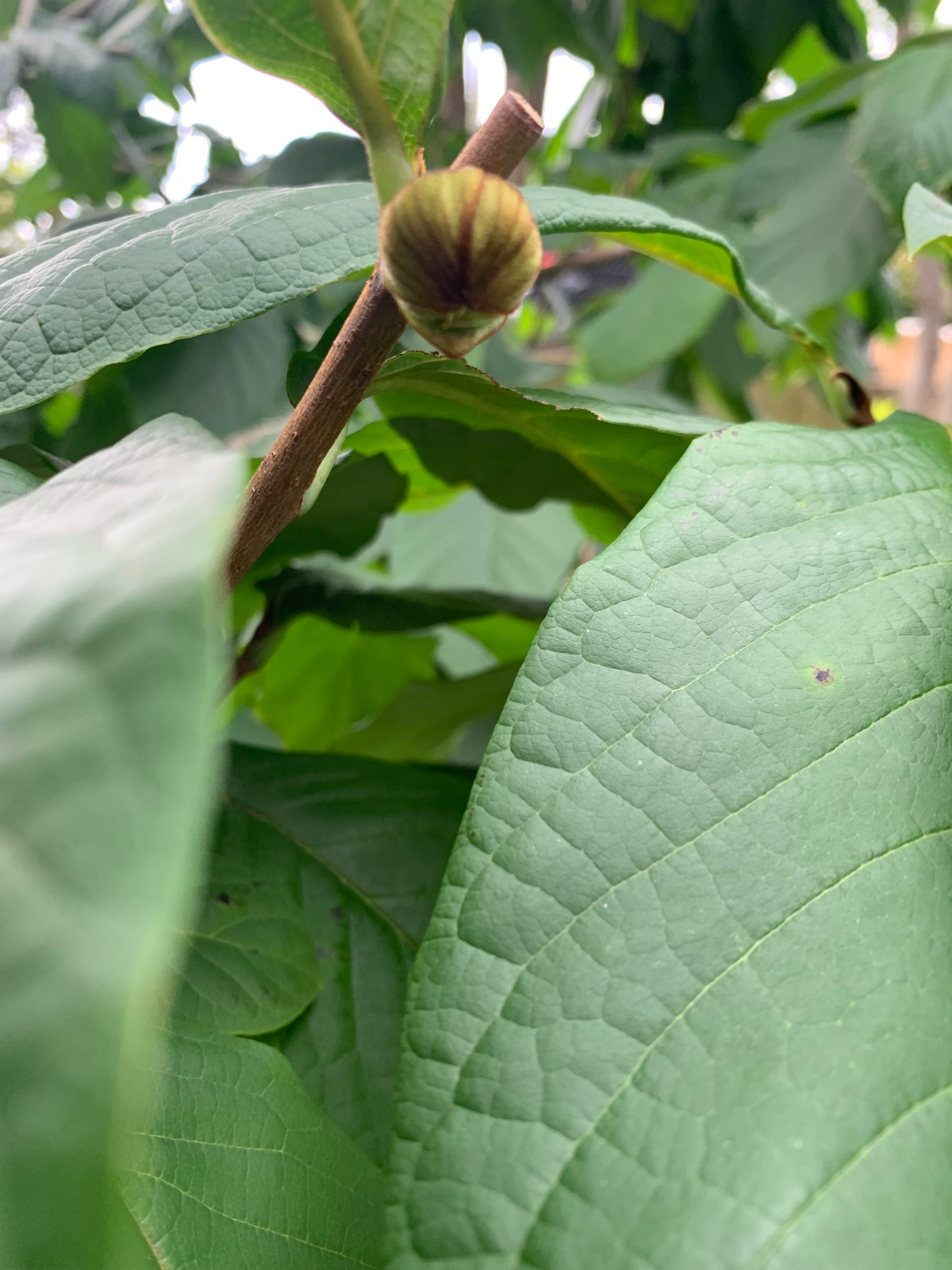
Does anyone have any knowledge of pawpaw trees flowering in July in zone 6B when they have been fruiting and have lots of big fruit maturing for months? I have mature Halvin tree that has the most mature flower and the flower that is starting to form is on a mature Susquehanna tree. I’m going to be able to get an exclusively hand pollinated Halvin with Susquehanna.
very interesting… did you have a period of cold weather? other plants sometimes rebloom with this, but this would be interesting for places that get killing frosts late in the season perhaps
No I think that could be a valuable trait if they continue to bloom that late. I have never heard of that. A late fruit and late bloomer would be very valuable indeed.
This is two trees. They are Halvin and Susquehanna. KSU has done dna level testing and sometimes hand pollinated pawpaws actually end up crossed naturally with something else in the orchard. None of my other trees have flowers now. This guarantees one of two thing if they do produce fruit. . Either a self fertile cross or a cross of Susquehanna and Halvin.