Sorry to hear that. I thought California was mostly safe from serious FB but clearly not.
It’s a worse year than usual here, on my pears I actually had to remove a limb (plus half a dozen small shoots). The FB in circulation for me now is mainly bad for apples, I had more apple damage. I think Reine des Reinettes has to be removed, it started the problem and only it and nearby trees have any strikes.
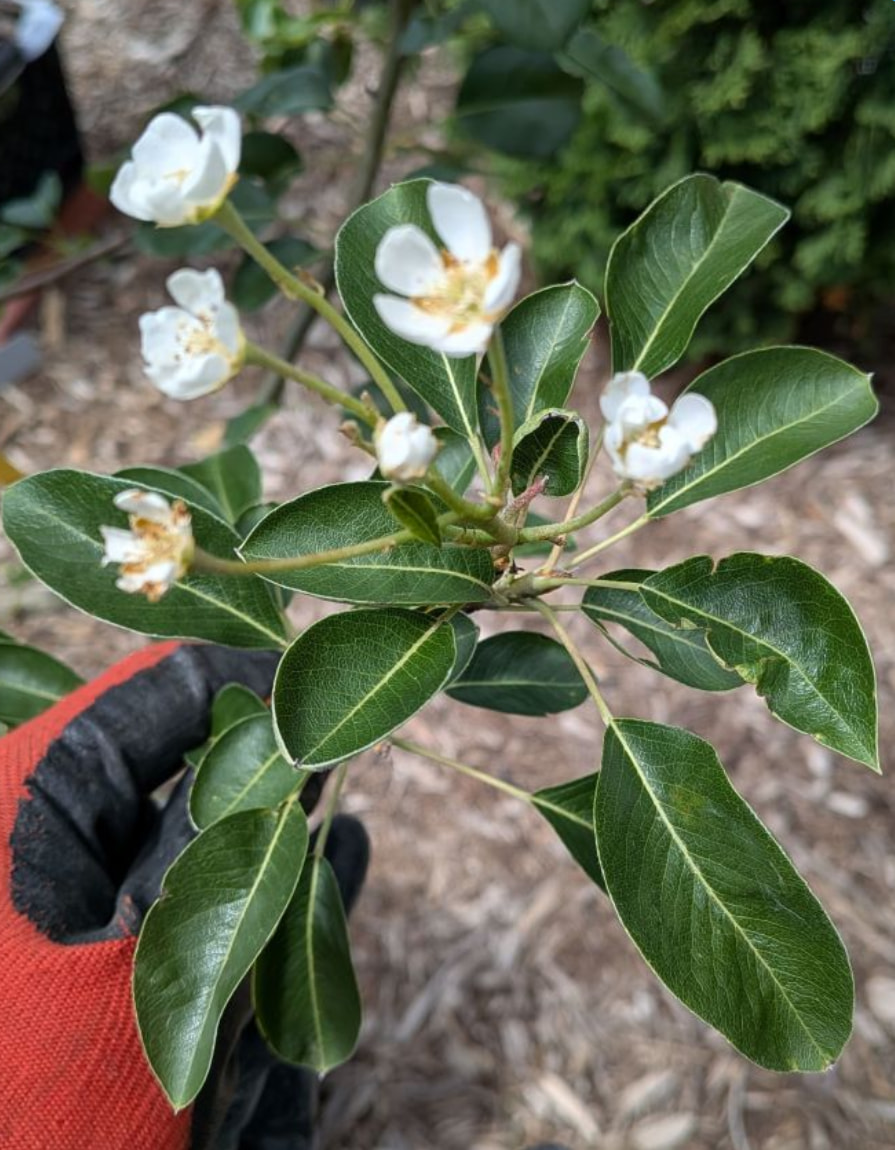
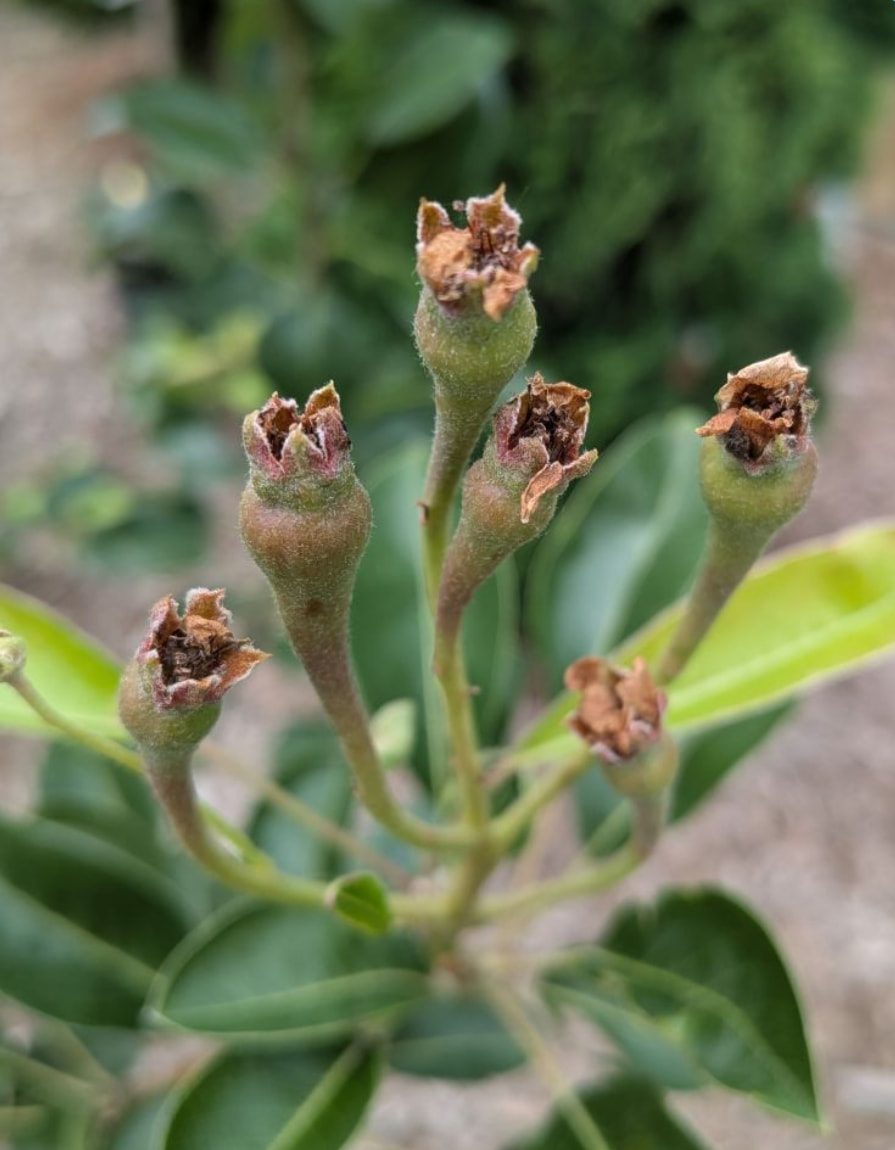
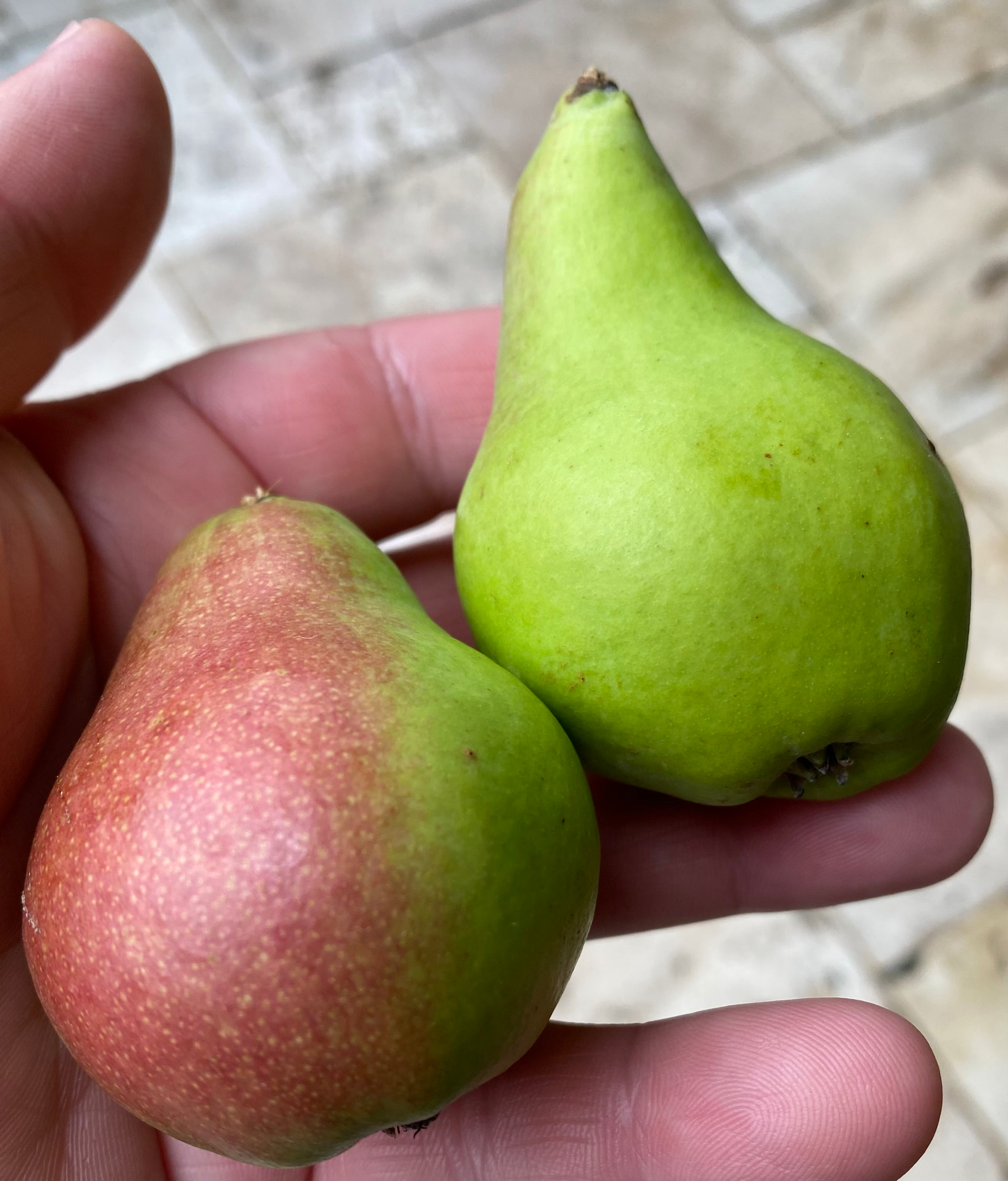
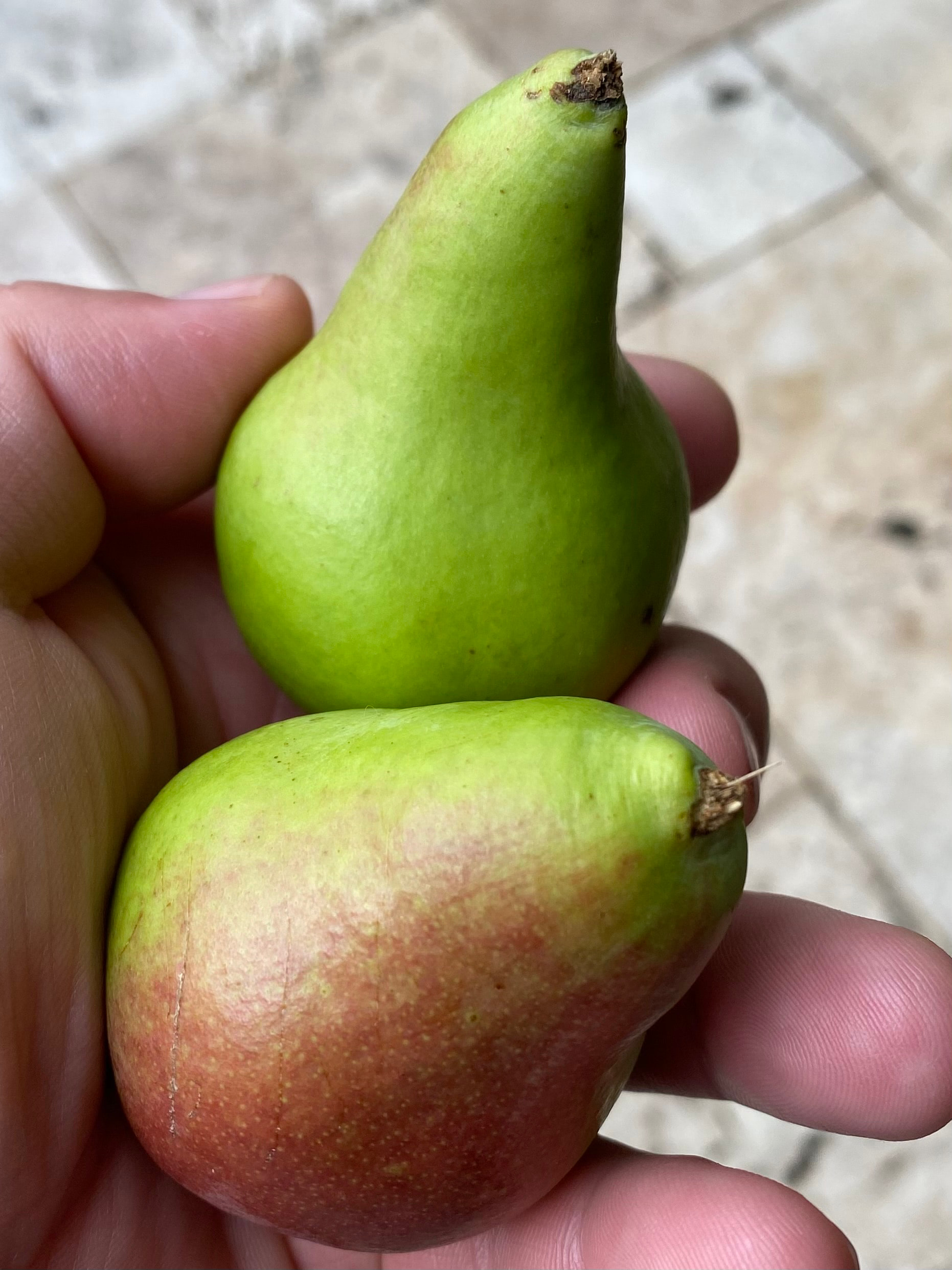
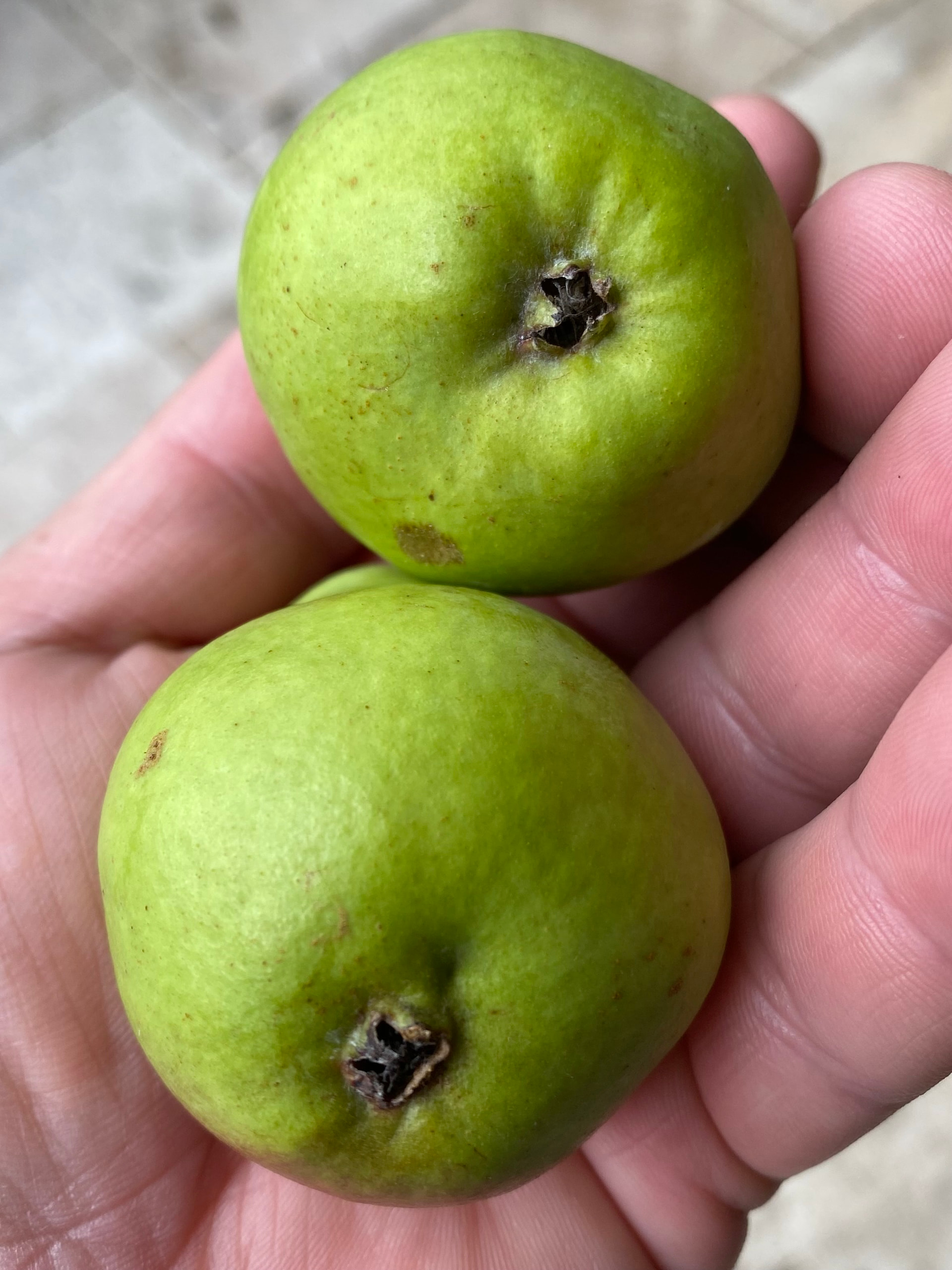
Occasionally I have a few out of season blooms like yours (rat tails). Your fruit looks healthy but I would keep a close watch on them for a few days because sometimes the late ones can get fireblight. They look okay to me and you might have a long enough season for them to ripen.
My keifer and improved kiefer trees bloomed and set fruit (they are in year 4)… but they bloom quite early…. Mid March.. and a frost took all the fruit.
My Orient tree (again in year 4) did not bloom this spring.
I have grafts of Bell Potomac Warren Karls Favorite that were added last year… But they did not bloom this spring.
Potomac for me has not yet bloomed in year 5 from graft on a large callery. It is over 30 feet tall and had zero blooms this spring. Bell was stressed from too much scionwood being collected last year so it is in recovery and growing limbs, i.e. no fruit. Warren has a few fruit, maybe 20. Magness has not yet set any fruit. It is grafted on the same tree with Warren. Karls Favorite is just a small tree in a container.
I had that same thing happen with Moonglow 4-5 times. I finally got ahold of some decent scion wood from a commercial grower and they are doing fantastic.
I will tell you guys I think most home orchardists pass around scion wood and wind up with trees that look like virus infected wimps. Get you scion from a trusted source. I have not shared any Moonglow scions yet but can tell you my latest trees set pears in 2 years. They grow so fast I can practically stand there and hear them growing. I had a truly horrible time getting good seckel pears also and I’m very happy with what I have now. Seems like half the wood is weak.
That group Kieffer, Orient, improved kieffer etc. Are very reliable trees. If you have a tree you suspect is virus infected graft one of these or Duchess d’ angoulme to it as they produce fruit in over abundance.
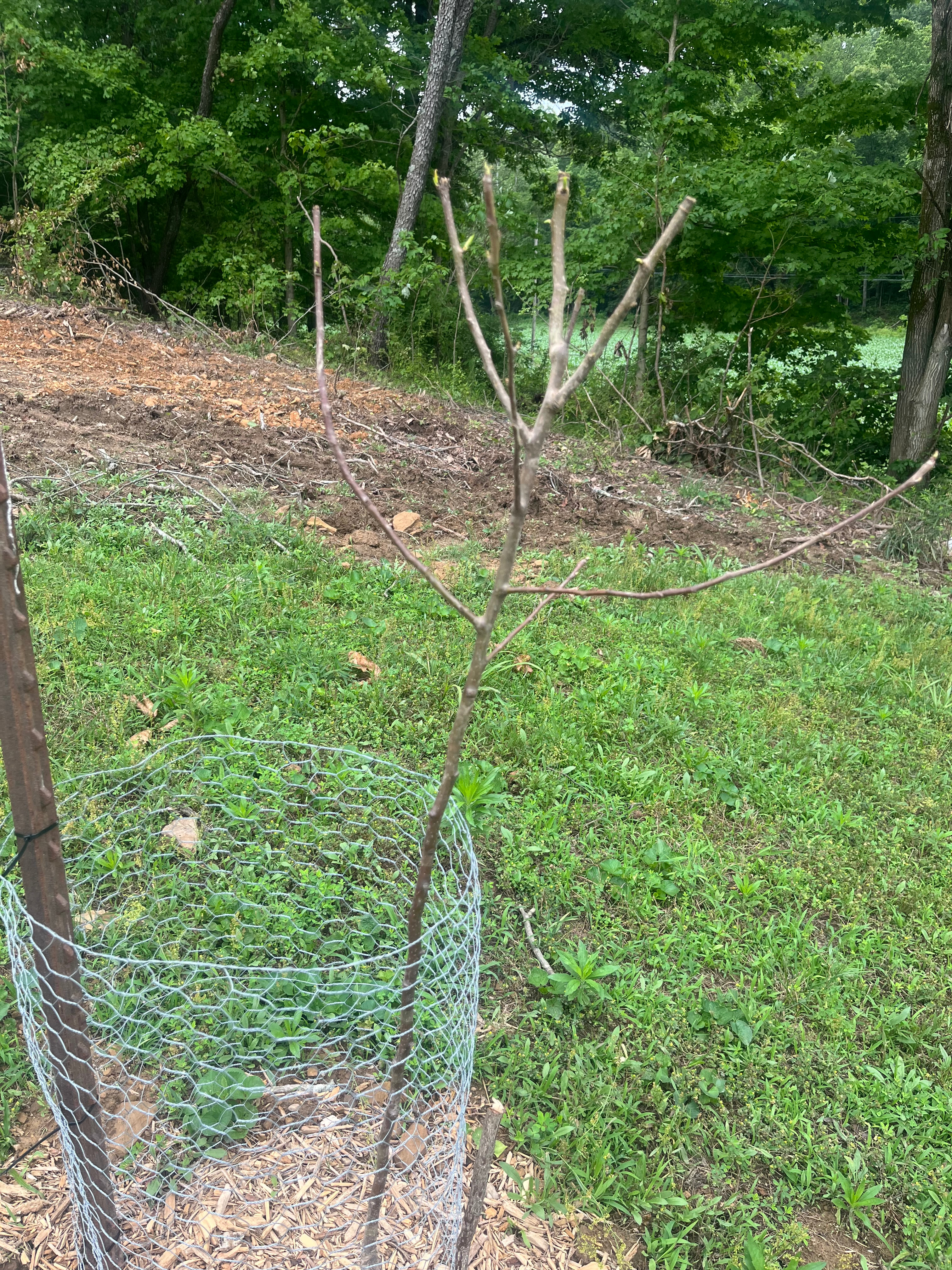
The wife bought this at a box store as a father’s day present a few years back. The leaves go slightly curly and a few die off. I see no visible pests or infections of any kind. Perhaps it is nematodes?
But nematodes have not been a problem so far here.
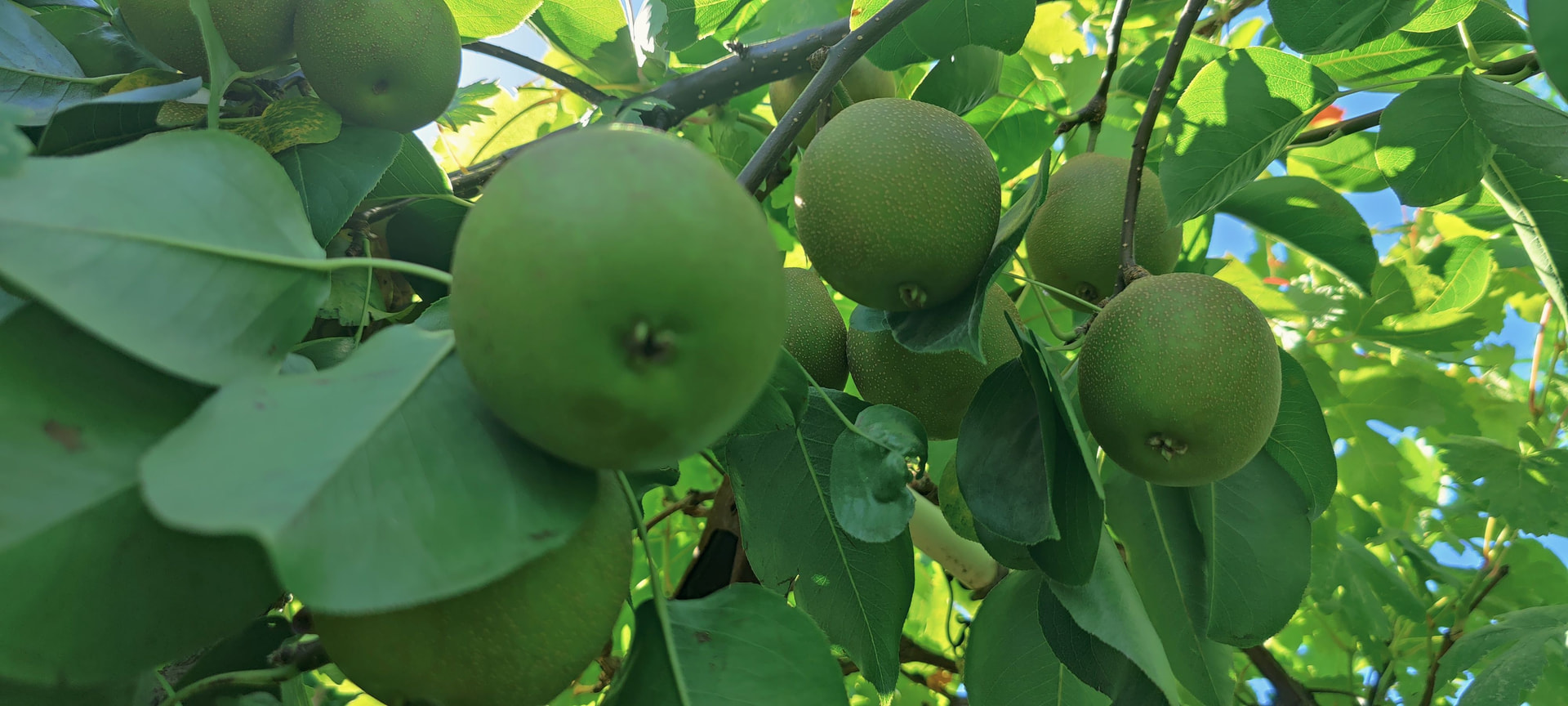
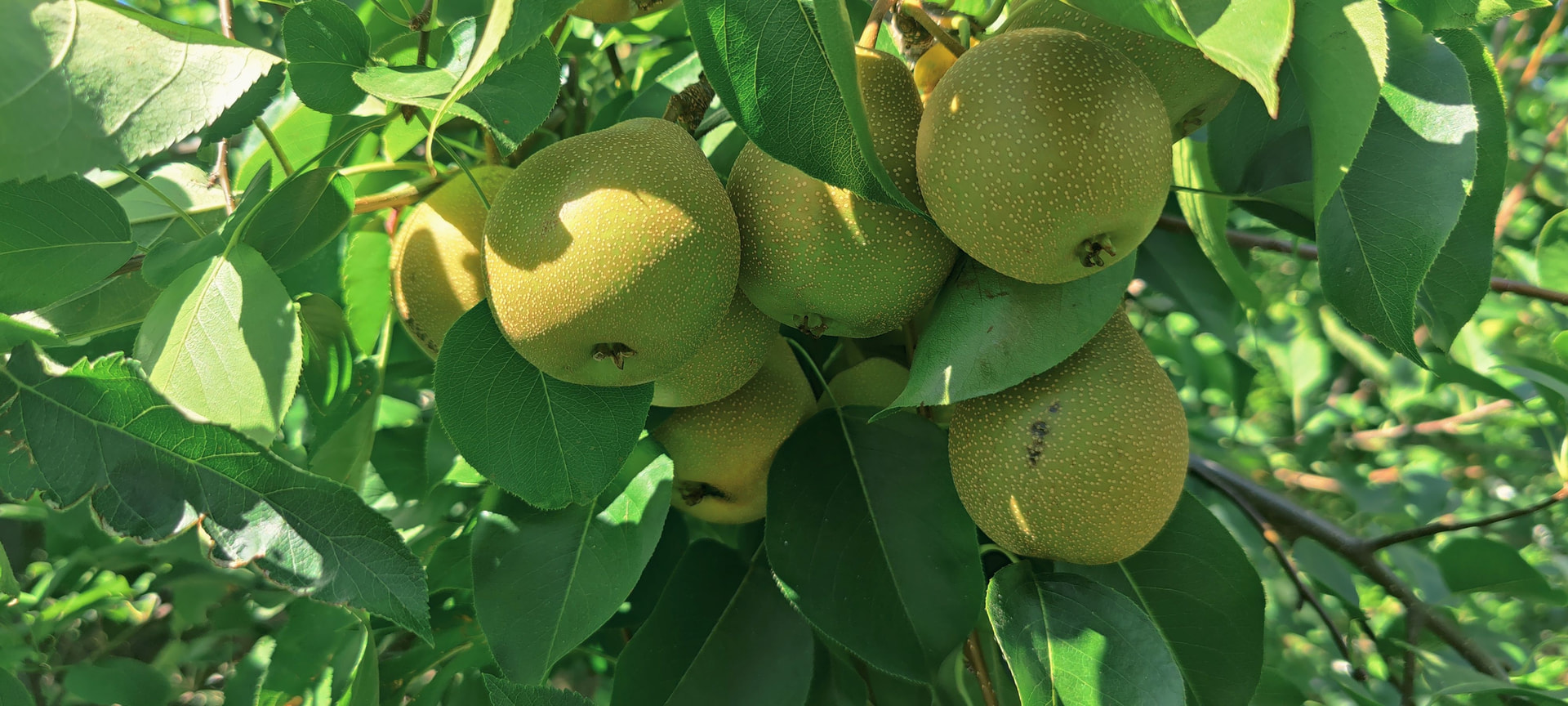
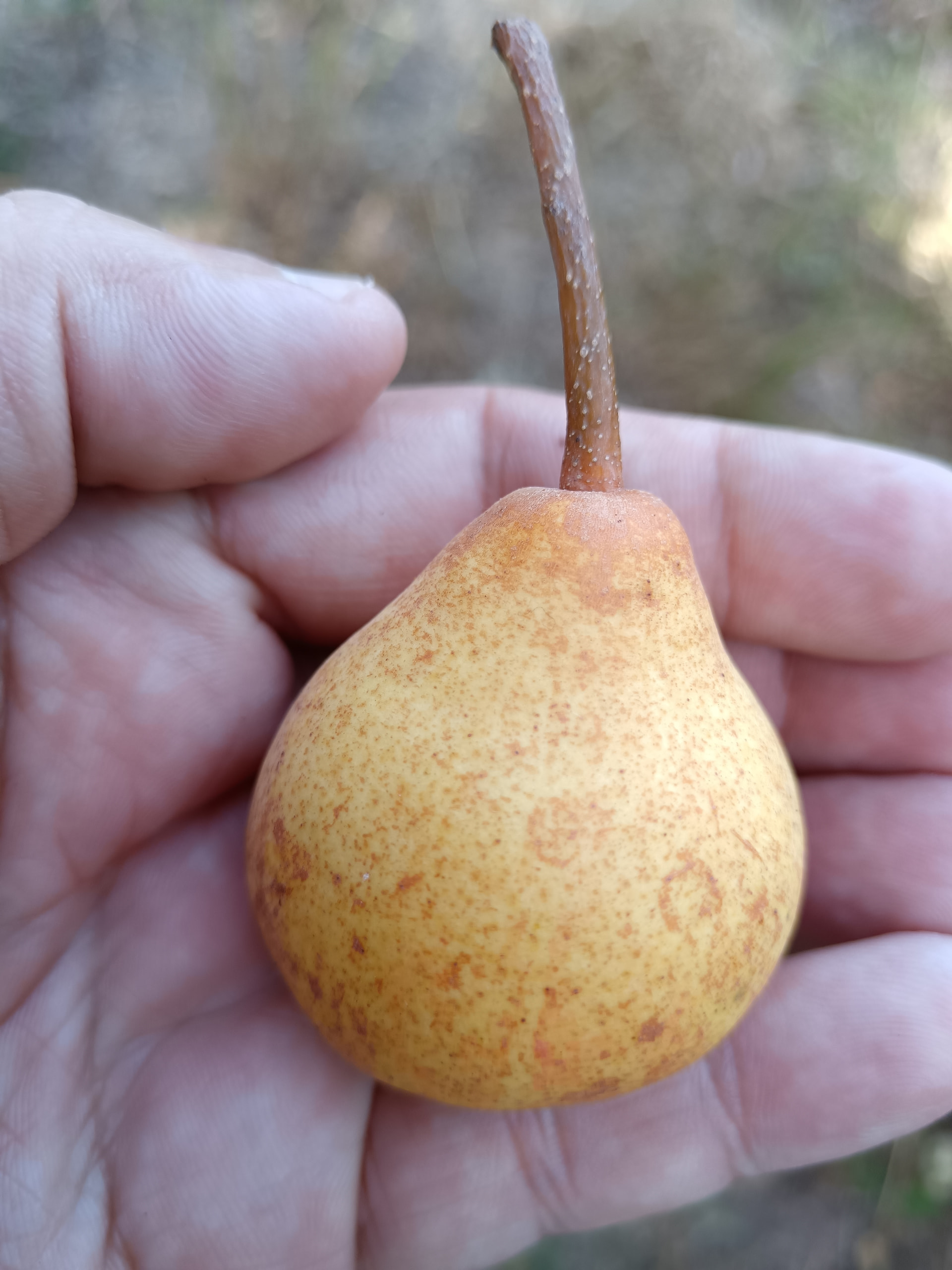
The wind knocked a couple of Ambrosia pears off the tree, but I can’t complain - tree is loaded this year!
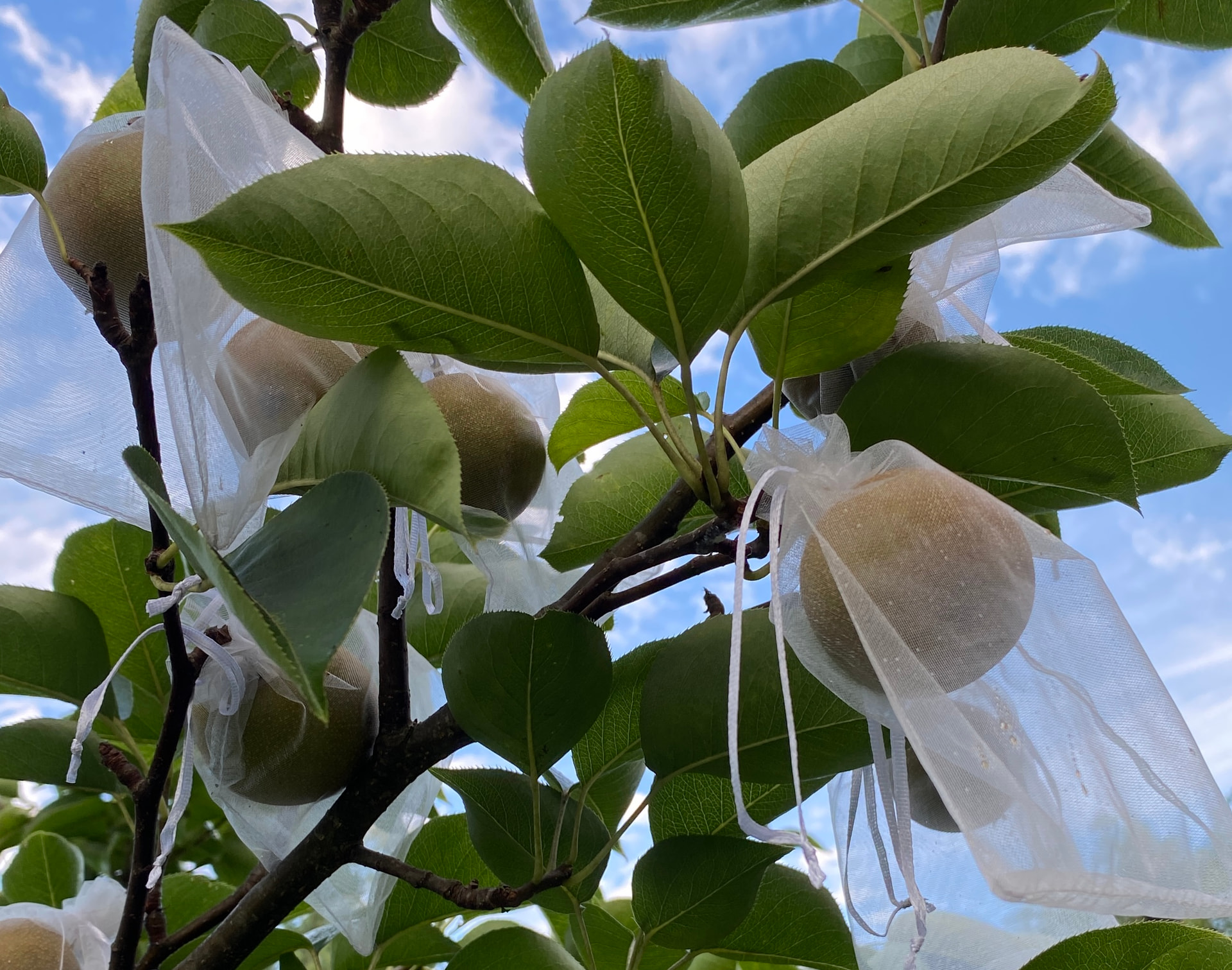
It also looks like I may have finally gotten pear midge under control. Last spring, I laid a tarp (weed barrier) under the tree to disrupt the larvae as they emerged from the soil. I’ve seen only a few prematurely dropped pears, which is a huge improvement over previous years.
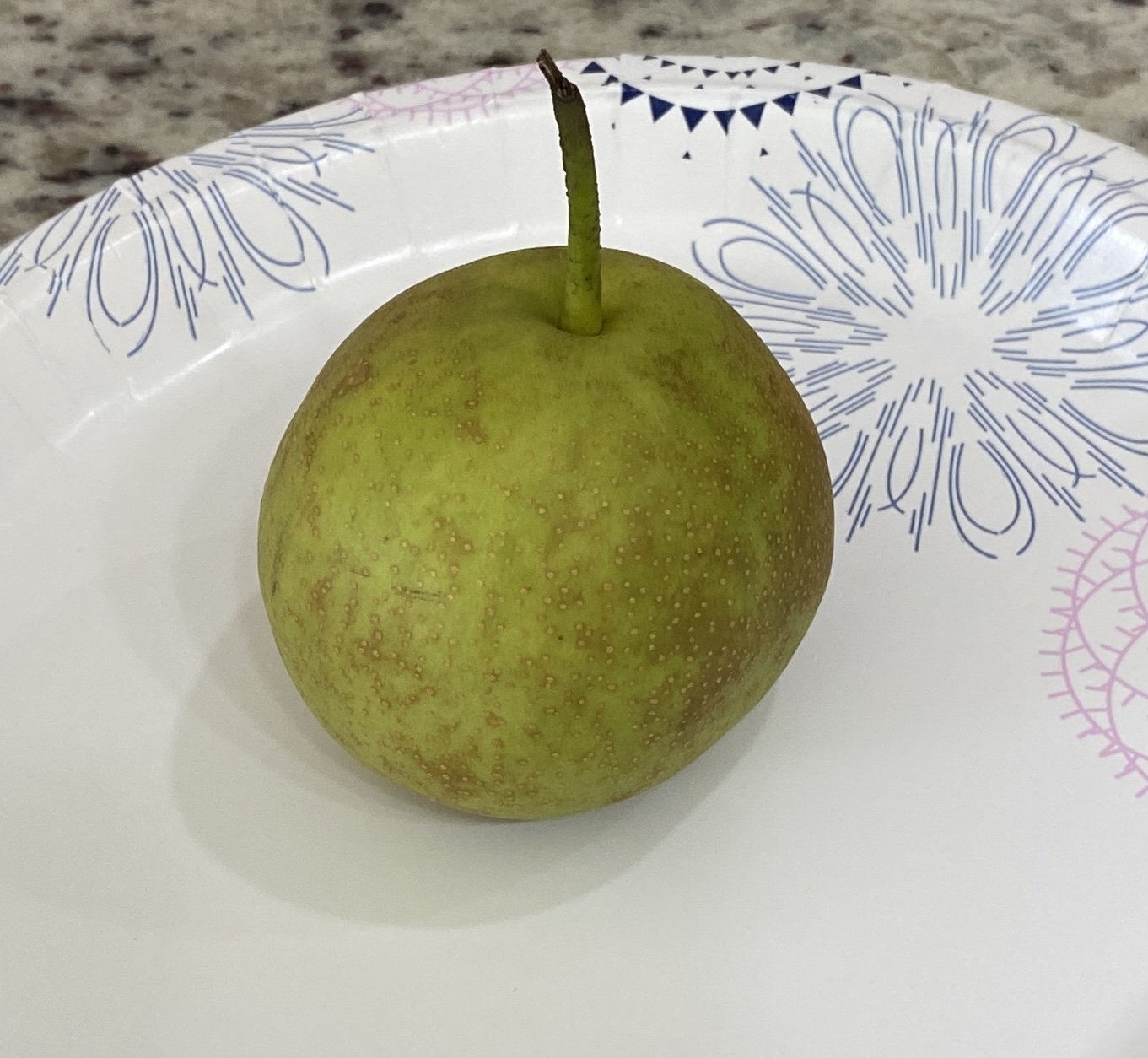
I haven’t used my brix meter very much so I decided to try it out on a Dripping Honey pear that I picked this morning. It tested out to be 13. According to my taste it was getting sweet but not at its peek but still pretty good. I ate it all.
Goggle lookup says: A “Drippin’ Honey” Asian pear measuring at 13° Brix is just entering the lower threshold of its ideal sugar ripeness. While this pear is juicy, lightly sweet, and refreshing, it hasn’t yet developed the intense, syrupy “sugar bomb” flavors that can push 16° to 18° Brix on fully matured fruit.
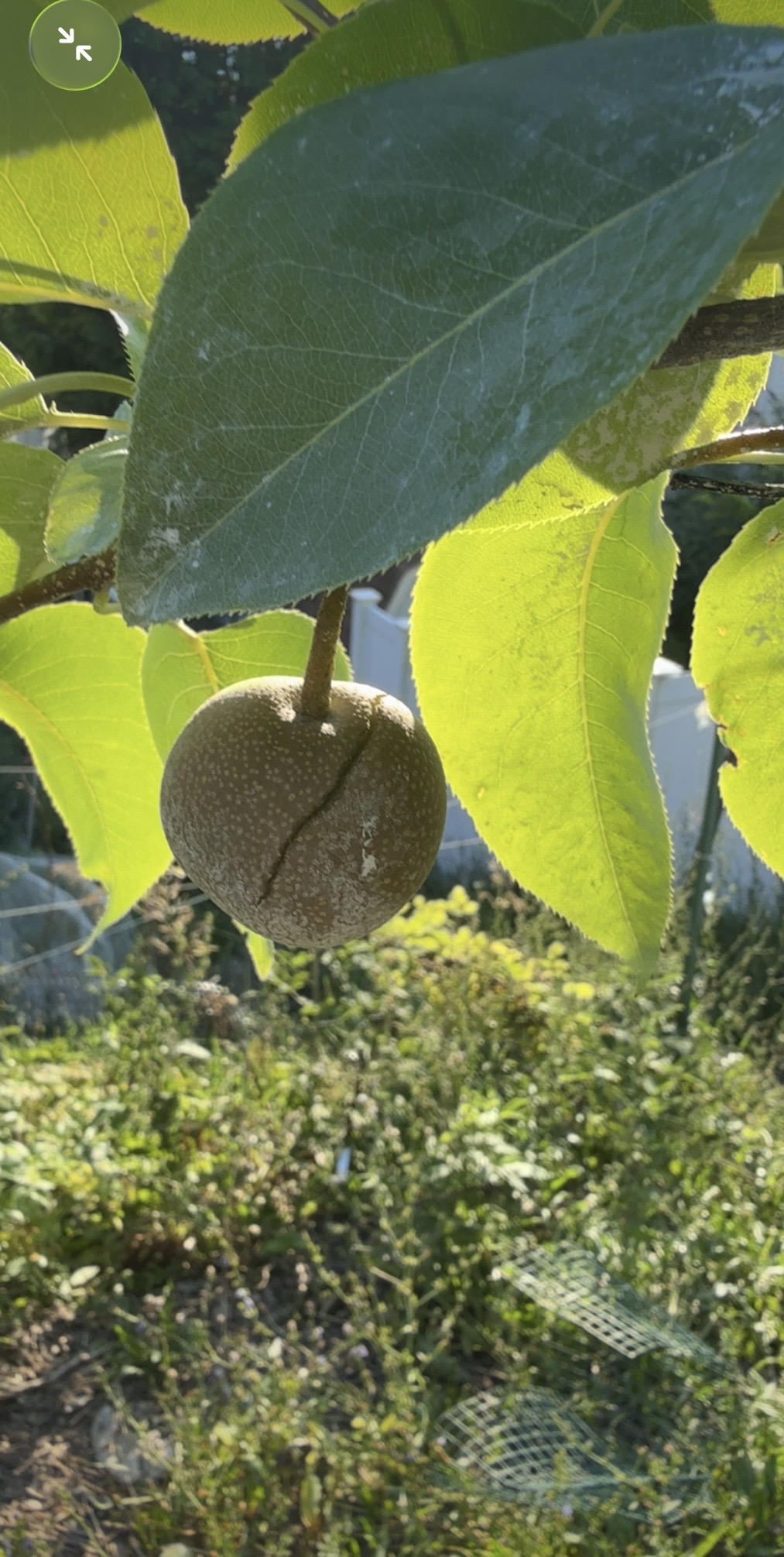
Had some crazy storms last week and a ton of rain and noticed a few pears with light cracking. Oddly enough the cracking only happened on one side of the tree and only on fruit closest to the tips. I culled the affected fruit.