I read this a while ago when it was posted. I read the abstract again.
There is nothing contradictory in what I stated.
You can still have tannins in non astringent persimmons under certain(many?)environmental conditions. C-PCNA in particular will be quite astringent until they get quite soft.
It is important not to confuse a gene with the subjective perception of astringency.
C-PCNA have a different genetic / metabolic path to non-astringency, so they are irrelevant here.
There is nothing subjective about astringency as reported in the article for J-PCNAs. It’s not about genes — they measure the tannins!
You made a sweeping generalization about PCNAs in not hot growing zones. I just want readers to be cautious before they take your “PSA” to heart. The evidence seems to indicate that most PCNAs never have enough tannins to be perceived as astringent anywhere. If there’s an issue with your fruit, it seems ideosyncrartic.
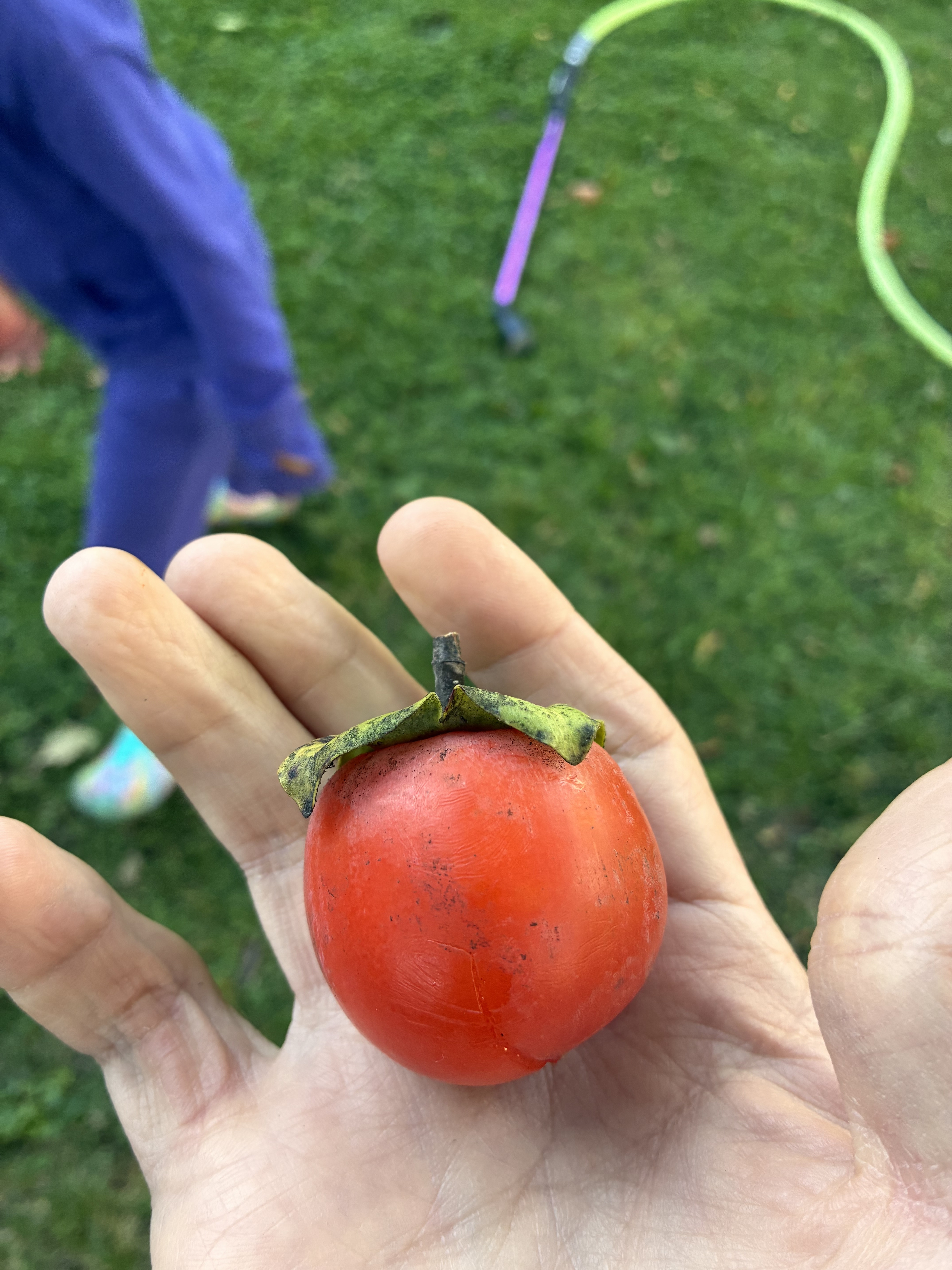
So I just want to put out there cause this conversation got me thinking…my Matsumoto Wase fuyu which has now fruited for its third time continues to have mild/ moderate astringency in the sold orange crunchy stage.
It’s been a real bummer.
If I let them continue to ripen and get softer the astringency no longer persists.
I have not had this problem with Jiro at my location. The Matsumoto has more sugar than Jiro ,you can taste it, but it’s ruined by the lingering astringency.
So what you’re suggesting is perhaps this is climate related?
Yes @Dom,
Non astringent persimmons may not lose astringency entirely under certain conditions. Some people think it is only temperature but there may be other factors at work.
C-PCNA for instance does not lose astringency completely - they are always eaten soft in China.
I think the best solution is eat them soft - they don’t need to get mushy like a Hachiya - just need have a little give.
Just wanted to updated that I was able to secured some Kassandra hybrid persimmon crossed with Rossy male seeds. So I have enough hybrid persimmons to complete my Z5 trial. I will paid more attention to this Six hybrid persimmons because I may be the only one that have these back crossed for trials in Z5: David Pierce hybrid persimmon called Thanksgiving X open pollination, Kunjinaja x Rossy male, Ukrainian 115-30 X open pollination, Nikita #4 X open pollination, Kassandra X Rossy male and Prok X Jerry Lehman 400-5 hardy male . The rest of my other Hybrid persimmons that other folks are growing already like NB-02, Nikita#4, Sosnoskya, Derevyanko, Hunter’s dream, Deer Candy, Kassandra, Nikita 's gift, Rossyanka, Kunjinaja. I will update them yearly in late May of their progress and also to see how cold can they handle the subzero in my Z5 Omaha, Nebraska. No more crossing and now just data collection only.
There is another point - the development of non astringency proceeds on a different time scale than the ripening process.
I’ve noticed that Izu here ripens sooner than Jiro - IOW develops sugars sooner than Jiro does. But it does not lose astringency any sooner!
This ties in with your experience with Wase Fuyu.
Both of them become non astringent after becoming soft.
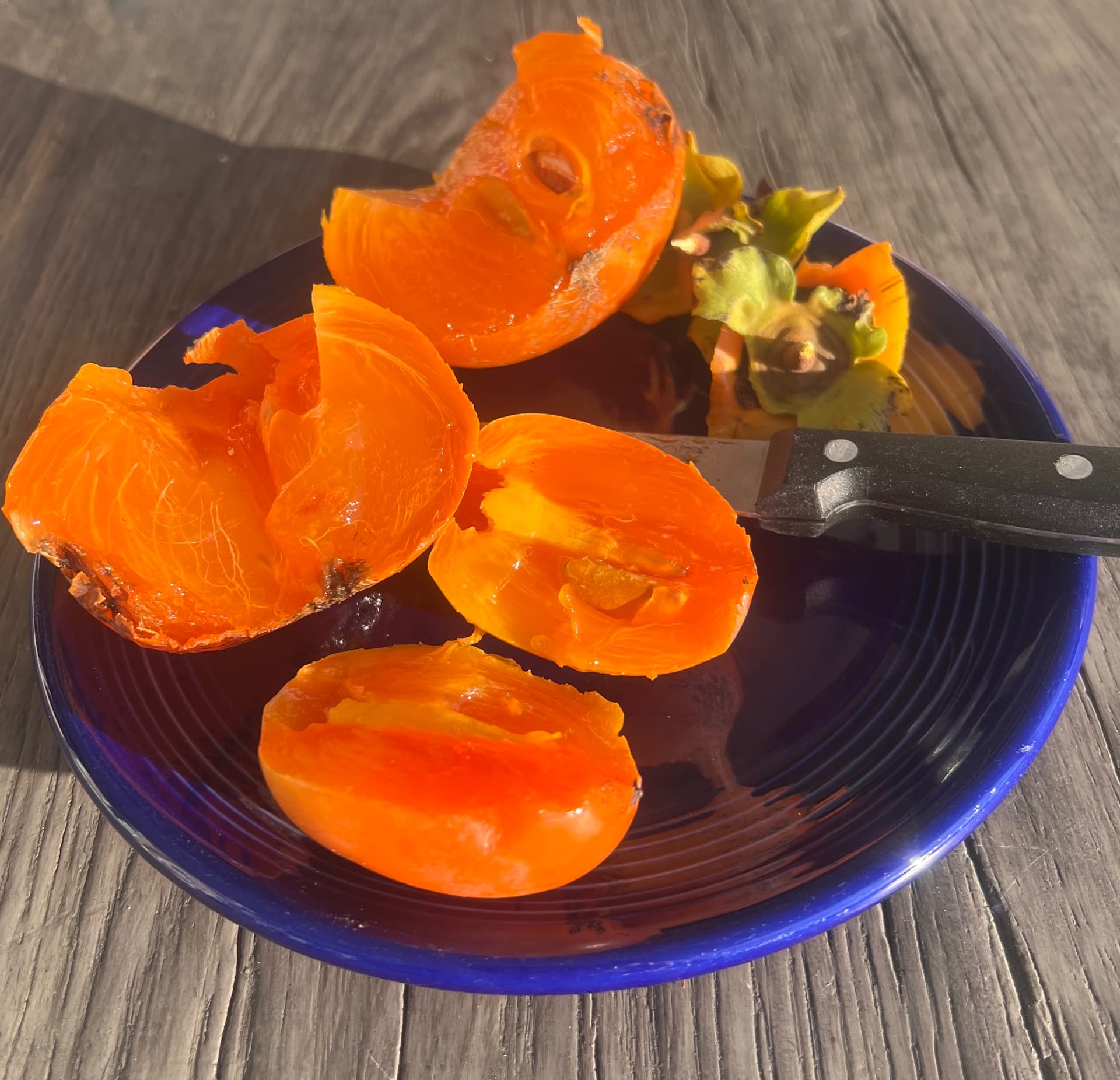
In my IKKJ we tried them… solid orange, still quite firm but just a little soft. There was still a little crunch to it.
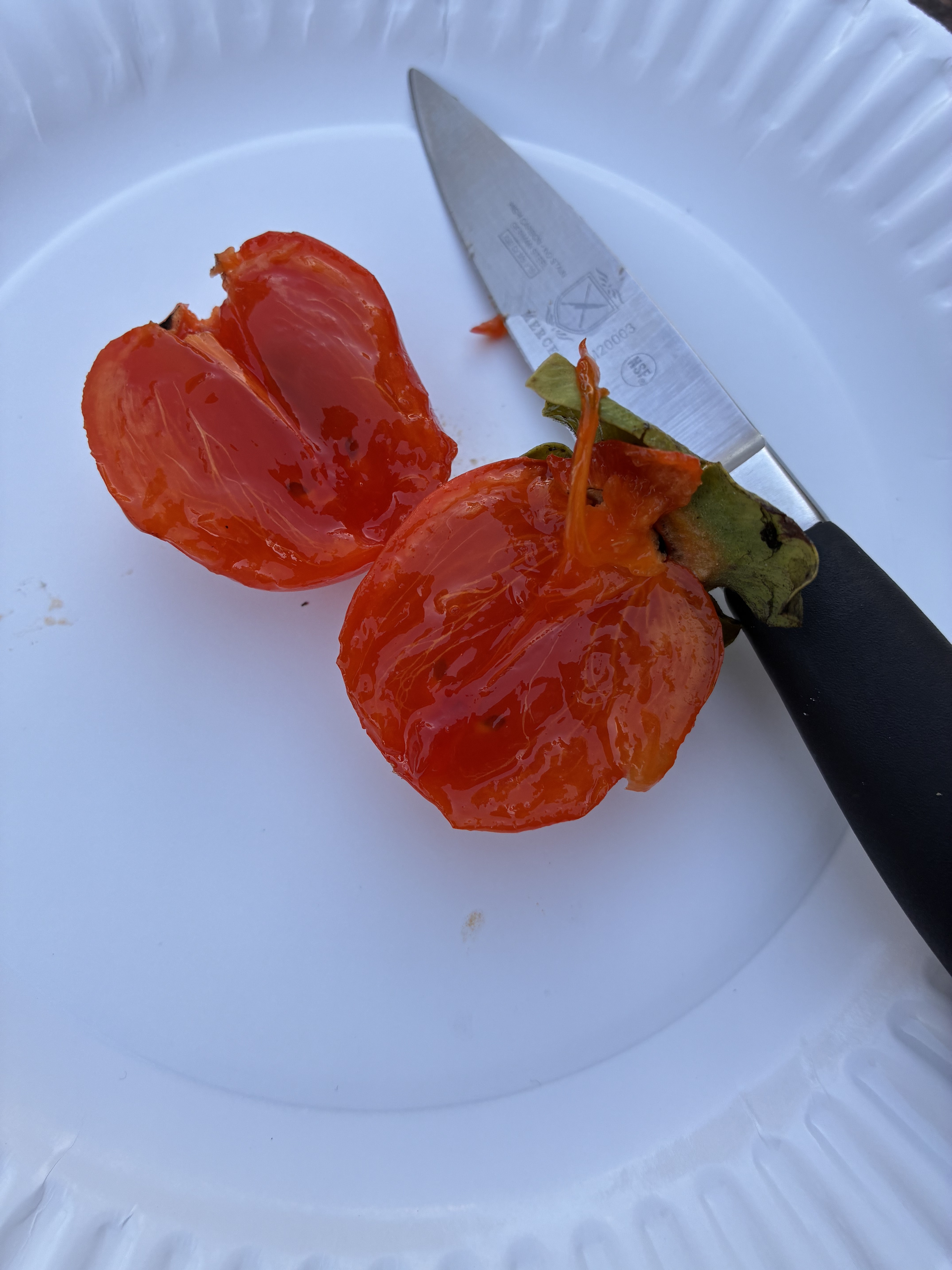
It was ok… but less flavorful and sweet… compaired to when they turn red and are mush (super soft).
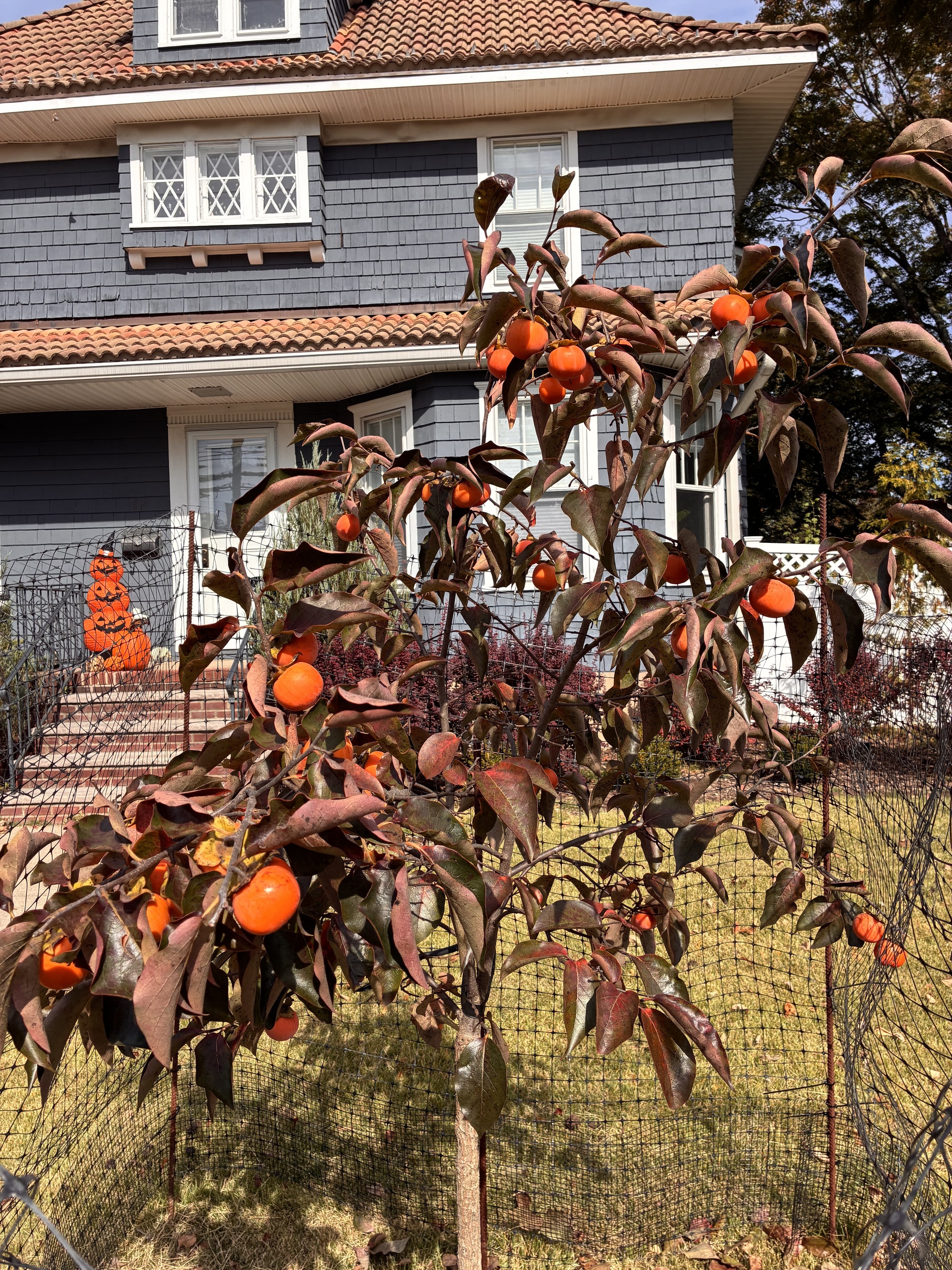
I have around 15 fruit remaining on the tree… waiting on them to turn red and super soft.
We definately prefer them that way.
My wife eats them with a spoon… it is like eating very flavorful and sweet persimmon jam or pudding.
We prefer them this way not for the texture… but for the flavor and sweetness.
To eat them even semi crunchy… you are sacrificing quite a bit of flavor and sweetness.
There has been no hint of astringency in my IKKJ or Kasandra so far. We have only eaten Kasandra once red and soft.
Both are absolutely delicious that way.
Eating persimmons when crunchy… is just odd to me… I ate nothing but wild americans all my life until this year. Crunchy may grow on me ? Eventually ? We will see.
To be clear, I’m not asserting that there is never any astringency in any PCNA variety. As I noted, Fuyu shows some tendency to be mildly astringent when grown in cool conditions. It would not surprise me if a Fuyu sport is similar.
My point is that we shouldn’t paint all PCNAs with this brush. Lots of people have grown other PCNA varieties in what we’re calling a “cool” summer (i.e., 75-85 F) without astringency.
This misses the most important point (see Fig 3 of the article attached above): PCNAs generally have little astringency to lose! Technically what happens is that tannin cell development ceases very early and then the already low tannin concentration falls below taste thresholds through dilution as the fruit grows.
Of course, many named varieties are sports of Fuyu. Also Fuyu is a parent or grandparent or great-grandparent of many other named varieties such as Izu (parent), Taishu (parent), and Soshu (grandparent). So maybe the Fuyu behavior is somewhat preserved even if diluted. The two key points are (1) there’s no reason to expect any astringency ever in non-Fuyu names such as Jiro (and its sports, such as IKKJ), the Goshos, Suruga, etc. (2) Many / most growers observe no astringency in any PCNA varieties when grown at 75-85 F, even if there is Fuyu ancestry. See my example with Izu.
I think we have to explore the “other factors at work” before rendering sweeping judgments about PCNA performance. For example, what is the role of sunlight / shading? I’m reminded of a discussion a few years ago regarding figs. One prominent grower / influencer / podcaster complained that the variety Smith is a reluctant fruiter. Other growers challenged that view. He asked to see pictures. Six growers submitted pictures of Smith, loaded with fruit. The influencer realized that all the fruiting trees were pruned to an open center, admitting good light, whereas his tree was cluttered with lots of self-shading. The lesson is not to blame the plant for what might be a cultural issue.
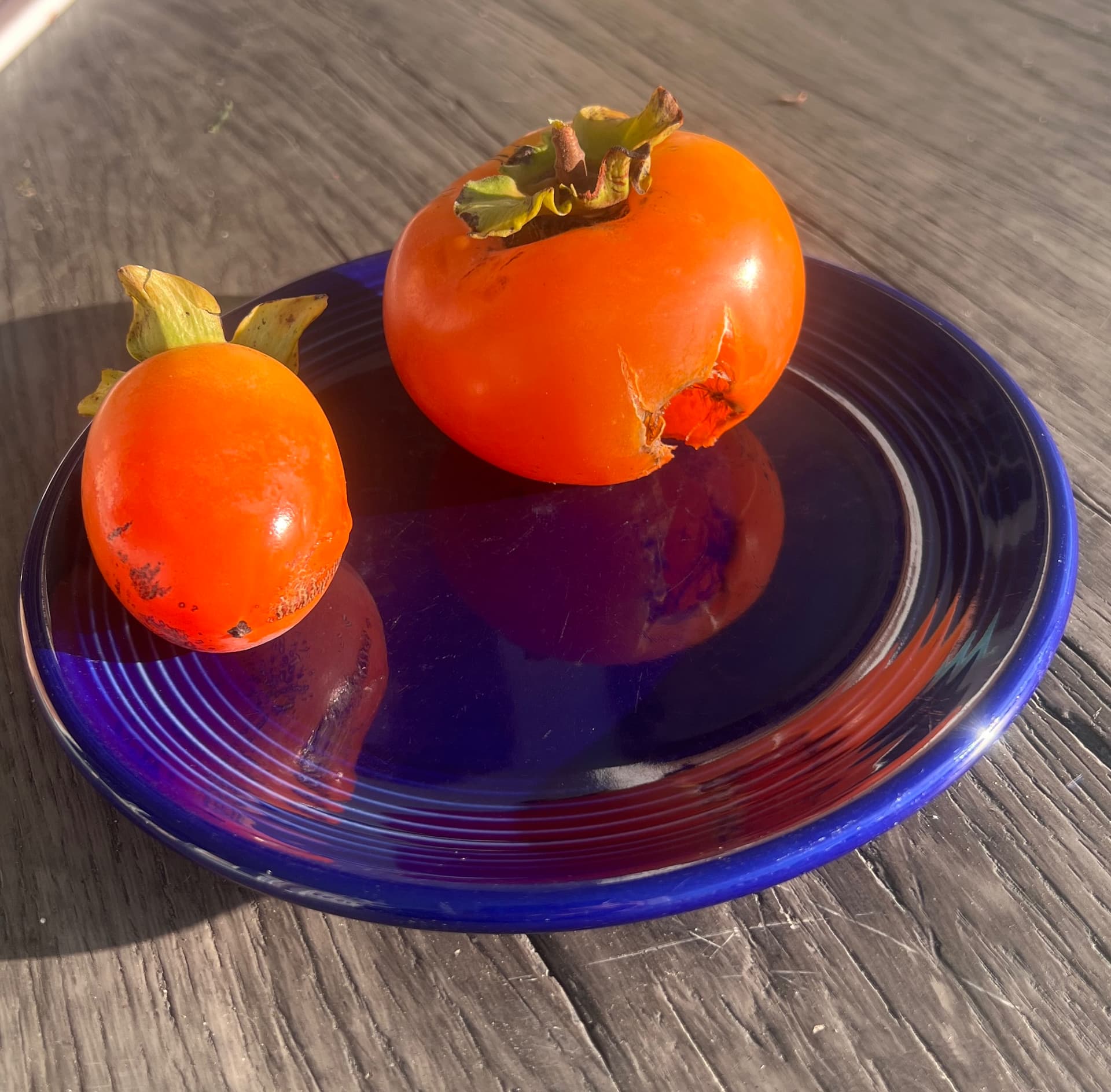
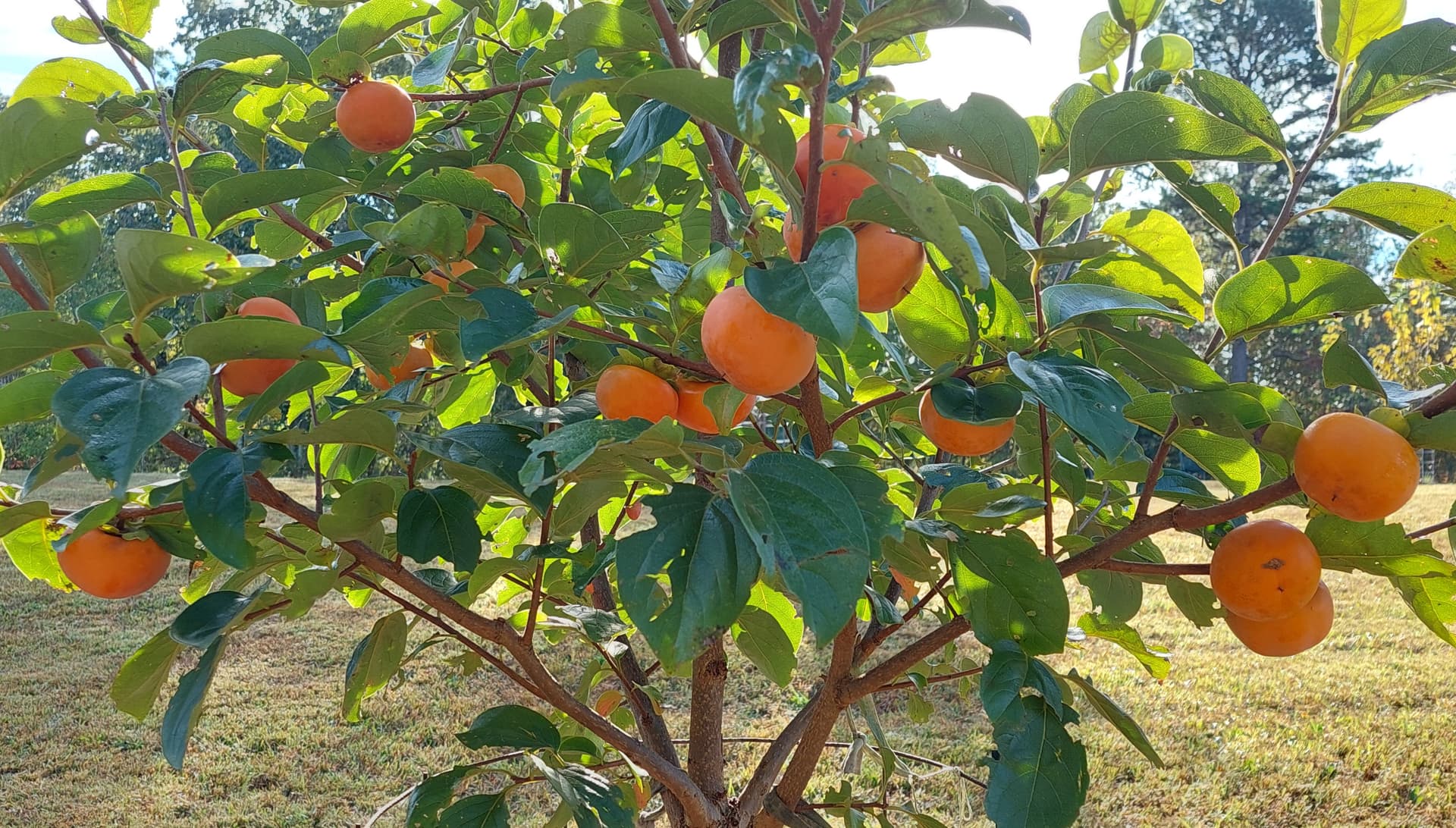
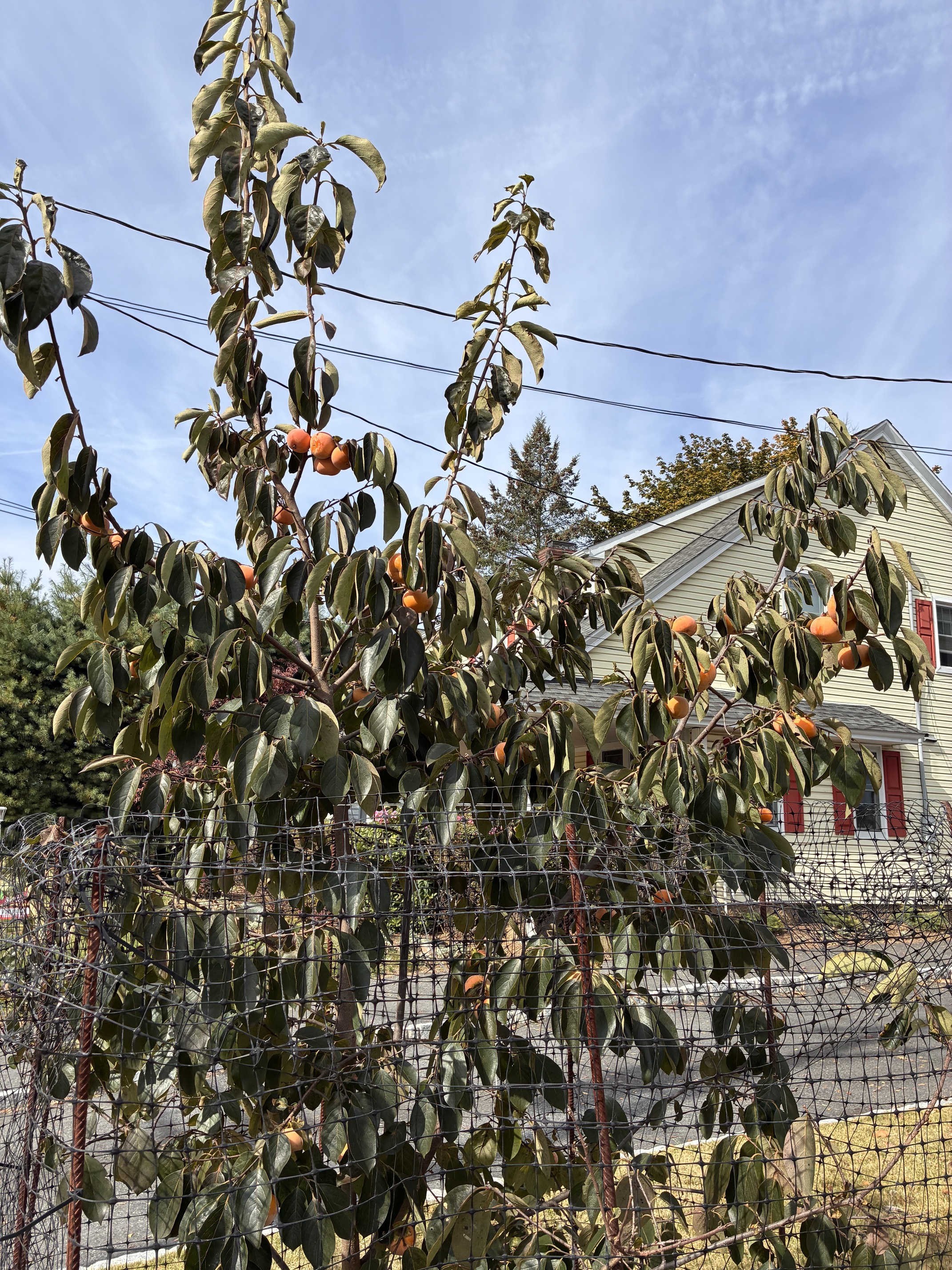
I never thought I’d use the words “tree-ripened Taishu” to describe a fruit raised here. Nevertheless, as of yesterday I had 5 large, nearly ripe fruit on a young potted Taishu with no benefit of any head start. Today I found that one had transitioned to fully ri[pe (and either split or suffered some pecks). I picked it, along with a nearby Saijo.
The Taishu was very good, though the Saijo was better. Both held 3-4 seeds. Neither exhibited any hint of astringency.
Thanks. Actually I don’t prefer the crunchy kind – that’s my granddaughter. I’m fine with them just like this or a little less liquid. But mainly I want to maximize flavor.
I totally agree with this. That’s why I’m not interested in crunchy persimmons. Apples are simply superior in every way when crunchy. The thing really going for Persimmons is the soft gooey texture. It’s like a dessert. It’s unique and THAT is what makes them special (IMO).
Not an American persimmon variety but Zima Khurma is a late ripening hybrid variety that is noted to have more of the American virginiana flavor. This tree is known to grow weeping branches. Which would make it easier to harvest (but also might make it more vulnerable to deer if you have them around).
@Robert … at Englands Orchard last year … 100-46 LD was just starting to ripen fruit mid October. Around 10% was ripe and the rest were not… it looked like it would ripen most later in October or early November.