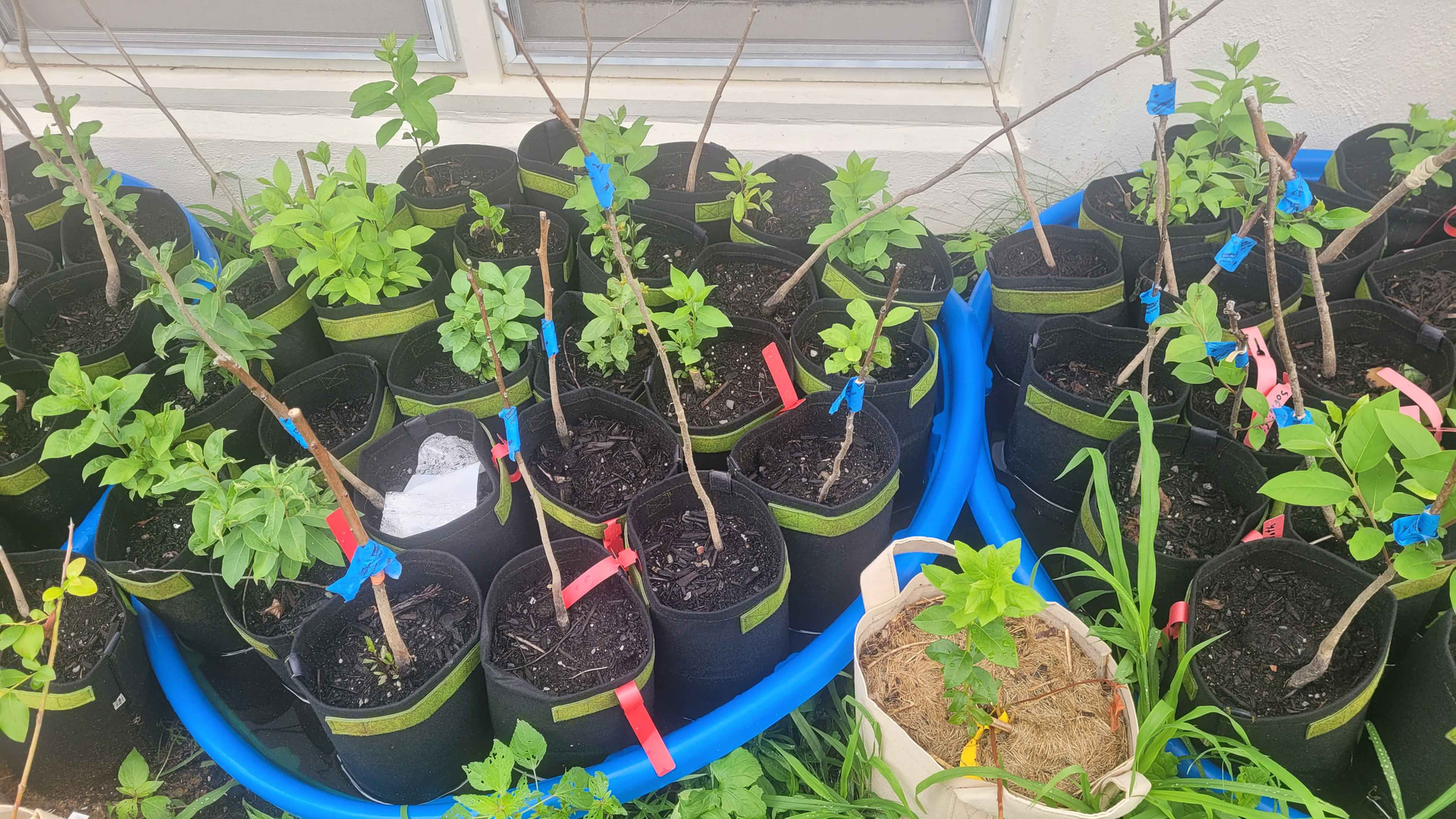
So, I had ordered 150 bare root persimmons from “Mid Atlantic Natives” with the intention of grafting them, since my seedlings had not grown enough to realistically graft on to them. These arrived in mid-March, which was a hassle since we still had very cold weather in NJ, and I could not dig to heal them in. I kept them indoors, in a few buckets or the bags that they shipped in, until it was warm enough for me to transplant. I was not able to get my compost delivery until mid-April, because my town doesn’t allow people to park in the street until then. I transplanted all of these Persimmon into basically pure compost. I sorted through the bare roots, discarded one for persimmon borer, and another couple for desiccation. I am very glad that I did NOT graft them bare root, as many ended up having some complications. The first, is probably my fault, and that is delayed emergence. It is 7/29/26, and I still have some trees that are just waking up. This is likely due to dry soil conditions, since they were planted in pure compost (with osmocote) and grow bags. The compost drains very well, and I used EZ wet to aid moisture retention, but they did eventually turn hydrophobic. To fix this, I placed them into kitty pools as giant water pans. These did a great job at allowing for the soil to recondition. I put more EZ wet into the base of the pools, along with some fertilizer, and soaked the trees. Now, every time it rains, they have an extended soaking period, which has not resulted in any rot issues.
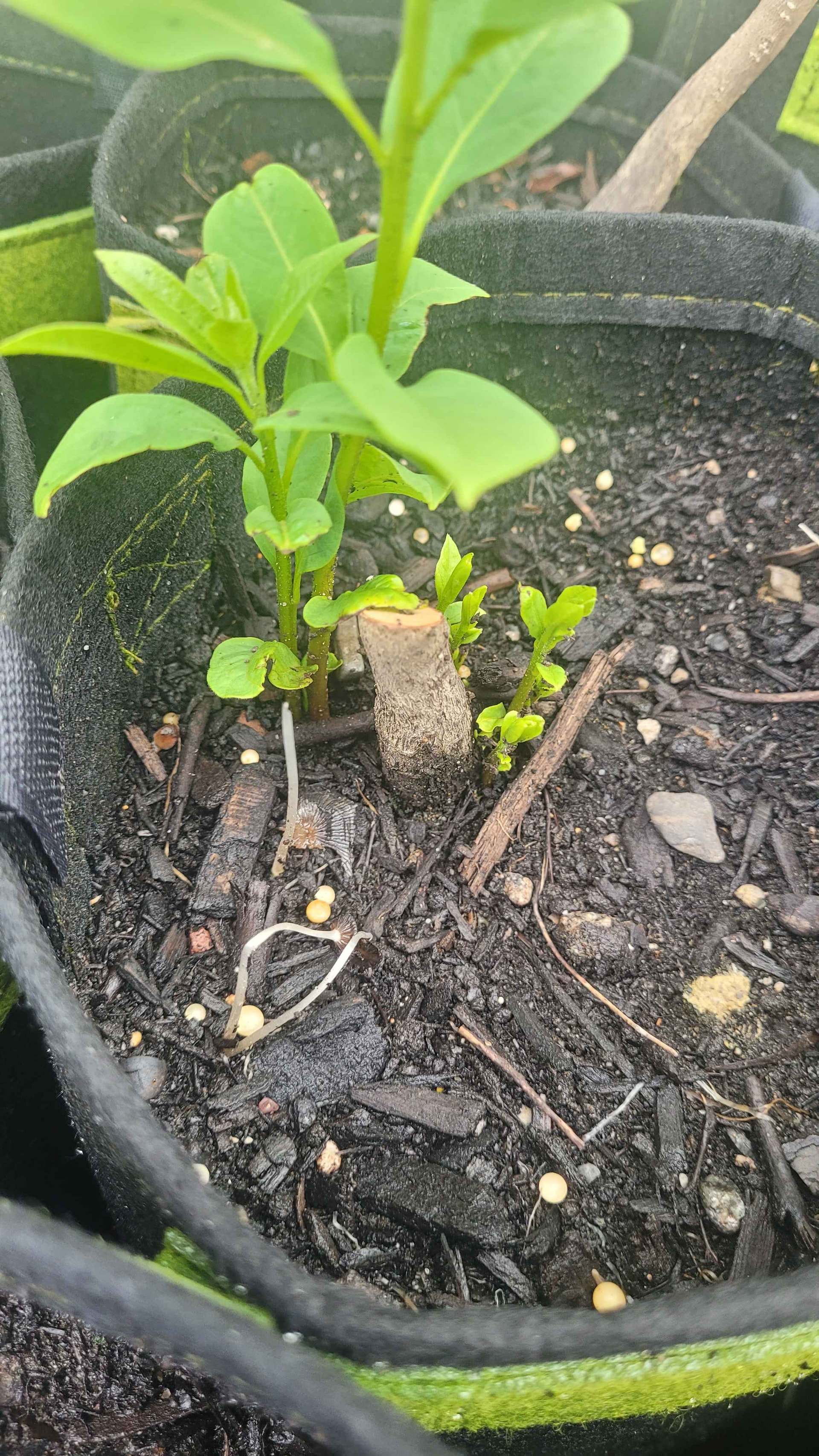
I graft them in batches, every couple of weeks, as they wake up. Again, I am glad I did not graft these bare-root because many died to the base and grew back from the roots. This happened to trees that passed the scratch test too, which I found interesting. If you are going to graft persimmon bare root, without a callous pipe, a strength in waiting may be to see the viability of the top growth.
Here is an example of common dieback and resultant regrowth. Very few actually died.
For almost all of the grafts, I used a modified Whip and tongue. For some, I used a cleft. I wrapped the graft tight with rubberbands and then dipped in melted paraffin wax/ bees wax in a 10/1 ratio, roughly. If you are doing this method, you need to protect the rubber bands from the sun and heat by wrapping them with something else. I mistakenly did not do this, and it caused several grafts to fail. I was used to just wrapping them and dipping them since it worked so well for the callous pipe, but they do not get exposed to the sun.
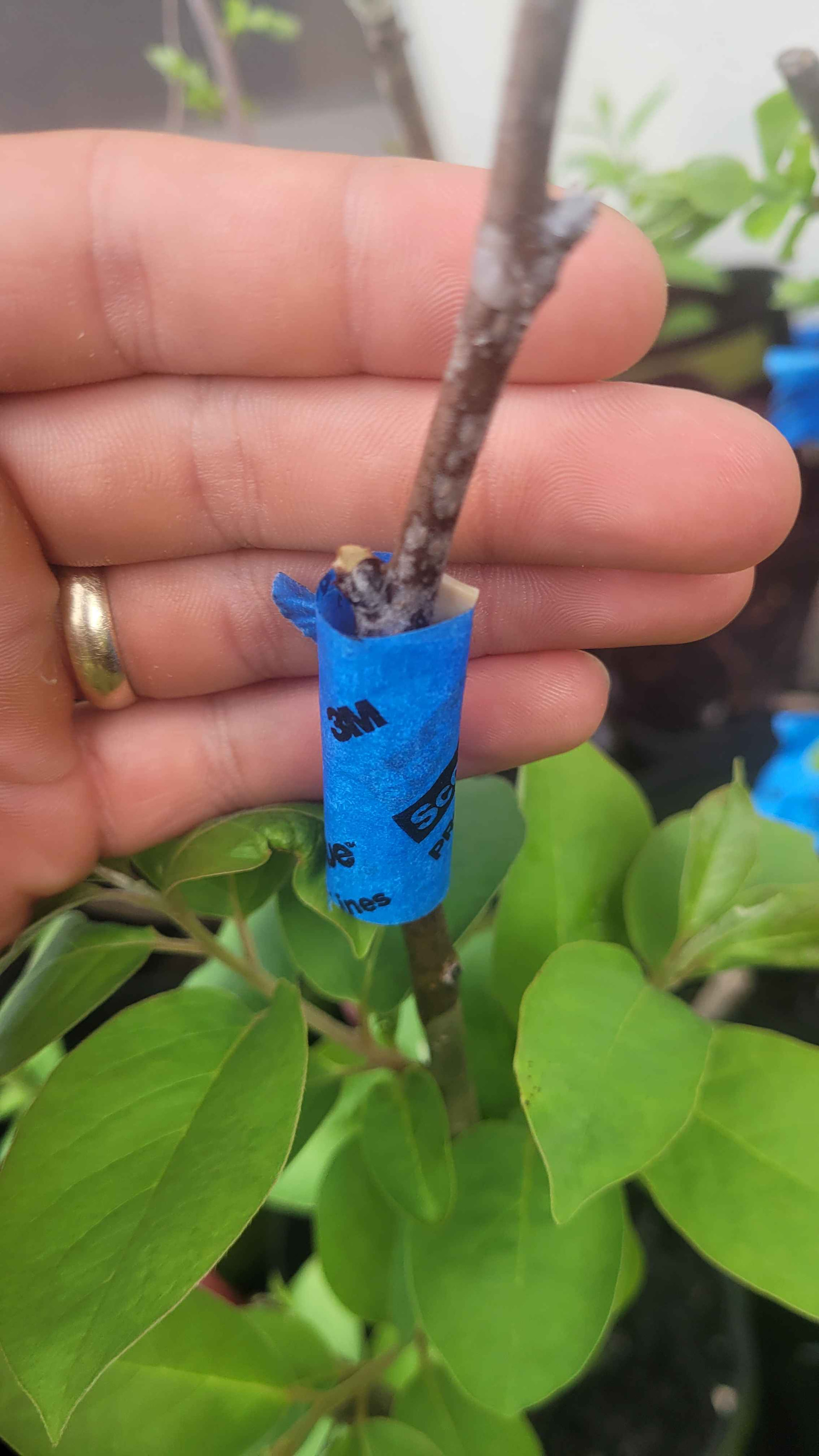
Here is an example of a mid-June graft I made, in the first batch. The rubber band basically came undone, but the graft kept thankfully.
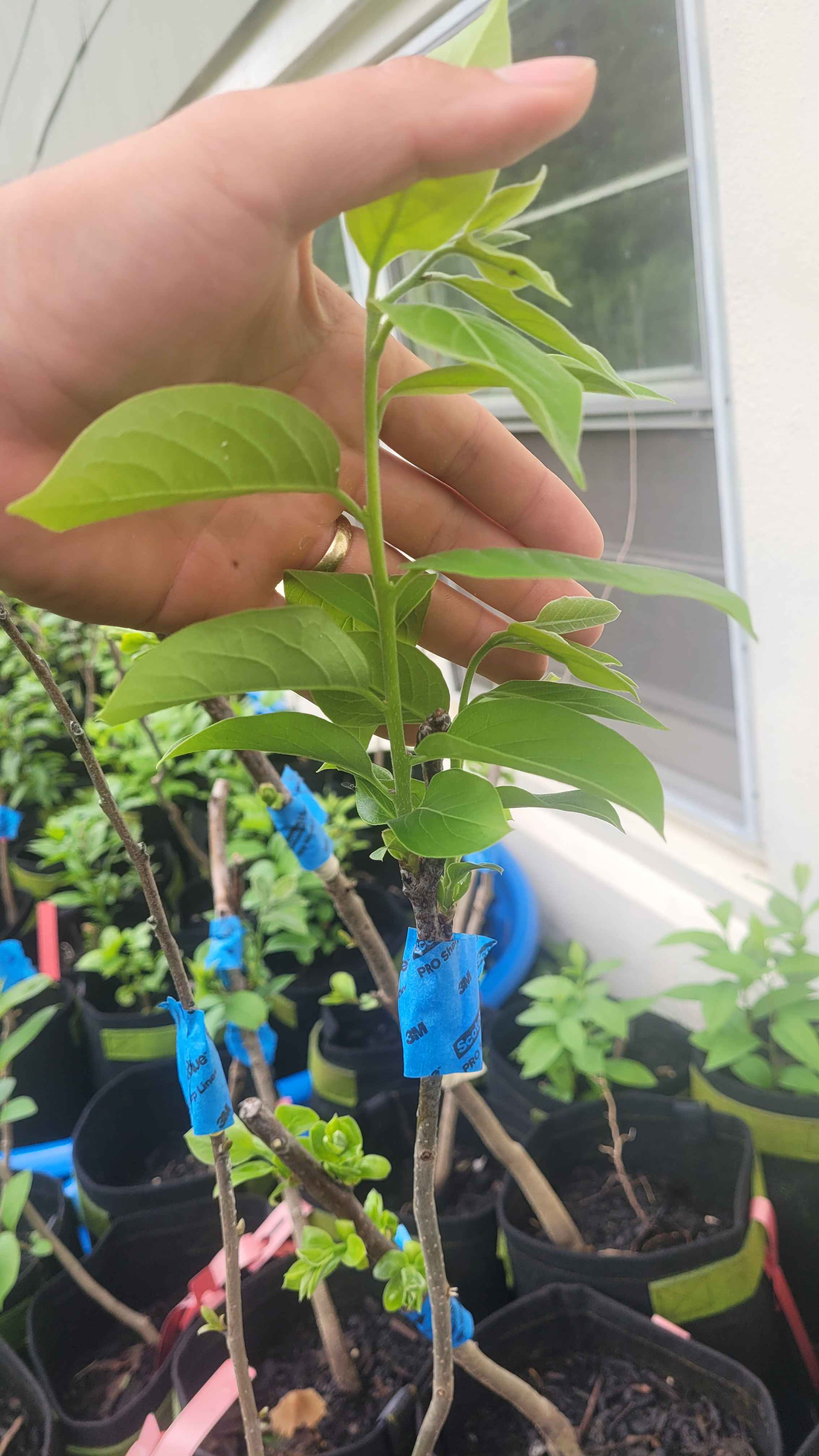
The trees had dormant persimmon psyllids, which I have been fighting since spring. They were infested, but I have been spraying and squishing as much as I can. Maybe consider doing a dormant spray on the bare roots to help with this.

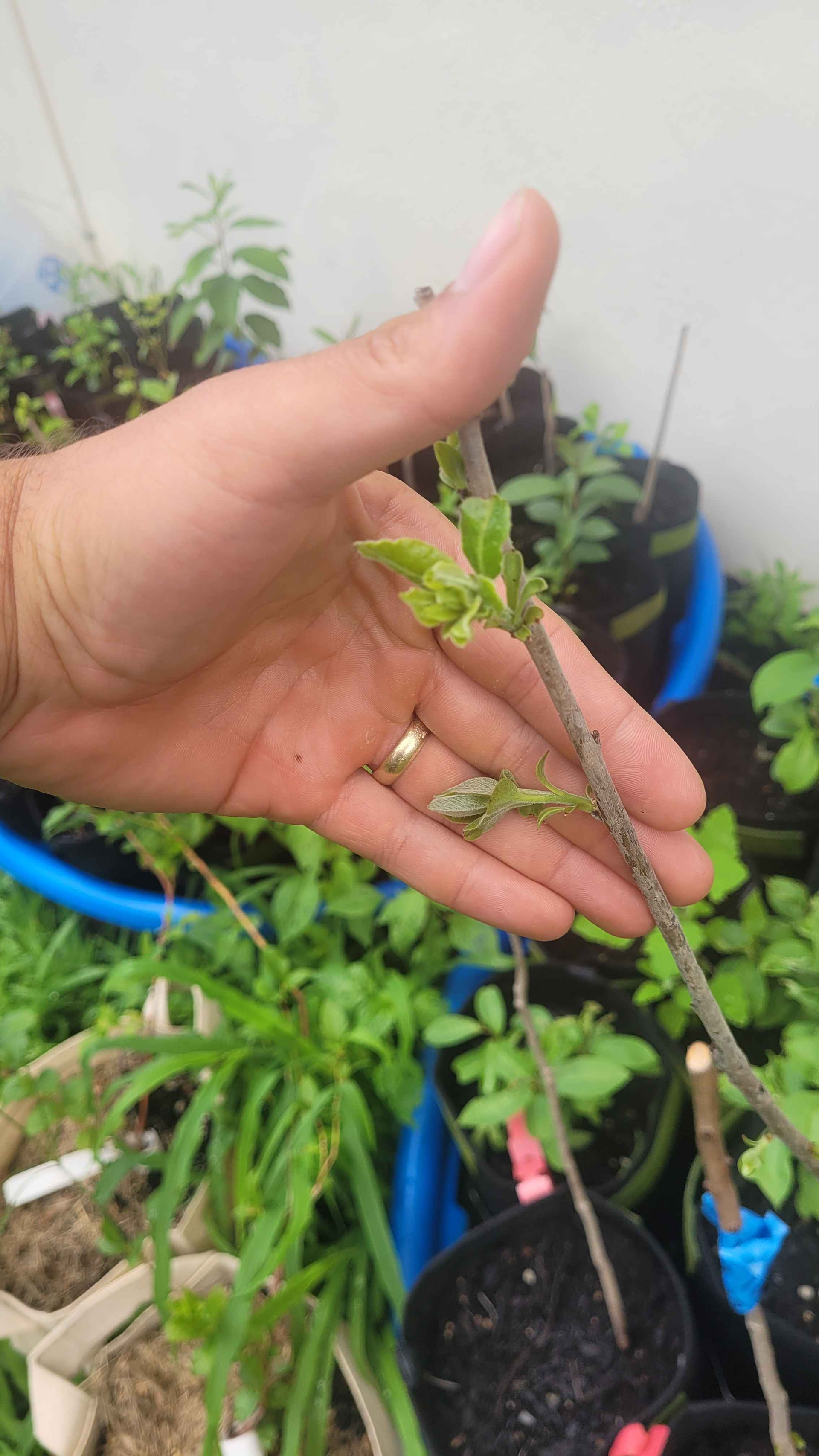
This is a tree that has just opened up earlier this week. today is 7/29, so it is a bit late, some may say. I will be grafting more trees this weekend.
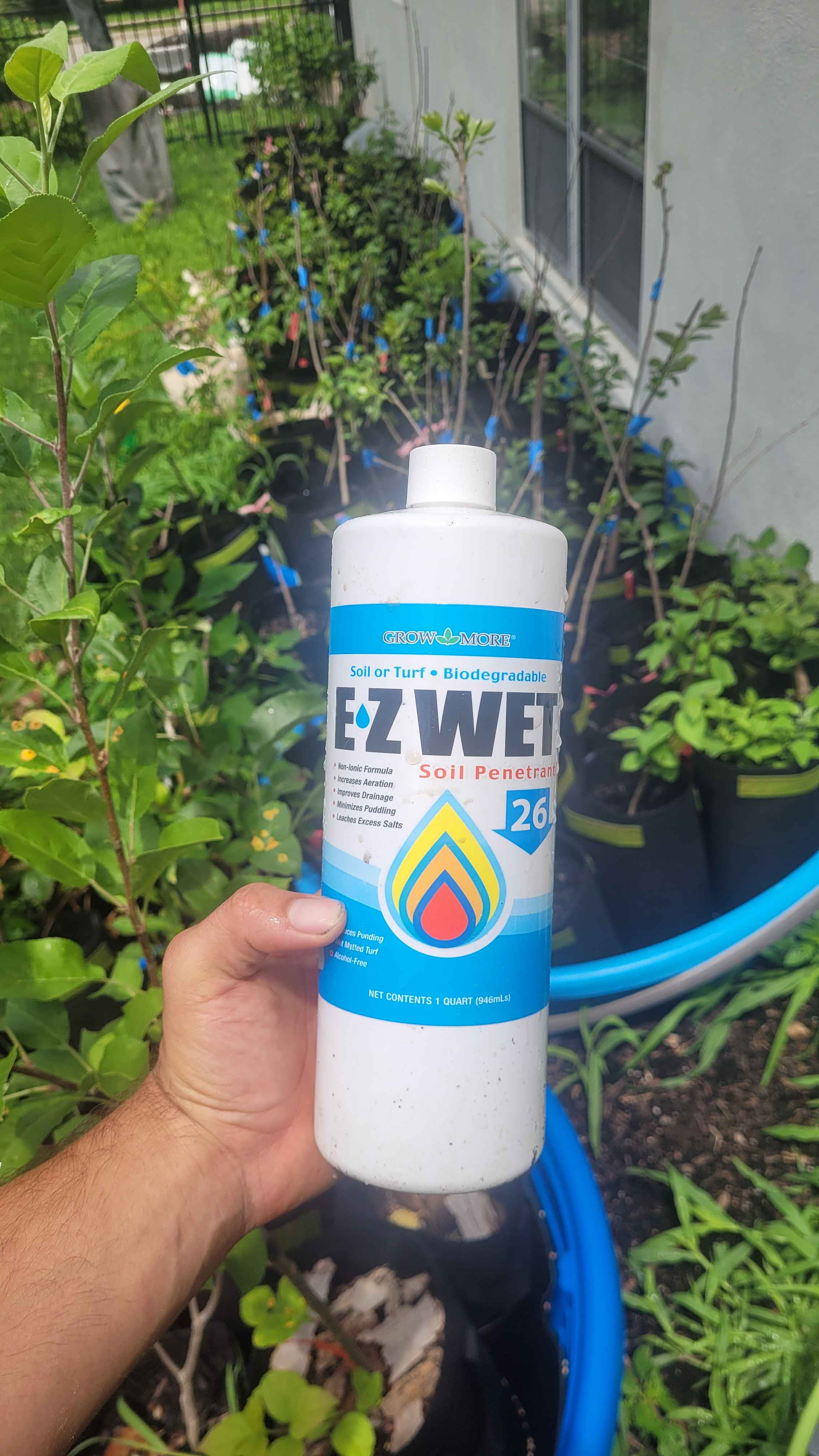
Here is a godsend of a product when you are doing container gardening, especially in grow bags. It is a surfactant that is a bit more forgiving than just using castile soap, and it lasts longer. if you are using grow bags, you should really try a surfactant like this or yucca, it greatly increases water retention and basically eliminates hydrophobic soil. I still used the kitty pools because the water demands were too high.
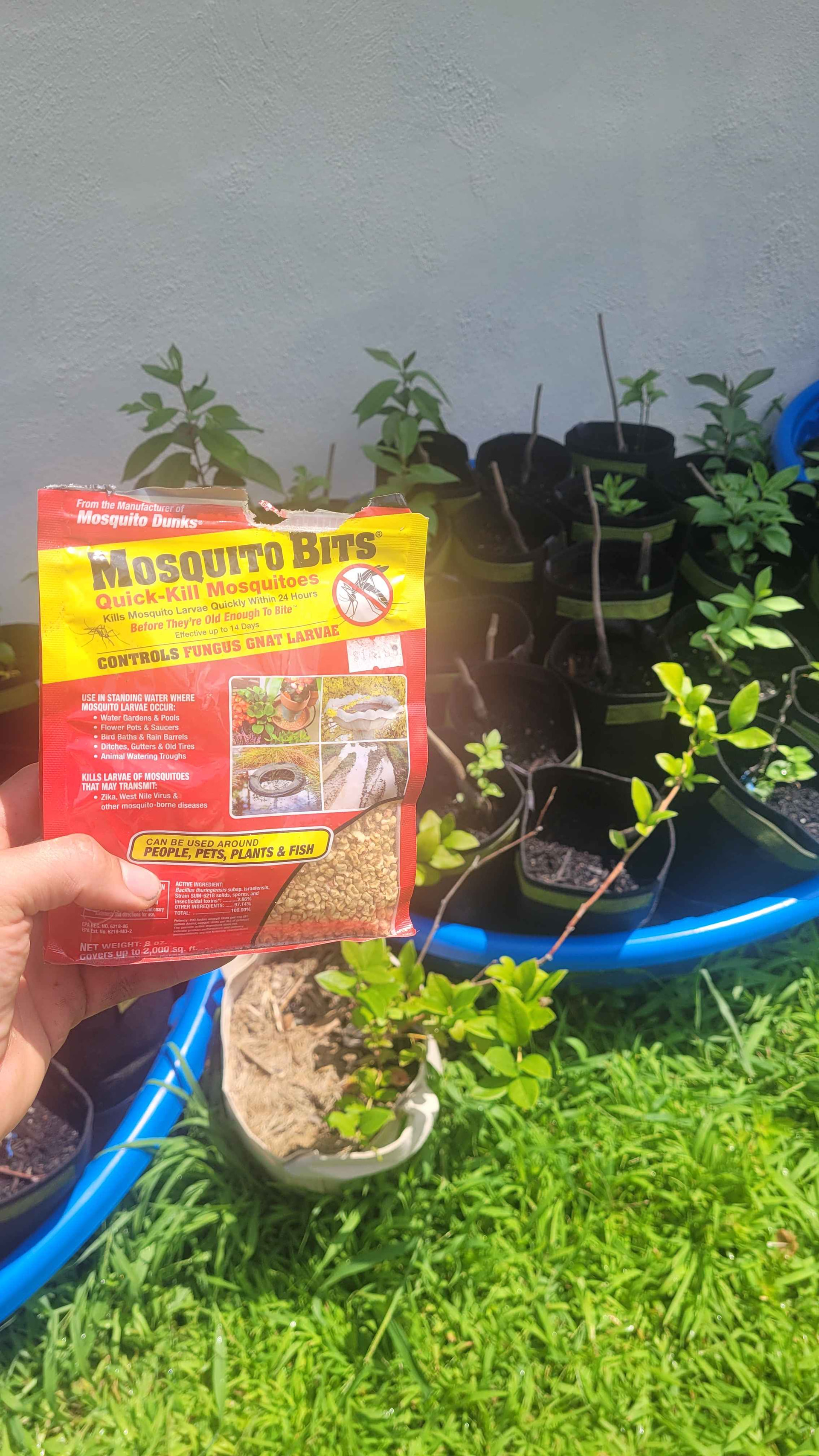
If you are using large water pans like this, you really should put some mosquito dunks in there every couple of weeks. these are mosquito utopias with all of the dirt and stagnant water. Though the pools dry up in a few days, each time it rains the mosquito eggs will rehydrate and make a new generation. on the plus side, this is probably killing more mosquitos than most traps would for pretty cheap.
Here is a PH and EC reading of the pool water after the last couple days of rain.

I have 8 of these