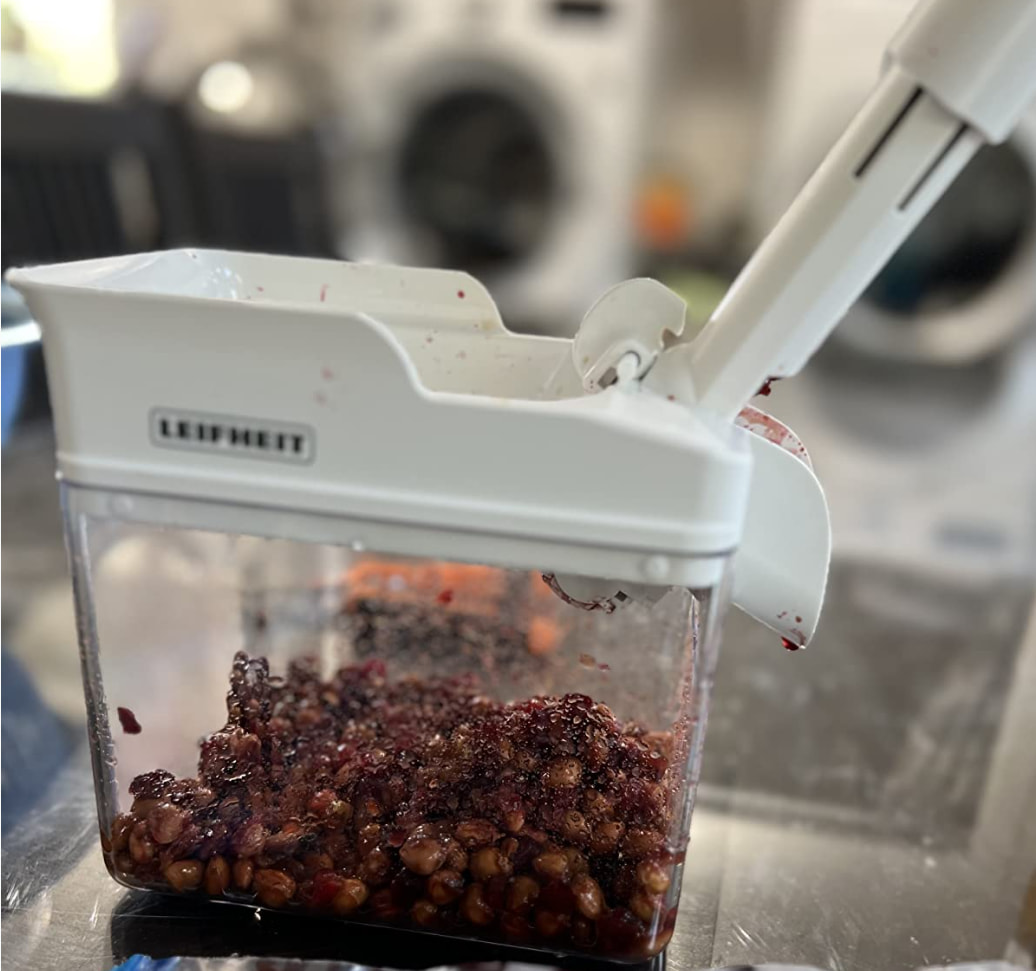
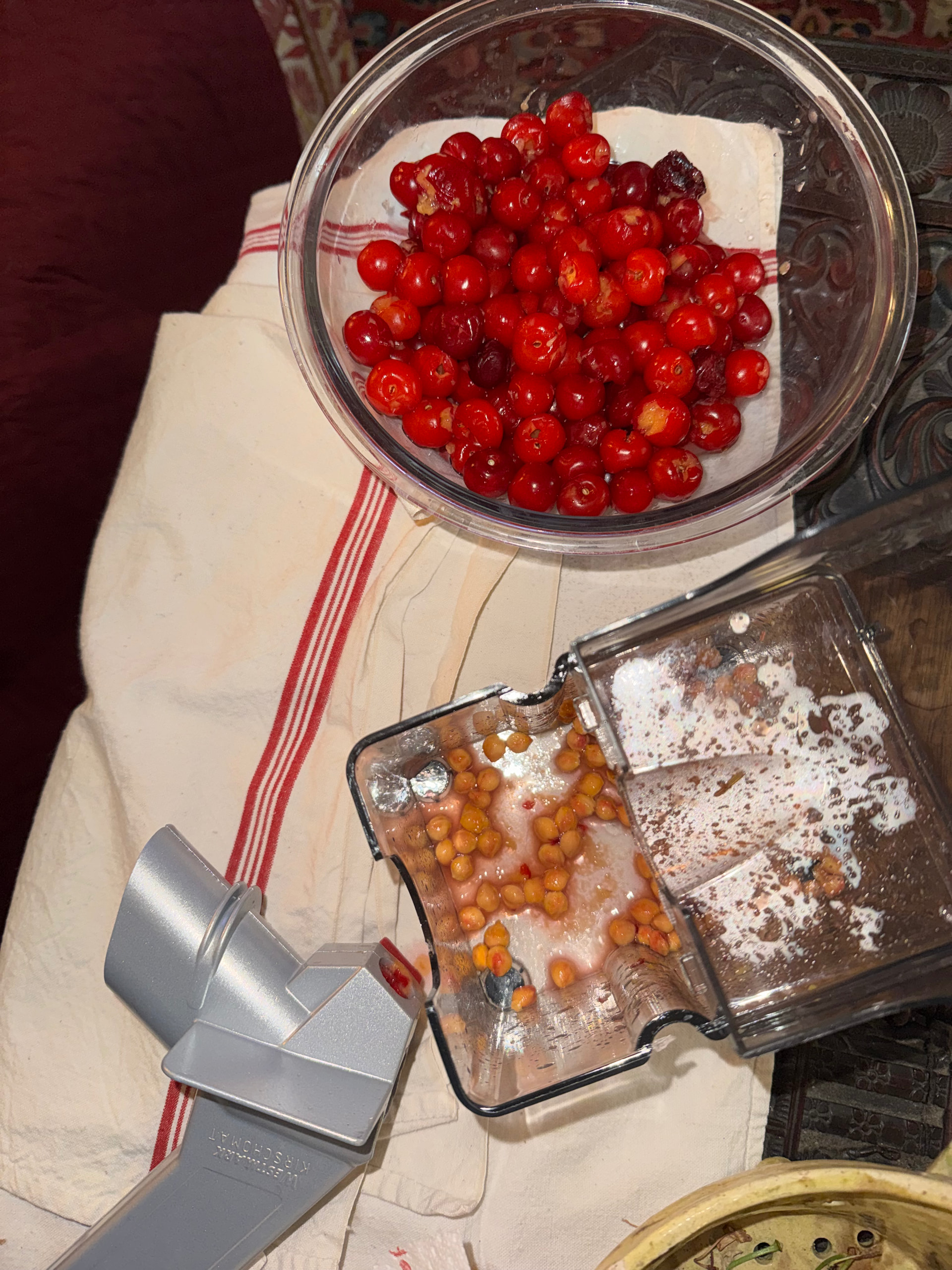
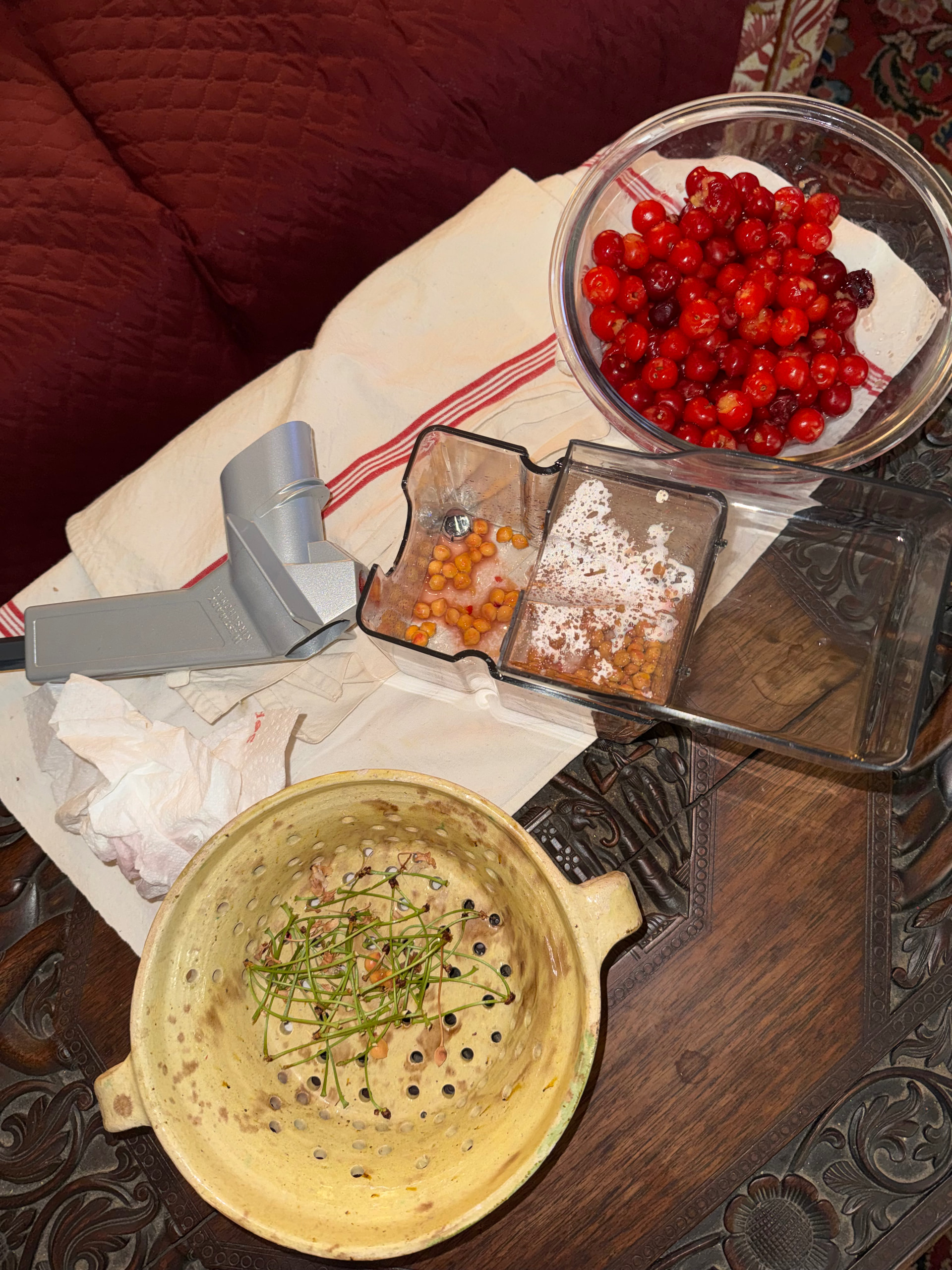
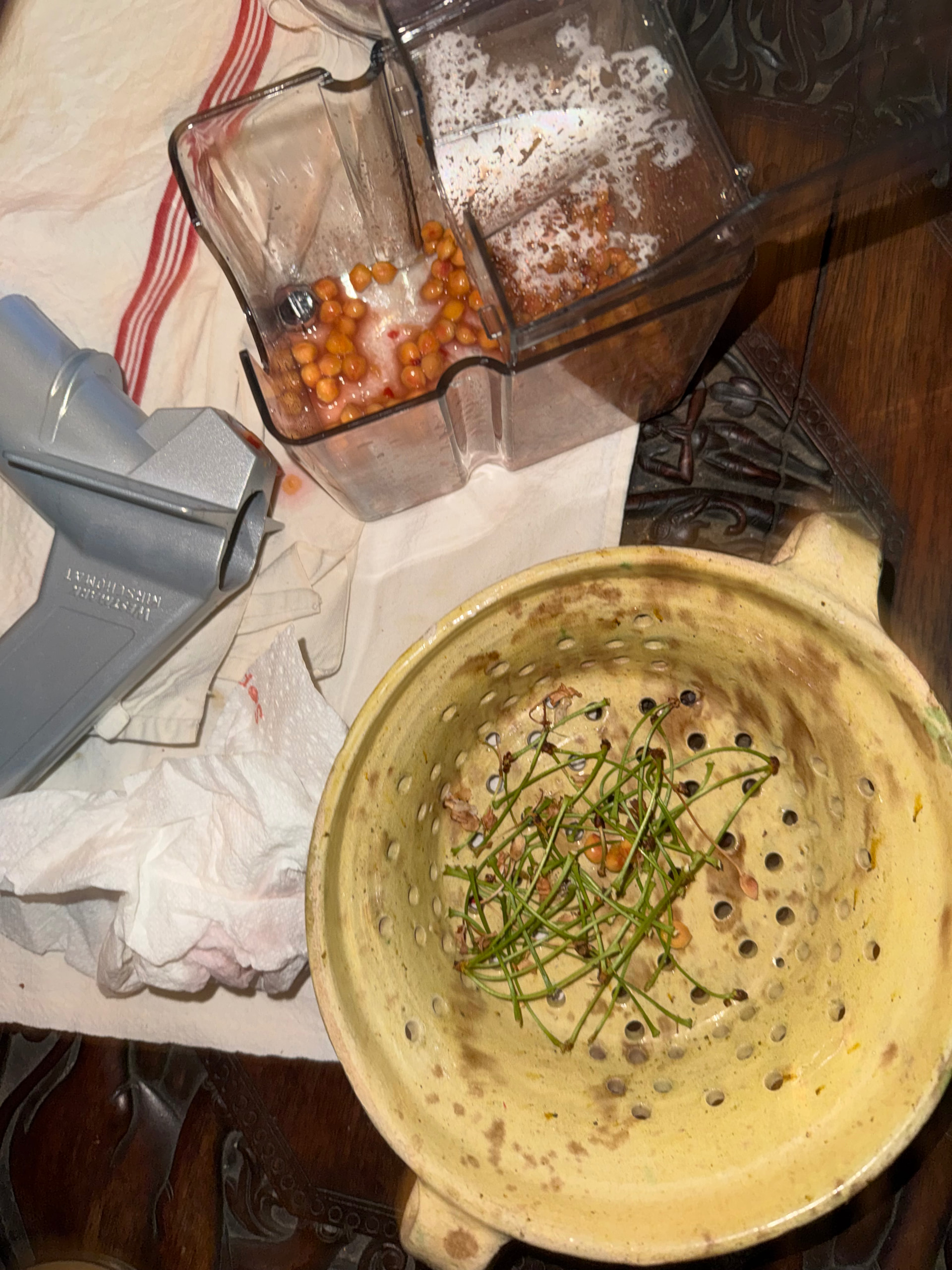
I tried the single cherry pitters. They took too long. Then we used a single chopstick, which worked pretty well, but I couldn’t sit for that long. Then I bought one of the leifheit machines. I think they’re from Germany. I love the mechanism and the machine. Main problem is that they don’t get all of the pits.
I harvested a ton of cherries last week. I brought them in, and my wife was going to bed. How am I going to pit all of these cherries? I used the Leifheit machine. It got them done. I knew I would harvest another giant pile of cherries the next day, so I couldn’t wait. She has had work done on her teeth. She can’t afford another broken tooth. She said she wouldn’t make pie or crisp out of those cherries. Well, I guess now I have to learn how to make cherry crisp and pie. She could see how disappointed I was.
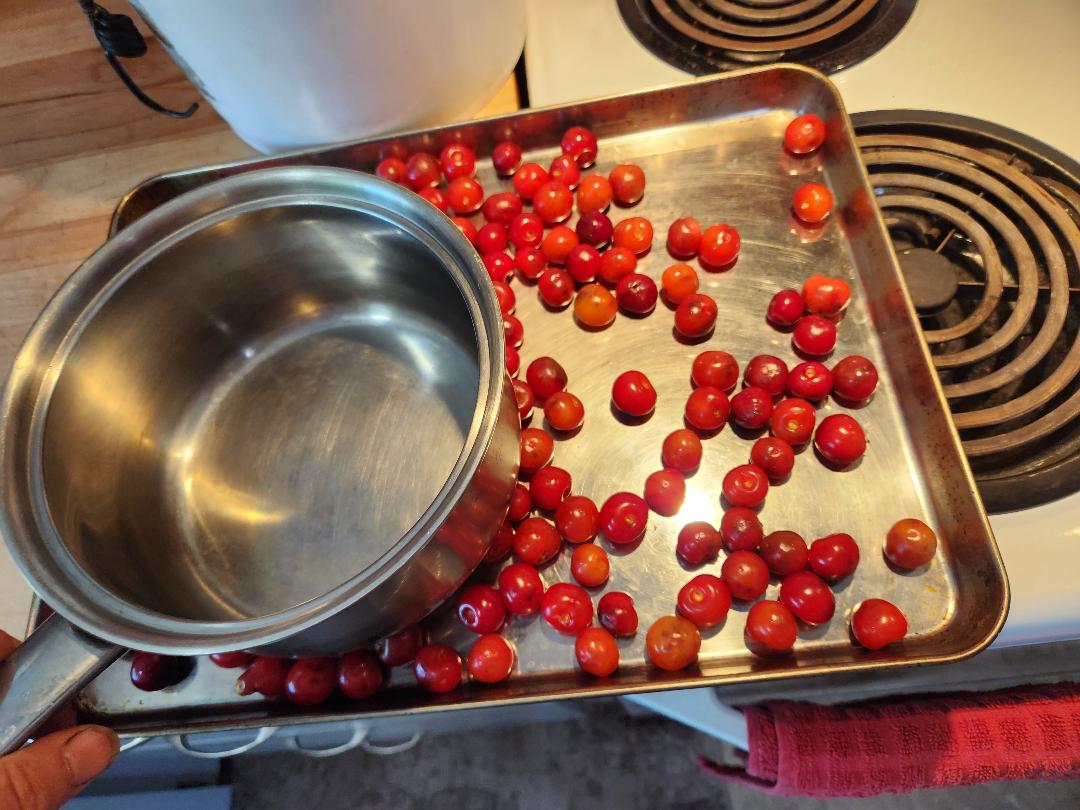
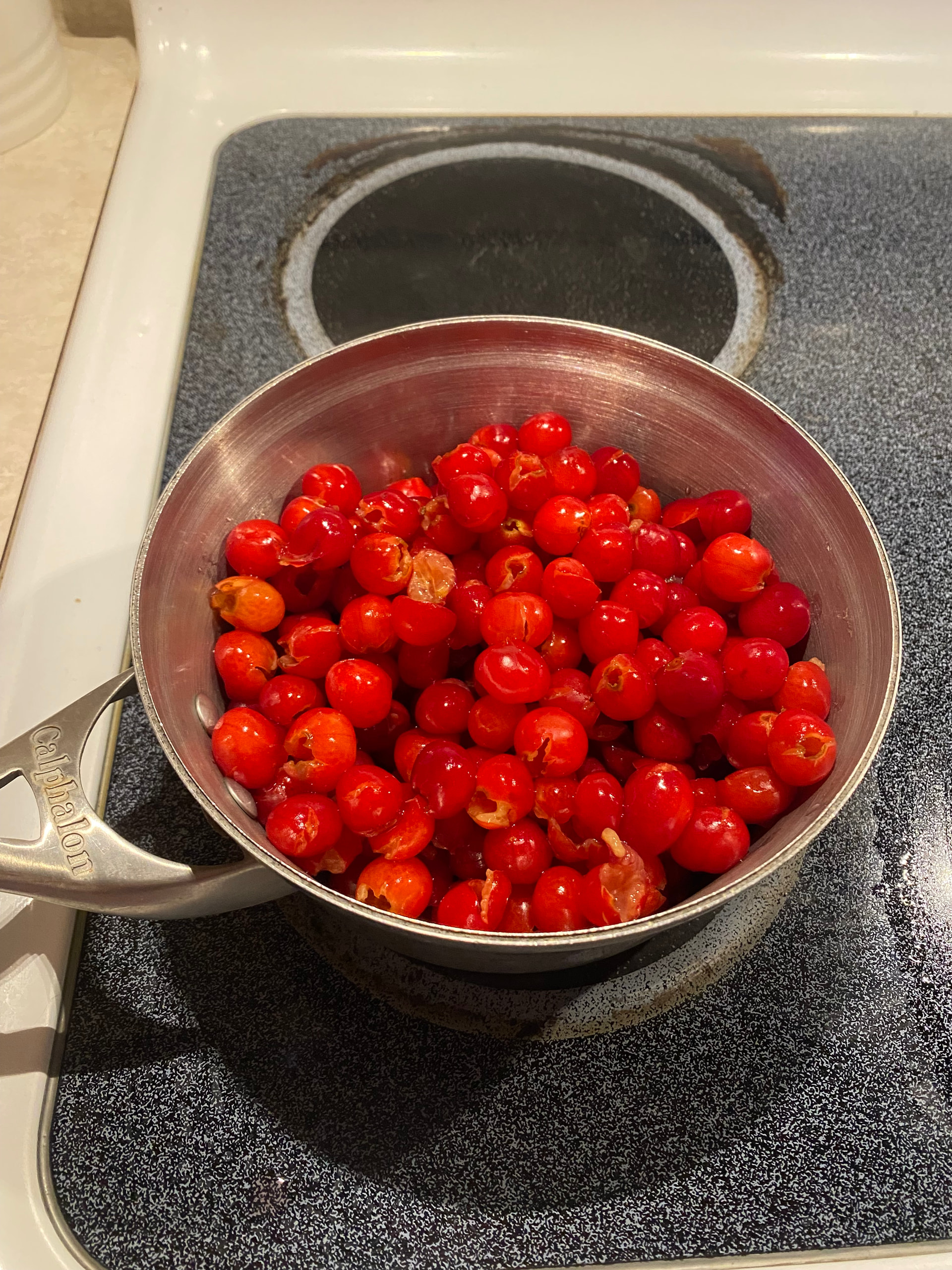
She looked on the internet and found out about this way called “the chef’s method”. Apparently, you take a normal medium sized pot like you’d use for cooking vegetables. You put the cherries in a large cookie sheet, and then you simply smash down on the cherries. Afterwards, she said it is amazingly easy to remove the pit, and you know that you got every one. Best of all, she said that she is willing to once again make cherry crisp and cherry pie on THESE cherries, but not the others. Well, I guess I will hope to learn how to make reasonably cherry crisp and pie out of the leifheit ones, and eat them very, very slowly. I am once again a happy camper because she will make some pies and crisp out of the ones from the new method.
Unfortunately I had the same problem with that cherry pitter. It works great on nice firm large sweet cherries, less so on fully ripe, smaller, softer, sour cherries.
I ended up have to go through them all one by one, squeezing gently to see if they had still had pits in them.
i have that machine as well and also had the same issue. i now just hold my hands over a sheet pan and literally tear every cherry in half, ensuring i get every pit. the rest i freeze and make juice out of them. no pitting needed. im going to have a huge crop again this year as my 2 lutowka polish cherries are loaded for the 1st time this year and my romeo that barely fruited last year is also loaded. despite losing my cj to shoot blight ill still be ahead of the game.
The hand-tear method is underrated. Yeah you lose a bit of juice but you catch every pit and it’s actually faster once you get into a rhythm. I do the same with overripe ones that would just get mangled by any machine anyway.
if you put a sheet pan under your hands, you dont lose any juice. just pour it back into the bowl. ive tried all the tricks and tearing the fruit is the most time effective other than juicing them in my euro. juicer. the chics get the leftovers.
we have an itty bitty funnel (like, 2cm tall, 2mm wide spout). I’ve been inverting it on a cookie sheet and skewering the cherries on it to pit them. Hands still get very saturated in juice. Next year I’ll try just smashing them. It seems like the funnel would be faster, but never know until you do a batch and see how it goes.
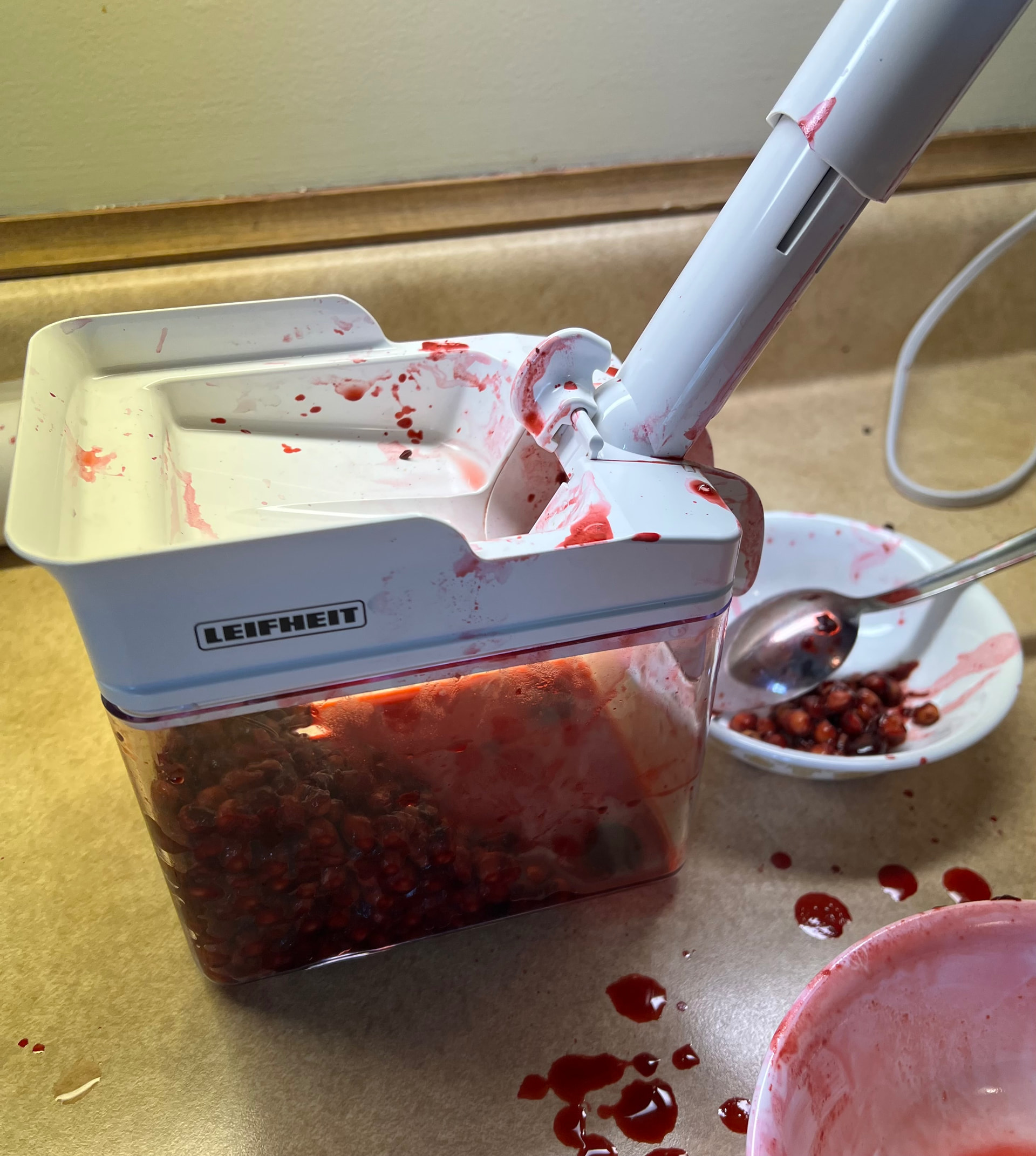
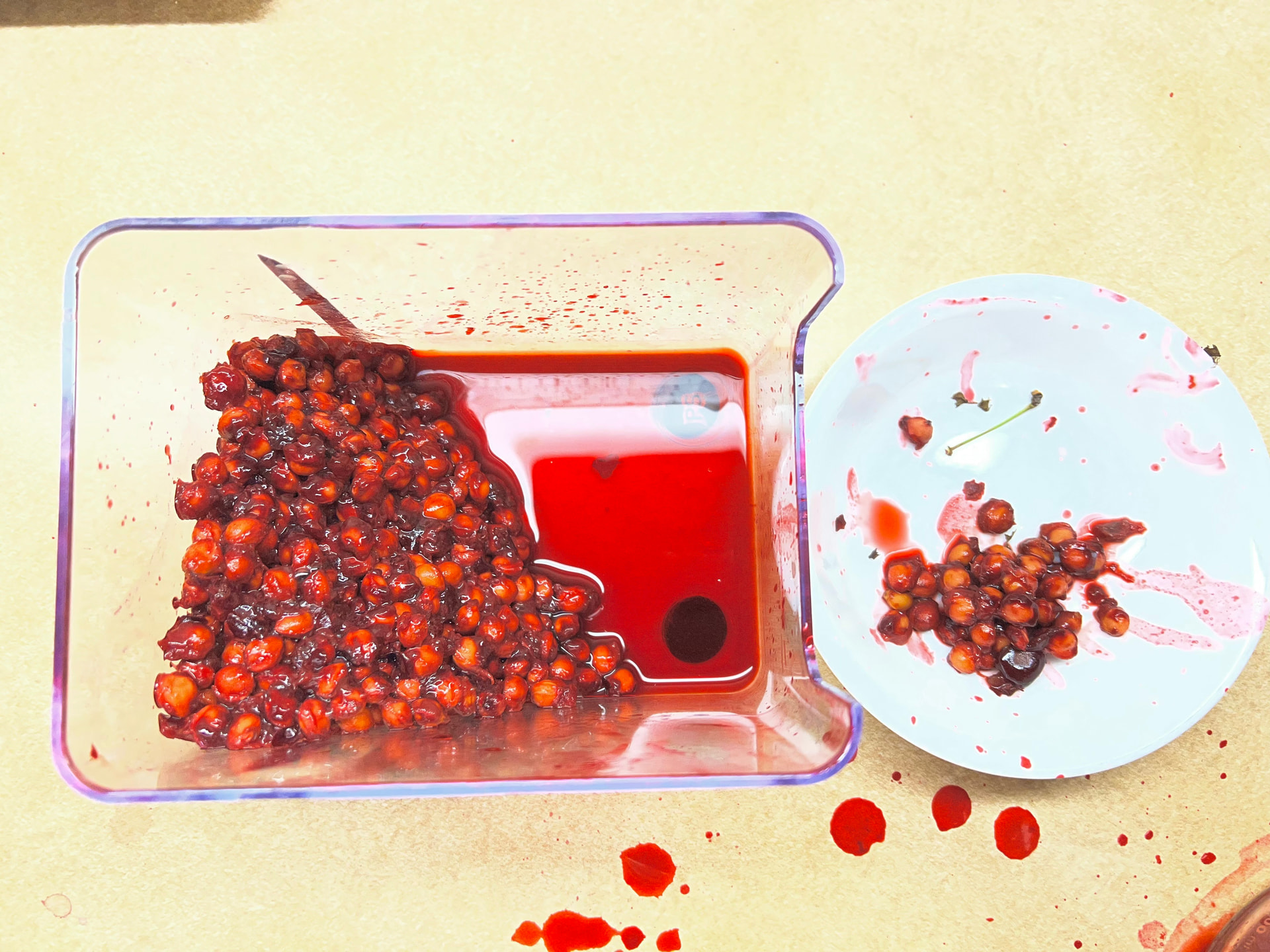
The pits in the left bin are what the pitter got (with juice drained off) from two pies (8 cups) of pitted cherries. The small bowl at right holds the pits I found by gently feeling/squeezing all cherries after passing them through the pitter. We ate one pie, and we found 2 pits that my fingers missed.
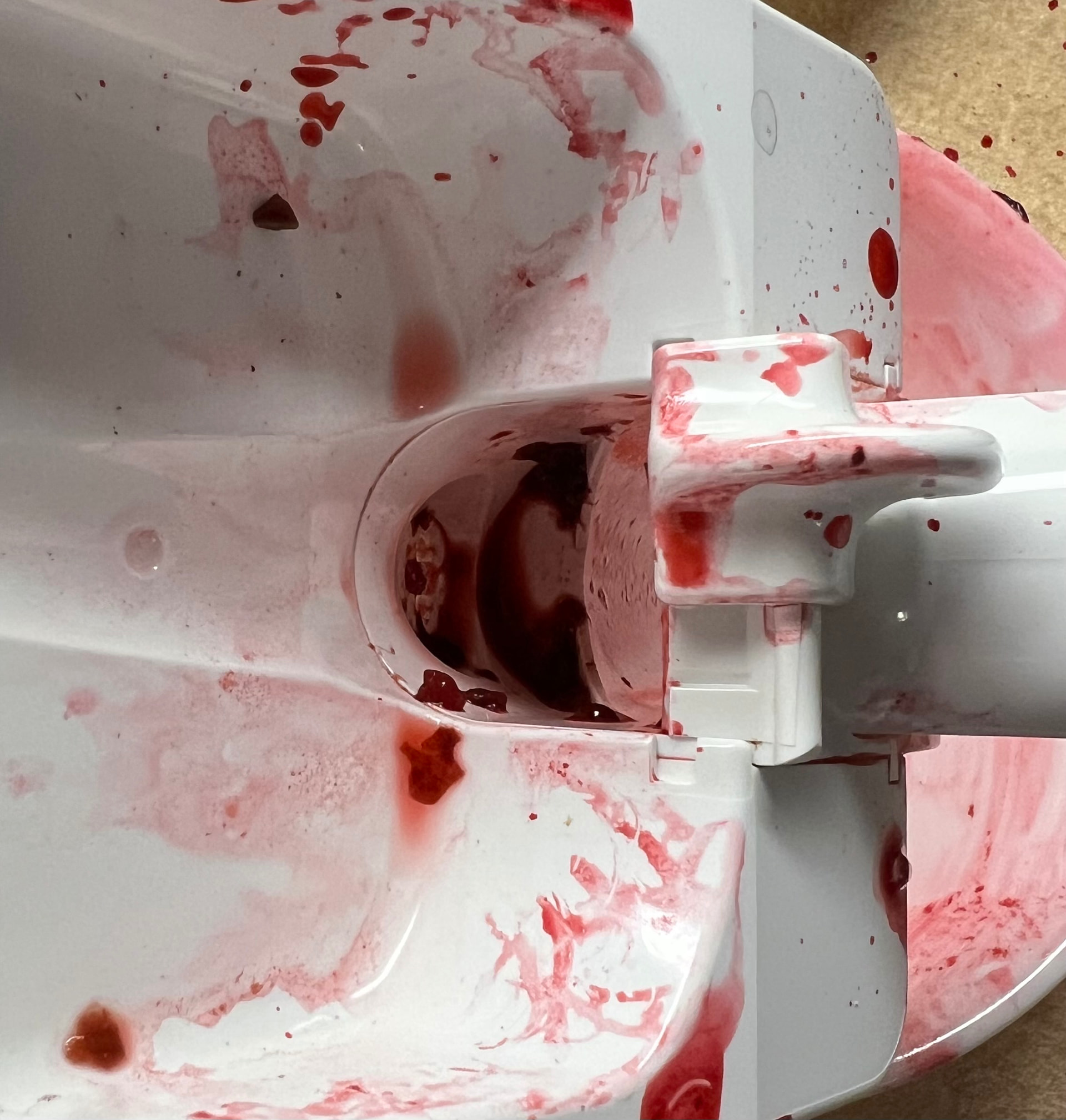
I think the Leifheit pitter struggles with smaller and softer cherries. I was able to increase the success rate of the Leifheit by putting a torn-in-half cherry on the down slope side of the pitting chamber. This moved the smaller cherries back into the center of the chamber where the plunger could hit the pit head-on and push it through, rather than a glancing blow. A 3D printed insert may be possible. Or Leifheit could make multiple swappable parts with different sized cavities.
We just pitted and froze about 16 lbs of Montmorency cherries, all done with single-cherry pitters. What we’ve found over the years is that these cherries are easier to pit if they are picked before they are fully ripe (dark red). When they are at a lighter red stage, the pit often (around half of the time or more) comes out with the stem when it is pulled off. This speeds the process up somewhat, but not that much, because you have to pull carefully, one cherry at a time. This amount of cherries or even larger crops did not seem to take too much effort to process this way, and very few pits are missed.