the book I’ve got is this one, third edition. there are two relevant sections for propagation from cuttings

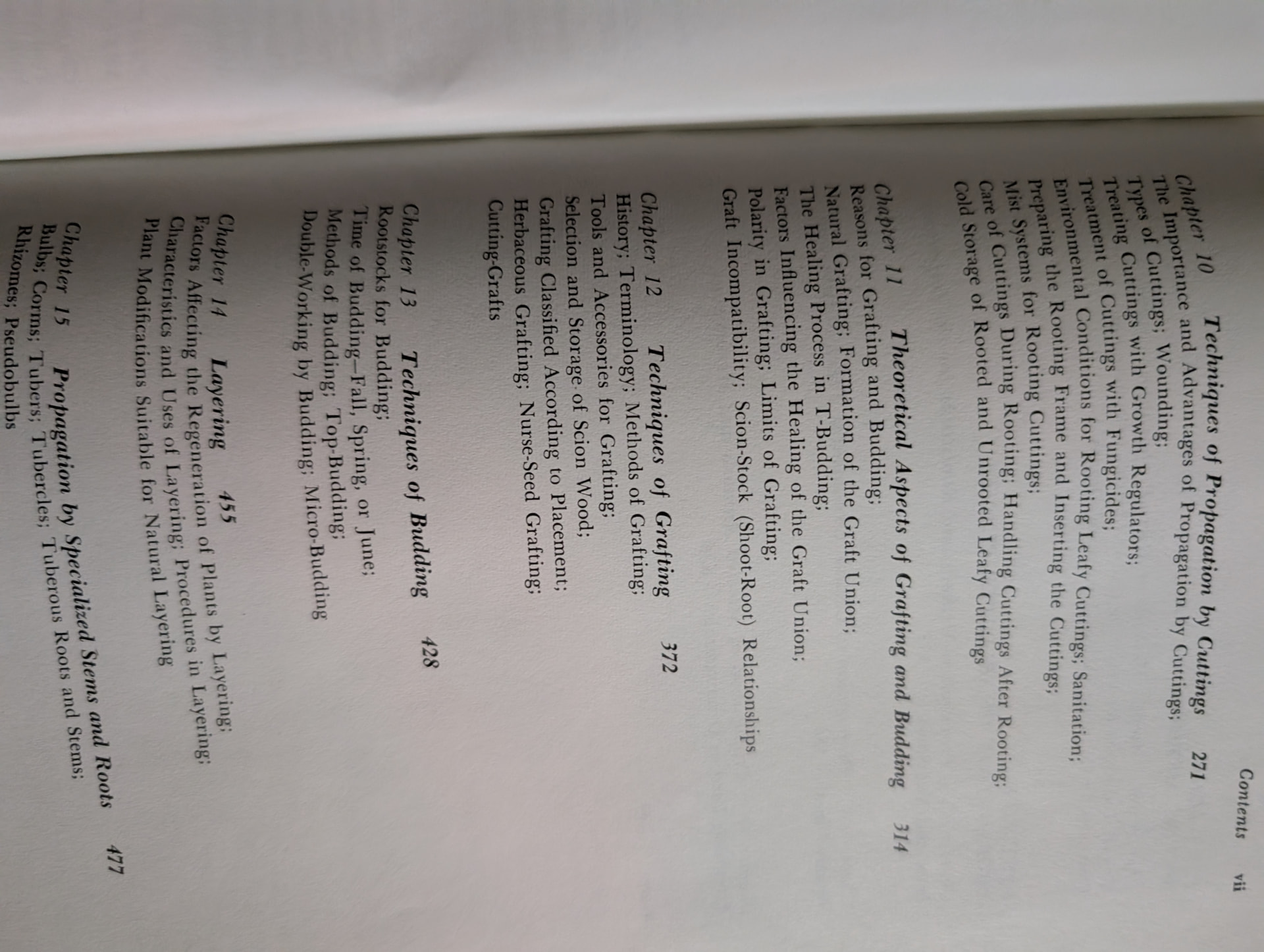

a quotation from chapter 10:
Hardwood Cuttings (Deciduous Species)
This is one of the least expensive and easiest methods of propagation, Hardwood cuttings are easy to prepare, are not readily perishable, may be shipped safely over long distances if necessary, and require little or no special equipment during rooting (50).
The cuttings are prepared during the dormant season-late fall, winter, or early spring-from wood of the previous season’s growth, although with … species, such as the fig, olive, and certain plum varieties, two-year-old or older wood can be used, Hardwood cuttings are most often used in propagation of deciduous woody plants, although some broad-leaved evergreens, such as the olive, can be propagated by leafless hardwood cuttings. Many deciduous ornamental shrubs are started readily by this type of cutting. Some common ones are privet, forsythia, wisteria, honeysuckle, and spiraea. Rose rootstocks, such as Rosa multiflora, are propagated in great quantities by hardwood cuttings. A few fruit species are propagated commercially by this method-for example, fig, quince, olive, mulberry, grape, currant, gooseberry, pomegranate, and some plums. Certain trees such as the willow and poplar, are propagated by hardwood cuttings.
The propagating material for hardwood cuttings should be taken from bealthy, moderately vigorous stock plants growing in full sunlight. The wood selected should not be from extremely rank growth with abnormally long internodes, or from small, weakly growing interior shoots. Wood of moderate size and vigor is the most desirable. The cuttings should have an ample supply of stored foods to nourish the developing roots and shoots until the new plant becomes self-sustaining. Tip portions of a shoot are usually low in stored foods and are discarded. Central and basal parts make the best Cuttings.
Hardwood cuttings vary considerably in length from 4 to 30 in. Long cuttings, when they are to be used as rootstocks for fruit trees, permit the insertion of the varietal bud into the original cutting following rooting, rather than into a smaller new shoot arising from the original cutting.
At least two nodes are included in the cutting: the basal cut is usually Just below a node and the top cut 16 to 1 in above a node. However, in preparing stem cuttings of plants with short internodes, little attention is ordinarily given to the position of the basal cut, especially when quantities of cuttings are prepared and cut to length, many at a time, as by a band saw.
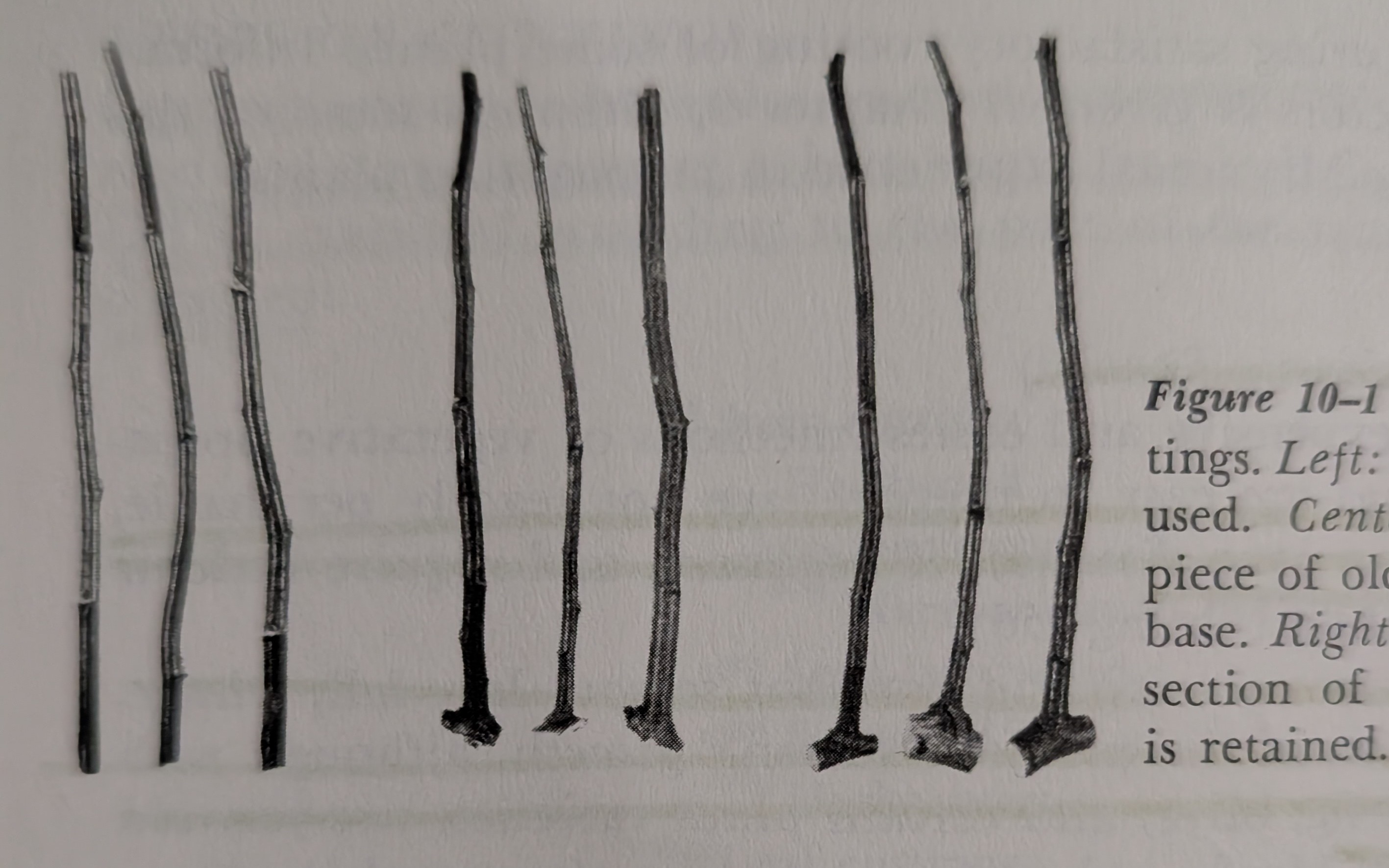
The diameter of the cuttings may range from 14 in to 1 or even 2 in, depending upon the species. Three different types of cuttings can be pre pared, as shown in Figure 10-1: the “mallet.” the “heel.” and the straight cutting. The mallet includes a short section of stem of the older wood, whereas the heel cutting includes only a small piece of the older wood.
it’s a very good book in all other aspects as well but again only two chapters relate to cutting propagation. (the grafting chapters are great).