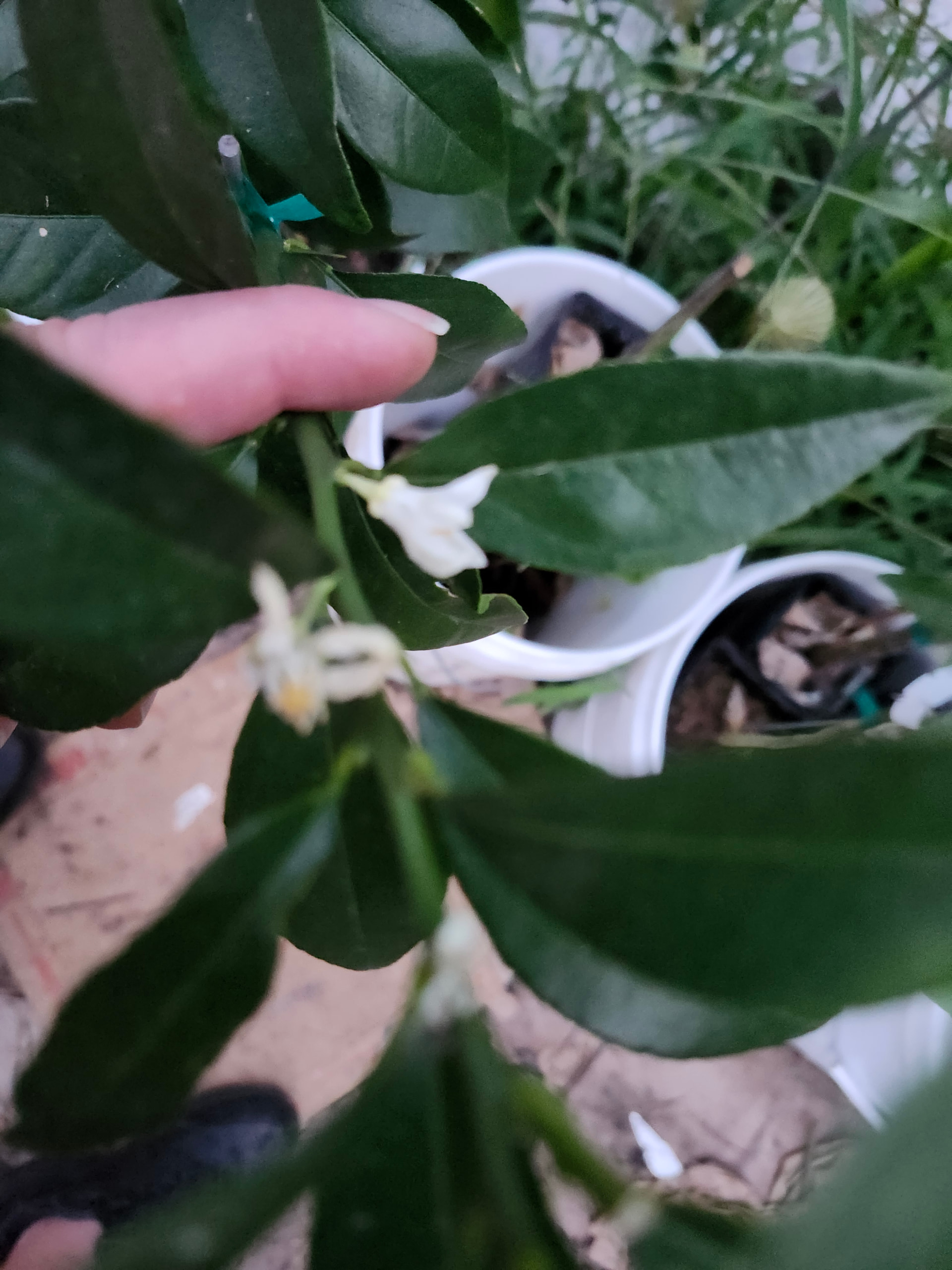
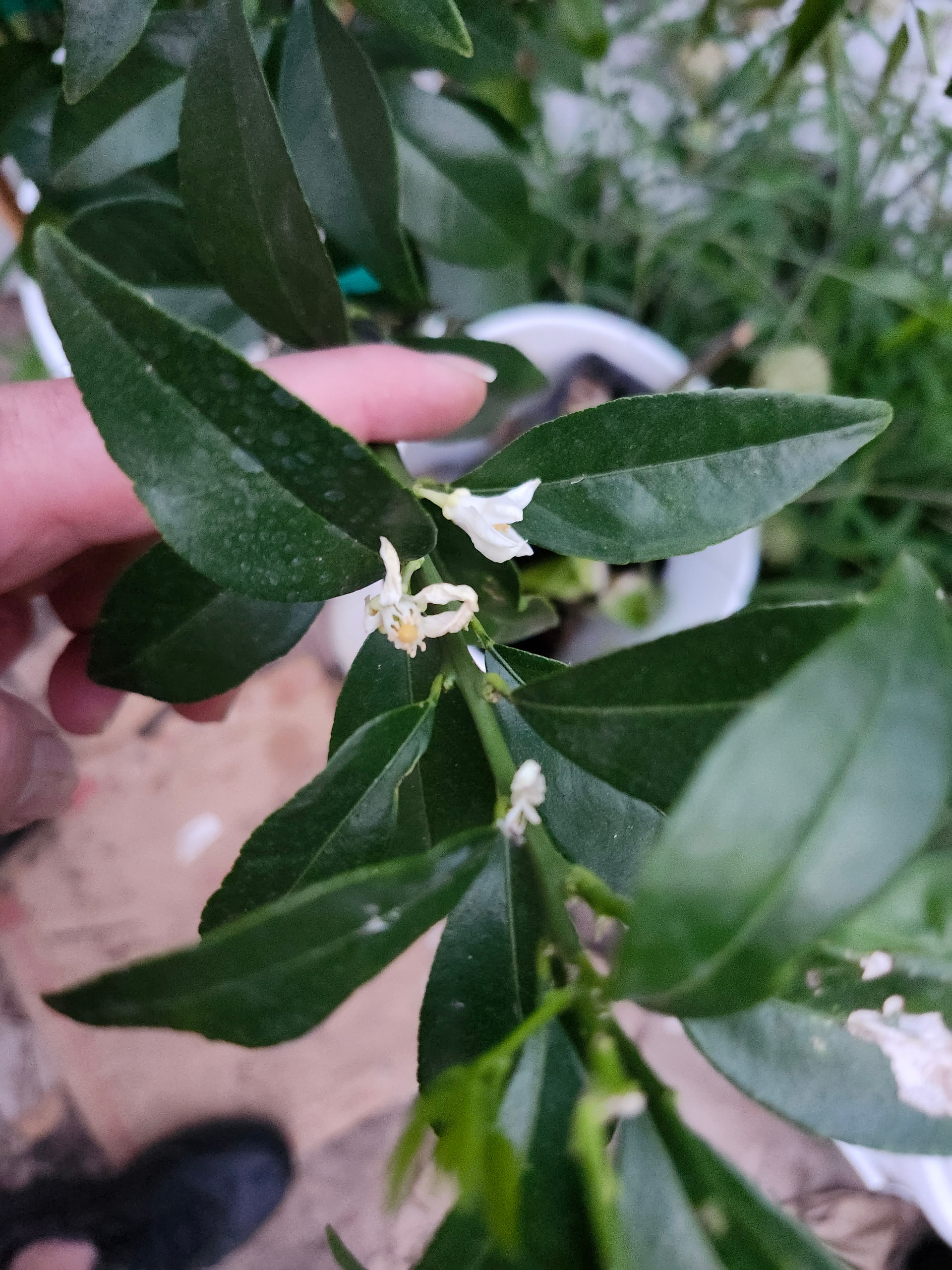
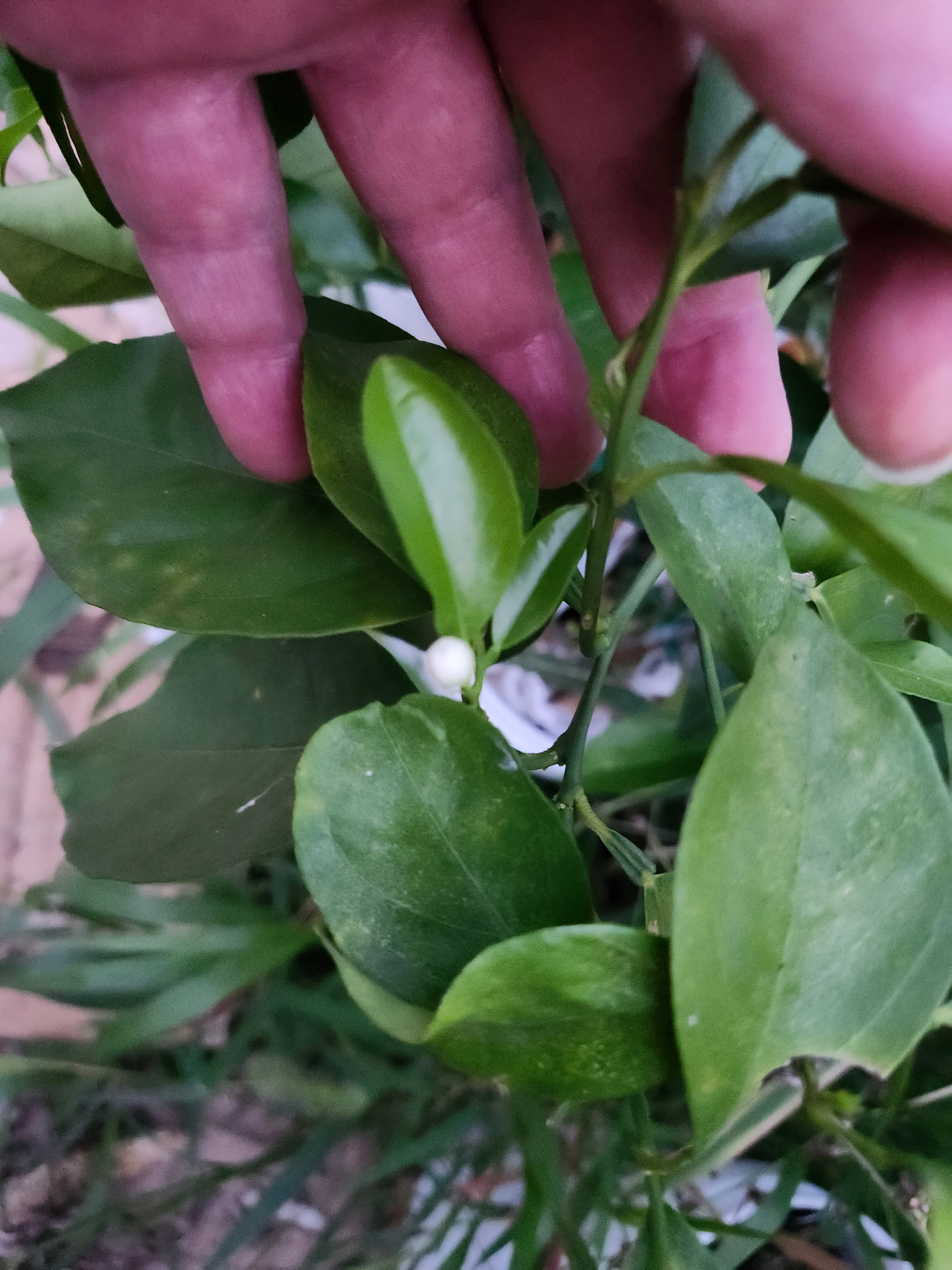
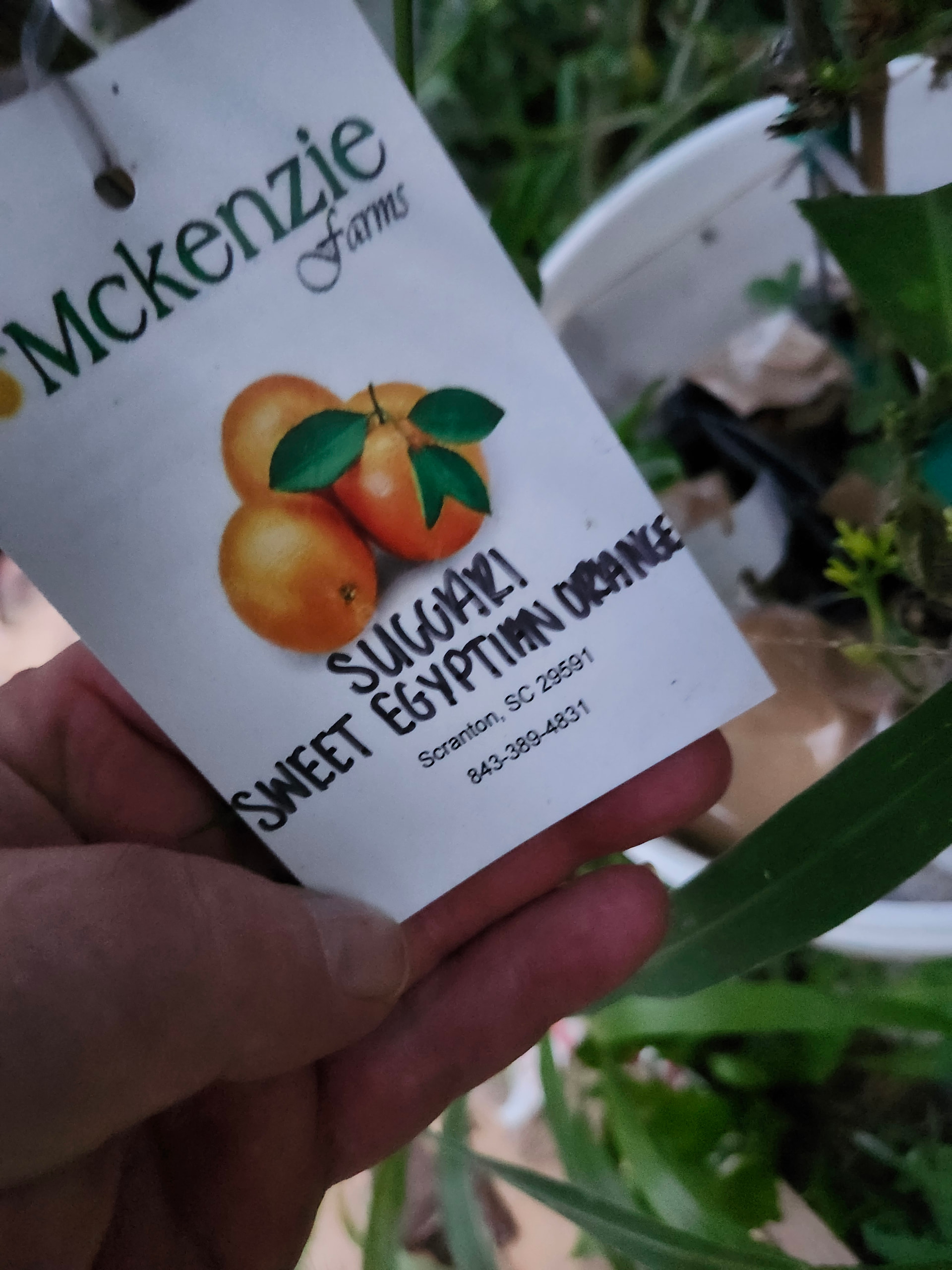
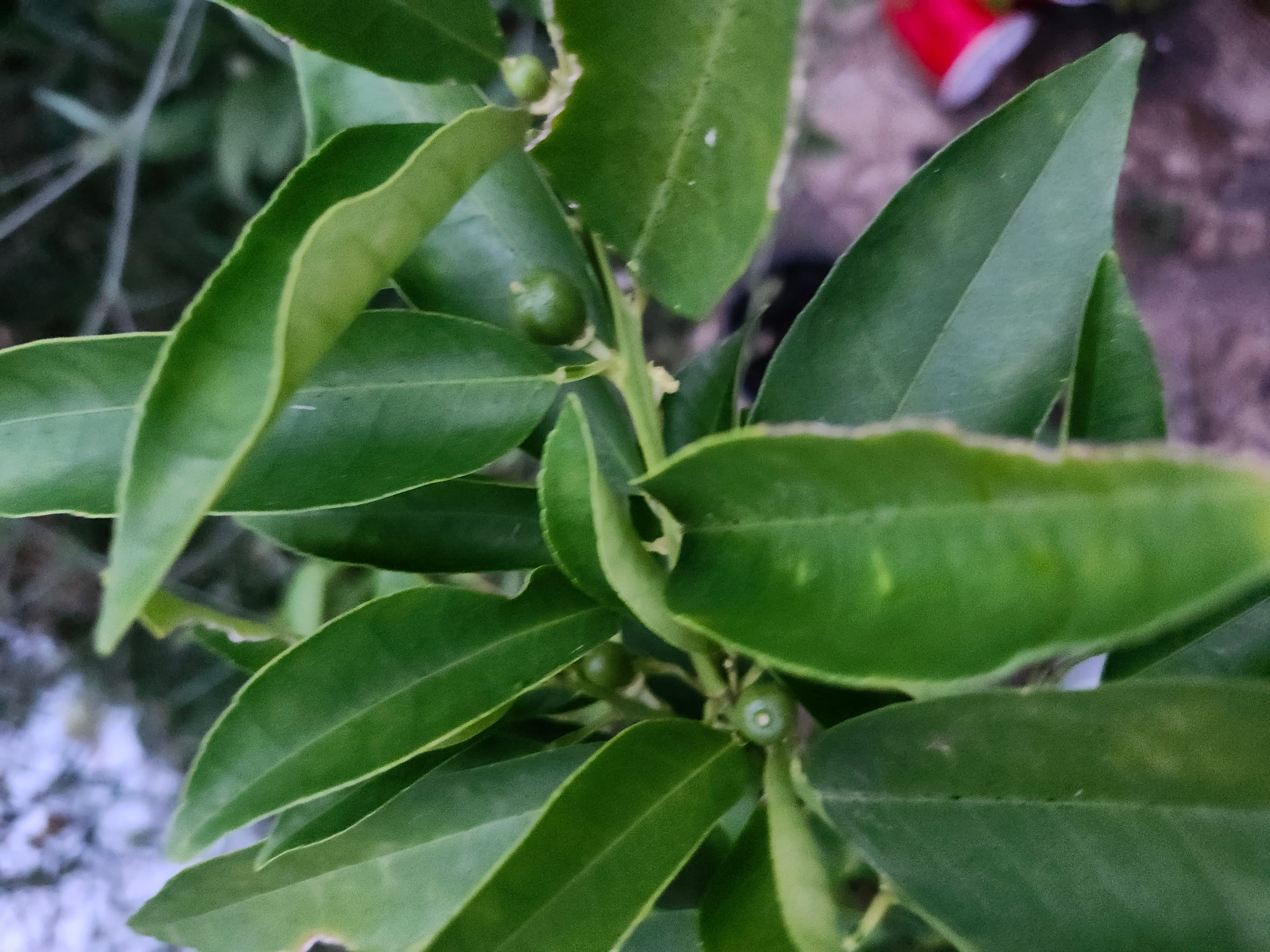
More are blooming and fruiting

3 Likes
Succari would be a very good citrus to make a f1 trifoliate hybrid with, for its low acid, high sugar, and early ripening.
3 Likes
It also has short internodes. In theory, the seedlings wouldn’t have to grow as tall before flowering.
2 Likes
I made an order last night, these sounded good to me.
Thomasville Citrangequat Tree
Clem x Yuzu Tangerine Tree
Eustis Limequat Tree
Meiwa Kumquat Tree
Sunquat Tree
4 Likes
I potted up some seedlings today from seeds @themulberries sent me in April.
Some will be reduced to winter in an unheated greenhouse but I have a bit of indoor space under LEDs to tide over 1-2 of each variety in small pots, especially the least hardy.
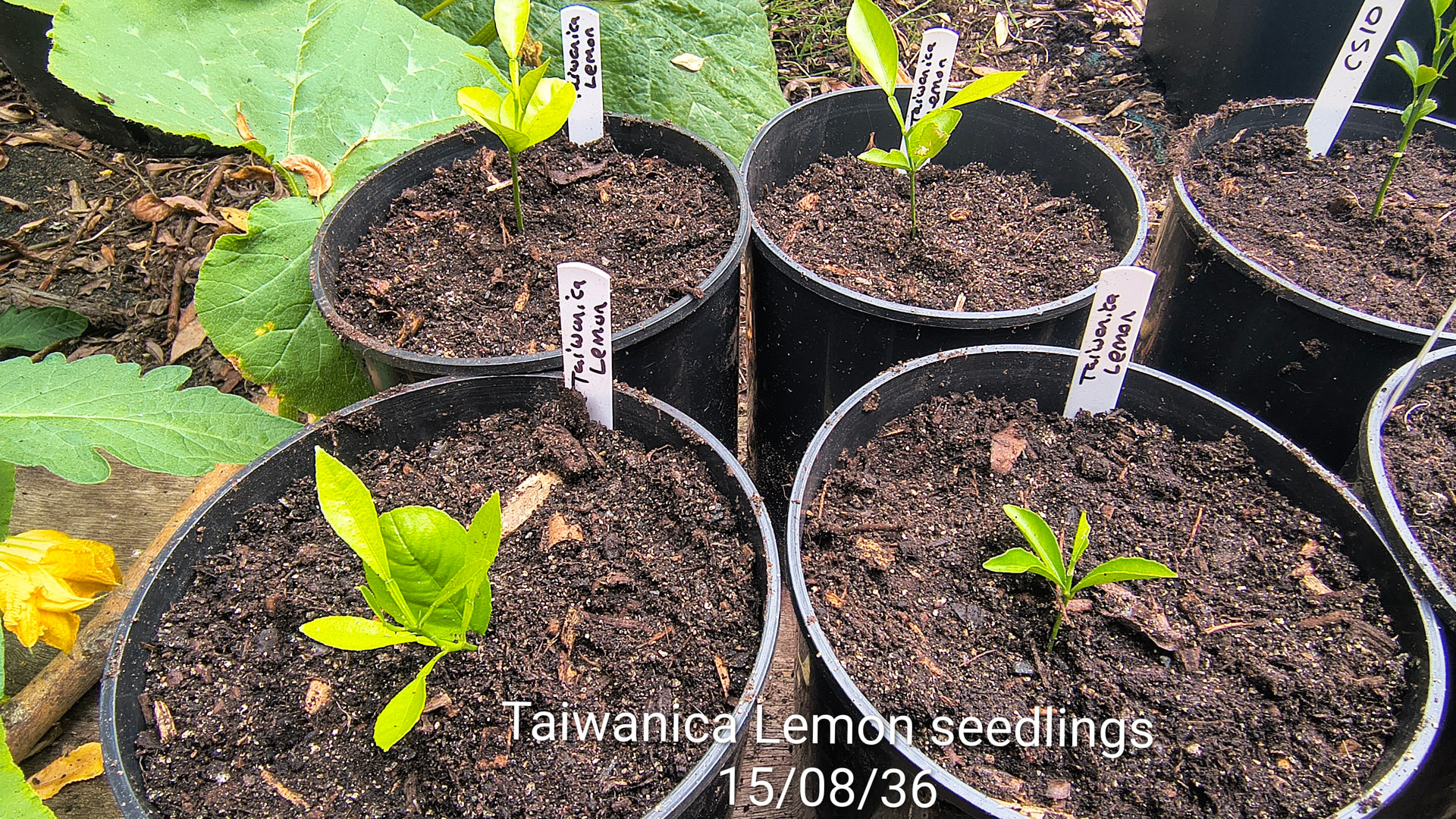
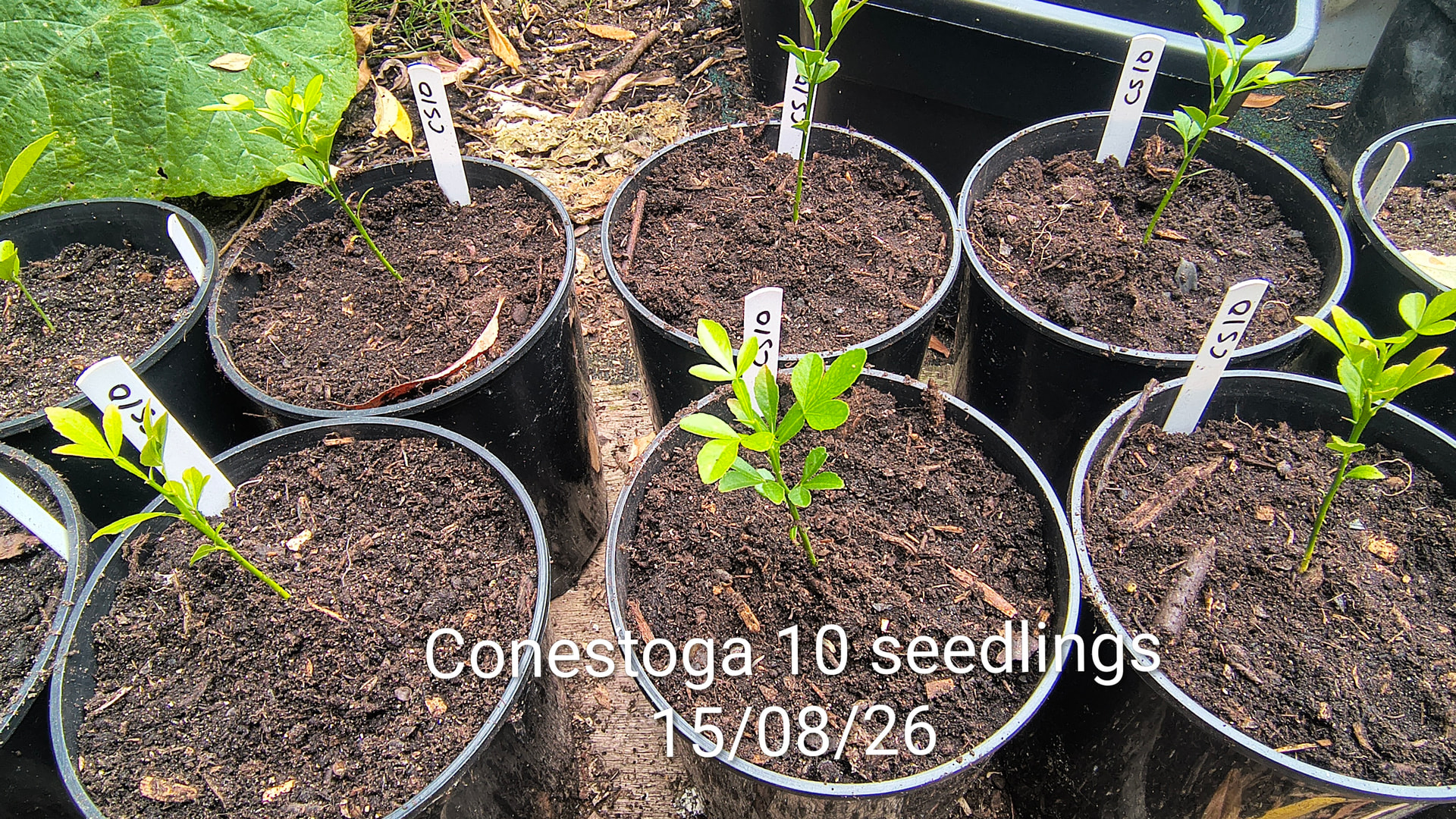
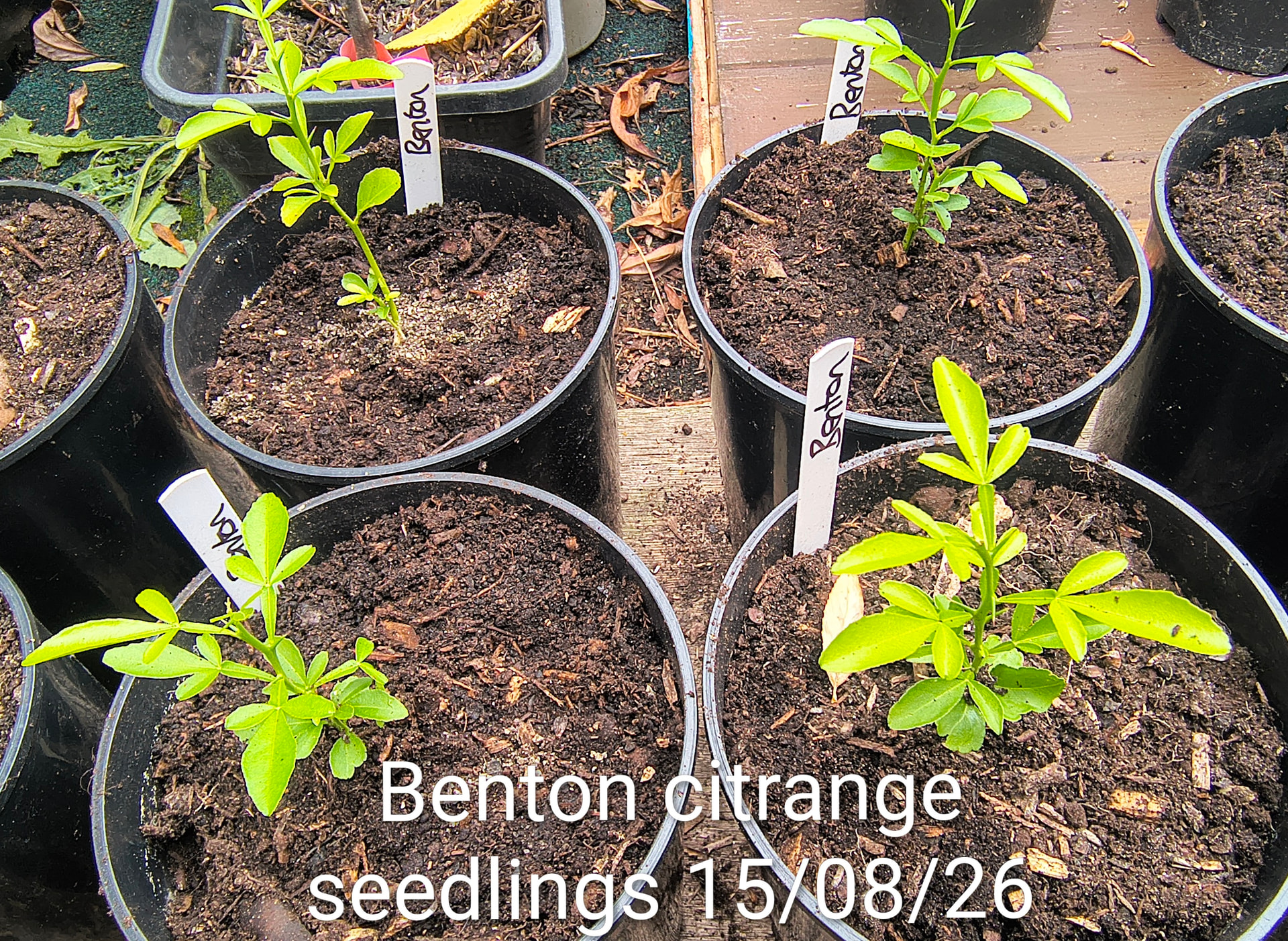
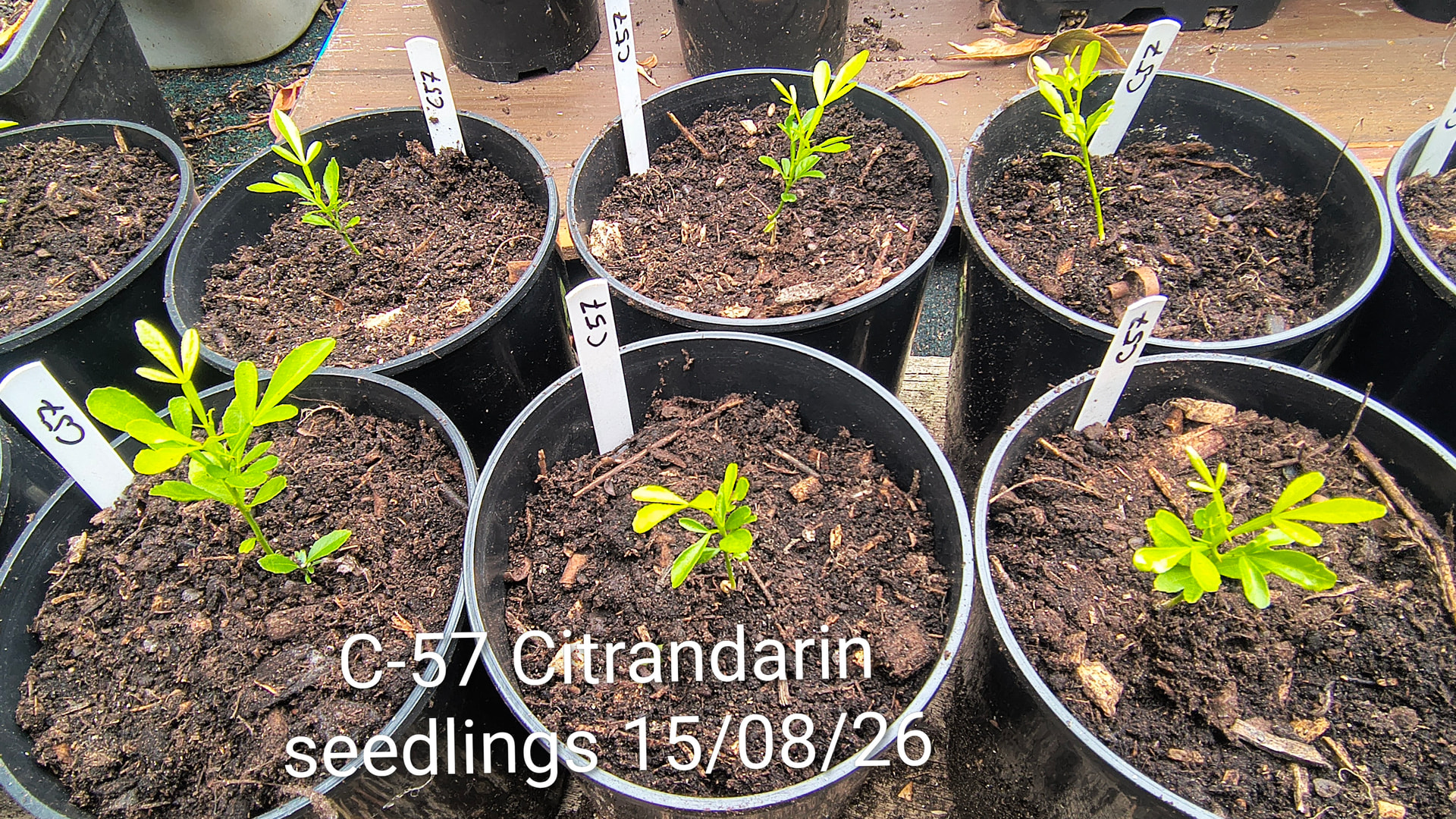
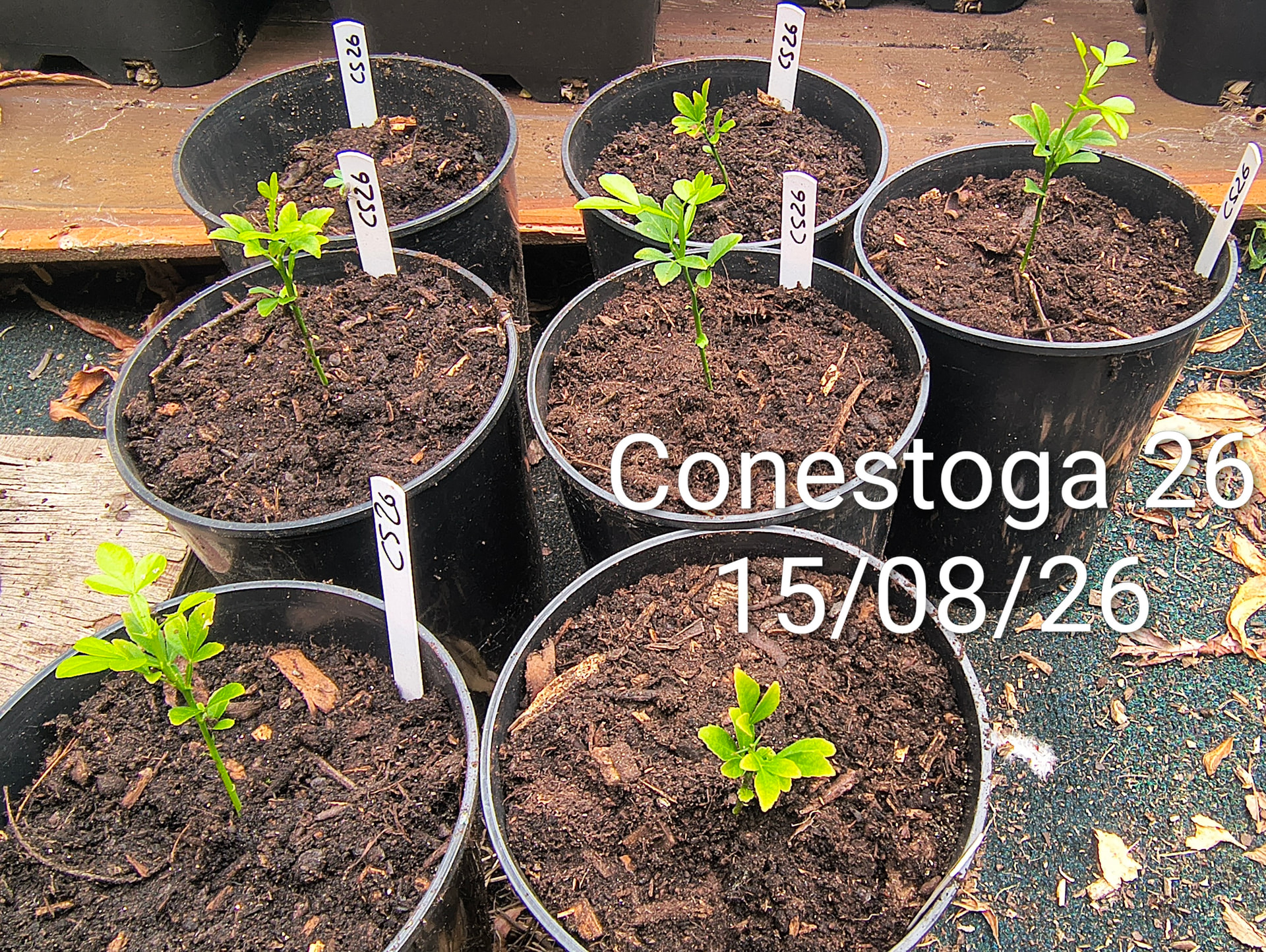
I have some more at home, this on on my quite sheltered but low sun hours allotment.
At home there is also Yuzu, Bishop, Kabosu and Shikuwasa.
Hopefully this is a worthwhile endeavour. We are at 53 North in Stockport UK so the summers are fairly short but have long days while they are here.
7 Likes
I’ve been thinking about how I would like to plant/pot the citrus I ordered. Do y’all think it would work to build a bottomless box and break up the ground a bit where it would sit? Should I just put them in big pots and have them mobile?
Here is an idea of the footprint I am thinking for the size the box could be.

3 Likes
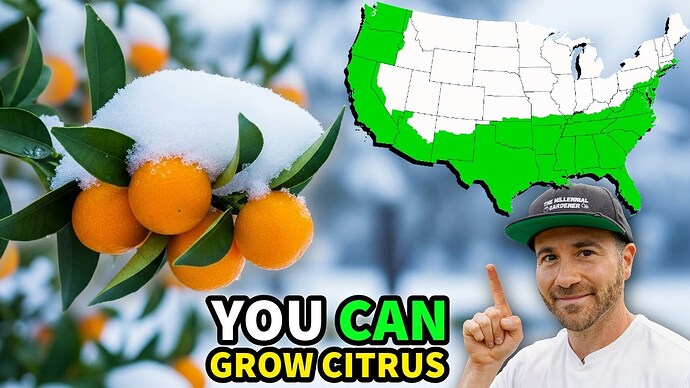
You are in zone 8b which is ideal for citrus. The pots would be a great way to do things, bags , boxes , in ground etc. The millennial Gardner is worth a watch on his winterizing techniques
2 Likes
@Tiirsys
In my experience, USDA cold-hardiness zone is sub-optimal for Citrus grown outdoors in the ground year-round. Zone 10a is common in California for orchards of several Citrus varieties, but there are a few varieties that have poor tolerance for sustained temperatures below 35°F, e.g. Budda’s Hand. Thus as a general statement, I would say zone 11 is ideal for Citrus.
2 Likes
That kind of depends. Is it zone 11 socal? or zone 11 Puerto Rico?
4 Likes
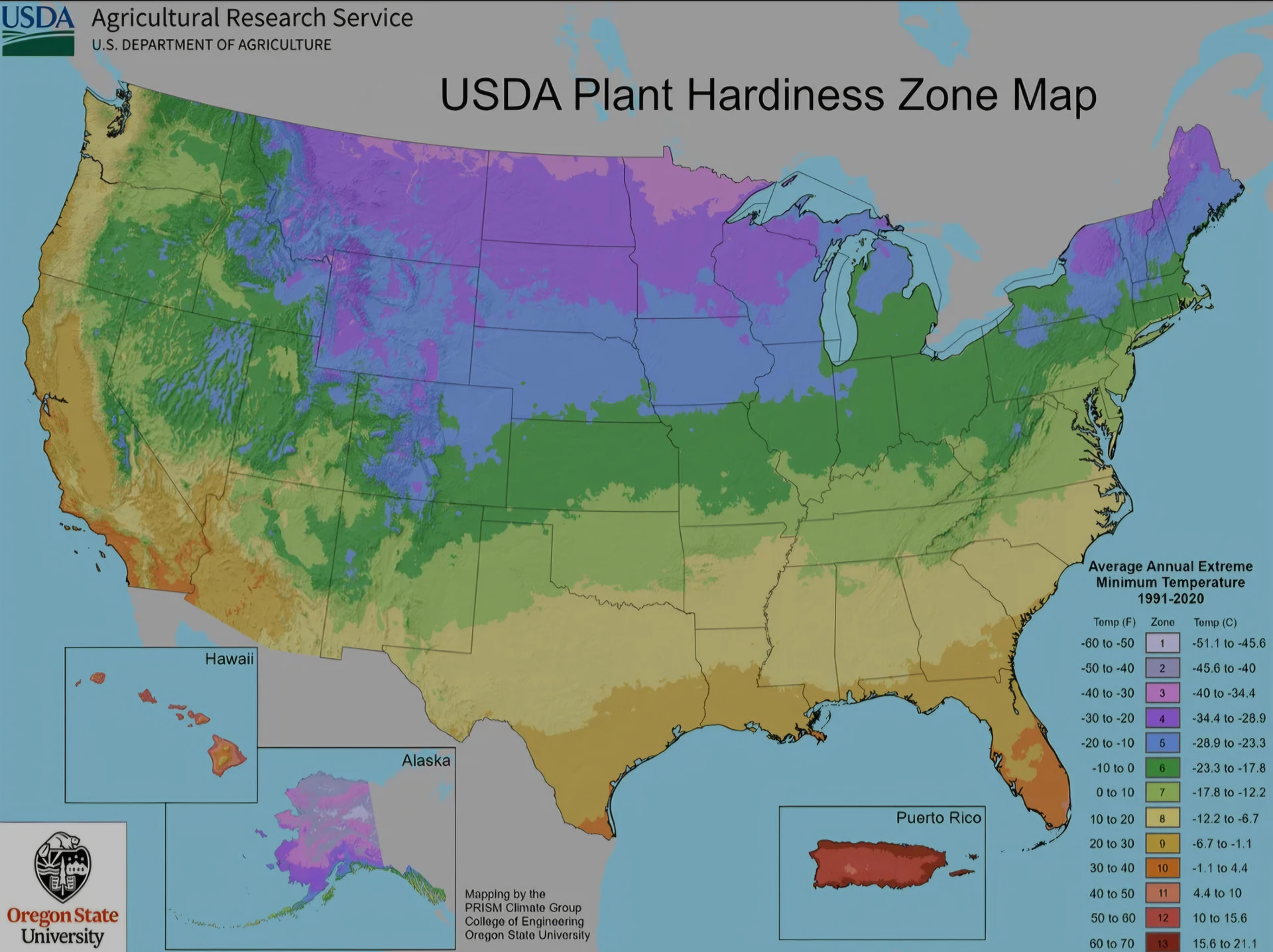
@Richard and @Fusion_power I was going to bring up my zone 8b has freezes during winter and a little snow here and there, normally quite dry summers. I am in the South Puget Sound region of Washington state.
I have lights to put on the trees and other protection available if I am to plant them in ground. If in pots I could potentially move them in my unheated garage or greenhouse.
2 Likes
@clarkinks I see you referred MillenialGardener. I have watched a lot of his stuff and while our 8b’s are definitely not the same it seems doable for my area. Plus, I have a Yuzu and two kumquats grown from seed that have survived unprotected and in a pots outside for the last two years. That made me more confident in actually purchasing some named cultivars.
2 Likes
Did not know an AI search counted as experience. What would you know first hand about what is optimal for cold hardy citrus in zone 8b? Optimal is determined by the millenial gardener who has millions off followers and lives and grows citrus in zone 8b. The citrus he grows is more like the citrus we grow indoors and outdoors part of the year. You live in a less than optimal zone for the citrus or other fruits we grow. The millenial gardener’s years of experience seems to be more relevant. My experience growing citrus in zone 6 indoors in pots the last 30+ years is more relevant. The last topic you said you grew no such cold hardy citrus. This topic is about cold hardy citrus in 2026 not non cold hardy citrus in 2026. To quote the experts “Zones 8–10: Cold-Hardy Citrus Varieties
These zones are suitable for planting select cold-hardy citrus varieties in the ground. During occasional freezes, young trees may benefit from frost protection. Popular cold-hardy varieties include Satsuma mandarins, kumquats, and Yuzu.”
I understand zone 9-11 are optimal for non cold hardy citrus but if you listen to @Tiirsys and what they grow you would realize it is cold hardy citrus ideal for zone 8 not zone 11. USDA Hardiness Zone Map | Find the Right Citrus Tree for Your Area – Backyard Citrus Trees
Yes, the millenial gardener is friends with cold hardy fruit expert Stan Mckenzie @Stanthecitrusman as well. Stan knows his stuff when it comes to cold hardy citrus ideal for your zone and your situation. You have to ignore these states for a minute AK, AZ, CA, FL, HI, LA, TX . They are in quarantine zones. You do not have their problems CDFA - Citrus - Asian Citrus Psyllid (ACP) for multiple reasons. Back to my previous statement about ideal location i hope it makes more sense now. Not many people grow citrus in your zone correct? I order citrus only from places like https://mckenzie-farms.com/ or Learn More About Madison Citrus Nursery in Ray City Georgia outside the quarantine zone. HLB aka greening is sweeping through those quarantine zones in California and Florida killing their citrus Florida Citrus Decline Detailed - Florida Citrus Industry Magazine . Zone 8b is a highly desirable location to grow citrus that is not injected with chemicals to combat greening. imported citrus from places around the world is not ideal either. The millenial gardener and those like him know the Psyllid is not in their zone making it a much more ideal location like yours to grow citrus. Can we afford expensive citrus from traditional citrus locations in the future? I wish the best for the citrus industry in our country. There is a lot going against them.
“With citrus trees in all major U.S. citrus-producing states affected by the bacterial pathogen, the Agricultural Research Service (ARS) is working to combat the disease. Citrus greening affects a variety of citrus fruits — with the greatest damage occurring within Florida’s orange groves.” “Grove-First” Approach to Combat Citrus Greening - California Fruit and Vegetable Magazine
1 Like
Zone 11 is everywhere on the map the citrus is quarantined from greening. It was ideal at one time. Greening changed that many years ago. Monocultural crops are ideal breeding grounds for disease and pests.
I live in zone 8 and I grow citrus so I’ll chime in.
Millennial gardener for reference lives in the same state not especially far from where I live. He’s in the next major city to my southeast. I will say that that, unless he’s a long way inland, his 8b over there in coastal Wilmington is very nearly 9a.
For my part I live on the borderline between 8a and 8b. Regardless, the duration of cold events and the duration of the winter here are much shorter than in the Puget Sound area. And I get way, way more heat units both in summer and in winter.
Despite all that, other than with trifoliate hybrids, there is nothing ideal about 8b for citrus. It’s possible to grow citrus here, it’s not ideal. In our subtropical region, zone 9 is probably the best. Millennial Gardner more or less lives in zone 9 given how close to the coast he is. I’m sure technically he’s in 8b but that low lying costal area from Wilmington through Charleston SC and Savannah Georgia all gets way, way milder cold outbreaks, and for shorter durations, than us folks in the same states who while still even on the costal plane are just a bit more inland.
I’ve lost the majority of “cold hardy” citrus I’ve planted and not giving active protection, outside of trifoliate hybrids. 8b is too cold unless you’re willing to experience some losses, even with Ichang lemon, Changsha, kumquats, keraji, bloomsweet, etc. to say nothing of the much less hardy satsumas and Meyer lemon. Even with passive protection, I’ve lost trees on that list. Heck, I’ve even lost a few trifoliate hybrids. 8b is not ideal for citrus.
And on the West Coast where cold spells last much longer and freezes are not usually just radiative like they are here, 8b is going to be really, really tough without a lot of active protection. Doable, but it’s not ideal.
Also I have to pick and choose varieties based on very early ripening, because otherwise I’m unlikely to ever get fruit. That’s despite the fact that I get more summer heat units than most of California! I get more winter heat units too, but I also get hard freezes months before standard citrus varieties ripen. And on the West Coast, 8b is awful for ripening citrus unless you live in a weird first pocket of the central valley or somewhere else that gets lots of heat but if somehow still 8b. 8b is not ideal for citrus.
Look, I’m very glad more people are growing citrus and zone pushing them. I think they’re one of the best if not the best fruit trees for zone pushing. But we have to be realistic about it. 8b will kill 99% of sweet citrus varieties without active protection. Maybe not every winter, but once a decently cold winter rolls in, citrus will take a beating. And dieback is going to happen every winter even with active protection. It’s still worthwhile to my mind since citrus are that good and are otherwise extremely easy to grow (in my subtropical climate, not so much in temperate and Mediterranean climates where they don’t get the heat and humidity they want). But it’s not ideal, that’s pure marketing.
Given the disease pressure once you get well into Florida or the Gulf Coast, right now I’d be willing to say that the warm end of zone 9a is probably ideal for citrus, but even then the choice of varieties has to be made carefully and some protection might be needed.
10 Likes
Thank you for a balanced take on the subject. That’s why I’m planning on a shelter for growing the best varieties of citrus in a 8b/9a climate. That and the fact that I don’t see any citrus trees in the area. It’s Arizona and there would be citrus trees in people’s yards if they were reliably hardy.
3 Likes
A_Vivaldi, that is one of the best and most informative posts I’ve seen about growing citrus in zone 8. It is balanced, full of useful information and practical experience, and totally on target for people who are interested in citrus.
3 Likes
Many people do cold hardy citrus zone stretching even though they know better. Me included by that last statement. As an example in zone 8a or 7b depending on coldest temps everyone can grow yuzu as it is hardy to 10 degrees, the 10 degree tangerine, the Carolina lime, prague etc. . Everyone wants to grow owari which can handle brief dips to 15F. You can grow things like citrumelo outside but it’s a short list. Does that mean 8b is not ideal? What is ideal? From my perspective there are lots of citrus that grow in 8b and you dont get greening disease which is great! @fruitnut is growing in a greenhouse and will be able to grow any citrus he wants. Like he said he might grow some cold hardy stuff outside. What is cold hardy in zone 6b? Yes, just trifoliate or 6a or 5b maybe certain trifoliates but not all of them. Cold hardy citrus is not always documented the best. I love @a_Vivaldi citrus rootstocks that are growing outdoors they are reportedly delicious oranges. The list is just shorter depending on location. Millenial gardner and many others zone stretch using light bulbs and covers which works. I will zone stretch with a passive greenhouse. Swingle Citrumelo works in zone 7 apparently as shown below and has been documented in many cases.

I brought this up about swingle before here Swingle citrumelo zone 7
1 Like
I’ve personally had 10 Degree Tangerine killed by a 20 F freeze. Yes, under excellent conditions and after a warm summer, it can be severely damaged by but survive a brief, radiative 10 F freeze IF established, mature, and not otherwise stressed or overcropped or still recovering from a difficult past winter.
And even then, we’re talking just barely surviving and not fruiting for at least another year as the tree recovers. A repeat freeze the following winter will likely finish off the tree.
This is what cold hardiness is actually like with citrus.
Let’s be realistic about what to expect. I fully support zone-pushing and using active protection (such as lights and tarps and water barrels). I myself do. I think it’s worthwhile. At least in warm, humid summer regions and with early-ripening varieties.
“Reportedly” and “delicious” doing a lot of work in that sentence. Most trifoliate hybrid rootstocks are really gross. Some of them are not so bad, and a handful are actually decent. But in this instance by decent we still don’t mean eating out of hand. It means processing them, processing to extract the juice (and for many of them then processing the juice to remove the resin), adding sugar and making a drink.
There are some very interesting flavors in some of those rootstocks, don’t get me wrong. And some people are more or less sensitive to the bitter and acrid off-flavors. But again, I strongly urge a bit of realism. Even if it’s just a little bit. I’ve been zone-pushing and breeding cold hardy citrus for several years now in subtropical zone 8a/b. I think more people should do it, it’s bloody awesome to have a pile of Meyer lemons through till Christmas, or to taste Japanese sour citruses for the first time, or to pick a citrumelo or citremon and make a stiff but fascinating drink from them, or have a beautiful cluster of satsumas ready for the picking. But I really am urging a bit of restraint and realism.
6 Likes
i’m just doing the ol dolly and move them into a grow tent in winter lol
4 Likes