I don’t know if this will help, but . . . I got a very unwelcome visitor this year that I named Mr. Jerkofadeer Eatsmytrees, and I had to ad hoc a solution fast. My chain link fence was only six feet tall, and I didn’t have the money to get a bigger one.
So I grabbed some branches off some annoying weed trees I’d been trimming back, and tied them to the top of the fence using bark stripped off those same weed trees. (The bark on Siberian elm branches comes off in long, slippery, flexible strips. Those strips work pretty well to tie stuff to things in the garden.)
I angled those branches with the poky side out, spaced about a foot apart. I was hoping this would look like a very unfriendly fence for a deer to jump over, encouraging them to give my orchard a miss in the future. For the past few months, it seems to have worked! I’m hoping it will continue to. I thought I’d share that.
Thanks for the reminder, but I’m not living there yet, so it isn’t easy to pop out there every so often to check. I’m just going to have to go with the stats I find online.
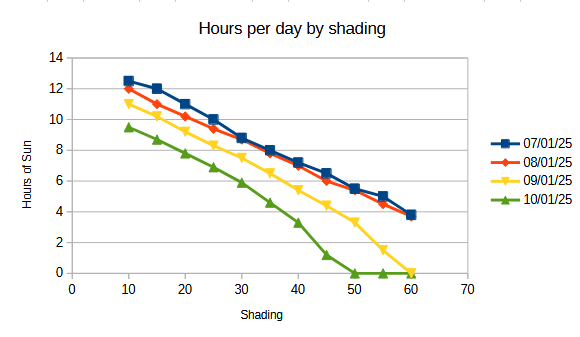
I know you can’t distil each location into a single number, but I think it is useful from a shorthand perspective to look at how much sun a spot would get when the obstacles at the horizon average X degrees high.
So, if the entire horizon had shade producing trees up to 10 degrees, from the perspective of the planting (I measured at about 4’ high for ease), then the spot will get 12.5 hours of sun on July 1st, dropping to 9.5 hours on October 1st. At the other extreme, 50 degree shading drops from 5.5 hours in July to none at all in October (at least unless the forest trees drop leaves first…).
When evaluating a site, I tried to look at the average angle for E and W. I only considered S if it was particularly high, as most of the time that won’t be the limiting factor. So, if it was 30-35 degrees to the East and 15 degrees to the West, I might consider it a 22 or 25.
This pic makes the backyard look pretty big, but regrettably, the best spot is about a 20. That’s still 9-11 hours during most of the growing season.
A large majority is in the 25-30 range (7-10 to 6-9 hours), which I think should be OK for most things. The bottom part (30 to 55 feet from the far end) is the worst in the 38-45 range. Once you get into this area, I think it is mostly for berries. Shading of 45 deg is 4.5-6.5 hours of sun, dropping to almost none in October or mid March (maybe delay honeyberry flowering?). So, I think currants and gooseberries are best for the 45’s and blackberries and raspberries for the 38-40.
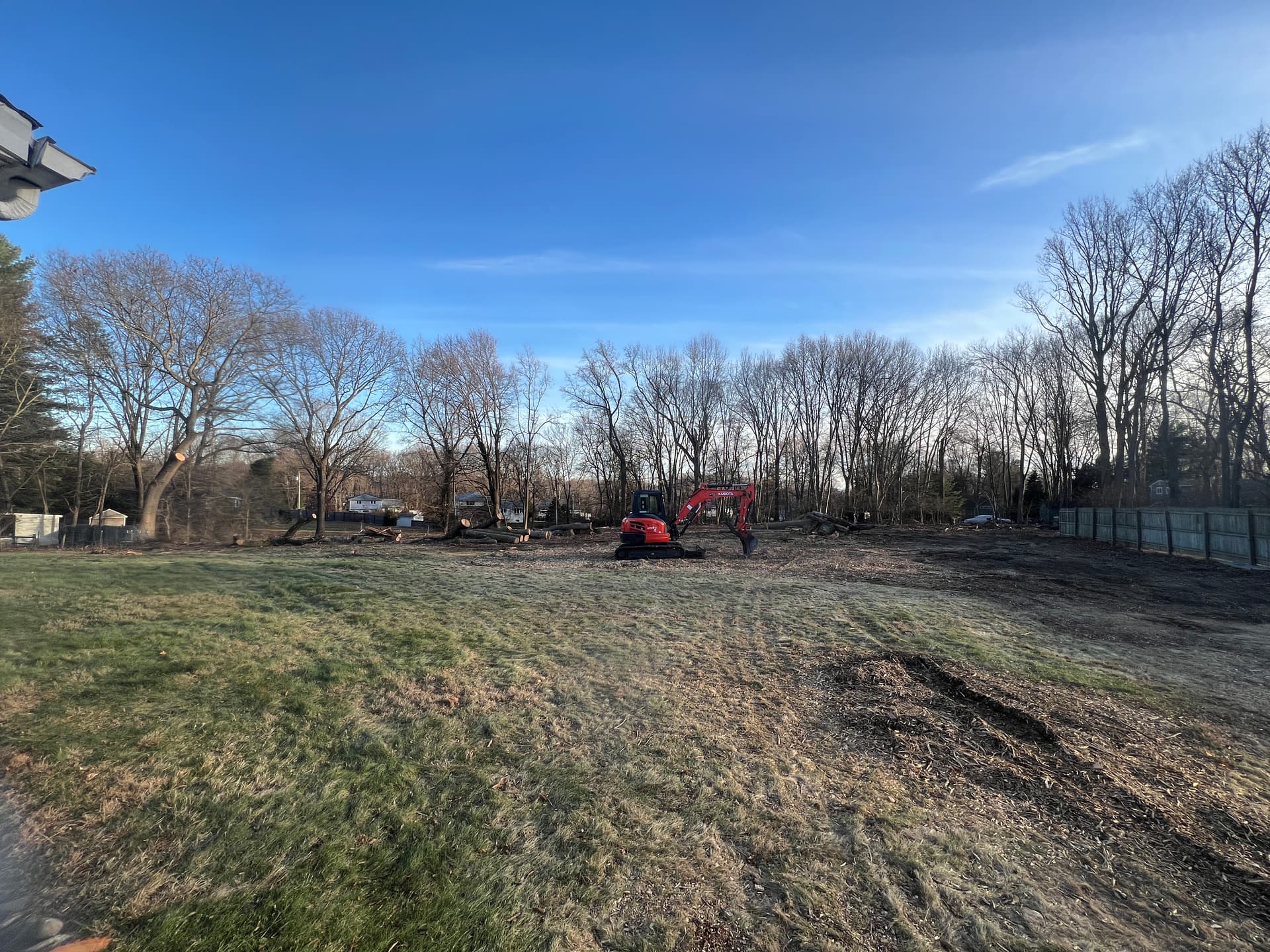
To update this thread, I’ve moved most of the trees. There are still a few that I had wanted to move that I didn’t get to before they were leafed out. But, I expect to still have the old property in the fall, so that will give me one more chance to get things moved over. There are also a few of the new trees that didn’t make it (and maybe some of the transplants), so there should be room to move anything that I feel ambitious enough to move.
Currently, I’m getting ready to seed grass into the rows that used to be forest.
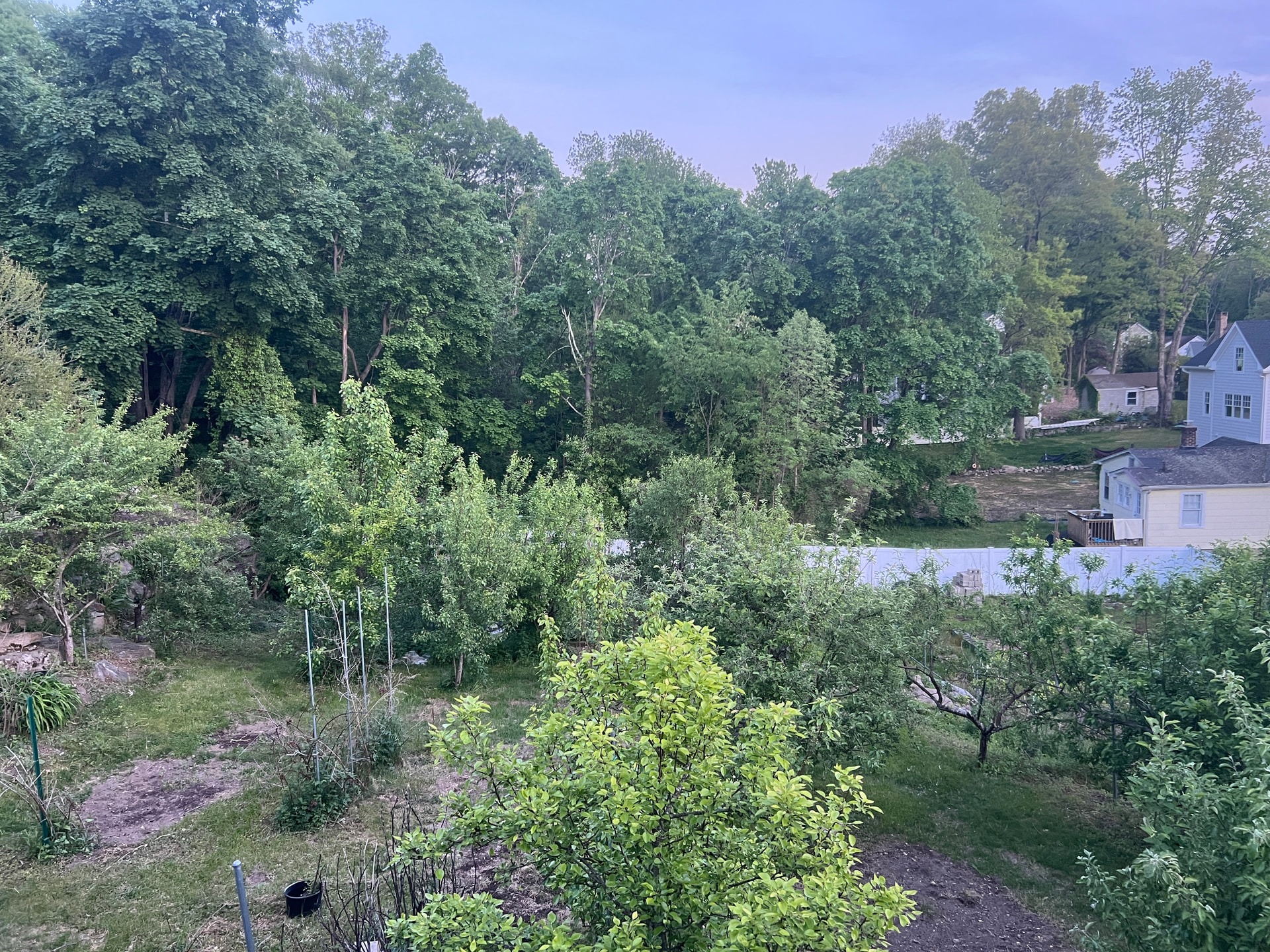
Here’s a pic of the old backyard. It still looks pretty full. I think this might be the best year ever for production. Moving all those trees has resulted in many (though not all) of the remaining trees actually having enough space. I’ll be very interested to see what that does to production.
After looking at the replies, there is one issue that I don’t see addressed. Your NW to SE lines are actually good for you. Here is why:
Summer temps over 90F degrees start reducing photosynthesis. Although Ct. summer temps do not average this high, just a couple of days over 90 will reduce the sugars needed for your plants to ripen fruits. Your plants will start closing their stomata (respiratory pores) and shut down energy production. As this happens in the afternoon, morning sun is better than late afternoon sun. Of course, the eastern plantings gain from the early morning, however, afternoon sun on the west side benefits from the slightly NW/SE row.
Depending on your exact location and microclimate, this may not apply to you as much as others. But something to consider when planning.
I checked online and it says we get 9-15 days with 90F, as I’m pretty close to the coast. Inland CT gets 20-23.
I checked and while some crops (tomatoes) see reduced efficiency above 90F, others, like Corn, are good until 95F. And Jujubes (by far my most numerous fruit tree) are completely happy in the 90’s. It isn’t until 104-113F when they start to stress a bit.
In case anyone is interested, here are the max optimal temps for some other fruit trees:
86F: Apples, Pears, cherries, & Plums
95F: Peaches, Pomegranates, & Figs
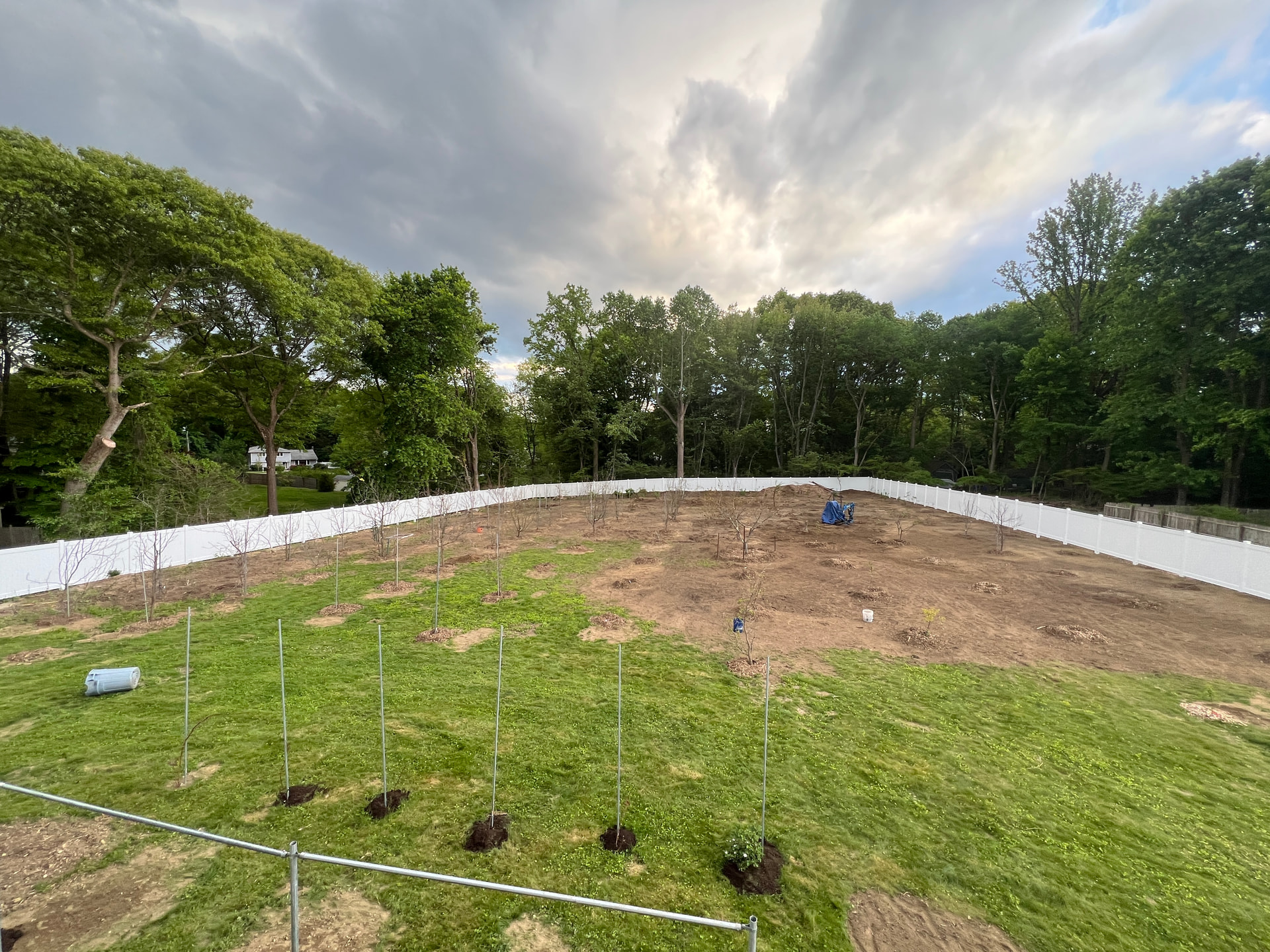
One thing I’ve noticed is that the white fence seems to make things brighter. Especially in the rows near it. Of course, the rows near the fence generally get more shade (with a few exceptions), so maybe that will equalize things a bit. The rows with some morning shade will get extra reflected light in the afternoon.
Actually, that is reversed in my new yard. The planting on the East side get shading from the neighbor’s trees in the morning. And the plantings on the West side get shade from the other neighbor’s trees in the afternoon. I’ve been positively surprised by the amount of sun the far back of the yard is getting. It still isn’t great, but there is some dappled sun even in times of shade.
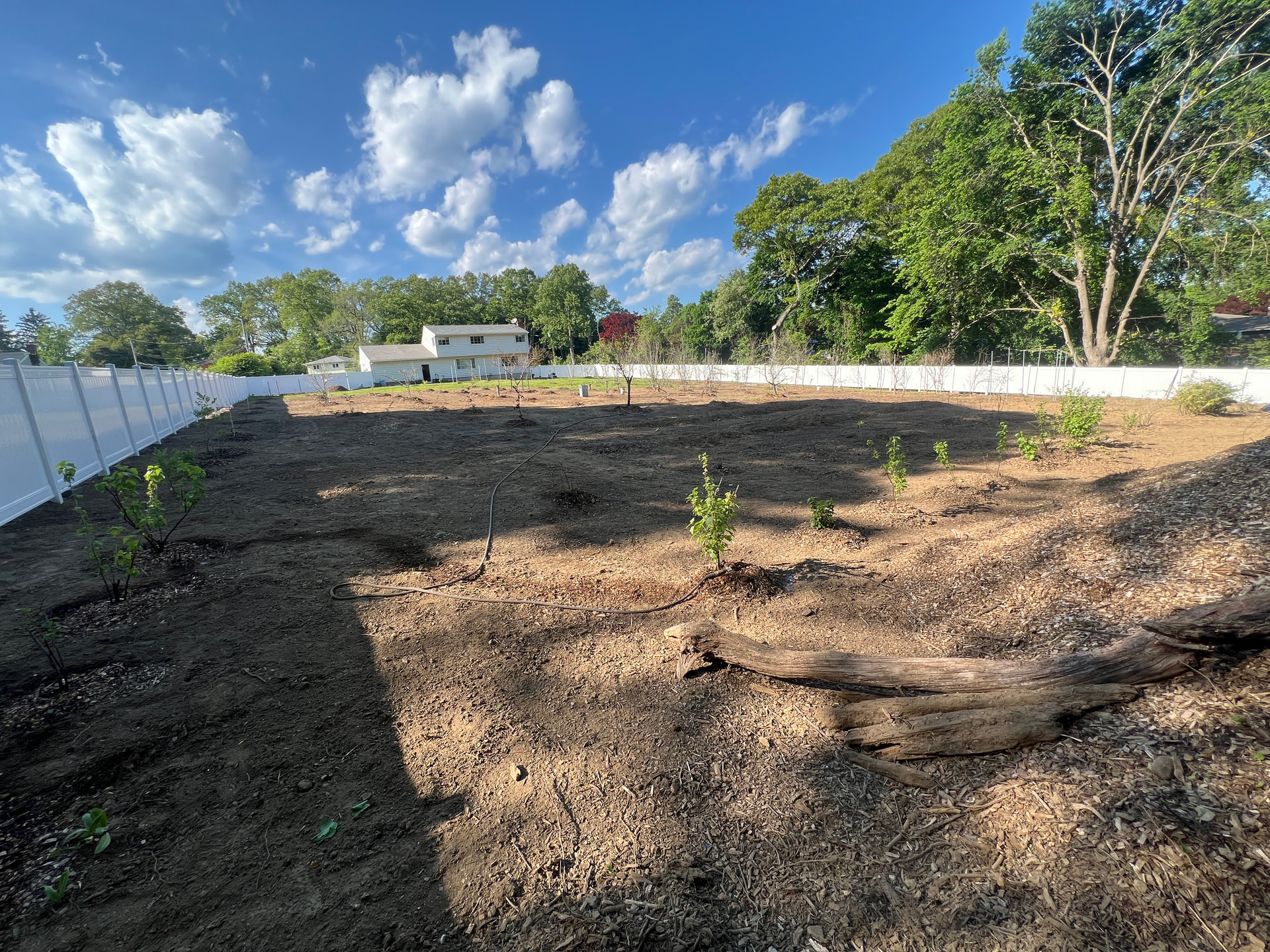
Here’s a pic from the SW (or maybe SSW) corner of the yard at 5pm today. There is a shadow moving across the bottom half of the yard, but there was still some sun even in a lower row (currants, gooseberries, and honeyberries) that I figured would be shaded.
Sure enough it’s 1:40 a.m. and I’m out looking at the full moon on August 29th, which is approximating the sun’s position on October 14th. I’m using the Android app called Sun Position. And I found that one position in my orchard gets a full extra hour of sunlight compared to the next row.
If I paid for the app I could choose arbitrary dates and see the sun or moon position. Probably worth it given my needs for planning.