Is it just the fresh juice that turns black? Like apples, the fresh fruit turns brown, but when cooked it maintains its pale color (e.g. apple pie). Was the juice in the above bottling pictures heated- since it has maintained its light yellow color?
Feijoa has very high pectin and is a natural ingredient for jams.
1 Like
I think the sorbet I make from feijoa pulp is easily the best sorbet I’ve ever had. I mean it is amazing. I haven’t tried making ice cream with it. That’s something I’ll try next year.
5 Likes
When I make membrillo or other preserves with feijoa they turn a very dark brown color. It doesn’t look all that appealing, but tastes great.
In contrast, the sorbet that I make doesn’t turn that very dark color. I believe it’s because the freezing process significantly slows the oxidation.
If you’ve never made sorbet from feijoa I highly recommend it. I use a receipt that includes a few ounces of sweet riesling. So yummy!
1 Like
Did you plant the 942 outside?
Good grief! Have you tested a batch for radioactivity?
Yes This will be the first winter. If the temp drops below 15F, I’ll add some lights. Having only been in ground for 8 months not sure it’s advertised hardiness will hold true.
Just get a rubber stopper and airlock at a homebrew store, Amazon, wherever? Let the CO2 vent as it builds up. There’s still going to be CO2 in it that fizzes a bit even after it’s finished fermenting. Gentle stirring (“degassing”) will get rid of it.
You could probably just add some citric/malic/ascorbic acid to the juice to prevent browning? In apples polyphenol oxidase turns them brown and acid or heat deactivates the enzyme. The former two might be more stable over the long run. I remember seeing studies VitC could cause some undesired, accelerated aging in wines after it was spent, but better earlier results. I quit drinking years ago, and stopped homebrewing a few years before that, so I’m not up to date on the latest science. But it could be worth a look.
1 Like
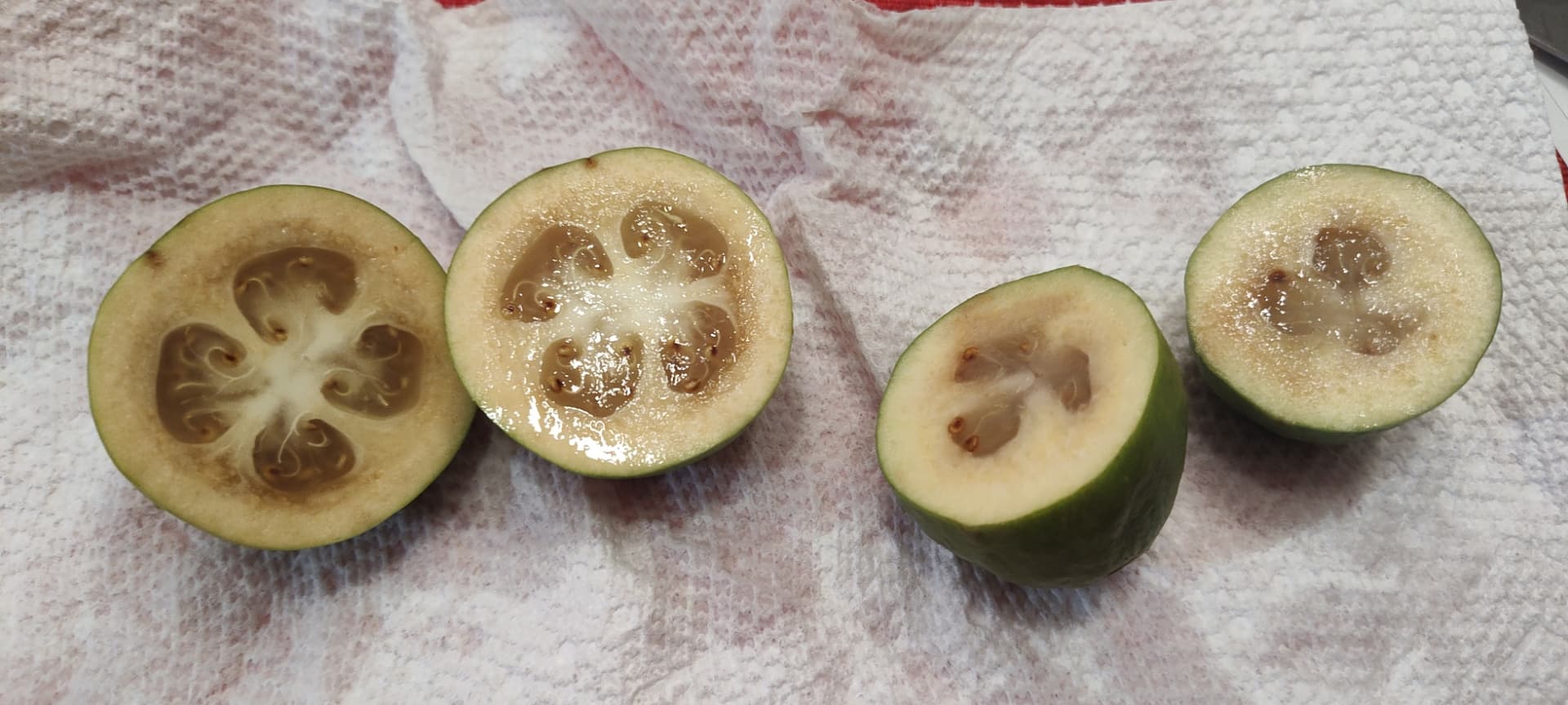
We only had one fruit of each to try, so its not fair to judge the whole variety from them, unless they were outstanding (which they weren’t).
They seemed nicely ripened, maybe slightly past.
The Kakapo was pleasant, not super flavorful but we liked it fine.
Anatoki was bitter. My wife said it tasted like poison or medicine. It had some sweetness and some decent feijoa flavor but also an unpleasant bitterness. I ate 3/4 of it. If I expected them all to be like that I’d graft over it. I’m assuming this was a bad sample.
When Larry’s fruit look like these with that proportion of jellied middle to solid outer flesh and the jelly is light amber, I expect them to be quite good.
2 Likes
Next spring make some clones and then, by having backups, you’ll feel more confident to see what it can do.
I do know that my internet buddies in Virginia and North Carolina reported that 942 survived below 10 F last winter with zero damage.
I don’t ever cover any of my 50% trifoliate hybrids and they’ve never received any cold damage. None occurred even during the January 2024 deep freeze. The 942 is very reminiscent of the flying dragon, making me suspect that it can withstand down to single digits. My citrange is now 12 feet tall, never been covered in 6 years. Time will tell for the 942. I am going to let it ride this winter. I have a backup in a pot in the greenhouse.
I recently made a friend on Reddit who I met in real life, and who has a phenomenal citrus grove in Portland, not far from One Green World. Massive grapefruit, mandarin and navel orange tree, 15 years old and loaded with fruit. On average they are covered 3 or 4 times each winter. There’s also an amazing collection of trifoliate hybrids, some 10 feet tall and never covered in 15 years.
Here’s the grapefruit tree.
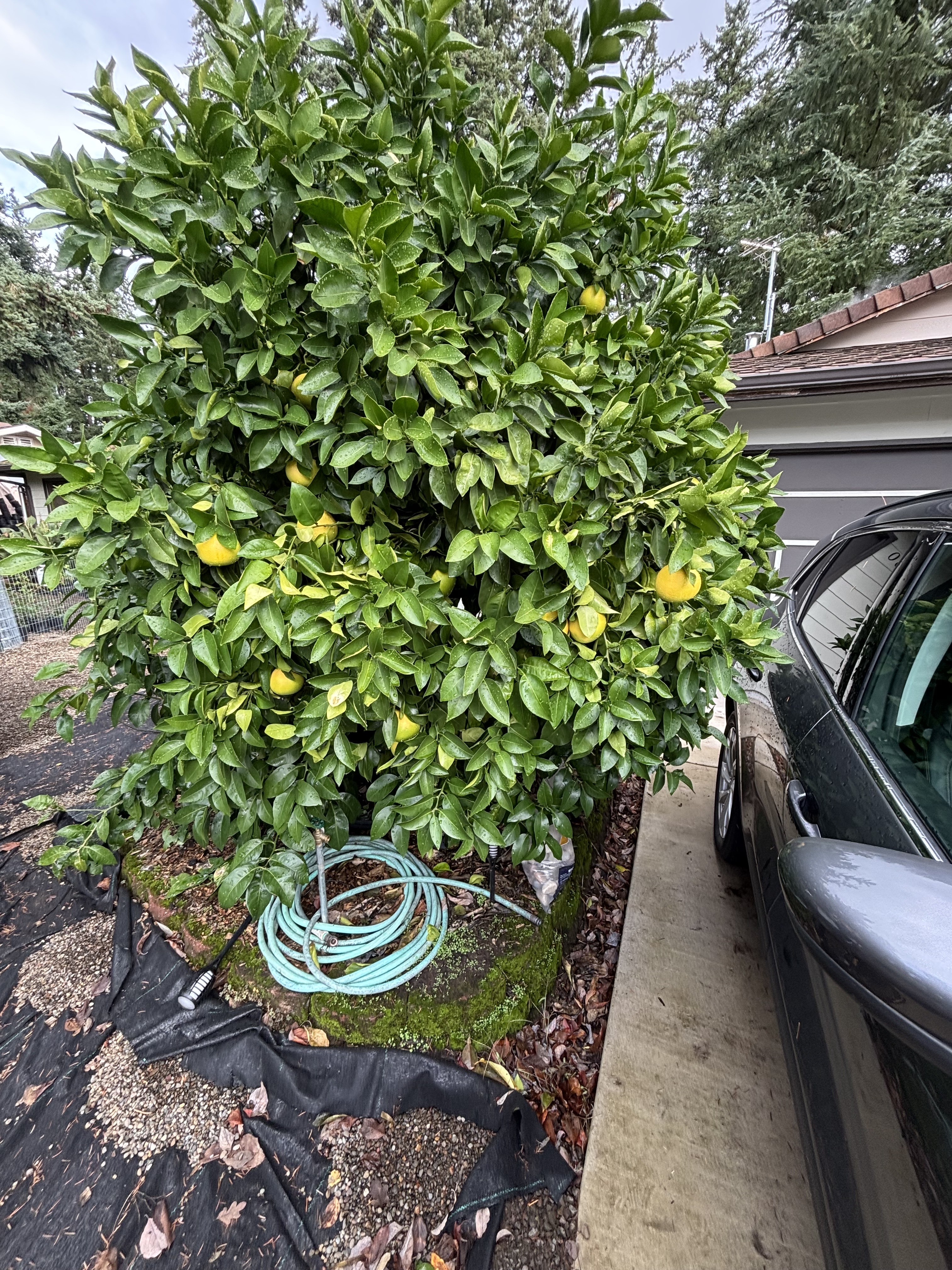
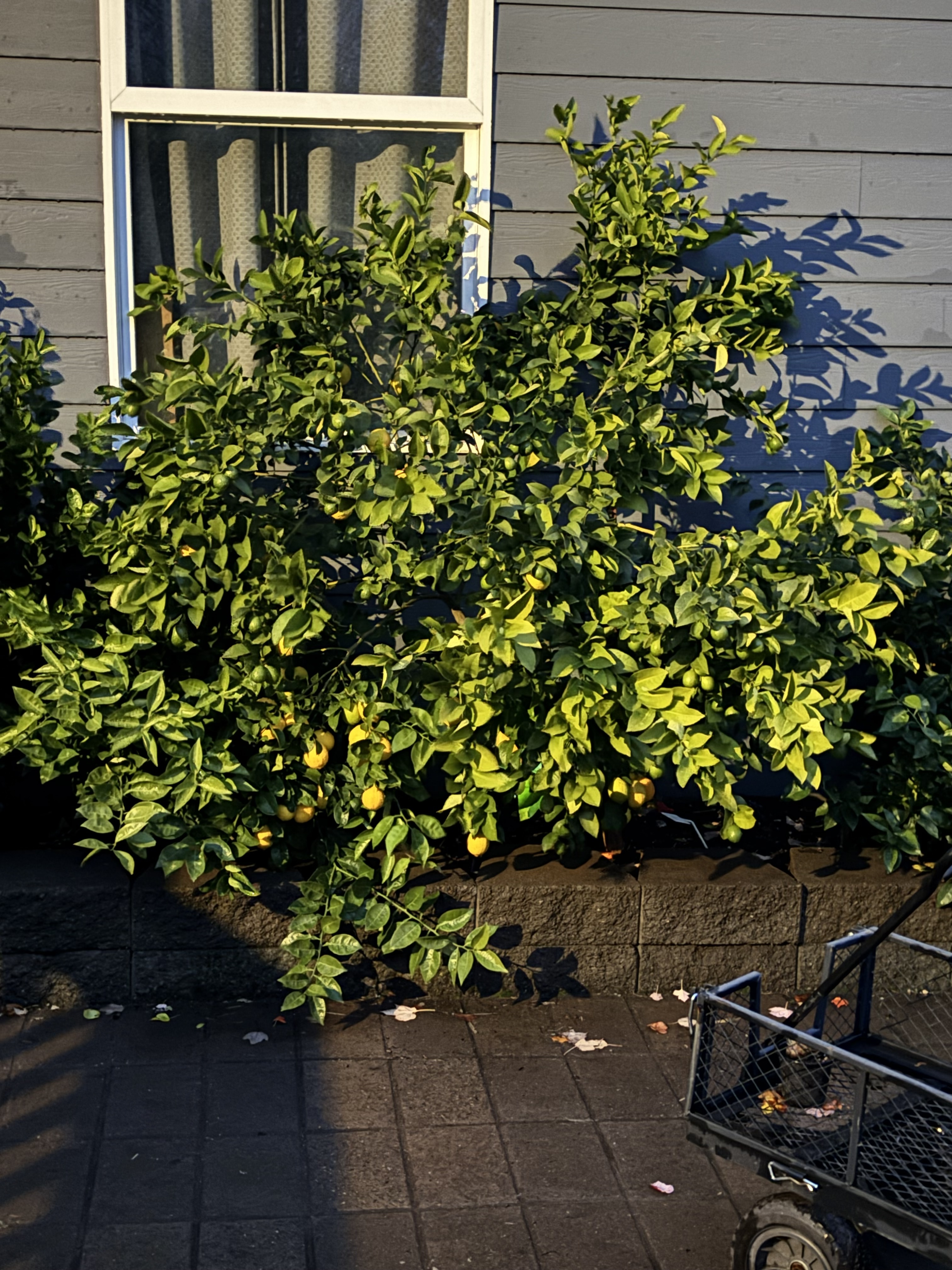
Here’s my outdoor Meyer lemon this fall. I got about 150 fruit.
5 Likes
In the jars, it’s the oxidized juice that’s black/gray. Citric acid does very little to limit oxidation. Rapid cooling or pasteurization seems more effective.
You can’t see it, but unlike apple juice, this juice contains a protein clump (likely the central jelly) which makes the product look unappealing, even when it’s fizzy.
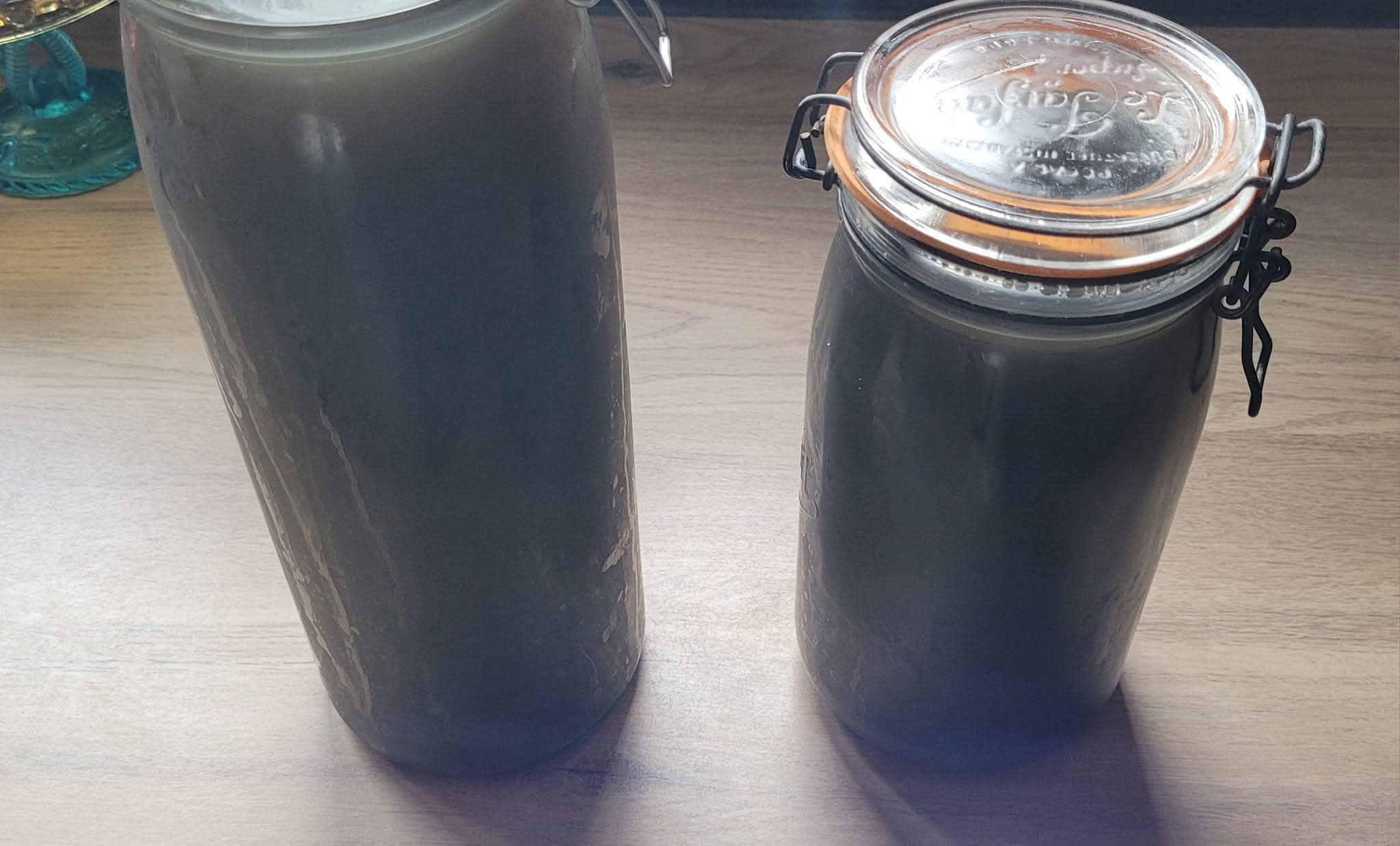
By allowing the fermentation to continue for a long time, these black proteins settle to the bottom and the product clarifies. But with the gases, it rises back into suspension.


2 Likes
I had my first Waingaro today - this is from a young tree still in a pot.
Flavor is outstanding. Beat ALL the other New Zealand varieties by a mile. None of the others even crossed 15 brix - this one from a young tree were 17 and and a larger one > 18 brix. Less tart and completely edible skin. Maybe it has something to do with late ripening?
I have several Apollo and Anatoki still on the bush along with my seedlings and Albert varieties. Maybe they will be sweeter too?
7 Likes
Waingaro was the best tasting of all the last crop of NZ varieties that I tried. The size is inconsistent, just like the literature implies. But is way sweeter than the others. I think it’s the lateness of the fruit. The longer the fruit hangs, the better it tastes. I hope that trend continues with the White Goose that I grafted this year. I wish I had swapped Takaka for Waingaro, but oh well…
1 Like
I will replace my Takaka with a Waingaro. I have 3 Waingaro trees. The Takaka was broken in half by critters trying to jump up to a nearby persimmon.
 are you selling or just donating it to a poor soul…
Hey guys.
I just got a huge, but pleasant surprise today when I walked past the feijoa trees I planted ealier this spring. These trees are only about 3 to a little over 4 feet tall and I wasn’t expecting any fruit for a while yet.
This summer I noticed that the largest of the feijoa I planted, (Anatoki 4+ ft) had a single small fruit about 2-3 inches on it. Sadly, the fruit only held on the tree for a month or two then dropped off. I figured that was all the fruit for this year, and I’d have to wait at least another year or two longer before I got to sample any fruit.
Fast forward to today. I was working in the area where I’d planted 2 of the 4 feijoa trees I planted earlier this year. I looked down and noticed 2 large green items on the ground. I figured they were a couple of cucumbers that the wife had dumped from the veggie garden when she cleaned it out a couple of weeks ago.
I looked closer and I was rather stunned, when I realized that the items on the ground were in reality 2 huge feijoa and not cucumbers.
I’d never even noticed that this small Kateiri feijoa tree (3+ ft) had any fruit on it at all. I guess the fruit were hiding the whole time around the back of the tree where I couldn’t see them growing. So I was pretty shocked to find fruit this large from such a small tree, that I’d never even noticed growing on it.
I really didn’t even think feijoa could get this large (seen next to a US quarter):
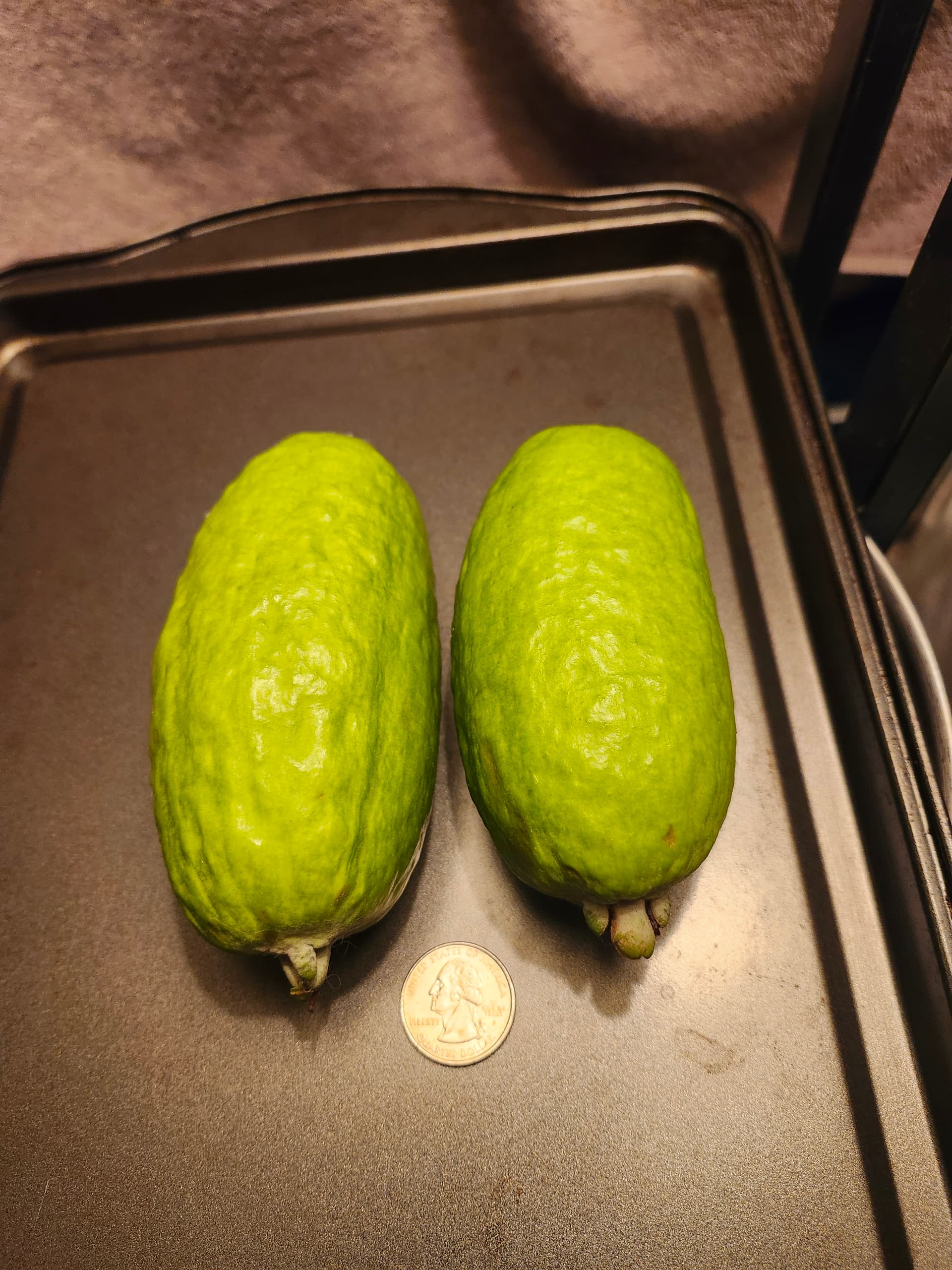
I had no idea that feijoa could attain this size. I was expecting something along the size of a Kiwi fruit from these trees, (if they ever produced fruit at all).
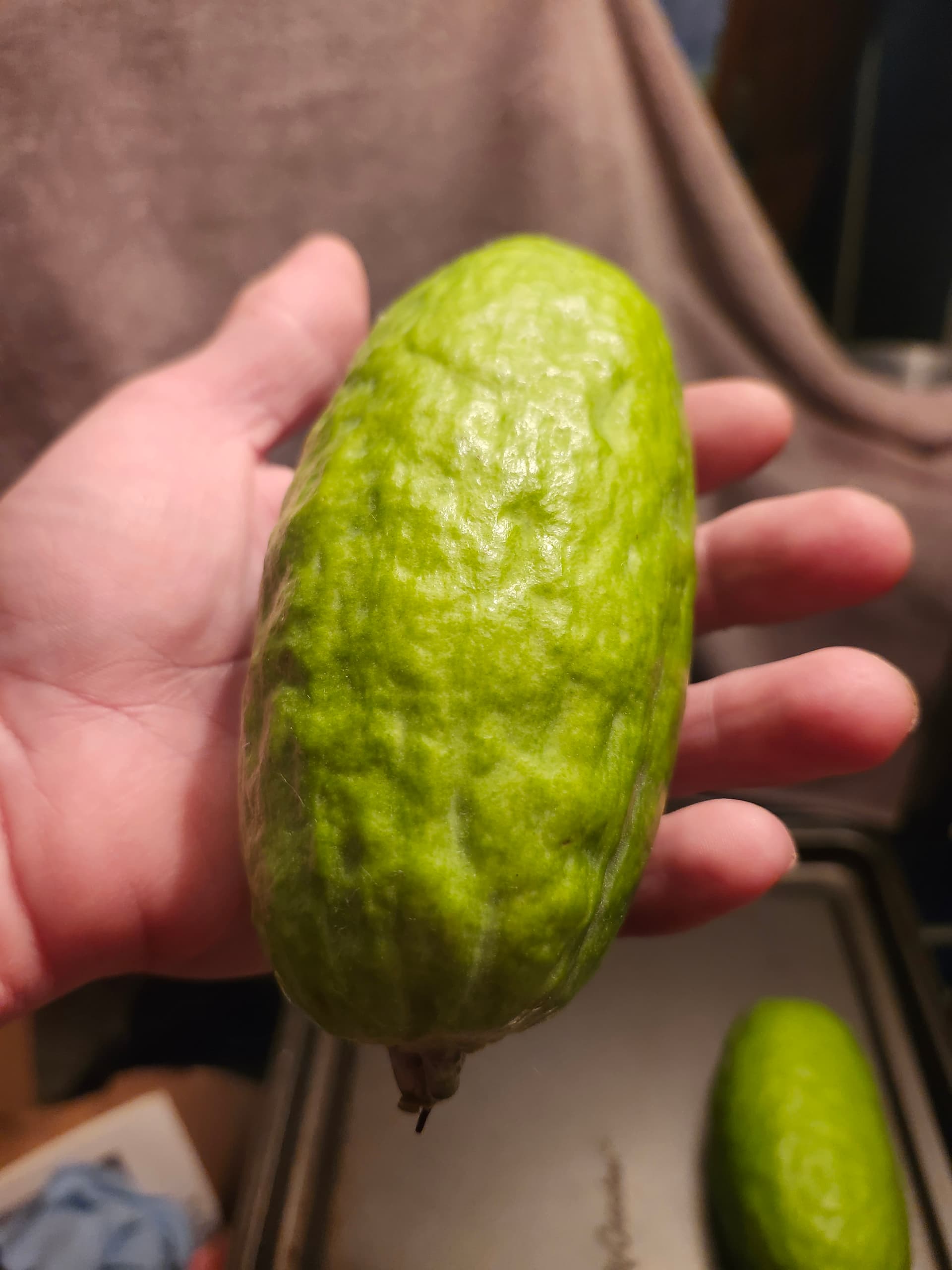
Unfortunately, the fruit that dropped still seem quite hard, and I’ve no Idea if they will counter ripen to decent eating quality or not. I put both of the feijoa that dropped in a brown paper bag along with a banana hoping this would encourage ripening.
Is this a good method to attempt to ripen hard green feijoa?
What are the odds of these fruit properly ripening and being of good eating quality considering the fruit are still very hard now?
How am I to judge if these fruit actually reach an edible state?
Will the fruit color change to a different shade when sufficiently ripe?
Yellowish?
Brownish?
How soft must the fruit become (if ever) before it reaches decent eating quality?
To the best of my knowledge we’ve had no frost events so far this fall, if that affects the likelihood of the fruit ripening or spoiling.
Any information or tips would be greatly appreciated with regards to ripening these feijoa properly.
Regards.
3 Likes
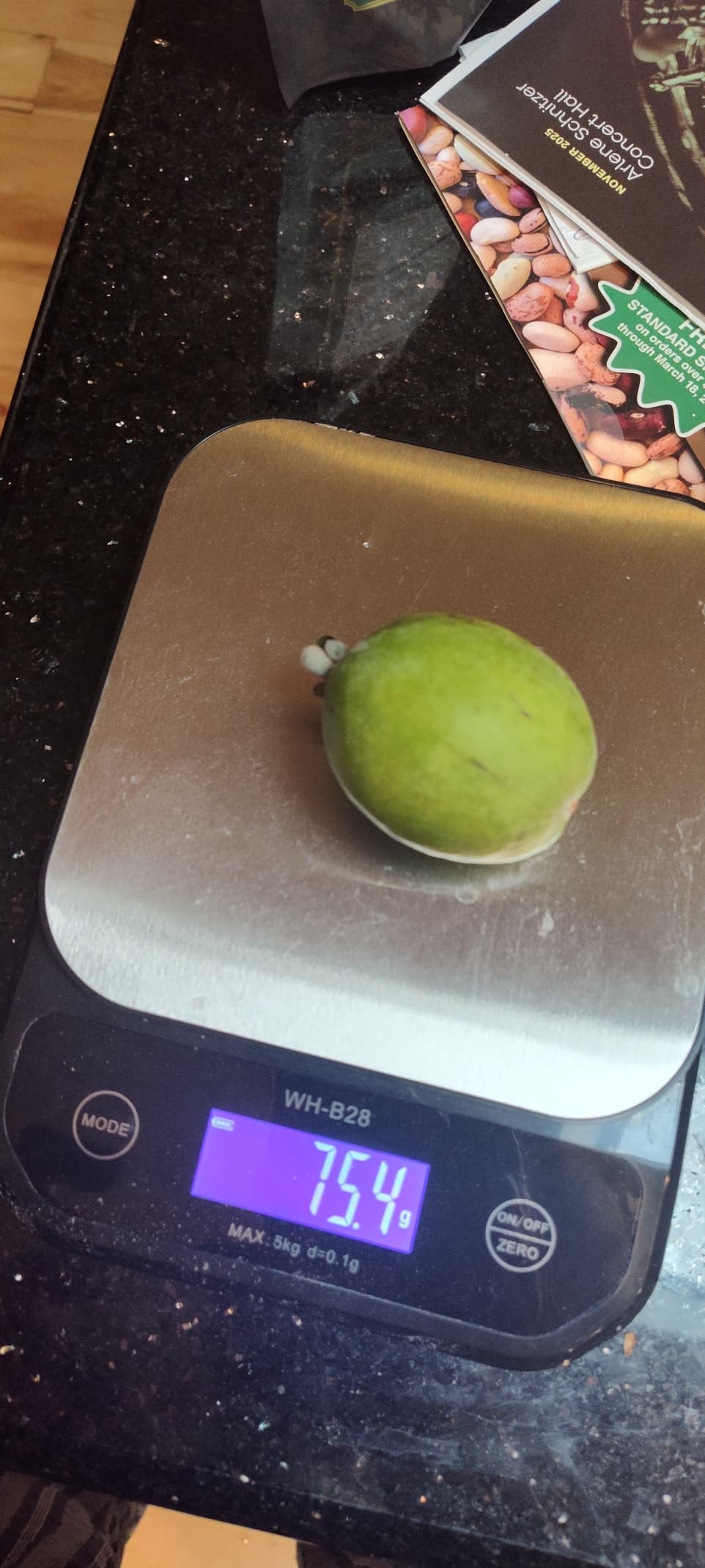
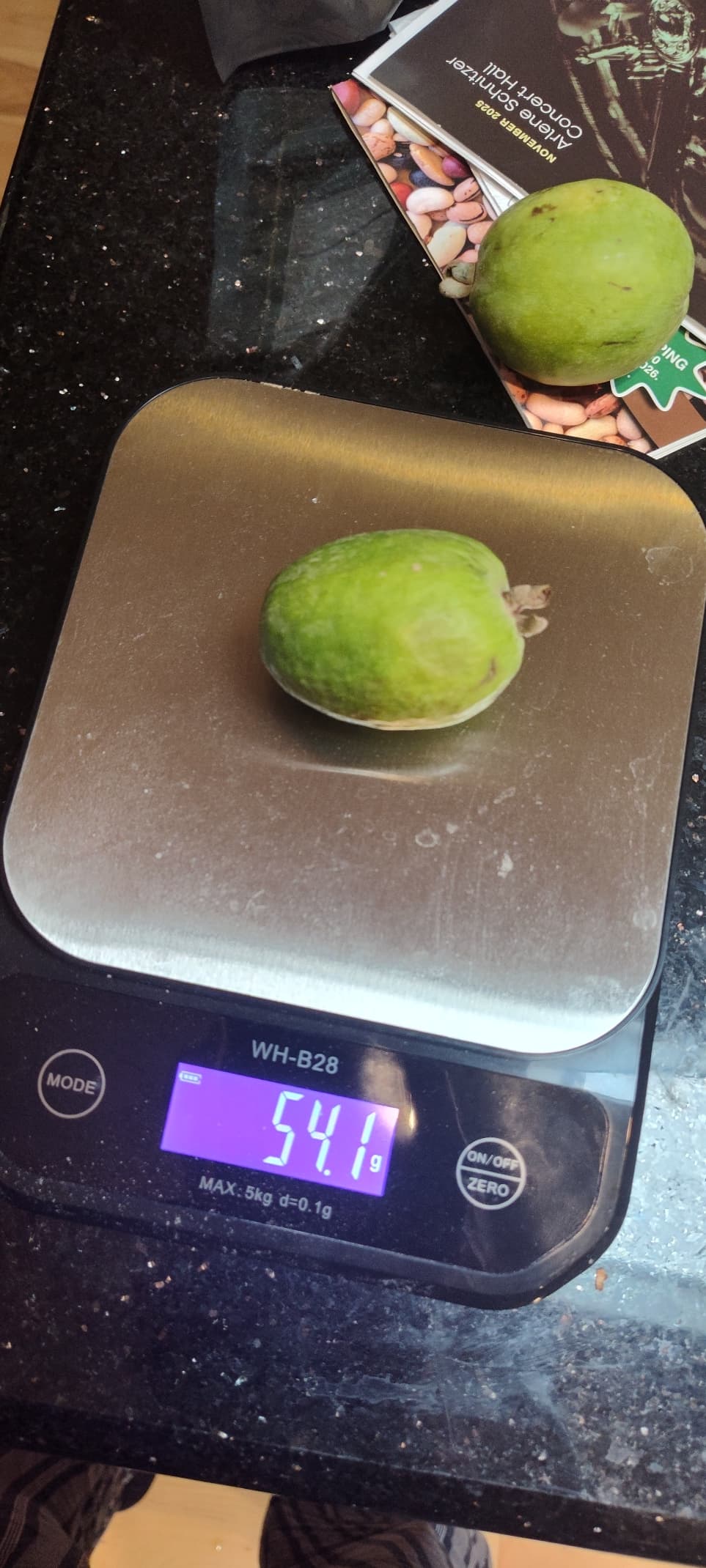
You may have the PNW record! Give us a weight in grams?
3 Likes
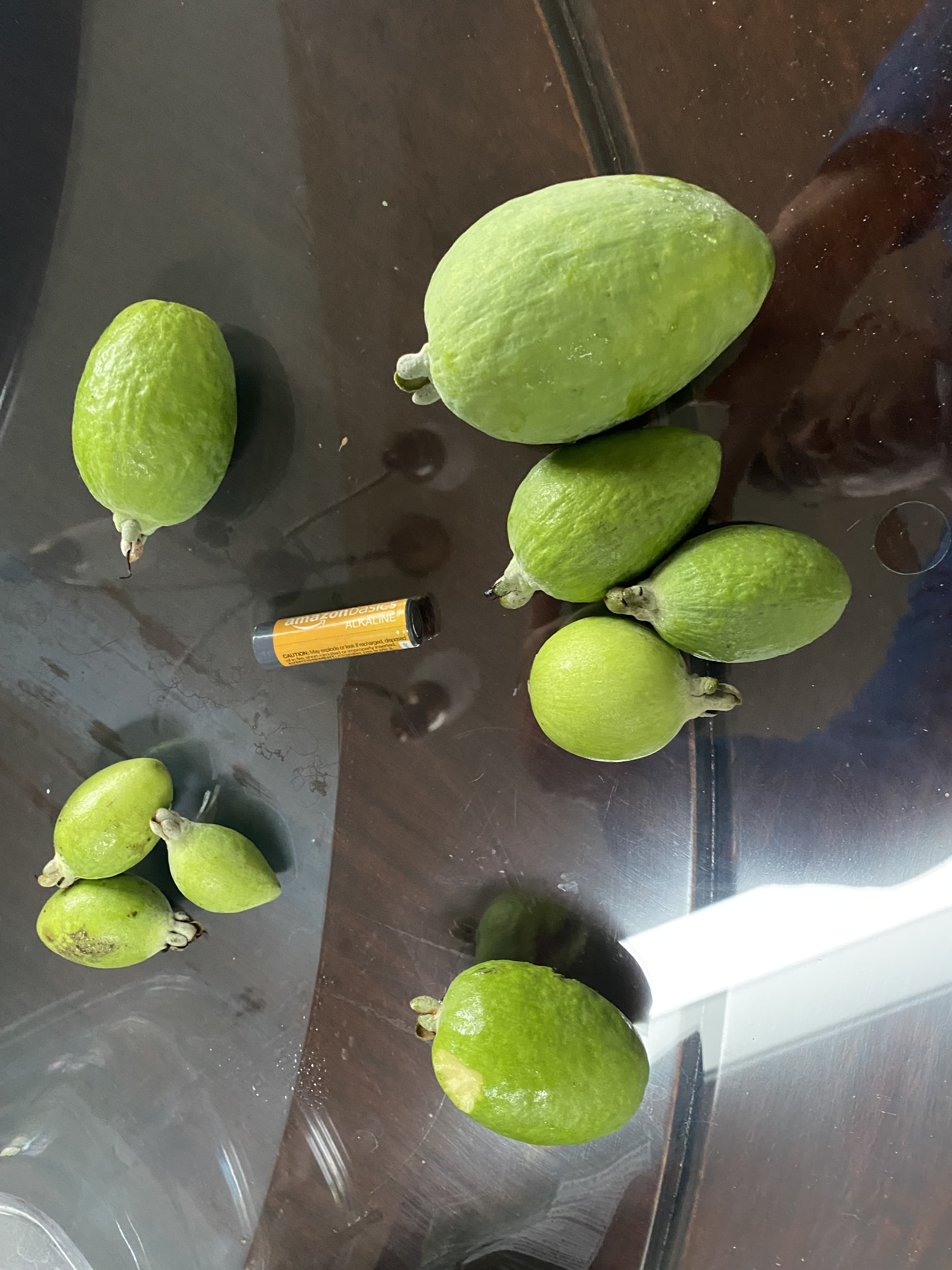
Thanksgiving pickings. My bushes are still loaded
Cointerclockwise from top right.
Apollo, my Joy seedling, Abbadabba, Anatoki. AA cell for scale.
Abbadabba is usually the best tasting - I will try them side by side with Waingaro - my new favorite.
2 Likes
I just bought 5 more trees from restoring eden. Which, btw, they have on sale right now for 37$ for their black Friday sale.
Has anyone had Ramsey? If so, how does it compare?
2 Likes
Which varieties did you get?