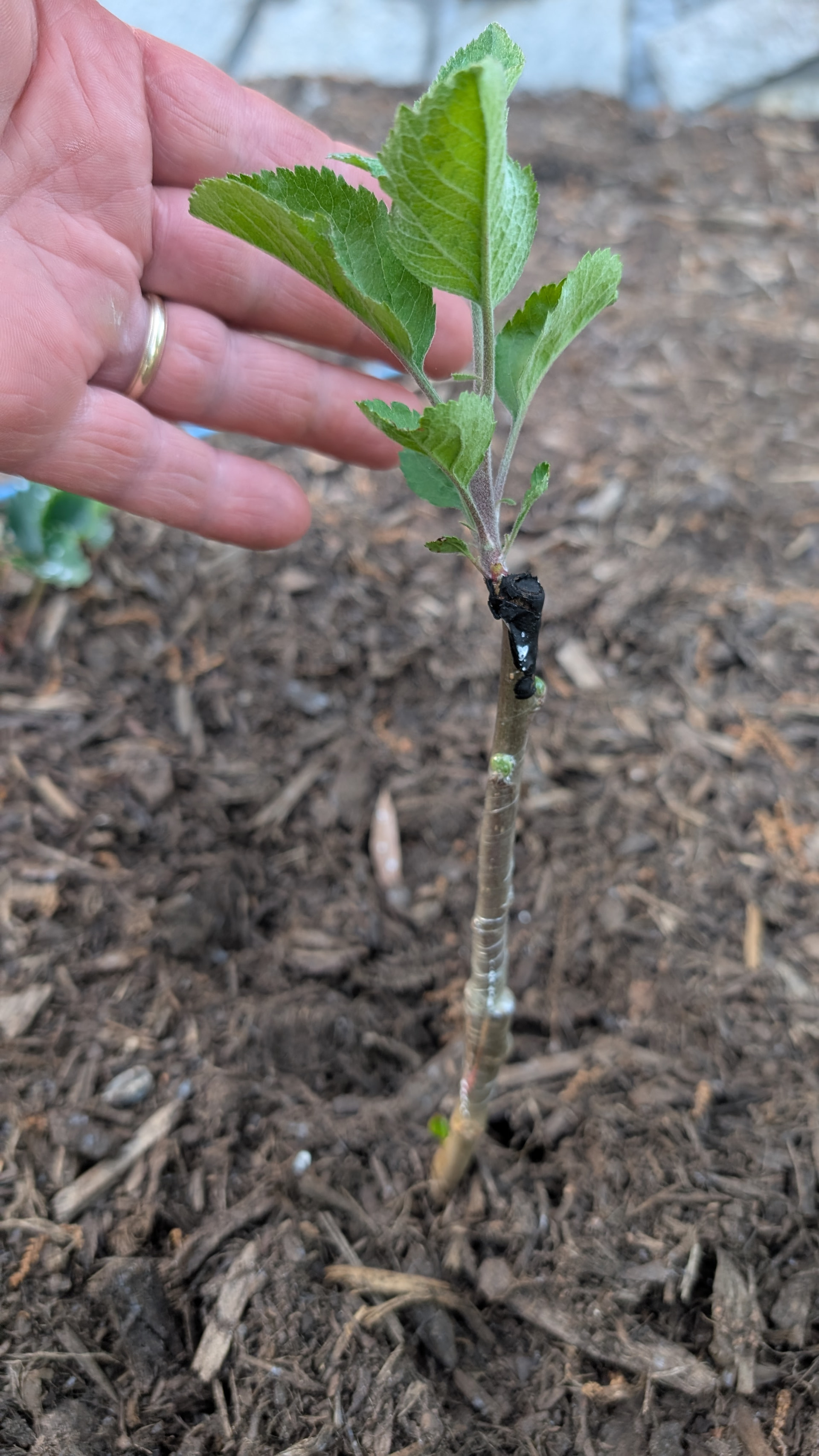
I have a question concerning the apple trees I grafted last spring. I had my first grafting experience with grafting apples trees last year. I tried grafting 8 and 5 survived. The other three the grafted part somehow fell off. My fault I am sure. I did not want to waste the space in my orchard if the trees I grafted failed. So I just put them a 2 gallon pot. I left them in the 2 gallon pot over winter. We had a horrible snowfall during the winter and a two week period where the temps were at least -10 to - 25 degrees below zero. I thought for sure the newly grafted apple trees would end up dying. Low and behold they all survived. To my surprise.
My question, after the long explanation, is should I plant them in their actual permanent location OR just keep them in that 2 gallon pot until next year? They are really small and no more than about 2 1/2 feet high. They are in a protected area where they are at now. I am leery of putting them in the ground and have them die from the severe heat and humidity we usually get in July-August. I protected them last year where they were at by making sure they were watered and not in the direct heat/sunshine. I cannot just take the hose to water them up where they will permanently be. It is too far away from the water supply. I lost 5 of the 6 apple trees I planted a three years back because of the severe heat and humid conditions we had. Temps in the 100+ and scorching direct sun. They were not newly grafted trees. They were probably 3 year old trees.
So my quandary is just that- leave them where they are now, doing fine, OR transplant them into their permanent location in my orchard. Another location I could transplant them, soil and all, is into a 30 gallon planter I had for another bigger fruit tree I put there to over winter.
I used to plant in the ground the first year after grafting, but if they’re small and don’t have much root development I don’t anymore. It just gets too hot and dry here, and if there aren’t enough roots, there’s too high a risk of the tree dying. I just place them in bigger pots or wait until fall before consistent rain.
i agree with Trev. with your hot summers, id plant them just as its starts to cool into the low 70’s and mulch well. the mulch will keep up the moisture and allow them to root. i grafted and planted out 10 apple last spring at my sons and so far havent lost any but i mulch heavily and give them 2 gal. ea. once a week all summer. my summers are alot cooler.
I have very strong views, as I’ve done it both ways. Plant them.
A planted tree will grow better than a potted tree.
A planted tree will never experience future transplant issues; so a planted tree will grow better than a transplanted tree, at least for a while.
Apples are tough. They will never suffer in Z6 cold. On the other hand, you will have to water them. If necessary, carry a gallon jug of water to each tree once a week. You can’t avoid this task; you can only postpone it. Better now. If you refuse to do this, the message from your trees is “Kill me now or kill me later. What’s the difference?”
A graft will grow better on a bigger, more established tree.
You will save yourself at least a year by moving the trees out of pots and then, of course, caring for them.
As needed, protect the planted trees from damage by voles, rabbits, deer, etc with layers of fencing. Again, kill me now or kill me later.
I believe so firmly in the importance of rootstock size and vigor that I would recommend that any wannabe grower start out by planting only rootstock trees – apples, pears, persimmons, mulberries, pawpaws, whatever. Grow them for 2-3 years. THEN graft.
Agree with planting them out sooner rather than later. A year in a 2 gallon pot is already pushing it for apple roots, they’ll be circling by now. If you can water once a week through summer they’ll establish way faster in the ground than sitting in pots getting rootbound. Mulch well and they should be fine.
A 2 gallon containers will not produce enough roots to survive the100 Plus degree days without water. You’re giving them a death sentence. Best bet is to plant them into the 30 gallon container and left them be. If not, then let them grow in there for a couple of year before transplanting them into the permanent place. It’s likely their best chance of survival.
Summers here are hot and dry, with sandy soil. I have used a 5 gallon bucket with a small hole drilled in the side just above the bottom for a dumb guy drip irrigation. The one apple I left in a pot two years was set back by limited roots.
In the 2 gallon container I could give them plenty of water, last year, since it is close to my house. Even with the 30 gallon container it is in the same area so watering the bigger container would not be a problem. Giving the newer grafted apple trees more room for the roots growing.
I am just leery of putting these smaller grafted trees out to the orchard area were watering them would be more difficult.
Like I mentioned I had newer trees planted a couple of years ago and the extreme heat we had just baked the new trees even with me watering them. The surrounding ground just sucked up the water like a sponge and probably depriving the new trees the actual water it was necessary to keep them alive.
With the newer apple trees being smaller and less roots established I would be afraid they would just bake in the sun and heat if we have a summer like the past two years. Maybe giving them one more year to grow in the bigger pot would make them more hardy and have more roots to survive.
Giving them more years to grow and in a bigger container is just one part of the equation. The next step before planting them in the ground is to locate the permanent site. Dig the holes that is 3ft deep and amend the soil. I did it with 2 of my apple tree seedlings. I did it with my giant sequoia and incense cedar. I mix it with straw that was used by the cooler, leaves, kitchen scrape, and any organic matter you can obtain. I continue to turn them over for 2 to 3 months.
The result was very good. The 2 apple trees grew to 6ft in 2 year, but got burn down from the fence fire. Since their root system was robust, they grew again from the ground. Within the next 2 year, they are 6ft tall again. The young giant sequoia and incest ceder that I grew in the pot all die. The one in the prepared holes all survived.
Home growers can plant rootstocks in their permanent positions and then graft them the following spring after the roots are well established after steering a particular shoot to be the leader of the tree. They will grow so much faster the first season after the root system is established in real soil and with less overall time investment.
Most commercial production seems to be done by planting out the rootstocks in the field and then doing chip budding in the fall, but spring splice grafts are easier. I do this with trees I purchase where the scion dies and the rootstock becomes the tree. Grafts get very vigorous growth the first season on established root stocks- at least in moist good soil with a little added N.
I agree with @smilemore. If you need more water-retentive soil, then dig a big hole for each tree and mix peat moss and compost with the local soil. To reduce evaporation, mulch a 2-3’ radius around each tree with a thick layer of wood chips.
If your soil near the surface is going to dry out completely, it doesn’t matter whether the tree you plant has a lot of roots. The key to long-term survival would be for the tree to develop new DEEP roots to access moisture well below the surface. The way to develop deep roots is to plant the tree then water deeply. The roots will chase the water.
For what it’s worth.. I graft in early spring and grow in a pot relatively close to my back door.. Easy to pick up a water hose and make sure it has plenty to drink. Once the leaves drop that fall I plant it out in my orchard. That way it has all winter for the pot dirt and the native soil it’s planted in to “mesh”.. Next spring they’ll typically take off and grow well.
i would love to plant out seedlings in the fall for your stated reasons but because they only send out rootstocks in the spring, i would have to pot them up for the summer. one more step to do. i prefer to graft and plant out here in the north.
I’d take your word for it. My inference was that @MikeC’s soil was not exactly decent, probably sandy. He said, “the surrounding ground just sucked up the water like a sponge.” If that’s what had really happened, it would probably have been OK – there would have been a reservoir of nearby moisture – your reservoir would be on top; this reservoir would have been around the perimeter. I guessed that the water had drained through what is actually sandy soil. It might have looked as if the surrounding ground was absorbing the water when, in fact, the water was just passing through. Honestly I don’t care whether the added reservoir of absorbent materials is above, around the sides, or mixed in.
Yeah, if surrounding soil was a finer texture than mixing stuff with the sandy soil would likely help. I often have a different problem here where there is very coarse sand 12-18" below silt. That destroys capillary pull and tends to create poor drainage.
I seem to improve the situation by digging deep and mixing a lot of the silt with the deeper sand.
Just to mention this. I am in Ohio. We do not have sandy soil around my area. The ground gets as hard a a rock when we get the types of drought conditions. The soil sucks up all the water like a sponge unless you pour many, many, many gallons around in that area.
I do put a little peat moss in a bucket and mix it with the soil I take out of the hole. I think it keeps the water a little more around the roots. ( at least it has worked for me the past planting the 40 fruit trees I currently have). It was just a huge problem the one year I planted the 6 fruit trees and 5 died. The drought and heat was horrible. It lasted about 38 days. It matched the record for the longest period of drought in our area.
That may be a good solution. Wait til fall, after their leaves have fallen off, and plant them in the location in my orchard.
That is what I done. I have them in the pot by my basement door so I easily keep them watered , even if there is a drought. I can make sure the soil is not dried out.