My seedlings are midway through blooming. Apollo has started blooming while takaka has begun to open up. But surprisingly Kaiteri that I grafted last year is blooming as well. All of the other New Zealand varieties bloom later. So not sure if Kaiteri is an outlier or if being grafted onto my seedling has changed its bloom time.

2 Likes
Not far from you. My Kalteri, Anatoki, and Unique are blooming now. The first two started about 10 days ago. The Takaka is soon to start. Waingaro lags quite a bit past the rest. I don’t even see blossoms formed yet. I also have Coolidge but it is more in the shade than the others and hasn’t ever bloomed.
1 Like
I am having a similar problem. This winter, like you said, wasn’t a problem in absolute lows but rather prolonged cold in southeast VA. Additionally, we got a lot more snow than usual. On three days we had snowfall that stacked on top of the pineapple guavas. I tried to brush it away when I could and they seemed fine. However, in late winter I noticed lots of the branch tips lost leaves. As a result, I am seeing a huge reduction in flower buds compared to previous years. Strangely Nikita is unaffected with tons of flowers, and so are my younger first year trees located no more than a dozen or so feet away.


4 Likes
My feijoa located in SoMD also lost their leaves at the top but have grown back out. Unlike you, I was trying to shovel more snow onto my plant to keep them warm when the temperature were below freezing…LOL

2 Likes
The reason I did was due to the weight of the snowfall. I wasn’t sure how much snow we would get during the night and the branches were being weighed down. The lows weren’t a concern for me, I don’t think we even broke 20. The affected trees are growing back, just with reduced flowering. They also took longer to begin their growth than usual.
1 Like
Snow here is heavy. They call it Cascade Concrete. It broke branches. I hate how snow damages evergreens.
2 Likes
I haven’t really seen a big reduction in flowers, but my shrubs are younger than yours. Beautiful planting, by the way.
1 Like
Lurked a bit here before I bought but thought I should share now that I’ve had plants in the ground for ~1 month. I am a relatively new gardener attempting to grow a Kaiteri and Kakariki in Piedmont NC.
When I first took them out I kept them in mostly shade (they shipped with a warning to acclimate them slowly as they were grown in greenhouse conditions) and almost immediately the new leaves started to brown and curl. The established darker leaves were unaffected. I was worried this meant that they needed to get in the ground quickly so I planted them within a couple of days and the problem persisted until just this week or so. At first I suspected leaf spot or transplant shock as they were starting to get moderately root bound, but in retrospect I think it was just a bit of sun scorch that they’ve since acclimatized to, and I probably should have started with taking them outside for shorter periods initially. I couldn’t find any comparable images or documentation so thought I should post here for the record in case it spares anyone else some grief.

They’re not quite in full sun but they get a few direct hours in the morning and afternoon each and a bit of dappled shade between. The new leaves seem to be tolerating it well now and are gradually darkening like the mature leaves, so I hope to update with some positive results in the future!
I am in the same zone you are (8b). I have 3, and two look healthy (the third is kinda bald). They’ve all flowered twice but I haven’t found any fruit and maybe they just aren’t old enough.
Good luck. I have Kaiteri, Nikita, Albert’s Pride, Albert’s Joy, and another 4 or 5 seedlings, also in the Carolinas. Only planted my first ones in ground about 18 months ago, but so far pineapple guava has proven to be one of the easiest/least fussy plants I’ve grown in terms staying happy in a pot for a while, handling transplanting, unaffected by temperatures into the upper teens, direct sun on young plants, etc. Essentially, they’re tough and very easy plants so I would expect they’d bounce back with a little time and possibly some very light pruning of damaged areas. I do think limiting direct sun on young plants could be helpful since our summer heat can be brutal.
2 Likes
The early varieties still surprise me how fast they develop.
Apollo and my seedling have just set fruit.
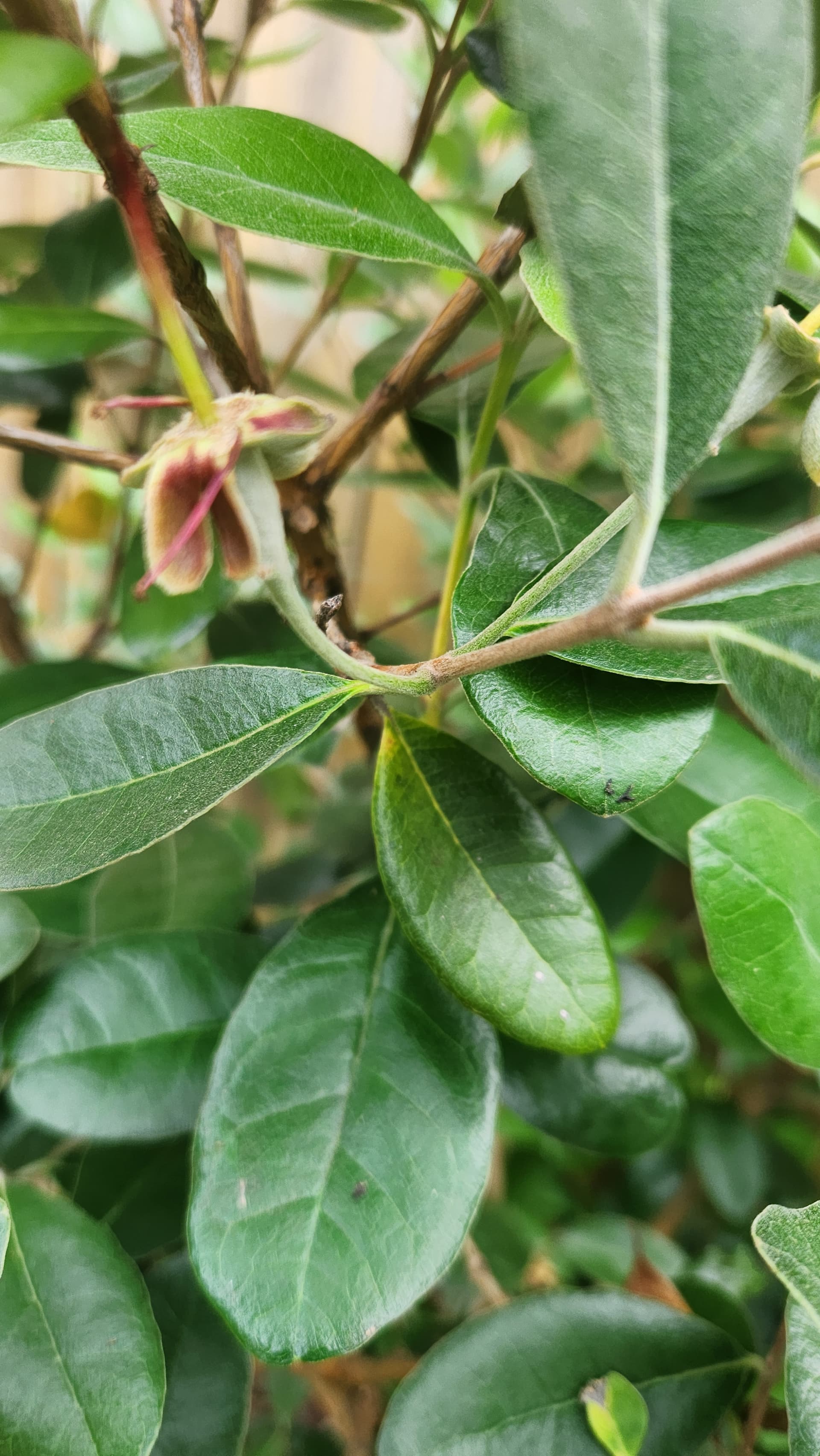
But then next door, Takaka is rapidly swelling. Crazy development for early June.

4 Likes
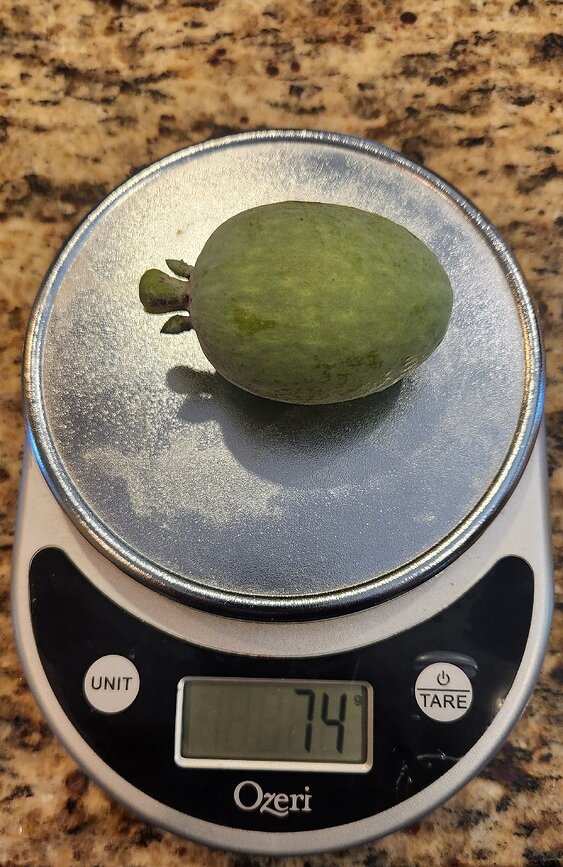
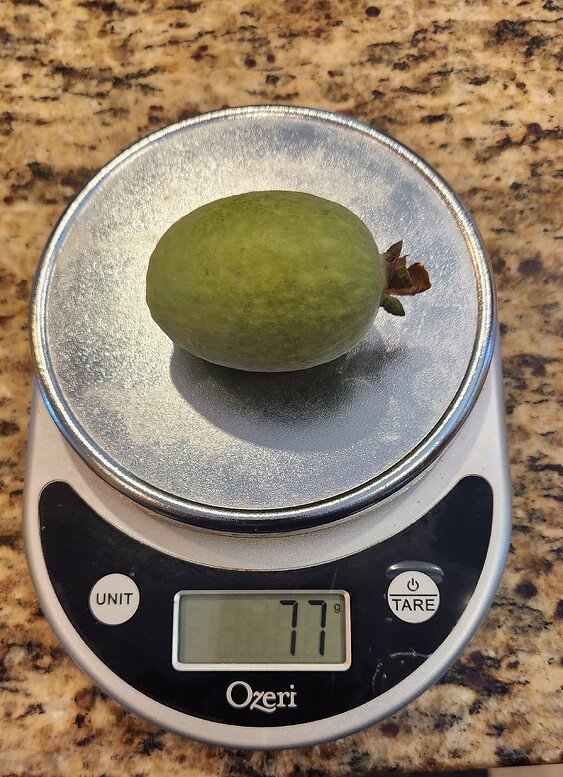
First few takaka have dropped. About 3-4 weeks earlier than last time. I went to run the hose and saw 2 had fallen. Alternate bearing looks in effect as less fruit than last year as the plants try to recover. However, they look a bit larger, inching up to the 100g club.
4 Likes
when is the best time to prune feijoa, after a harvest or late winter/early spring?
Since mine are evergreen, I prune after harvest. I’ve never seen the new growth harmed after the plant got to a few years old. I only leave branches for Spring if I’m top working. Then I prune the candidates that don’t take…
1 Like
i saw that one green world has new varieties - kakapo, earlihart and a variegated type. is anyone growing these, and if so how do they compare with the other NZ varieties? my NZ varieties have not flowered yet, i am hoping in a year or 2.
Earlihart sounds like a random seedling that had promise. I don’t think anyone will have info for a few years.
kakapo is a mid season variety according to NZ with small to med size fruit. Unless you just don’t have a mid season, Apollo or Marion have larger fruit. Since warmer climates mean smaller fruit, I always aim for larger fruited varieties at the start. The Northwest crew get larger fruit due to cooler temperatures.
Mid-Season Varieties
- Apollo: Mid-season, delicate fruit. Large fruit, some uneven in shape. Sweet with good eating quality. Bruises easily.
- Den’s Choice: Mid-season, good keeper. Medium-large size. Very sweet, smooth and juicy fruit. Mildly aromatic.
- Kakapo: Mid-season. Medium size fruit with good flavour.
- Mammoth: Mid-late season. Medium size fruit with high incidence of empty locules (segments) inside. Moderately soft & juicy and grainy.
2 Likes
And now with Apollo dropping, I noticed again that running the hose once a week during this drought helped the fruit size up. Still not 100g but very decent size.

I think an inch a week and thinning is really how to get the maximum size in these down here.
5 Likes
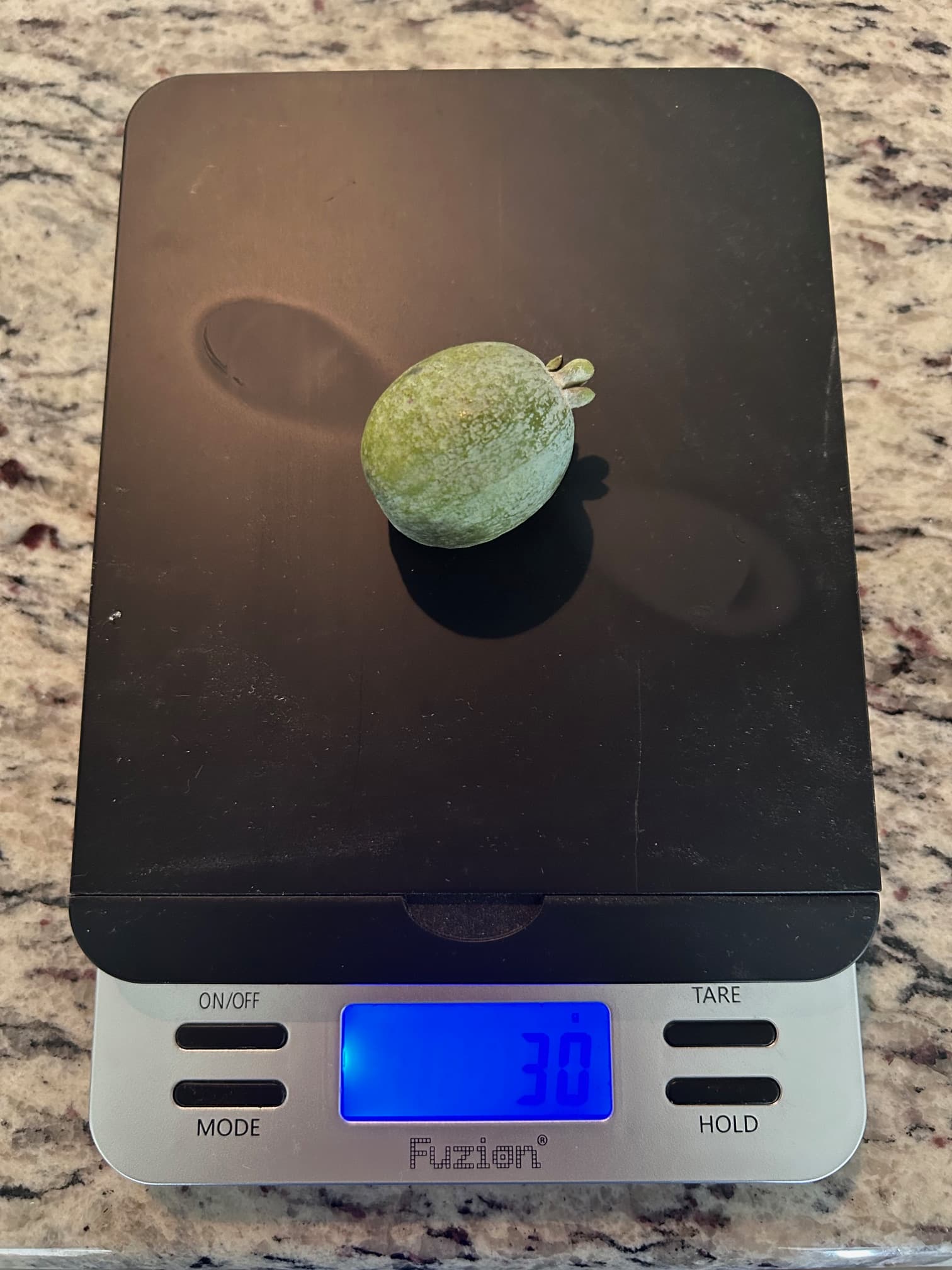
i was wondering why most seedlings produce such small fruit (the size of grape and cherry tomatoes), i thought maybe not completely fertilized when i hand pollinated. but i do notice random large fruit (i’ll post pics when they drop). unfortunately i didn’t keep track of which ones i cross pollinated. i’ll have to start weighing them.
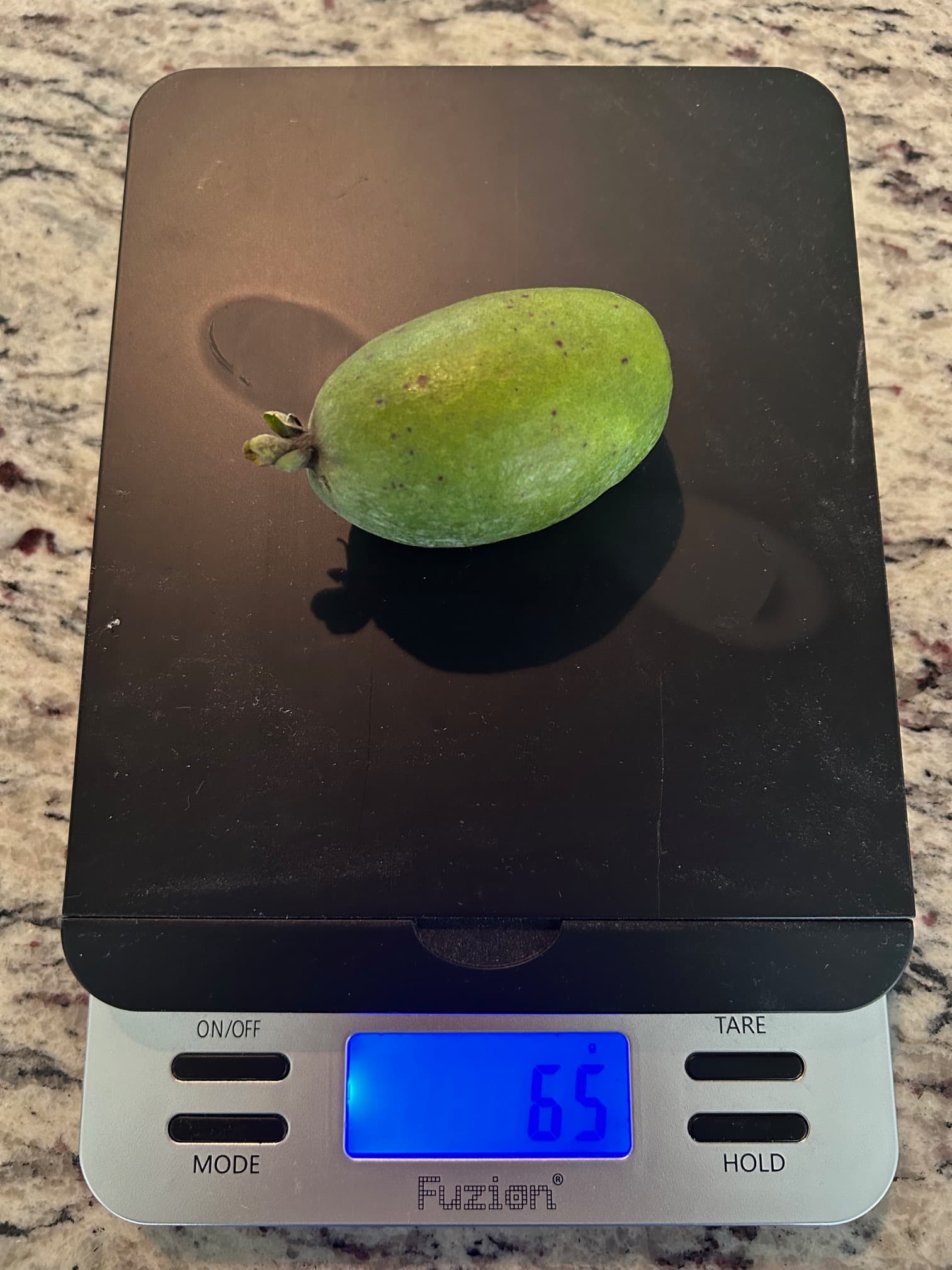
this is probably one of the largest ones i’ve had so far, from a seedling, typically my seedlings are half the size or smaller.
4 Likes
I am starting to think that the seedlings just set too much fruit for the most part. The skin thickness and taste are definitely a breeding point, but I think the seedlings are just too productive, and that’s why they’re so small. Thinning took my seedlings to 50-60 grams, which is not far below an average Takaka or Apollo down here. The named varieties set less fruit, so the fruit are larger. That’s why you hear NZ talking about the plants needing pollination IMO. The fruit total weight of the tree is limited by the sunlight and water mostly. I think if you pruned seedlings for maximum sunlight and thinned, you would get as large fruit on average.
1 Like