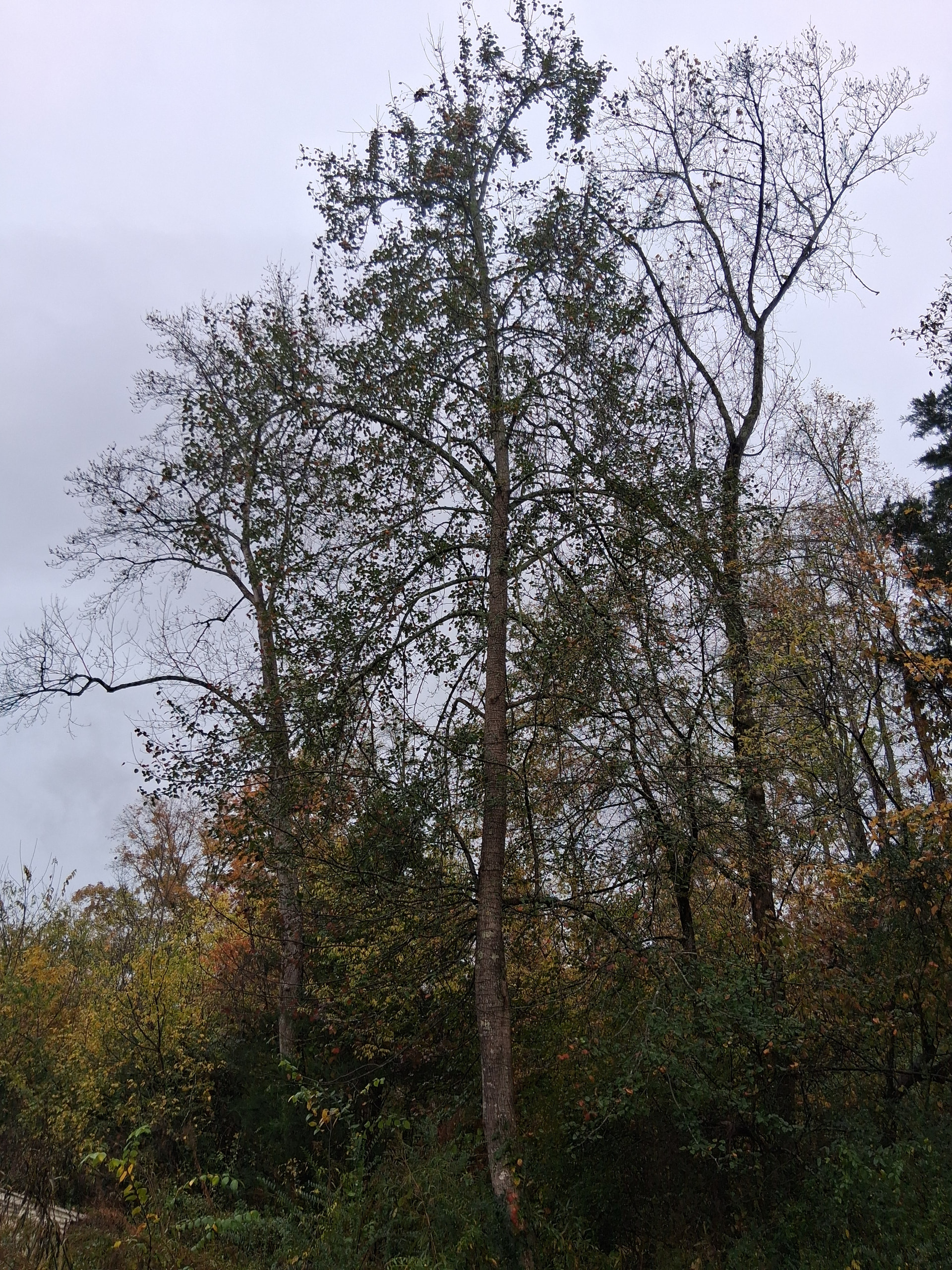
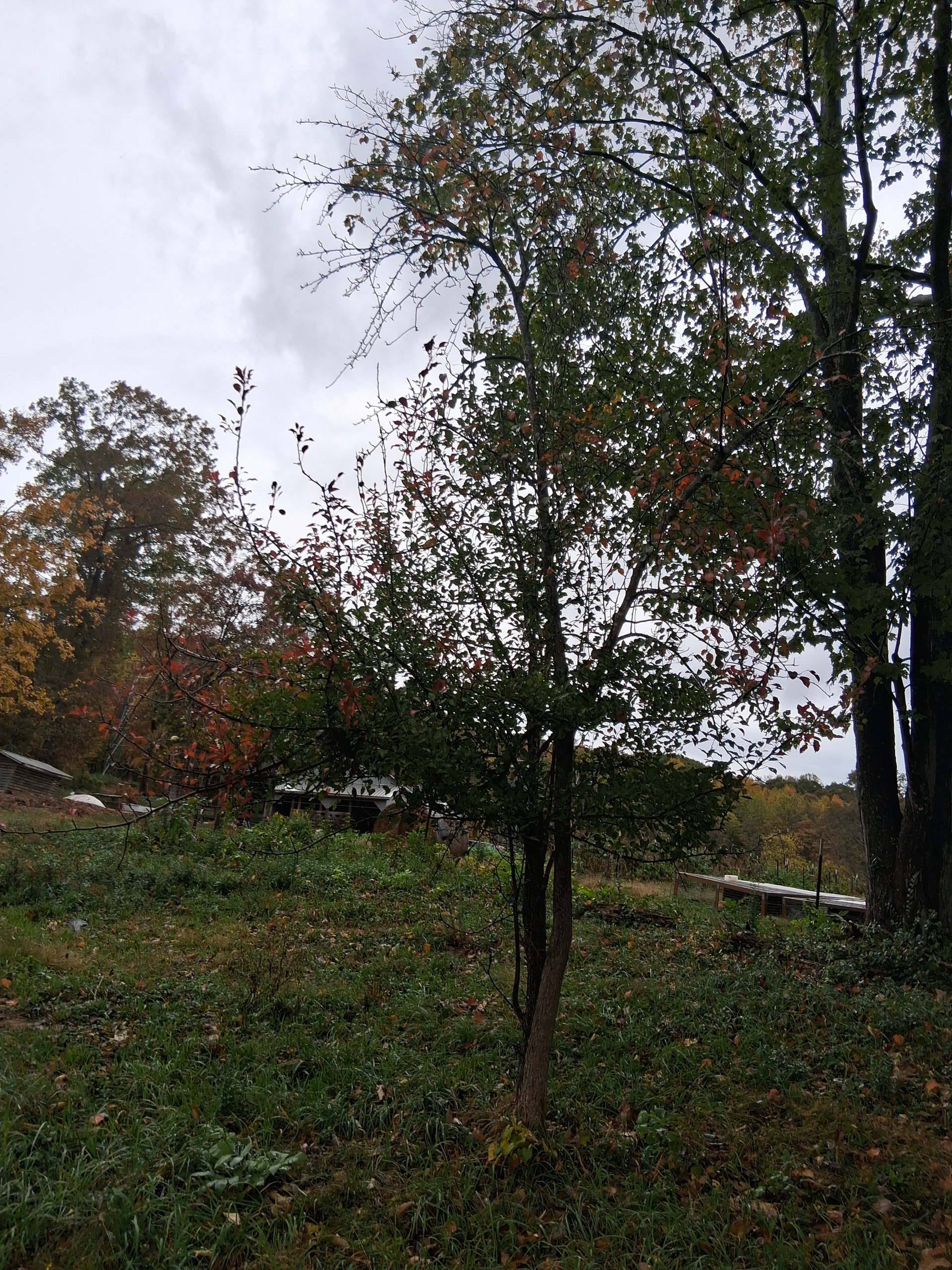
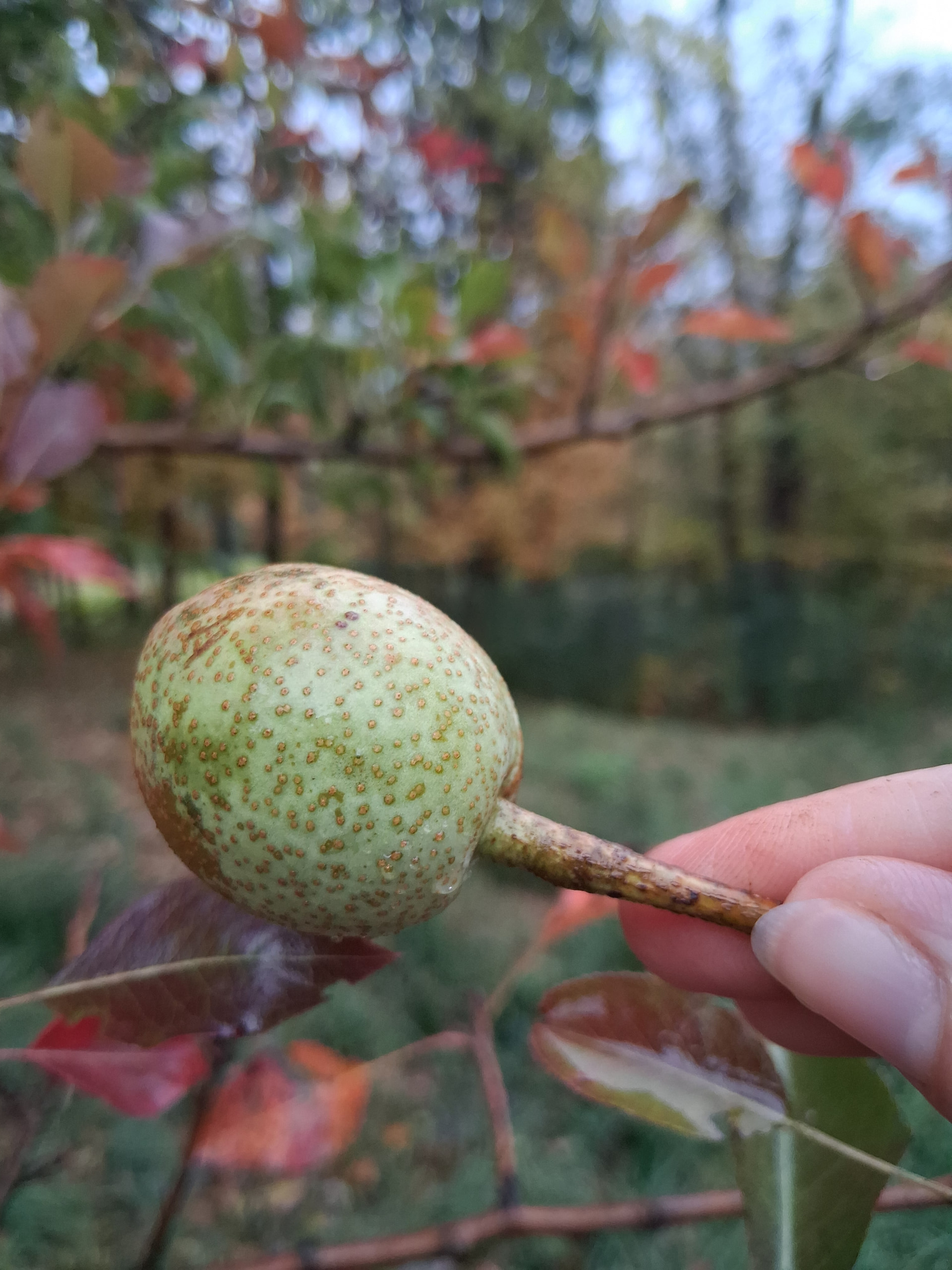
I found some interesting wild pears in a Mennonite community yesterday. This post contains photos of the largest one. It’s currently growing in a stand of wild volunteers and may itself be a wild volunteer, judging from its size relative to the trees on either side of it (see photo below).
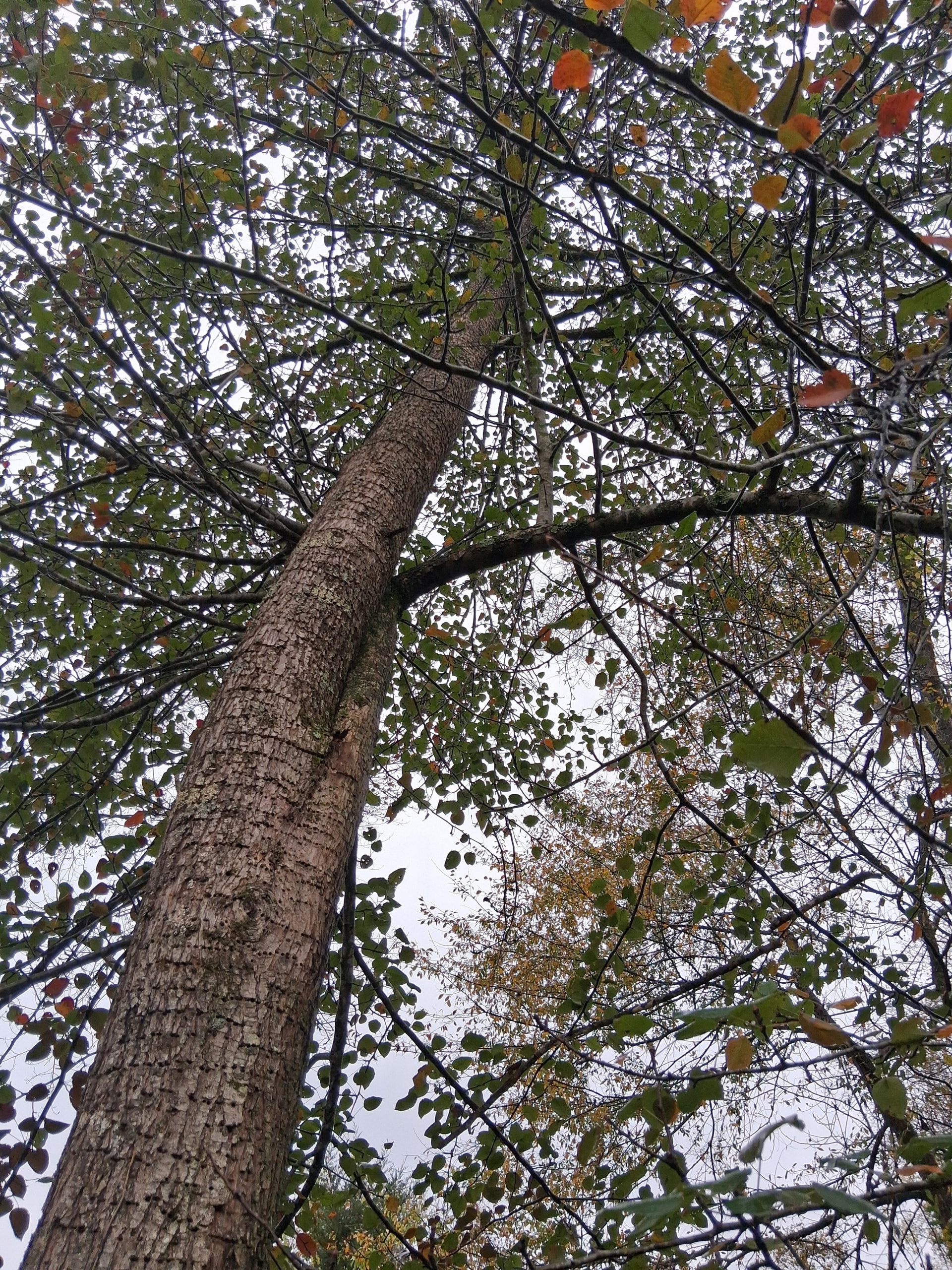
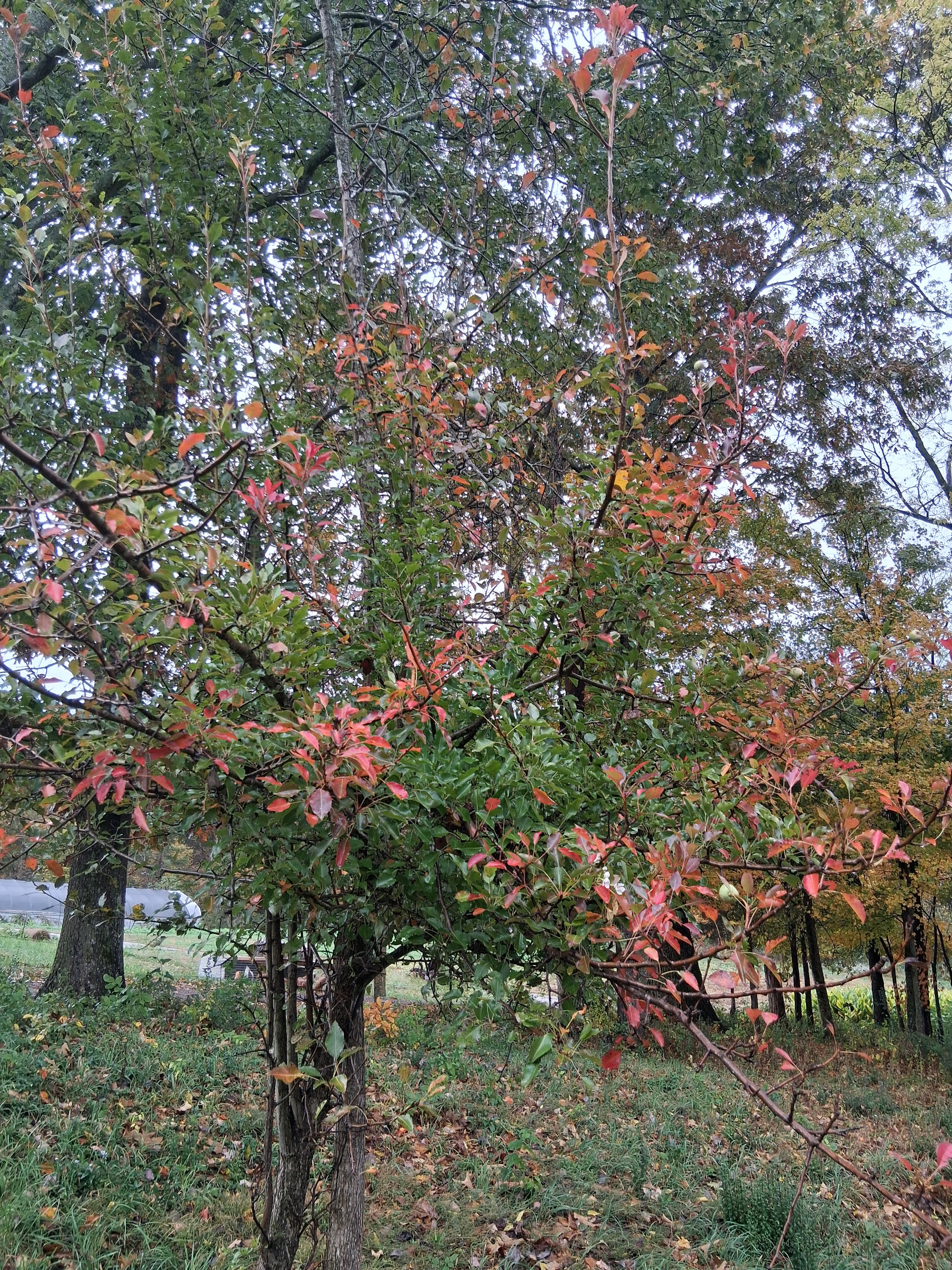
What I found really interesting about this tree was its growth habit: one central leader with branches coming off of it at almost 90 degree angles, as can be seen above.
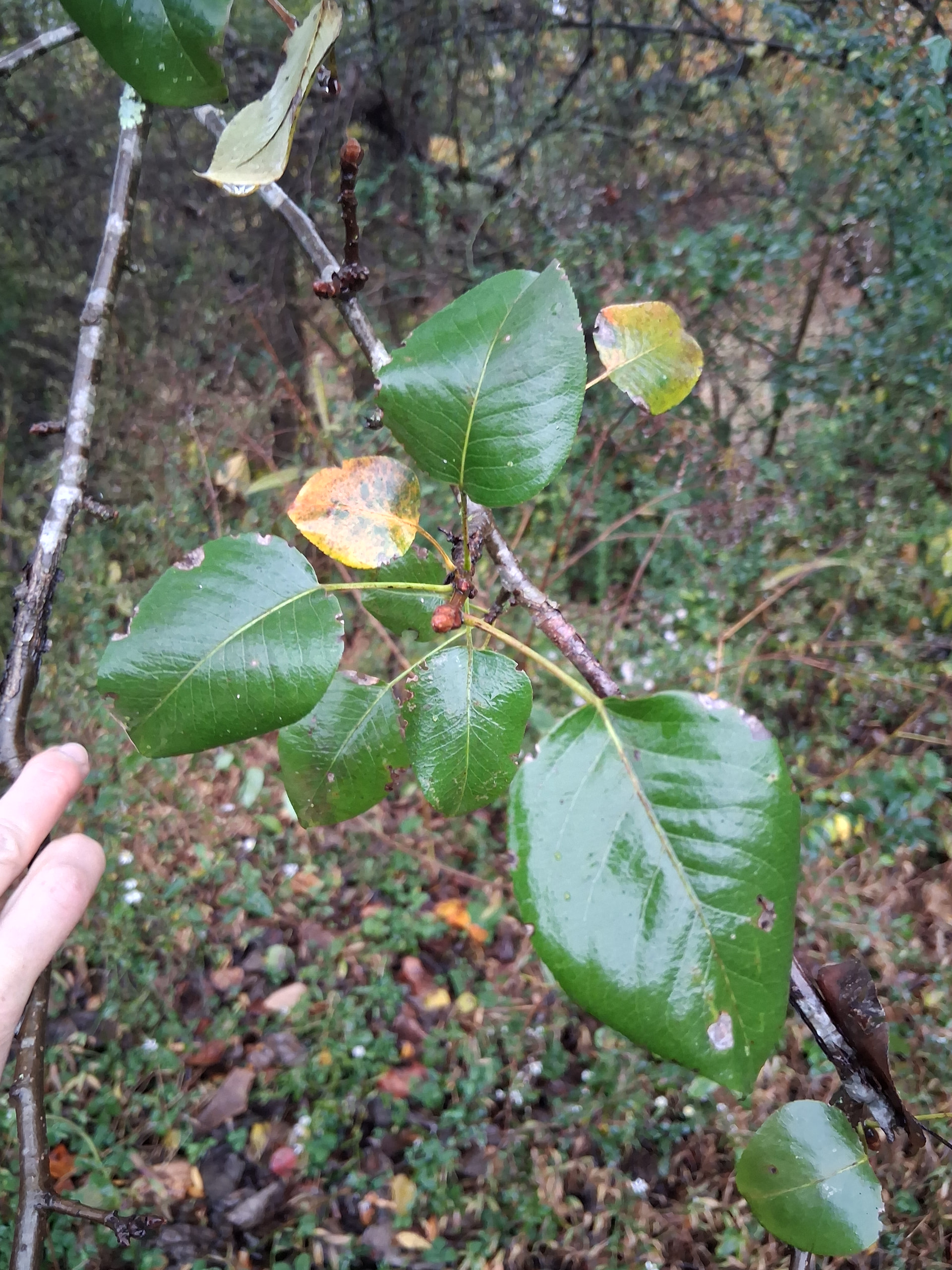
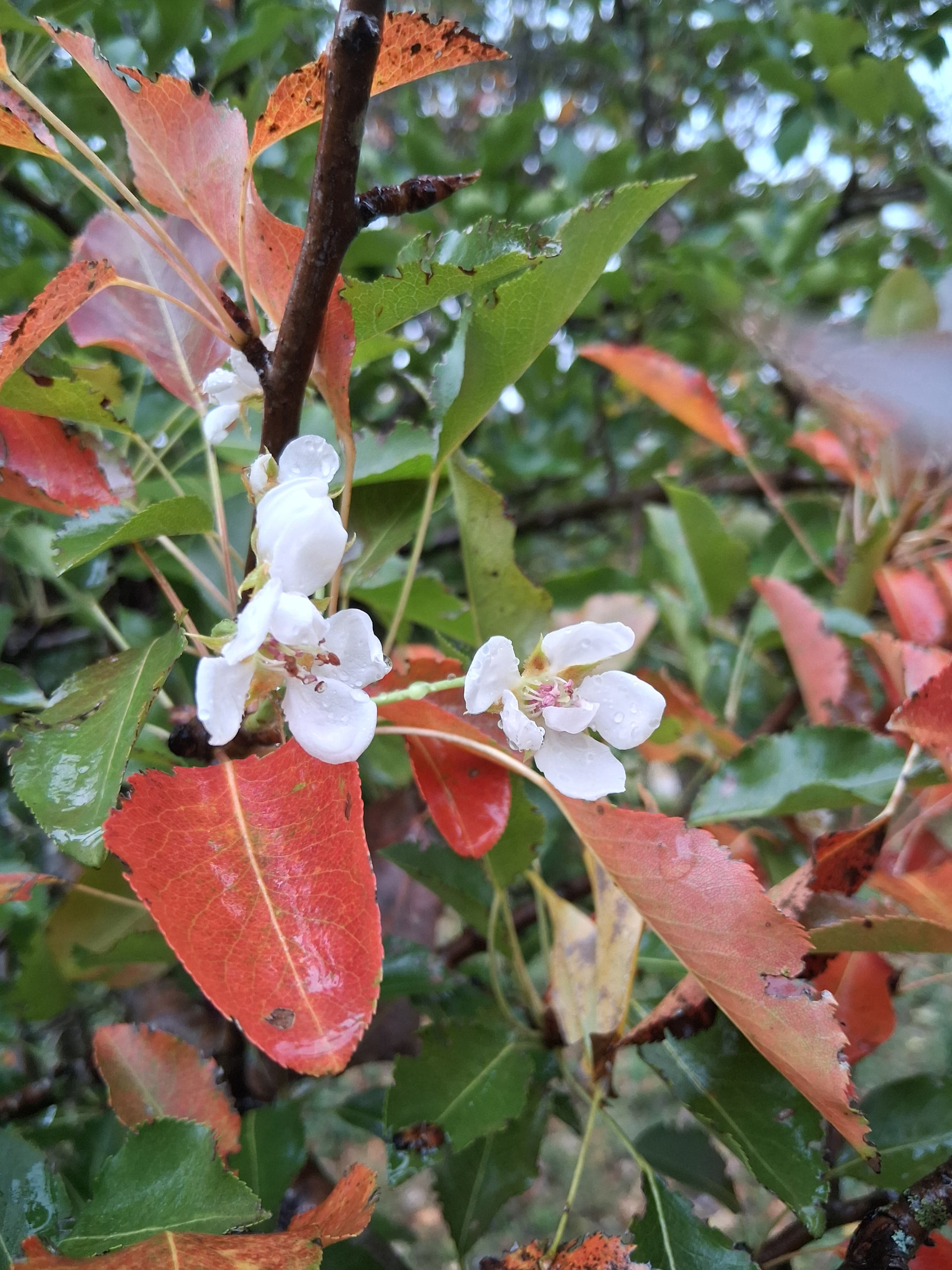
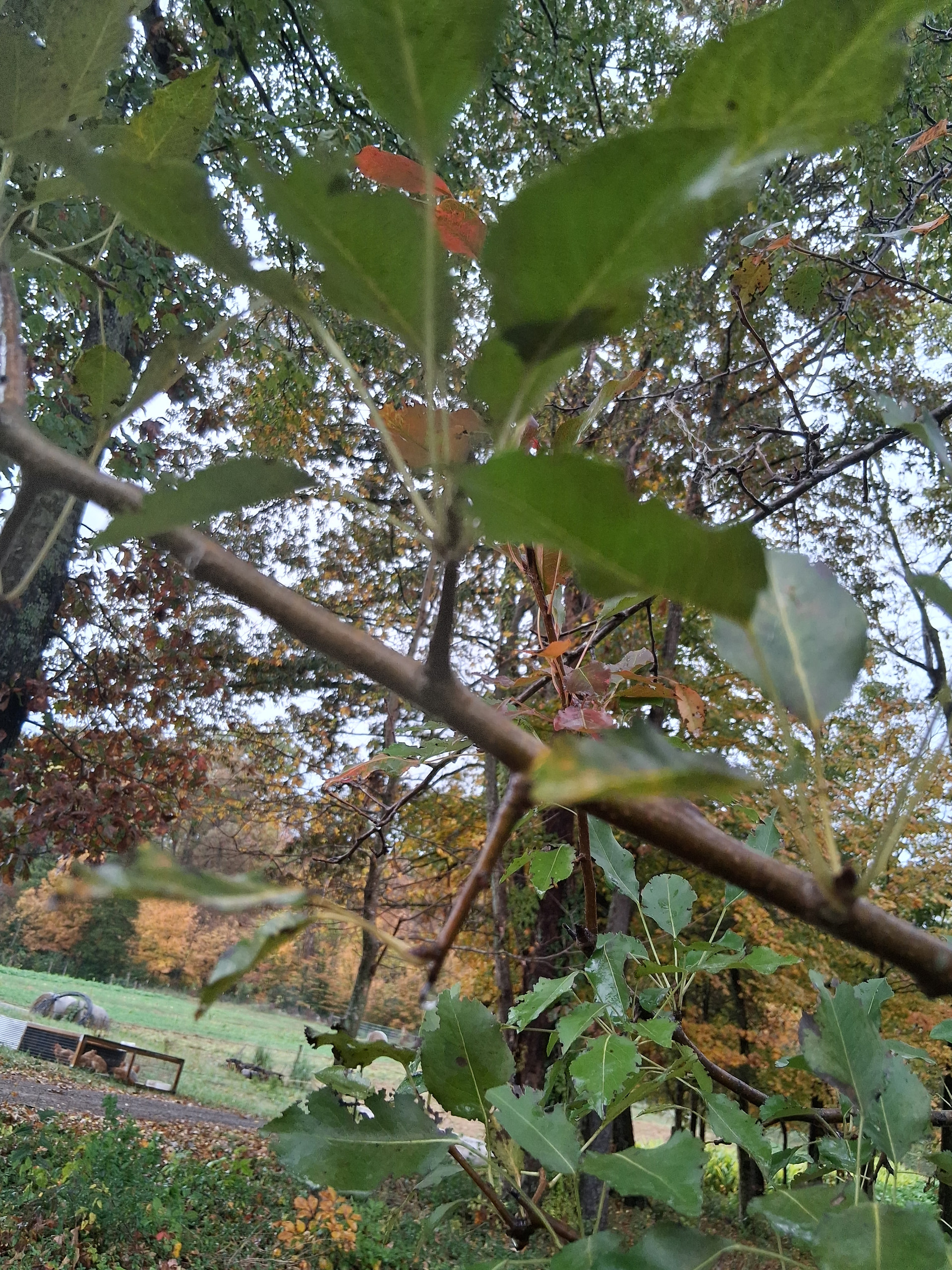
The only problem this tree seemed to have was the borers that attacked its trunk at some point. Otherwise, I saw no signs of blight on the leaves and only a tiny scab spot on one of the fruits I collected.
Closeup of the leaves (above)
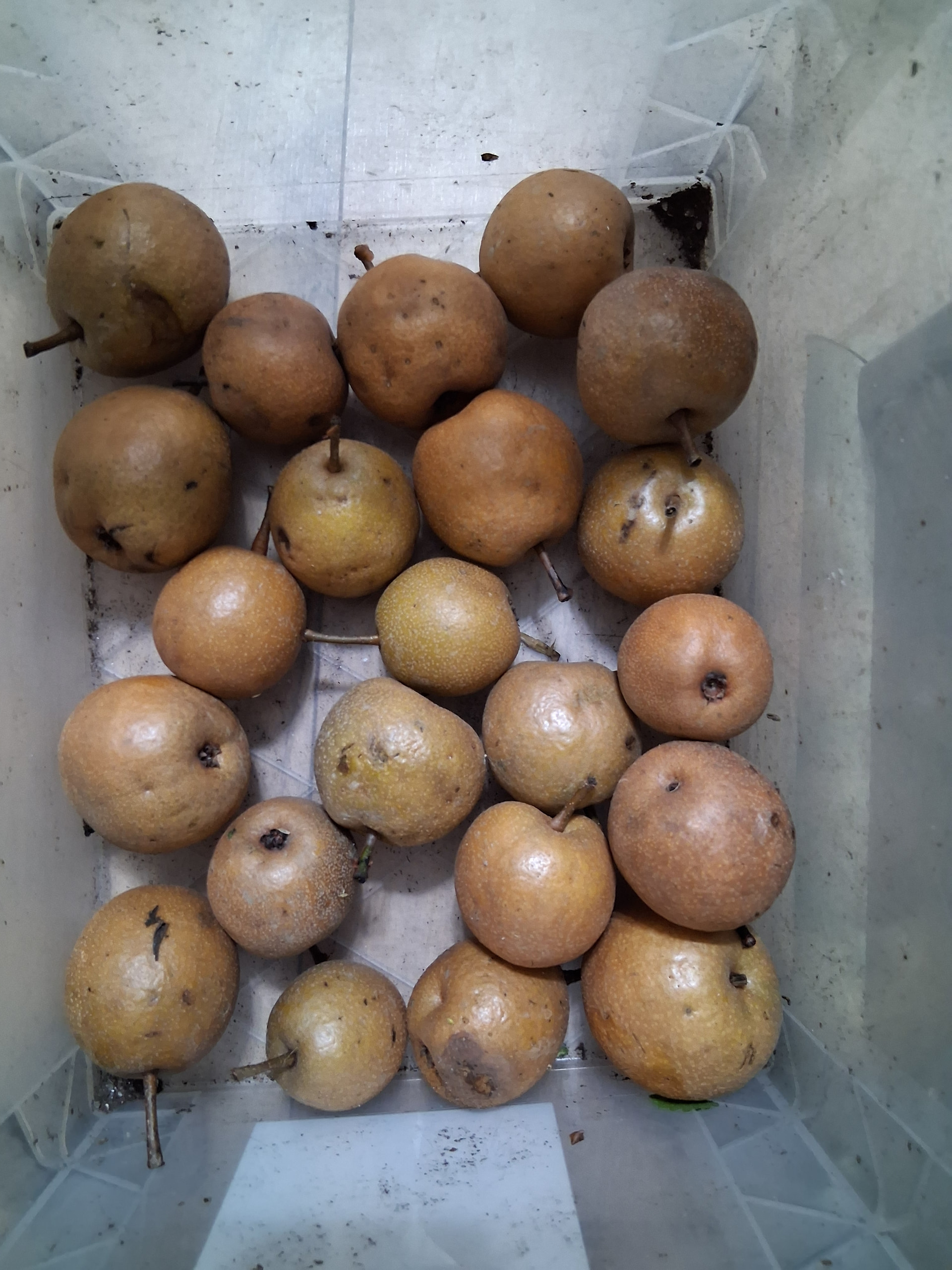
I collected and processed about 30 fruits. The most common issue with them was physical damage sustained during the fall from the tree. Otherwise, I found a very small scab spot on one fruit and a worm in another fruit. That’s it!
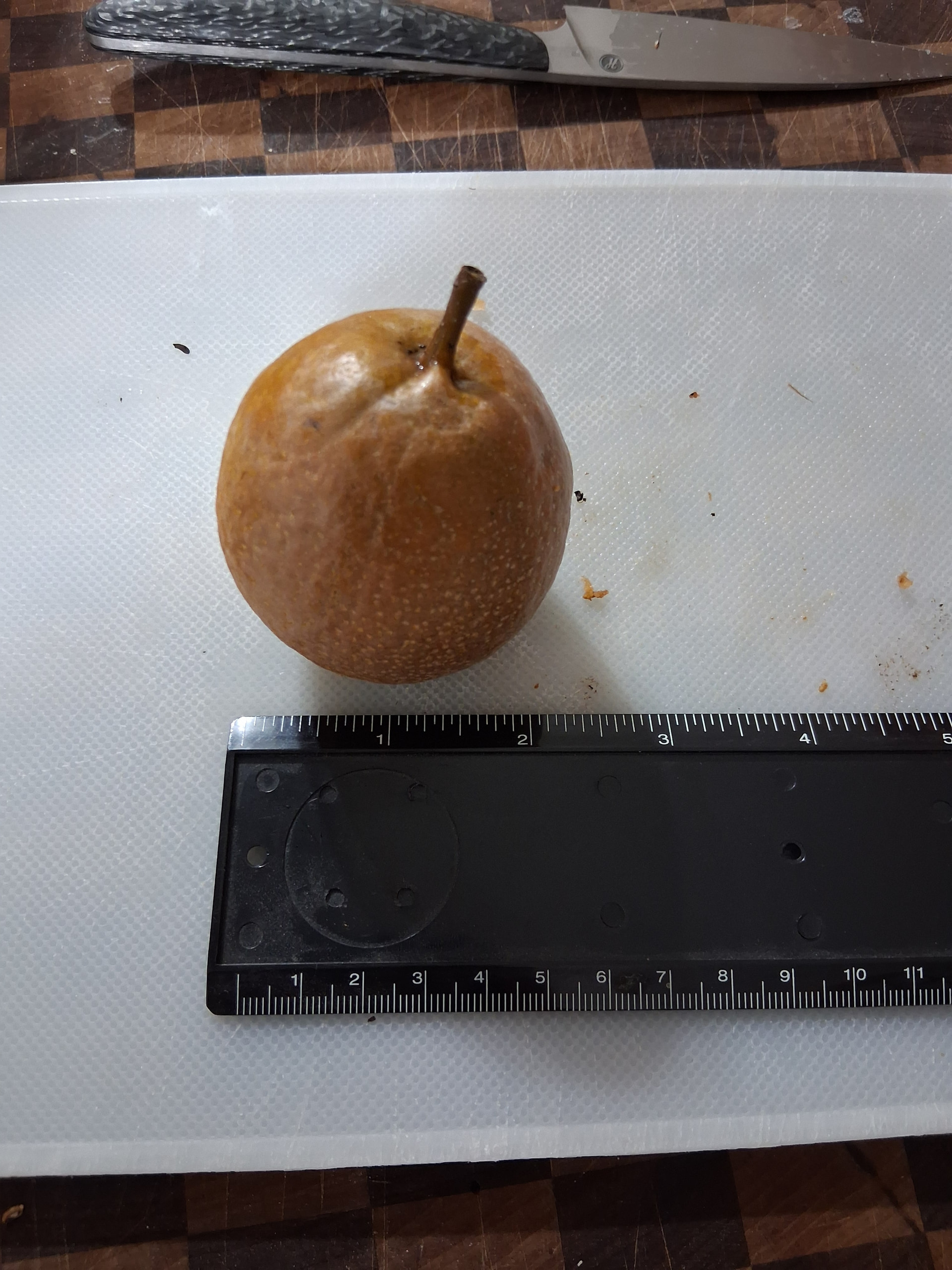
The fruits were all about 2” in diameter, round, and russet.
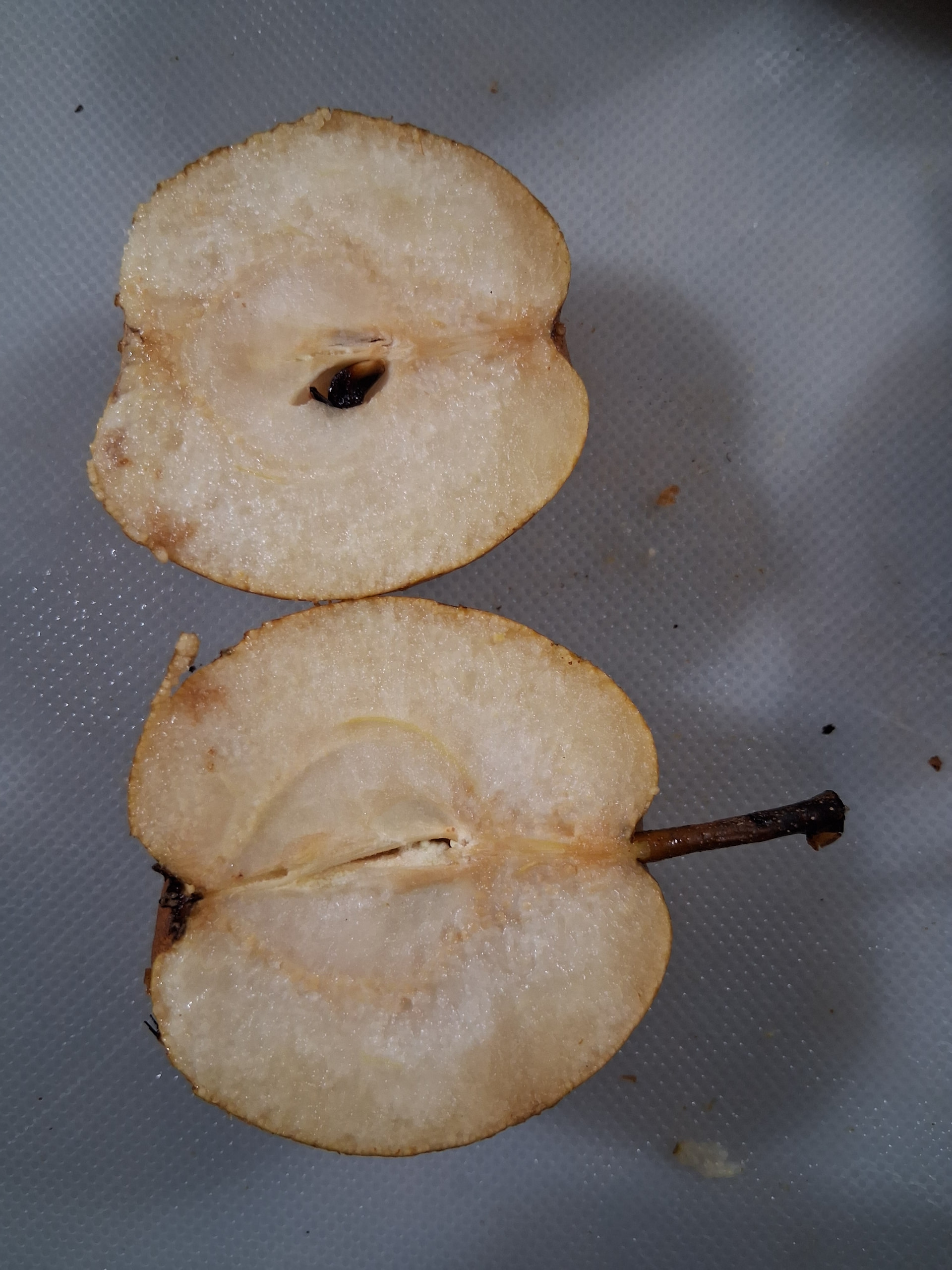
Some of the fruits had what looked like underdeveloped cores, as can be seen in the horizontal cross-section above.
Vertical cross-section (above). Most of the seeds in these pears were underdeveloped and/or shriveled. Out of about 30 pears, I harvested only 24 healthy-looking seeds.
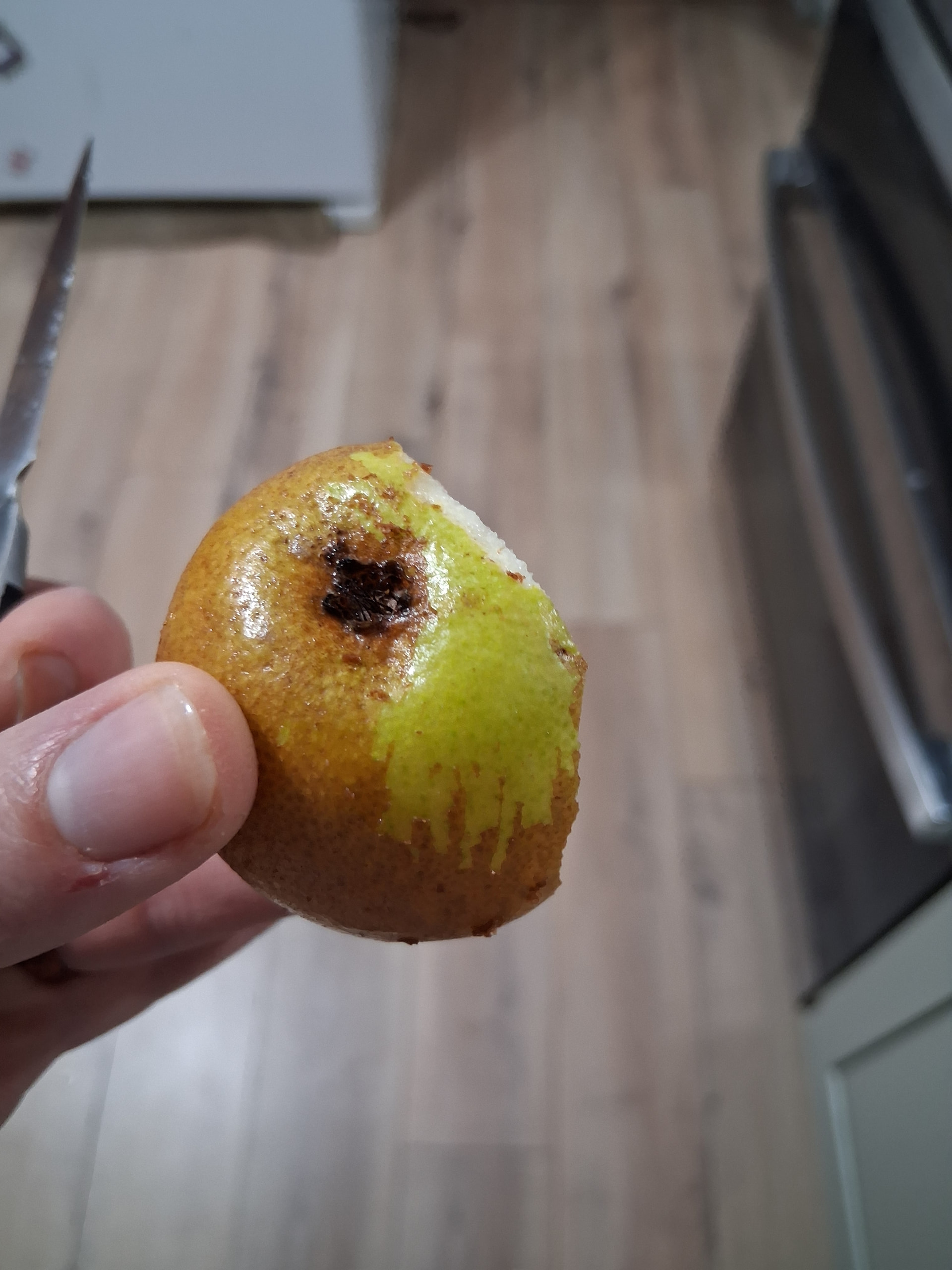
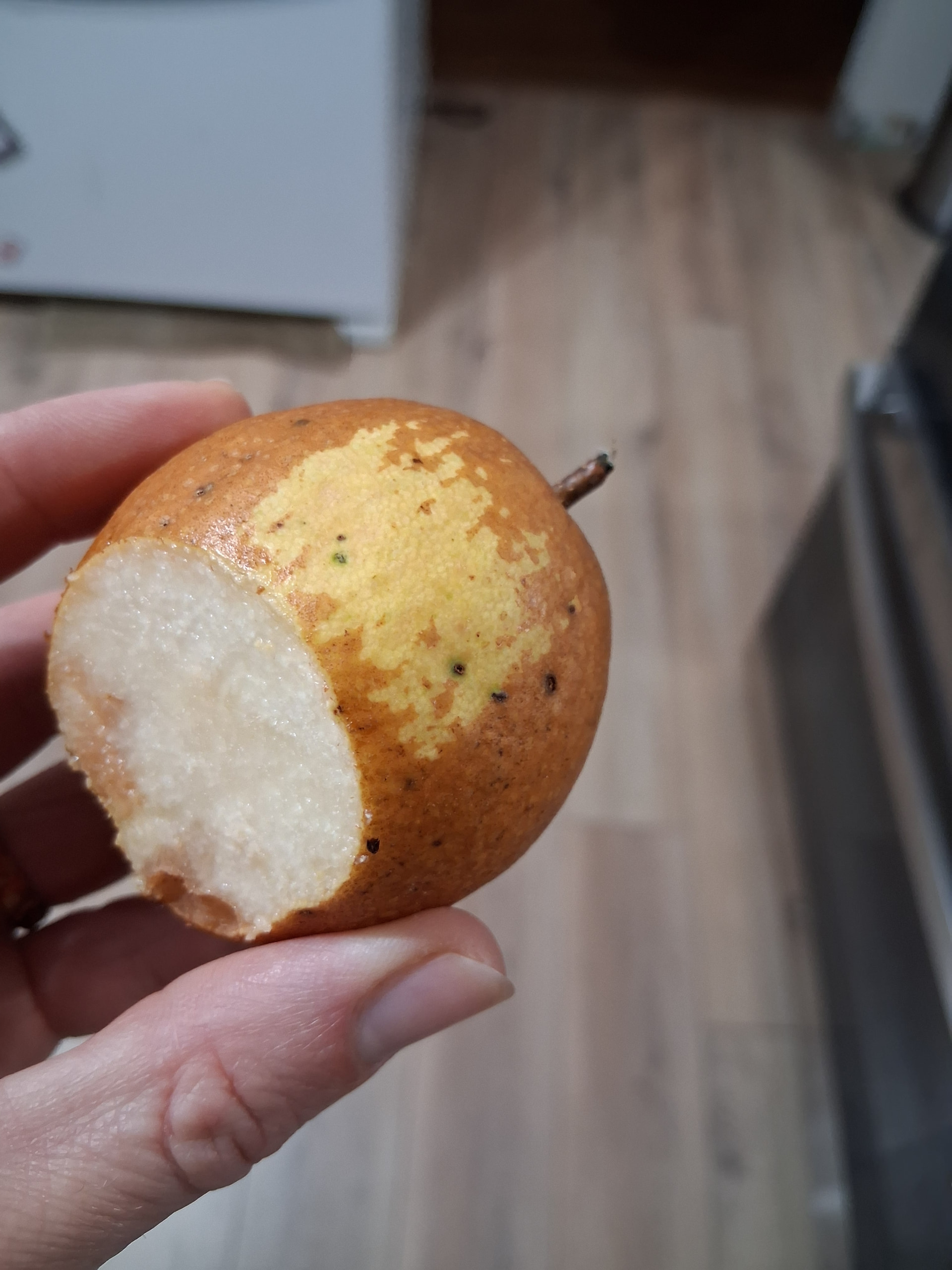
The fruits were either green or yellow beneath the russet layer, which was pretty easy to scratch off.
About 30% of the crop was still attached to the tree.The pears I collected had all fallen off the tree, and I don’t know how long they had sat on the ground before I came along, so they may have had some time to blet. That being said, they were all very firm, juicy, and tasted like apple cider to me. Probably not as sweet as apple cider, and a bit more intense-tasting. I liked them, and I ate 2 in the car on the way home. The only drawback that for me relegates these pears to the juice/cider/rootstock category is the large amount of grit in them.