Once I get another picture I will show the comparison of notching. If you look up further you can see the start of the clips/notching process. I did this as well, albeit on a different cultivar (January russet). There is a clear difference in growth habit. The clothespins were essential in my opinion to get a good branch angle. Otherwise they would have been near vertical I think. More to come. This is pretty interesting, and reliable, stuff in my limited experience
I also trained one tree in your system, the tree is considerably taller, but the branches unfortunately were headed by deer an inch or two. I’m also unsure of the cultivar, which obviously affects the size and growth habit. I will however dedicate two trees in the nursery to your practiced system. I have 8 gold rush trees on m111, so it will be a more controlled trial.
I hope you manage to protect the trees from deer, rabbits, and rodents such as mice and voles.
Here, deer will shred any foliage, twigs, or even branches within reach. Rabbits and rodents will eat bark.
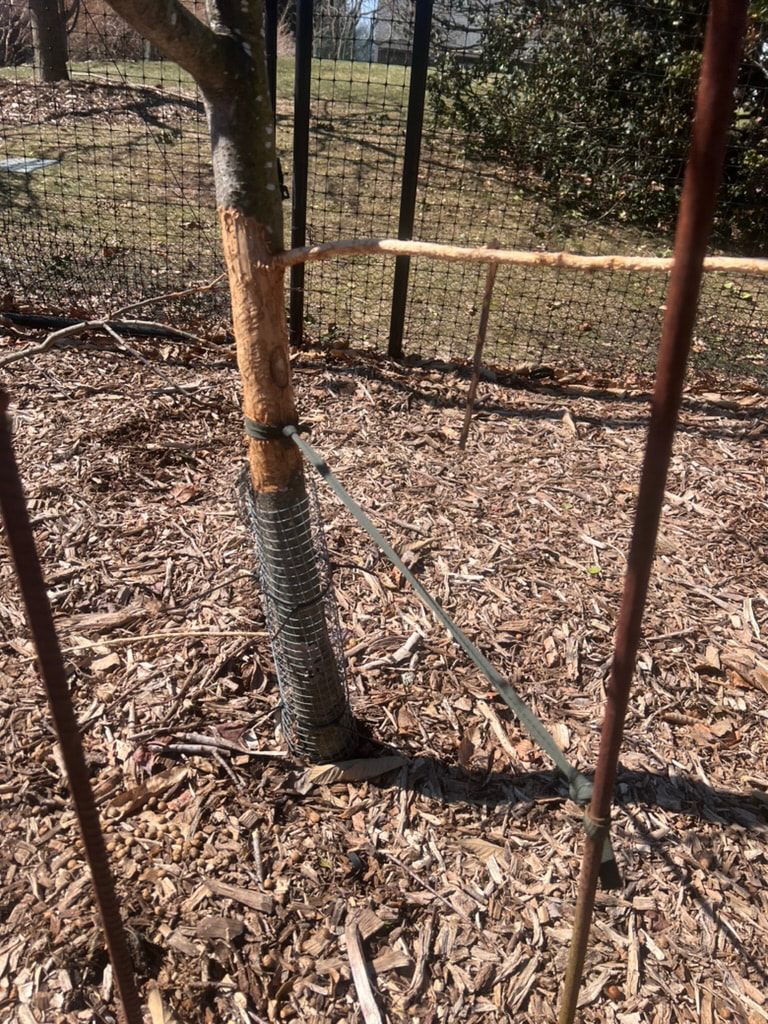
Here’s an example. Deer and rabbits took advantage of a 3’ snowstorm to get above the chickenwire skirt that surrounds the orchard, eat through a 7 1/2’ plastic fence, and also get above the hardware cloth girdle that surrounds each tree.
1 Like
Sorry to see that, I have a friend near jordanville in New York who has an identical experience.
I lost 25 bench grafts to rabbits last year. Basically grenaded my plans of a diagonal cordon system. I Mistakenly assumed spring and summer is light rabbit pressure due to the extra foliage around. Wrong, lesson learned. Ive since added 24" and 30" solid PVC pipe to the tree trunks, and we are investing in a 3d electric fence for the deer to close about 2.75 acres. This fencing set up has worked well for us here so far, we’ve baited it with apples. I’m going to buy scent caps and keep it baited perpetually. Snowfall rarely ever accumulates above 8" here, so hopefully our guards will be enough. How many trees did you lose? And could I offer a few replacements if you need them?
I have two orchards, one with 24 dwarfs closely spaced, the other with 16 semi-dwarfs. The damage was isolated in the dwarf orchard. Roughly 3/4 of the dwarfs were severely damaged. When I saw the damage, I immediately took scions from the damaged trees, so I don’t need help – though I appreciate the offer. For established trees (as in the picture) I should be able to use a combination of (1) regrowth above the graft and (2) new bark grafts to regrow most of these trees. In some cases, the damage was done to either 1-2 year old bark grafts or 1 year old bench grafts. In these cases, rabbits ate bark down to and sometimes past the graft. If there’s any bark showing on the graft, I’ll give it a chance to regrow. If there’s doubt, I’ll probably add new bark grafts. In one case, a young bench graft was eaten down to the rootstock. I’ll either redraft or replace that tree.
Wow, they really are a menace aren’t they? I have a groundhog to contend with this year too. I’m hoping he stays out of the nursery… I think we need a dog
1 Like
100% agree with the branch angle on notched buds. The clothespins seem to be an easy fix that is probably near 100%.
I’ll have to do 3 types this year.
- Clipped and notched, removing as much unnecessary growth as possible early.
- Not notched, and removing as much unnecessary growth as possible early
- Disbudding, no notching, and leaving extra growth for the first year, as the framework study laid out.
I should be able to pull this off with a single variety on common rootstock. I see the framework study method as the easiest to adopt for the masses, it doesn’t really require follow up in the early stages as do the two systems of removing unnecessary growth (the latter are most probably better in terms of growth). People want a “set it and forget it” type of life generally. I think ideally they get a well trained tree that just needs to be stuck in the ground and watered and that needs little to no care for 5 years. That’s probably most appealing to the majority of people.
i just grafted my single whip stock and is my first year with apples. they are going to be grown and kept as a tall spindle form but probably not as tall. probably 8-9’ or whatever i can reach and in pots so spacing will be customizable. is there a good way to get them to branch out as they are growing to the height i want or do i have to wait a year for them to grow and harden off? it would be nice to get them branching(10-15 feathers) and trained horizontal to downwards as they grow vs waiting another year.
As Steven said above, notching through the cambium above a bud usually induces that bud to begin growing as if it’s a new leader. So you will need to train the new tender growth outward at a good angle.
1 Like
how soon can i notch new leader growth? do i need to delay until it at least starts to harden for risk of damaging new/greener tissue? would sort of defeat the purpose of trying to get max feathers in the first season. maybe ill get plenty of feathers as it grows without intervention 
Look on YouTube for Stevens videos. Channel Skillcult, videos labelled smart fruit tree training. The apple study did work on the whips in July I think. Notching can be done any time to drive desired growth. Revisit this thread later in the week to see my own trials with photos. As long as you don’t cut too deeply you can’t really mess it up.
2 Likes
ya ive seen all of them. iirc that was notching on previous year whips that didnt feather or the feathers were removed for whatever reason. im talking notching or another way of inducing buds to break as its leader is putting on new, flimsy, growth.
Ah I see, I’m not sure how you’d do that before the bark and wood were clearly differentiated.
At a certain point I think we can only ask so much from a growing tree.
I’ve messed with that. If it is too juicy and weak it will break. You could splint it though.
1 Like
LOL, for each of the past few years I’ve dispatched at least 1/2 dozen groundhogs. Last year it was a full dozen. There’s a fallow community garden across the street that operates as a groundhog hatchery.
The silver lining is that I’ve become a dead shot with a pellet gun.
1 Like
More photos.
First is the result of notched and clothes pins to correct the angle.
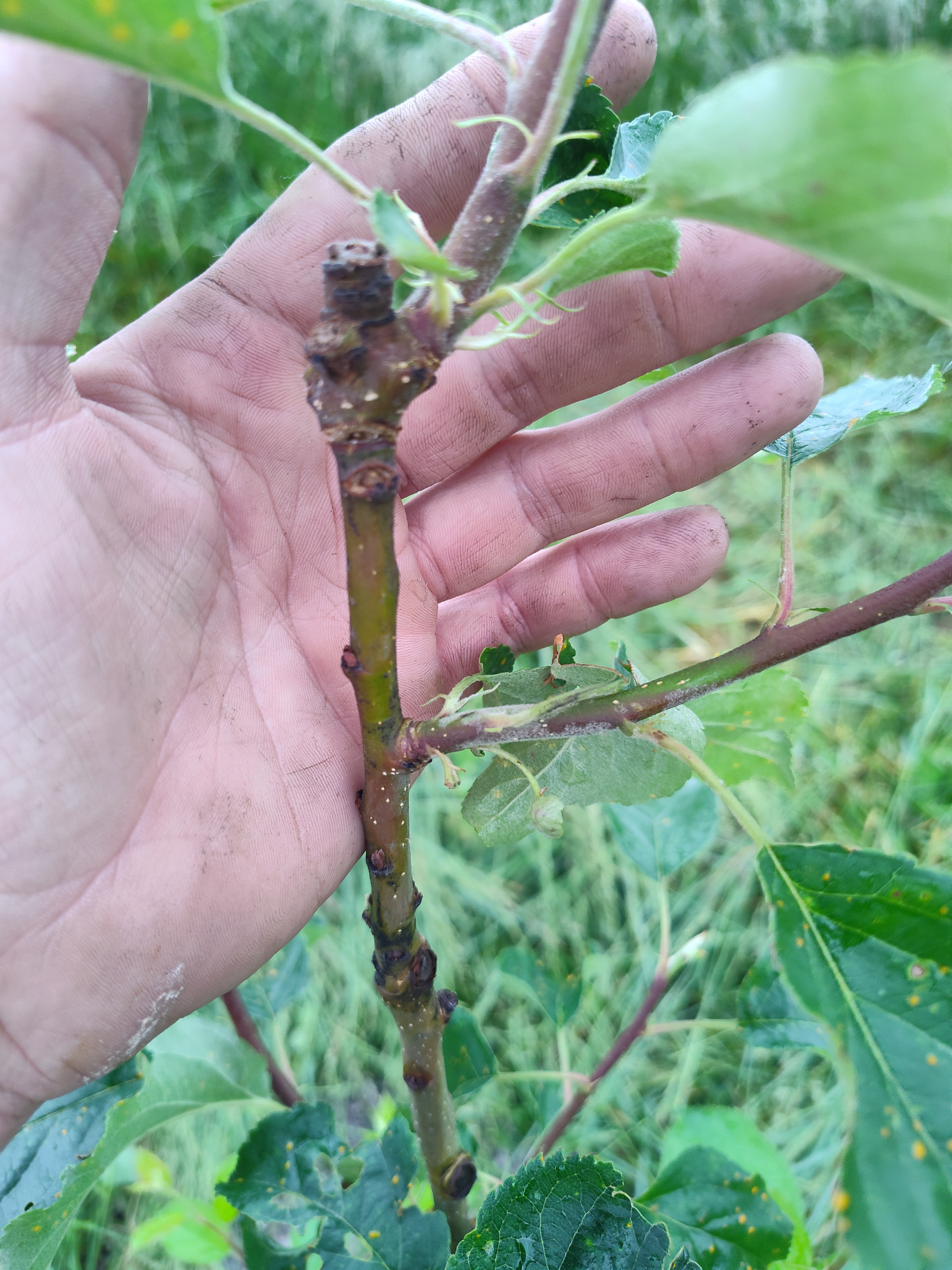
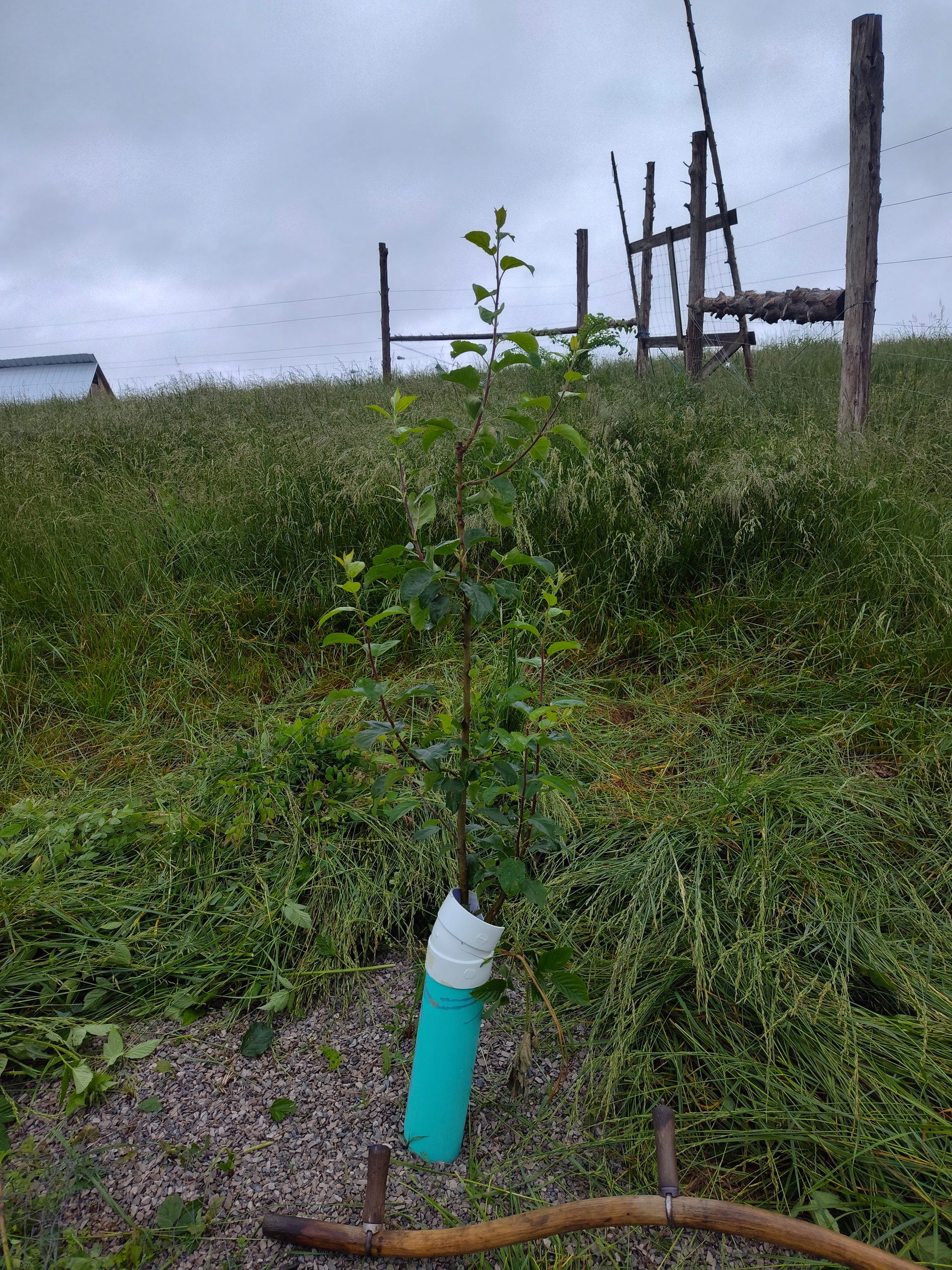
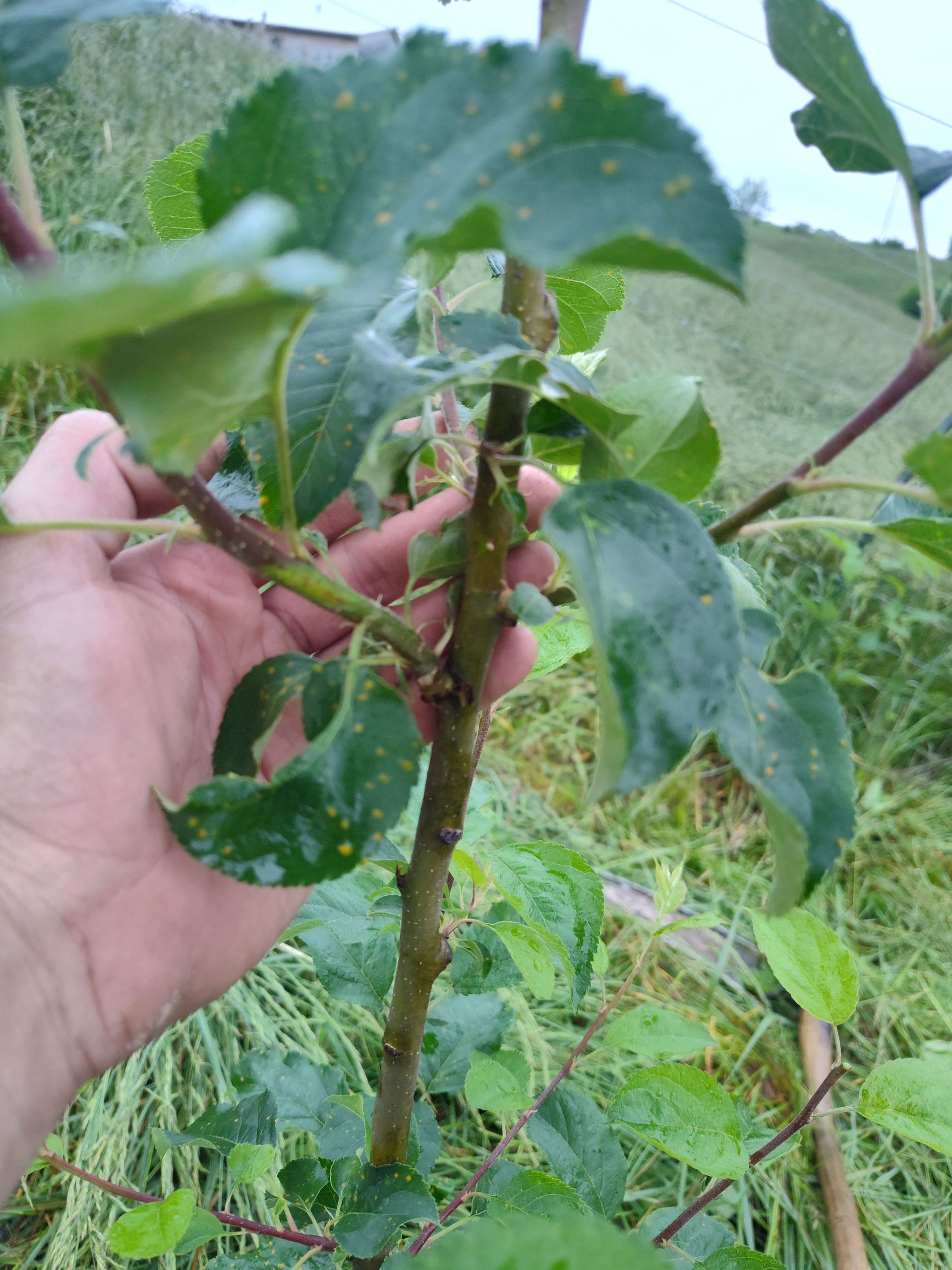
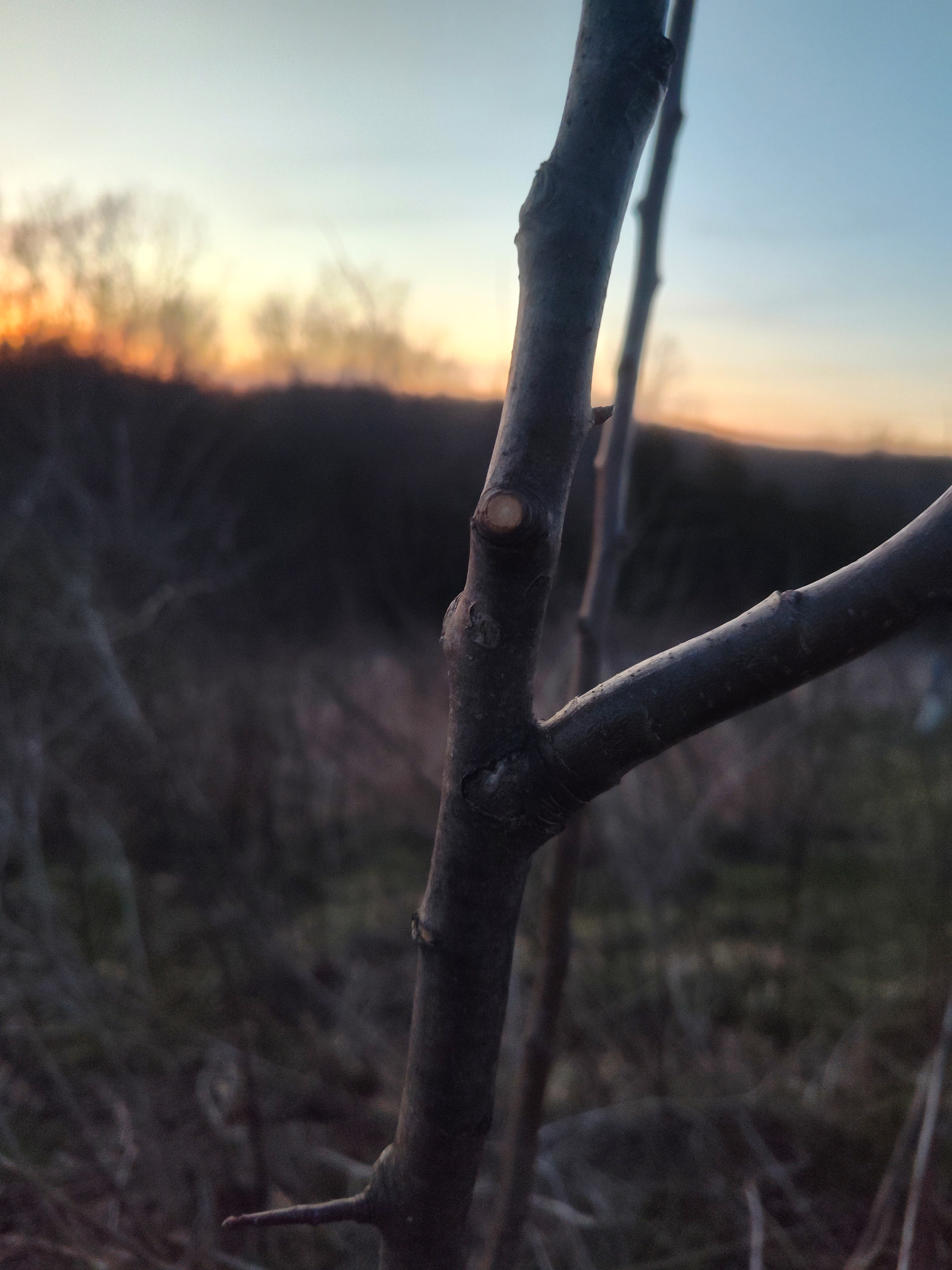
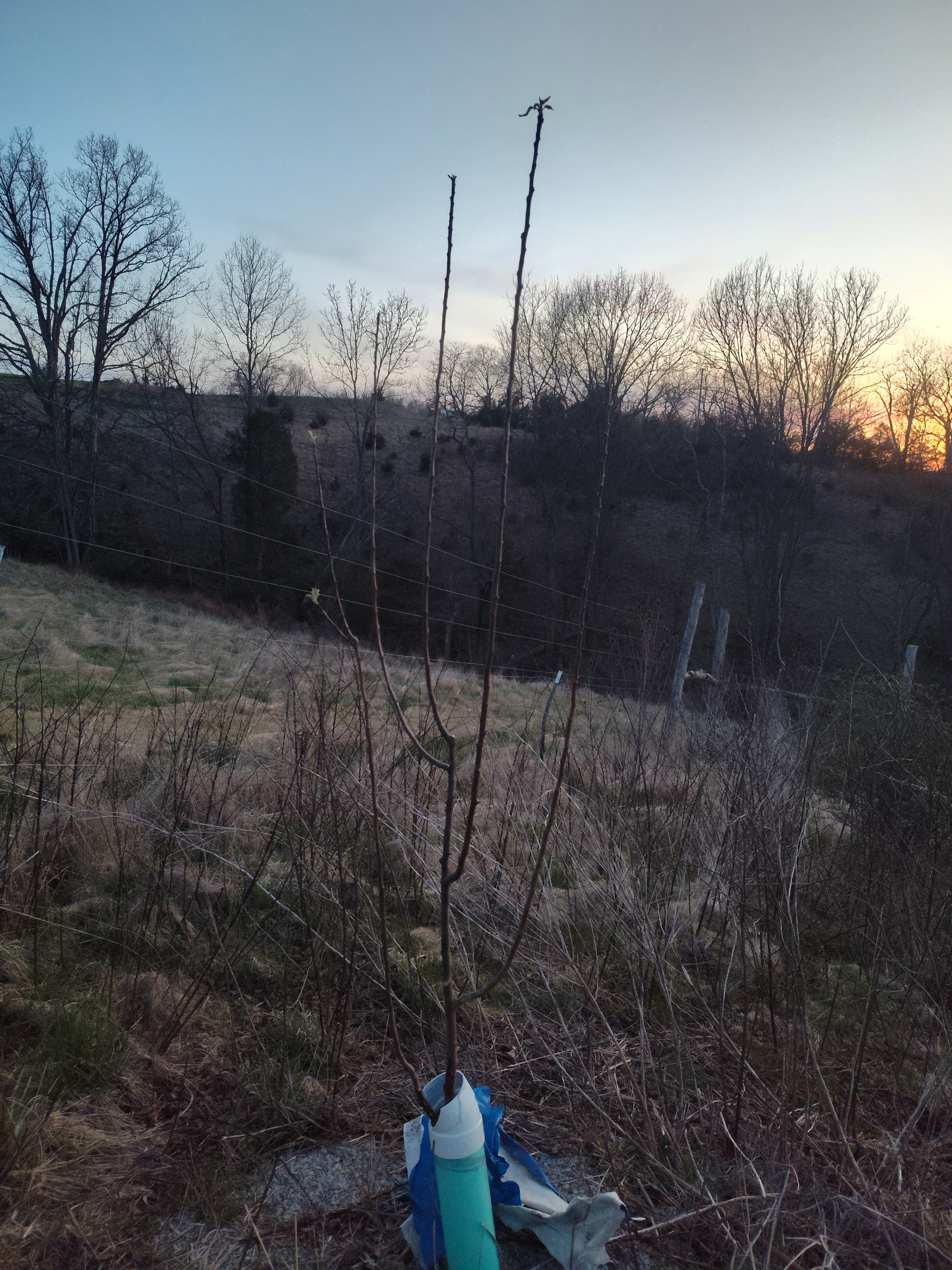
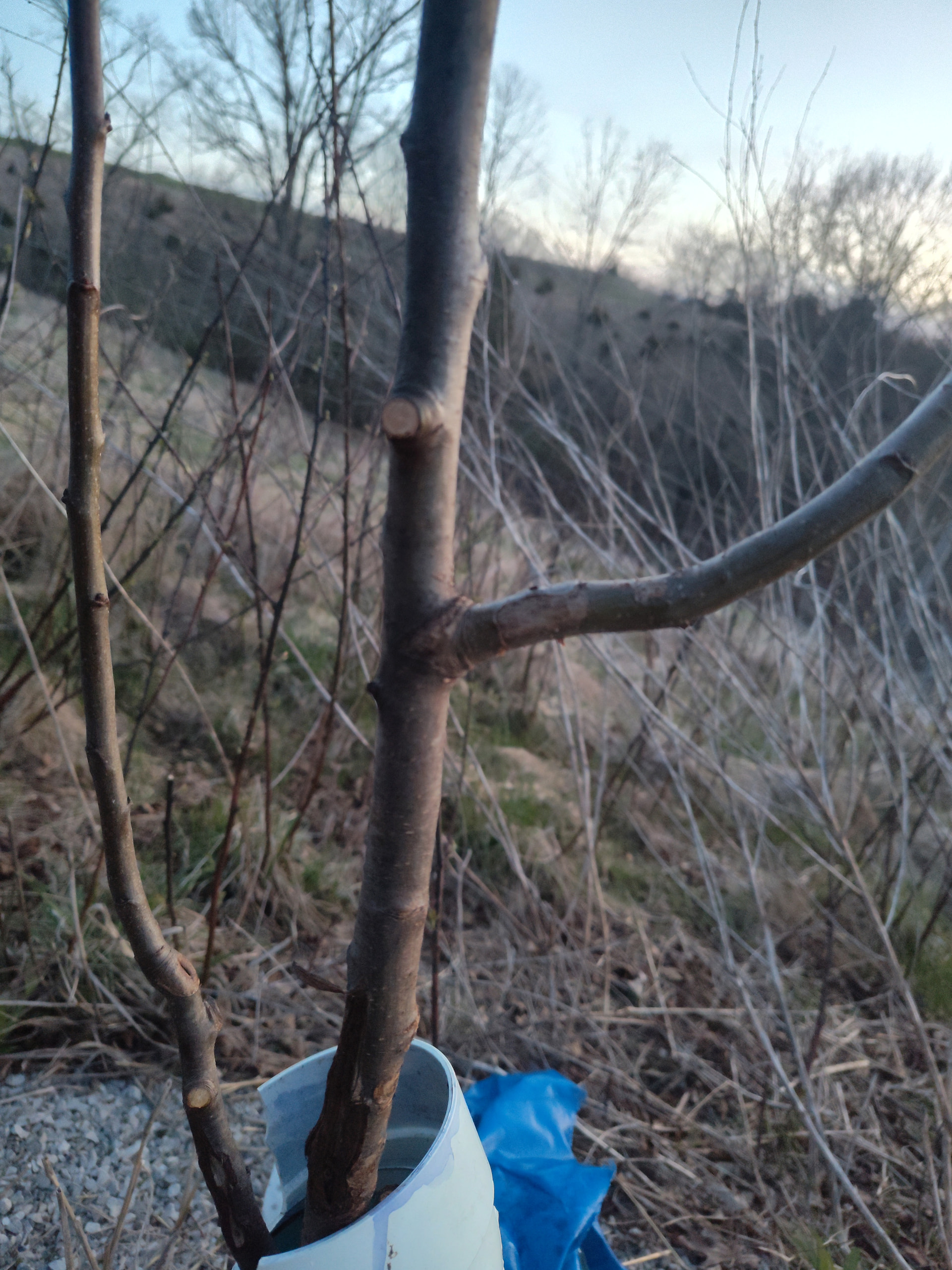
This is January russet, the growth is extremely vertical, but arguably the most vigour of all the examples. The leader is suppressed, the branches are very large.
Next is unknown variety, again on m111, but using @jrd51 recommended practice of removing all the unwanted branches early. This tree is arguably the best looking so far in my opinion. This one was treated like the wickson above in every way except for early removal of the excess branches vs pruning them off during dormancy.
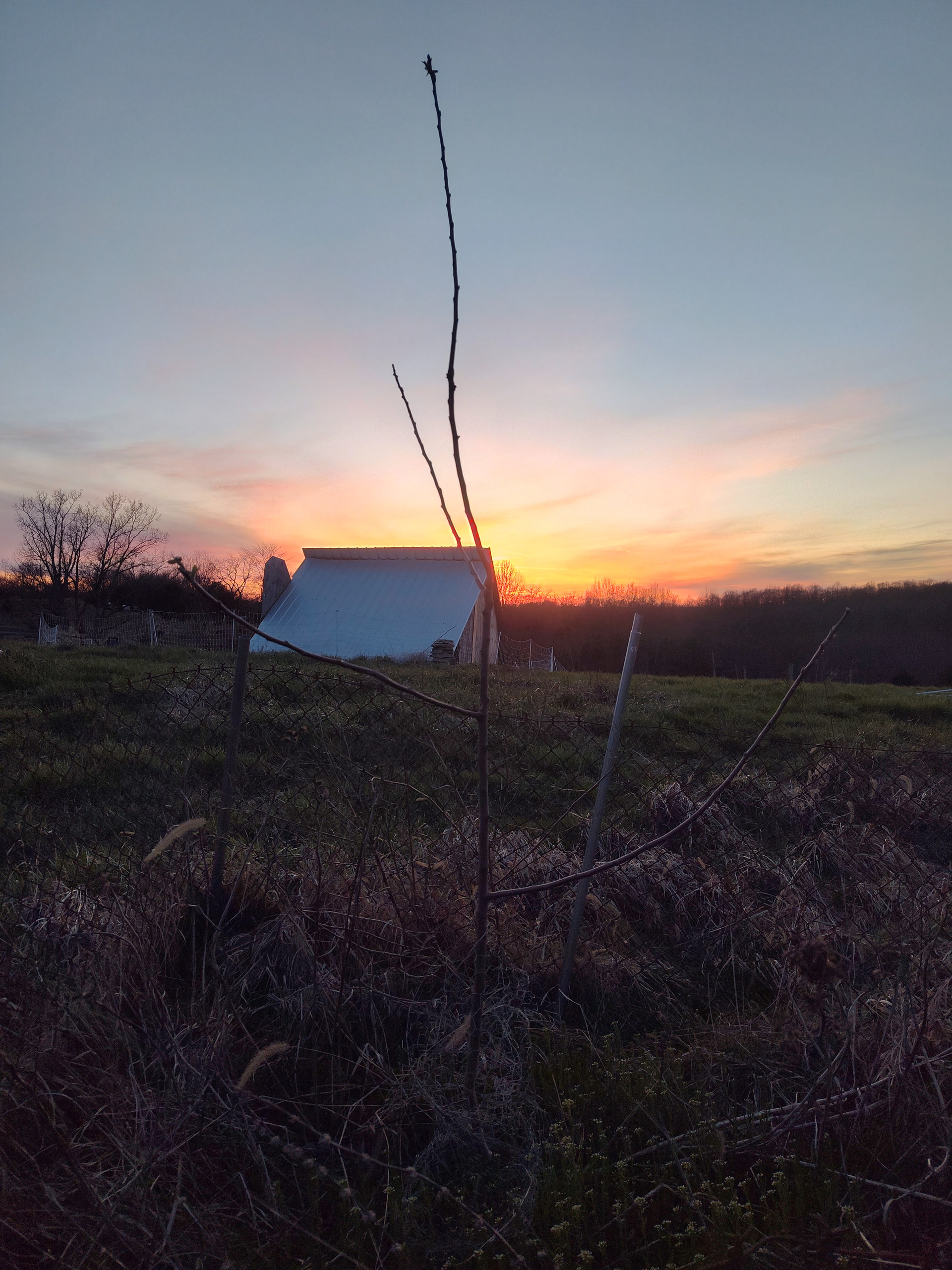
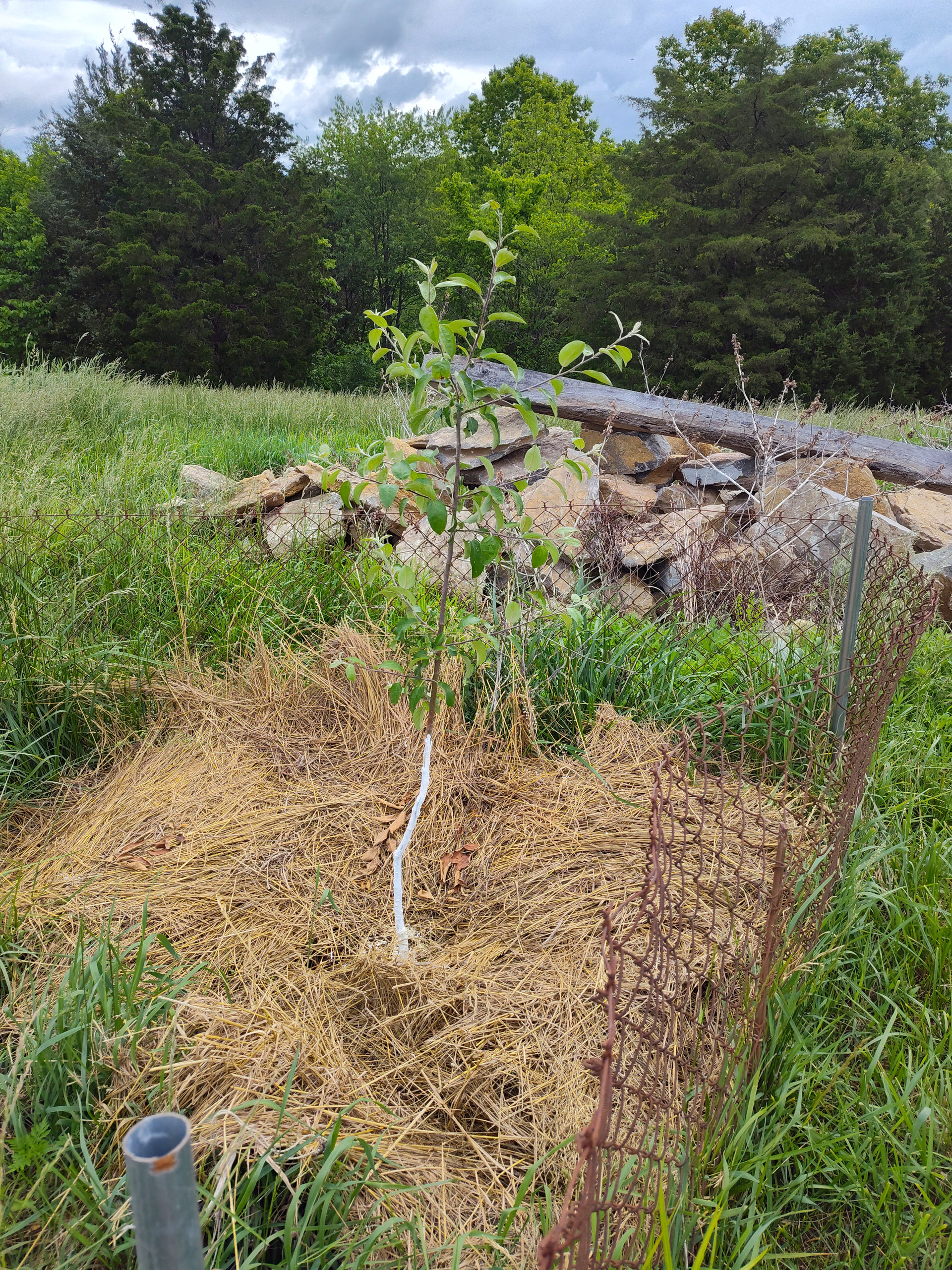
They clearly all work, and have different uses. Notching seems to induce all round vigor (the branches are nearly the same size as the trunk) removing unwanted growing points early in the season induces a little more balanced vigor and didn’t quite supress the central leader. Leaving all the branches till dormancy was easy, and produced the desired result as well…
1 Like
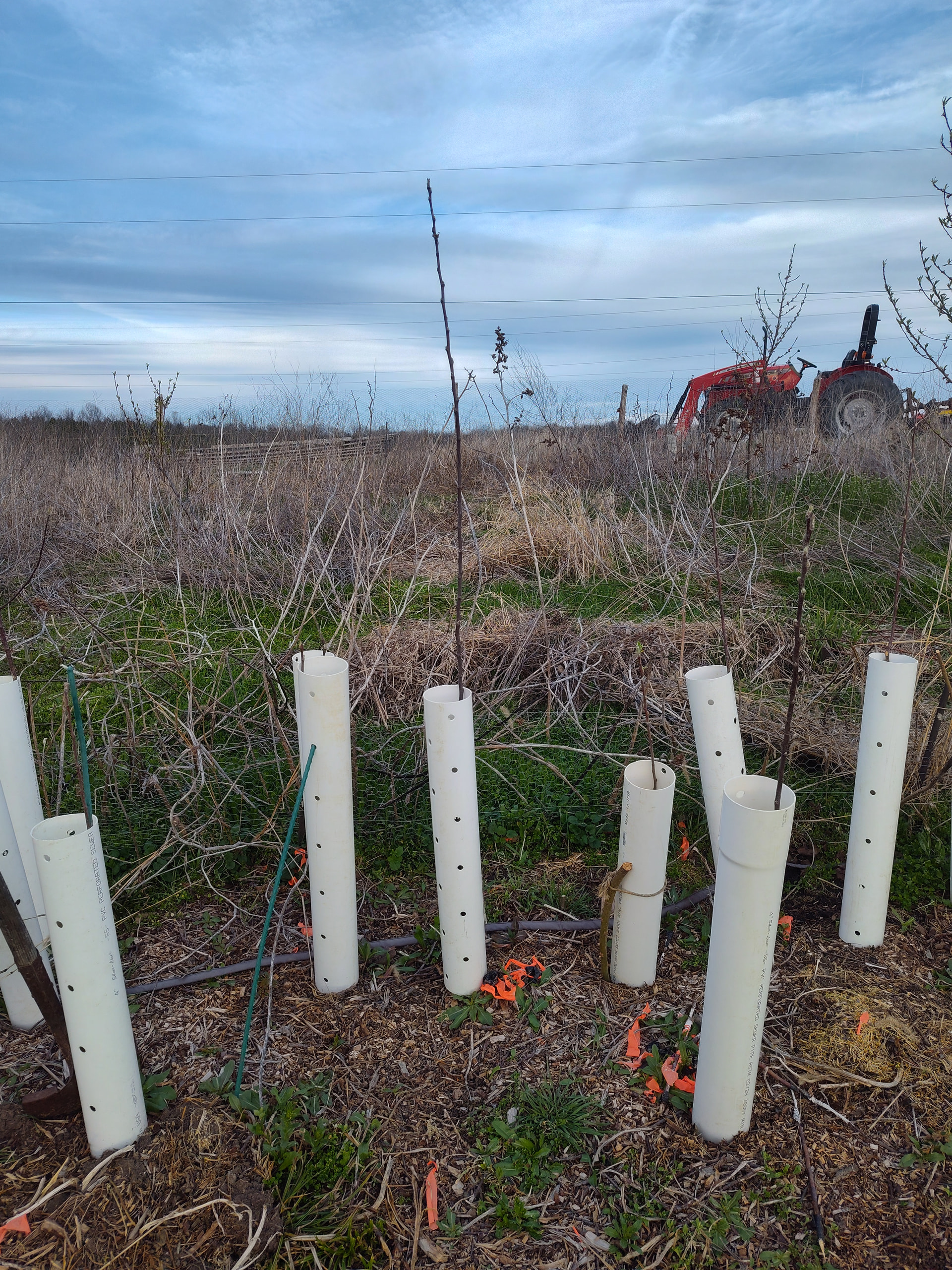
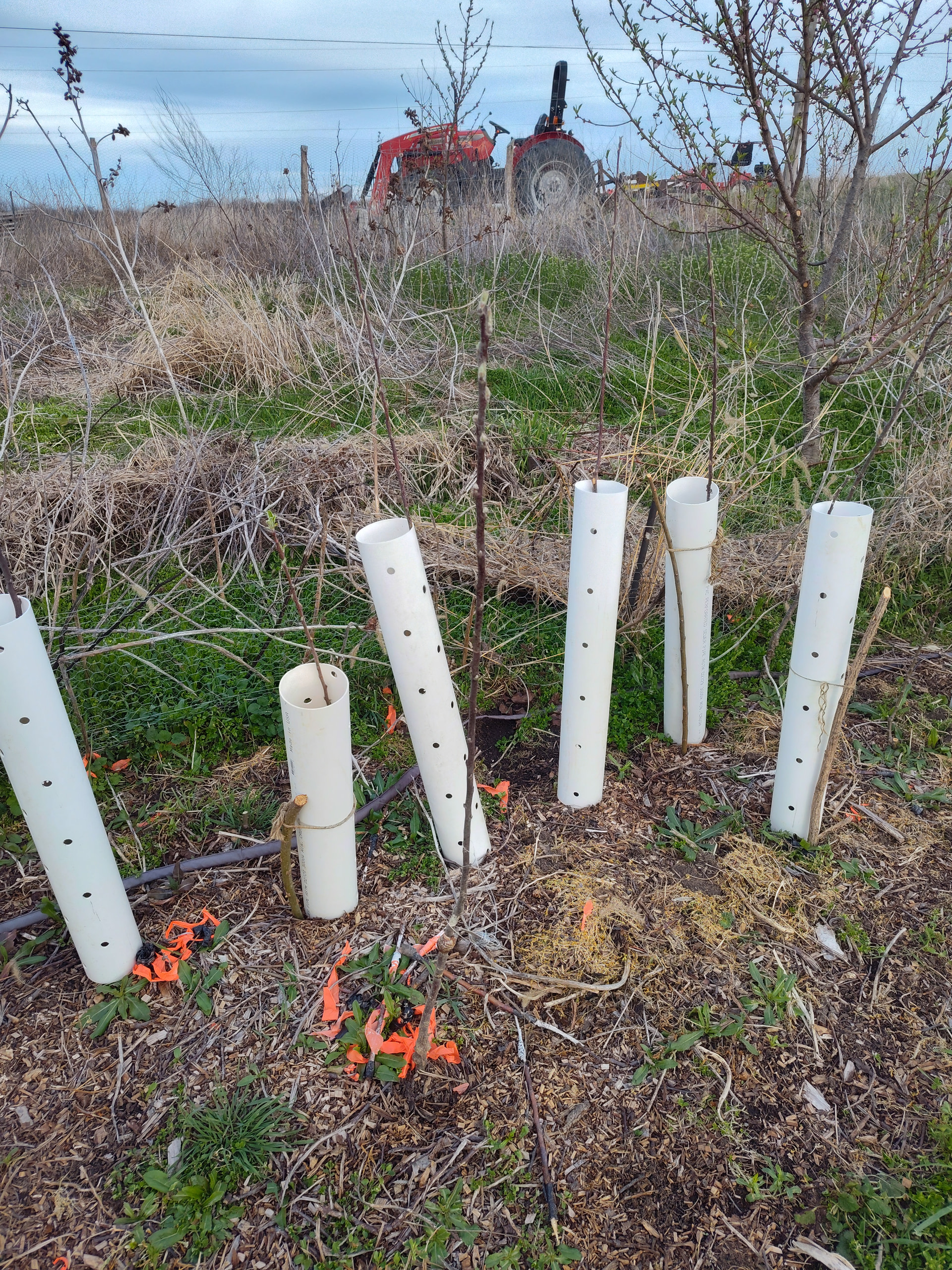
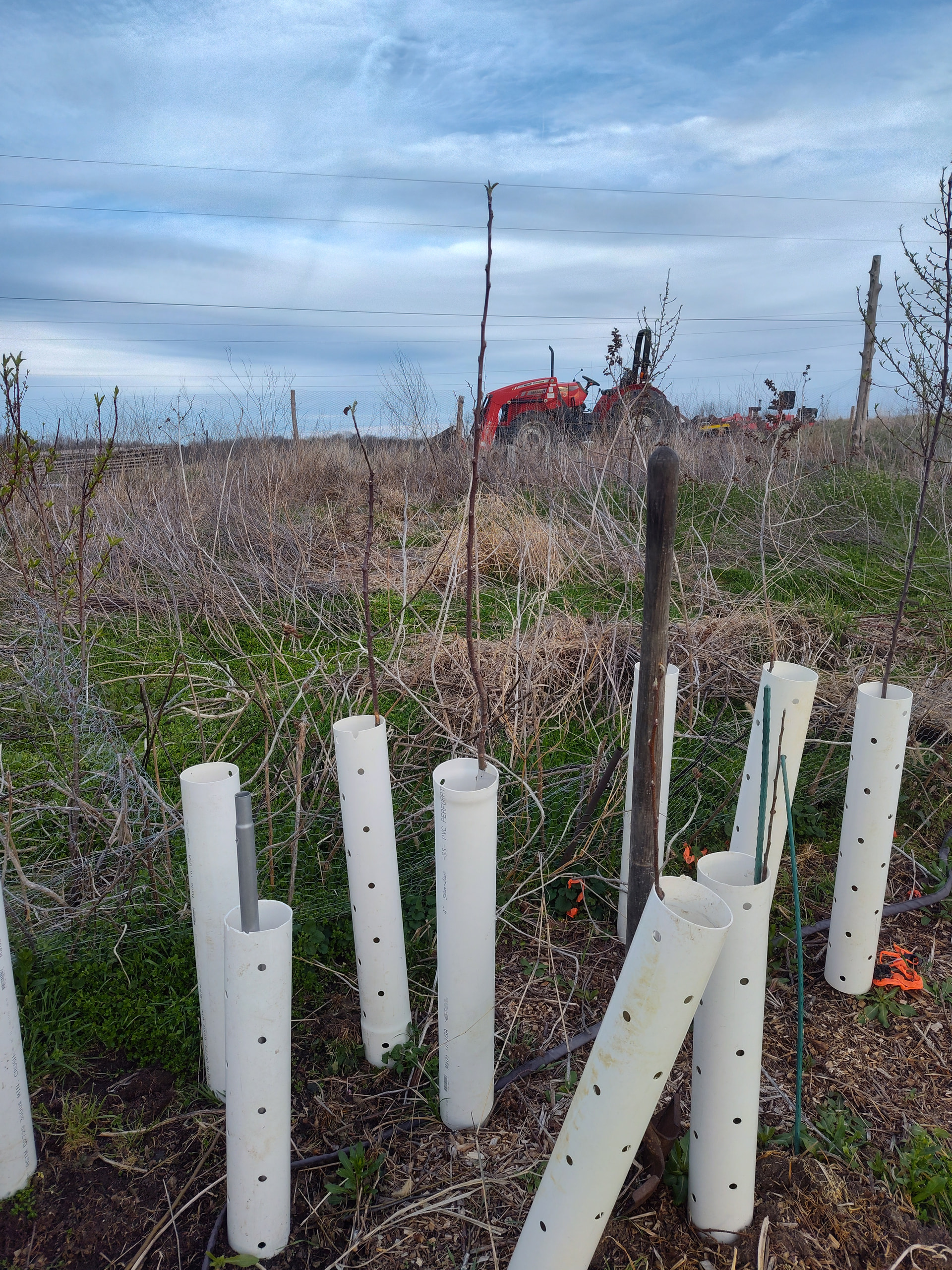
Here is this years starting stock. Mostly gold rush/m111. That will be the main focus, as it’s the most controlled. Same variety, same rootstock, same conditions..
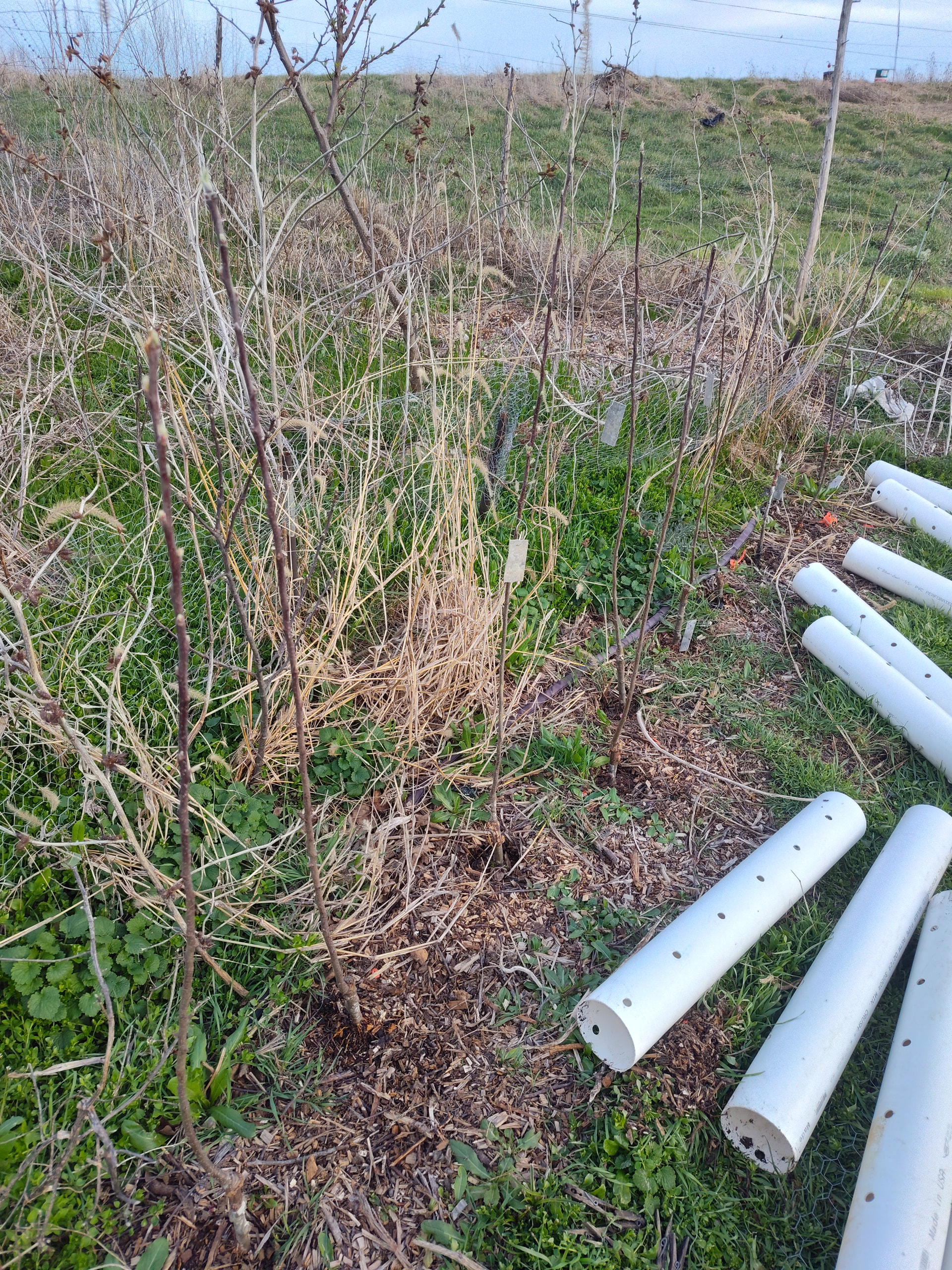
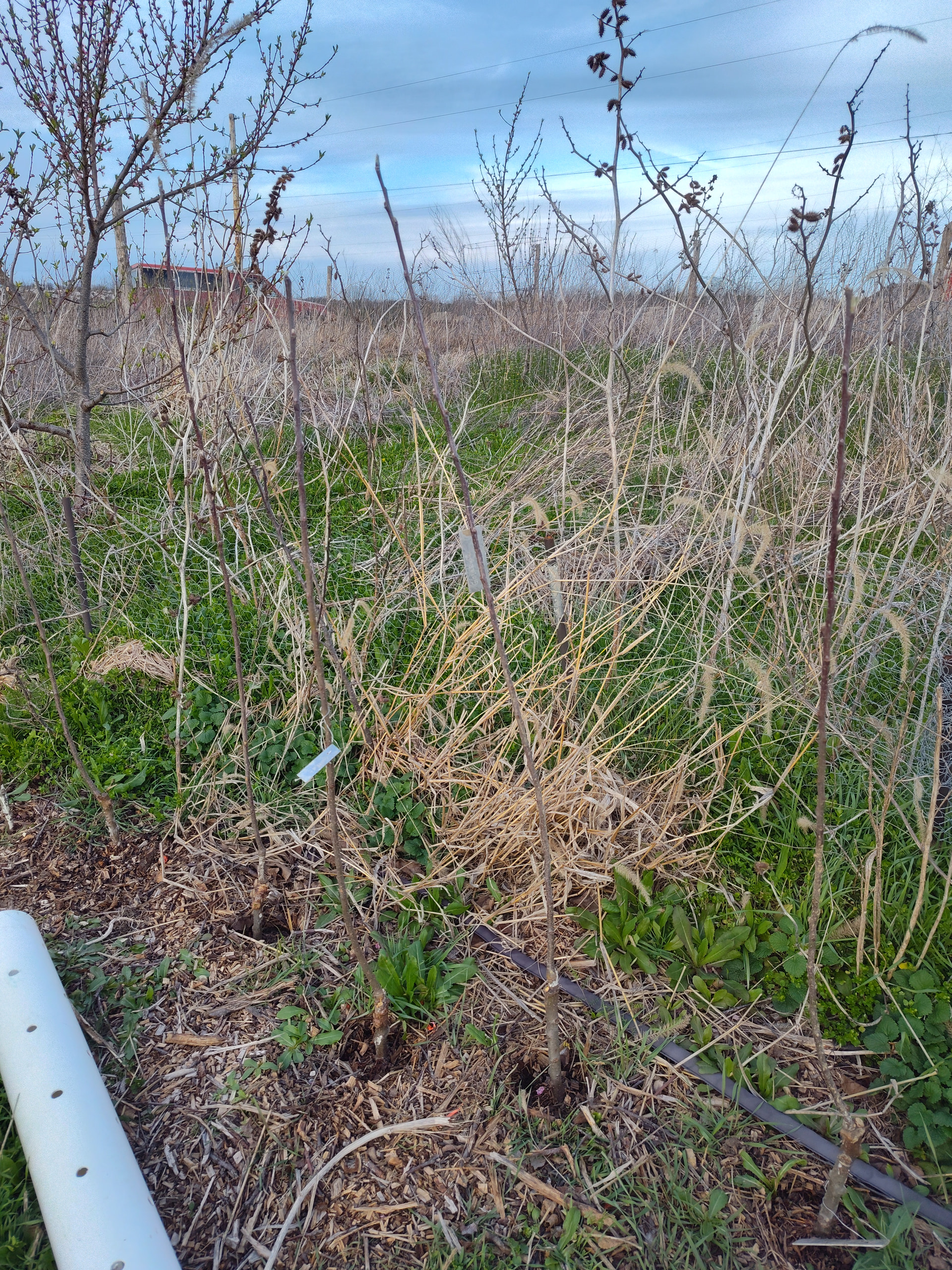
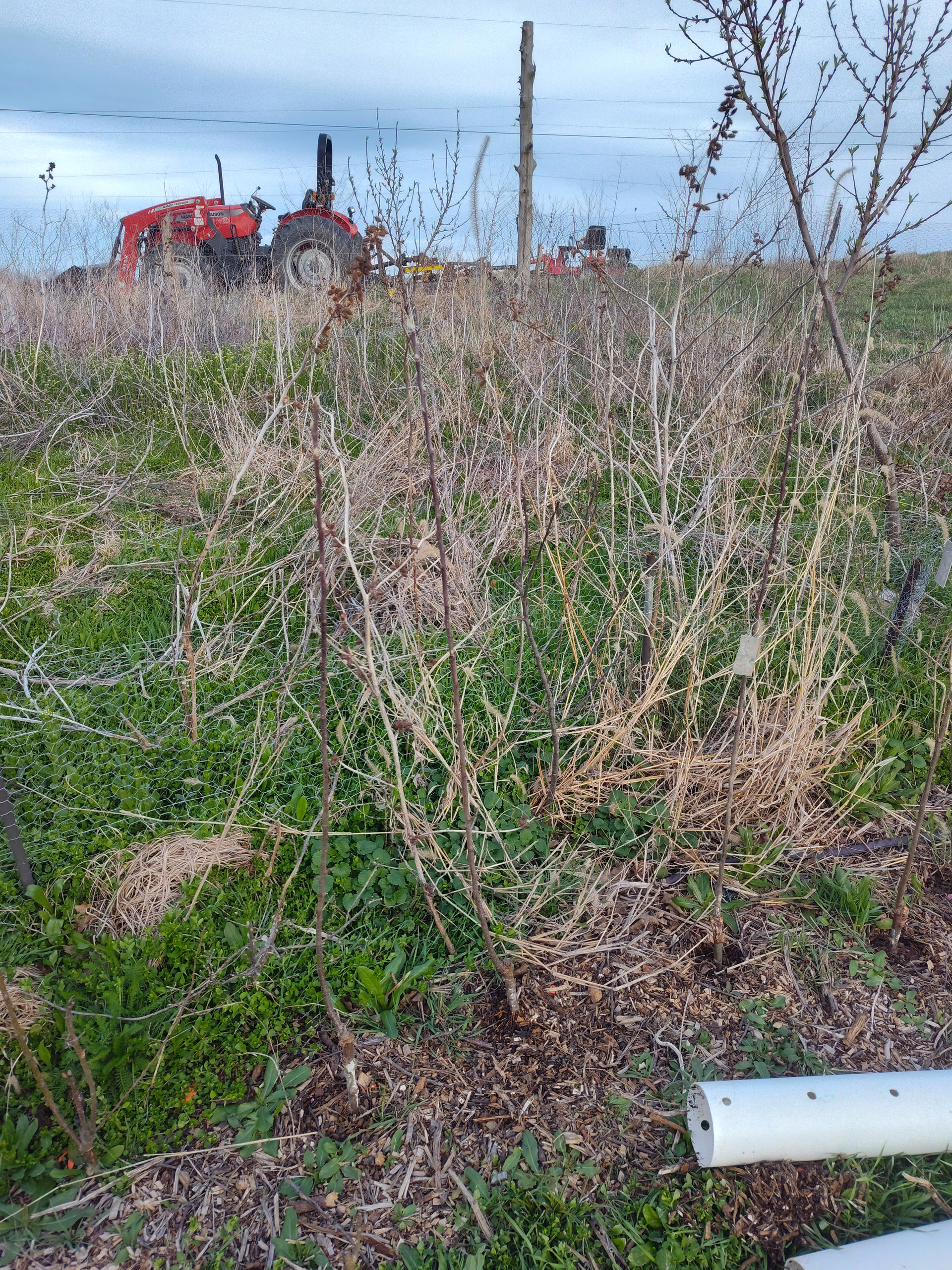
The following are seedling stock, about 6’ of maiden growth. Variety is BiteMe (intended as an understock), and king david. Both will be trained with at least two systems. Probably the methods used in the framework study and jrd51s method. If I have enough of one variety I’ll use stevens method as well.
1 Like
The tree guards are 24"-30" for reference. @SkillCult do you think the amount of branches for a seedling tree should still be 3-5? I’m gearing up to train the seedling stock