That refers to training modified central leader and delayed open center. I usually do 4 occasionally 3. Not really ever 5.
How many scaffolds per tier? Depends partially on the variety, so for a seedling it would be a bit tricky… but why decide early for apples when all pruning is dwarfing? At least for young trees still primarily vegetative. If you wait until trees begin to bear before doing serious training you will get your first harvest sooner and your tree will fill its space faster.
Back when apples were primarily grown on trees that stood on their own roots a method was developed to do as little pruning as possible beyond removing all branches more than a 3rd of the diameter of the trunk where the branch meets the trunk. This was used widely by commercial growers managing thousands of acres of trees in Washington state, and I consider it to be, by far, the best approach for beginners. It was used by commercial growers because it assured the earliest cropping possible in an industry where profit margins are slim.
If you are interested in this approach, go to pruning guides on this site in the guides category and look up my guidelines.
Incidentally, I think 3 scaffolds for the bottom tier of apples is almost always the best approach, but temporary branches are very useful to tape secondary branches or your permanents to- many varieties produce secondary wood reluctantly and water sprouts can be taped to a horizontal position this way creating productive wood quickly. I eventually also turn my stone fruit into 3 scaffold open center trees.
2 Likes
How many scaffolds total for the final tree. The study linked above which is the focus of the thread was conducted in response to the standard training method of commercial orchardists, which inevitably left large branches lower in the tree that failed to remain fruitful over time, resulting in large pruning cuts later. While the current recommended practice by the university, extension offices, etc for seedling trees is to have three branches per tier, this results in the tree taking 4 years or so to reach its final form. The framework study proposed a method to achieve the final branch structure in one year, which is what I’m experimenting with. A modified central leader tree, with 3-5 very large and competing branches were usually selected, which would all suppress the central leader to a point that it was no longer dominating upward growth. And the proposed result was balanced trees with overall lower height.
Now with all that said, do you think 3-5 main branches is about right with a seedling tree in the final form..If so, then I can have my final scaffolding by the end of this year on my seedling trees that I grafted last spring. Which would theoretically bring my trees into production sooner. After I select branches it’s hands off until production.
I tend to only have 7, 3 on the bottom tier and 4 on the tier above, starting 4’ below the first tier… because I need to eliminate the typical bottom tier of a 3 tier tree because of wildlife issues. Or just convenient mowing on estates.
The tier above should be about 4’- 5’ above the one below it and have about half the spread.
I don’t know what you mean by seedling tree- are to speaking or root stock?
The method I’ve developed but I suspect is widely used is the recycling of branches in all but the bottom tier, cutting out upper scaffolds and replacing them with small branches I build in advance. This is done when an upper scaffolds diameter exceeds 1/2 the diameter of the trunk where it’s attached to it. This is explained in my guide. This is how you avoid upper tier dominance. The upper branches draw more light, relatively, and more sap because of that- much like having a bigger and better equipped army with better supply lines.
My big idea has been to build a tree with a vigorous variety as the bottom tier and upper tiers with a or two less vigorous varieties. I like grafting in a way where the trunk above the first tier is transformed to the less vigorous variety or varieties. My more spurring upper tiers benefit from having 4 insead of 3 scaffolds.
The only problem is that after about 20-25 years, it seems to be inevitable for most trees I manage to be turned into open center trees. There’s nothing wrong with an open center tree- commercial growers are driven by the need for massive bins per acre, but most of us don’t grow apples for a living, and the actual advantage is exaggerated anyway, at least for older trees. Research tends to be focused on young orchards.
Incidentally, the most talented orchard managers tend to be hired by huge commercial growers and don’t work for land grant universities. Look up Bas Van Ende, he’s who I learned the minimum pruning method from and the importance of ratios.
1 Like
Yes sir, seedling rootstock. Our plan here is to have a low density production orchard, about one acre. That’s a very cool idea with having less vigorous varieties up top. Clever. That’s the cool thing with these trees, seems that you can do whatever you want with them within reason.
Part of this study conducted in 1924-1932 dealt with the “problem” at least to commercial orchards, of having to do that pruning later in the life of the tree that changes the form, illinois growers attributed early tree death and long years of low production at the end of the trees life to this sort of pruning, and the author of the study attributes even more problems to it than the orchardists themselves, like death due to disease and unruly growth. The idea of this study as well was that the final form of the tree and it’s ability to have a long production period is are directly related to how the tree is headed at planting. His study concluded you can have a better form of tree earlier with no remedial pruning down the line if you do not head the tree at all, and simply select branches in year one in his systematic but simple way.
That’s my focus in the thread as seen above. This will be the first year I am able to train our seedling stock.
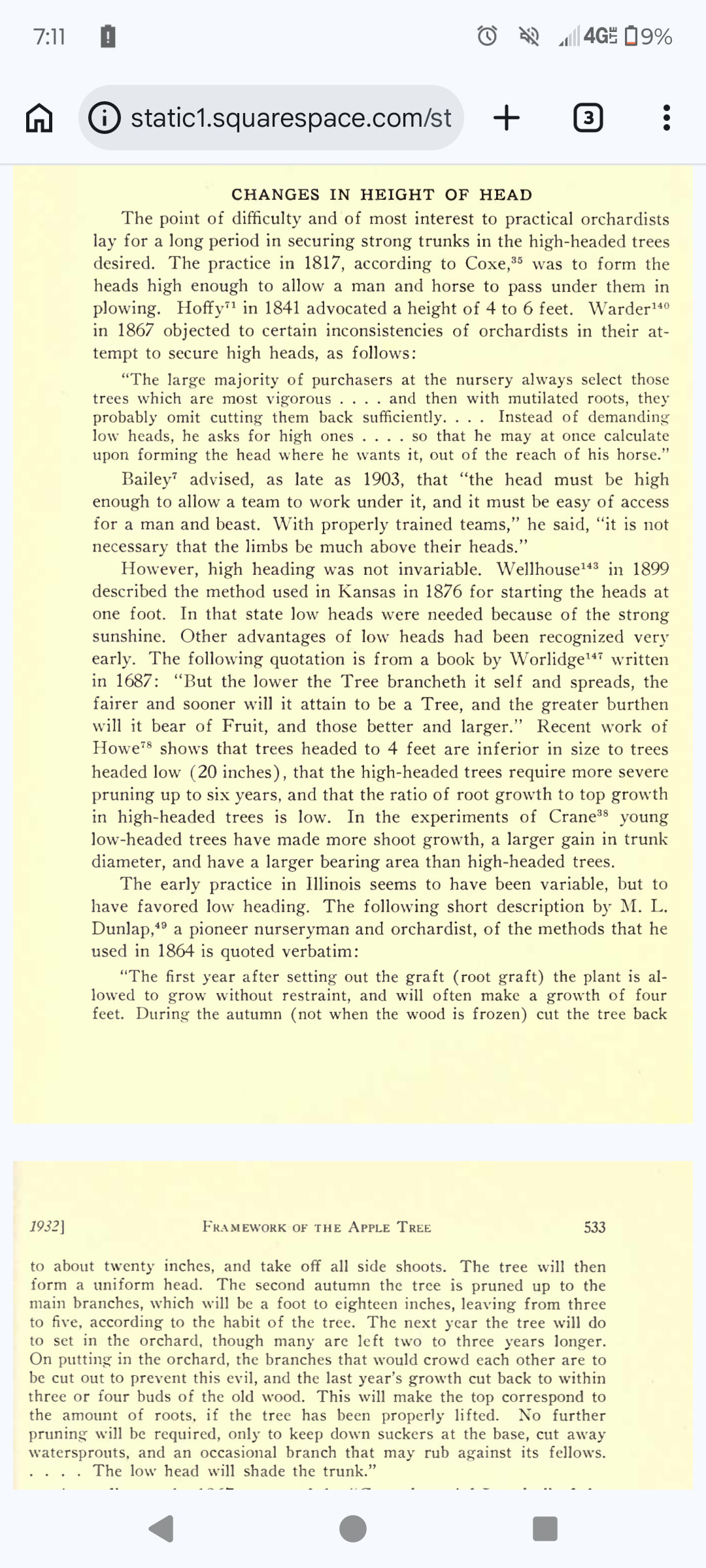
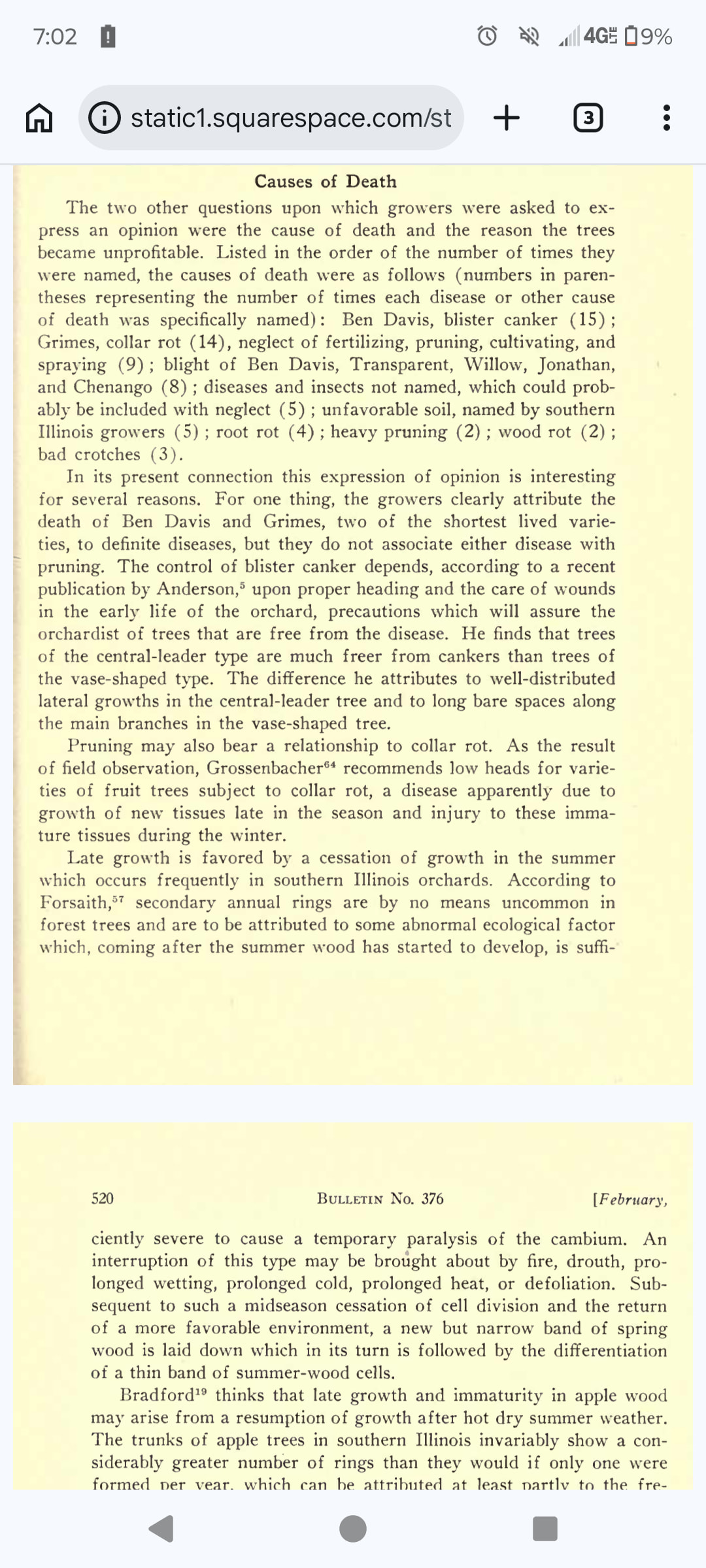
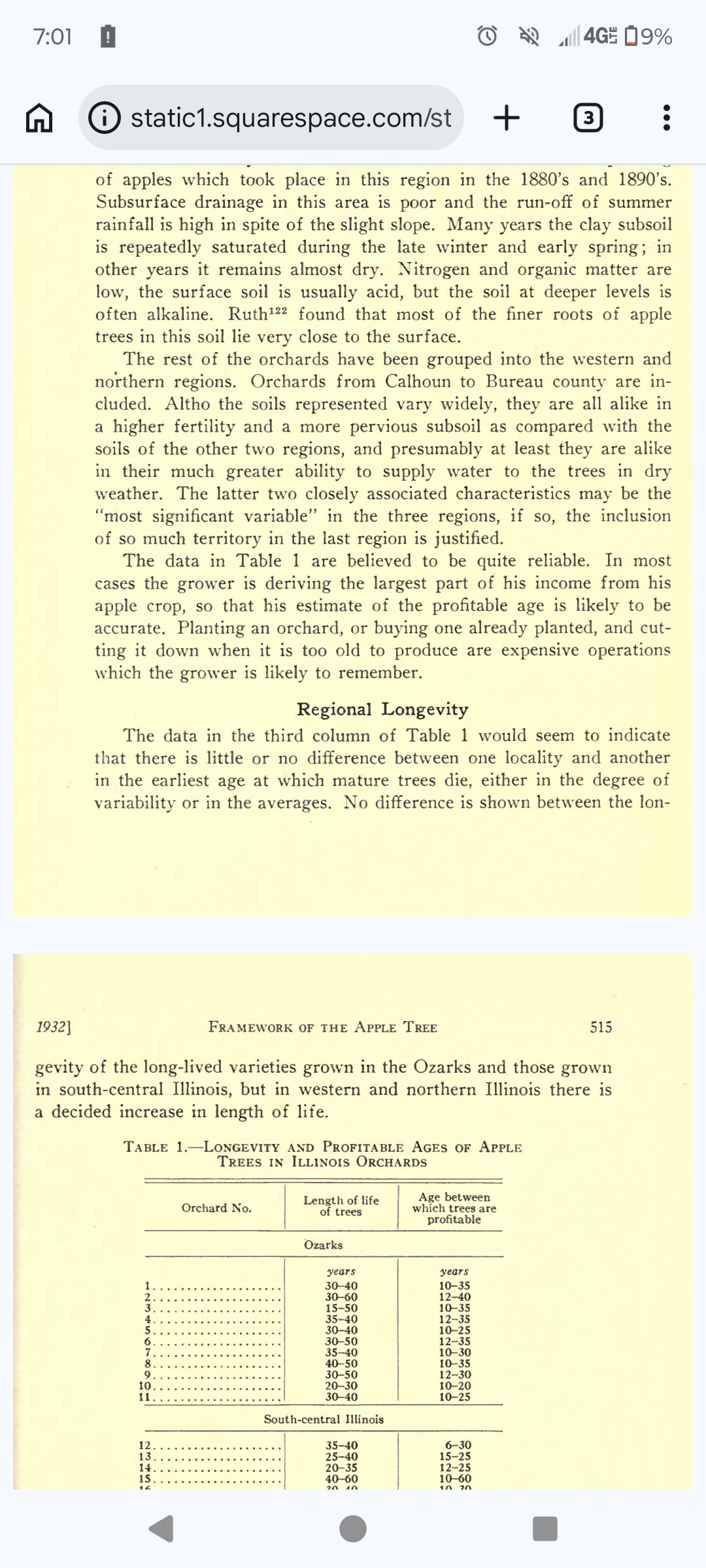
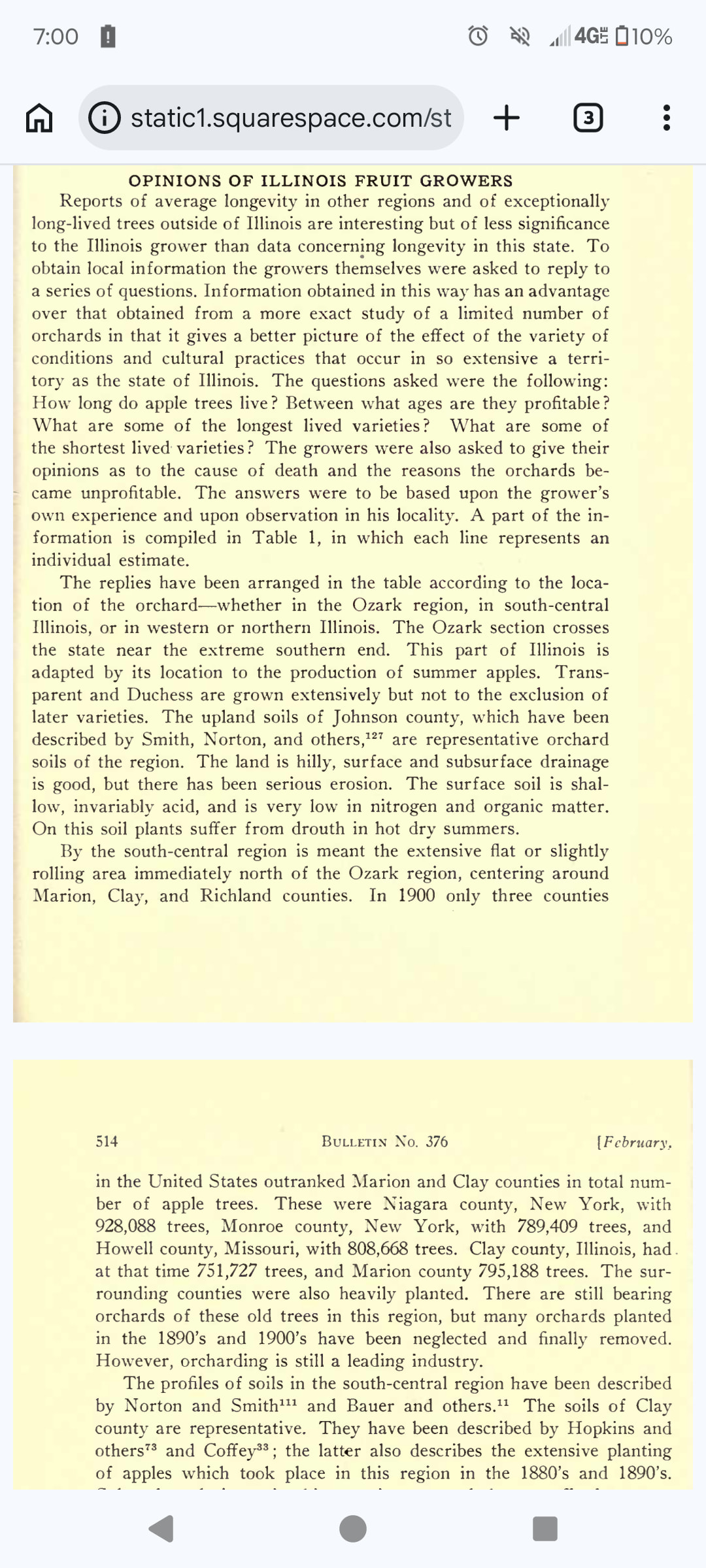
Also as Steven often says when explaining it, it’s like growing 3-4 trunks out of the main trunk, at proper angles. I’d like to maintain modified central leader form for the life of the tree, I think it’s more natural to apple trees rather than a vase shape.
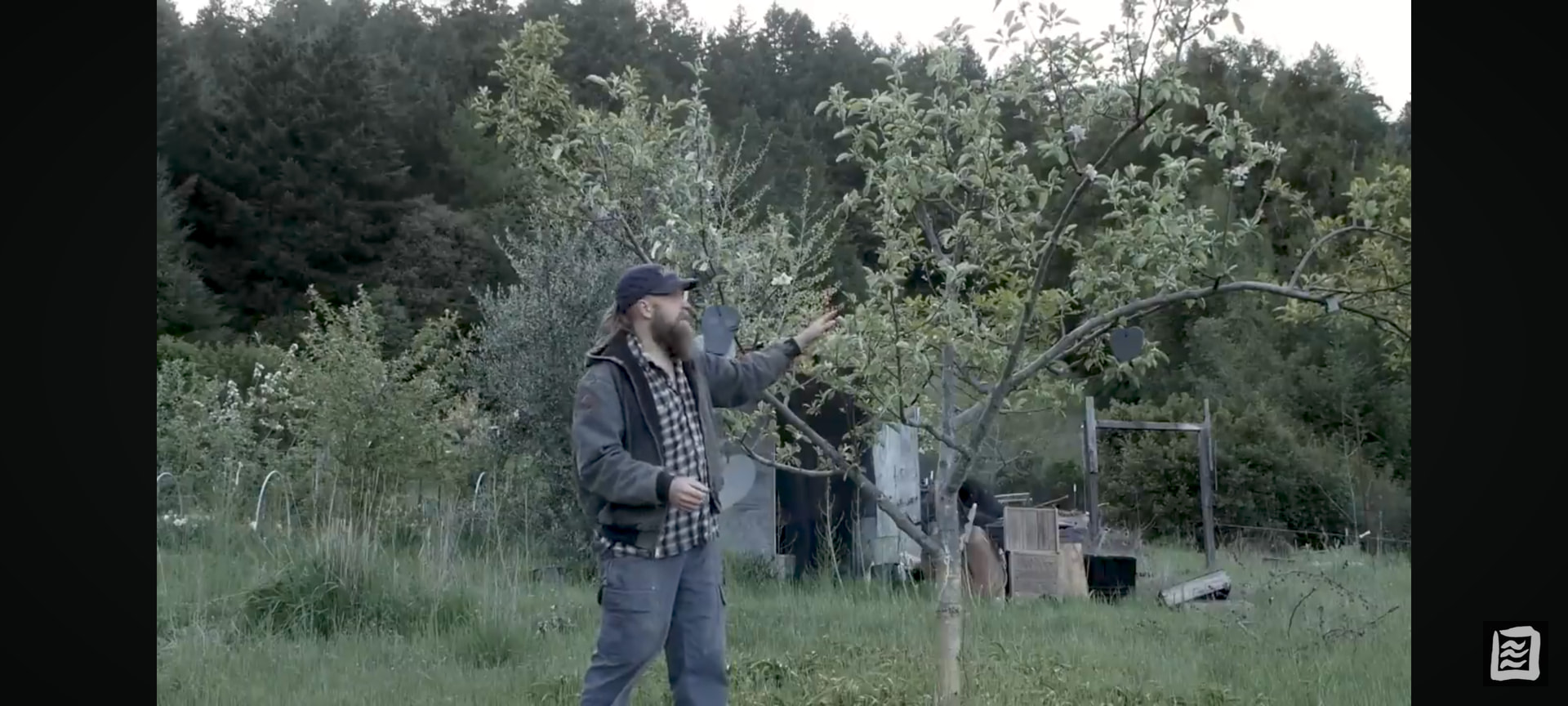
This is the desired form, taken from @SkillCult video. It’s balanced, and each tier is sharing the light. My main question today is “can a standard sized also only have 3 or 4 main branches in its final form, or does it require more due to being larger and filling more space over time?”
I prune and otherwise manage 100’s of century old apple trees on seedling rootstocks, and they are extremely productive and same varieties are more annually reliable than on size controlling rootstocks. They are all open center trees.
I live in a climate and with soil where apple trees tend to flourish. I have managed 100 year old Northern Spys for example, that were trained to be low growing and extremely spreading trees and 50’ tall Baldwins and Tompkin’s Kings that I brought down over time to 25’ tall trees. They are like an entire orchard in a single tree.
Huge cuts made decades ago have not killed the trees I manage and may help them live longer by creating a more sustainable architecture… I can only speculate as have many before me, some coming up with different conclusions. .However, the trees tend to kill huge scaffolds themselves when they are starved for light by higher branches.
1 Like
Thank you for the input. I definitely agree that the standard practice is very productive, tried and true, otherwise it wouldn’t be the standard and it wouldn’t be so difficult to introduce something new in such an ancient practice. I believe in the wisdom of our fathers as the only viable path forward, forgive me if I give the impression of casting off your advice, that’s not my intent. If I had a stand of established trees I would certainly follow your advice on how to care for them.
The purpose of this thread when I created it is to showcase the apple framework study cited above, in real time and in real conditions here in kentucky, as the orchardists in illinois who were included in the study saw room for improvement. I’m trying to stay focused on those specific methods, simply as an experiment to see if they are indeed worthwhile because I think there’s many benefits. The methods in the study are focused on establishing a new orchard on seedling stock, which is exactly what we are doing, and training trees early on in year one, followed by almost no pruning until bearing age.
I know this is a long thread by now, but that’s my intent. I encourage all to read the whole thing, and read the framework study I keep referencing, and was referenced in the first post. When I went to look for info on this I found nothing cohesive. I hope someone else can find benefit in my documenting of our orchard establishment, the same way I had hoped to do in someone else’s experience
Specifically thinking about seedling and standard sized trees, I’ll be curious to see your progress and how happy you are with your scaffold placement after a few years. This might be very location specific, but if I focus on permanent scaffold placement in the first year of a standard sized tree, then my scaffold branches end up much too low to the ground for my liking.
I prefer the opposite approach. I don’t head the tree at all, but rather remove all side branches the first year aiming to get some height to the tree before I start selecting permanent branches.
As I look at seedling trees in the wild in my area I don’t really find many with a tiered scaffold/Christmas tree form, and none with an open vase form either. The majority seem to be more of what you could describe as an umbrella form. There is a lot of variability from tree to tree in how open the umbrella is.
Looking forward to following your progress.