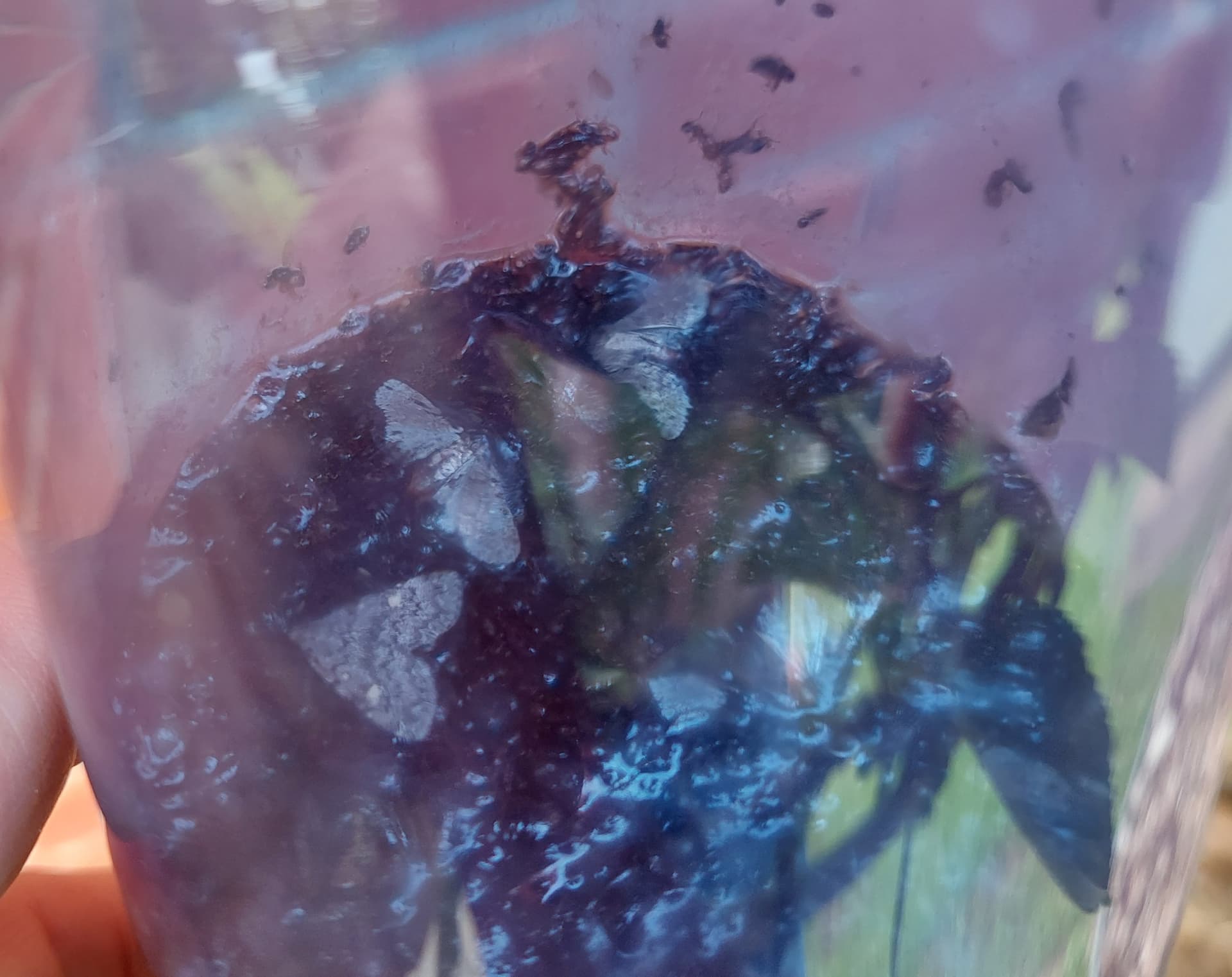
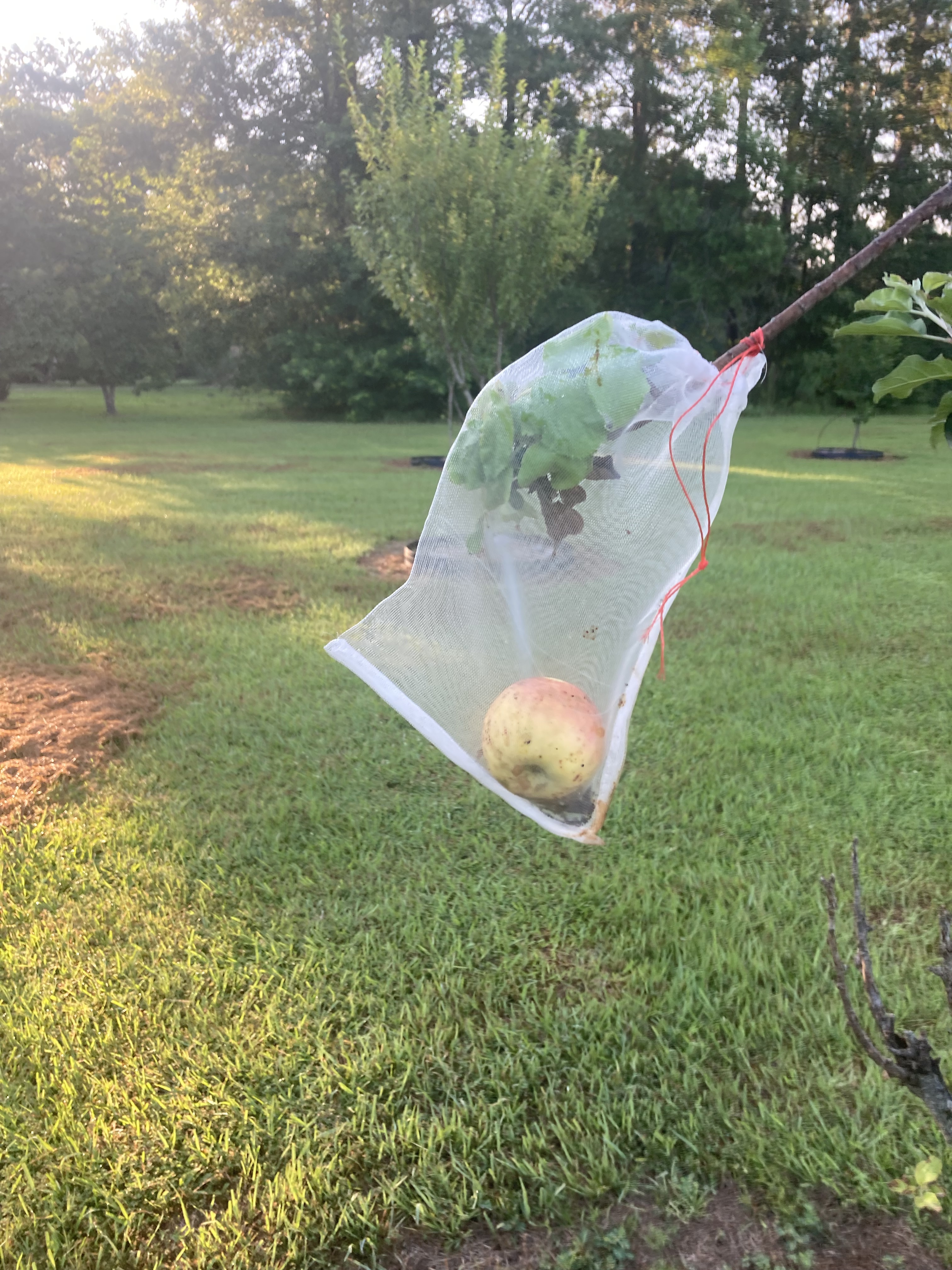
Surround WP has an effectiveness of under 50% and many of my fruit have maggot/moth issues. This is because codling moth and apple maggot flies fly around here during peak rain and surround keeps getting washed away by the rain.
This has caused me to become less enthusiastic about apples.
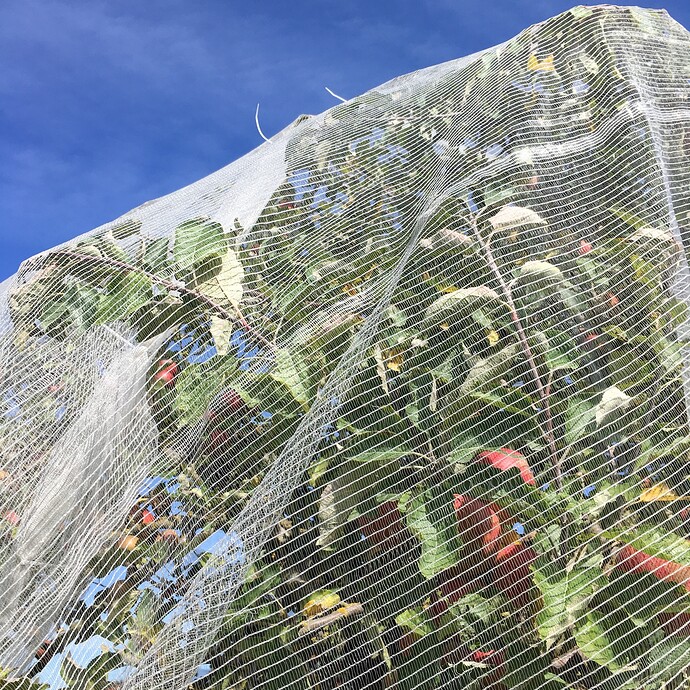
One of my fruit growing friends here told me that he nets his entire trees during the maggot season. And has perfect apples.
This seems like an easy fix. Especially when apple maggots and codling moths are the only pests.
Anyone else do this?
I’ve tried netting trees against birds, and I don’t do it anymore because:
It’s expensive.
It’s time-consuming.
It’s ineffective because birds are not the problem; squirrels are.
It takes a lot of net to cover even a small tree to the point you can gather the loose ends around the trunk.
I taped the loose ends to ½" PVC pipe to make a teepee, but that was frustrating to move to get at the tree underneath. Squirrels could still get under it.
Birds would get caught in the net and die. Squirrels wouldn’t.
No, my approach toward codling moths nowadays is to set pheromone traps for the males to see when they begin to fly, then track growing degree days until the females begin to lay eggs, then nuke the larvae with chemicals. I outline the technique here along with some other considerably more organic ones that I may or may not indulge in seasonally. I’m still looking for an effective spray for squirrels, though.
Commercial organic apple growers are starting to net entire orchards for just the reason stated. It’s very effective. It’s easier to install if the apples are on a trellis. The trellis bears much of the weight of the netting. There is a recent article about this in the last issue of good fruit growing.
I think it would work in areas with low Summer rainfall but in areas with high Summer rainfall I think you will have more disease issues because the leaves of the trees will dry slower inside the tree bag. The fruit would also dry slower.
For apples using ziplock bags works well. I have bagged quite a few apples. It may not be practical if you have tall trees or really large numbers of apples (>500).
Just a cheap plastic container filled with a 50/50 mix of molasses and water hung in the tree. Small holes drilled up near the top for the CMs to enter.
By first of August those traps had hundreds of CMs in them… and I was eating Novamac apples that looked like this.
Those are my only 2 real anual insect pests also. I dont like to spray either and when I was certified organic the approved methods were even less desirable as far as I was concerned (like Surround).
There is no easy fix if you want to continue with apples. If you remove your apples the AM will probably move into other fruit, like Asian pears.
I worked for a long time to come up with a sustainable approach to these 2 pests and I have been using these 2 methods since the early 2000’s.
For Coddling Moth when populations reach an unacceptable threshold I use mating disruption to wipe them out. I realize that all the stuff you find will tell you that mating disruption wont work for backyard growers or even less than 10 acres. This is complete crap. Mating disruption is an investment and to get the best bang for your buck you would apply the 400 dispensers to 10 acres and the bigger the area of coverage you have the better the results will be in the middle.
None of that means it wont work in your back yard. In fact I know of people who are serious about their backyard fruit and have banded together as community members / neighbors to use pheromone dispensers in as big of a block as possible to eliminate the problem. After all these bugs are coming in from neighboring properties?
In a backyard situation you would place the dispensers everywhere and as far away as you could to enlarging the coverage.
The next year you should notice a big dropoff of CM. After that the every year build up of them is just going to depend on outside pressure.
For me, the cycle between mating disruption and buildup to unacceptable levels is around 6 years. I dont have the outside pressure that you have. Im assuming…
For Apple Maggot I developed a attract and kill method that works pretty well. When I was working at the research station at Mt Vernon I developed a friendship with a Dr Prokopy at U. Mass. He was way ahead of this curve and was looking for a no spray alternative for AM. He didnt care about using organic methods as much as he wanted to keep sprays off the fruit and trees. This has always been my goals too.
Dr Prokopy’s research has been published in the U mass “fruit notes” and is still available for online viewing. He published a lot of articles as AM is a much bigger problem on the east coast than it is here.
Anyway, bottom line is I purchased about a thousand wooden apples, never have used all of them, painted them red, put a screw hook in the stem end and those are my bait.
These can be dipped into anything you want that is registered for AM control. There are two ways to go. Contact insecticide, in which case the AM just lands on the sphere and is killed or ingested insecticide where the AM has to feed on it.
Beings as you would just be hanging these in your trees and not spraying the pesticide on your trees I think you could feel comfortable with anything.
Dr Prokopy did a lot of experimenting with different types of attractants to further help with efficacy.
When I was certified organic I wasnt allowed to use any pesticide that wasnt organic approved despite the fact that I wasnt applying it to tree or fruit. I know, ridiculous. Just one of several reasons i quit the WSDA organic program.
At that time a new product came out, GF 120, an organic spinosad product which normally everyone says oh yah we know spinosad, it doesnt work. The problem with spinosad insecticides is that the insect has to feed on them. This is fine for lepidoptera since they are eating your leaves anyway but with AM they dont feed on leaves and coating the whole orchard with spinosad is just a waste of money.
GF 120 however is a different product. It comes with a feeding attractant in it. Its also very thick so it can be thinned with water and used as a dip very effectively.
So then you have your organic AM spheres hanging in your trees and nothing sprayed on them.
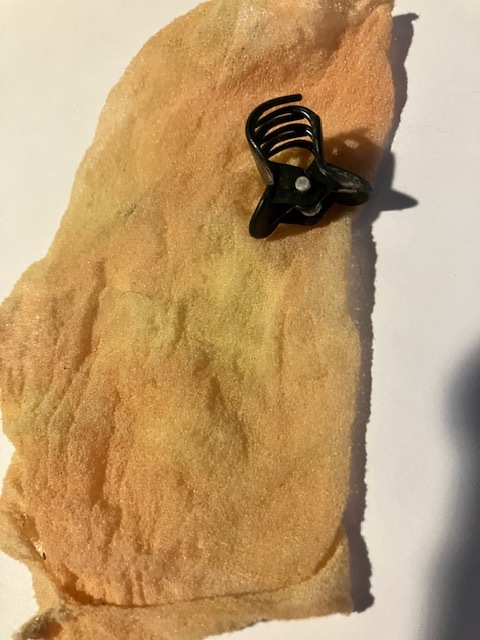
Last year, i had some moths lay eggs on top of my organza bags and i watched them just try to get into it with no success I’m going to try the molasses and water thing for my fruits this year as well. Whatever keeps not having to spray, I’ll try
I think it depends on your situation and your goals. My trees are small. My goal is only to produce 80 to 100 per tree so that is all I bag. I’ll let the critters have the rest. I use the insect bags since they are reusable and I can use them for other fruit that Ripen at different times. It has worked out perfect for the apples. I do not live at my Orchard. I’m about 80 miles away so I I’m not up there every day. Apples fall off on when they are ripe and just hang on the tree in the bag until I collect.
I use Surround plus spinosad plus Madex plus Bt and get very few moths. So, that might be another option. I only spray through early June so it’s not a whole lot of work. The early treatments eliminate nearly all of them so not much need to worry about the later generations. The PC are much more challenging than the CM for me, I really need to have great Surround coverage or they win.
Re: mating disruption mentioned by @jcf above, I used it for maybe a dozen years and it did seem to help, but once I got the population low enough it didn’t seem to matter whether I used it or not and so I stopped. It was also really hard to source the disruptants.
I have never had the patience for bagging apples! I start using Surround Wp when the fruit is about the size of a Quarter. First I thin the fruit and remove the foliage hiding any apple left. Then my first application is done 3 times with extra thick spray, waiting for each coat to dry before repeating each application.
To handle codling moth I plug in my bug zapper on a timer for the 4 hours around dusk and dawn. This also handles mosquitoes for the summer!
I reapply Surround until early August and after any heavy rainfall!
No bagging needed
Dennis
Kent Wa


 I’m going to try the molasses and water thing for my fruits this year as well. Whatever keeps not having to spray, I’ll try