I can help a little bit with that list but it is a very different list. Maybe call Bob and let him know what you are after. I won’t focus on the Russian pears or all the ones everyone in Alaska already knows about. I will mention them at the bottom from past discussions. If you want to revisit those topics no problem we have them on the forum. @Bernie was the importer of the Russian pears into Canada and they have made there way into Alaska. Years ago a guy I know used to be a fruit tree importer in Alaska. Bob eventually stopped doing his import business and moved to Idaho. The thing is he is very aware of the cold hardiness required in colder locations and focuses on that. Bob is also a prominent member of NAFEX Pears - Purvis Nursery and Orchard
Here are some of his cold hardy pears and his descriptions. Douglas came from just down the road from me. If things do well in Canada or Alaska they will do well in Kansas and typically vice versa.
Douglas: Fruit is large, slightly tart, few grit cells, firm texture, excellent for canning, keeps well. Tree has upright to spreading growth habit. Flower buds hardy to at least -34F; tree is productive in SW Minnesota and very resistant to fire blight.
Ewart: Introduced in Ohio, 1928. Tree is precocious and very productive, somewhat more fire blight resistant than Bartlett, willowy growth habit, flower buds hardy to at least -34F. Fruits are medium sized, flesh fine-textured, melting, juicy, flavor and quality are excellent. Ewart will pollenize Bartlett and somewhat resembles it although it ripens 10-20 days later.
Harrow 604: Somewhat spreading growth habit, well spurred, low vigor, very precocious, early ripening, slightly fire blight susceptible, hardy in Zone 4, injured at -33F. Fruit has long neck, yellow, size small to medium, outstanding flavor, ripe early August in SW MN.
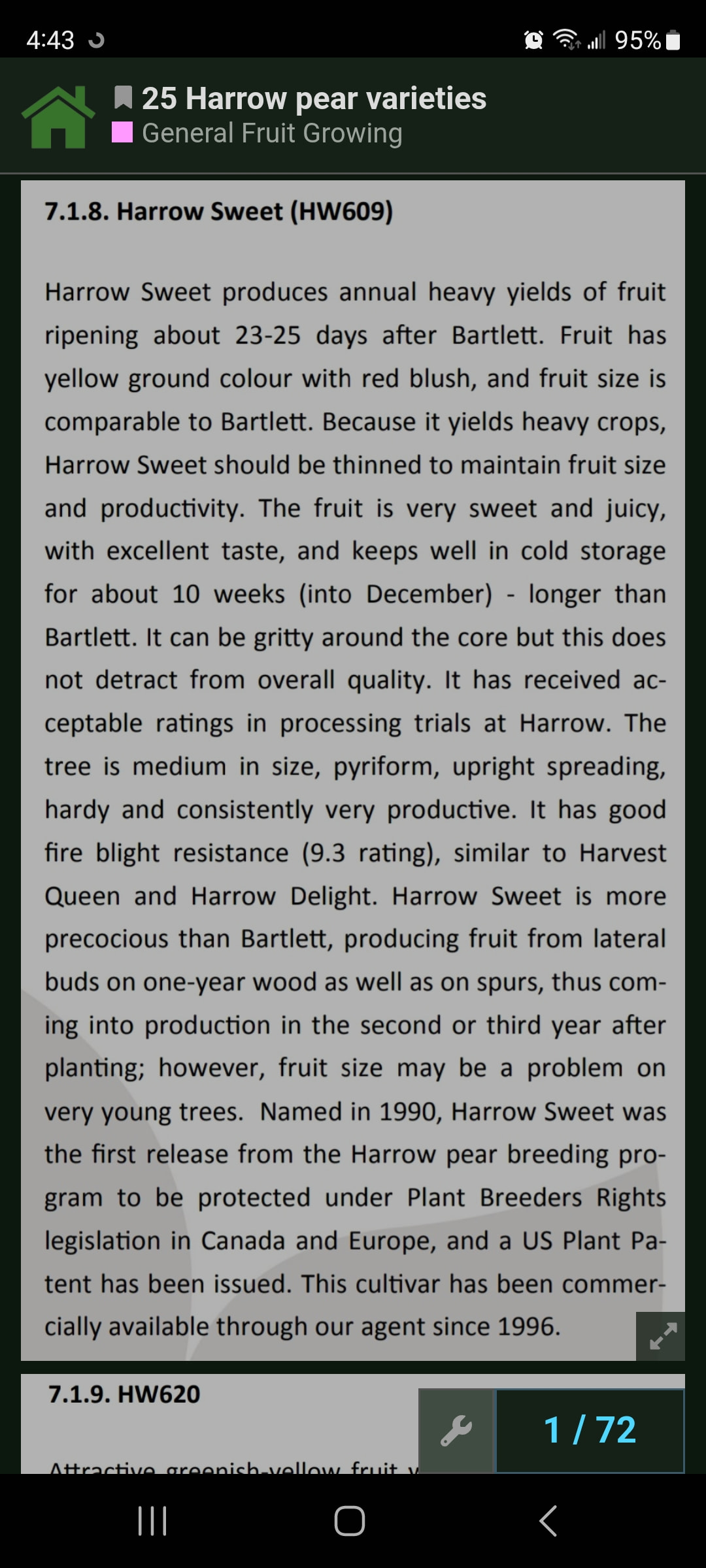
Harrow Sweet (Harrow 609): Medium sized tree, moderately precocious, somewhat spreading growth habit, hardy in SW Minnesota to at least -34F, resistant to fire blight, very productive. Fruit ripens 3-1/2 weeks after Bartlett, yellow with red blush, sweet and juicy with excellent taste, keeps about 3 months in cold storage.
Honeysweet: Self-fertile seedling of Seckel, hardy to at least -35F, very productive. Fruit resembles Seckel being very sweet. Larger and keeps better than Seckel. Tree has spreading growth habit, high resistance to fire blight, ripens about Sept. 4 in east-central Minnesota.
Luscious: Medium sized fruits, good flavor, tree has somewhat spreading growth habit and sterile pollen. Hardy in Zone 3.
Stacyville: St. Lawrence introduction, very sturdy tree, hardy in USDA Zone 2, tree is productive. Fruit size medium, sweet, but needs to be picked before fully mature. Keeps for about a month. Popular with customers at the farmers’ market in SW Minnesota.
Savignac: as grown in central WA, tree is spreading, low to medium vigor, precocious, hardy in zone 2. Fruit ripe about Sept. 10-15 in central WA. Sweet, juicy, size medium to large, coarse flesh, few grit cells.
Summercrisp: Tree is upright to spreading, fairly precocious, and very well spurred, an excellent pollenizer for early-ripening pears. Good resistance to fire blight. Fruits medium sized, best eaten when crisp. Hardy well into Zone 2.
Ubileen: Tree is upright to spreading, flower buds not hardy below about -25F. Fruits large, very flavorful and of high quality, ripens early August and keeps about a month. One of the best pears in the Corvallis collection, precocity is average.
Nova: St. Lawrence Nurseries introduction. Tree is spreading, low vigor, precocious. Fruit is large, round, melting, and juicy, of good quality, and may be used either green or ripe. Tree is supposedly self-fruitful. Hardy to about -45F.
Not resistant to fireblight
Comptesse Clara Frijs: Dessert pear from Denmark, 19th century, solid rugged hardy tree. Fruit size medium, shape oblong, yellow-green with a blush of red, rather thick skin. Flesh firm but not crisp, juicy but not dripping, flavor a cross of honey with vanilla. Tree very productive, flower buds hardy to at least -34F, fruit very popular at SW Minnesota farmers’ market.
Concorde: A British cross of Conference x Comice. Tree growth habit upright to spreading, moderate vigor, precocious, grower friendly, some resistance to fire blight, spurs up well, fully winter-hardy at –34F in SW Minnesota. Fruits are large with long necks, excellent sweet flavor, and keep till April in cold storage. Skin easily damaged in long-distance shipping.
Beurre Giffard: Tree has reddish new growth, willowy growth habit, precocious in bearing, blossoms with Summercrisp. Tree not hardy below –30F. Fruits are medium sized, somewhat pyriform, good tasting even when slightly unripe, sweet with vinous flavor notes, but keep only a month or two at best. One of the best of the summer pears, grown commercially in southern Quebec.
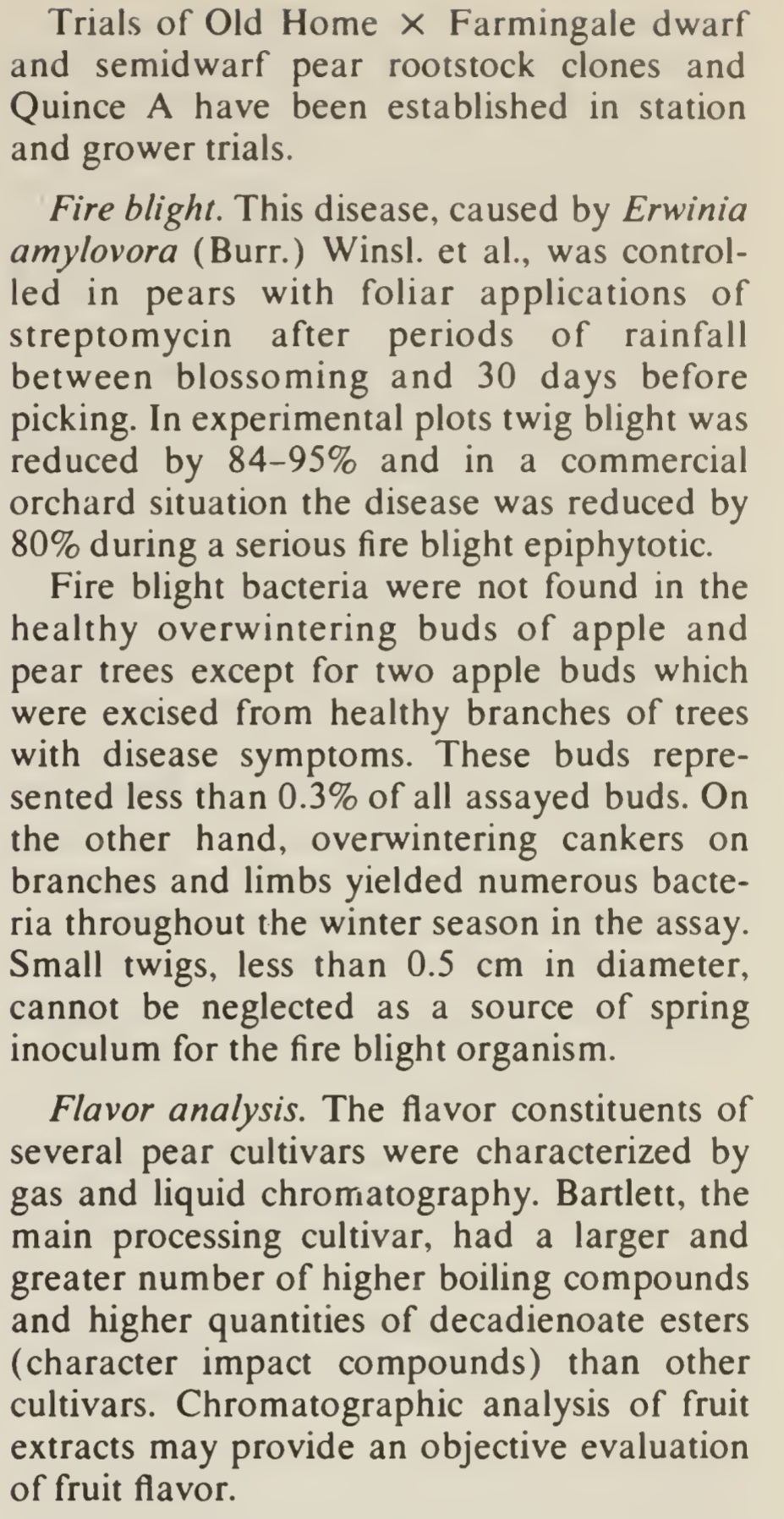
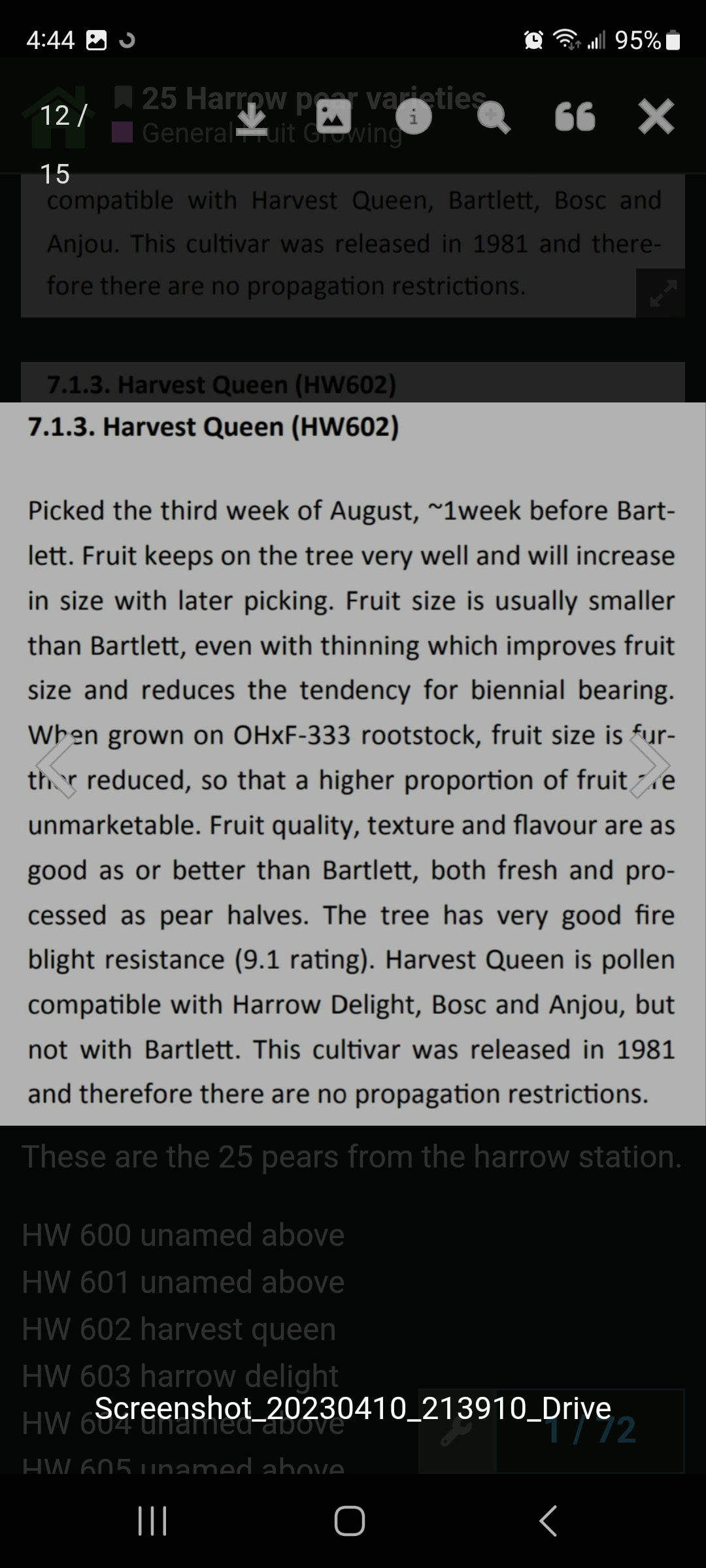
From my link above on Harrow pears

@VicJ would likely want to give some input on his experience.
I really like what they are doing in Canada with pears