Many fruit growers want cold hardy pears. Wwe have lots of members in zone 3,4,5 and even a few in zone 2. Lets look back at pears you can grow easily.

Menu
19 of the Best Cold-Hardy Pear Varieties
May 1, 2025 by Kristine Lofgren
Cold climates can be magical with dramatic fall foliage followed by blankets of snow. But living in a cold region does limit what you can cultivate in your garden.
For those living in Zone 4 and north, cultivating pear trees might have seemed like an impossible dream – until now!
While most pear varieties thrive in Zones 6 and above, with some hardy options suitable for Zone 5, this guide focuses specifically on exceptionally cold-tolerant varieties.
We link to vendors to help you find relevant products. If you buy from one of our links, we may earn a commission.
We’ll explore cultivars that not only survive but flourish in Zone 4, with several remarkably resilient varieties capable of withstanding Zone 3 conditions – enduring temperatures as low as -60°F in extreme weather.
Our list features 19 outstanding cold-hardy pear tree options, including disease-resistant and self-pollinating varieties to suit various growing needs.
Let’s explore the varieties that bring homegrown fruits to even the coldest gardens:
Best Pear Cultivars for Cold Climates
There are three pear species commonly grown in home gardens: the European or common pear (Pyrus communis), the Asian or nashi pear (P. pyrifolia), and the Russian or Siberian species (P. ussuriensis).
You’ll mostly encounter European types but there are a few Asian pears that will tolerate the cold. Russian varieties are known for being cold-hardy but the fruits are smaller and less flavorful.

We’ll introduce you to a few of each that are flavorful, tough, and hardy.
All the varieties on this list are hardy to Zone 4, but we will let you know if a particular cultivar can tolerate even colder climates.
We will call out the ripening date, but keep in mind that this is just a guideline. Harvest time can vary depending on your climate and the weather during that particular year.
Let’s get into it!
1. Ayers
P. communis ‘Ayers’ is a self-pollinating cultivar that is hardy down to Zone 3. It’s ready early and yields heaps of medium-sized, yellow and blush fruits.
You can improve your harvest if you provide a pollinating friend nearby.
The flesh of the fruit is so sweet and honeyed that you could use it as a dessert all on its own.
Bake it in the oven, sprinkle on some cinnamon and add a dollop of whipped cream and you’re in for a healthy treat that tastes like something sinfully decadent.
‘Ayers’ was discovered by grower O.H. Ayer in Sibly, Kansas in 1880 as a chance seedling.
2. Bosc
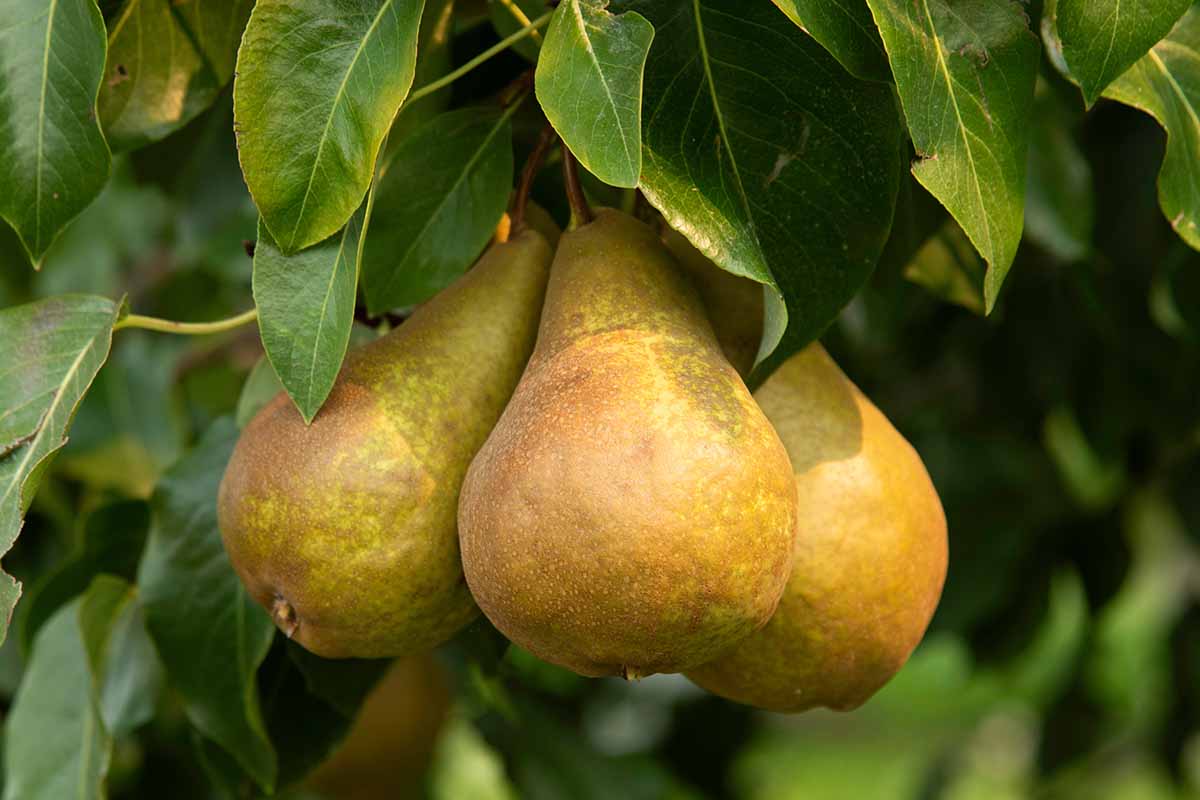
The cinnamon brown, russetted skin and iconic shape of P. communis ‘Bosc’ has made it the star of many drawings and paintings.
It tastes delicious, too. Starting in late September, the fruits start ripening with ivory-colored, crisp, juicy flesh.
The first ‘Bosc’ found its way from Europe to the US in 1832. It’s not clear where it originated in Europe, but there are lots of theories. Regardless, it’s a beautiful option for cold climates.
You can find ‘Bosc’ available in #5 containers at Nature Hills Nursery.
Learn how to grow ‘Bosc’ pears here.
3. Clapp’s Favorite
It’s not just Clapp who loves this tree best: ‘Clapp’s Favorite’ (P. communis) is extremely popular and pretty much anyone who grows it falls in love.

This vigorous, adaptable tree produces beautiful yellow pears with a hint of blush red, wrapped around sweet, creamy flesh.
The medium to large fruits are ready early and the tree will treat you to beautiful fall colors when the foliage turns purple, red, and gold.
William Clapp and his sons Thaddeus, Frederick, and Lemuel developed ‘Clapp’s Favorite’ in Dorchester, Massachusetts during the 1800s and it has remained in production thanks to its popularity ever since.
You can find ‘Clapp’s Favorite’ in #2 containers available at Nature Hills Nursery.
4. Early Gold
‘Early Gold’ is a Russian (P. ussuriensis) hybrid that doesn’t mind the chilly climate in Zone 3 and up.
It’s early maturing, ready in late August, with large, golden fruits that have white interiors. When mature, the flesh has a sweet, melting flavor and texture.
While it’s self-pollinating, you’ll achieve much larger yields with a pollinator planted close by.
It’s also an excellent pollinator for other cultivars, with heaps and heaps of huge white blossoms in the spring.
5. Flemish Beauty
In Zones 4 to 8, fantastic P. communis ‘Flemish Beauty’ grows medium to large fruits with a nice rounded shape and a blush hue over yellow skin.

It’s one of the most cold hardy of the European pears, and will survive just fine down to -40°F.
Originally called ‘Fondante de Boise’ or “Sweetmeat of the Woods,” this cultivar has extremely creamy flesh that melts in your mouth with its sweet, floral flavor that’s ready for harvesting in late summer.
6. Golden Spice
If you like your pears with a bit of spice, ‘Golden Spice’ is your tree.
Brought to us by the University of Minnesota in 1949, the fruits are tart and spicy, wrapped in a blush and golden green skin.
This Russian hybrid is fireblight resistant and reliably hardy down to Zone 3 but will even survive in Zone 2b if you put it in a protected spot.
The fruits are ready mid-August and are a delight. You can find ‘Golden Spice’ available at Nature Hills Nursery.
7. Harrow Delight
‘Harrow Delight’ is a popular European pear option in the Pacific Northwest, which isn’t exactly known for its frigid winters.
But that just speaks to its adaptability, because it’s also a regular sight in northern climates down to Zone 3b.
That’s because it’s extremely productive, starts fruiting at a young age, and is resistant to fireblight, cedar trellis rust, and scab.
Pears are ready to harvest in the mid-season when you’ll find small, greenish-red fruits with a sweet, creamy flesh.
8. Kieffer
In the late 1860s, farmer Peter Kieffer of Philadelphia noticed one of his ‘Sand’ trees had been pollinated by a nearby ‘Bartlett’ tree to produce an unusual new seedling.
He cultivated it into what we now know as ‘Kieffer.’ The large, golden-pink skinned pears have juicy, coarse, white flesh.
The fruits start maturing in mid-September and stick around for up to a month. It’s extremely resistant to fireblight and while it can tolerate cold climates, it’s also adaptable to heat.
You can find trees in a variety of sizes available at Fast Growing Trees.
9. Krazulya
When it comes to cold tolerance, nothing beats a Russian pear (P. ussuriensis).
‘Krazulya,’ which is Russian for “beauty,” is a hybrid between a Russian and European species.
Hardy to Zone 3, the fruit is exceptionally flavorful and ripens early. You can even get it to thrive in Zone 2b if you plant near a brick or cement wall that will reflect heat back onto the plant.
Each fruit is fairly petite, about the size of a ‘Bartlett.’ There’s a lot of flavor packed into that sweet flesh and yellow-blush skin.
There’s a sweetness tempered with just a bit of spice that makes it perfect for fresh eating.
Maybe the only downside to ‘Krazulya’ is that it doesn’t store well at all. Eat the fruit fresh, dry them, or can them, but don’t wait. This marvel is here one minute and gone the next.
10. Loma
You know how potential employers always ask you what your worst trait is during a job interview? My answer is always that I’m impatient.
Which is why ‘Loma’ (P. communis) is a good cultivar for me. The fruit ripens extremely early with small to medium-sized pears wrapped in green and red skin.
The thick skin has an acidic bite while the flesh inside is juicy and soft. I love the combination, which gives you a burst of acid before melting into sugary sweetness.
It is disease-resistant, hardy to Zone 3, and hails from Canada, home of some excellent new cold-hardy cultivars.
The fruits can be eaten fresh, but they’re at their best after about a month in storage.
11. Lorraine
‘Lorraine’ is a European type that produces large yellow-green fruits kissed with a rosy hue wherever the sun hits them.
Inside is juicy, sweet flesh that reaches its peak after a bit of time in cold storage.
The fruit is ready to harvest in early September, but keep in mind that they all ripen at once, so you’ll want to be ready when it’s time.
Brought to the world by Canadian breeder Jean-François Hébert, ‘Lorraine’ doesn’t need a pollinator as it is self-fruitful and has moderate resistance to fireblight and scab.
12. Luscious
South Dakota State University wanted to create a tree that not only did well in cold climates but was also fireblight resistant.
And here we are with the lovely P. communis ‘Luscious’ pear. The fruits are large, sweet, and juicy, wrapped in a golden green skin with a blush hue when ripe.
The fruits are ready to pick in early September, so you’d better get planting!
You can find ‘Luscious’ available at Fast Growing Trees.
13. Nova
It’s rare to find a pear tree that yields fruits good for both eating when green and when fully ripe, but P. communis ‘Nova’ manages to do just that.
The thin yellow skin on medium-sized fruits wraps around juicy, sweet flesh that only improves with age.
Ready in mid to late September, the tree is also self-fertile, so those with space challenges will be able to enjoy pears without requiring a pollinator.
14. Parker
The University of Minnesota has worked hard to breed several cold-hardy pears and ‘Parker’ is an excellent result of their efforts.
Released in 1934, the green fruits of this European type have a bright red blush and a sweet white flesh that is good for both fresh eating and canning. It’s ready for harvest in early September.
The white blossoms have bold purple anthers and the leaves turn dark purple in the fall, so you have something pretty to look at even when the tree isn’t fruiting.
While it’s susceptible to fireblight, ‘Parker’ is hardy down to Zone 4 and tolerant of pollution.
You can find ‘Parker’ available at Nature Hills Nursery.
15. Patten
P. communis ‘Patten’ is often chosen as a pollinator for other pears because it has a long flowering season, but don’t overlook the fruits.
The large pears have light green skin enclosing white flesh that ages to a perfect texture after about a month off the tree.
When they are ready, you’ll be treated to sweet, creamy flesh that’s superior to so many of the mealy options on the market.
It ripens late in the year and is tough enough to grow even in Zone 3.
16. Shinko
The apple-shaped pears on P. pyrifolia ‘Shinko’ are such a treat, both for the eyes and the tongue.
The russet orange skin is beautiful and the crisp, sweet, tangy flesh has just a bit of butterscotch undertones.
The fireblight-resistant tree is partially self-fertile, but it’s best to plant a pollinator to ensure an abundant harvest.
This vigorous grower produces medium-sized fruit that stores well. No wonder it has been a top choice for Asian pears ever since it was introduced in 1941 in Japan.
It can be hard to find Asian pears that thrive in cold weather, so make this one yours by grabbing a tree in a five-gallon container at Perfect Plants Nursery.
17. Southworth
‘Southworth’ produces huge fruits in an elegant and classic European pear shape.
The light green skin is speckled in dark green or brown lenticels, all hiding a firm, crunchy interior.
But leave these pears on the counter for a week and the flesh will be transformed into a creamy, sweet bite.
The fruits are late to ripen and store for a long time, meaning you can be enjoying fresh fruit as late as February or so even down to Zone 3.
18. Summercrisp
With a name like ‘Summercrisp,’ this may sound like it’s a tree that thrives in the heat of summer, but it’s definitely a cold weather lover.
This European cultivar was bred by the University of Minnesota to thrive and produce well in cold climates, with fruit that ripens in the peak of summer.
The pretty, red-skinned, mildly sweet fruits are ready in August and you can eat them straight off the tree, no need to let them mature a bit after picking.
Not only does this cultivar produce in regions where many pears fail, it’s resistant to fireblight and is an excellent pollinator for other pears as well.
You can find trees in a variety of sizes available at Fast Growing Trees.
19. Ure
While the fruit on ‘Ure’ might be smaller than average, this Russian hybrid makes up for its size with a fabulous flavor.
The thick, light green to yellow skin hides tender, juicy flesh. Eat right off the tree or let the fruit age for a few days to intensify the flavor. Just don’t try to store ‘Ure’ pears, because they won’t last.
On top of being resistant to fireblight, the thick skin protects the fruit from insects. They’re ready for harvest sometime in early September in Zones 3 and up.
Chill Out!
Just because you live in Zones 2, 3, or 4, that doesn’t mean you have to live without the unique experience of growing your own pears.
By choosing one of these cold-hardy cultivars, you too can enjoy an abundance of delicious homegrown fruits.
"
That article way be useful and you may find some additional information at Pears - Purvis Nursery and Orchard . We have known Bob many years. He iss an expert in growing cold hardy fruits. Make sure you look at his notes on his pears like these shown below ( not all are cold hardy)
" Note: Call and inquire if you are looking for a particular pear not on the list, and we may be able to help you, thanks to our extensive contacts among amateur and commercial growers.
PEARS
Abbe Fetel: The leading pear cultivar grown commercially in Italy. Upright growth habit, may be susceptible to fire blight. Fruit is large and elongated with yellow kin and a red blush. The flesh is white, melting, juicy, sugary, and aromatic.
Aurora: Bartlett x Margaret Marillet cross, large pyriform fruits, juicy, sweet, upright to spreading growing habit.
Beurre Giffard: Tree has reddish new growth, willowy growth habit, precocious in bearing, blossoms with Summercrisp. Tree not hardy below –30F. Fruits are medium sized, somewhat pyriform, good tasting even when slightly unripe, sweet with vinous flavor notes, but keep only a month or two at best. One of the best of the summer pears, grown commercially in southern Quebec.
Champion: Russeted pear, seedling of Gorham, fine-grained flesh, very good flavor, ripens mid to late September in Idaho. Tends to shrivel in long-term storage because of a thin skin.
Comptesse Clara Frijs: Dessert pear from Denmark, 19th century, solid rugged hardy tree. Fruit size medium, shape oblong, yellow-green with a blush of red, rather thick skin. Flesh firm but not crisp, juicy but not dripping, flavor a cross of honey with vanilla. Tree very productive, flower buds hardy to at least -34F, fruit very popular at SW Minnesota farmers’ market.
Concorde: A British cross of Conference x Comice. Tree growth habit upright to spreading, moderate vigor, precocious, grower friendly, some resistance to fire blight, spurs up well, fully winter-hardy at –34F in SW Minnesota. Fruits are large with long necks, excellent sweet flavor, and keep till April in cold storage. Skin easily damaged in long-distance shipping.
Dana Hovey: Possibly a seedling of Seckel, nicknamed Winter Seckel because of its sweetness. Fruit size is medium, intensely sweet, highly aromatic flesh, keeps till at least December. Spreading growth habit, ripens late Sept. here, good resistance to fire blight as observed in our 2016 epidemic. One of our favorites.
D’Anjou: Commercially grown pear for winter storage. Tree upright, vigorous, early blooming; fruit large, flavor mild and sweet, stores about 5-6 months in cold storage.
Douglas: Fruit is large, slightly tart, few grit cells, firm texture, excellent for canning, keeps well. Tree has upright to spreading growth habit. Flower buds hardy to at least -34F; tree is productive in SW Minnesota and very resistant to fire blight.
Ewart: Introduced in Ohio, 1928. Tree is precocious and very productive, somewhat more fire blight resistant than Bartlett, willowy growth habit, flower buds hardy to at least -34F. Fruits are medium sized, flesh fine-textured, melting, juicy, flavor and quality are excellent. Ewart will pollenize Bartlett and somewhat resembles it although it ripens 10-20 days later.
Gartlett: a Bartlett seedling discovered next door by the late Garfield Shults circa 2000. It looks and tastes like Bartlett but is not brown in the core when the skin turns yellow, unlike the regular Bartlett pear.
Harrow 604: Somewhat spreading growth habit, well spurred, low vigor, very precocious, early ripening, slightly fire blight susceptible, hardy in Zone 4, injured at -33F. Fruit has long neck, yellow, size small to medium, outstanding flavor, ripe early August in SW MN.
Harrow Sweet (Harrow 609): Medium sized tree, moderately precocious, somewhat spreading growth habit, hardy in SW Minnesota to at least -34F, resistant to fire blight, very productive. Fruit ripens 3-1/2 weeks after Bartlett, yellow with red blush, sweet and juicy with excellent taste, keeps about 3 months in cold storage.
Honeysweet: Self-fertile seedling of Seckel, hardy to at least -35F, very productive. Fruit resembles Seckel being very sweet. Larger and keeps better than Seckel. Tree has spreading growth habit, high resistance to fire blight, ripens about Sept. 4 in east-central Minnesota.
Hudar: St. Lawrence Nurseries introduction, tree is precocious and productive, medium sized fruits are yellow with sweet, juicy flesh, quality acceptable for farmers’ markets, size is medium in SW Idaho, where it typically ripens in early August.
Luscious: Medium sized fruits, good flavor, tree has somewhat spreading growth habit and sterile pollen. Hardy in Zone 3.
Maxine: Productive in Stillwater, MN; grown for roadside sales in Oregon. Fruit medium to large, pyramidal shape, good flavor. Tree is resistant to fire blight and a good pollenizer of other pears. Excellent productivity here in Idaho.
Nova: St. Lawrence Nurseries introduction. Tree is spreading, low vigor, precocious. Fruit is large, round, melting, and juicy, of good quality, and may be used either green or ripe. Tree is supposedly self-fruitful. Hardy to about -45F.
Packham’s Triumph: Australian pear, tree upright and moderately vigorous, midseason bloom. Fruit size medium to large, flesh is firm, very juicy, melting; flavor, rich and very good. Needs 14-21 days in refrigeration to ripen satisfactorily. Will keep 6-8 months.
Paragon: Discovered by Dr. David Sugar at Mid-Columbia Research Station, Oregon. Tree has upright growth habit. Fruits are large, juicy, honey-like sweet flavor, one of our favorites, keeps about 2-4 months, ripens mid September in SW Idaho. Tree observed to be susceptible to fire blight in 2016.
Patten: U of MN introduction, very large, pyriform fruit, ripe late Sept., good flavor but should be picked 1 week before tree-ripe for best flavor. Good for eating but only fair for canning. Some resistance to fire blight.
Stacyville: St. Lawrence introduction, very sturdy tree, hardy in USDA Zone 2, tree is productive. Fruit size medium, sweet, but needs to be picked before fully mature. Keeps for about a month. Popular with customers at the farmers’ market in SW Minnesota.
Savignac: as grown in central WA, tree is spreading, low to medium vigor, precocious, hardy in zone 2. Fruit ripe about Sept. 10-15 in central WA. Sweet, juicy, size medium to large, coarse flesh, few grit cells.
Shenandoah: Tree is very fire blight resistant. Fruits large, ripening late Sept., mellows after picking, excellent storage life.
Sierra: Seedling of Bartlett x Marguerite Marillat, introduced at Summerland, B.C. in 1969. Tree is medium sized and cold hardy, bears early and heavily. Fruit is very large, long pyriform, light green, somewhat irregular in size and shape. Flesh is medium tender, very fine and melting; flavor is very good. Ripens a few days before D’Anjou and keeps till January.
Summercrisp: Tree is upright to spreading, fairly precocious, and very well spurred, an excellent pollenizer for early-ripening pears. Good resistance to fire blight. Fruits medium sized, best eaten when crisp. Hardy well into Zone 2.
Ubileen: Tree is upright to spreading, flower buds not hardy below about -25F. Fruits large, very flavorful and of high quality, ripens early August and keeps about a month. One of the best pears in the Corvallis collection, precocity is average.
Vermont Beauty: Tree medium to large, hardy in Zone 4, extremely productive. Fruit medium sized, lemon yellow, flesh yellow-tinged, melting, smooth, dense, fine-grained and juicy. Ripens before Seckel, keeps 8-12 weeks. Highly resistant to fire blight during blight epidemic here in 2016.
Warren: Tree originally from Louisiana, not resistant to fire blight. Fruit is sweet, juicy, flavorful, green skinned, ripening mid season, good keeper. Reported to be somewhat slow in bearing, but fruit is well worth the wait."
Here is another article
"
Pear Tree Cold Tolerance: Pears That Grow In Cold Winters
When you purchase through links on our site, we may earn an affiliate commission. Here’s how it works.
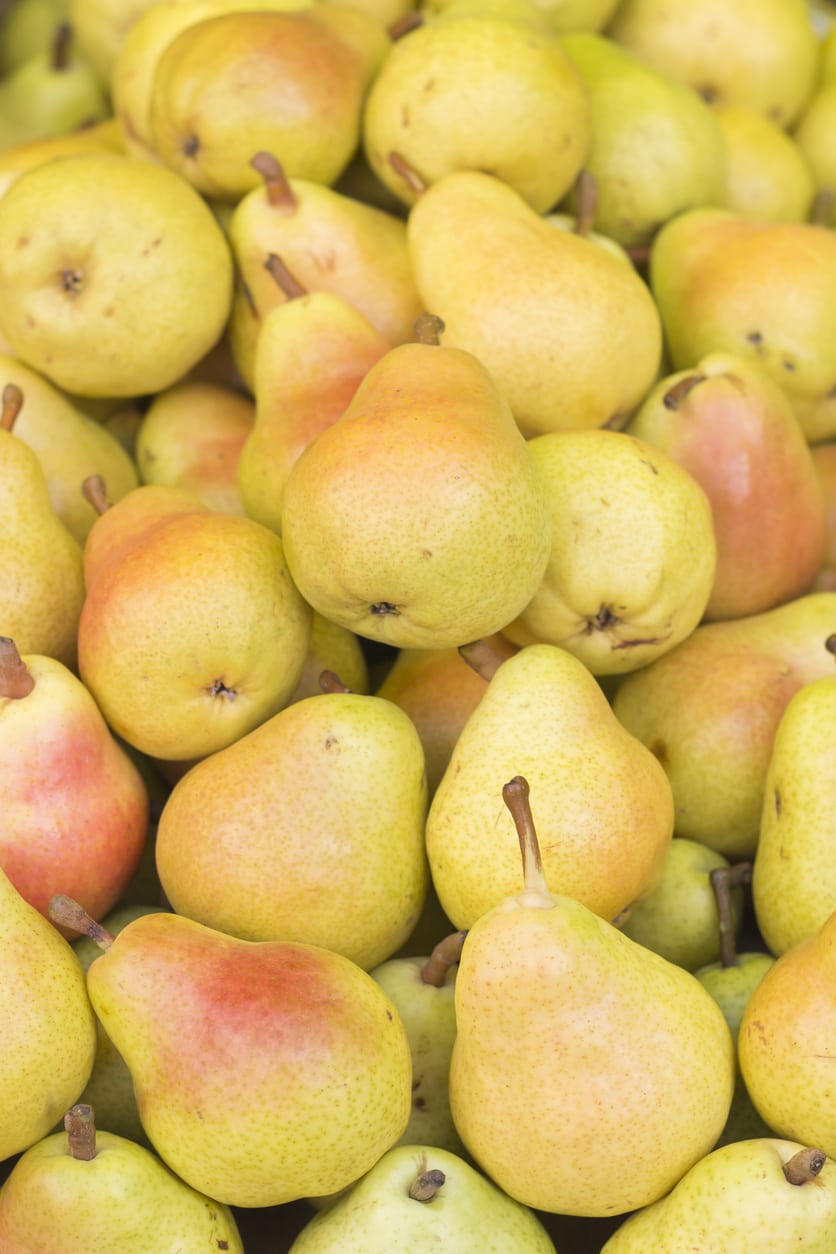
pears
(Image credit: wwasilisa)

last updated March 31, 2021
inFeatures
Pears in the home orchard can be delightful. The trees are pretty and produce spring flowers and tasty fall fruit that can be enjoyed fresh, baked, or canned. But, if you live in a cold climate, growing any kind of fruit tree can be challenging. There are, however, some pears for cold climates; you only need to find the right varieties.
Cold Hardy Pear Trees
While apple trees may first come to mind when considering fruit to grow in colder climates, they are not the only ones that will adapt. There are pear varieties that definitely won’t make it in colder zones, including most Asian pear varieties. On the other hand, pear tree cold tolerance is possible, and there are some cultivars from Europe and from northern states, like Minnesota, that will work at least in zones 3 and 4:
- Flemish Beauty. This is an old European variety of pear that is known for its sweet flavor. It is large and has a white, creamy flesh.
- Luscious. Luscious pears are medium to small in size and have a firm texture and a flavor similar to that of Bartlett pears.
- Parker. Also similar to Bartlett in flavor, Parker pears may be borderline hardy in zone 3.
- Patten. Patten trees produce large pears that are great for eating fresh. It is somewhat self-pollinating, but you’ll get more fruit with a second tree.
- Gourmet. Gourmet pear trees are fairly hardy and produce a tasty fruit, but they won’t pollinate other trees.
- Golden Spice. This cultivar doesn’t produce the best fruit, but it is hardy and can serve as a pollinator for other trees.
There are even some varieties of pear that can be grown in zones 1 and 2. Look for Nova and Hudar, New York-developed pears that can grow in Alaska. Also try Ure, which is one of the hardiest of all pears. It grows slowly but produces a tasty fruit.
"

 They taste like a cross between petrified wood and old, compacted sawdust.” That aside, they are reportedly OK canned or made into pear butter. They are faster growing than Krasnobokaya, and I also consider these to be pollinator varieties for Early Gold.