That’s most likely Dog Vomit Slime Mold.
1 Like
Thanks. Seems like that is what it is. Reading about it sounds like it is fairly harmless.
1 Like
In Mexico,they scramble the stuff like eggs and call it Caca de Luna.
1 Like
Came across this insect identification key,
May be useful .
https://www.knowyourinsects.org/index.html
3 Likes
For beginners, will identify by insect Orders: fly, bee, bug, beetle, butterfly, etc.
Thank you for the link. This will be very helpful.
1 Like
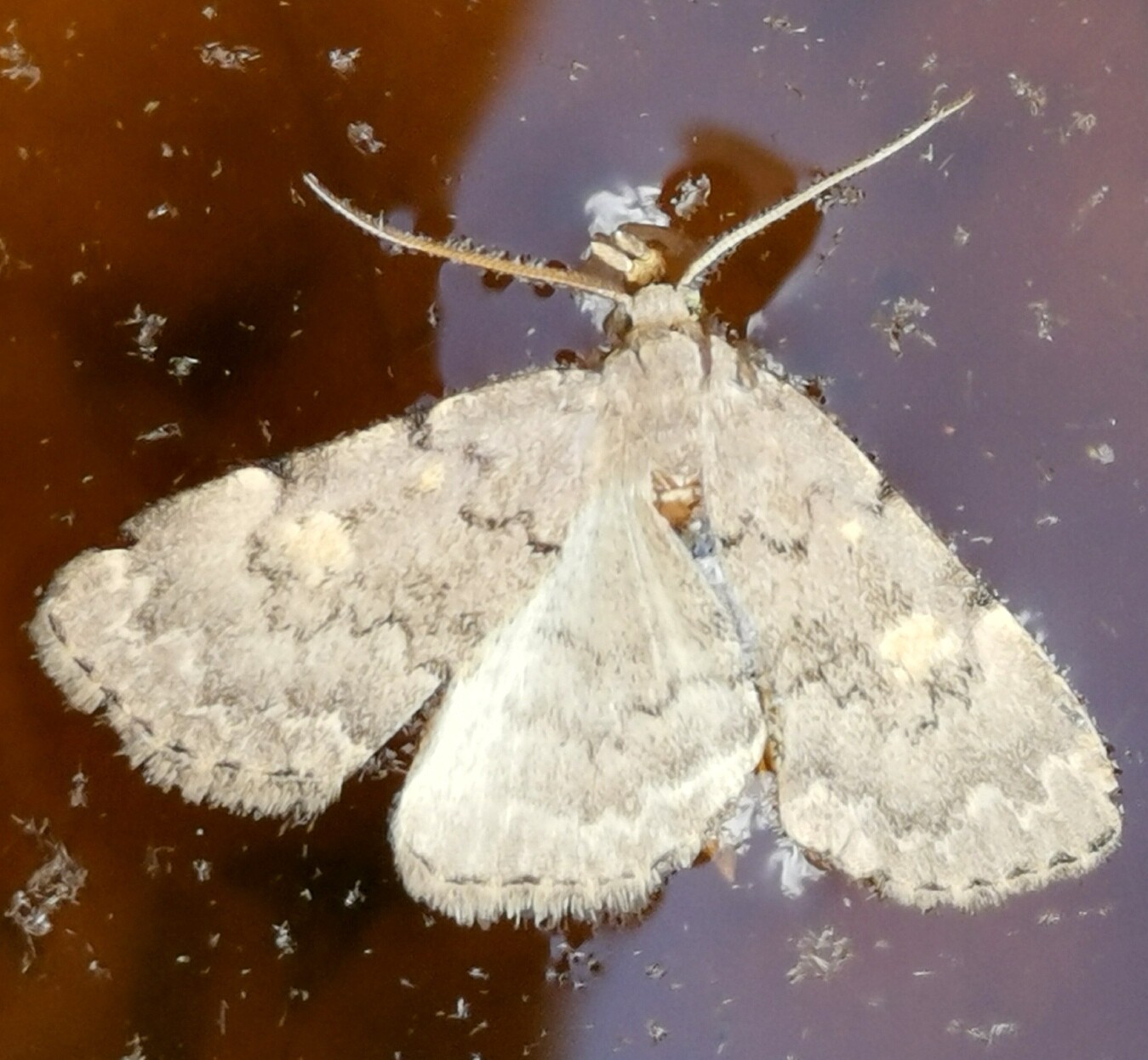
No. The moth pictured above is a geometrid (spanworm, inchworm) moth. The OFM is a tortricid (tortrix) moth. Different moth families. Inchworms generally chew leaves.
1 Like
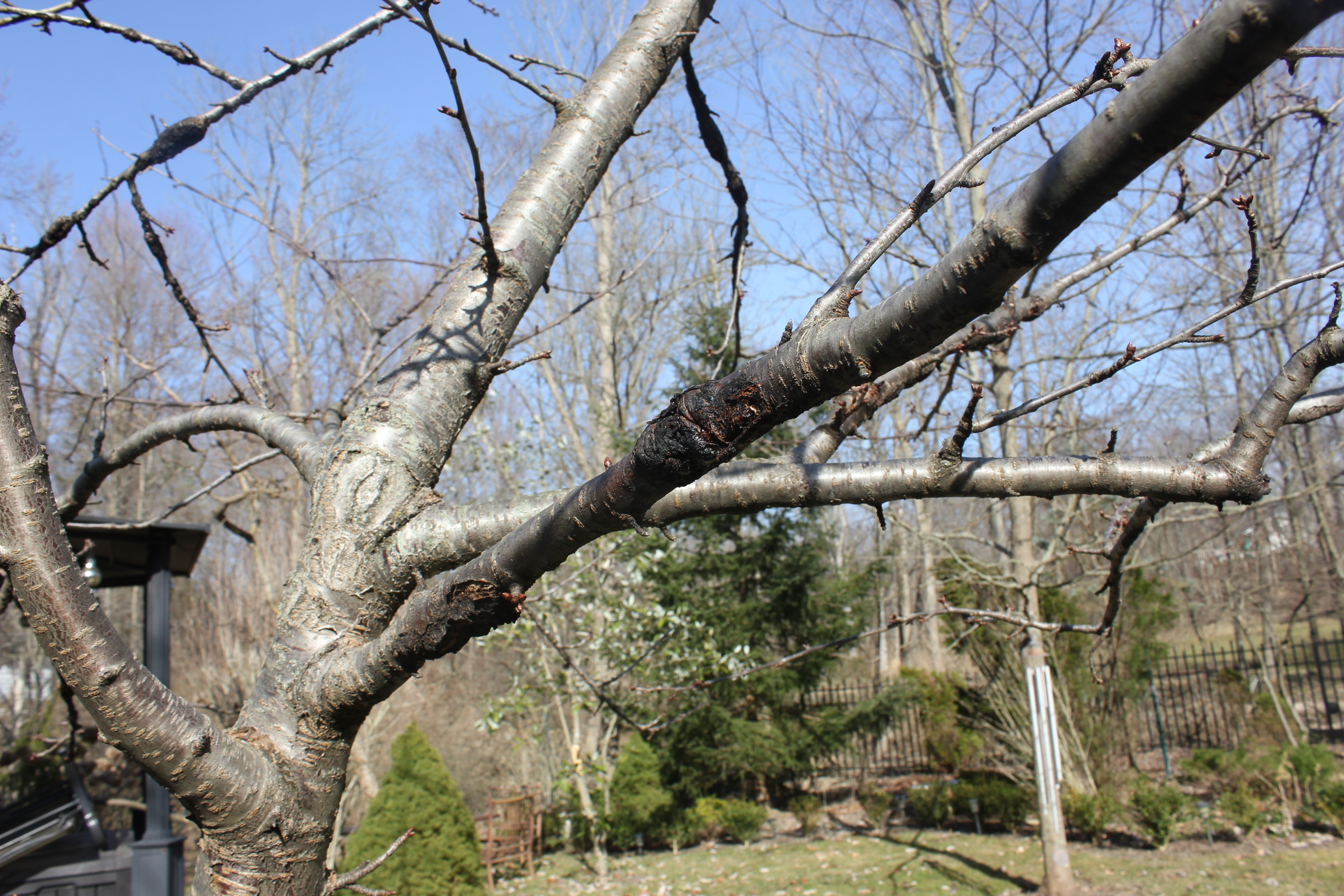
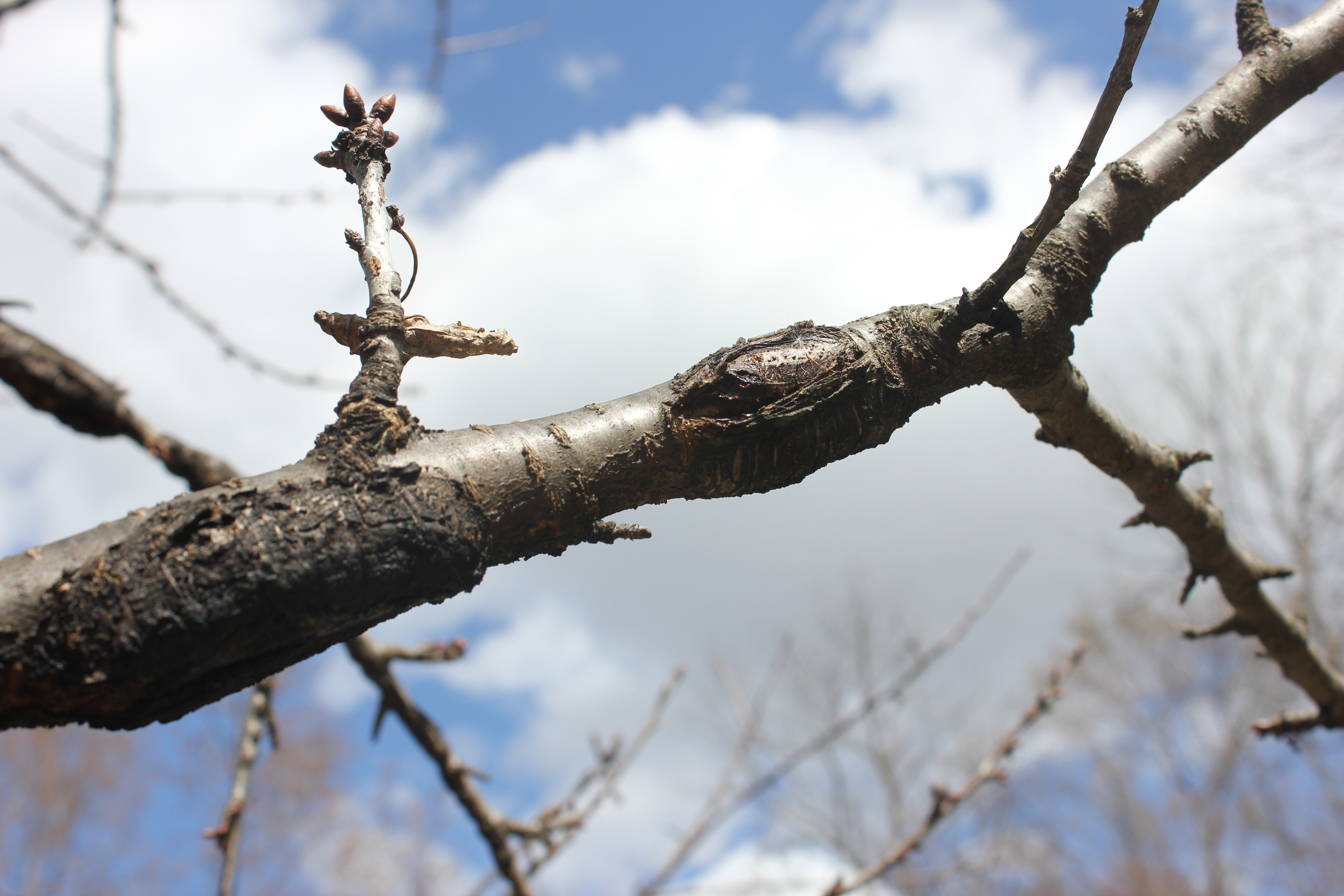
Just notice this after a rain that Cicadas did a lot of damage to my second year Shiro plum . Since most of the damage was done top four feet and below two feet plant look ok.
Anyone think it will recover or I need to remove top four feet of the plant. Please look below at pictures and also check if you are in Cicadas zone and notice any damage on your trees like that.
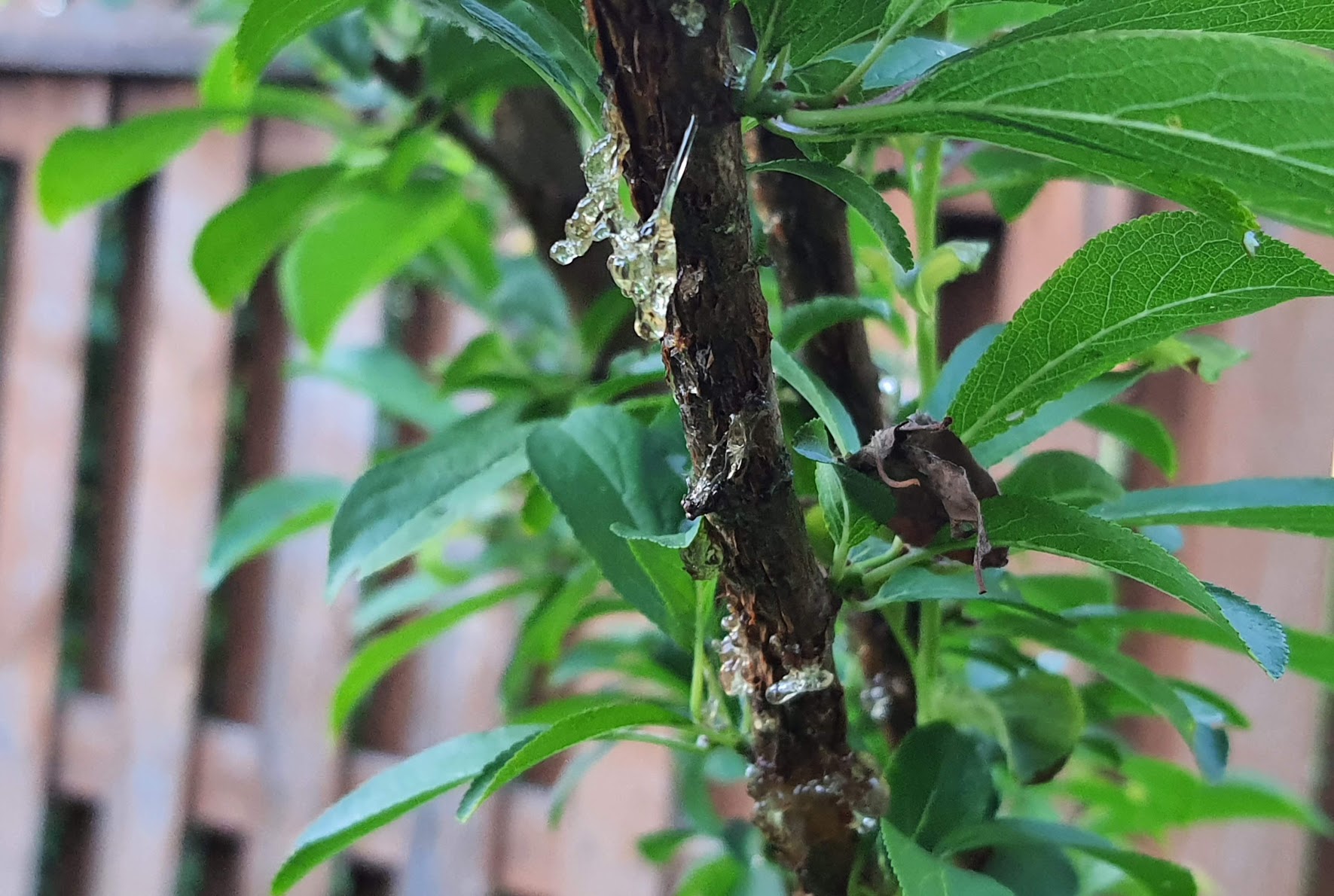
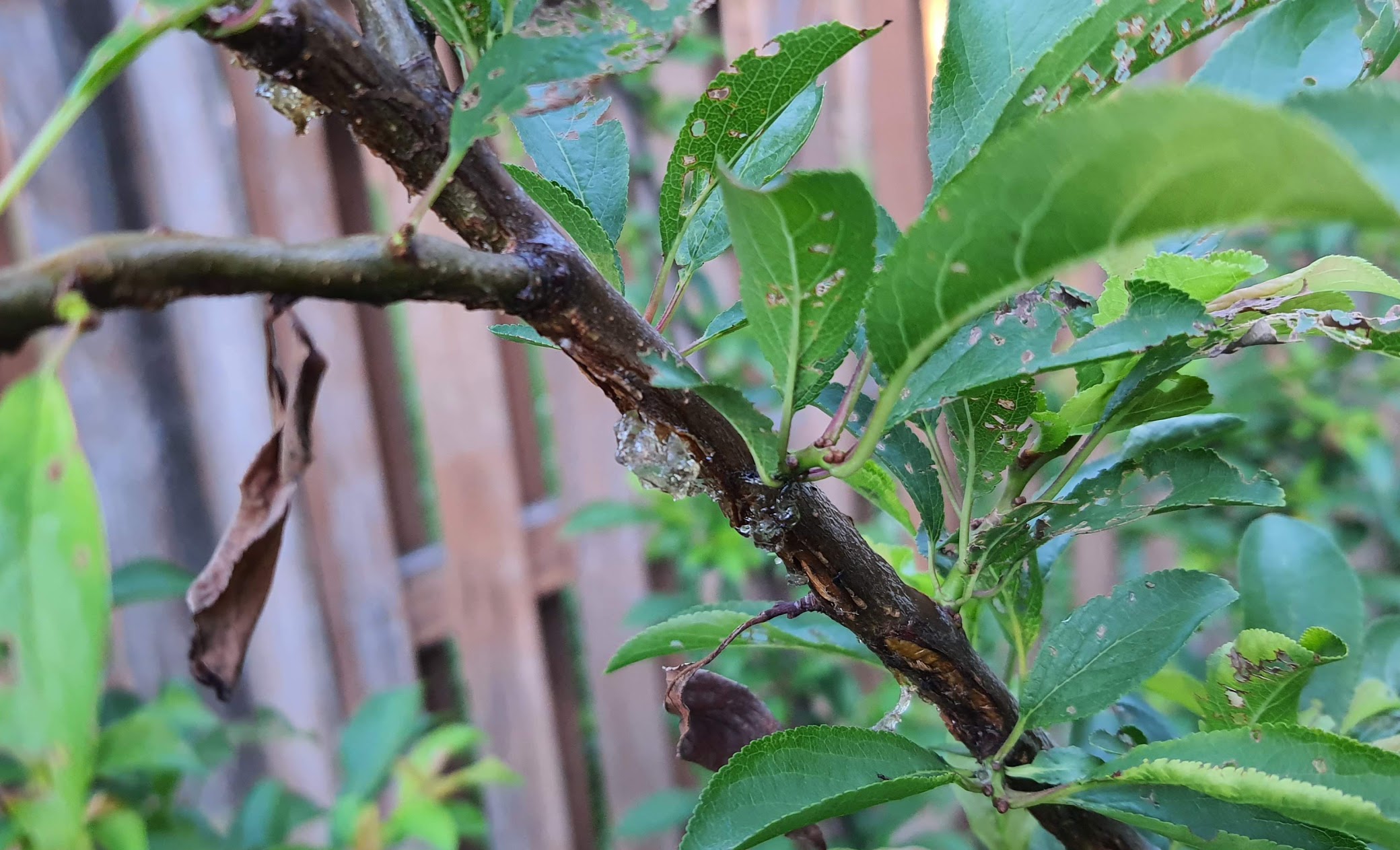
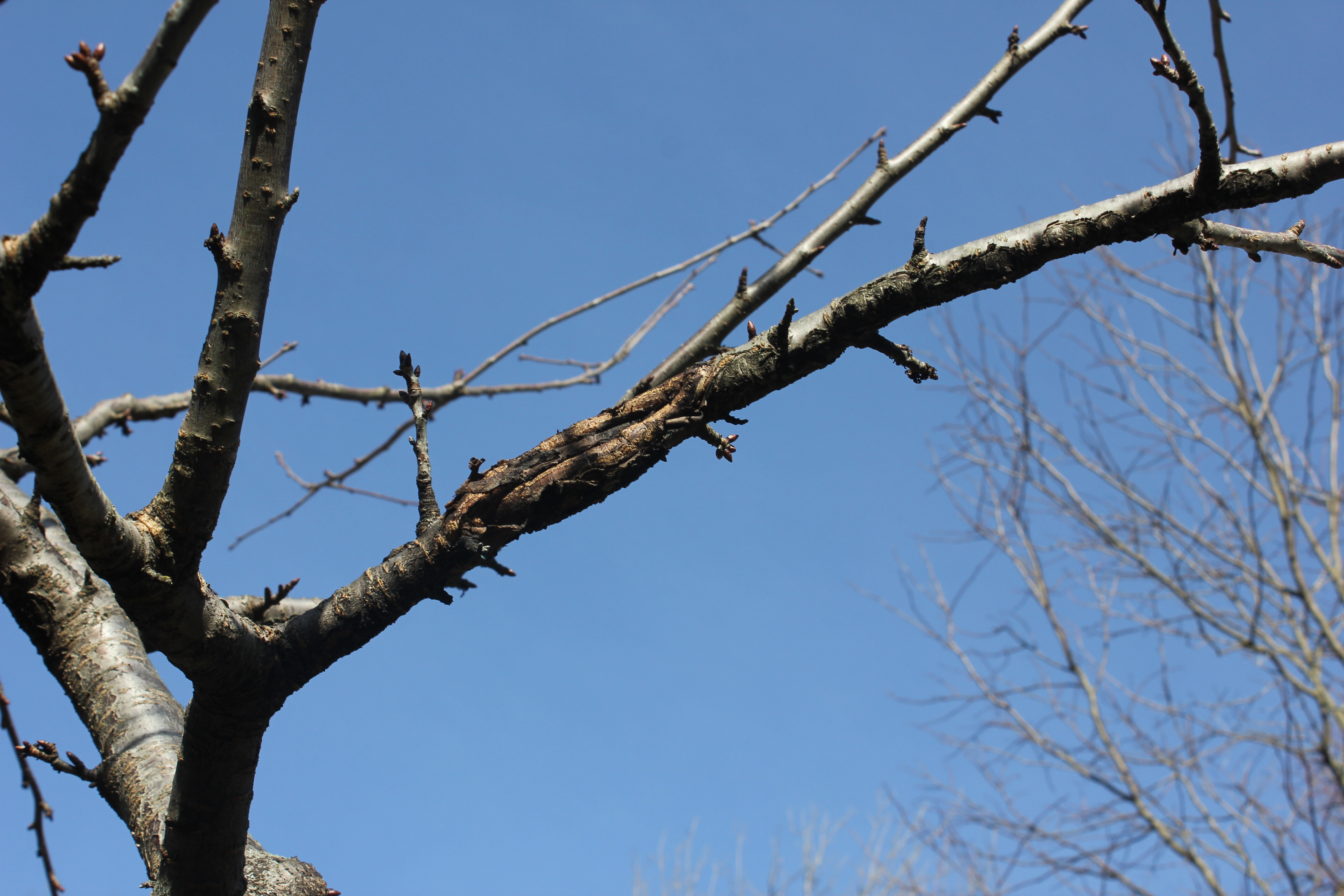
The wounds will heal, but they will likely be very large bulbous callous that can harbor disease ( if not already infected ( unsure if the gum is from the wound or from infection)) in the future. Had I known about this at the time, when the brood of cicadas around 5 years ago showed up, I would have pruned off all of the damaged branches and they would be cleanly regrown by know. Its more aesthetics to me, however. The impacted trees did have some disease issues, but mostly it is just very unsightly. Nearly the entire bottom side of all old growth has significant callous. I am slowly pruning it off in an effort to keep some tree. Note that the large growths visible on background branches are callouses areas, not black knot.
2 Likes
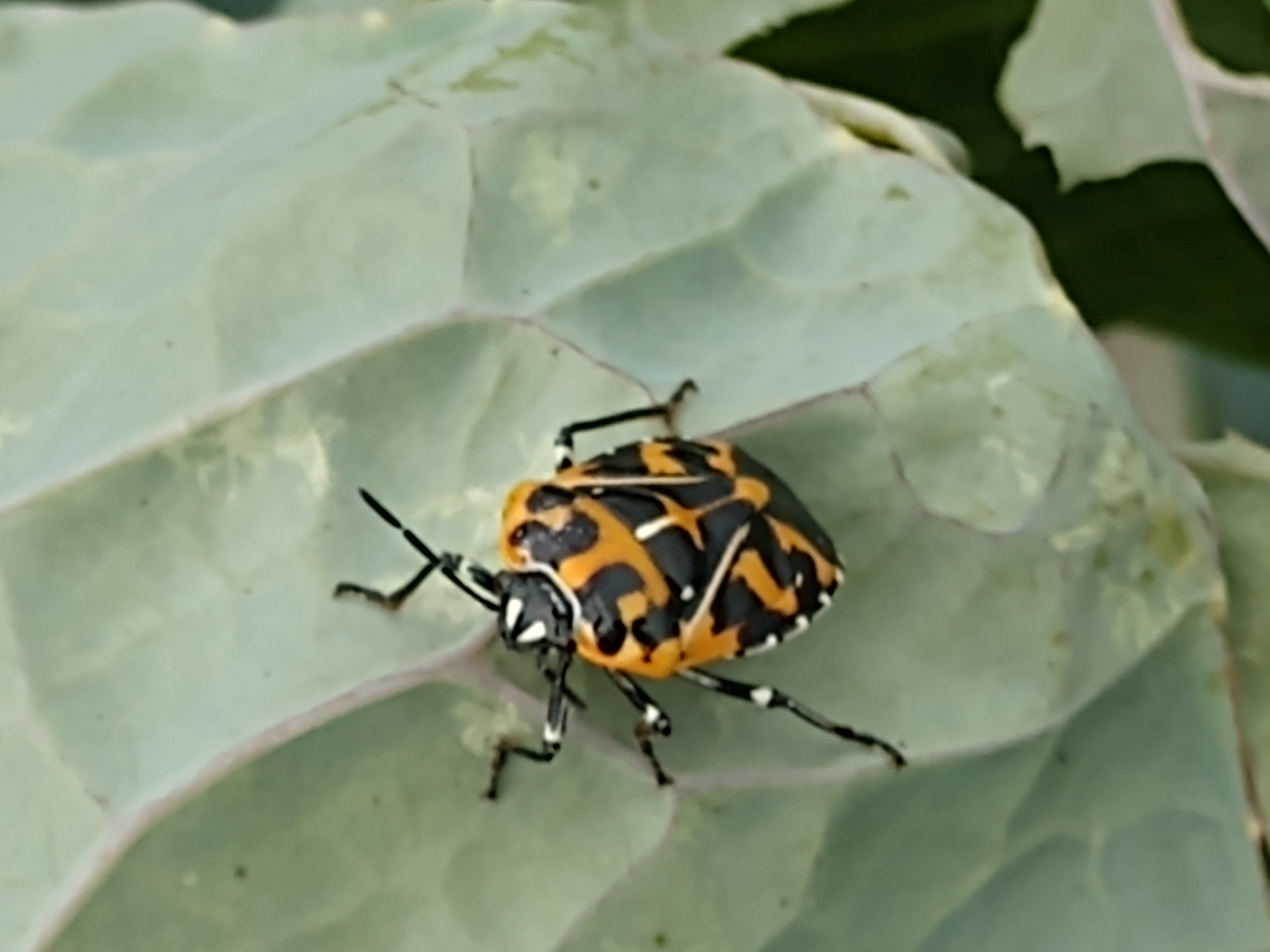
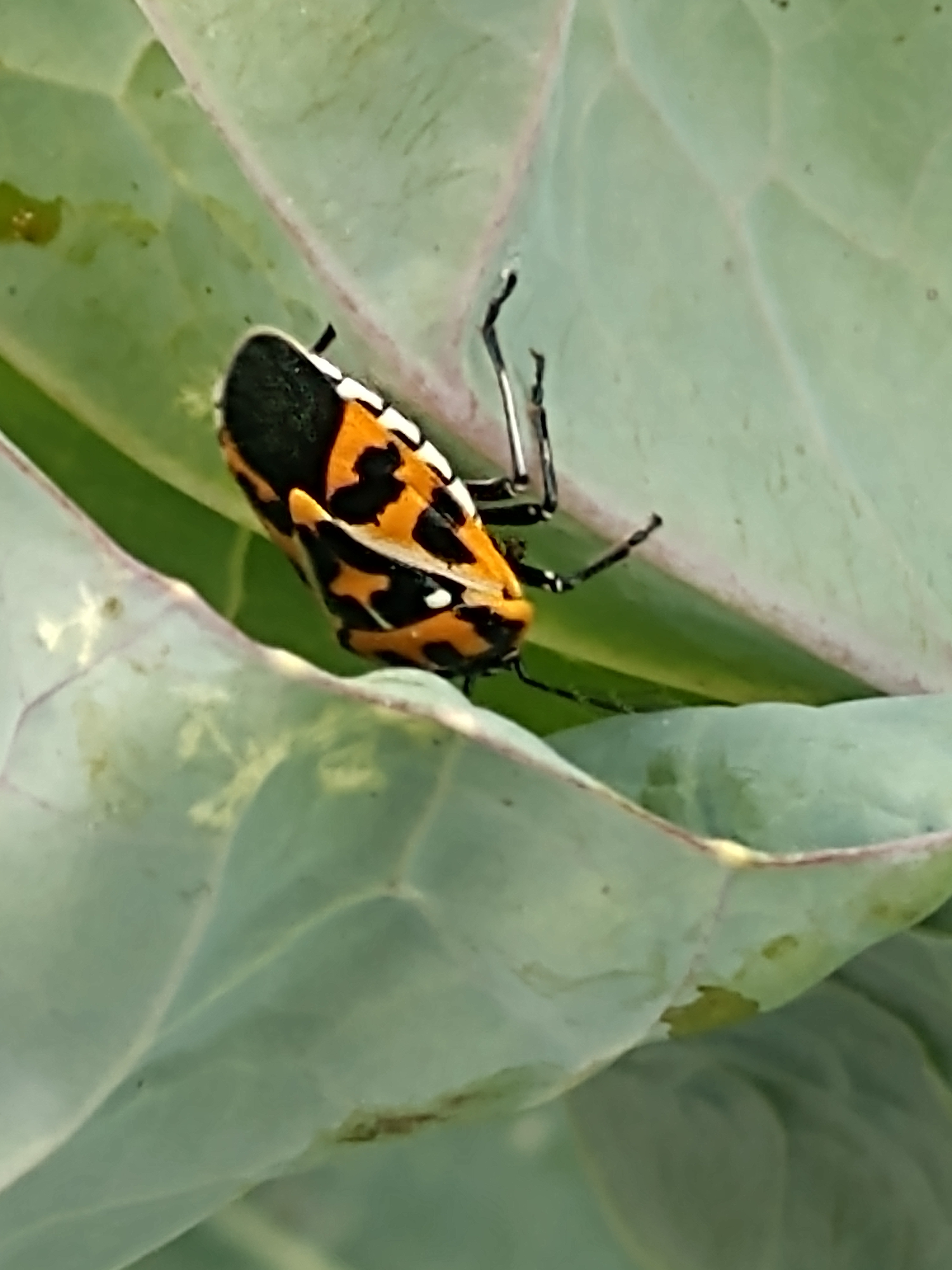
Thanks. I was sure they were juice suckers. I just had never seen them before. Now they are dead.
1 Like
Much of the foliage on the previous years black raspberry cane are small and turning yellow and brown. It started at the base and has been working its way up ( or at least seems to have ). It is starting on this years new cane also. Any ideas as to what is happening?
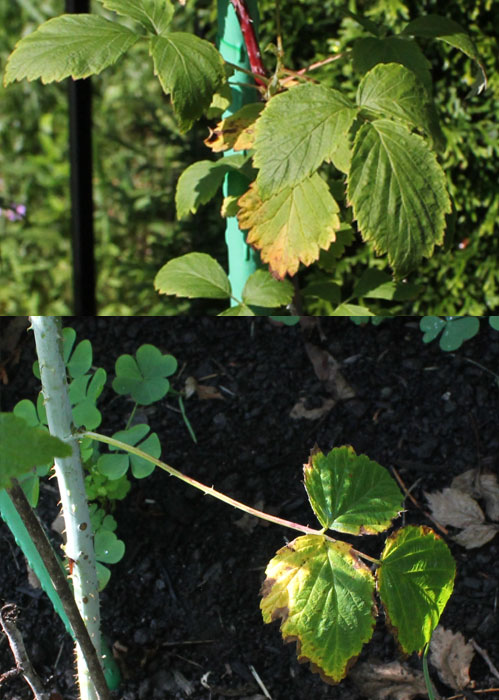
How old is the planting?
Are the canes as thick as normal even with small foliage?
Black raspberry primocane tops will nod over if under-watered.
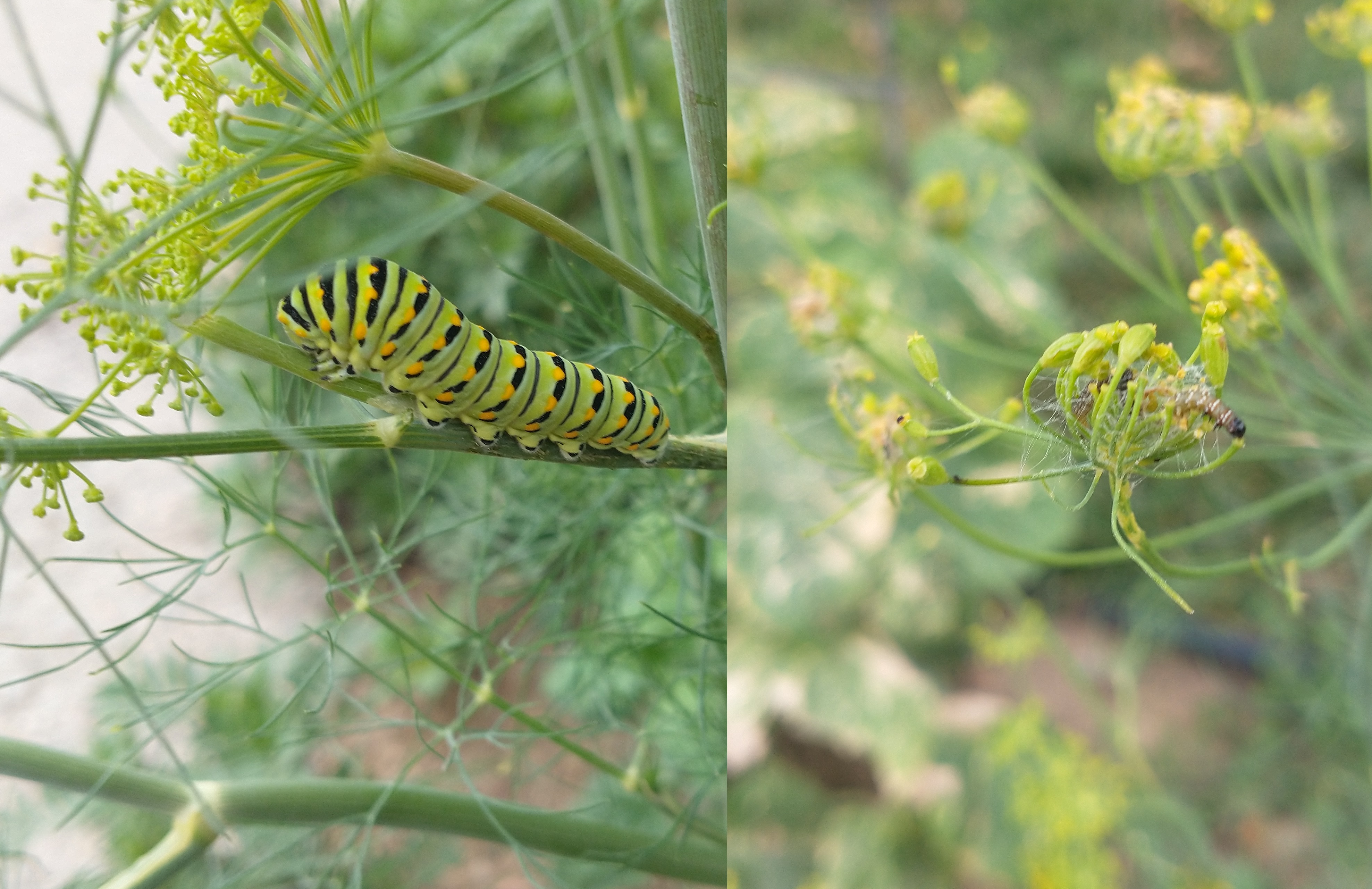
Hoping for some help here with some dill pests. On the left, the anise swallowtail caterpillar, I think. Which I actually watched that butterfly lay on the dill. I’m ok with them for now, though I’m hoping they don’t totally destroy the dill as I also want to make pickles.
However on the right, are some much smaller (right now) caterpillars, which I don’t think are the same. They appear to make a loose silky web in the actual flowerheads, unlike the anise worms. There’s a lot of them too, infesting almost every individual group of the flowerheads on some plants. Since I use the flowers for pickles I’m not inclined to tolerate these ones. But I’m wondering what their final form is, so I can recognize that enemy when I see it, but also maybe in the future if I have more dill than I need, and it’s a pretty final insect, maybe I tolerate them then.
2 Likes
The old cane is from last year.(should be the cane that is fruiting this year but it doesn’t look like it would grow fruit ) I planted the bare root last year and it is the first year growth of a “fruiting size” cane… it is only about 3/16" thick. The new green cane next to it is about 3/8 inch thick: much healthier looking. The green canes top was nodding over. I cut the top off of the old cane because it was getting too long and I wanted to try to promote side growth, so I do not know if the top on that was nodding over. In the bottom photo, you can compare the green cane thickness to the old cane visible in the lower left, and also a neon green tomato stake behind them.
In Omaha, it’s much more likely they would be Black Swallowtail caterpillars rather than Anise. They are native butterflies and good pollinators so I’m glad you don’t want to kill them. What you could do is put them on some wild plants that they eat, which are plants of the genus Apiaceae (some common ones being Queen Anne’s Lace and Water Hemlock). I like to do this with any native caterpillars I find on my fruit trees or garden plants, including hornworms.
The smaller caterpillars appear to be those of the Purple Carrot-seed Moth (Depressaria depressana). They are a fairly new invasive species in the U.S (first documented in 2009), native in Eurasia. Not much is known yet as to how impactful they will be in the U.S. but they will ruin your seed heads and could potentially be a problematic invasive so I would go ahead and kill any that you find. Here’s an article with pictures of the moth and caterpillars: The Purple Carrot-Seed Moth Lands In Wisconsin | WisContext
1 Like
I had about dozen swallowtail caterpillars on a wine barrel of dill one year. Sadly, the destroyed the dill. And to boot, I didn’t protect the pupa, and they disappeared more quickly than if they developed. So, I guess some bird got a tasty snack in the circle of life.
YumYum: A 3/8" cane is a good size for the first year of primocane growth. My experience with black raspberry is that as the season progresses, leaves yellow and wither starting at the base and by the end of the growing season the primocane may be bare for the first 3 or 4 feet.
1 Like