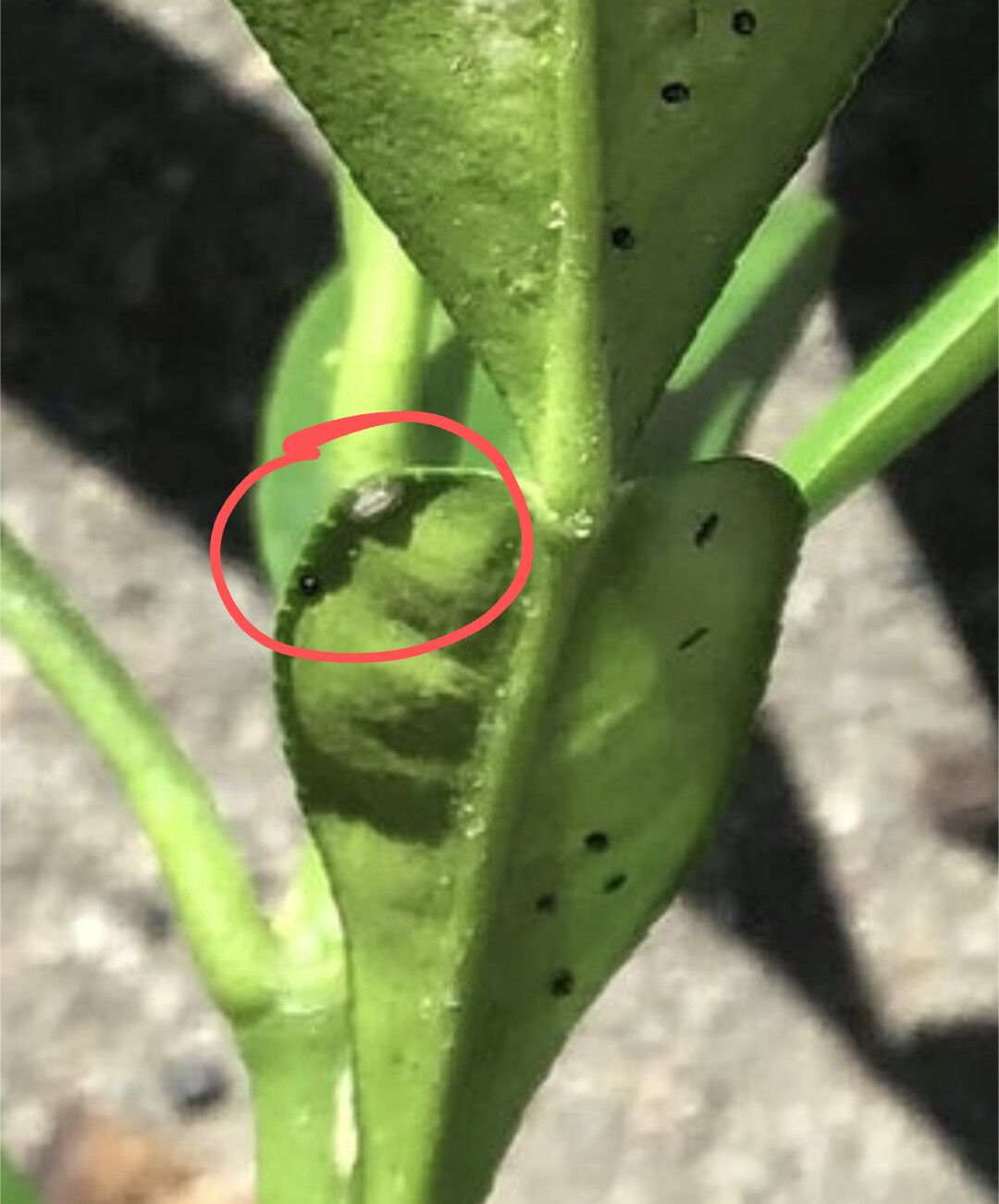
They could be Scale.Maybe take a few off and try to crush them.
2 Likes
They definitely look like some kind of insect, either scale or something similar. I also see a pale one that looks more like the soft scale I see in my greenhouse occasionally:
2 Likes
Thanks @swincher @Bradybb they did get washed off. I did the washing away from the yard too but now I’m wondering about the soil. Any type of soil drench you guys recommend? Sulpher or neem?
I did try that at first to crush them but they were dry and light that’s why I thought some type of excrement until I blew up the photo jic. I’m wondering if they were treated with something now.
Okay,maybe check with your plant giving friend,to see if an insecticide was used beforehand.
1 Like
Thanks, Tippy!
1 Like
Frass is generally deposited near chew holes or notches, or it falls directly below feeding sites.
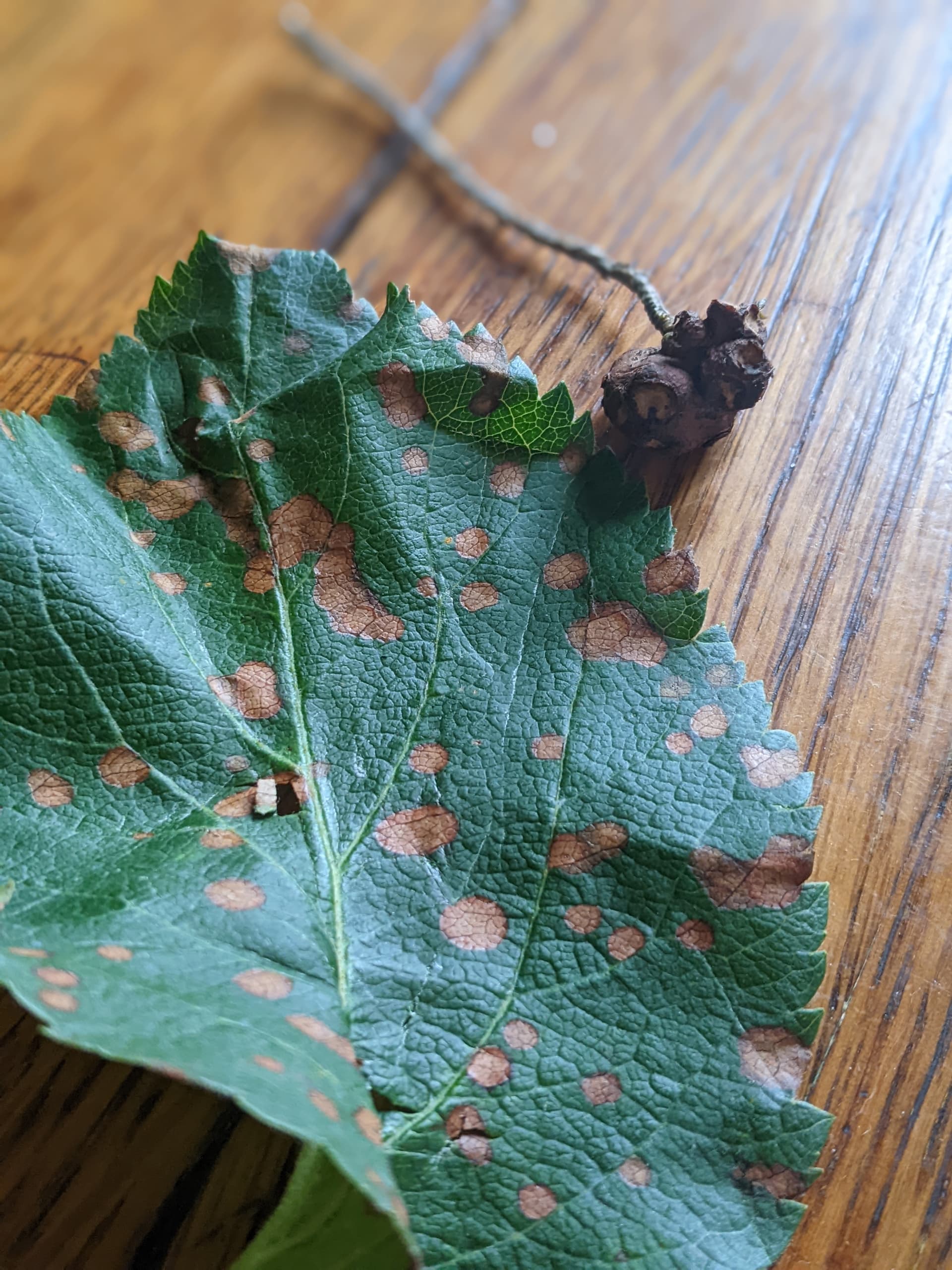
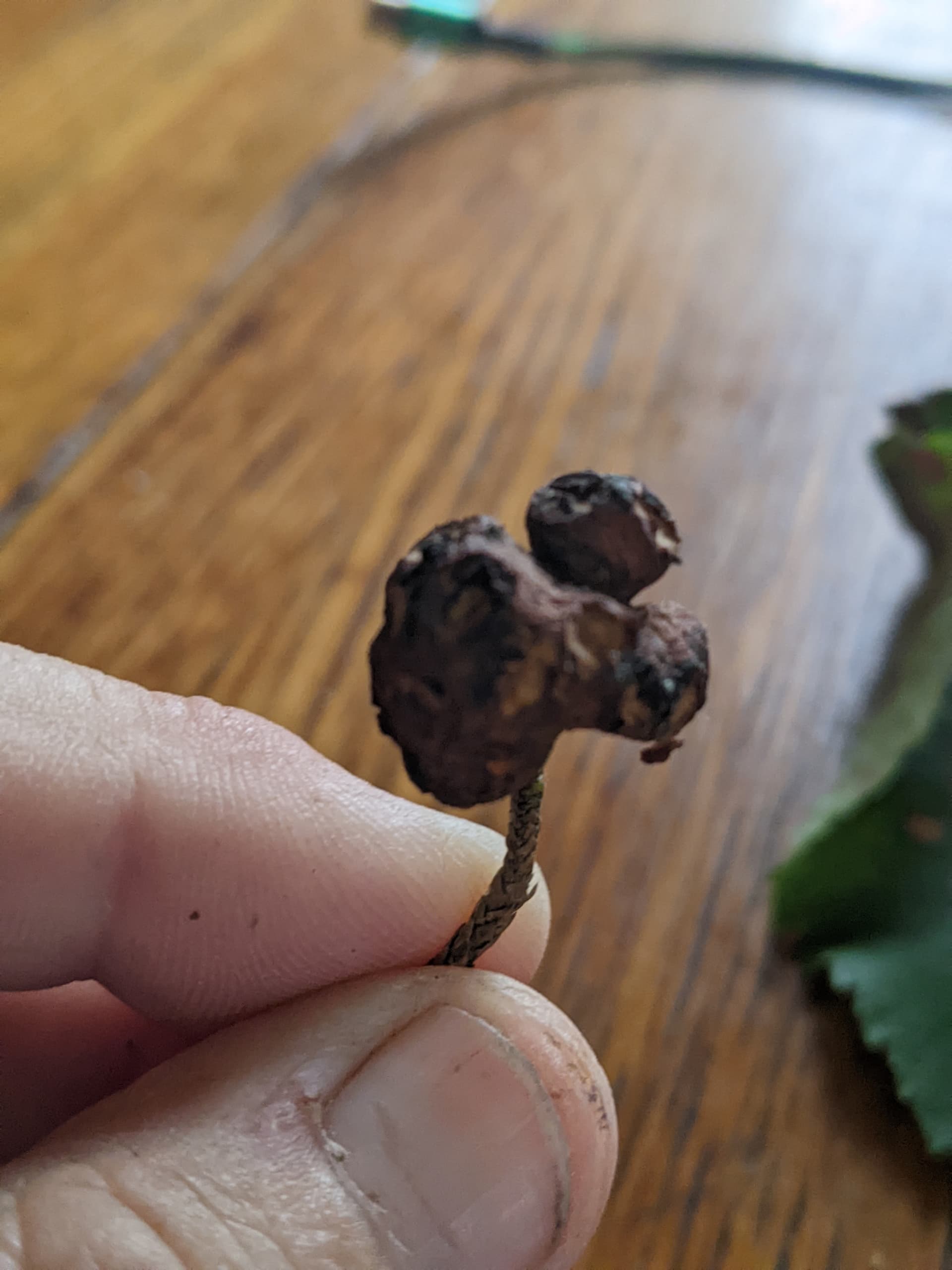
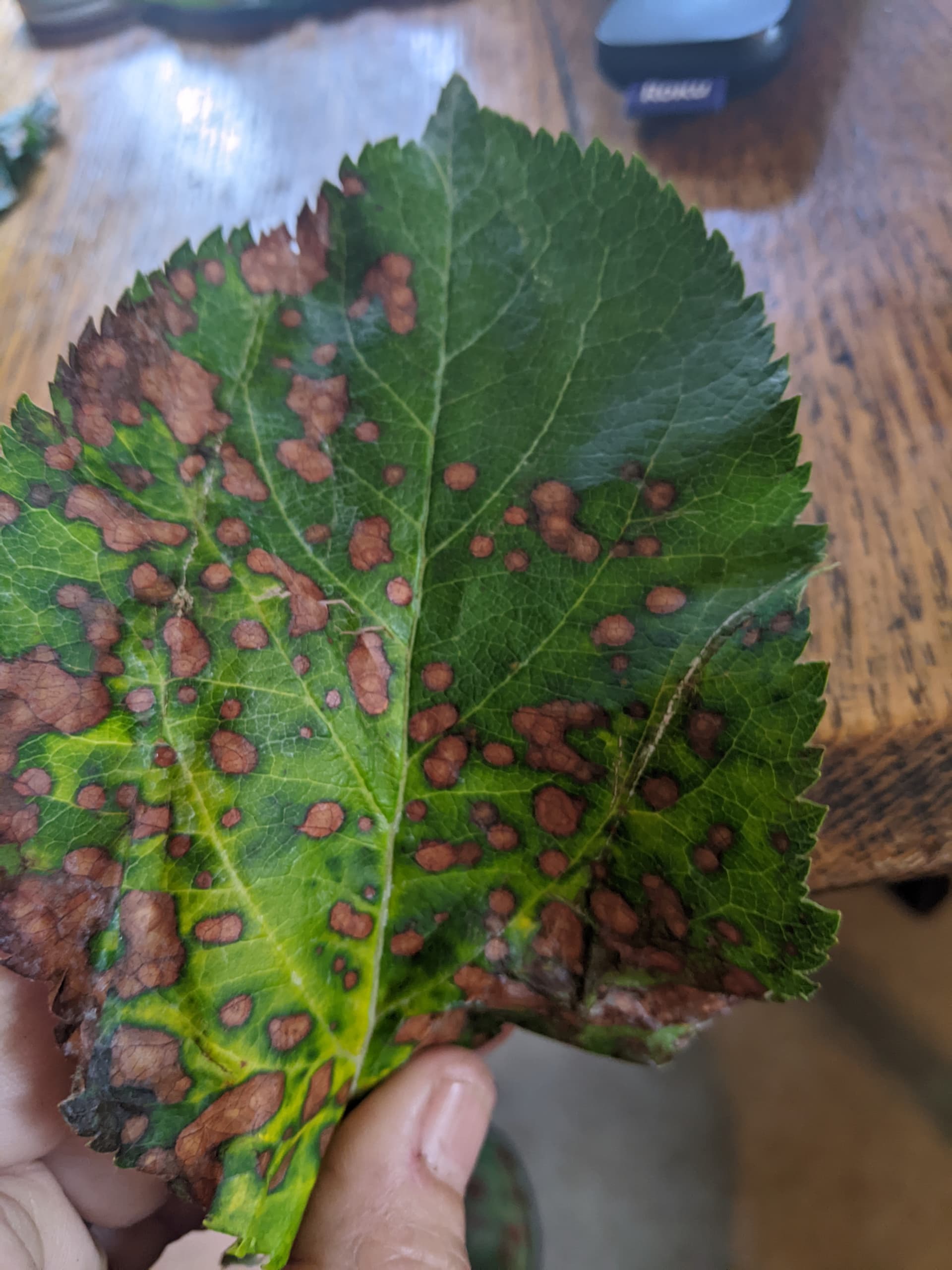
CAR on Dula Beauty, one of the trees harder hit this year. I found this dried gall on a cedar tree at the perimeter of my yard. Guessing this is the dried fungus but would appreciate your thoughts.
1 Like
I recall the rust I see have more of a rusty (orangey) color, but the age of the disease may have something to do with it.
I agree it does look like a dried up cedar gall that’s withered and broke apart a bit.
1 Like
The galls can have different size shape with age .
That does look like one.
The leaf spots , however ,I believe are frog eyed leaf spot.
Not Cedar Apple rust.
2 Likes
Useful pictures for identification.
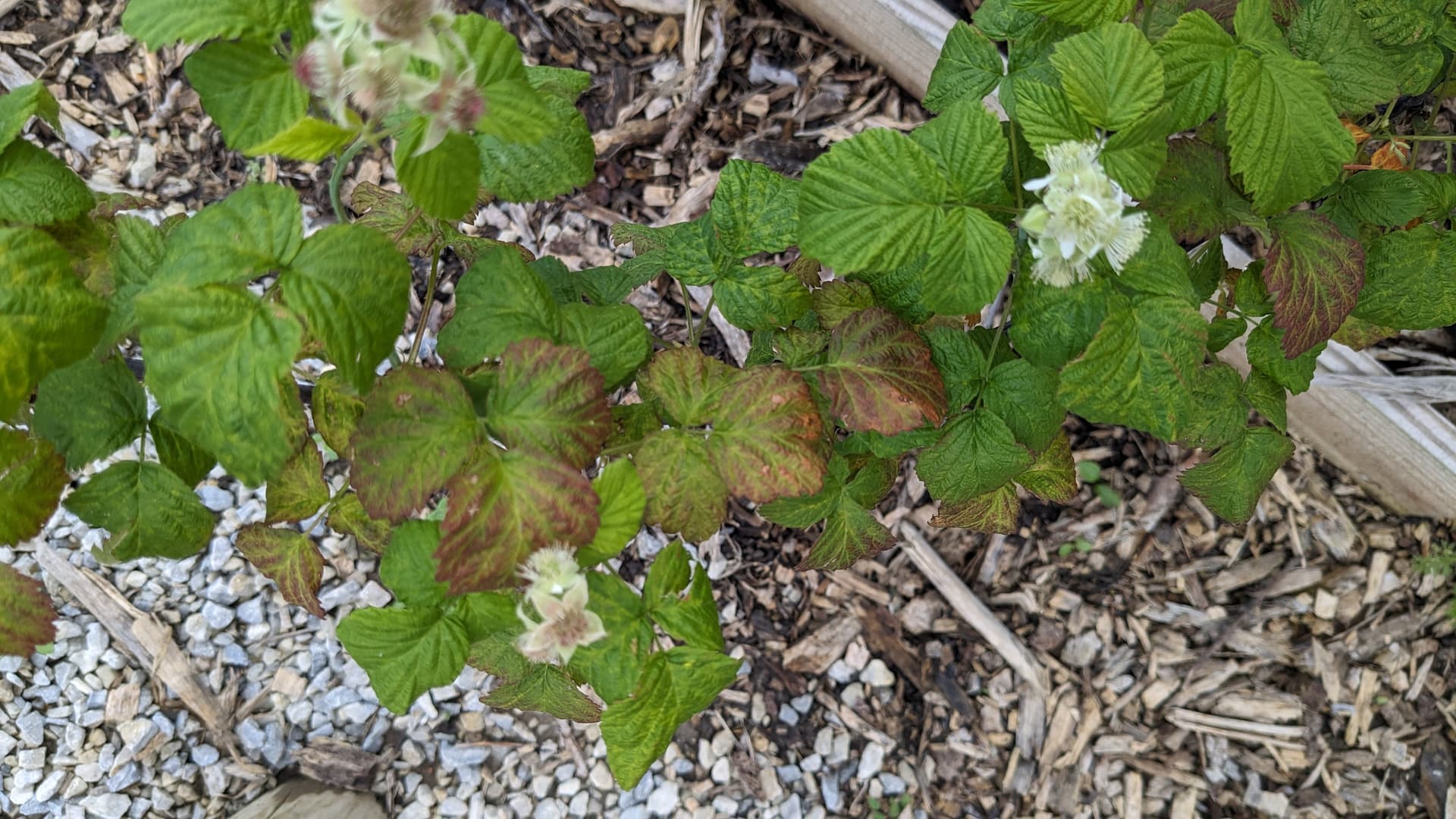
Any idea? Black raspberry plant. This is last years growth that’ll bear fruit this year. This years growth looks normal.
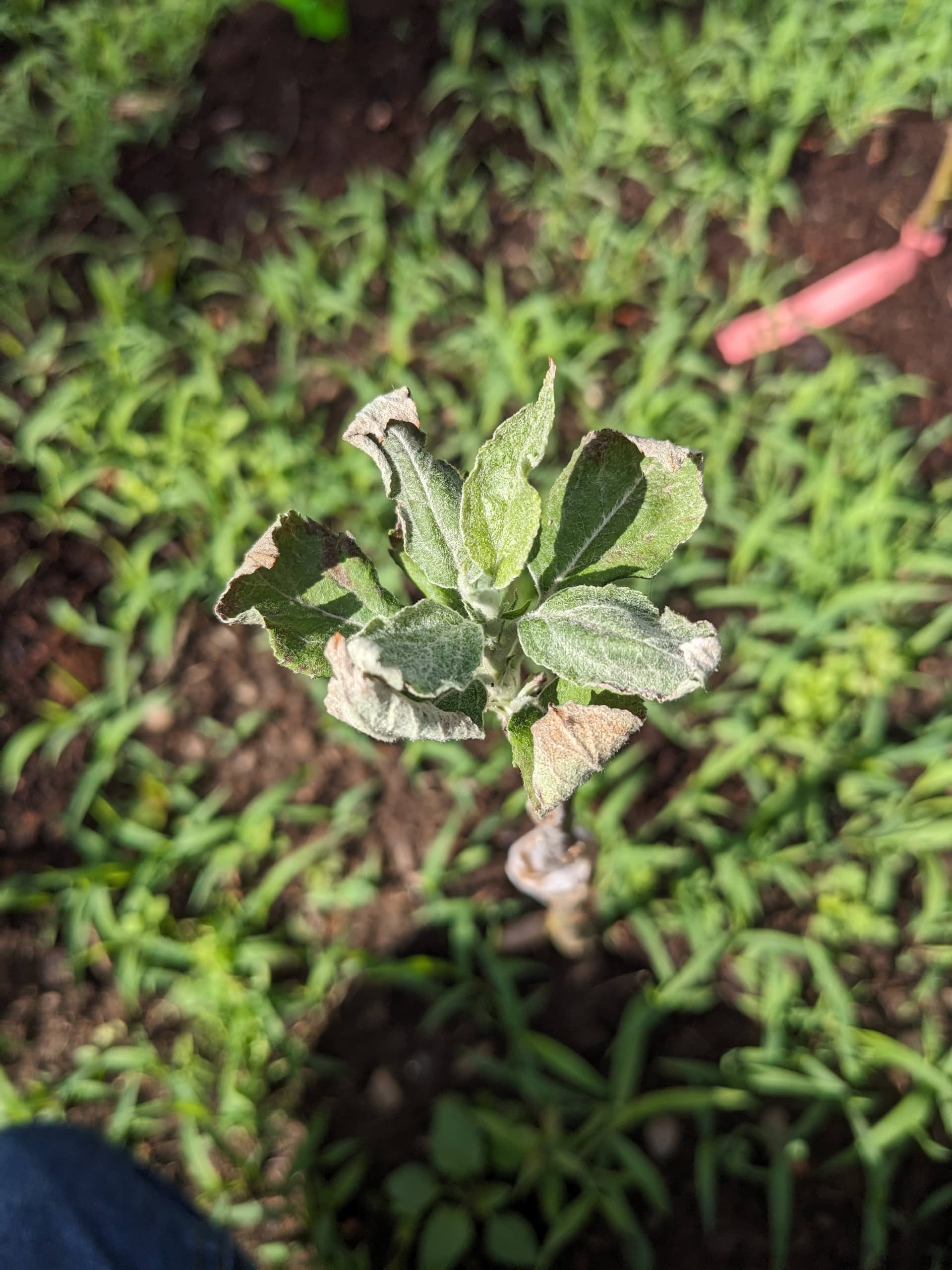
Request for identification #1: This looks like powdery mildew to me, but it has not been dry (Upstate NY). This is new growth on an apple graft:
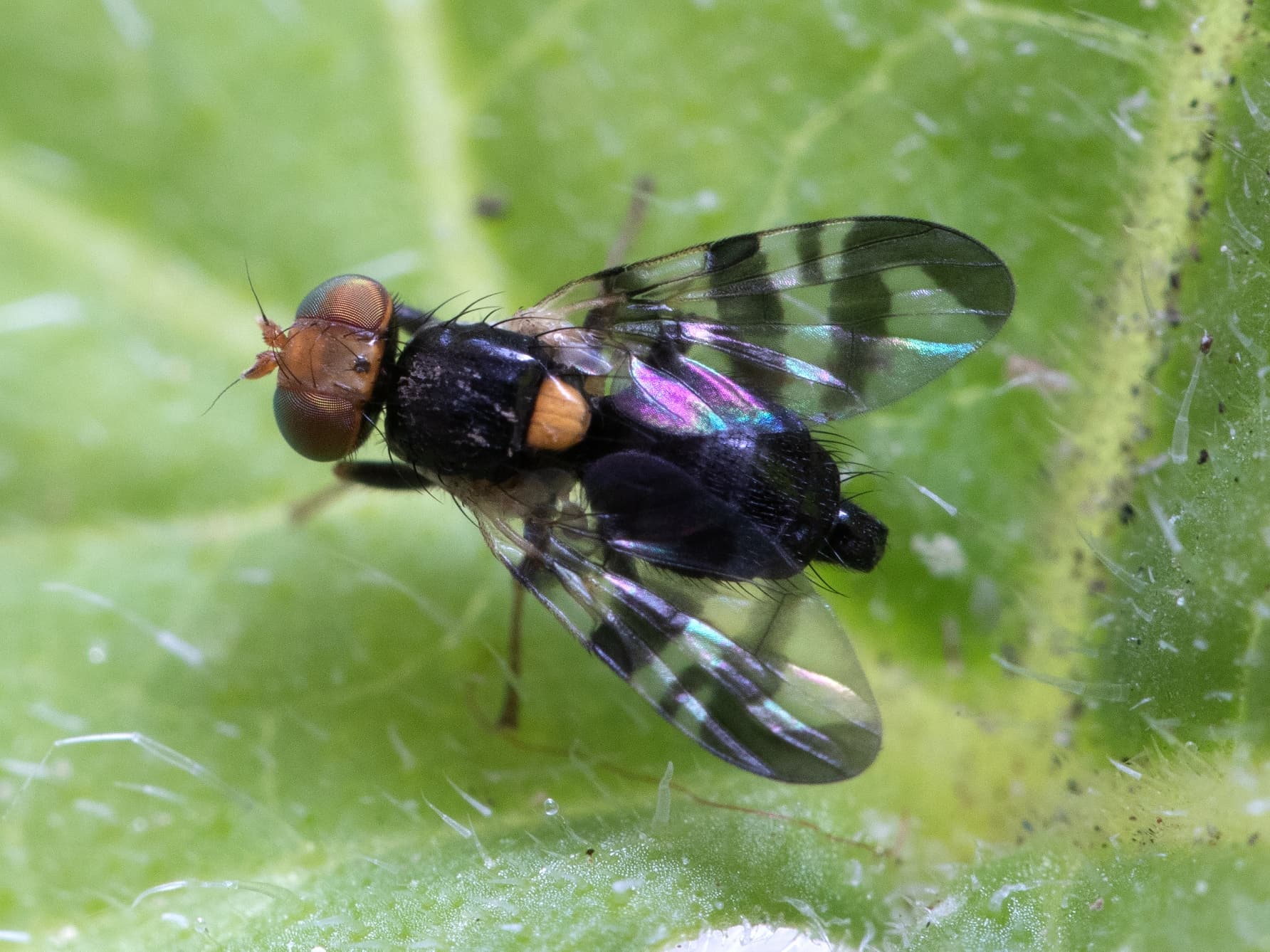
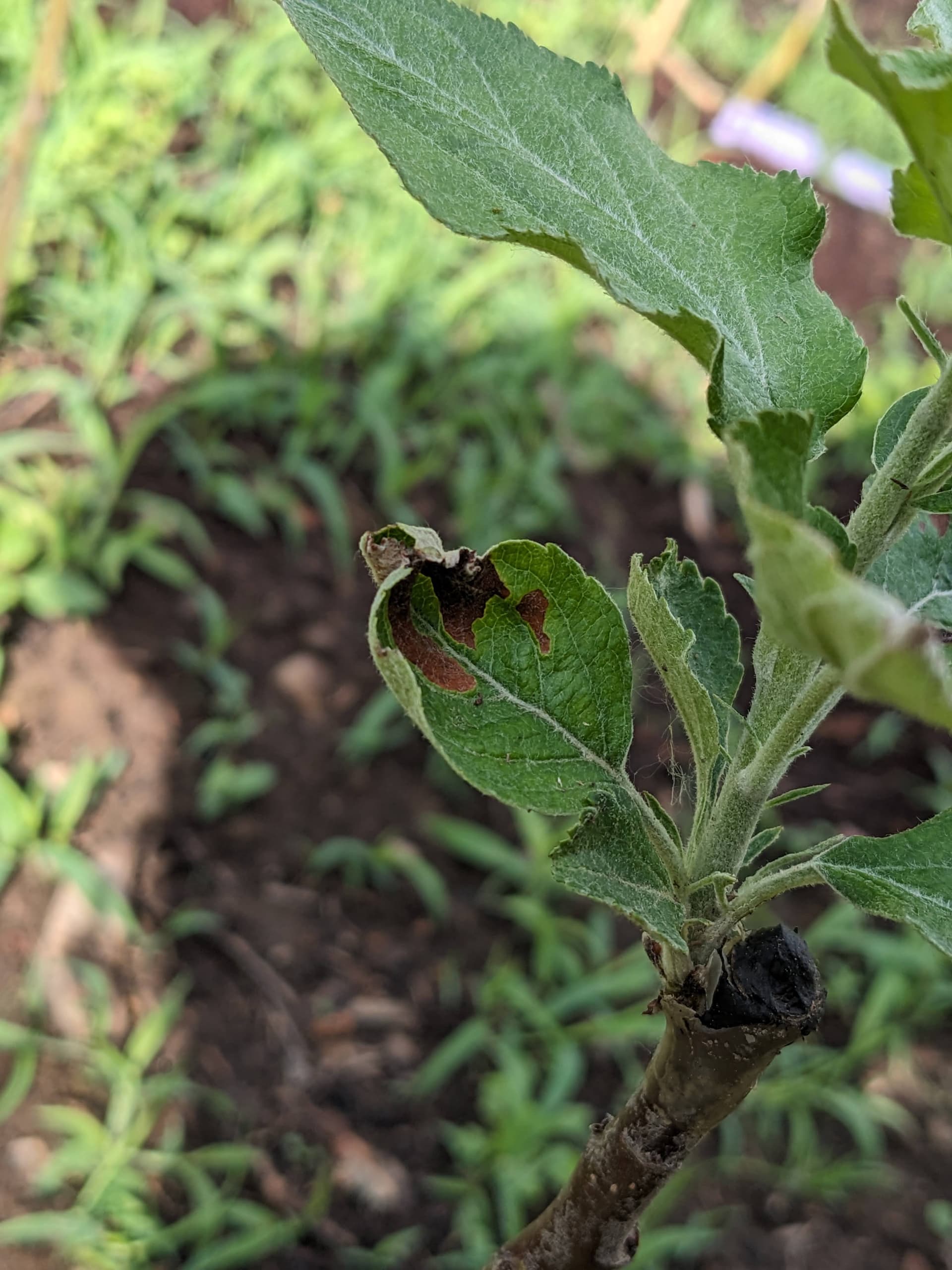
Identification #2: Also on apples - tips of the leaves are brown & curled with a small maggot inside the tip. Only ever one per leaf.
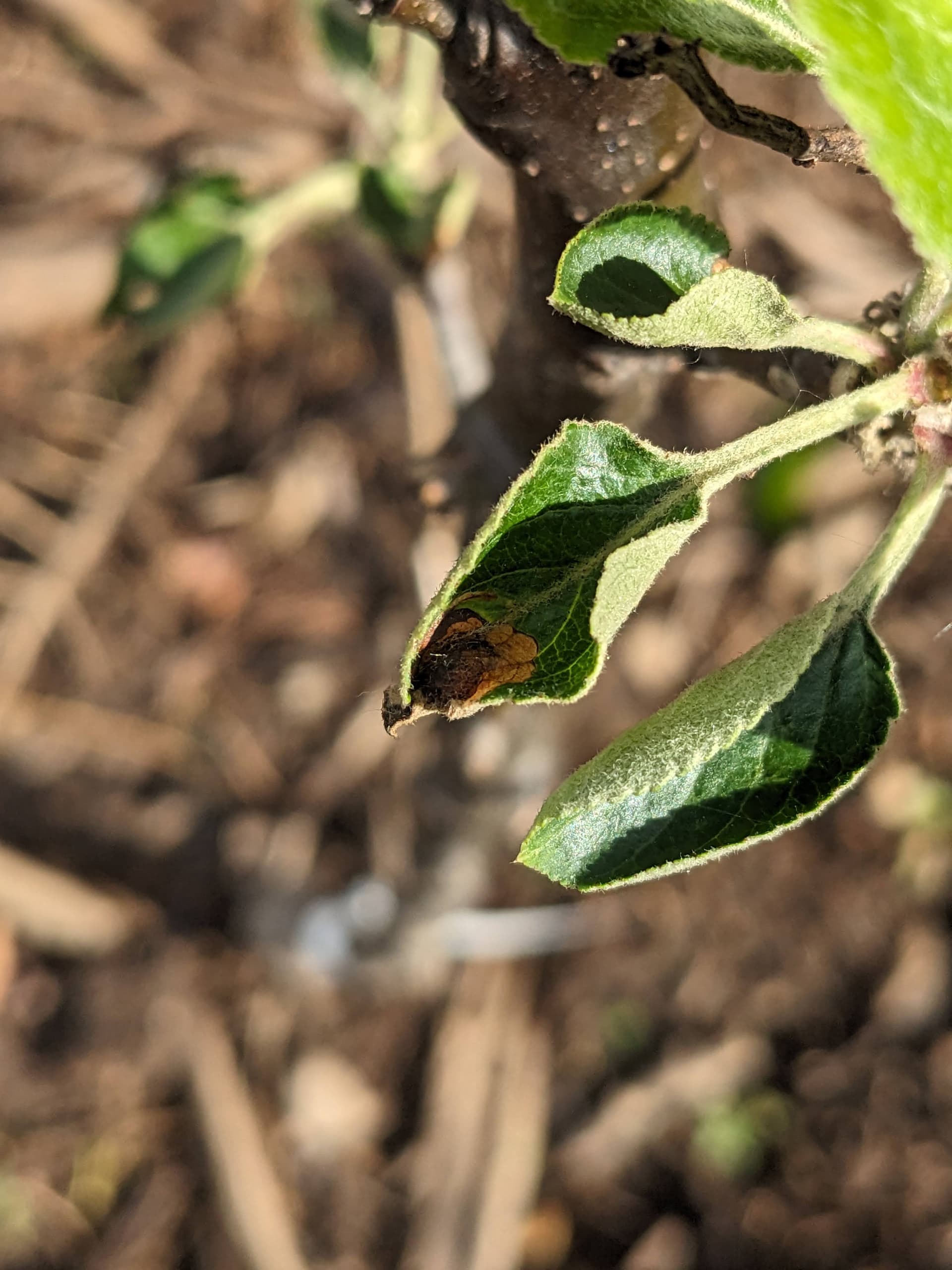
Powdery mildew likes it wet and warm (steamy), then the damaged leaves dry out. Does this fit?
Some apple varieties have very hairy leaves (that looks like a graft leafing out) and some are smooth. You can remove the mildew with a finger to check.
2 Likes
For your second question those are leaf roller caterpillars, never a big issue. Listen to the experts rather than me but I think there is nothing wrong with your apple
2 Likes
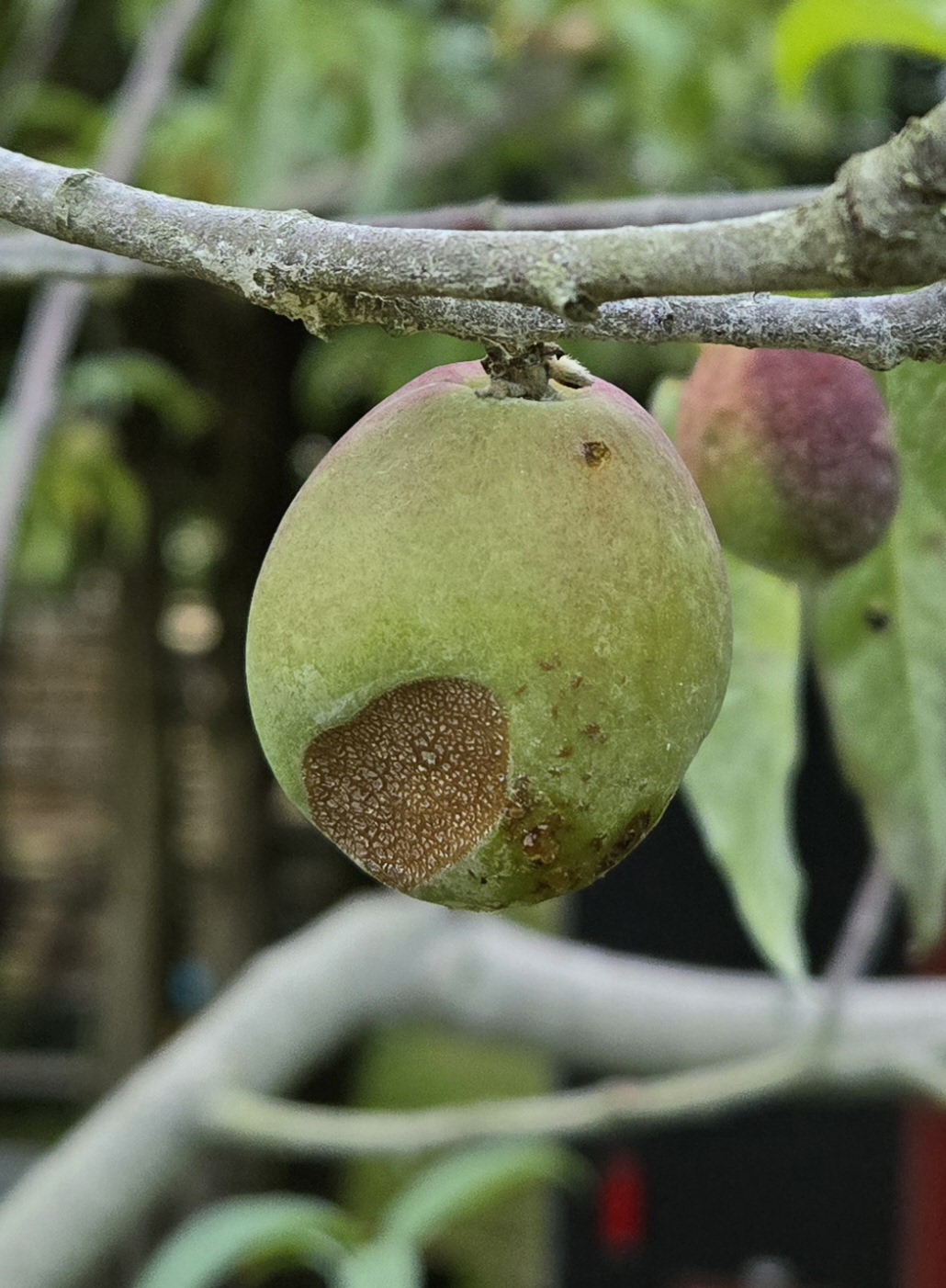
Does anyone recognize the early stages of this disease? Its on an arctic glo nectarine in z7 mid Atlantic region.
Brown rot / monilia?
Brown rot was my guess too but I haven’t been able to find a picture of the early stages that match so I figured I’d throw it to the collective.