This article will help others understand that Macludrania hybrida Archives - Eat The Weeds and other things, too
“Macludrania hybrida
byGreen Deane
in Edible Raw, Fruits/Berries, Jam/Jelly, Plant Uses, plants, Trees/Shrubs
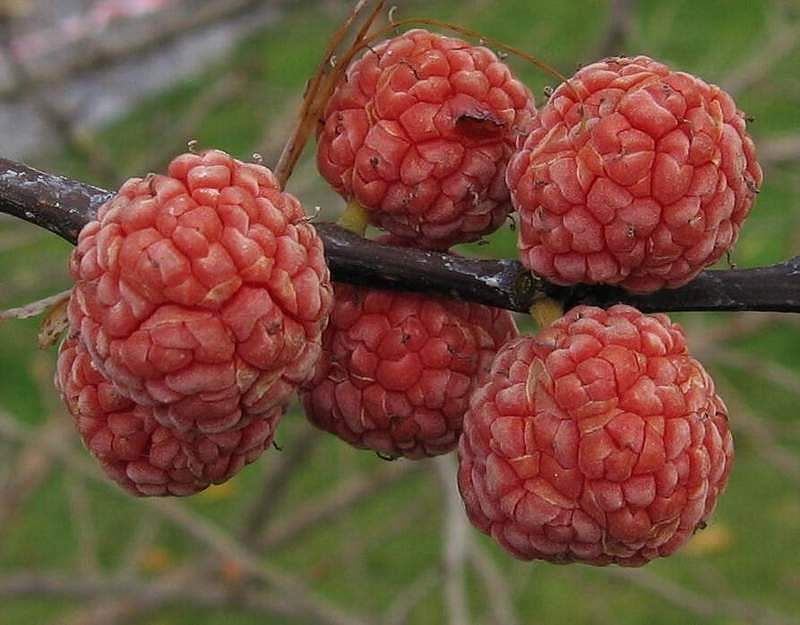
Che berries are related to mulberries. Photo by Michale Kesl
Che is not the tree it used to be.
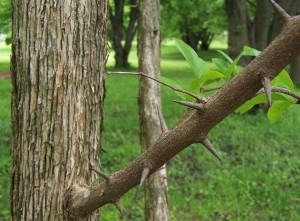
Che’s thorns are inconsistent
At one time there were just he and she Che trees. Then a few decades ago along came a self-fertile seedless Che then Ches grafted onto a close relative the Osage Orange. The he’s and she’s have also escaped from cultivation in North Carolina and coastal Georgia. I don’t think the seedless escape. Ches are planted from about New York south and west. Your best chance of seeing one is in landscaping in the southern half of the United States and up the west coast. Whether to include Che as a wild edible was a bit of a debate. It’s wild in Asia and has been around North America for more than a century thus it was included. One reason why you might not have seen a Che is birds. They aren’t too interested in the berries so they don’t spread the tree around.
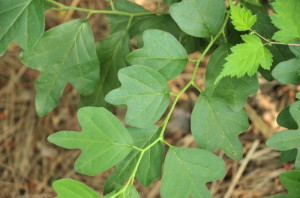
Leaf shape can vary from 3 lobes to none
The Che is native from the Shantung and Kiangson Provinces of China to the Nepalese sub-Himalayas. It was naturalized in Japan many years ago which is where I first saw one back in the early 70’s. Che (Cudrania tricuspidata) was introduced to France in 1862, England in 1872 and to the United States about 1909. There was one growing at the P. J. Berckman’s Nursery in Augusta Georgia by 1912 and fruiting, which is another issue. Both male and female trees can fruit, she more than he while the grafted seedless fruits the most.
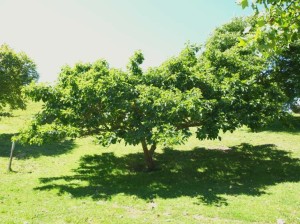
Che benefits from pruning
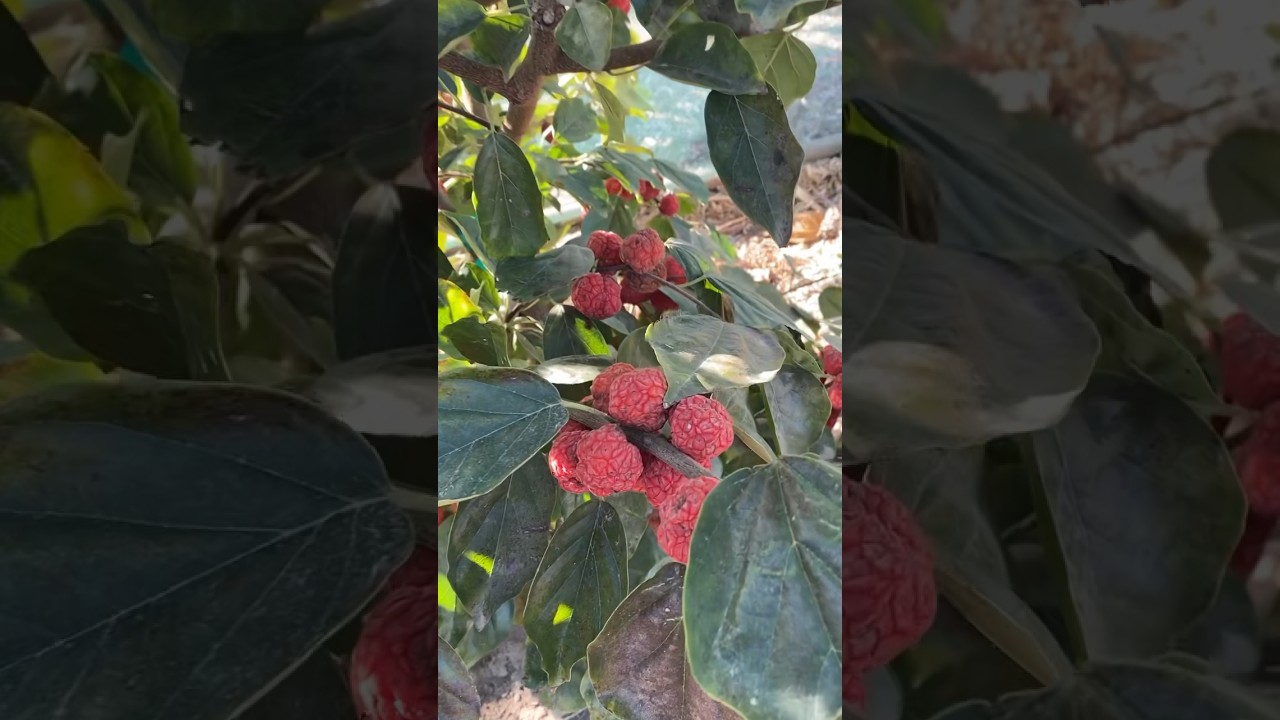
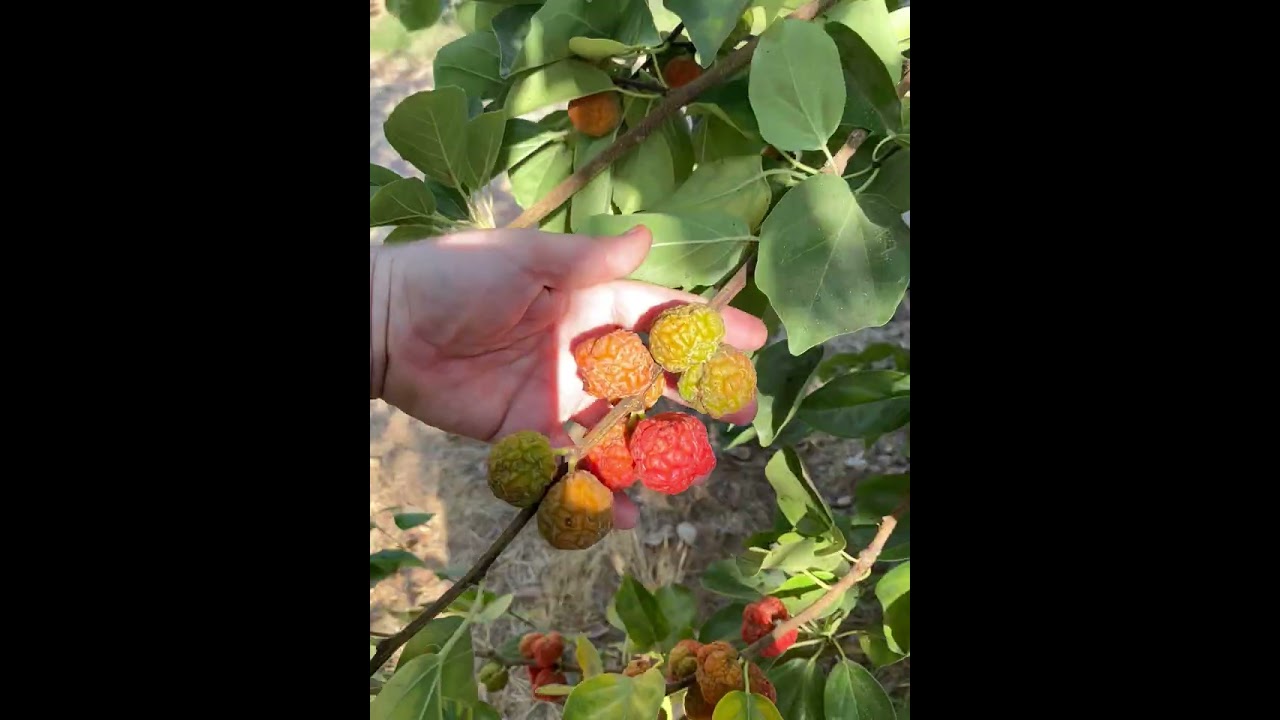
The seedless Che is a small tree. The natural species is shrubby and can produce many suckers. By grafting the Che onto an Osage orange a superior single-trunk fruit tree is created. It bears a large crop of red, juicy fruit clusters reminiscent of round mulberries about an inch through, ping-pong ball-ish in size. The flavor is a cross between a mulberry and a fig, which it not remarkable as it is related to both. It is also distantly related to Breadfruit (Artocarpus altilis), Jackfruit (Artocarpus heterophyllus), Fig (Ficus spp.), Mulberry (Morus spp.), African Breadfruit (Treculis africana), Paper Mulberry (Broussonetia papyrifera) and the aforementioned Osage Orange (Maclura pomifera.)
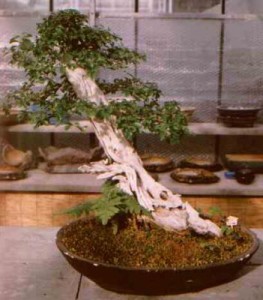
Bonsai Che
While the Che has been promoted outside of China as the up-and-coming fruit tree for decades in China its reputation varies from valuable to intolerable. This might be because of erratic thorns. The tree is backup food for the silkworm and the leaves have to be picked by hand which means braving thorns. Worse, the tree is not consistently thorny so there’s no pattern to help you avoid them. Silk made from the leaves, however, is reported to make high quality lute strings of pure tone. The Che is also a favored tree of for bonsai. (On a personal note a life time ago I visited Bonsai Machi in Japan, the heart of the bonsai culture. There were amazing specimens there. There was also a small city laid out with miniature buildings and bonsai tress for landscaping. The effect was to be a giant walking down the street. And when I see specials about bonsai they show specimens I saw some 40 years ago, still alive and craggy.)
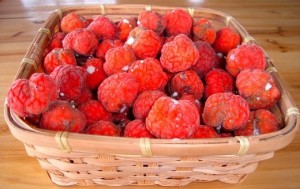
Che berris store well
Besides “Che” the tree is called Cudrania, Chinese Mulberry, Cudrang, Mandarin Melon Berry, Silkworm Thorn, and Storehousebush (why it is called that no one knows.) As for the botanical name Cudrania tricuspidata no one knows where Cudrania came from either or what it supposed to mean. It was named by one Dr. Hance in 1877 and he left no clue as to why his chose that name for the genus. I suspect it has something to do with the common name of Cudrang. Tricuspidata means three pointed as in the leaves though even Dr. Hance said the leaves vary so much calling it Tricuspidata was inaccurate. “Che” (said like the Cuban revolutionary) means “stony ground,” a reference to the tree’s natural habitat of poor, dry soil. But it likes warm, rich soil as well.
Incidentally an intergeneric hybrid exist between the Che (Cudrania tricuspidata) and the Osage Orange (Maclura pomifera) called Macludrania hybrida. Mostly from France they were planted in the US National Arboretum in 1960 and have large orange-like fruit and no thorns. Other than that planting the hybrid seems to have been largely ignored by everyone.
Green Deane’s Itemized Plant Profile: Che
IDENTIFICATION: Cudrania tricuspidata. Deciduous trees to 25 ft. height, often a broad, spreading bush or small tree. rarely to 60 feet. Immature wood thorny, female trees larger than males. Leaves alternate, resemble mulberry but smaller, thinner, pale yellowish-green, trilobate, with central lobe sometimes twice as long as the lateral lobes, frequently unlobed. Flowers dioecious, male and female flowers on different plants, green, pea-sized. Fruit is aggregate, looks like a round mulberry crossed with a lychee, knotty, ripens to red or maroon-red, juicy, rich red flesh, 3 to 6 small brown edible seeds per fruit. Flavor varies from fig/mulberry cross to watermelon.
TIME OF YEAR: Flowers in late spring or early summer, fruit in early fall in cooler areas, later in warm areas. In warmer areas it is an evergreen. In cooler areas the leaves turn red in the fall and persist.
ENVIRONMENT: Likes a sunny, warm location with rich, well-drained soil but can grow in rocky dirt. Planted in zones 5-9, can tolerate -20F. Treat them like a mulberry tree. Fruit stains like mulberries.
METHOD OF PREPARATION: Trees mature early and can produce up to 400 pounds of chewy fruit. Let the fruit stay on the tree until they are soft and dead ripe. Ripening is continuous for about a month. Fruit is eaten out of hand or used like mulberries or figs. Good shelf life.
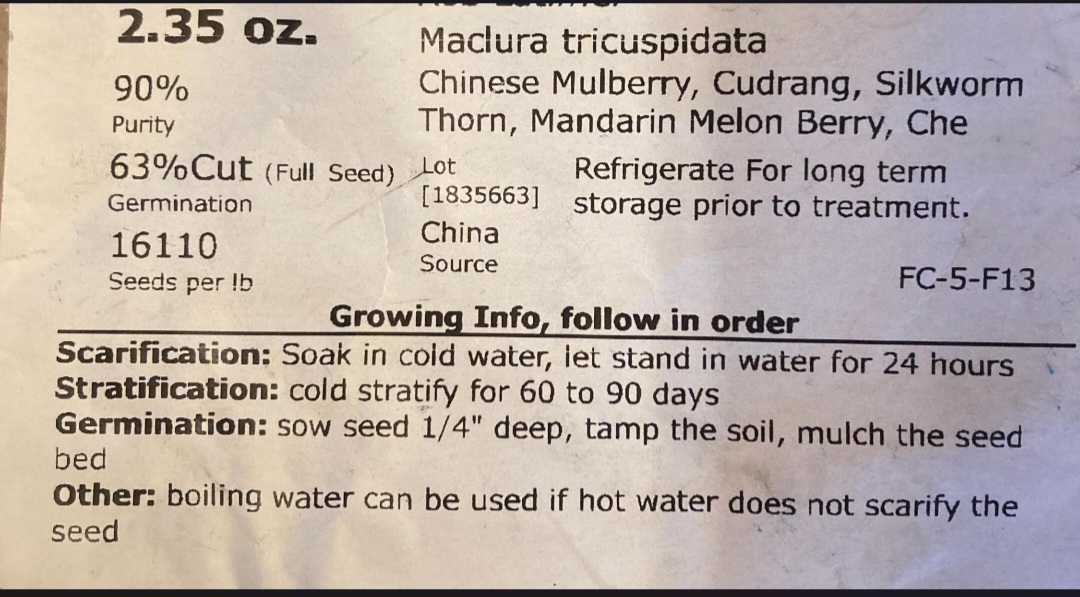
Grafts are better than raising trees from seeds. Seed planted immediately from ripe fruit germinate at a high rate. Stored seeds must have a period of cool, moist stratification. Plants from seeds can take up to 10 years to fruit. Cloned plants bear very young.”
This could never happen without fertility of plants Breeding an edible Osage Orange . Hybrids have some value.
 | | | | | | | | | | | | | |
 | | | | | | | | | | | | | |