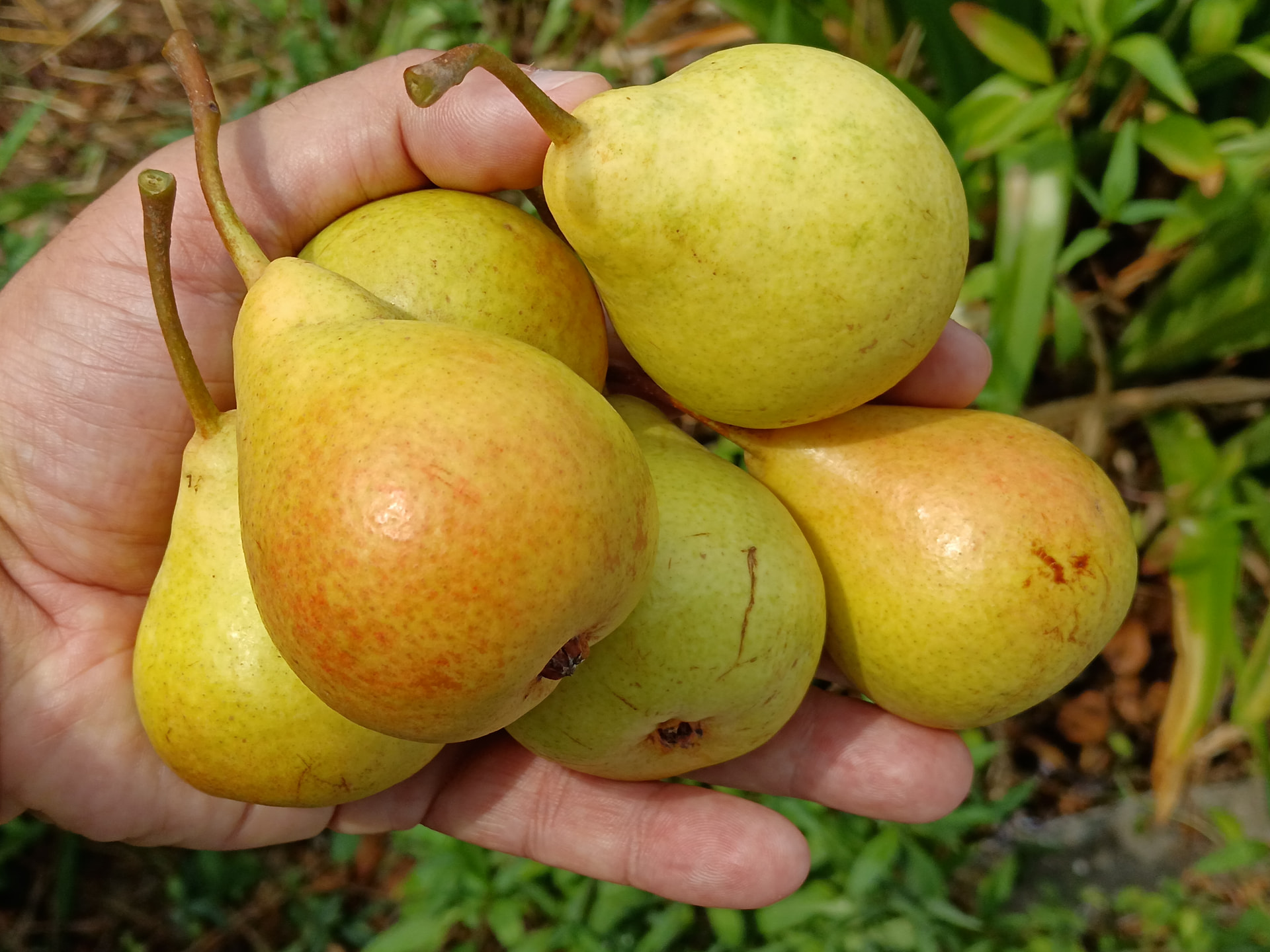
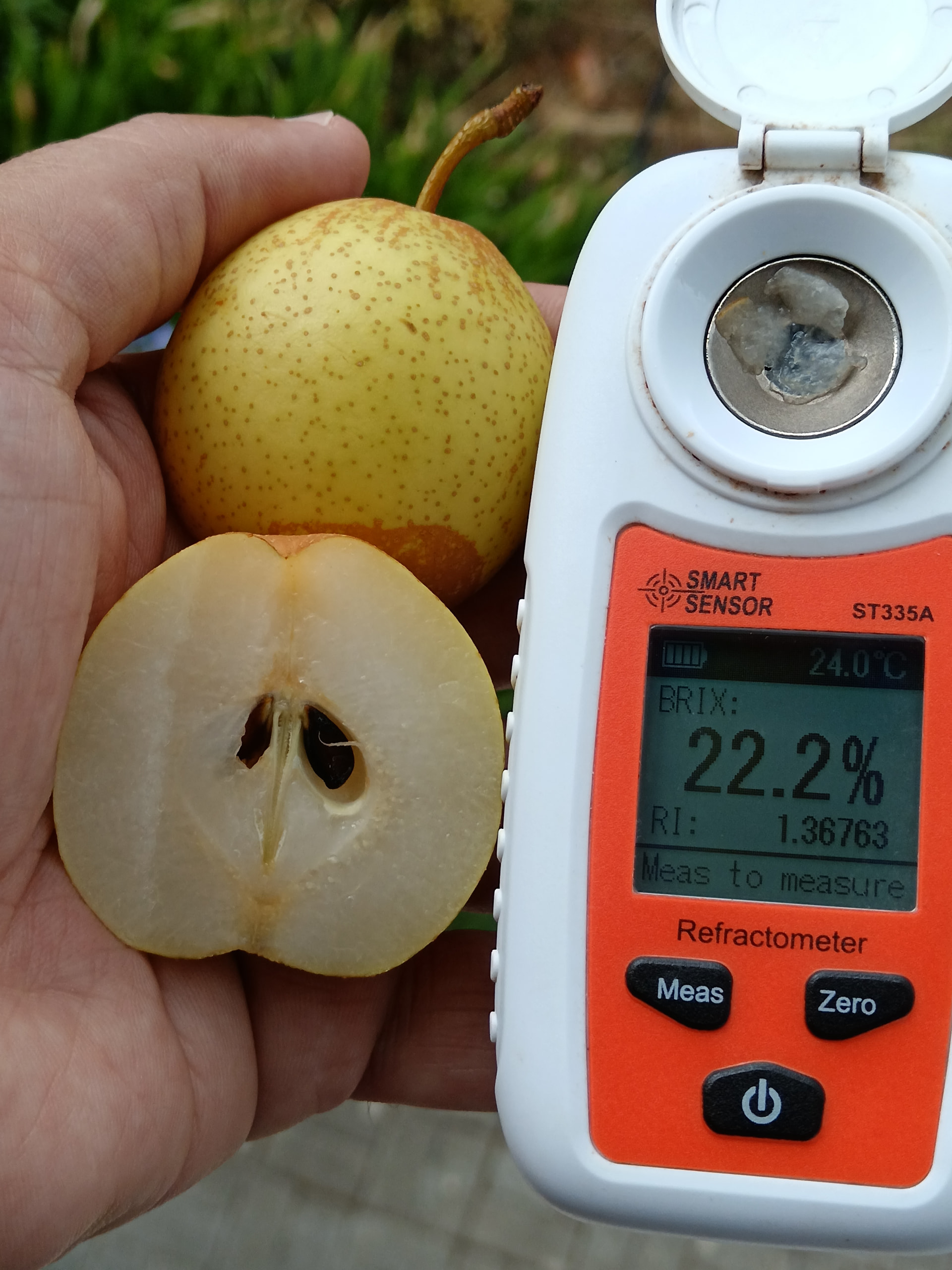
Yes, Robert, Seckel is touted as being blight-resistant, but my clone has been hard hit with every fire blight epidemic year we have had since it was planted. It always survives and doesn’t seem to get the late shoot blight that others often get.
I have new strikes on my 24-year-old Comice and Shinseiki trees now. Also, the top 18 inches of one of my Gold Rush apple trees has blighted in the past few days. This is a bad year here!
Along another line - have any of you used Agriphage for fire blight? With my medical training, I think it should be very helpful. I have been injecting it into some of the trees getting late shoot blight using the Chemjet syringe. What I don’t know is how strong a solution I should be injecting. It should be tolerated well, as it has no toxic chemicals or additives. It is also organically approved for spray application. I’m open to any suggestions.
Six years of fighting and still going, that’s proper commitment. Orient might not win any beauty contests but they’re tough as anything. Mine always look a bit rough on the outside too but the flavour is there when you let them ripen off the tree for a week or so.
I originally fenced with woven wire and 4 t-posts. Some of the enclosure fences were trampled but trees were fine. I then added remesh as a “second” fence. It’s been mostly good. If cows defeat that, I may have to tip my hat and tell the cows they’ve won. I’m not going to build a stone fortress around each tree.
If things continue the way they are currently, the cows will be my last worry. Squirrels, and raccoons to a lesser extent I suspect, have completely decimated pears before cows could even think about eating them. If you have a 5’ fence, baffles probably aren’t practical unless the first branch is 9 feet up. If you only have baffles, deer and cows destroy the tree.
Agriphage - fire blight does look really helpful. I don’t understand why you’re injecting it though. The directions say to spray it on at “1 to 2 quarts of AGRIPHAGE-FIRE BLIGHT per 50-100 gallons of water per acre.”
The details in the materials say the phage doesn’t move well through plant tissue. It’s for killing the bacteria on the surface of the plant.
Picked all the Dripping Honey this morning and they will go into the fridge. The total DH for 2026 was about 70 fruit. Some of these were smaller and some had stinkbug damage. Between us and the grands these won’t last very long. Next up in a few weeks will be the Korean Giant.
The one thing I would like to do is reduce the amount of stinkbug damage in 2027. I’m willing to apply a couple of sprays if this will take care of the stinkbugs. If you have any solutions please pass them my way. Thanks
Drippin honey ripeness is also subjective. They are delicious a month before they turn yellow. If you want to eat them this winter earlier is better. If you want them softer later is better. Sweet is never an issue with drippin honey! I prefer earlier because I like them crisper , but later is fine too if I get busy. Bill, you normally run at least a month earlier than me, but this year, it may not be quite that long.
@clarkinks Hi Clark, I’m getting Drippin Honey budwoods this winter so only logical to get ahead of myself. How does it work btw? Do you pick the fruit whilst it’s still green? Can it be eaten straight away, or does it need to be stored for a while?
Benthegirl,
You are absolutely correct in what you have posted. Agroiphage is listed for surface application to help kill the bacteria on the blossoms and also later to decrease the bacterial load in the orchard.
That said, what are we going to do when the bacteria start moving into the twigs, then limbs, then the trunk, and then down to the roots to kill the entire tree?
As a retired physician with special training in infectious disease many years ago, I thought, why not inject the bacteriophage into the tree’s vascular system? I have done fungicides that way, and people treat large trees for bad diseases such as sudden oak death with injections.
I spoke with someone at Omnilytics, which manufactures the product. They said it is not approved for this use mainly because it is not commercially feasible to treat entire orchards. But he said, “I injected my pear tree with it last year”.
I hope that the product will be transmitted through the xylem into all parts of the tree and help kill active bacteria. I inject 20 mls of Agriphage using the Chemjet Tree Injector. It usually takes between 2 and 4 minutes for the liquid to be absorbed by the tree’s xylem. Sometimes a lot longer, supposedly because the xylem is damaged.
When I first added scions of DH I was expecting a later harvest date and I actually let them stay on the tree too long. My location/conditions must be why I get earlier ripening dates. Korean Giant is already starting to get a little sweeter now but not ready yet. Some of the KG will be sweet enough in 3-4 weeks. I wanted the KG to ripen later to spread out the harvest date but I’m happy with both.
If I had more of the DH pears I would pick some earlier for longer storage. I have added more limbs but it takes me a couple of years to get them to produce well. Will picking some of the Korean Giant early have the same long term storage?
I’ve been reading about how to reduce stinkbug damage and one video indicated that they like Asian pears more than European pears. I checked my Ayers pears and sure enough none of them had any damage as of now.
Your HD pears look very appetising. As a side note you have very good photography skills. I’ve had 2 limbs of HD for 5 years without any blooms. I have about decided that my HD is something else.