A few years ago, I dehydrated my own IKKJ fruit. The dehydrated fruit was superb. One note, however: I let these fruits ripen fully before dehydrating them. So they were fairly sweet to start, and the drying concentrated the sweetness and flavor.
2 Likes
I suspect the temperature and time involved in the dehydration are very important for the preserving of these particularly fragile flavor compounds
2 Likes
Can American persimmons be made into hoshigaki ?
2 Likes
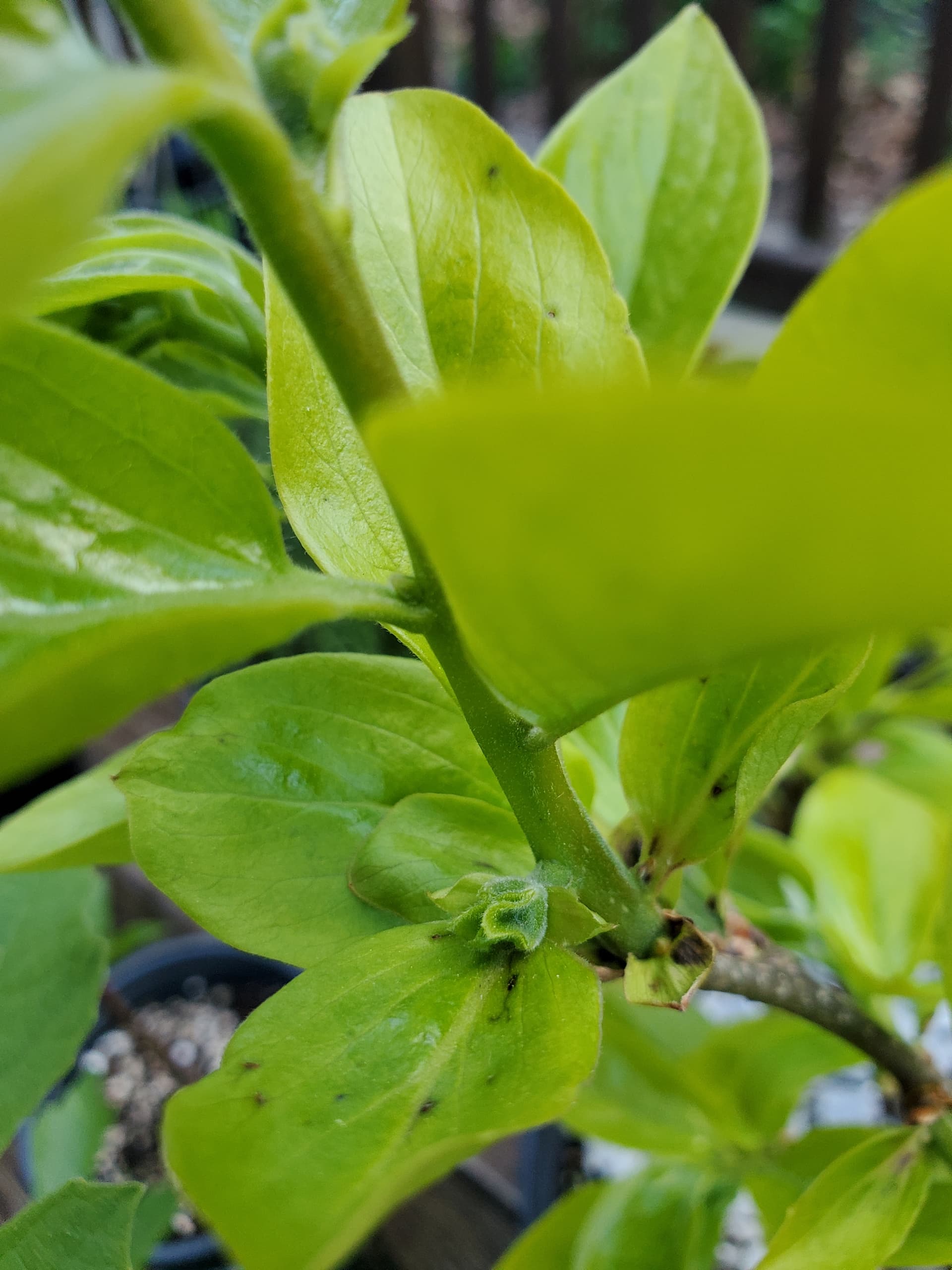
It might maybe be happening this year! I have three flower buds on my potted Chinebuli. If the fruit stick, I’ll provide only leave one on, as it’s still quite small.
Prok is a no-show still, Mikkusu I’ll know in another week or so.

8 Likes
I picked up a couple thousand wetland planting trees from Pikes Peak for work this year, including 4’ persimmons. They were decent caliper. We always have good results with healthy trees from them, but I will say some years the graftable percentage of my orders is low. Not always.
1 Like
I believe the ‘traditional’ strategies are making bread and pulping to freeze.
Also pudding. It’s good.
1 Like
lol, this must be 60s and 70s. After that, everyone started using sunscreen and avoided sun as much as possible.

3 Likes
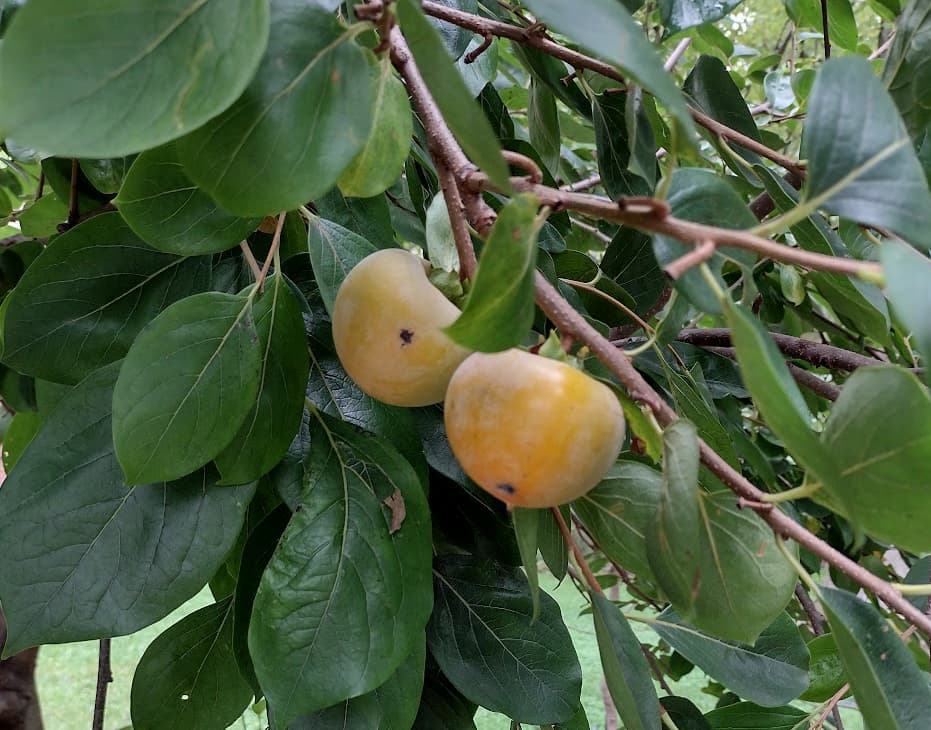
A neighbor has this astringent persimmon tree that he doesn’t know the variety. It was there when he bought the house. The fruits are about 2-2.5 inches wide and seems very late ripening. Does anyone recognize this cultivar?
1 Like
Just made a pie from some frozen kaki from last year. Flavor intensity was really down. Almost no good. Wonder if canning them would preserve them better?
2 Likes
I’ve never had dried persimmons that were better than “not bad”. They just don’t have much flavor. I haven’t had real hoshigaki, but at this point I’m not so excited about it.
I also don’t like dried apples, don’t see the appeal.
I’ve been open to the notion that I just haven’t had good ones yet, but more likely it is a matter of palate.
Dried stone fruit set the standard for me. Ripe pears can be really good too. I also like jackfruit and longan dried, as well as many berries all better than persimmon.
4 Likes
Advice needed:
My Dunaj DK persimmon got some frost damage - which is not completely unexpected as it can only be grown in the traditional wine growing regions of Slovakia. And which is also why veteran growers of this rare variety advise to wait and prune after flowering.
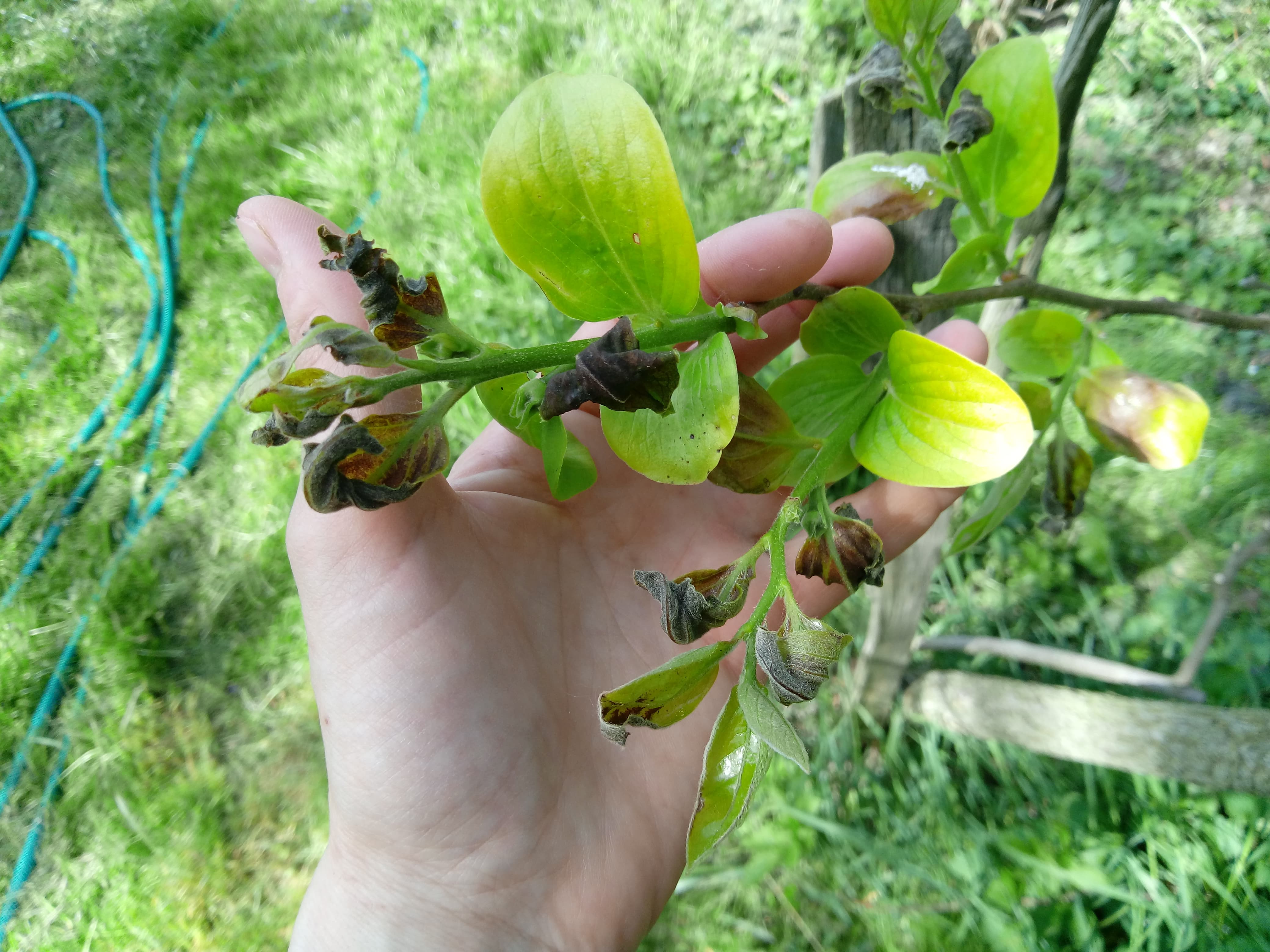
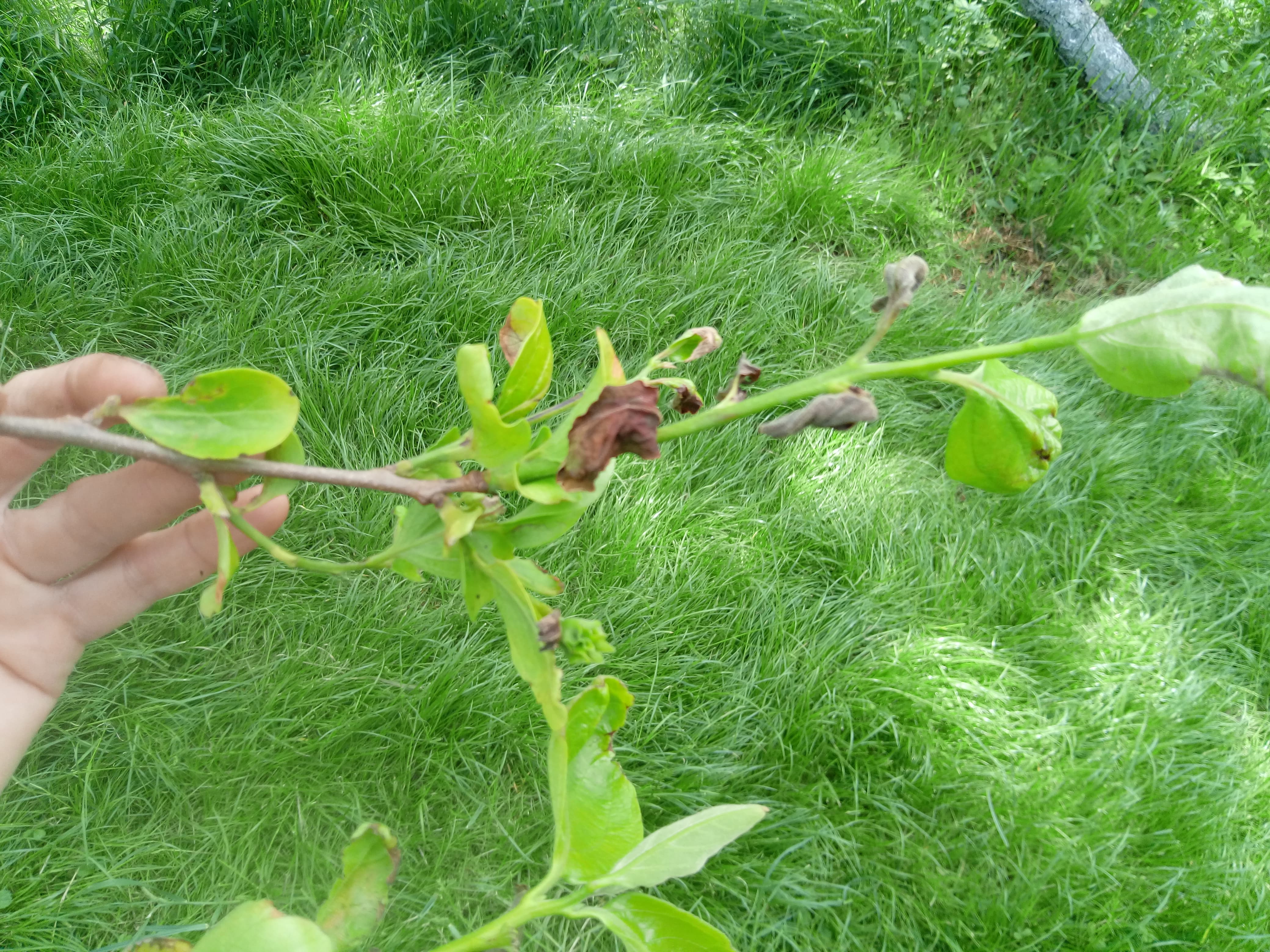
So I’ve only pruned the longest floppiest branches. And decided to wait and hopefully have some fruit however the end of spring turns out.
Now I feel like I should prune regardless of where there’s flowers left, because the frost damage seems to force the sprout tips to grow longer in order to have functioning leaves. And the natural habit of Dunaj already resembles my Mother apple tree with its half-weeping thin and long branches
Should I prune semi-heavily for structure or will it set the tree back too much on top of the frost.?
If this were any other species I’m more familiar with I would go for it. I’ve grown it for some 14 years (4 fruiting) but it is like a hot-house baby living just outside said hot-house…
1 Like
Yeah, I hear you. Dried fruit will always taste different than fresh fruit. I’m just curious about finding a way to have and eat persimmons past their season.
But I have to say that I did enjoy the dried slices of hachiya persimmons I made last fall. To me they tasted a little like dried pears/apricots, which was satisfying. Although to be fair, I have never tried hachiya fresh, so I can’t compare and contrast the difference.
1 Like
Dried persimmons are good “fodder” for me. I can blindly eat them and they are nutritious and healthier than typical snack food.
Kaki flavor is already relatively subtle. Drying removes the nuance and its about texture and sweetness with no balancing acid.
Fresh Hachiya are sweeter, better texture (when soft), and a little more flavor than non-astringent persimmons. From what I’ve had, that distinction is lost by drying.
4 Likes
I have been disappointed with the flavor of dried / frozen. named varieties of American persimmon .
However , this year I dried whole fruits of “Sweet Lent “persimmon with low heat and they are great !
In normal years ,this variety , on its own turns into dried , mostly seedless , raisins like fruit on the tree. That will hang on until the birds eat them , usually mid January.
This year I just picked them before the birds ate them.
Already partially dried on the tree.
Just finished drying inside this year.
If too dry they will be hard as a rock.
So , I find drying them to the point that they are still chewy like a raisin, ( not too dry ) and not getting them too hot.
The flavor was VERY GOOD !
Some had seeds in them , not too many.
I saved and planted those seed for rootstock, they are growing !
So , apparently , I did not get them hot enough to kill the seeds.
Some batches did eventually mold after months in storage.
So a fine line between
“too dry hard as a rock”
“ too moist - eventually mold”
“ or just right moisture - still chewy - no mold “like baby bear soup !
Sweet lent is becoming one of my favorite varieties because of its long edible season.
I find it odd that there is little info / discussion of this variety.
A web search mostly just shows the post I made about it on this forum. Not much other info. ?
I ate them everyday from November - march this year.
Really good
Sweet lent persimmon
6 Likes
Will the candidates for 2025 persimmon grafting rootstocks please stand up ?


Yep… these are poping up out in my fields now.
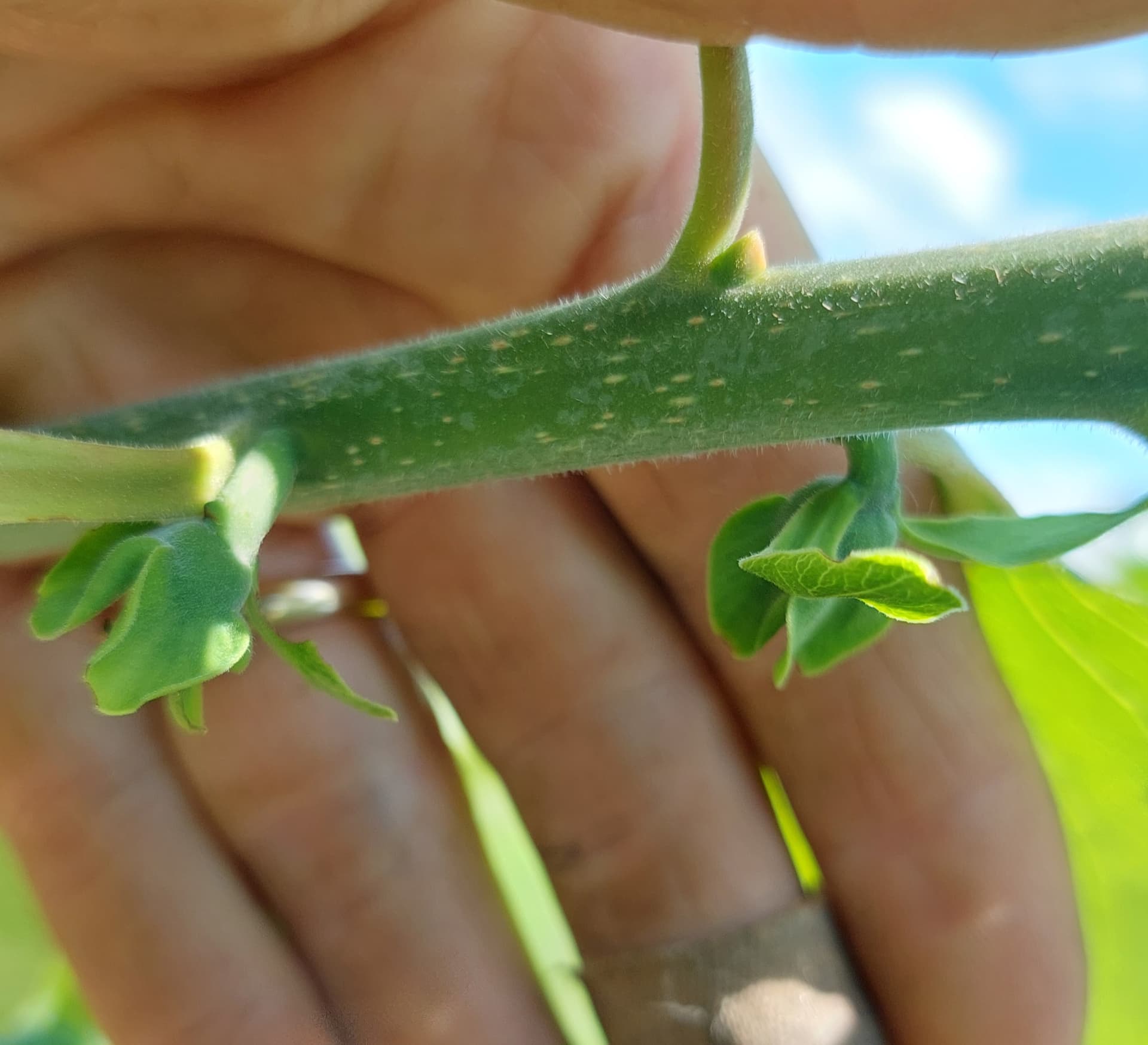
My WS8-10 Barbara’s blush (graft from last spring)… has 4 blossoms.
15 Likes
I’m curious about the timing of persimmon grafts. In the past, I would graft late April/early May when the leaves were “mouse ear” size and near that time with about ~80F highs. I typically got 50% take rates. Part of that may be because I often couldn’t get back to the grafts (a decent drive) to routinely pinch off rootstock buds and part of it was just weak growth. I’ve had much higher take rates (~95% or better) with apples, pears and mulberries.
After visiting England’s Orchard, he said he typically grafts late May. He’s not far from me, so I intend to wait a bit longer. I’m curious if grafting later may be more successful as a result of the consistent high temperatures, tree hormone levels at that time, or perhaps sap flows more in late Spring compared to early-to-mid Spring.
3 Likes
My problem is that it’s never routinely >80 F here. And I’m impatient. I have found that once buds break, the bark slips easily. As most of my outdoor grafts are bark grafts, that’s the major hurdle. So I do all my outdoor persimmon bark grafts in early May. At that time, buds are breaking; bark slips easily; but temps are typically high 50’s / low 60’s during the day and 40’s / low 50’s at night. By mid-May the temperature range shifts up to >50 F at night and ~70 F during the day. I have a very high success rate in this scenario.
Success with cleft and whip-and-tongue grafts is lower but I always assumed that bark grafts just ensure better cambium contact – if the bark slips OK and the cut of the scion is flat, then good cambium contact is guaranteed. That’s in contrast to cleft and W&T grafts where the positioning of the scion is critical.
I should ask – isn’t excessive sap flow a problem? So if sap flow is increased in late Spring, isn’t that an argument for starting earlier?
1 Like
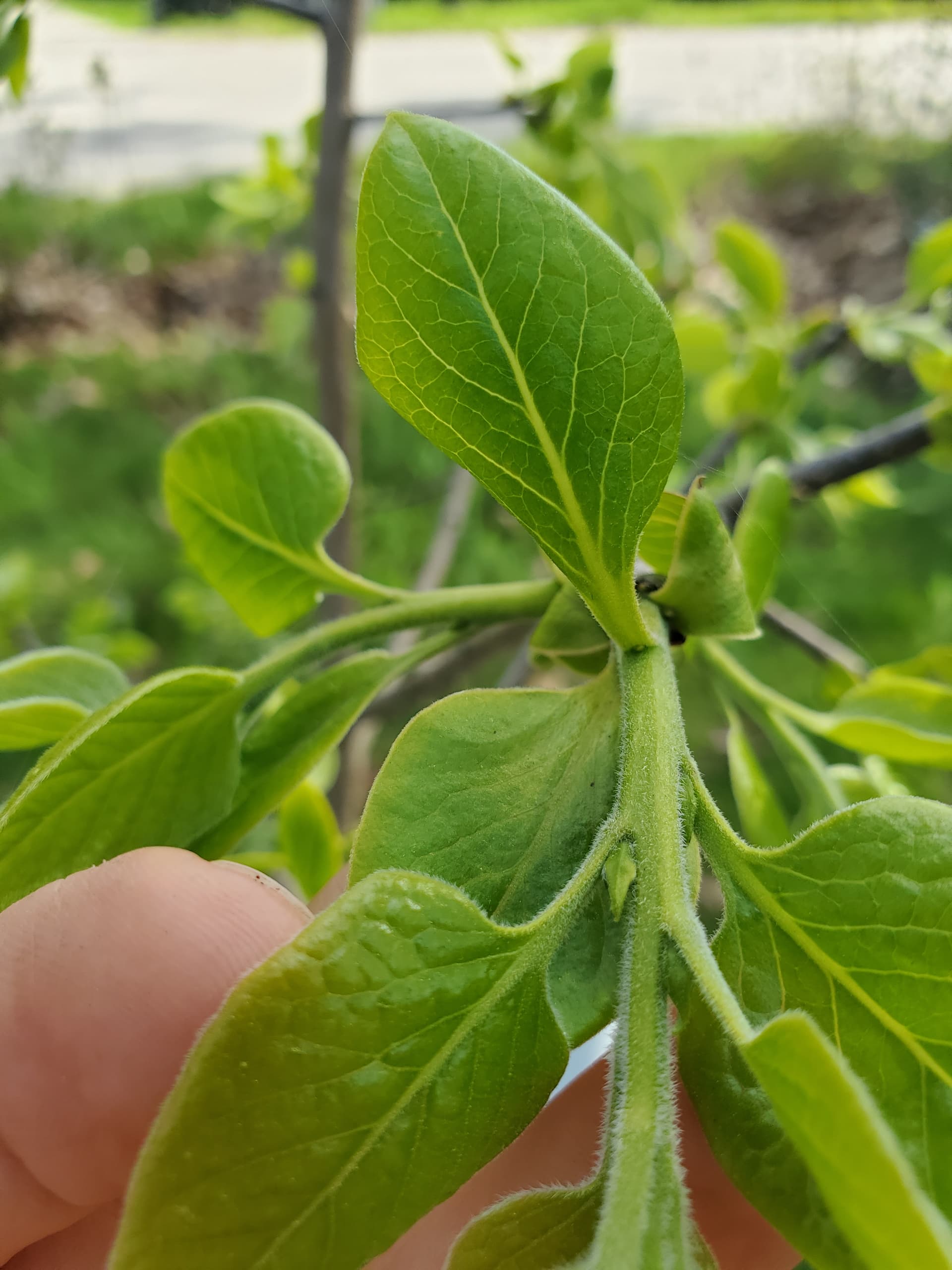
About a dozen flower buds on my Early Fuyu which is about 2.5’ tall. One on IKKJ, but it looks like it’s thinking of doing more.
2 Likes
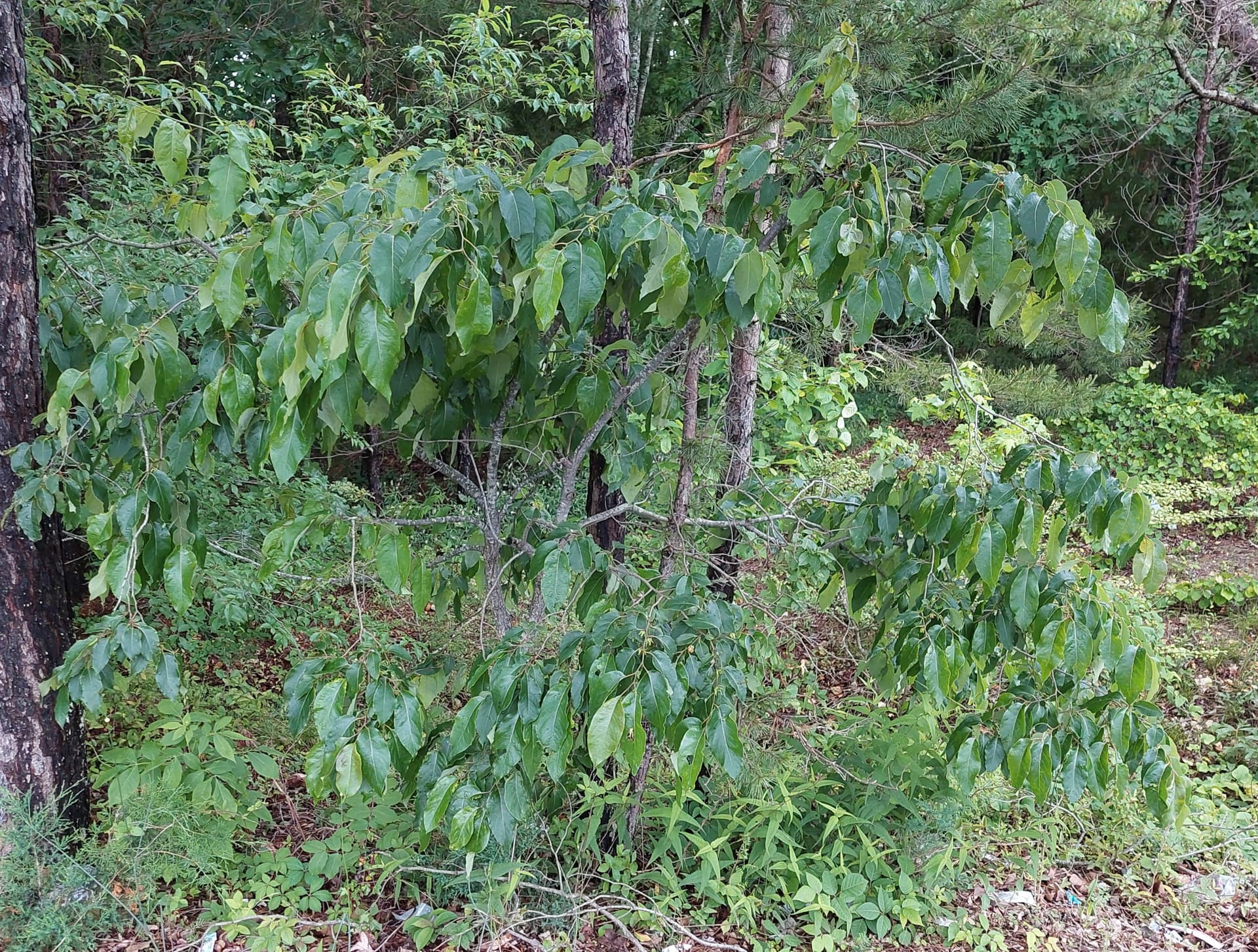
Made a trip to walmart today… that is the little roadside tree I collect from there. It is under some taller trees in a tree line that faces west. It gets just a little evening sun.
I noticed it a few years ago and have collected fruit from it for the last 3 years.
The taste of the persimmons increased dramatically last year including a nice vanilla aftertaste.
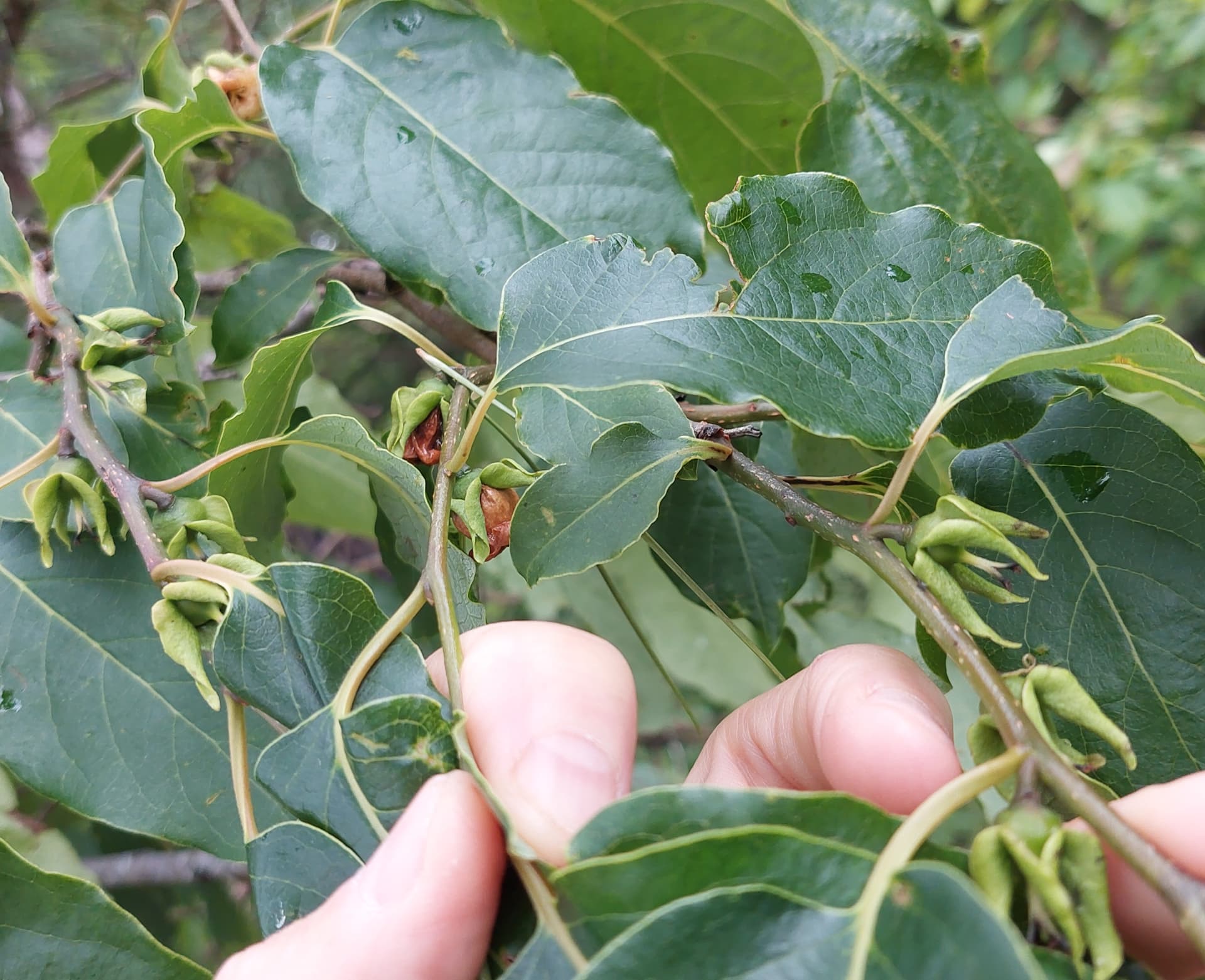
It is loaded with blossoms again this year.
TNHunter
12 Likes