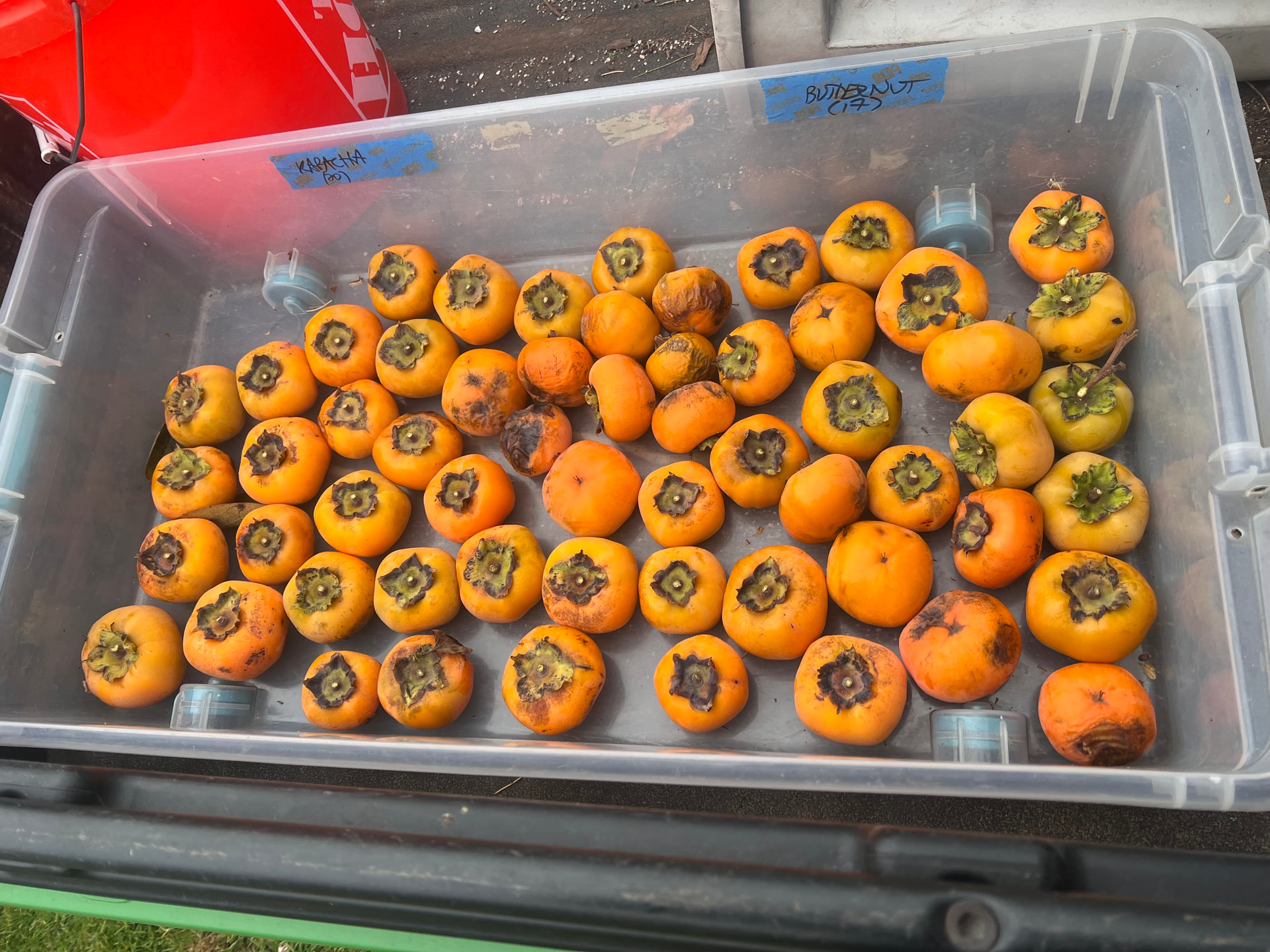
From what I have seen all nurseries seem to be selling the same variety under that name. It’s an acorn-shaped persimmon which is PVNA and has brown flesh when pollinated. My guess is it is a descendant of Maru which has the same characteristics but is smaller. Its a great persimmon, my favorite for taste.
In Japan the Tsurunokos appear to be a flat-bottomed variety like Fuyu so not the same variety, but they also are PVNAs with dark flesh.
The names of persimmons is not super reliable, Maru for example is often regarded as a type and not a variety. Similar for Fuyu, what you get in the grocery under that name could be any crunchy flat-bottomed variety.
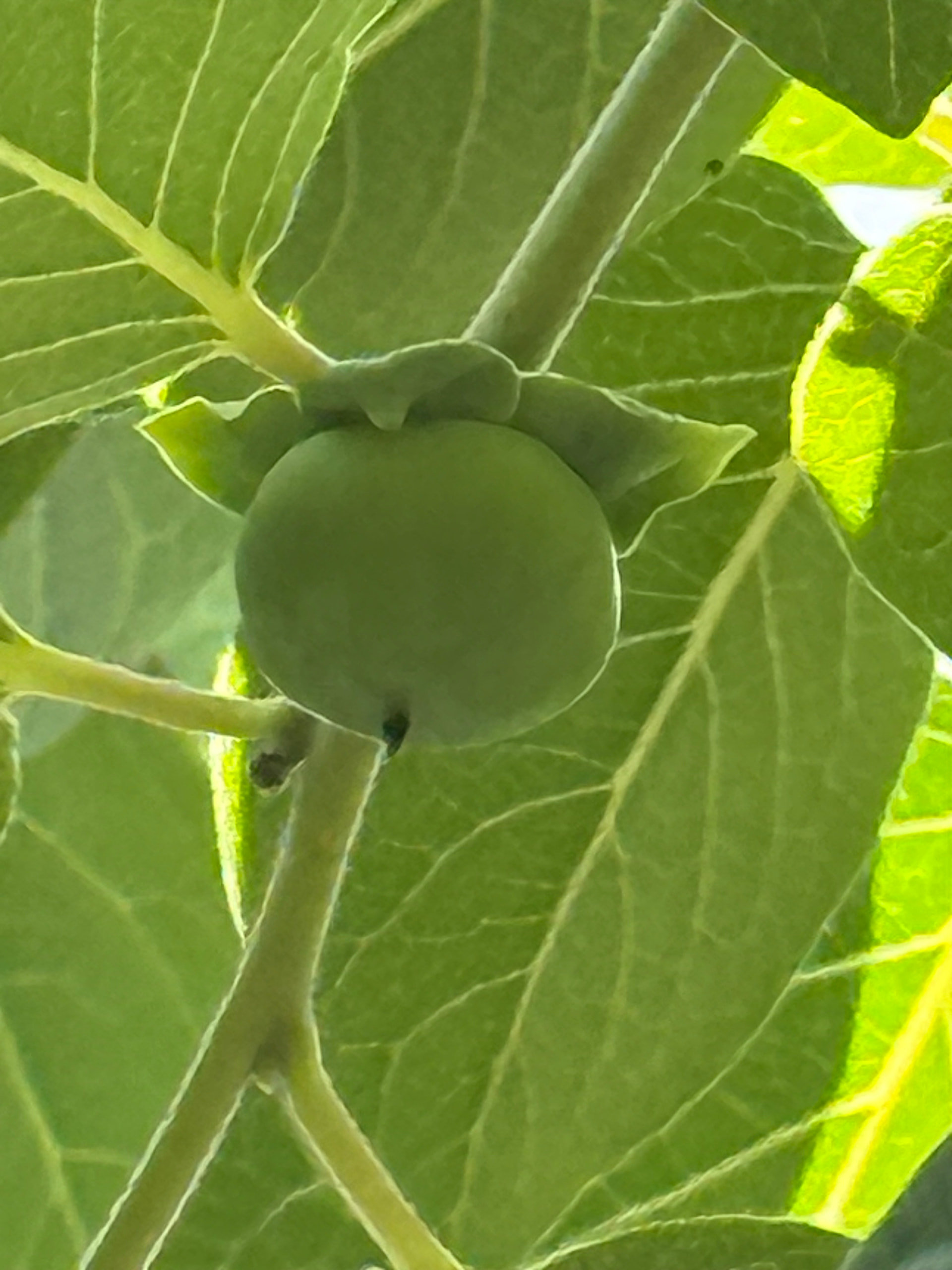
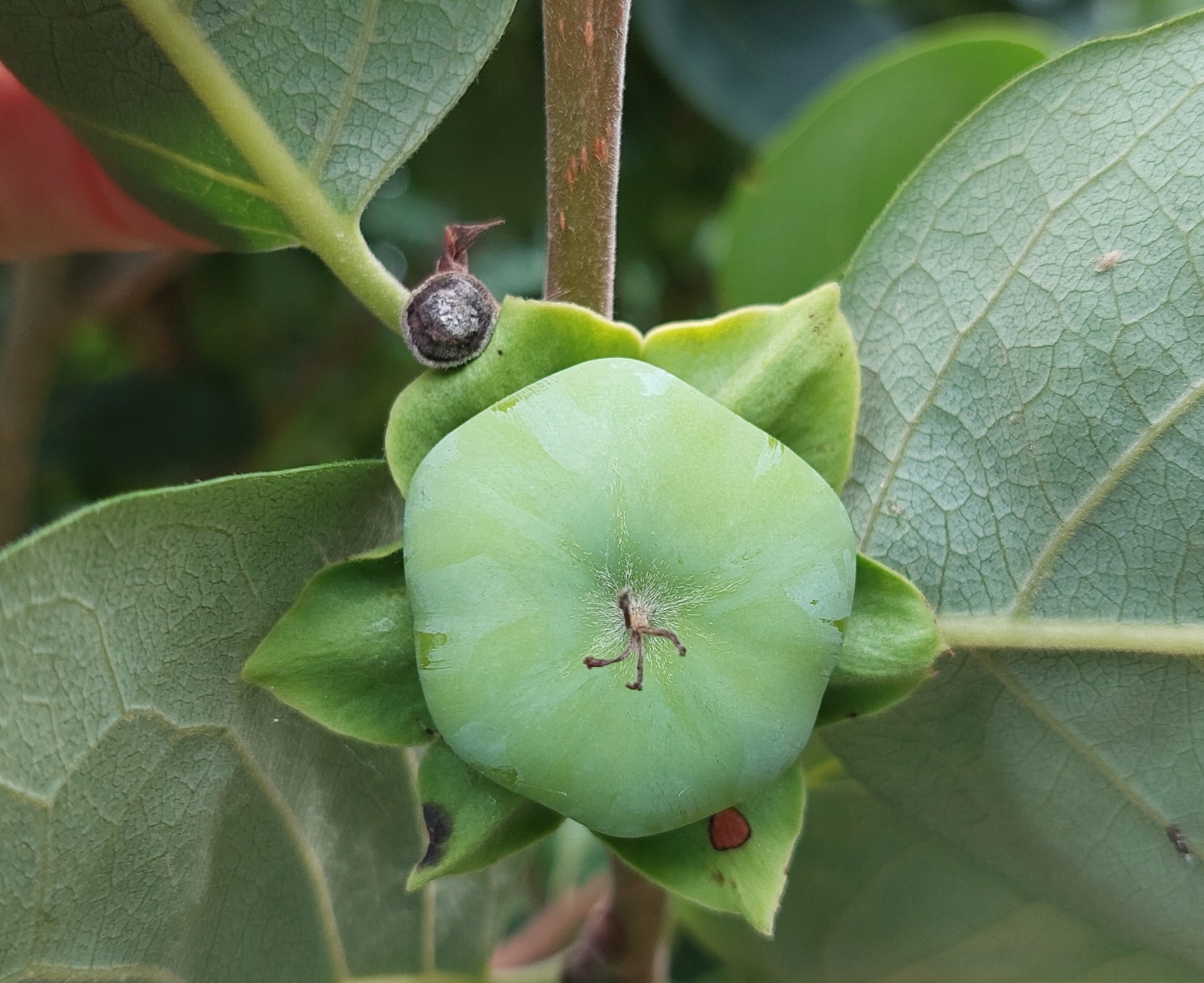
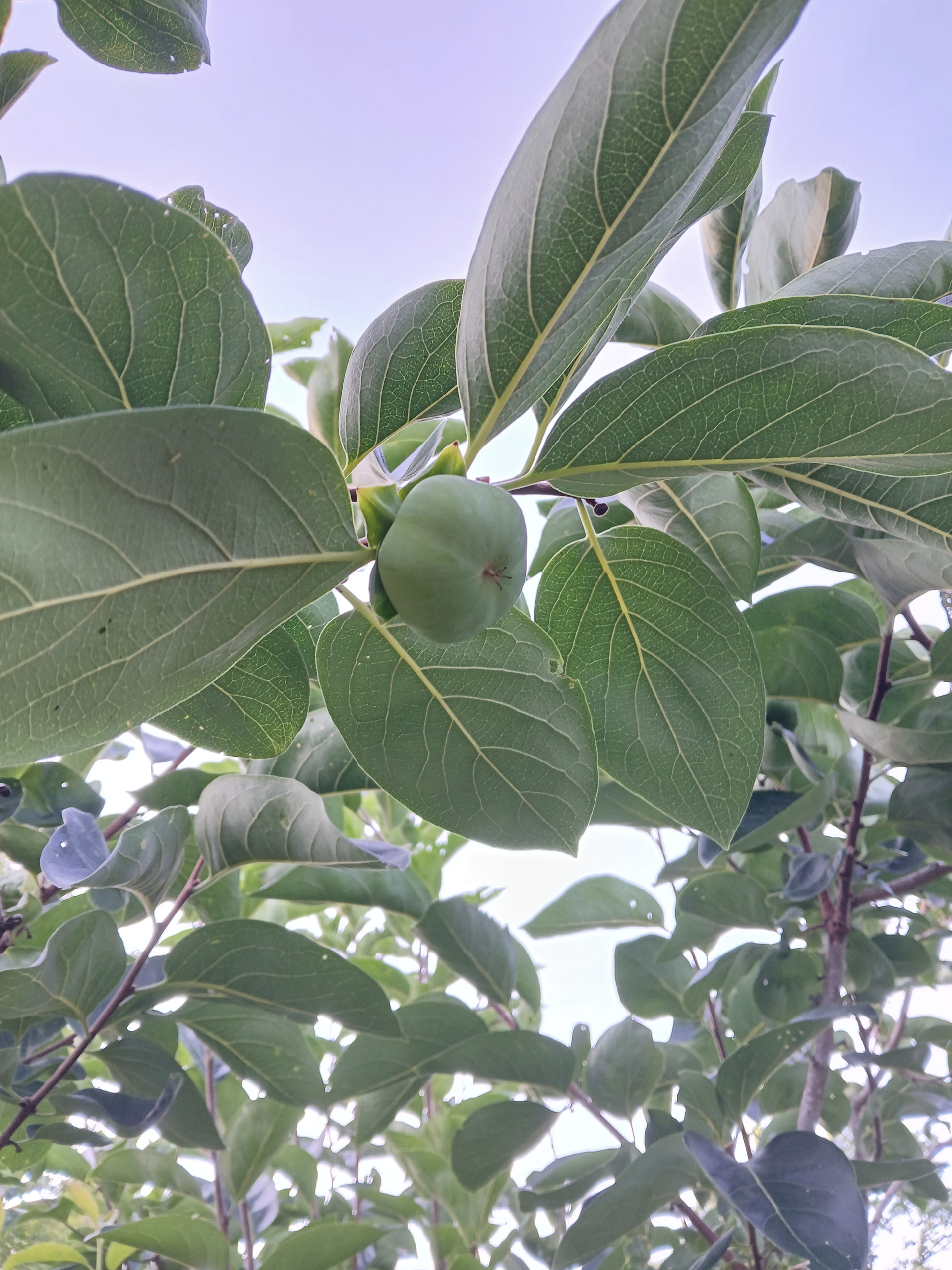
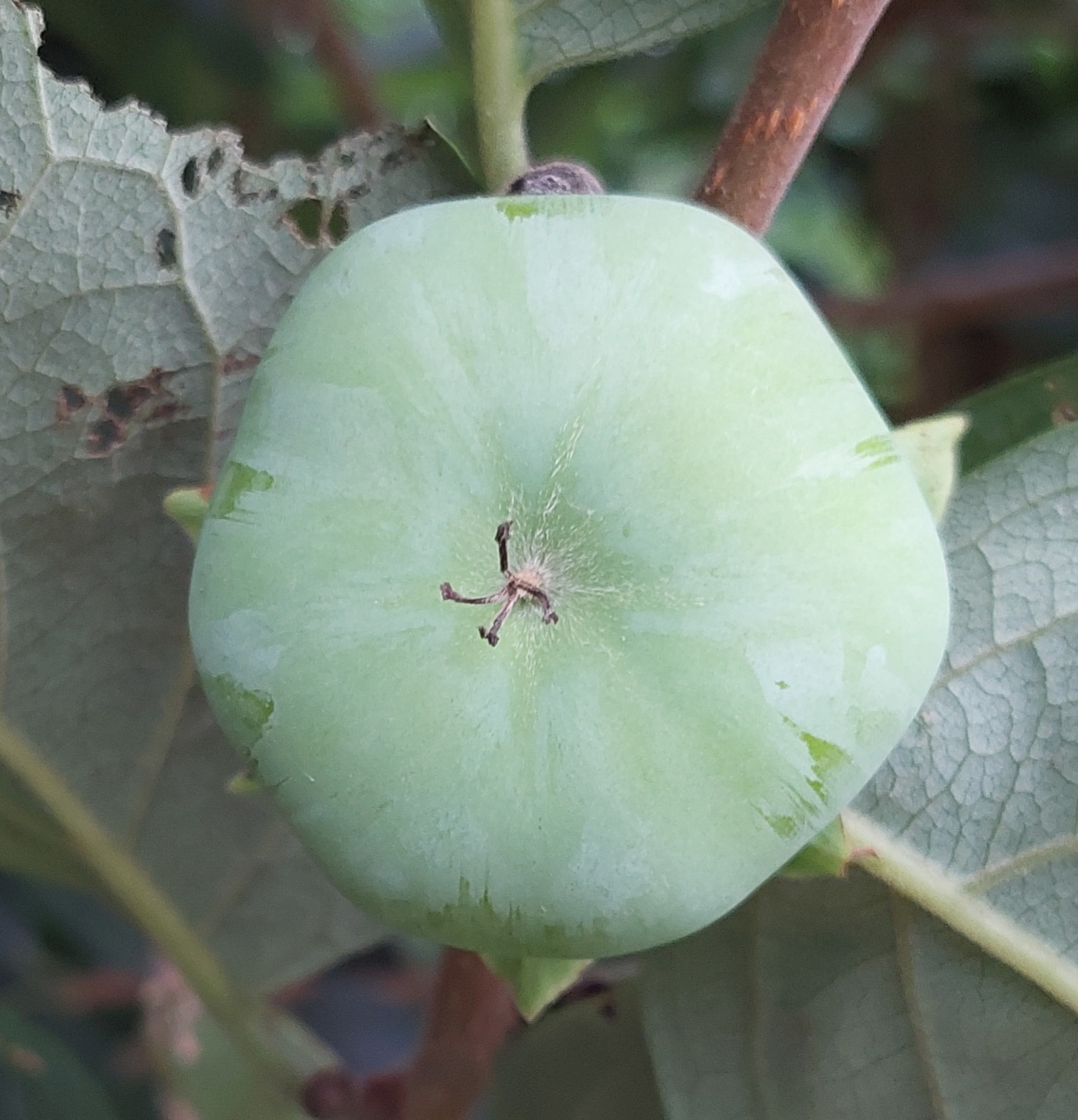
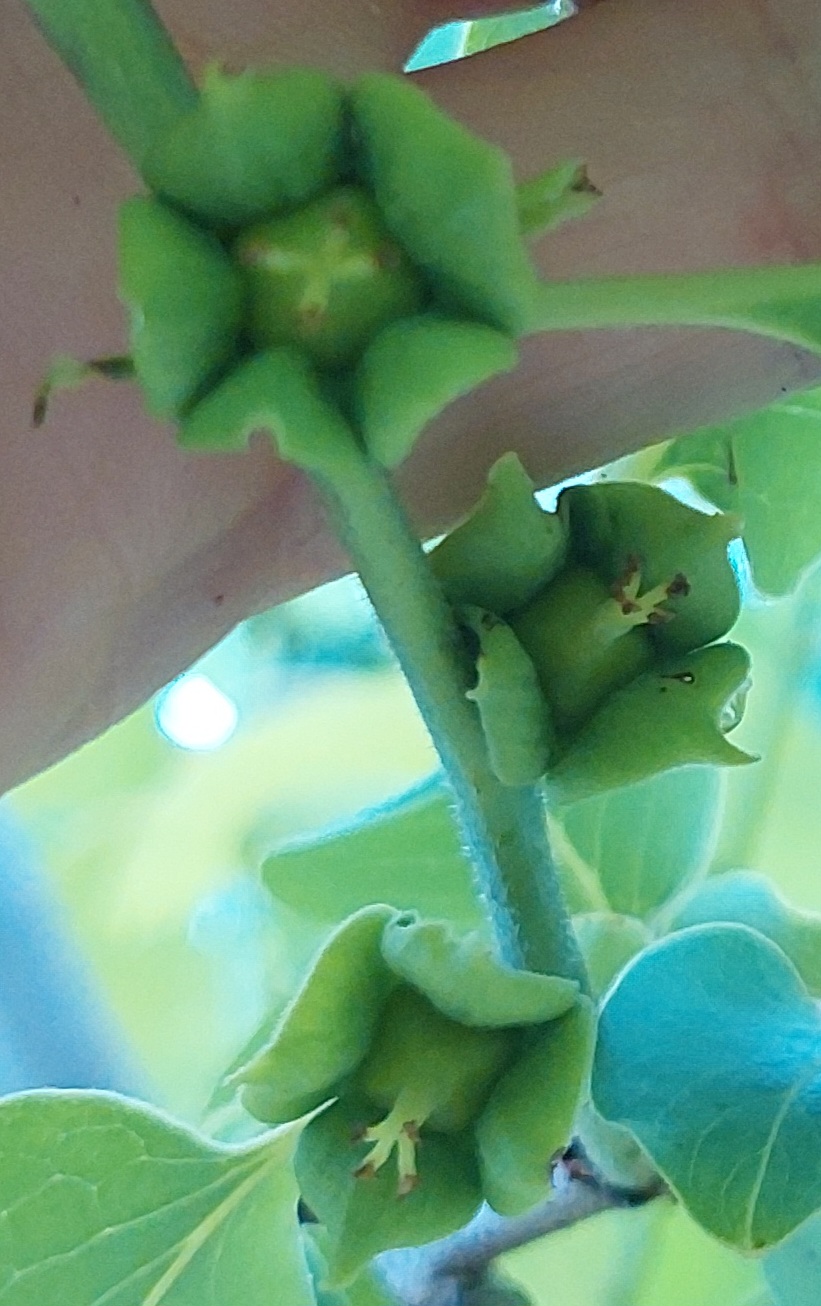
Yours look like hexagons and mine don’t.. I don’t remember seeing anything like hexagons in past years either. Hmm. I looked up my source and it was Threefold Farm.
@jrd51 I’d be interested in what yours looked like in a few weeks when they are a similar maturity as mine are now.
I’ve noticed some significantly different opinions on JT-02 out there and wonder a bit if there was not a mix up somewhere..
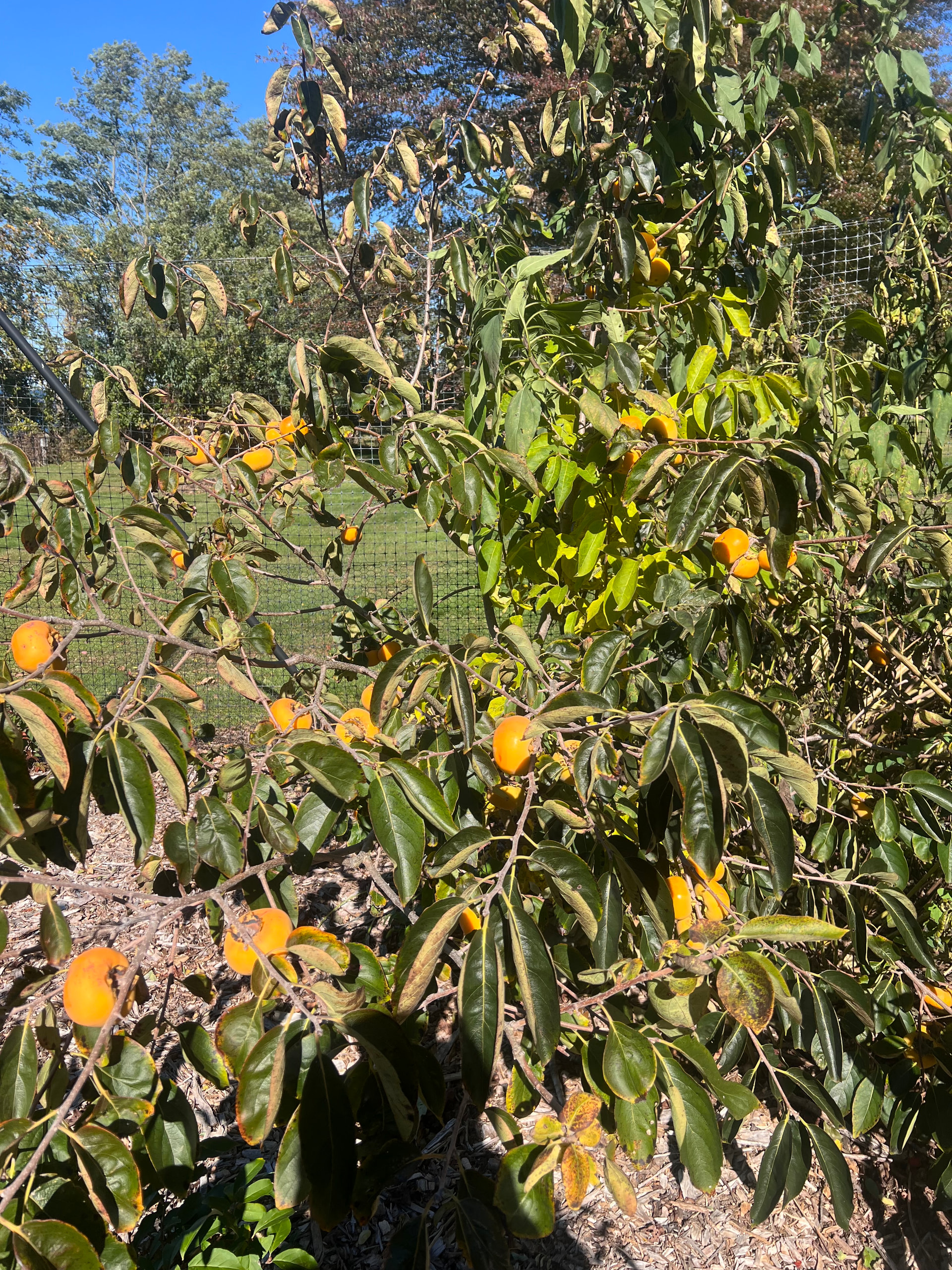
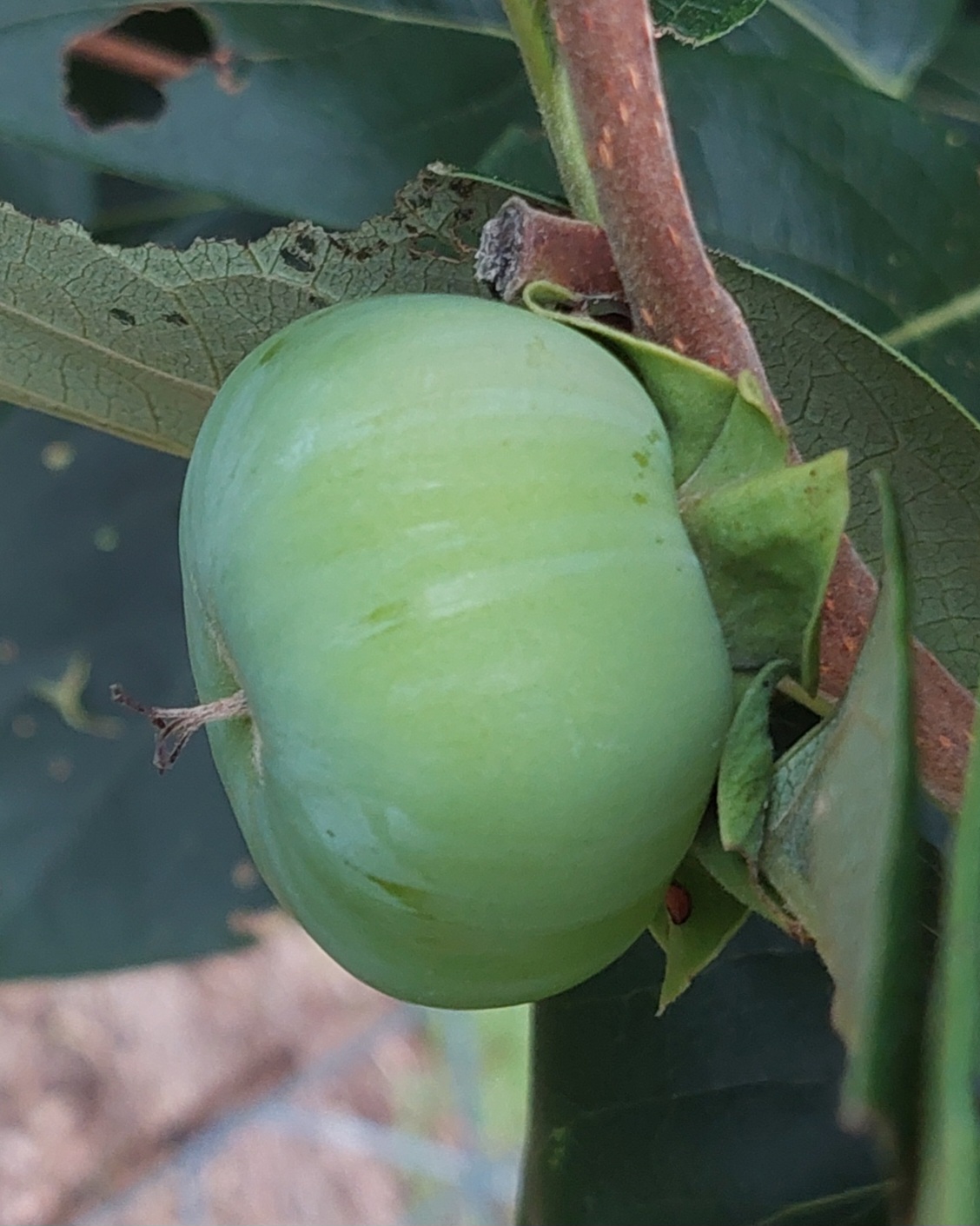
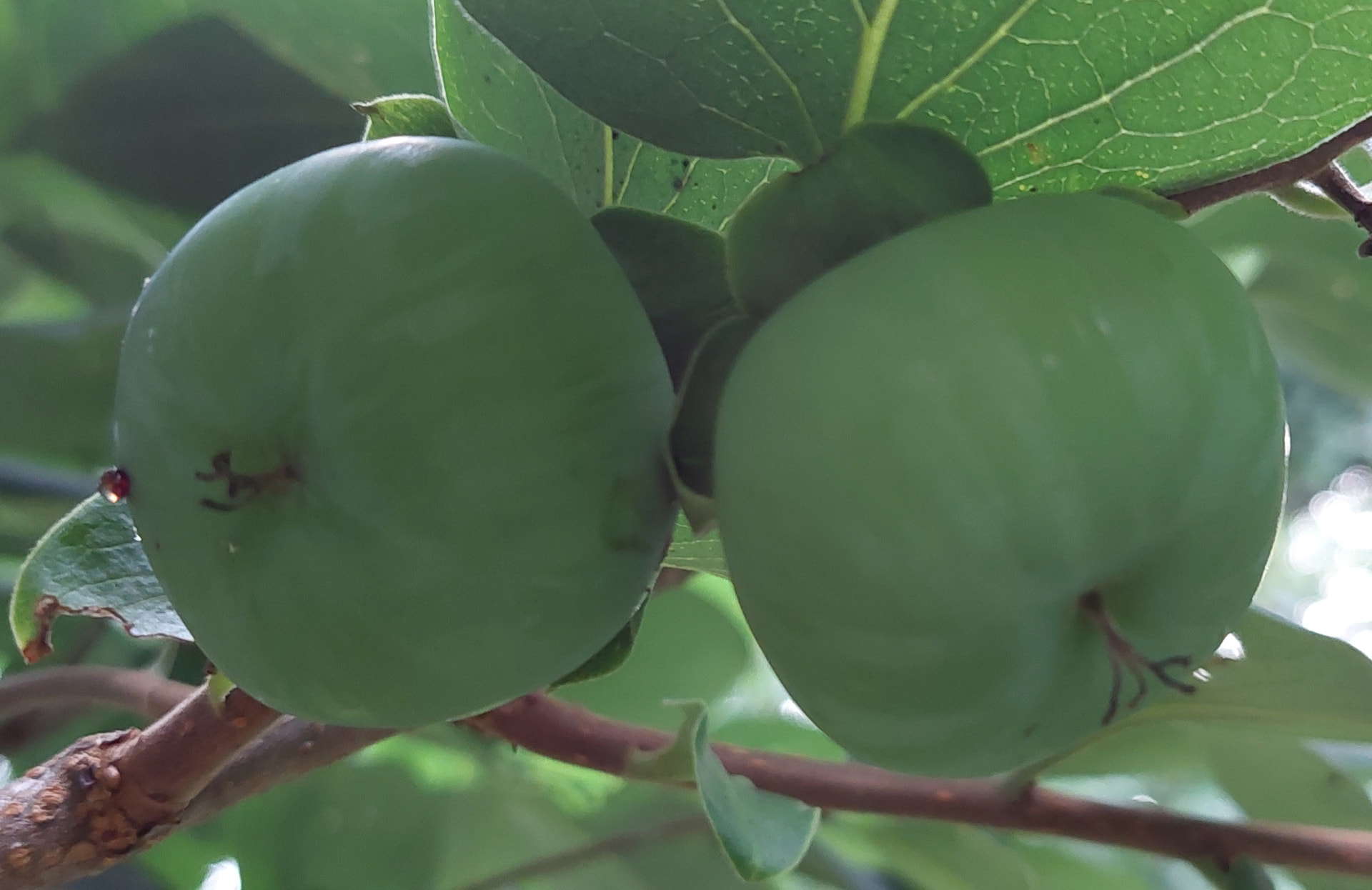
Here in NC JT-02 fruit regularly develop black streaks as they ripen - sometimes more black than orange by the time they soften. The fruit have distinct lobes and are more squat/disc-shaped than round by the time they are mature.
The plot thickens and the hunt is on. I will just have to find a Tsurunoko tree and see. I have found a few different websites that said “chocolate” was this or that (maru, tsurunoko,…)
I’ve also seen different synonyms, but the fruit they are picturing is always larger than Maru and acorn-shaped. So whatever it is consistent at least.
What I can say for sure is that my JT-02’s are more square (4-sided) than hexagonal (6-sided), that is a square with rounded corners. And the fruit is somewhat flat-bottomed not round.
Yes, the number of calyx petals (botanically known as sepals) can vary
While a 4-lobed calyx is the standard and most common characteristic for both the American persimmon (Diospyros virginiana) and the Asian persimmon (Diospyros kaki), it is common to find fruits with 3 to 5 petals/lobes.
…
And leave it to me to have one with 6 petals/lobes.