Buy some wild seedlings. Many of those will be nothing but bags filled with tons of seeds.
Right, but all the original breeding stock used to produce modern named varieties was wild. So the video is implicitly talking about all the female trees used in early crosses.
Morris Burton was a wild seedling tree found by a farmer. Same for all the early varieties that were discovered growing wild, then named and cloned – Miller, Mohler, Juhl/Yates, and so on. The video is saying that these found wild seedling varieties (by implication including Morris Burton) were dioecious. The only exception appears to be Early Golden (and then its descendants).
Let me pose a brain teaser: (1) We know that Early Golden is monoecious (female and male flowers). (2) Let’s assume counterfactually that Morris Burton is also monoecious. (3) We observe consistently that the offspring of Morris Burton x Early Golden that Claypool named H-63A is dioecious – female only. And the same is true for other crosses of wild varieties with male-flowering descendants of Early Golden, such as D-128/Dollywood (Miller x G-2), H-55A/Prairie Dawn (Juhl x Garretson), H-118/Early Jewel (Juhl x George), F-25/Prairie Gem (Morris Burton x George), and I-94/Valeene Beauty (Morris Burton x Early Golden).
Now if the found wild varieties (e.g., Morris Burton, Juhl, Miller, etc) were monoecious, we’d think that pollination of these varieties by monoecious varieties such as Early Golden, George, Garretson, etc. would produce monoecious offspring. But the offspring are, as noted, generally dioecious. Not always. F-100 (MB x George) is male-flowering.
By what odd genetic process would the cross of a (counterfactually) male-flowering female such as Morris Burton x an actual male-flowering Early Golden (or its descendants) produce mainly dioecious offspring? It’s possible, perhaps, assuming some expression of a recessive or quantitative trait, but not likely.
I think we have to give persimmon breeders such as Claypool and Lehman credit for pragmatic good sense. They would not have used only Early Golden and its offspring as pollinators if there were alternatives. They just didn’t find male flowers anywhere else (except on dioecious males, whose qualities for fruit could not be observed).
@reym - SFES, noted in the table in that article, is a local native 60-C selection that I made. SFES produces, most years, about 80% small 1+” seedless fruits, and 20% larger 1.5” fruits, each containing a single plump seed.
I’m surethat the SFES ortet is pollenized by local 60-C males growing in the same fenceline, across the highway from Sinking Fork Elementary School. My graft of SFES, in the orchard here at the house, follows suit. I have no 60–C males in the orchard, but adjoining property does.
4 Likes
Leaf-spotting on Wild Diospyros virginiana trees is quite common. The most common pathogen is Pseudocercospora fuliginosa, and it is quite ubiquitous across the entire range of Diospyros virginiana by late summer.
1 Like
I harvested the last few pounds of Saijo off our in-ground (in SE Texas) tree (it produced over 50 pounds of fruit this year)
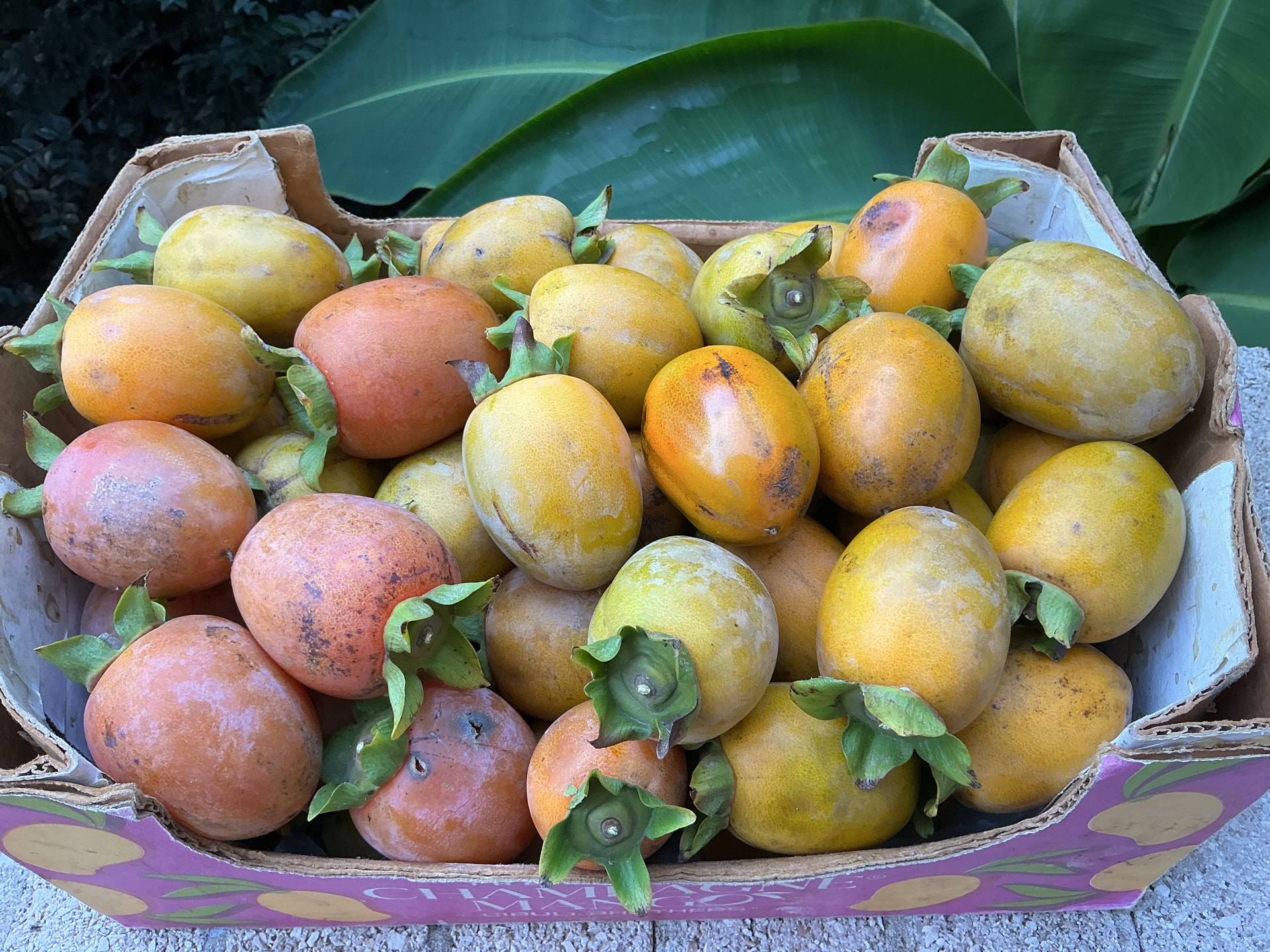
I agree it is an excellent Asian persimmon cultivar. I grown about a dozen different varieties (both astringent and non-astringent) and Saijo is hands-down our favorite.
11 Likes
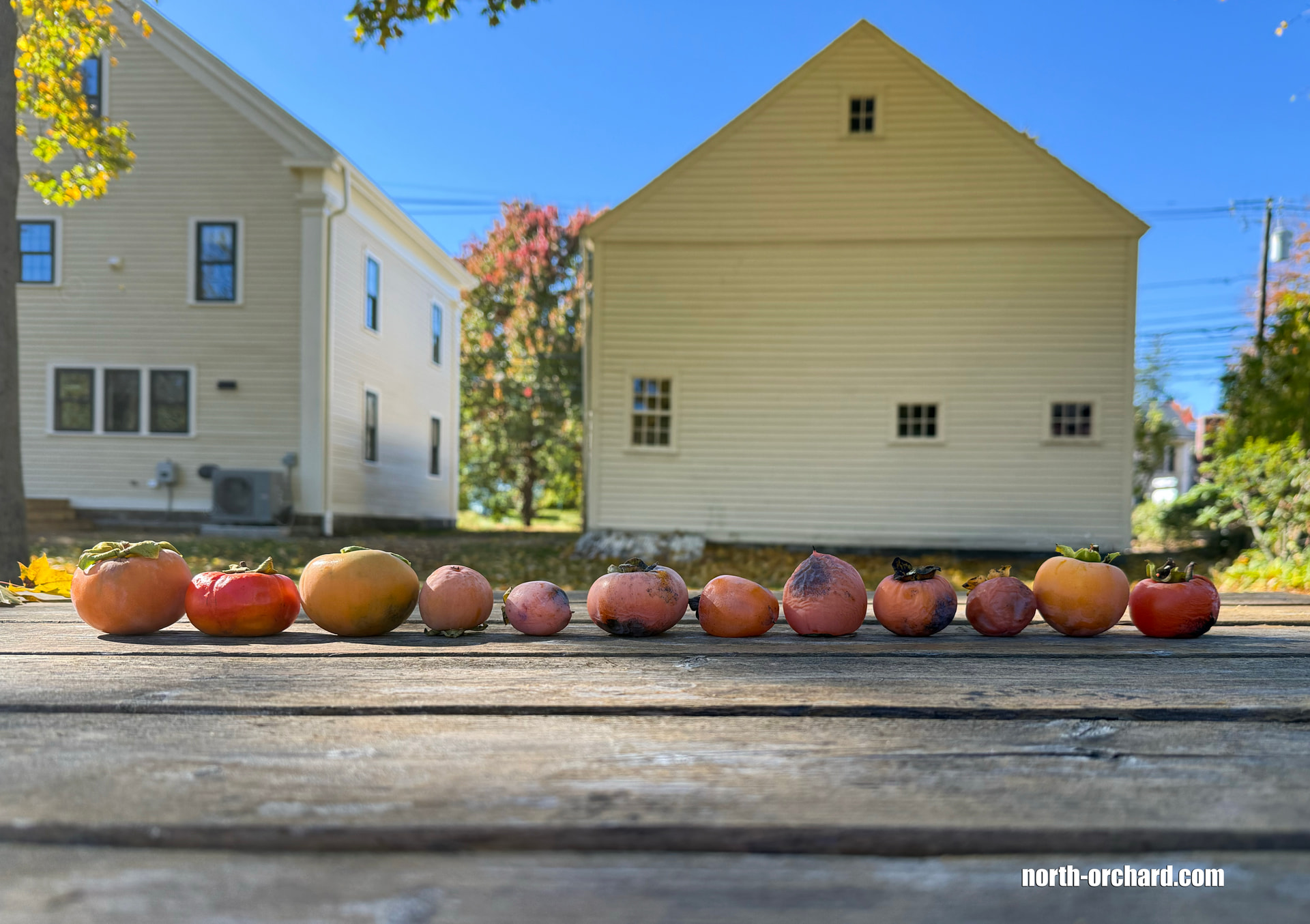
Left to right: V. Derevyanko, Cardinal, JT-02, Chuchupaka, Haiku, 100-46, Geneva Long, Prok, Hybrid Seedling #1, OP hybrid of Kazaa, Bozhy Dar, Rosseyanka.
20 Likes
Have you eaten Giboshi (Smith’s Best)?
If so, which one do you prefer (Saijo or Giboshi), and why?
Thanks.
1 Like
If a monoecious selfs are all the seedlings monoecious?
1 Like
No, I have never tasted Giboshi. I assume it is also pollination-constant astringent. I may have to get a scion or two this winter if you think it is even better than Saijo. All my Asian persimmons end up with seeds thanks(?) to 2 Hana Fuyu trees in our orchard that produce copious numbers of “male” flowers.
2 Likes
Any thoughts as to what’s going on with my Asian persimmon?was wondering if this is borer damage. At the moment the tree up to has fruits and looks ok but the base looks pretty bad

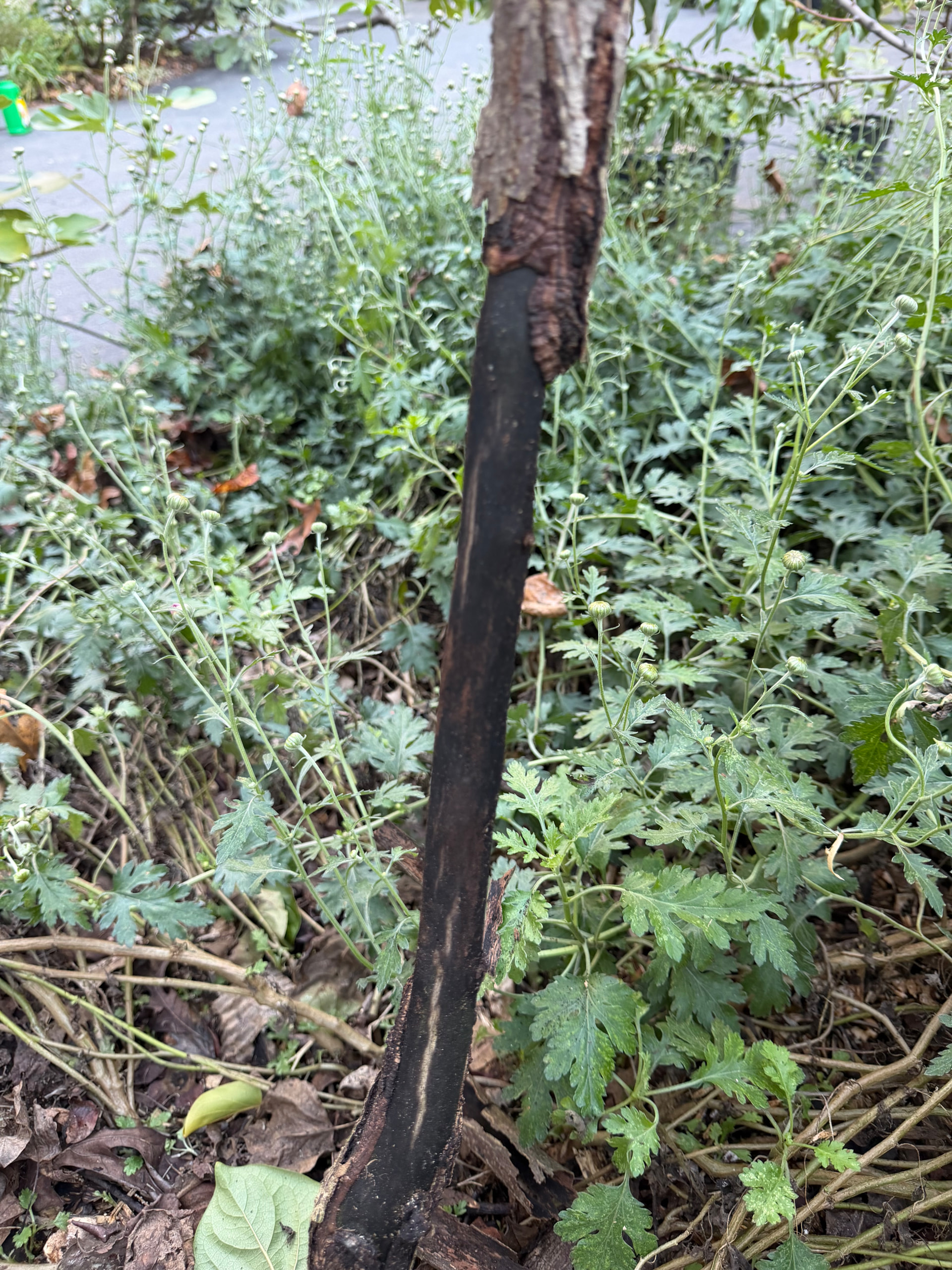
Looks like sunscald to me. If it looks like that the whole way around, it likely won’t come back above the base next year.
2 Likes
It’s in a good spot for sunscald
So bummed
No, it is PVNA.
2 Likes
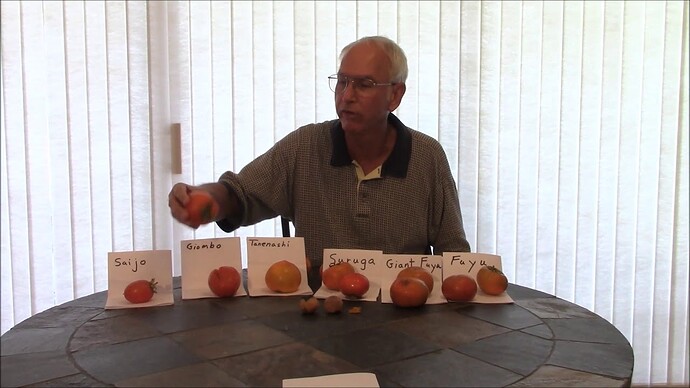
A better competitor to compare it to is Giombo. I hear a lot of people rave about it. The fruit size is much larger than Saijo. It’s not as cold hardy as Saijo though. It can grow to Zone 7, where I see Saijo being recommended down to Zone 6.
Here is someone eating both varieties side by side. Just one person’s opinion:
4 Likes
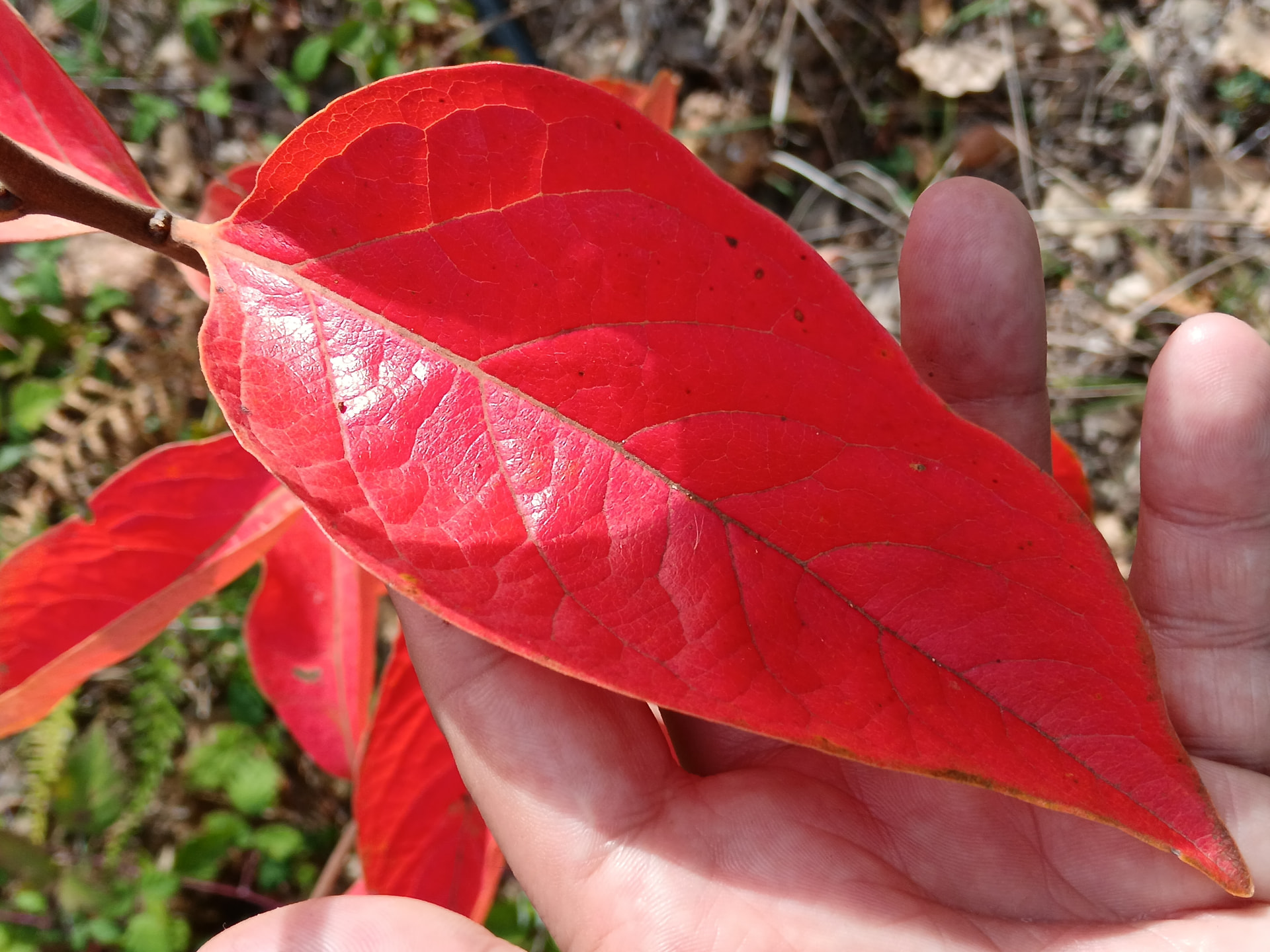
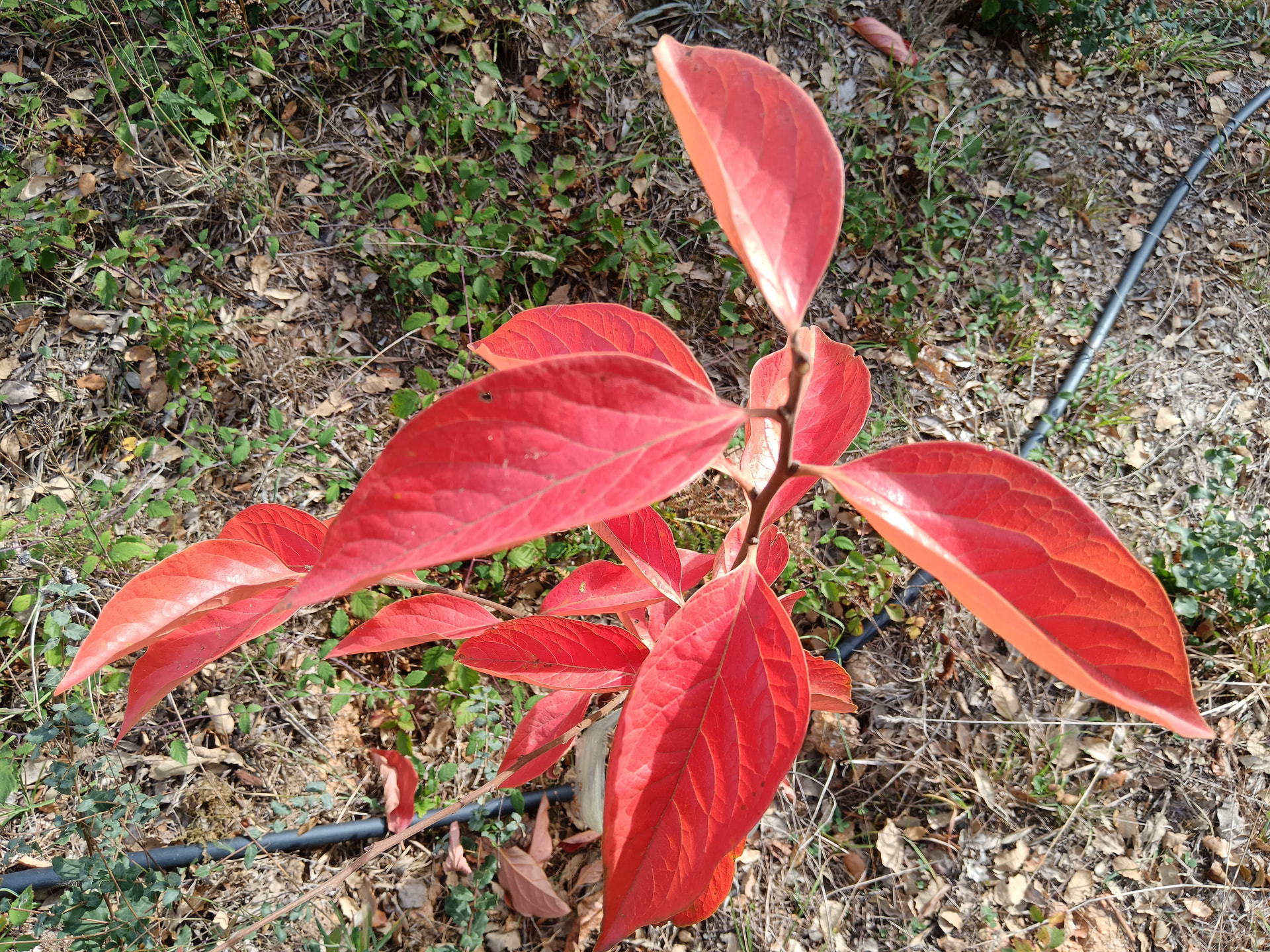

I did have Giombo on my multigrafted IJKK tree (it had 16 different cultivars on it, including every single cultivar in your YouTube taste-test, but over time a few entire branches have died and aborted, as Diospyros often does, and a couple of entire branches met their demise when a large raccoon decided to sample many different varieties one night). Sadly, the Giombo branch held fruits that the raccoon seemed to be quite fond of. I thought it was good, although not quite as syrupy sweet as Saijo. Here is a photo of some of my cultivars from a couple years back (after my Giombo branch was already gone)

7 Likes
I find Giombo and Giboshi equally exceptional in taste.
Friend grows Giombo so not sure if it avoids the many years of premature fruit drop with my Giboshi.
3 Likes

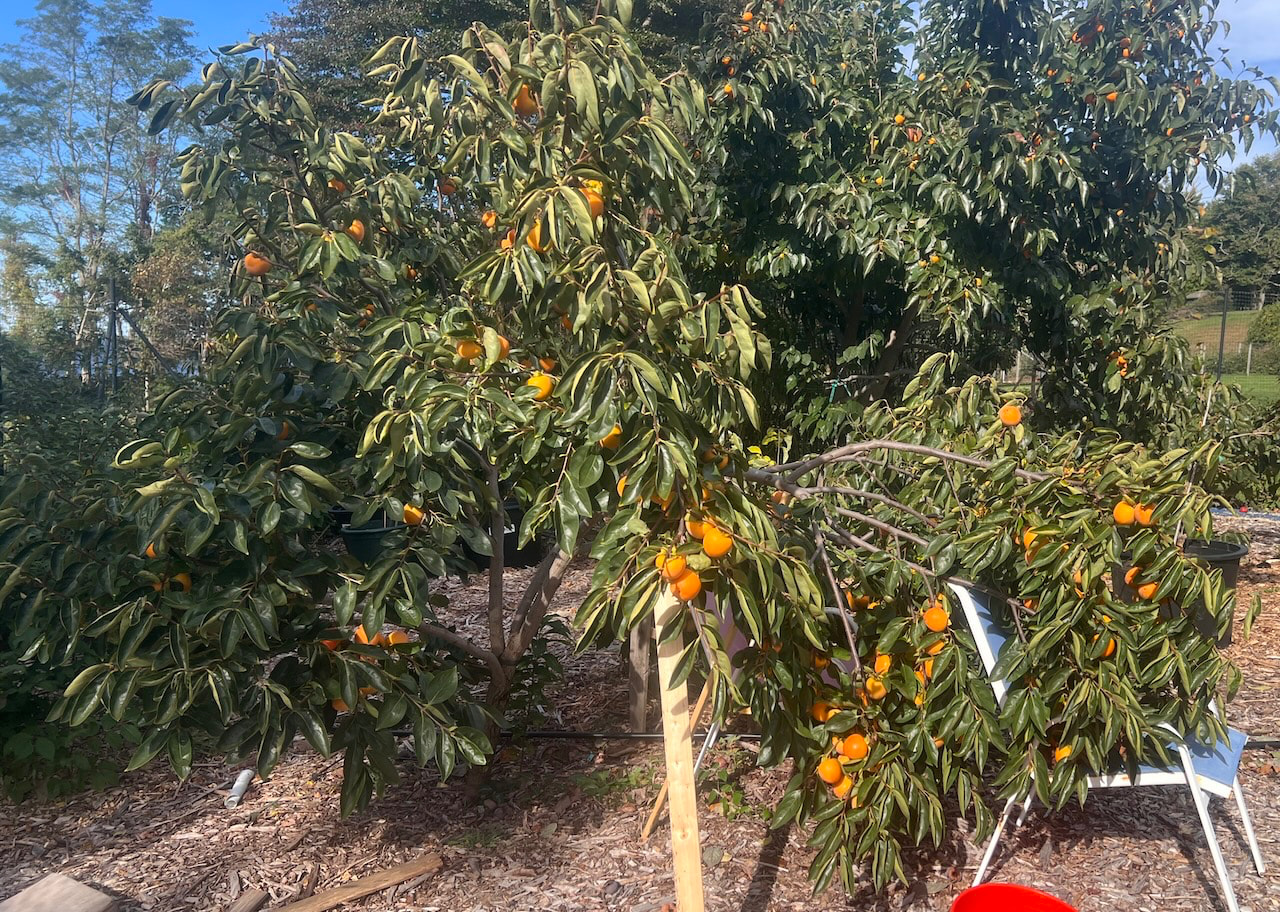
In the foreground is Giboshi, straining under the burden of its crop. The lumber and decrepit lawn chairs are positioned to relieve some of the burden on the branches. Last year I omitted the support and lost a large scaffold branch. Lesson learned.
Today I started picking, which is a bit tedious because each stem must be cut individually. Nevertheless I filled a 5 gallon bucket, then had to stop due to other commitments. Tomorrow I’ll finish. I think there’ll be two more buckets.
I’m hoping to make hoshigaki.
p.s. In the background is Kasandra.
7 Likes
Interesting- my Giboshi usually isn’t ready to pick for another month here in 8A MD.
1 Like