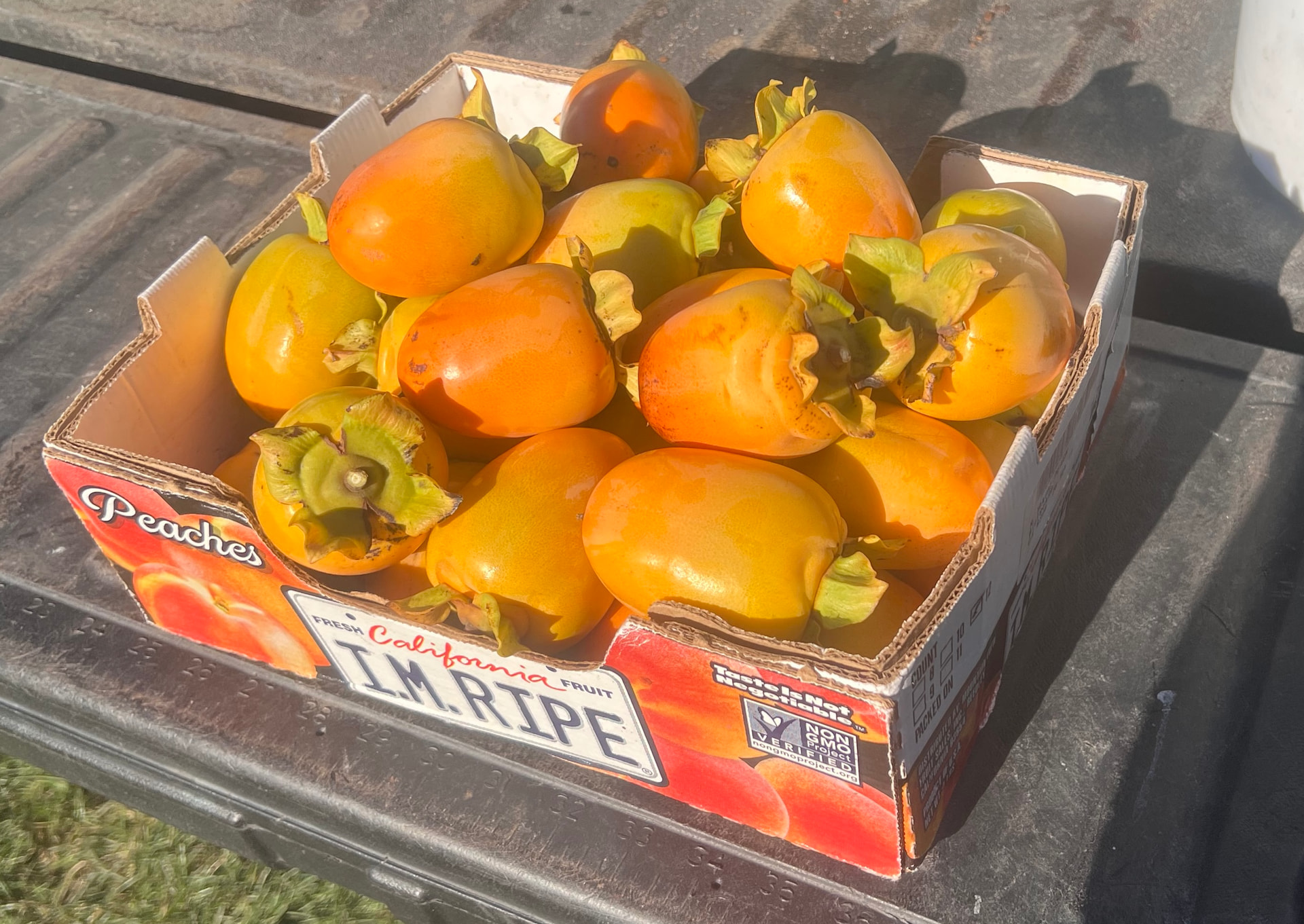
I picked my potted Saijo today, taking 33 fruits off a small tree that I grafted in 2022. One fruit was prematurely ripe due to some damage that looked like a bird peck. I ate it and it was delicious, as usual for Saijo. The other 32 fruits are in this box. They’ll need some days on the kitchen counter to ripen.
11 Likes
Who owns the Claypool Orchard?
1 Like
I finally got to eat two Giboshi (Smith’s Best) and the flavor was disappointing. It was mild like a very ripe PCNA. So, the winner in my opinion is Saijo when compared to Giboshi.
I will let the fruit get mushy soft ripe and reassess. But, so far, the flavor was not as good as the Saijo that I ate.
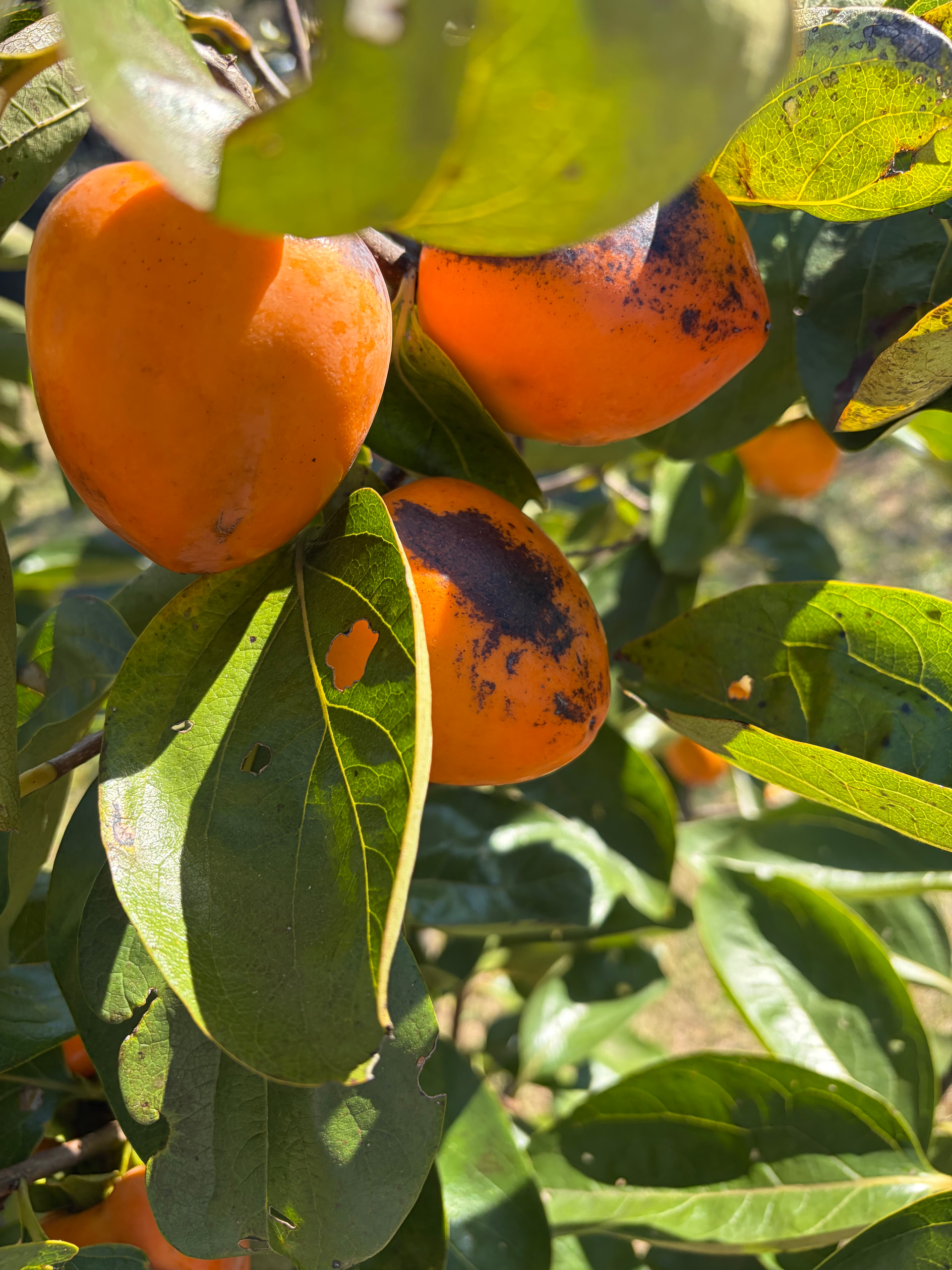
Below is a photo of my Giboshi fruits taken 10/24/2026.
5 Likes
In a head-to-head competition for flavor, I’d agree that a well-ripened Saijo is superior to a well-ripened Giboshi. But I’ve only eaten these varieties from trees grown here by me, which is a big caveat.
That said, I’d argue that a well-ripened Giboshi is much better than a not-so-well-ripened Giboshi – and better than a PCNA. So maybe you need to let your Giboshi get riper before judging? Just because we can eat PVNA Giboshi not-quite-ripe doesn’t mean that we should.
One thing I wonder about is whether fruit quality suffers materially when a tree is allowed to overbear. For example, I picked more than 3 5-gallon buckets of Giboshi. What if I had manually thinned to 1/2 or 1/3 that quantity? Would the sugar and flavor get packed into fewer fruits?
The meta-message is that we sometimes are too quick to attribute observed characteristics to the variety per se rather than to our particular practices as we grow and consume the fruit.
4 Likes
I’d like to see a picture of what the insides look like. It’s a PVNA variety, correct? So yours were pollinated with seeds? Does the flesh turn a different color once pollinated on this variety like some other PVNAs or does it mostly just stay orange in color?
The six foot tall Smith’s Best tree had over 30 fruits.
I thinned to about 15 very early in the season.
I actually overthin because I have more persimmon trees (and fruit) than I can possibly use, and because I do not want branches breaking under the weight of too much fruit.
Therefore, I am certain it is not overbearing.
However, in regards to picking and eating in its early ripened stage (with some texture still) vs late ripened stage (completely gooey), maybe eating later might improve the flavor.
Nevertheless, for the same stage in softness, my PCNA (Izu, IKKJ, and Matsumoto) have all had the same level of sweetness.
I will give an update once the other Giboshi fruits ripen to the late stage of ripeness. Hopefully, they will be significantly better.
By then, I will be able to give a fairer assessment of the fruit flavor, as you correctly pointed out.
I have another Giboshi tree that will produce next year also. After trying fruit from both trees, I will be absolutely certain of fruit quality. But, for now, I am not impressed with Giboshi.
2 Likes
I will get new photos once the remaining fruits ripen. The fruits are not pollinated.
The color of the two that I just ate was not red at all.
But, it did have a darkish orange appearance. I will keep you all updated once the others are completely gooey soft ripe. And, I will take photos of the whole fruits and sliced in half.
I really hope the flavor improves. It has been three - four years of waiting and caring.
3 Likes
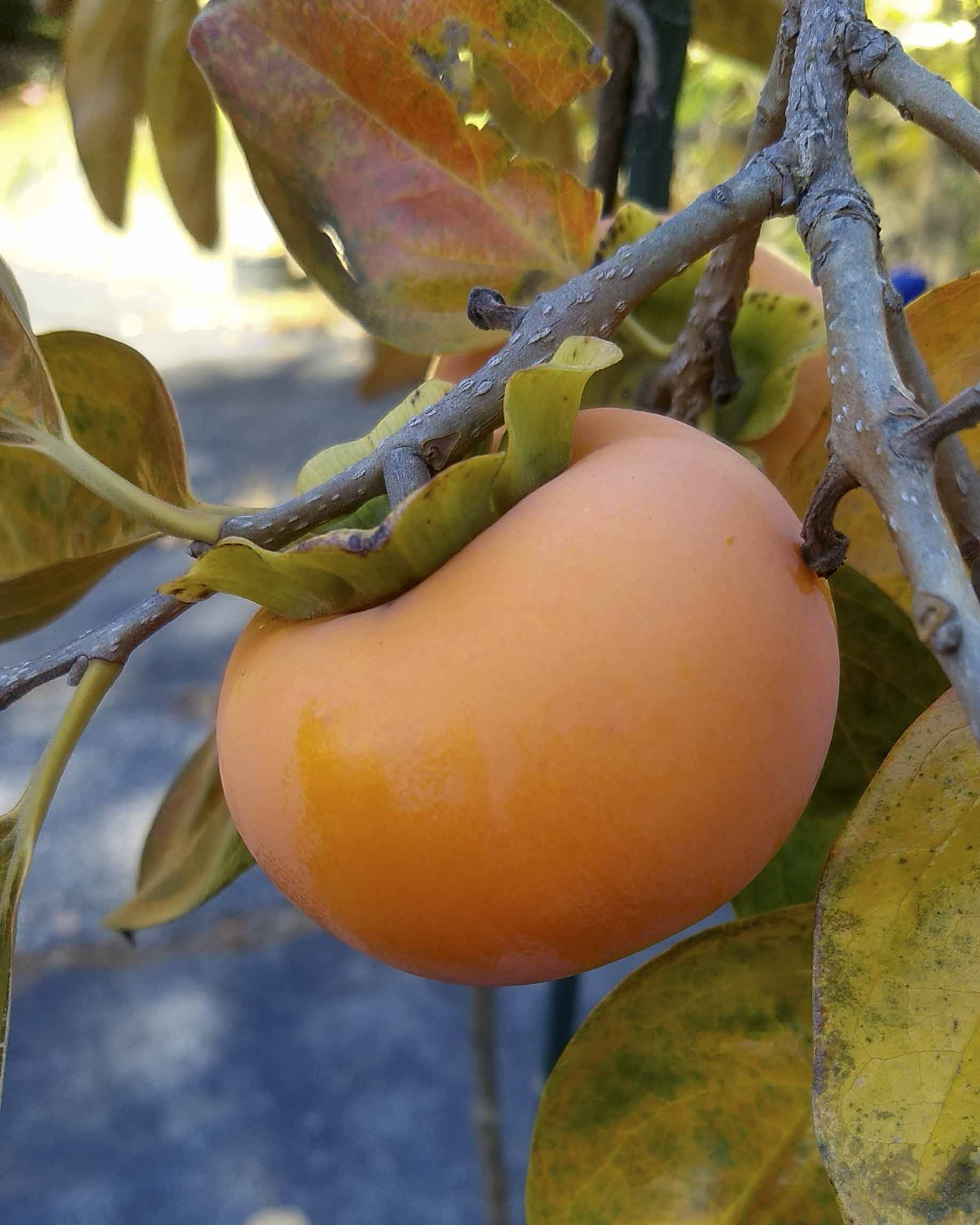
Here are a couple of my Maekawa Jiro fruits. I put the tree in the garage the last 2 nights just to be on the safe side. Are they ripe enough to pick and ripen inside?

6 Likes
yes
3 Likes
When you initially planted it did you ever intend to pollinate it to capitalize on the PVNA traits? The PVNA attributes tend to add spice notes (cinnamon), brown sugar, and pastry notes to a persimmon.
I’m currently going back and forth if I want to add a PVNA variety to my persimmon collection. I absolutely love the taste of the PVNA I had (seeded and crunchy). It really impressed me the flavor notes added to it.
I think I’m going to wait it out a little and see what happens with my other trees.
@jrd51 I recently chatted with someone in Ukraine who is growing Chuchupaka and they said they do not think it needs a pollinator. They said they don’t have any hybrid pollintors. They grow a bunch of Ukranian persimmon trees. They mentioned their Chuchupaka is either seedless or has 1 seed in it. They showed the amount of fruit on the tree and it was covered in Persimmons. This is really good news in my opinion. I was considering adding a male pollinator, but I might just wait several years and see if my Chuchupaka does the same. Their Chuchupaka fruit had the black colored skin forming on the fruit on their tree. Which is a great way to confirm it’s the correct variety.
5 Likes
Interesting. I’m just going by the papers published by the breeders. I figured that they’d know. Those breeders state that Chuchupaka normally produces 2-4 seeds per fruit, which is not a ton but is not nothing either.
3 Likes
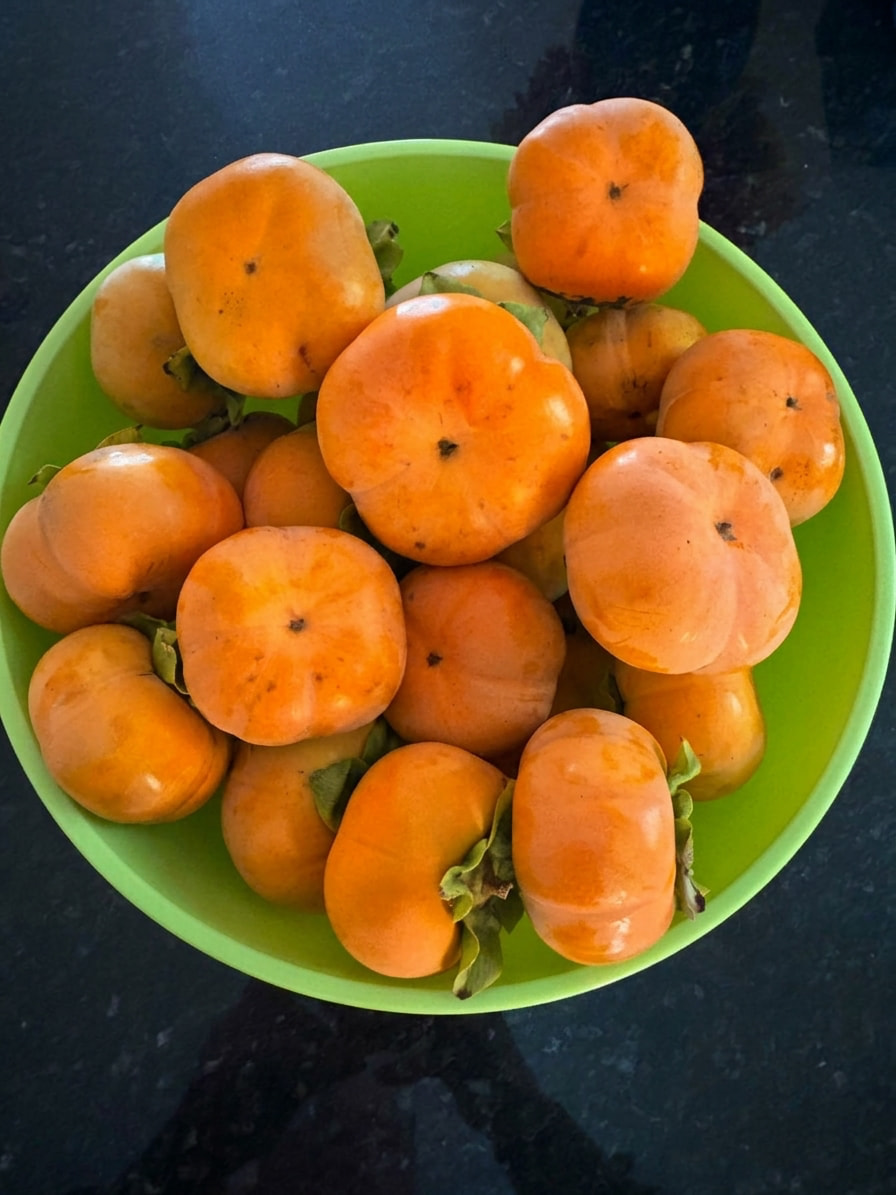
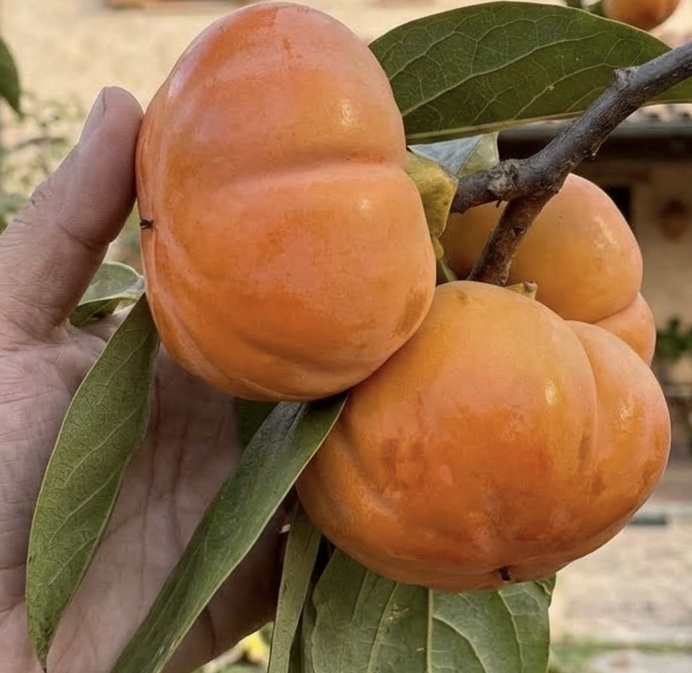
We harvested the rest of the Izu fruits today and are waiting on the Sheng to ripen, maybe another two to three weeks before they are ready. Both trees were bought from JF&E in spring 2025 and are growing in 25-gallon containers.
This is the first time I’ve grown and picked my own kaki fruits. Hopefully next year I’ll get to pick some of the hybrid persimmons I put in the ground last year.
Thanks to all of those on the forum who have supported and guided me through this satisfying journey.
5 Likes
Beautiful looking fruits! Could you share a bit more information, please? How old is the tree, where did you buy it, and when did it break dormancy? Thanks and good luck.
I have Sheng in the ground just south of you. I’m not counting on much ripening before a severe freeze. So I picked mine a few days ago. I did the same last year and they ripened nicely (and not all at once) in a bin in the garage.
1 Like
The forecast calls for sunny days this week otherwise I would’ve picked them to ripen inside. The clear plastic sheet is trapping enough heat inside the garage to keep temperatures in the mid to high 70’s.
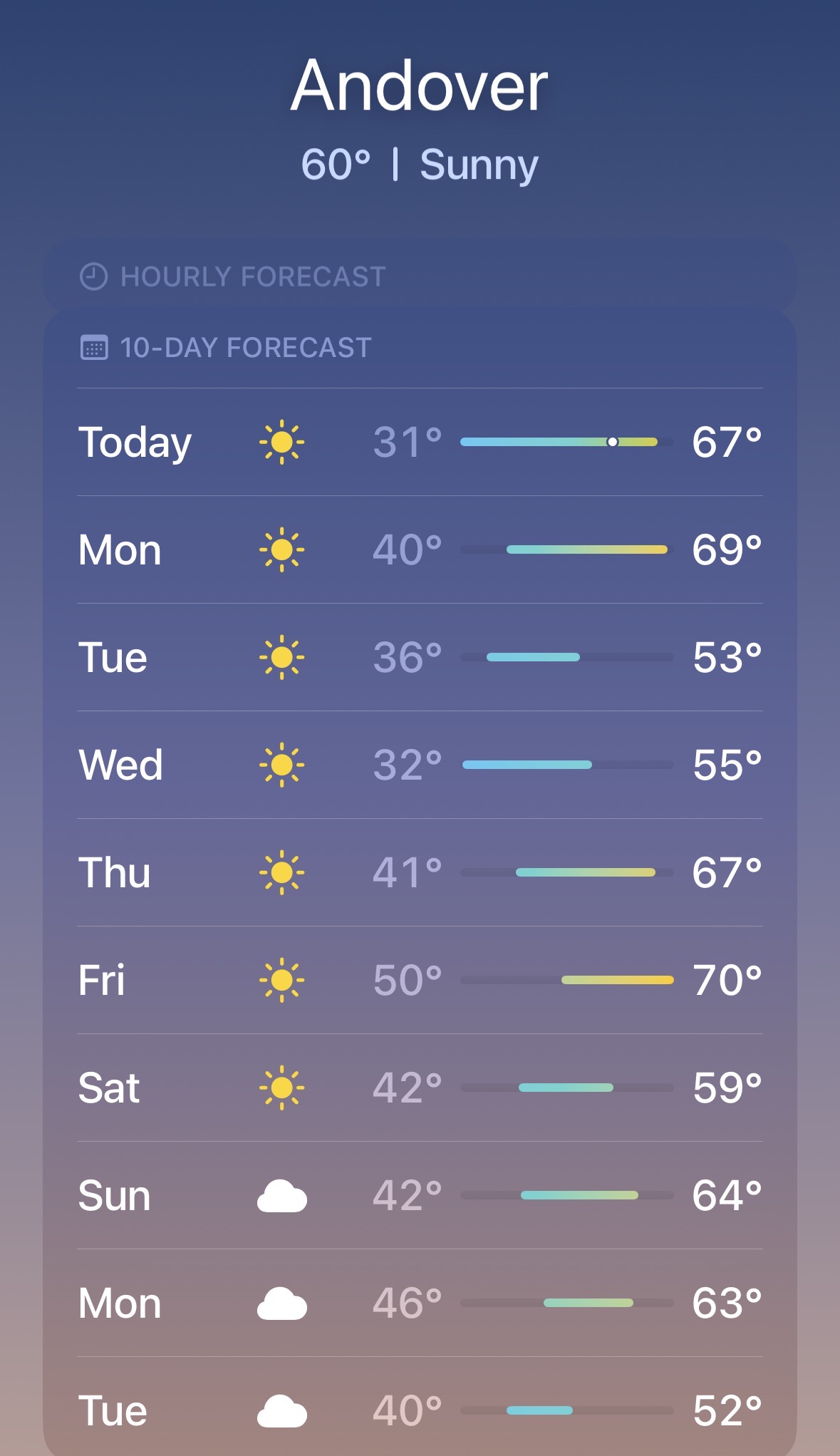
The tree is from Stark Bros in July 2024. I didn’t note when it broke dormancy.
1 Like
I greatly prefer the named American persimmons to the Asian ones. I just think that there flavor is more complex.
John S
PDX OR
2 Likes