The best stuff for spring planting may be sold out
but most places restock in summer or at the latest early fall
The best stuff for spring planting may be sold out
but most places restock in summer or at the latest early fall
Do persimmon seeds usually come out with pretty good tasting fruit? Are they close to the parent?
Probably depends on their lineage, like if it is a cross with a bad wild one, it might have bad traits pop up, whereas if it is one of the Americans that have heavy early golden in the parentage it will presumably give a lot more uniform offspring. And then like the hybrids, they ought to be volatile in their progeny.
Youre lucky to get any fruit from a seed grown persimmon.
Aparently about 75% of seedlings are males
Whoops, sorry I meant to say with Asian persimmons.
Put a chicken wire cage around it. Let it grow out in the spring. Chose the strongest sprout above the graft as a main trunk. Your tree will recover in no time.
Tony
Would you recommend grafting at that point or just cutting below the damage but above the union and letting it grow without grafting?
(My understanding had been that I should trim below the damage but above the union either way so it’s just a question of whether grafting helps or trusting some sprouting)
I would leave the tree alone and not cutting anything off until you see some sprouts above the union then you can start cutting the dead woods off.
They may be similar to the parents, but will not be identical, just like children. That means things like astringency, ripening time, productivity, tree habit, vigor and whatnot are all variable. Yoy could definitely grow them as rootstock though! I also observed wild kaki when I went hiking in Japan.
As far as sex of offspring, I believe that the ratio is 50/50 as a dioecious plant. I think the weird number quoted of higher male than female tree ratio has to do with wild patches. It is probably observed that wild patches are skewed male, and this gets erroneously attributed to there being more male seedlings. It is more likely that the female trees are damaged by the weight of their fruit, or by animals climbing them, or by fungal infection and that is why there are less of them.
That being said, seedlings have the potential to be just as good as parents, if not better. You just have to plant a lot of then and cull the ones that don’t perform well.
With Asian persimmons that likelihood is pretty small, just to be candid. With fruits like Asian persimmons that have been selectively bred for literally thousands of years the chances of getting a better one are very low
With American persimmons that have very few generations of selective breeding the chances are STILL low, but not as low
interesting, i was getting my information from Charles West, I dont know if its true. maybe its just males survive longer since less energy on fruit and so its observed. or maybe some females just dont fruit for many years and therefore arent identified as such.
There could be other factors at play that are beyond my scope of knowledge, but I don’t know what else would influence sex of offspring in a dioecious species. My assumption is that 50/50 is the ratio of seedling, but that male trees are more likely to live longer and potentially spread by suckering in some locations.
I wonder what cliff England observed or Lehman.
If they been selected for thousands of years, doesn’t that mean there is less wild and more larger fruiting n good tasting genetics in Asian seeds, so good chance to get good fruit? Esp if most people in US don’t have wild asian males around, so orchard/backyardgrowers maybe has a female with male flowers (same concept as below)…
American is more inbred since most come from EG, but good chance at large fruit if coming from EG family where the male flowers have large fruiting genetics.
i am curious, which has higher chance of larger fruit.
Asian female crossed with male from female plant.
or
American female crossed with male from female plant.
Good fruit? Yes. Better than the cultivars available? No.
Asian persimmons are also extremely inbred
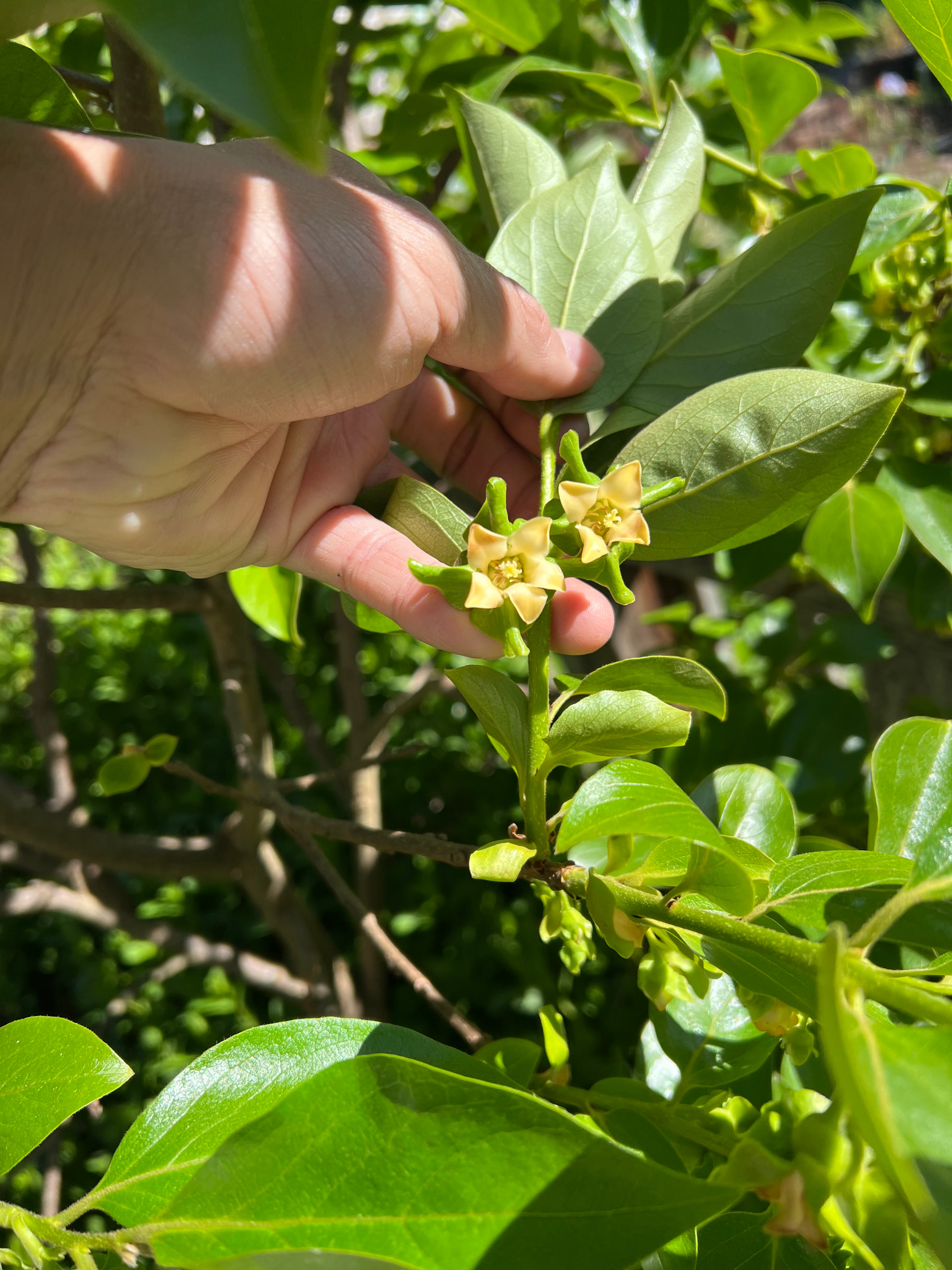
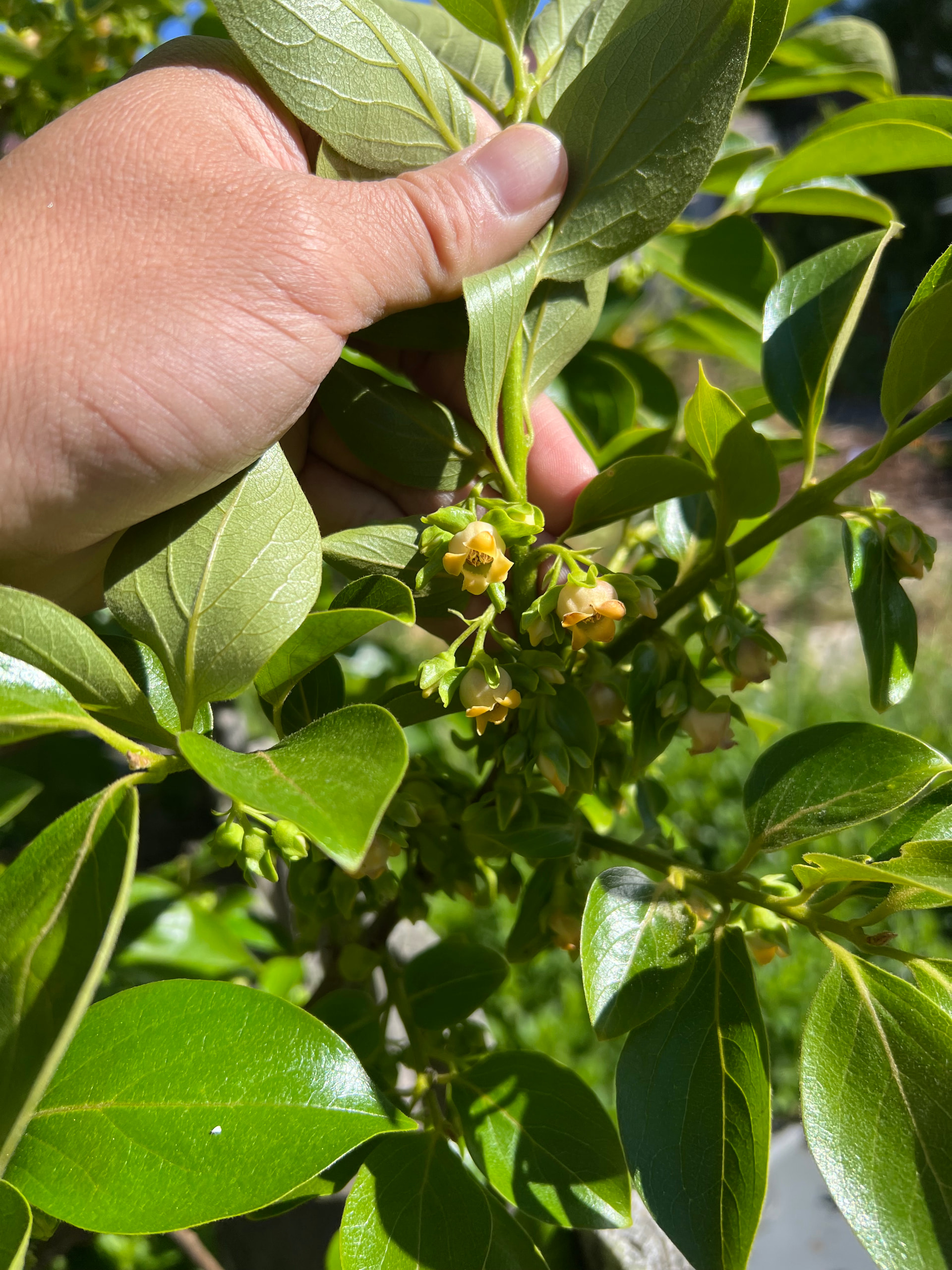
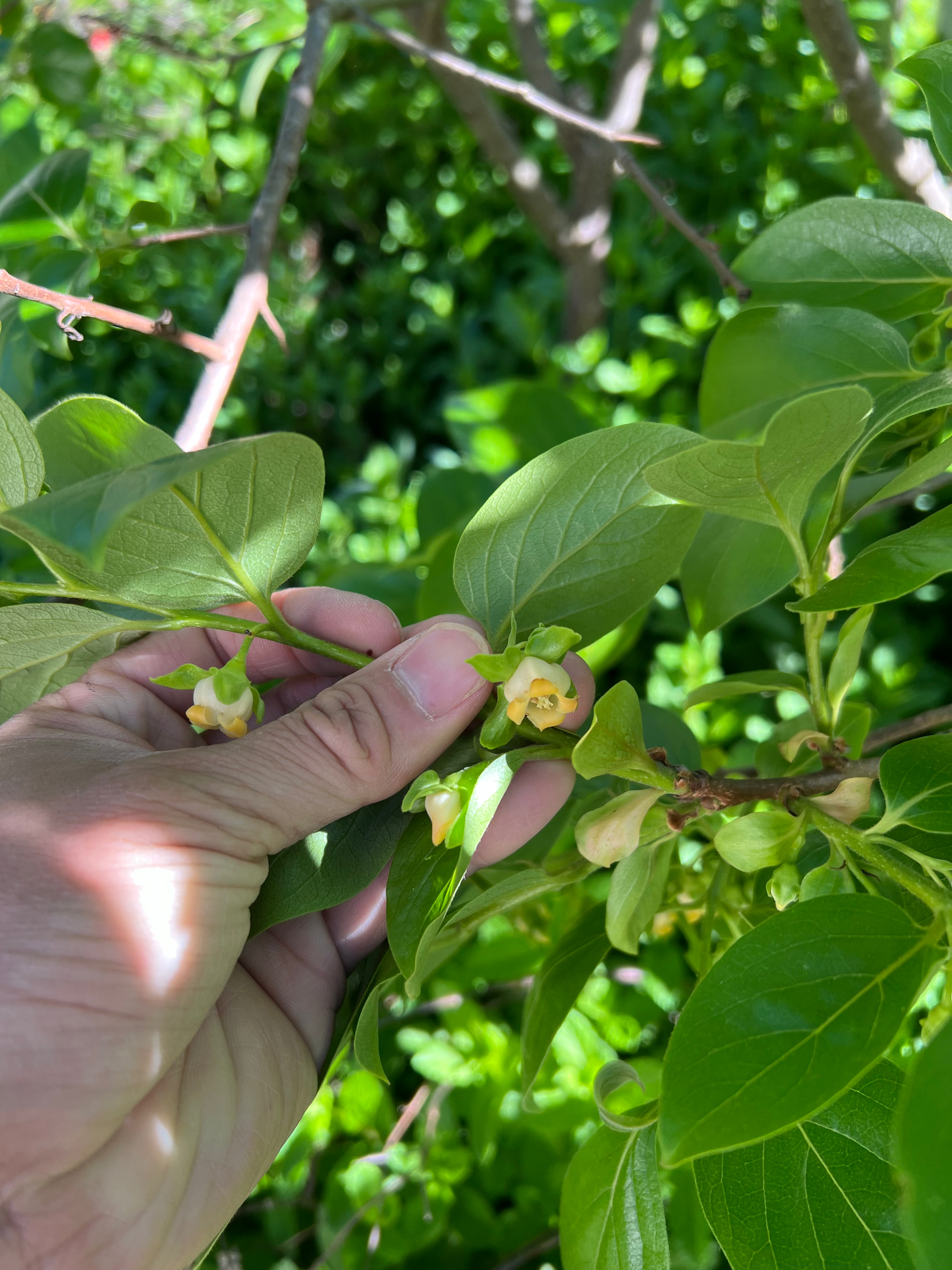
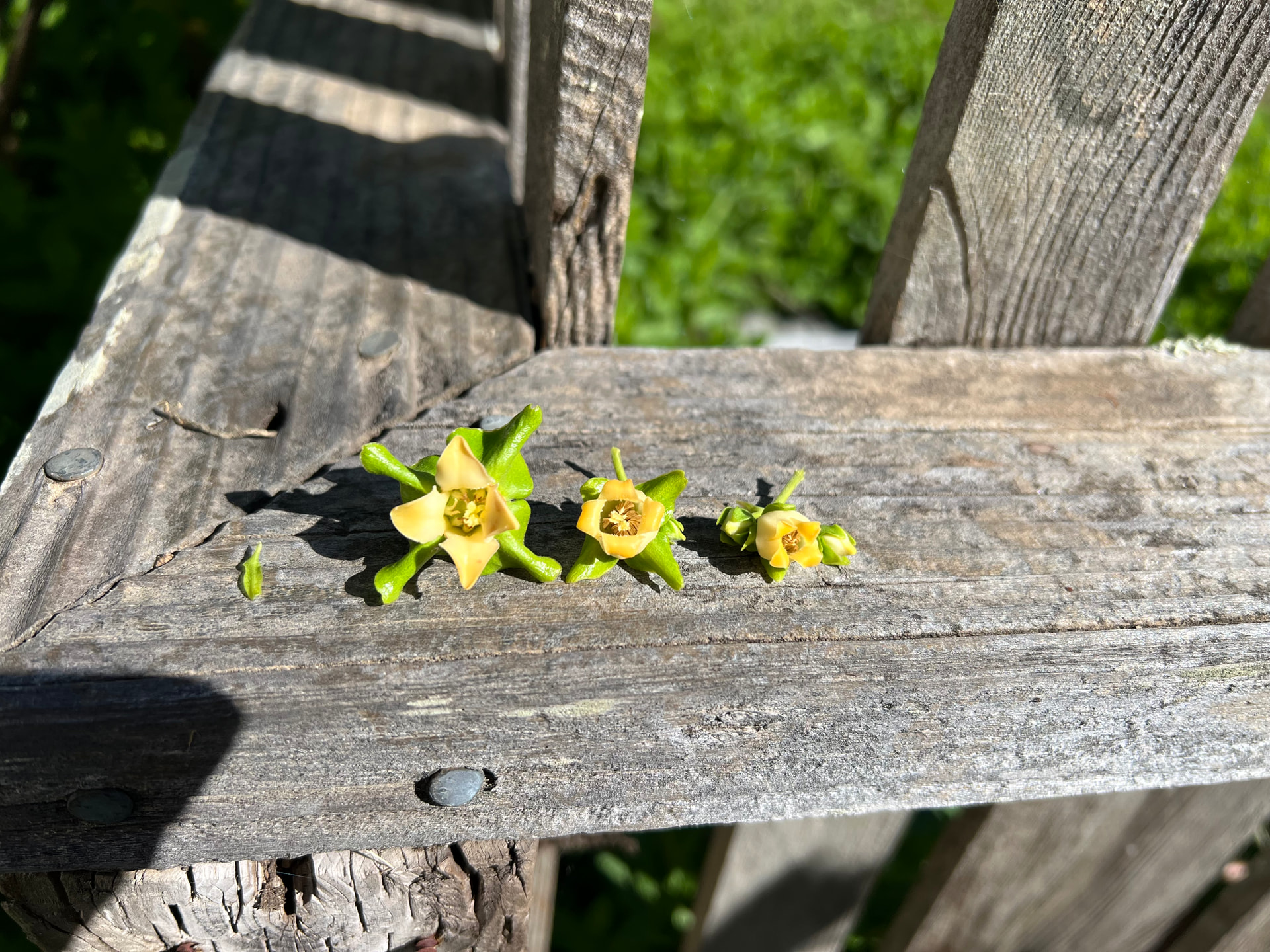
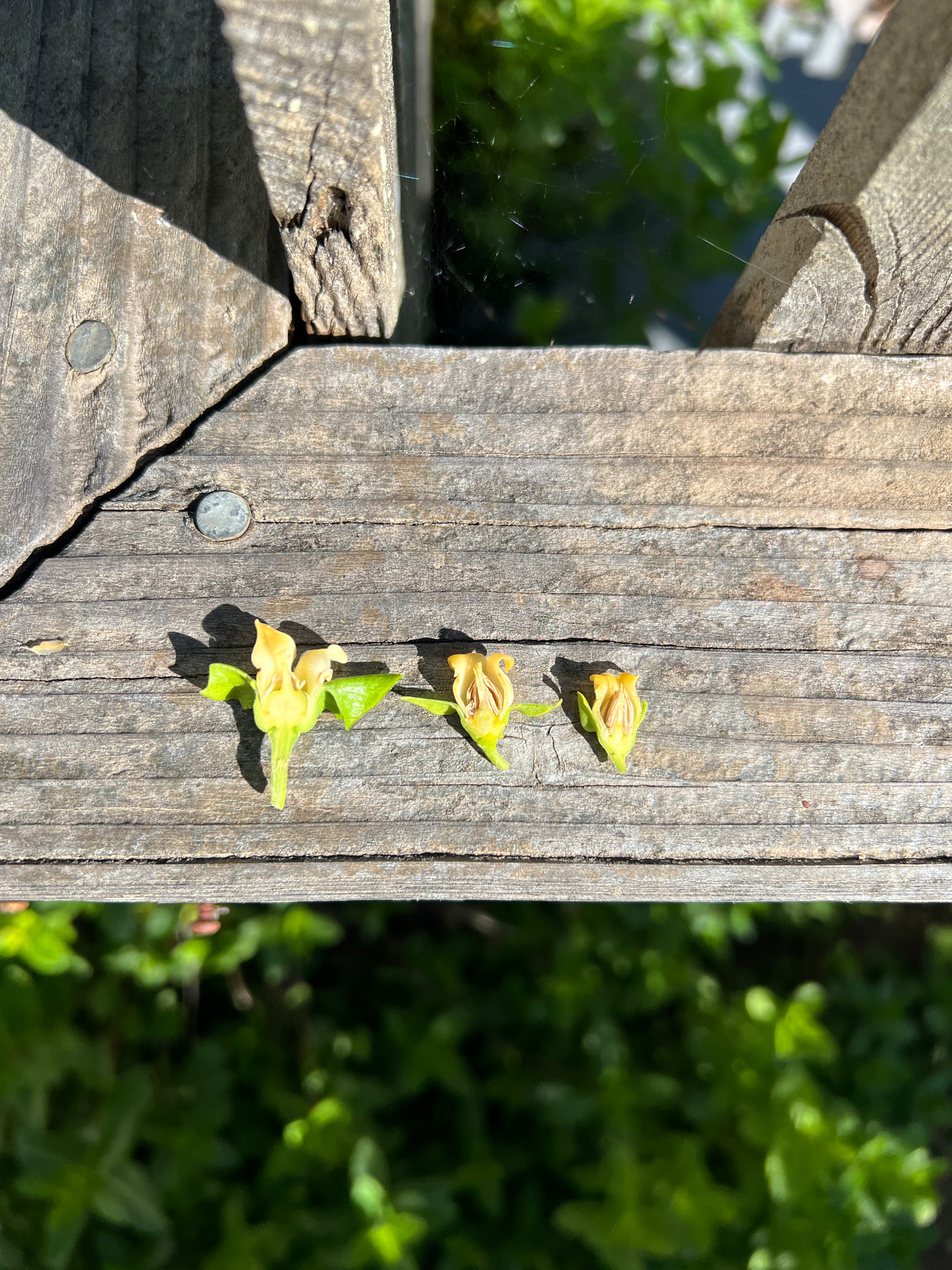
Asian persimmons are in full bloom here. @armyofda12mnkeys Since you asked me for flower comparisons a while back:
You would most likely be correct if persimmon was diploid. It is not. American and Asian persimmons are tetraploid or hexaploid.The sex determining gene therefore exists as either 4 copies (southern ecotype) or 6 copies (northern ecotype and Asian). If all 6 sex determining genes are female, it will be a female plant. If 1 gene is for male and 5 are female, it will be a female plant with some male traits. If 2 male and 4 female, it will have intermediate traits and may include flowers with both male and female organs and can produce fruit, but it WON’T be female. If 3 male, 4 male, 5 male, or 6 male, it will be phenotypically male. As a result, seedling populations of persimmon are roughly 66% male.
Plants don’t obey human “rules”. They have some extremely oddball adaptations that help them survive.
You can think of persimmon as a species in transition. It is most likely they will wind up with perfect flowers, i.e. having both male and female organs in a single flower. They are currently dioecious (male on one plant, female on another plant) with some individuals expressing as monoecious (separate flowers but with male and female on the same plant). If they eventually develop perfect flowers, they will be referred to as hermaphroditic or bisexual.
Muscadine is another example of a dioecious plant with separate males and females. About 100 years ago, a few perfect flowered muscadines were found growing wild and were used in breeding. As a result, most newly released cultivated muscadines are now perfect flowered. This is a case where humans directly influenced a plant species to fix a major reproductive trait.
Can you take more pics of the cross-section from another hermaphrodite flower (or all 3), maybe each one closeup…
Buzz Ferver From Perfect Circle was asking for them as i think he’s never seen a true functional hermaphrodite flower and i sent him the updated pics and he said:
“Any chance he would be able to take a better pic of the cross sections
These are great”
Sex determination in hexaploid kaki persimmon is actually much more complicated and variable and involves epigenetic control of the female gene via DNA methylation and insertions of transposable elements into the male gene, and not strictly due to the ratios of male vs female genes.
so where are we on what % of seedlings are male