Seek has the identification as, Rose-hip Fly,Rhagoletis alternata.
3 Likes
That does look like it. Funny, I was just talking with someone about how I’ve never seen a rose hip that wasn’t full of worms. I guess I know why.
1 Like
So my Asian pears have held fruit for the first time this year. But they are quite small - maybe 1-1.5” diameter.
I didn’t thin. Would thinning to one per cluster help at this point in the summer or not?
First year fruit often do not size up and/or do not taste very good. I call it practice fruiting.
4 Likes
For those who have hand pollenated, do you save the previous year’s late pollen in order to make an earlier variety as the seed parent or is there some other way of going about this?

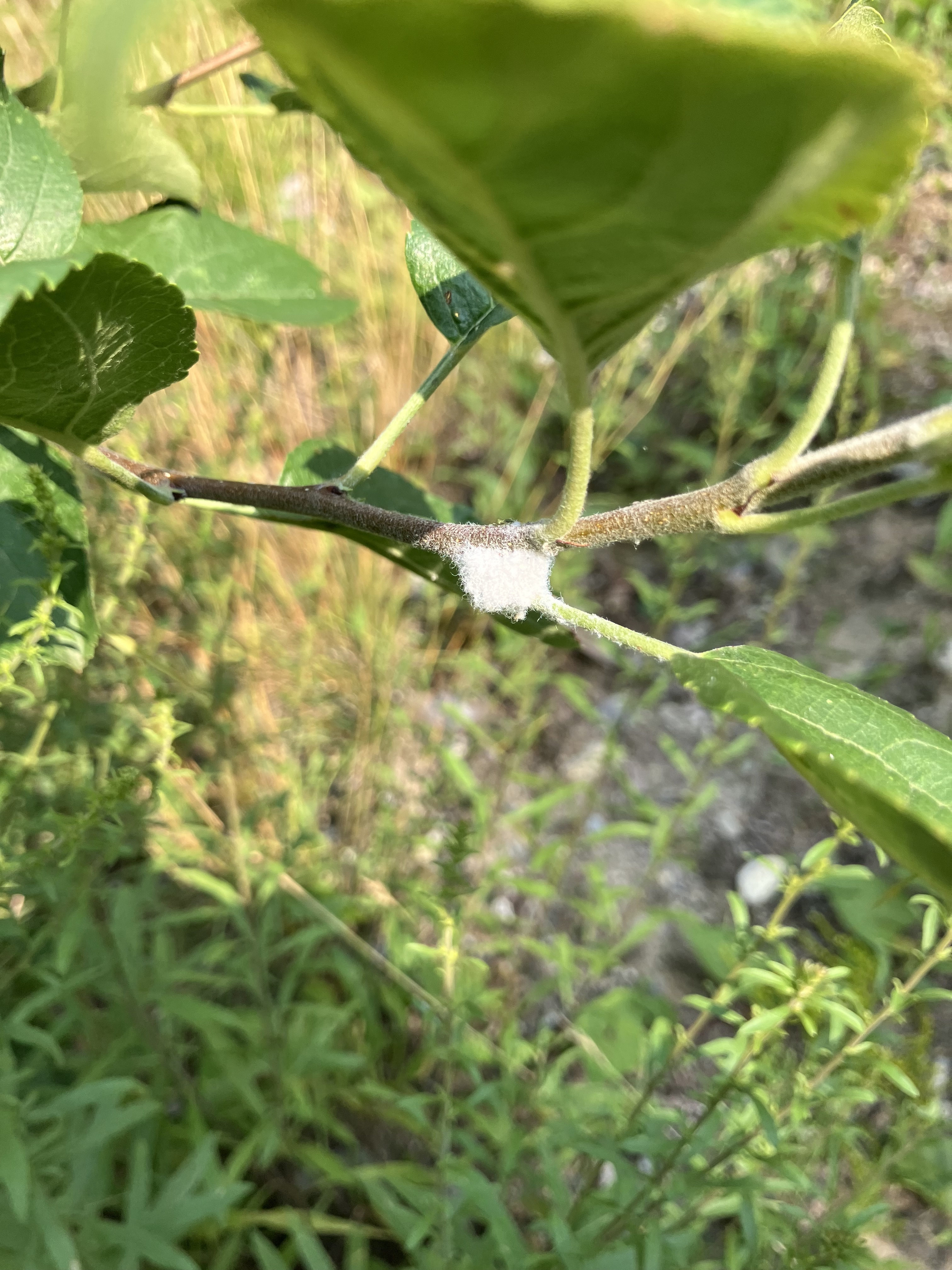
Woolly Apple Aphid. I use neem oil solution to get rid of them - just brush affected areas.
4 Likes
They probably won’t be ripe for another month so thinning could be helpful.
1 Like
Thanks!
Hi guys,
Is it normal for a bare root pear tree to struggle a lot on its first year? This is a Perdue pear on callery.
It’s well mulched and in sandy soil, I water it regularly.

Does it look severely diseased?
Yes, it’s normal for bare root to struggle the first year. Sometimes more than one year. They spend the first years rebuilding the roots they lost from when they were dug. I’m not a fan of bare root myself.
1 Like
If I cut these artichoke head now, will the seed be viable?
I know they are close but all the things I have found say to wait until the poofs are coming out.
All of them look like this.
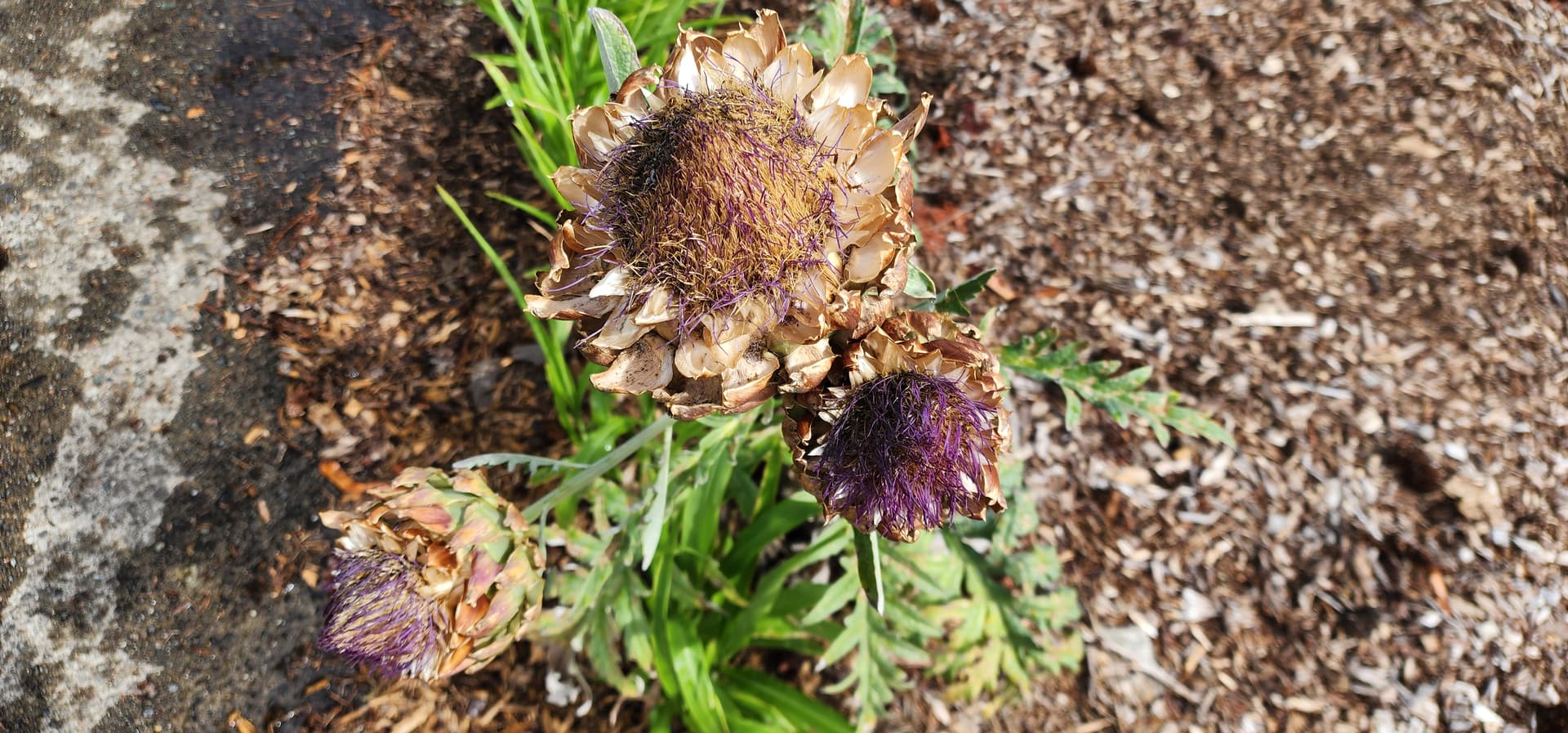
If they are like thistles, if you cut the heads now and let them dry you will have fully developed seeds, but the longer you wait the more viable seeds.
1 Like
I’ve tagged along with a friend, who is looking to buy some property in Anchor Point, Alaska, near Homer.
This plant grows abundantly and am wondering the name.Google Lens has Cow Parsnip or Hogweed and states,they are similar in appearance.

1 Like
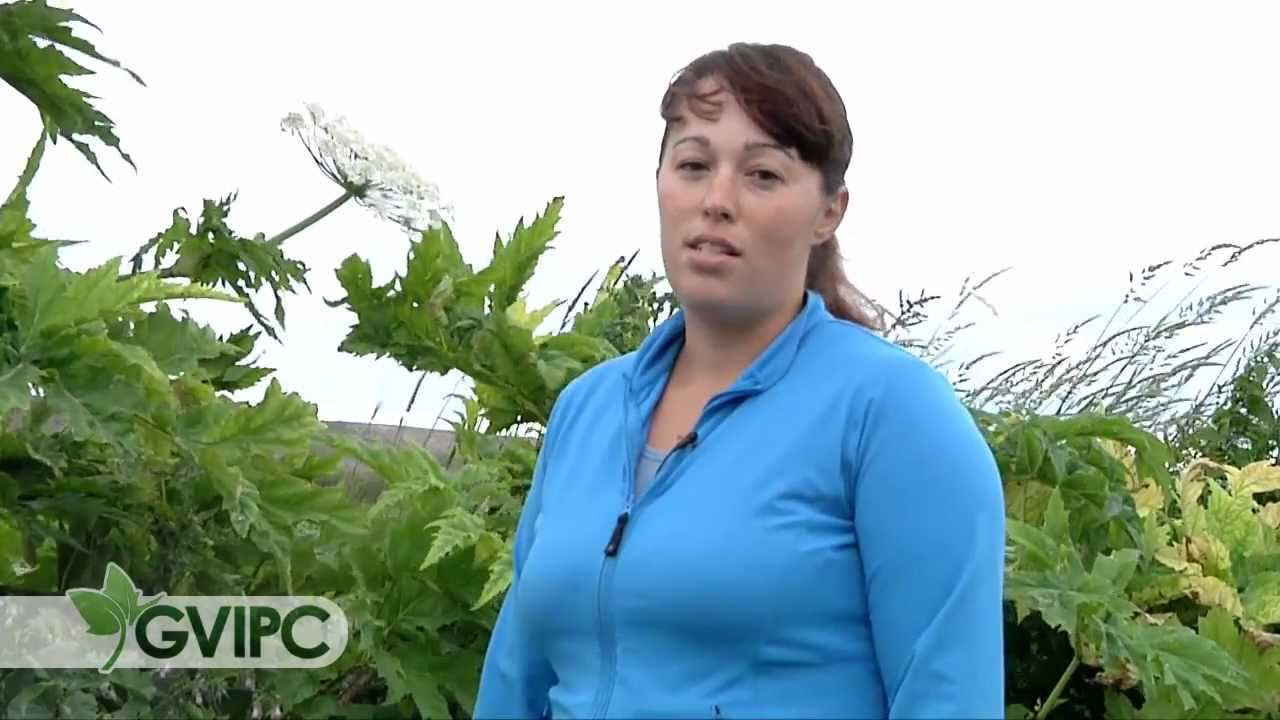
I’ve noticed no one in Minnesota can tell the difference, so the native cow parsnip gets removed. Based on YouTube I’m guessing Cow Parsnip. I’ve seen cow parsnip – labeled for identification – in a habitat restoration. It was 6-7 feet high. I’ve never seen Giant Hogweed labeled.
3 Likes
Zone 4 Midwest here. When climbing trees to cut down branches all by myself, I often have trouble controlling the direction branches fall. Even though it means climbing, sawing a notch, setting on a tow rope or chain, descending, winching, climbing, sawing the back cut… I’m wondering if a winch is a useful tool for guiding branches? I assume I could also use it to pull logs around on the ground.
(P.S. Most of my tree cutting is in winter. I’m young enough I enjoy repelling down the ropes and using Prusik and Klemheist loops to ascend back up to maintain sport climbing skills because winter here is very long and there’s nothing much to do otherwise. Trees here aren’t as big as the west coast.)
I use a winch when controlling the direction a tree will fall but branches are different. Once the branch starts to move the tension comes off the winch and gravity pulls it straight down.
With a complete tree tilting the tree using the winch changes the center of gravity of the tree and that and the angle of cut determines how it will fall.
1 Like
I have a battery powered capstan winch. Similar to @danzeb I mostly use it to force a (not too large) tree to fall in a direction it wouldn’t otherwise. Been handy for numerous other purposes as well. There are also some which are powered by drills, chainsaws, etc…
2 Likes
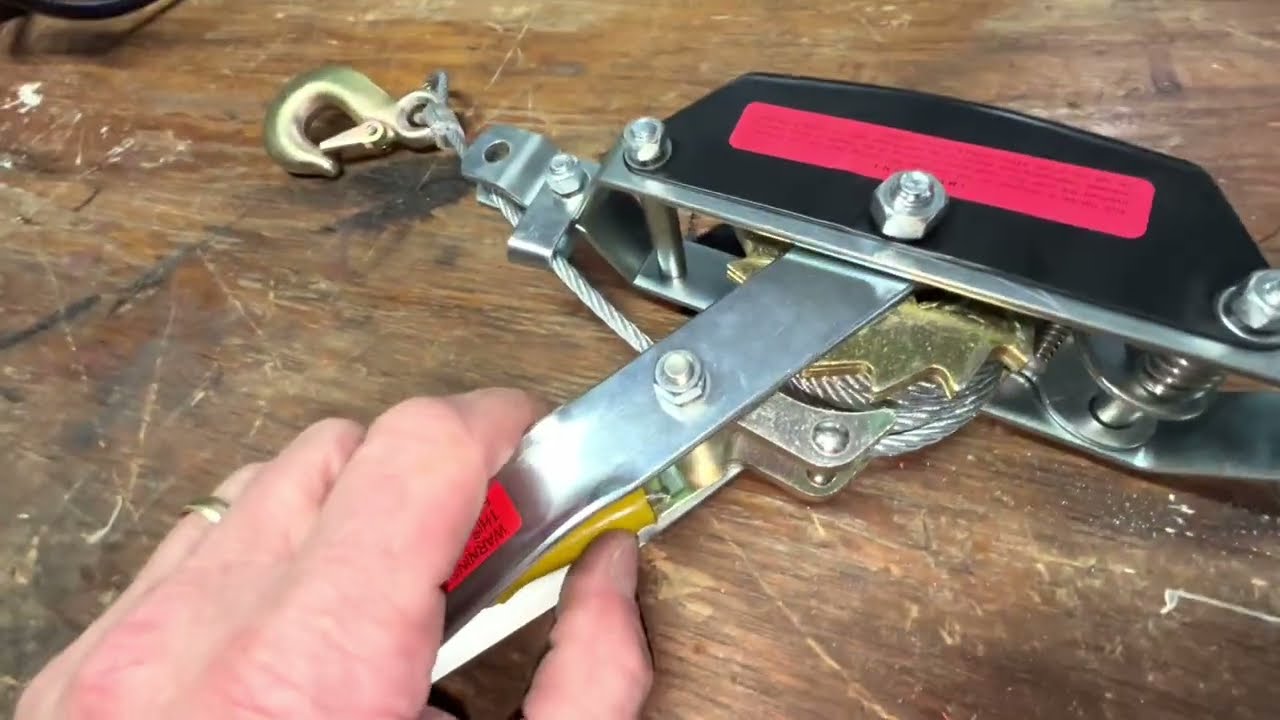
Thank you, the 1st instructional video I found mentions their come-along winch is being used to direct falling trees.
Tie a rope to the branch you are cutting. Then from the ground you can pull it out of the tree. If you really need it to go a certain direction someone on the ground can pull the rope as you cut.
1 Like