They are beautiful.
4 Likes
Has that tree been outside it’s entire life?
2 Likes
No. It was outside in a pot for its first winter (2021/2022), when it was one of the only potted trees that was not killed entirely by this 6-day freeze with a low of 16°F in December 2021:
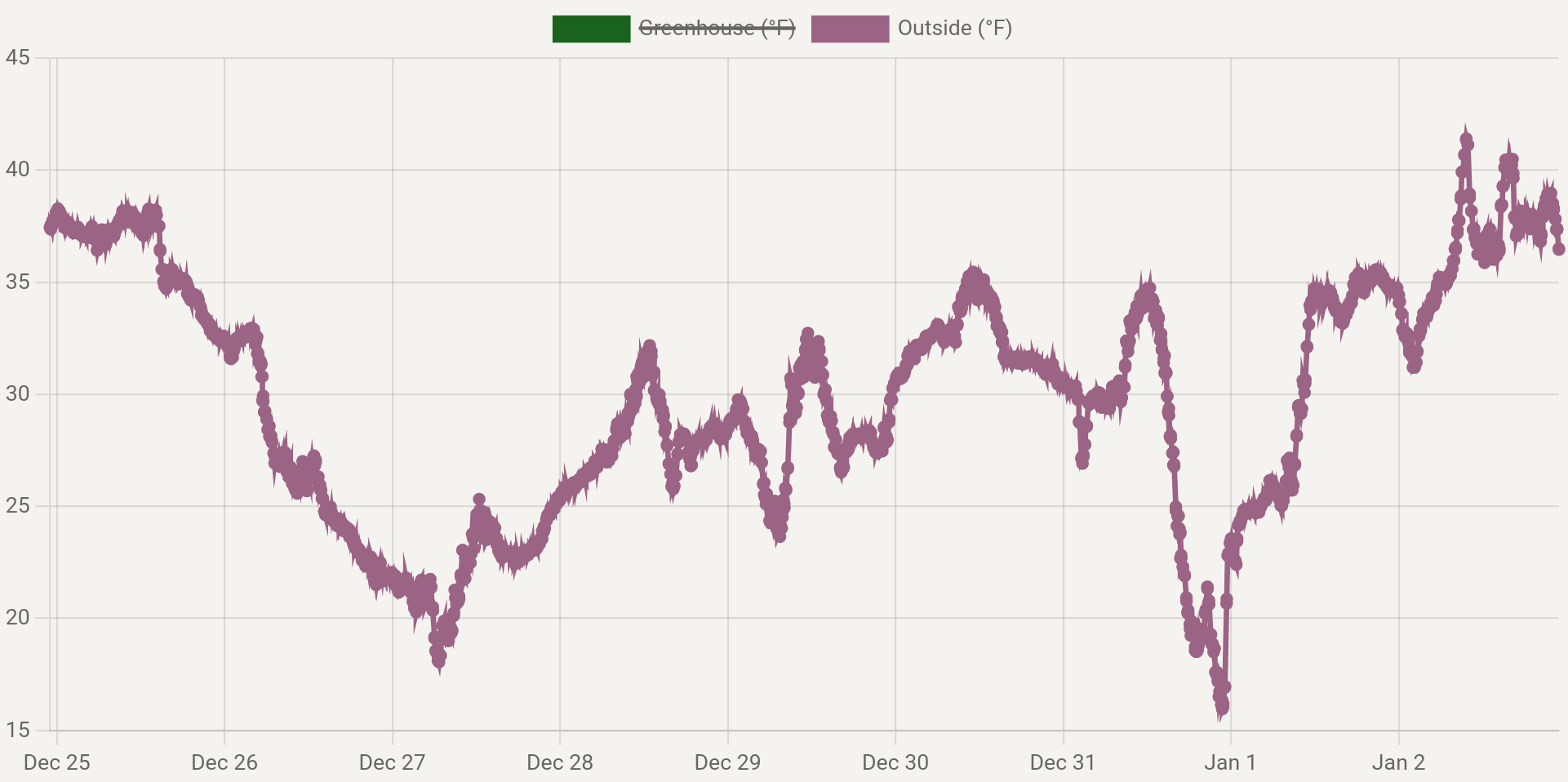
As its reward for regrowing from the roots so vigorously last year, it spent the most recent winter in its pot in the greenhouse, and was planted out in early March this year. It had one night around 27°F soon after planting out and showed only very mild frost damage on new leaves at the time. It has basically doubled in size since then.
3 Likes
That sounds very promising. And with an El Niño winter upcoming for 2023/24 that could really help it get established. I’m counting on that too for several of my own specimens. Fingers crossed.
4 Likes
Gcc
1 Like
I was just watching a video about a guy who grows avocados in southeast North Carolina. He grows a Mexican avocado called Lila. Have you ever heard of or tried that one? Part of your trial? If so, how does it taste and or performed?
1 Like
Lila is not yet in the collection, though some people claim it’s a synonym of “Opal,” which I did graft this year. But I’m somewhat skeptical of claims that any varieties are the same, as it seems to mostly be based on similar looking fruit. I will add Lila at some point I’m sure, and compare and flush color, leaf shape, etc., to Opal. I’m on the “notify me” list for Lila scions from Fruitwood, and it currently says they expect to be available again this November:
3 Likes
I’m anxious to give it a try too. This guy in North Carolina is in a zone 8a and it’s 8 feet tall and covered with dozens of fruits. He says he has to cover it infrequently.
Have you reached on sort of consensus on what the best rootstock is for these marginal areas?
1 Like
No consensus yet, probably not for many years yet. But, a few observations.
None of the usual commercial seedling rootstocks have done well for me here. Bacon, Zutano, and Fuerte seedlings have all had very low rates survival, even of the roots.
I haven’t tried Duke7 or any of the other Duke-derived commercial clonal rootstocks, but those would probably be good based on how well other Duke seedlings have survived for me so far. Aravaipa seedlings have also done pretty well.
I know Walter Hole seedlings are used in some parts of the world as rootstocks, but my graft has been slow growing. It appears to be covered in dormant flower buds now, perhaps it will hold a fruit or two next year so I can start testing its seedlings as well.
3 Likes
Those are some great insights so far. I seem to recall a post a while back about one seedling that has survived outside the entire winter with only minimal dieback. And it’s pretty tall now too. Which one is that?
2 Likes
The outdoor seedling that had the least dieback last winter was #149, a Duke seedling, which is currently a little under two years old from seed and about 3’ tall. Wait a minute or so for all the photos to load on that page (and the other ones linked below).
Another one that re-grew from a good bit above ground level was #138, a seedling of Aravaipa. That’s the same age, just under two years from seed. The newest photo on that one is about a month old, it’s a bit larger now, but I may go add one today and it’ll update there.
One that keeps regrowing well from below ground (two winters in a row now!) is #51, a seedling of Mexicola Grande, but that one is planted next to the west side of my concrete foundation, so is in a warmer spot than the other two. It is nearly three years old from seed, has been outside since around February 2021, and had no protection at all this last winter.
The tallest outdoor tree was not outside last winter, but did survive below the soil line in its pot the previous winter. That is #37, a seedling of Mexicola Grande, and it’s about 8 feet tall now. It was planted out this March and has more than doubled in height since then.
5 Likes
That’s fantastic! I’m really excited for a possible mild winter upcoming. Imagine what that could do for your trial specimens.
How often do you feed your avocados? As often as the citrus?
I learned a hard lesson when I failed to feed my citrus regularly. They really need those nutrients.
I also learned a hard lesson about keeping avocados in a proper soil medium. All three that you gave me lost every single
leaf. A not insignificant portion of their stems also turned black and died. Fortunately, I got them out of that nastiness in time to save them. I reported into some excellent soil, and within two months they are almost all the way back to the way they were before I transplanted them into the death mix in June.
2 Likes
Millennial gardener in North Carolina protects his avocado carefully in winter. He also has a much milder climate than the PNW (fewer hours of bitter winter wet cold)
1 Like
Other than mulching with compost and wood chips, I don’t feed the in-ground trees much at all. I did mix a little dry organic fertilizer (bone/blood/fish/etc meal) with the backfill for a few of them when they were planted, but there’s not much difference between those and the others.
In early summer, I gave a little diluted fish emulsion to any avocados that looked a little pale, but most of them did not get any.
I give the potted avocado trees diluted fish emulsion about 2x per year, not much else.
2 Likes
Sounds good. Thanks. I have some fish emulsion concentrate handy.
I can’t believe how expensive it has gotten in recent years. That stuff was always so cheap.
I’m a recreational fisherman for a hobby and frequently have lots of scraps leftover that I toss into the ocean. I’ve been flirting with the idea of using one of my 50 gallon rain barrels to ferment some fish guts and heads. Maybe include some seaweed. My family has had a commercial seaweed business since 1983 and with the increased cost of fertilizer I’ve been thinking this is a route I should definitely go. I’ll have plenty to share if I do. When I’m down in Mendocino next time I’ll look into getting extra fish scraps from the gals at Noyo to supplement my own and the seaweed.
3 Likes
Don’t forget the urea you make for free! Hard to get a cheaper fertilizer than that, though it comes with the uncomfortable requirement to collect and dilute your own urine. The lively thread about that on this forum is pretty informational.
3 Likes
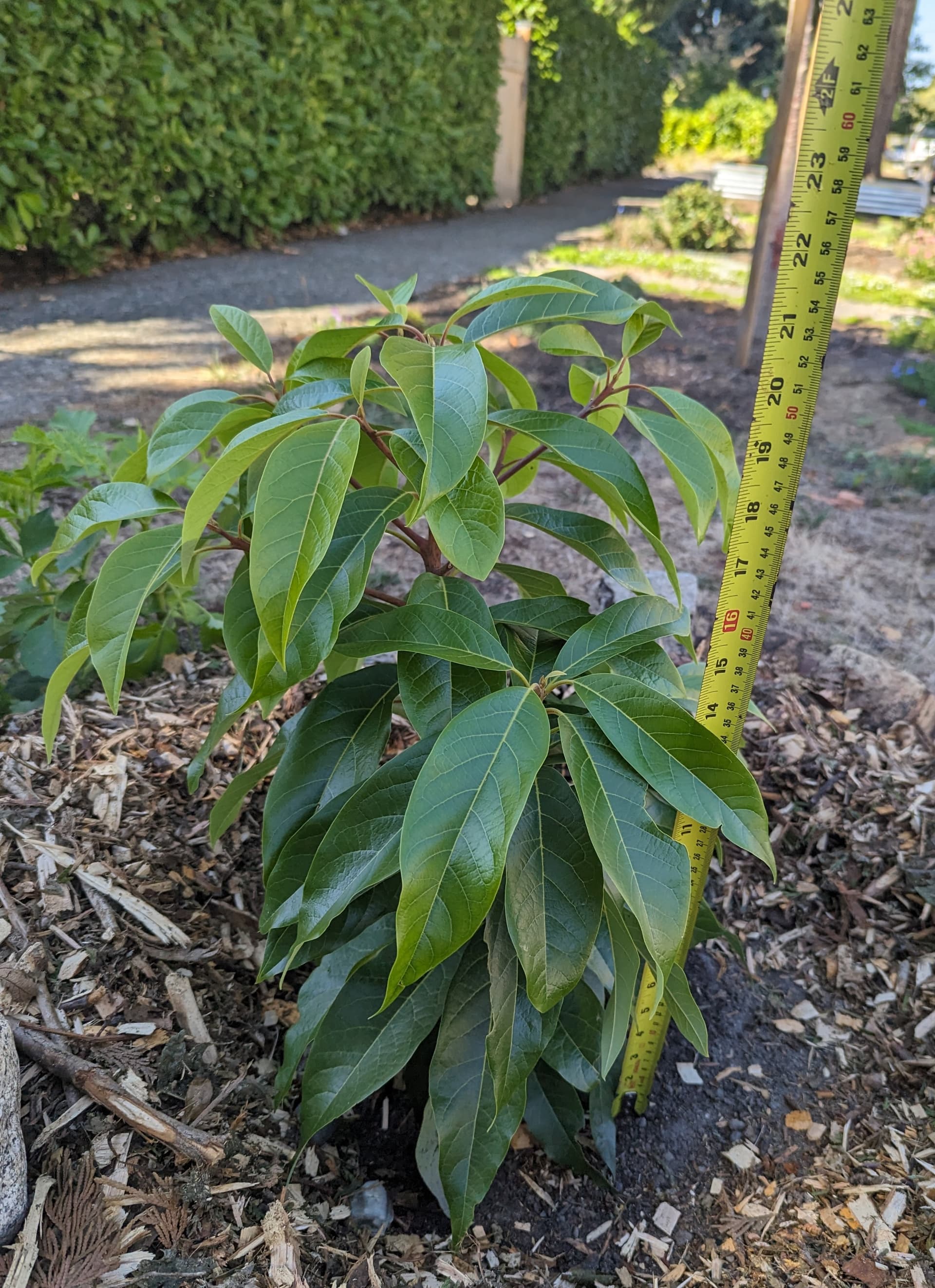
Always good to double-check oneself, it appears I greatly exaggerated the size of #149, and slightly exaggerated #37:

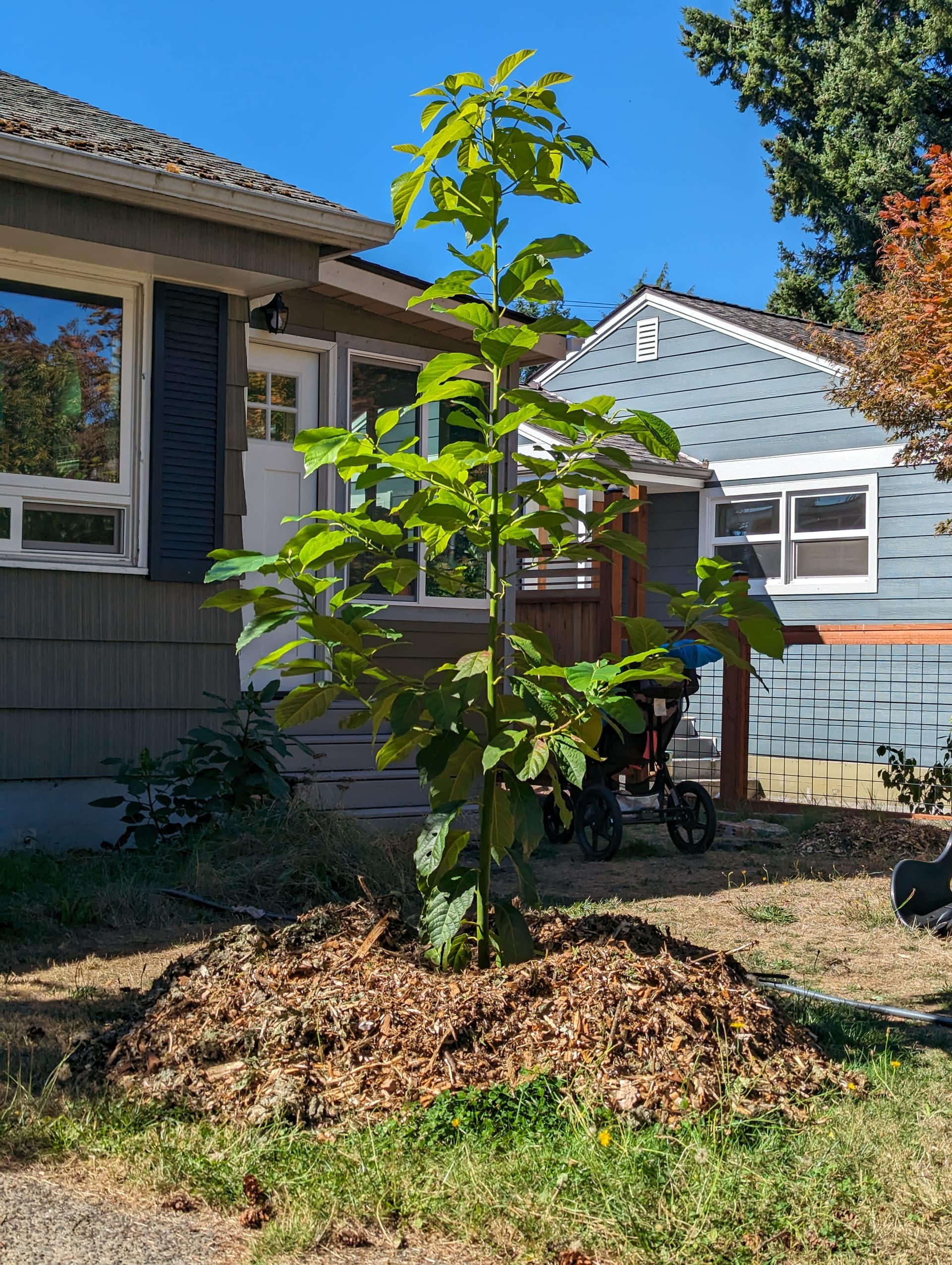
I got my chipdrop today and started spreading wood chips, and #37 got a couple wheelbarrow loads:
8 Likes
That’s a great idea. Someone recently suggested that start I doing that for my cactus collection. The idea doesn’t bother me in the least. Why waste it?
I’m actually planning to put a composting toilet in my cabin down south. The septic tank got broken apart by roots over a decade ago and I have no desire to find out what a proper septic tank repair would cost me. I had to disconnect it from the system a few years ago once the heavy rains started pushing the contents back into the bathroom.
2 Likes
That’s an impressive specimen in the last pic. Crossing into the territory of ‘wow, an avocado in Seattle. Who’d a thunk it?’
3 Likes
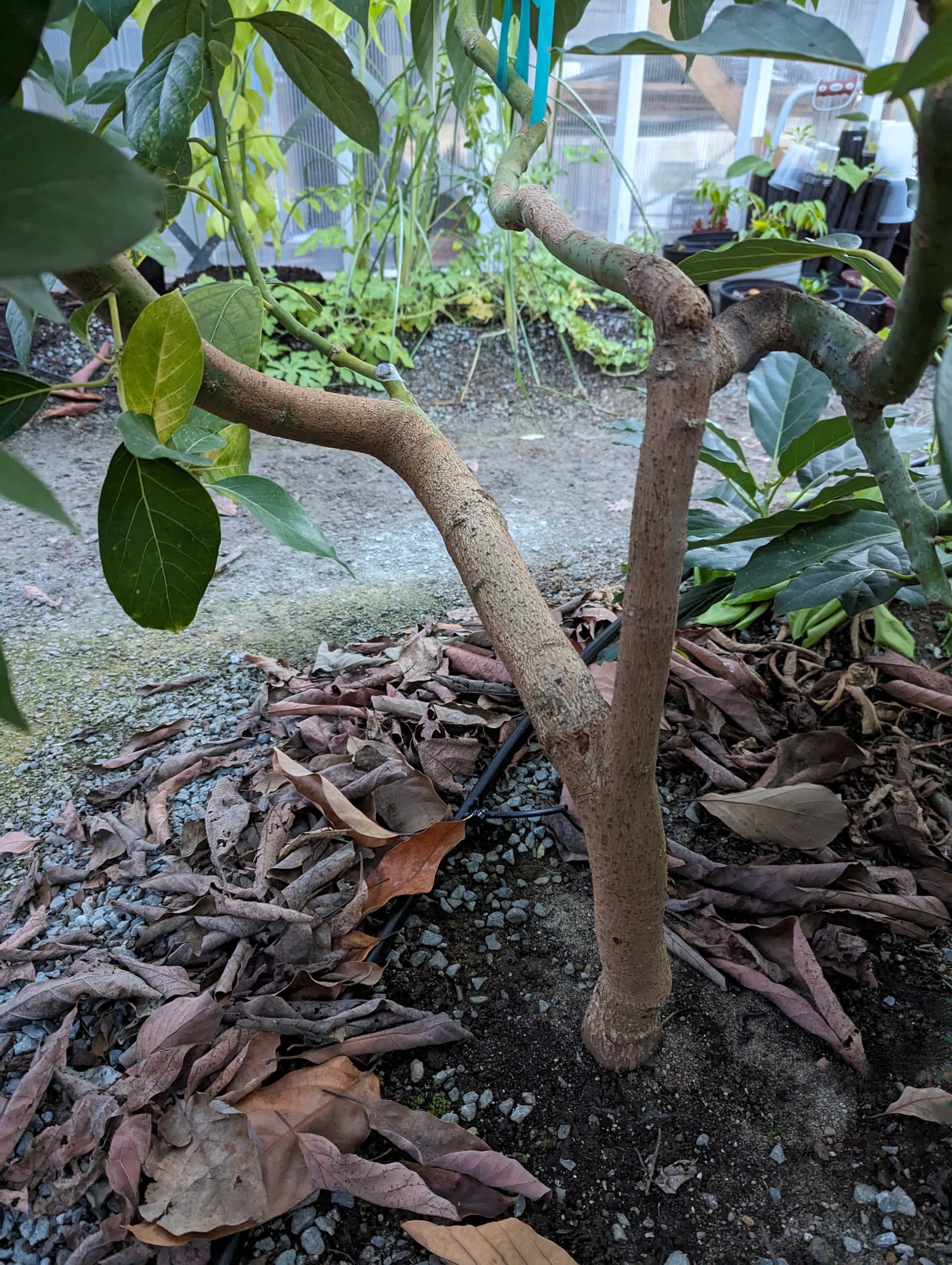
I’ll agree when the trunk forms bark and drops its leaves, but even if it’s 7.5 feet tall, it still looks fragile with this green trunk:
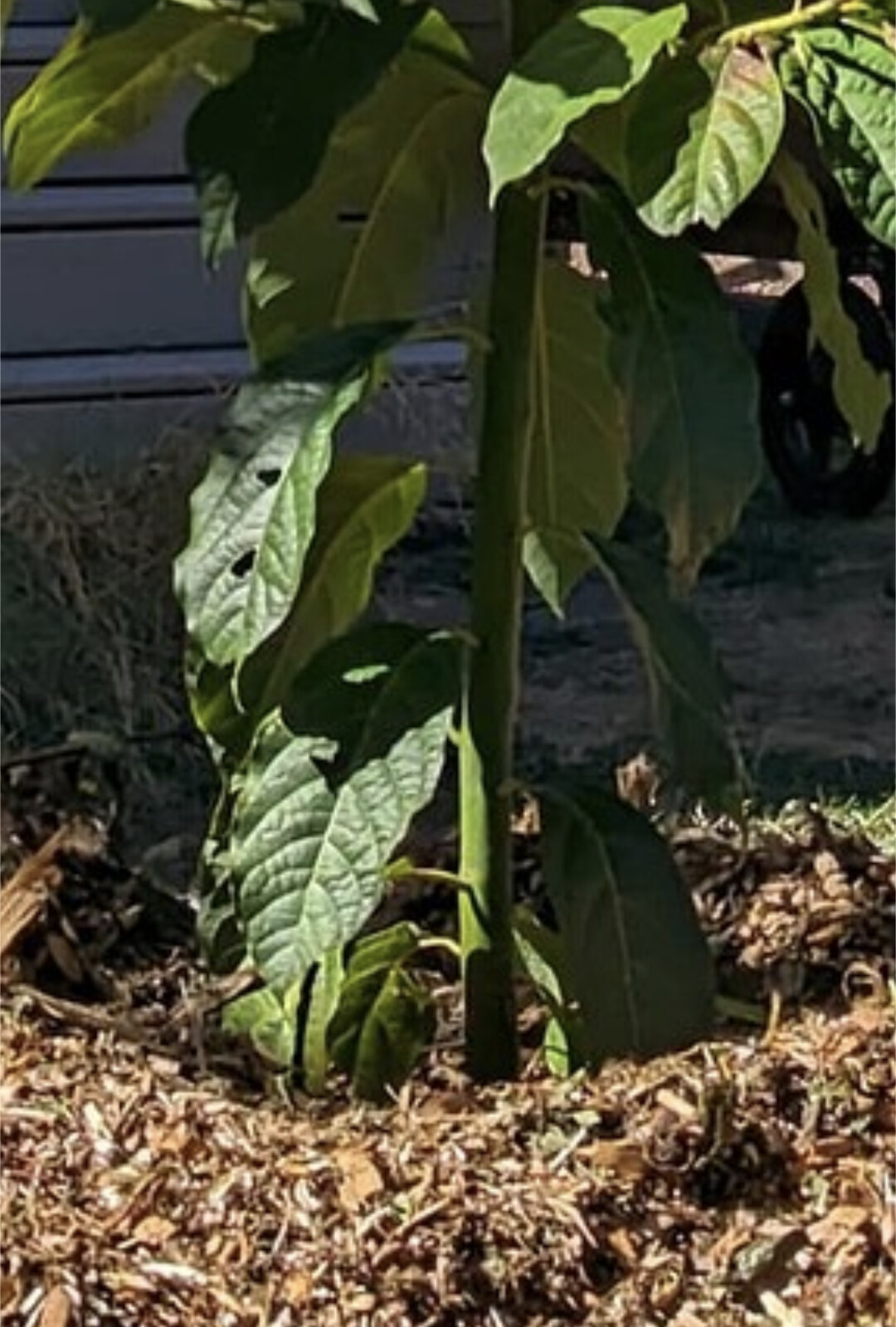
But the greenhouse trees looked similar a little over a year ago, and they look like proper little trees now, so maybe El Niño this winter will grant the outdoor tree a trunk like this before the next winter:
11 Likes