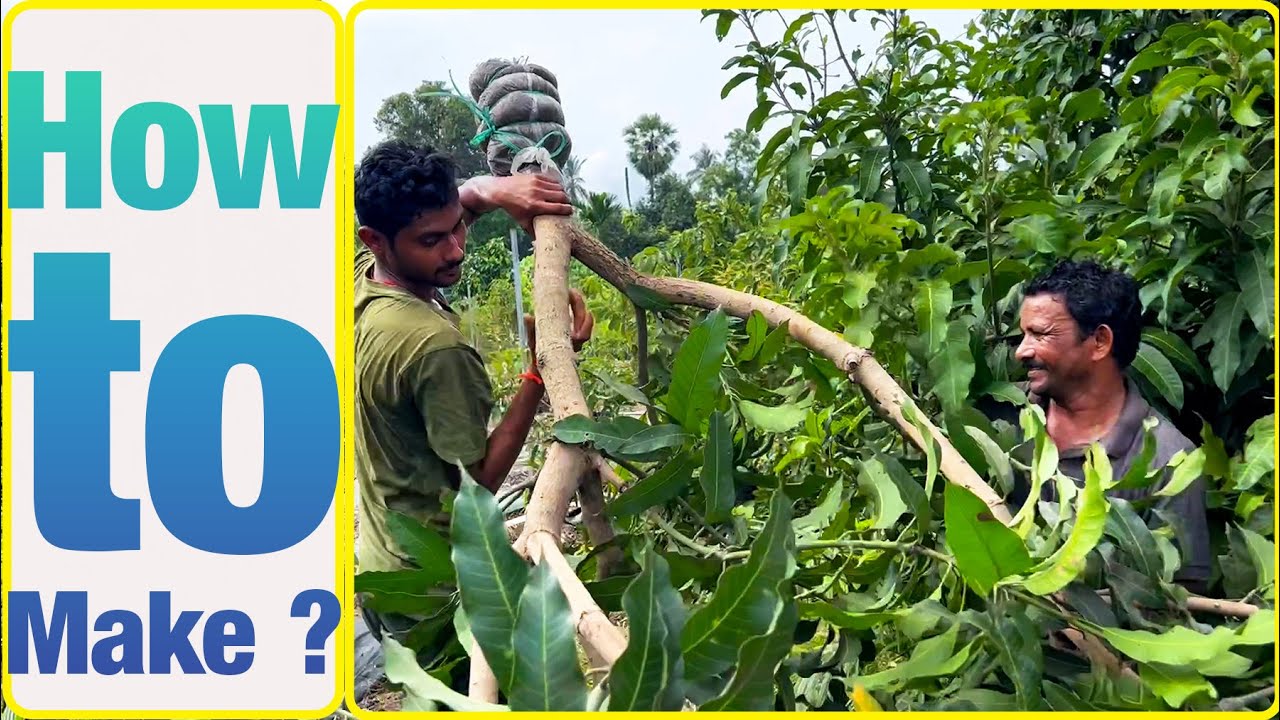
I’ve not seen this before. It could accelerate creation of new trees in species that take a long time to air layer.
Not sure if it will ever be commercially viable though given the labor. But could be very interesting for hobbyists like us.
I’ve not seen this before. It could accelerate creation of new trees in species that take a long time to air layer.
Not sure if it will ever be commercially viable though given the labor. But could be very interesting for hobbyists like us.
Very neat, I need to think about potential use cases
Thanks, very interesting. It could solve a problem I have. But my experience has been that tropical plants seem to be easier to graft. I’ll see if it works on an an almond tree next spring/ summer.
After the trunk was ringed,was that part included in the plastic bag?
We saw the same video and I don’t have any extra info. I suspect you would bag the ring as well - as in usual air layering.
My question was posted in the comments.It wasn’t a PM.
Nobody here has any additional info. You need to post in the comments on the video.
I would say it’s optional. The important thing is to grow roots from the grafted rootstocks. If additionally roots grow from the stripped trunk then all the better imho
FWIW, I’ve made very large air layers with figs. Instant tree.
wow totally mind blowen. big brain move.
i seen this technique use in cactus/ caudex plant before.
where we use root as root stock to graft scion to mimic the nature shape of a seed grown plant.
but we usually just do it for fun. some caudex plant can use this technique to mimic seed grown root system.
but i never thought this can be apply to tree.this is huge. and very use ful. aspecially on persimmon.
Have you found them to grow anywhere near as quickly as fig trees propagated from cuttings? I’ve been meaning to bring this up on the thread since the two trees I produced via air layering are growing at a much slower rate than all of the ones I produced from cuttings, and this is after observing two full years of growth after they were planted in-ground. Given my experience to date I’m not planning to air layer ever again.
After having thought about it quite a bit it’s somewhat of a novelty. As he says in the video it’s about having a larger tree as a starting point
For anything hard to root like persimmons it would be much easier and less effort to graft a scion directly to a piece of root and the result would be only 1-2 years behind
I have just the opposite opinion. If I want to duplicate a fig variety that I already have, I won’t try anything other than air layering. The only time I’ve had any trouble is when either (1) the container is not securely fastened to the tree, so the pot moves and roots shred; or (2) I remove the container too soon. Even air layering a small branch, I can usually produce a decent small tree within 1 year.
Note that I do all my air layering of figs in late May - June. With decent temperatures, it takes roughly 6=7 weeks to produce a solid root ball. I try not to remove the air layer until the root ball is very dense. I like to joke that I could throw a spiral pass with it and it would not be damaged.
If I were doing another big tree, I’d try to air layer a big branch into a 3 gallon pot. Then when I cut it off, it’d already be potted.
Air layering is a fast way to get a large tree.
Figs are super easy to air layer and you don’t need to graft roots on. But maybe this technique is effective on hard to root things like loquats or persimmons. Maybe even pawpaws