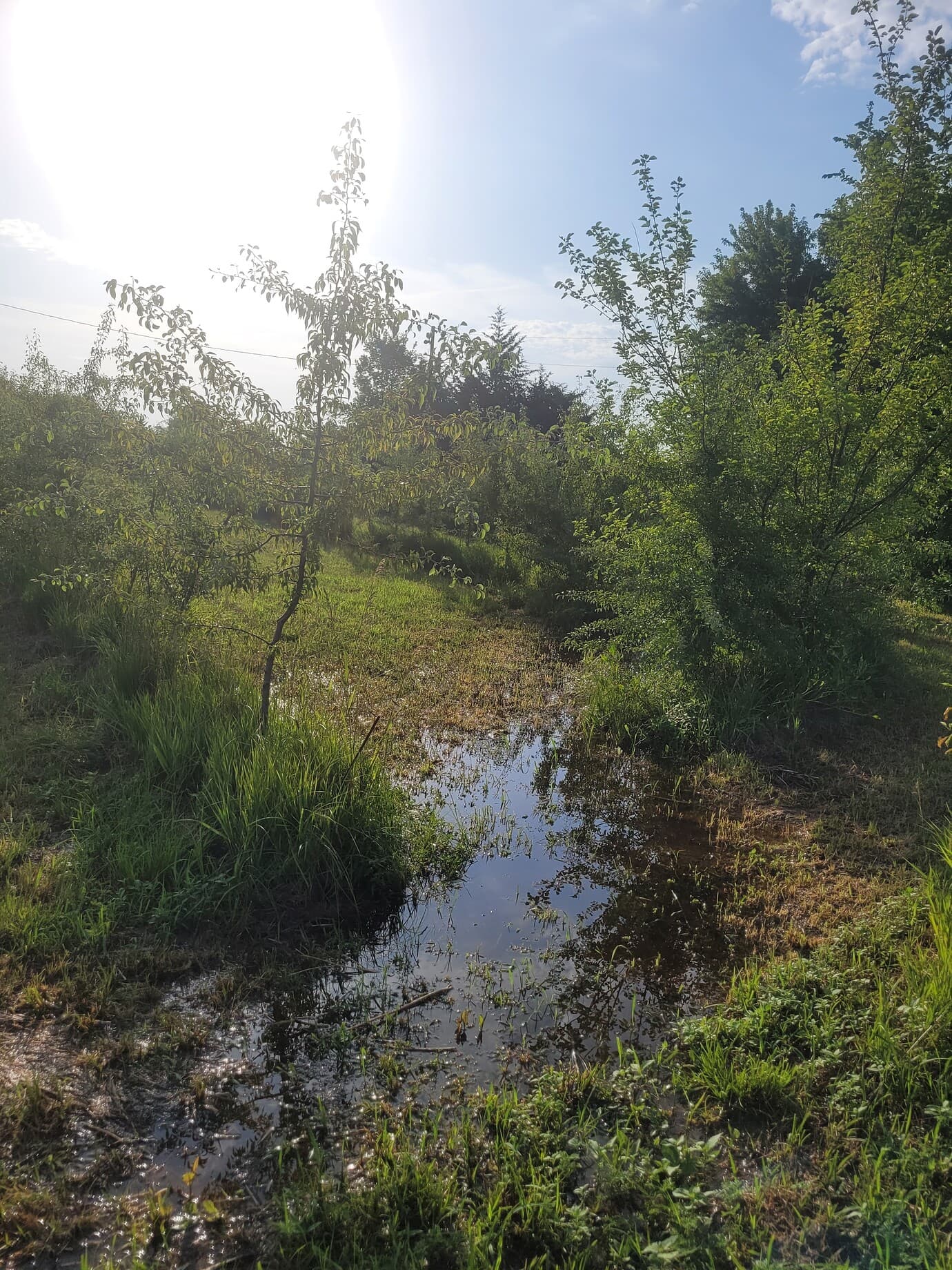
Many understand and use concepts such as ponds to collect excessive rainwater. This post is about advanced concepts i use of not just collecting it from the fields but directing it to centralized points and using as much of it as possible. This video discusses the concept of berms and swales
So why use berms and swales? One of the first things i did after several years of dirt farming my property was to come up with an idea to stop.
Quickly realized i needed to stop dirt farming because it causes erosion on a scale greater than most people can imagine. Having lived it and done it i understand better than most how big the problem is. My property had huge ditches in parts of it when i purchased it that had been there a long time. They were not supposed to be there they were from bare farm ground allowing water to pass over it and taking dirt with it washing that out to creeks. I repaired terraces, fixed ponds , planted grass and trees instead of using bare farm ground https://growingfruit.org/t/ponds-are-a-great-investment/7033/46
Like me you cannot do anything about the 20 feet of missing topsoil from the hundred + years of poor farming practices. We can build up from what we have and leave that for the next generation. Wealth is land not money and if we take care of the land it takes care of us. The idea of monoculture seems to be growing unfortunately. Single crops seldom work out long term in large areas. Modern methods of agriculture require some monoculture for the system to work but it can be done responsibly. Dirt Farming beside a river as an example might not allow enough of a barrier for dirt washing out of fields. The dirt from erosion winds up suspended in water and ultimately thevrivers wind up very muddy as can be observed with the Kansas, Missouri, and Missippi rivers all the way to the point where the mississippi flows into the gulf of Mexico.
Small things can be done as we go to collect moisture and concentrate it where we need it for plants
Many people are using individual mounds Search results for 'Mounds' - Growing Fruit but consider using a long solid berm and swale might be easier than individual mounds. I’m bringing this up for many reasons. When i grow sweet cherries here they must go on a mound of some type or they drowned. Unfortunately that lesson cost me a bunch of money when first planting cherries.
Here is an example picture from my field catching water in a terrace which is similar to a berm and swale type setup. Snow can be caught in a water way the same way. Im using blackberries and brome to hold the soil in that waterway. Notice they are not dormant most of the winter. Once you have the water it has to be put somewhere which is the pond. There are lots of terraces catching water and dumping it in the pond https://growingfruit.org/t/ponds-are-a-great-investment/7033
It is interesting how one grows to know the land, and its water flows over time. There are so many joys to growing fruit other than eating it. It sounds like you have developed approaches to avoid “wet feet” for some of your trees. We have had no rain since early September and our irrigation was turned off in early October. But the other day I was working in one area of my orchard and the ground was quite wet.
I have a 4 year old apple tree growing in the area with some rare varieties grafted to it, and am wondering if I should dig it up and move it, or replant using a mound. Or just wait and see. I am hoping this tree lasts a long time. The tree seems to be doing fine, but in the longer term will it suffer as its roots expand? If so, I’d like to address the issue while it’s still young. The area wasn’t wet when I planted it. There is a French drain about 3 ft downhill from the tree, so it may drain away some of the water. The drain was put in by previous owners, indicating that this area likely gets wet many seasons. The soil is clay and river rock (we live near a river).
When you plant into a mound, what are the dimensions (height and diameter)?
I believe attempting to move such a tree might damage the grafts and work you have done. I have raised hills up to 30 feet and planted trees on them. Sometimes i just have hundreds of logs to get rid of and that becomes my next berm.