10 Likes
Are you planning to grow out at least one seed of each variety?. The cold hardy male parent is Cheong Pyong.
3 Likes
I will grow out every seed that germinates.
3 Likes
Hopefully have some seeds of my own in a few years. Have a few males and starting to accumulate a lot of females.
3 Likes
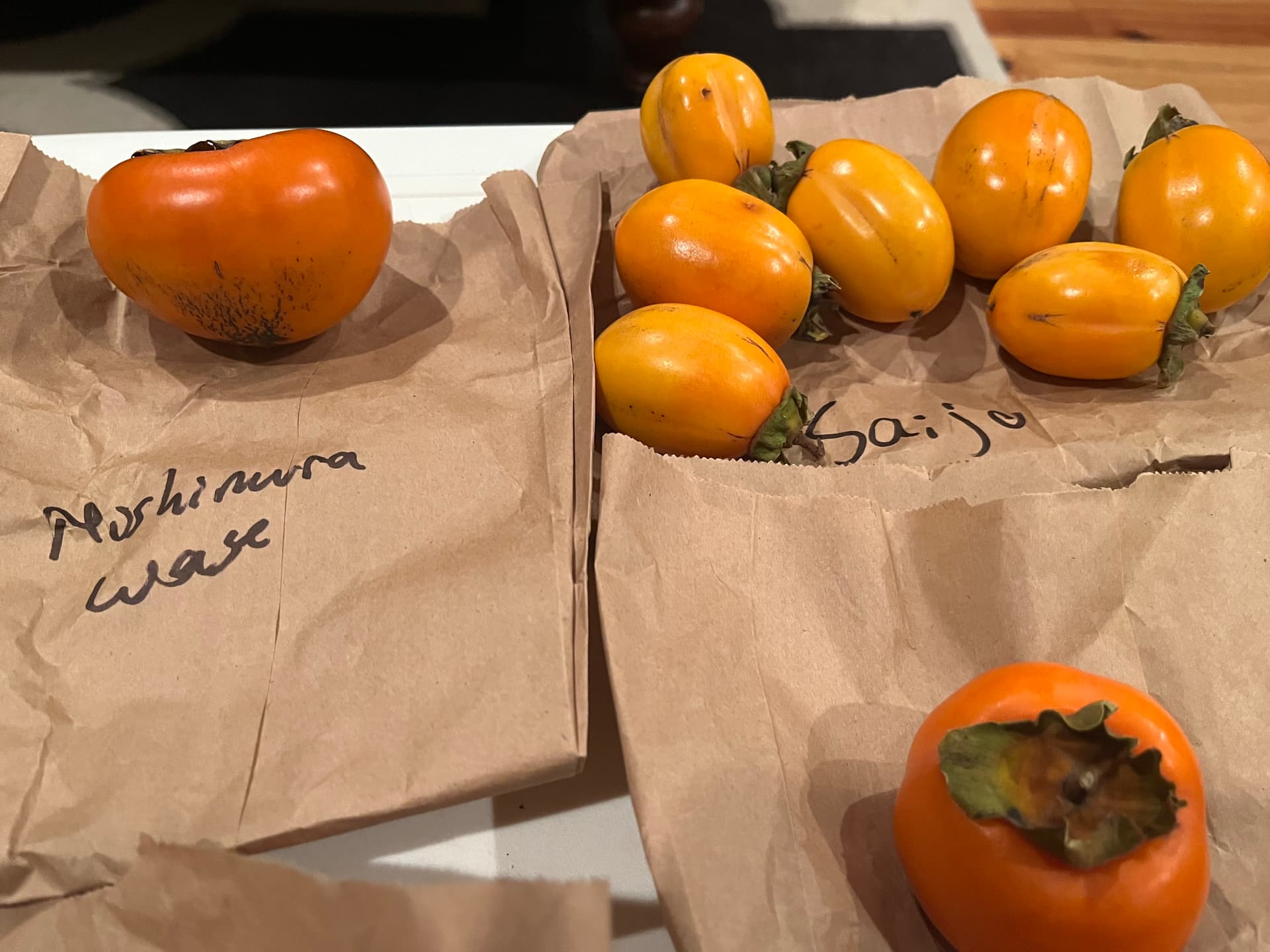
Nishimura Wase? Coffeecake. Was it pollinized? Based on the other post that says the shape changes with seeds, I’d say yes, it is pollinized.
You’ve got good friends. I still haven’t tasted a pollinized Coffeecake even though I grafted a tree to it many years ago. I also tasted my first Saijo this year!
3 Likes
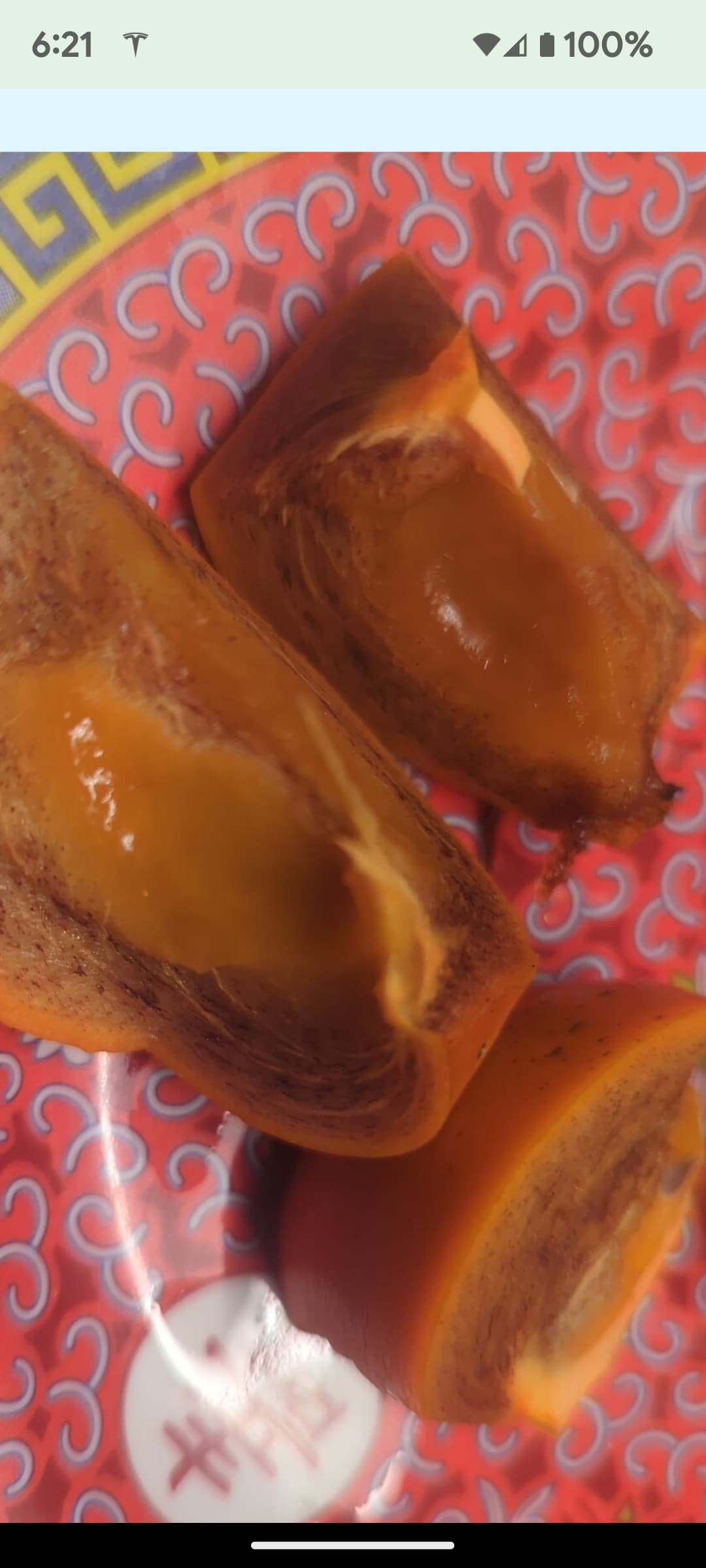
The persimmon fruit was crunchy, real sweet with a hint of brown sugar with 5 seeds I may graft one this Spring and grow it in a pot. I hope your tree will produce soon because it is a keeper for sure.
Tony
8 Likes
I grafted Coffeecake to my Jiro about 3 years ago, this year I found seeds in a couple of the coffeecake ones but they ware not brown inside. Flavor was the same. Not sure why develop seeds?
I tasted my first Saijo this year. Planted the trees in spring and this fall they produce about 6 of them.
2 Likes
You can diligently hand pollinate yours by transferring pollen from male flowers to your female Coffeecake flowers with a tiny paint brush. It’s probably partially why nearly all of mine are well pollinated. I notice bumblebees are very attracted to persimmon blossoms but there’s sometimes a dearth of pollinators when I need them to be around. All of my other persimmons are seeded but not to the extent of Coffeecake. You need at least 3-4 seeds in Coffeecake for it to become fully nonastringent.
3 Likes
@murky – Just a data point . . . . I purchased both Chocolate and Coffee Cake this year to raise in pots. One of the bare root trees (I forget which) produced male flowers. One result was that most of my Kassandra fruit was seeded. What this tells me is that Mother Nature may take care of the pollination if there are male flowers around. Would you consider adding a tree, maybe in a pot, just because it is a strong pollinator?
FYI, I entertained the possibility that suckers from my nearby Prok rootstock produced male flowers and pollinated Kasandra, but there were no seeds in my American fruits. So I’m sure that the pollinator was Asian. [There were also no seeds in my nearby JT-02 fruits, which I can’t explain. Maybe timing.]
My plan is to place the potted Chocolate and Coffee Cake near an in-ground Giboshi / Smith’s Best and encourage and orgy of pollination. I was briefly concerned that JT-02 and Kassandra would then become seedy too. I’d prefer Kassandra without seeds but having eaten a lot of seeded Kassandras this year, I know can tolerate them. And I’m very interested in getting a PVNA response from JT-02.
3 Likes
These sound mislabeled. They should be nonastringent regardless. Freshly picked PCNA can have a sort of sappy, resinous taste that goes away after a couple weeks.
They will soften rapidly once picked and brought indoors. Mine still had green when I picked them 3 weeks ago but are all ripening nicely.
What about Niu Nai? 牛奶柿
4 Likes
These seeds could result in some interesting trees. The parent is PVNA and larger fruited than your Kasandra so maybe some of that would transfer over into the offspring.
5 Likes
I got zero germination last year with my hybrids x Maru.
I wonder if I’m doing something wrong.
2 Likes
The tree hasn’t bloomed much, this year it had maybe 5 fruit, but it also had a mix of male and female flowers for the first time.
I grafted Chocolate to two of the branches. Both Coffeecake and Chocolate are capable of making male flowers. My Chocolate has been over 95% male flowers so far. Strangely this year the grafted chocolate limbs bloomed in September. I thought maybe it was because of funniness with how the graft took and grew, but then noticed that the Chocolate tree also bloomed profusely in September. Mostly male, but also some perfect flowers (I presume because they were smaller and closer together than female in the past but had ovaries and weren’t in clusters of 3).
3 Likes
19 Likes
Right, but the PVNA trait seems to be additive (not the proper term, I think), by which I mean that the more PVNA alleles, the more PVNA the phenotype. Having relatively few PVNA alleles seems to result in a PVA genotype – you get some change in flesh color and some reduction in astringency but not enough to eat the fruit firm. I think that’s the inevitable outcome.
If I had to invest time in any Hybrid x PVNA cross, I’d follow up on your idea (I think it was yours!) to cross JT-02 x PVNA, as JT-02 already seems to exhibit some PVNA tendencies, possibly inherited from its Fuyu mother. That seems the shortest route to a PVNA hybrid, though I’m relying a lot on hope and in any case it’s a genetic crap-shoot. Nevertheless, if a JT-02 x PVNA cross can get 1-2 PVNA alleles from JT-02 and 3 PVNA alleles from Chocolate, then it would almost certainly be PVNA. I hope!
2 Likes
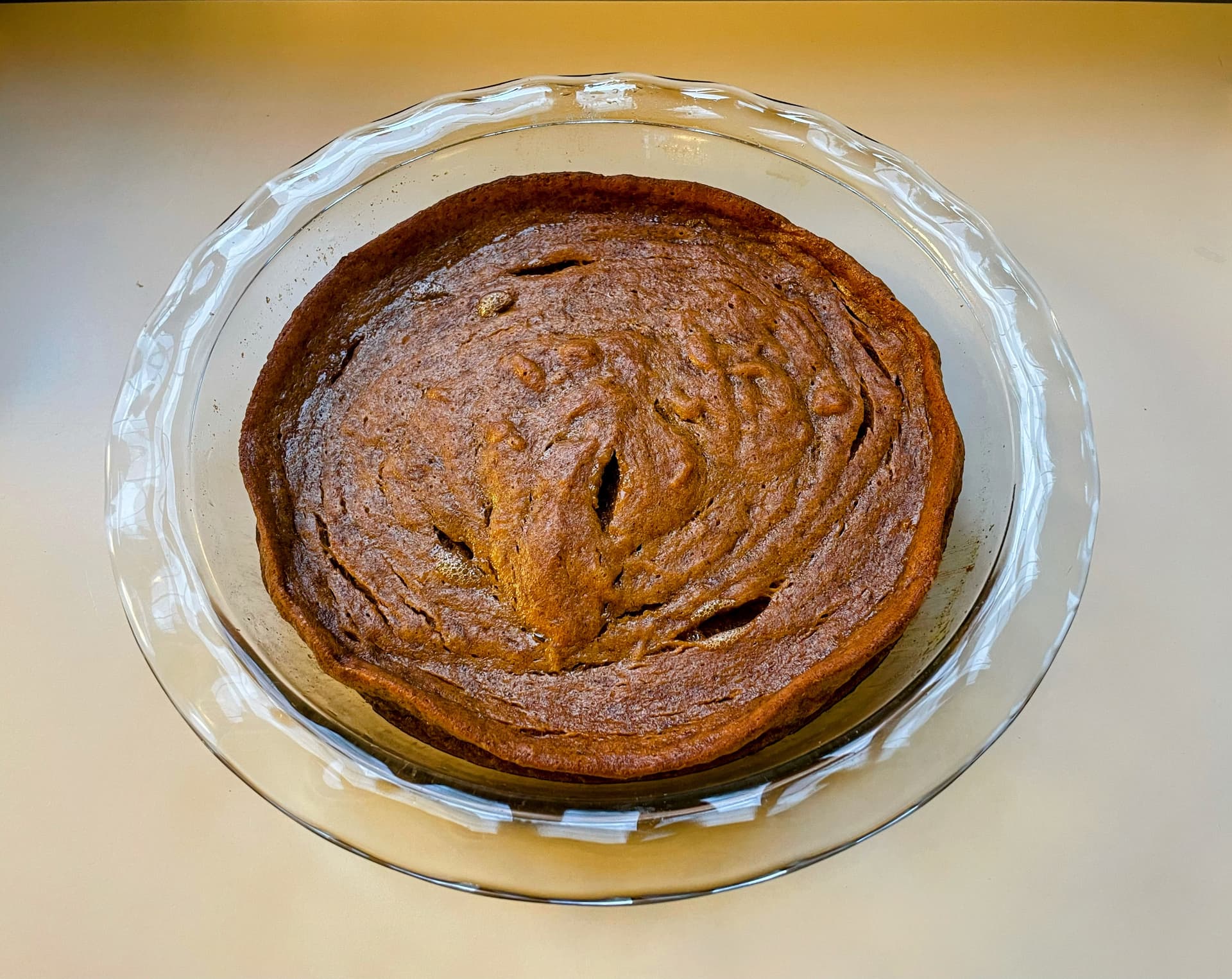
That looks delicious. Let us know the result and if good the recipe. Happy holidays!
1 Like
- List iteml
isnt it the case that brix is a measure of total dissolved solids and not just sugars? if so, its a useful shorthand but subject to distortions based on any number of other solids.
Years ago I made an excellent carrot parsnip wine. It tasted like brandy- potent and dry yet with a sweetish flavor. I thought at the time perhaps there might be complex or perhaps oddball sugars that were not readily fermented. I forget if that showed up on hydrometer but I think not.
2 Likes
That is my understanding too, which is why I doubted the meaning of the measurement.
2 Likes
A little Thanksgiving non-astringent taste test, with the names hidden until after favorites were chosen.
The contestants were Tam Kam, Il Mok Jae Cha Ryang, Jin Yong and 20th Century. 4 tasters unanimously gave the win to Tam Kam, with Il Mok Jae Cha Ryang and Jin Yong getting second place from the tasters. But, and it is a big but, 20th Century was clearly less ripe than the others and Tam Kam was definitely the ripest as you could tell by the texture. 2 people commented that they really liked 20th Century’s texture, which was of course because it wasn’t as ripe.
So the only thing this really told me was to confirm the statement most people make about non-astringents tasting pretty close to the same in terms of taste. But it was a fun and tasty exercise. And I will say I’ve grown to really enjoy non-astringents much more than when I first started eating persimmons and always felt they were 2nd rate because they were less flavorful than many astringents, etc.
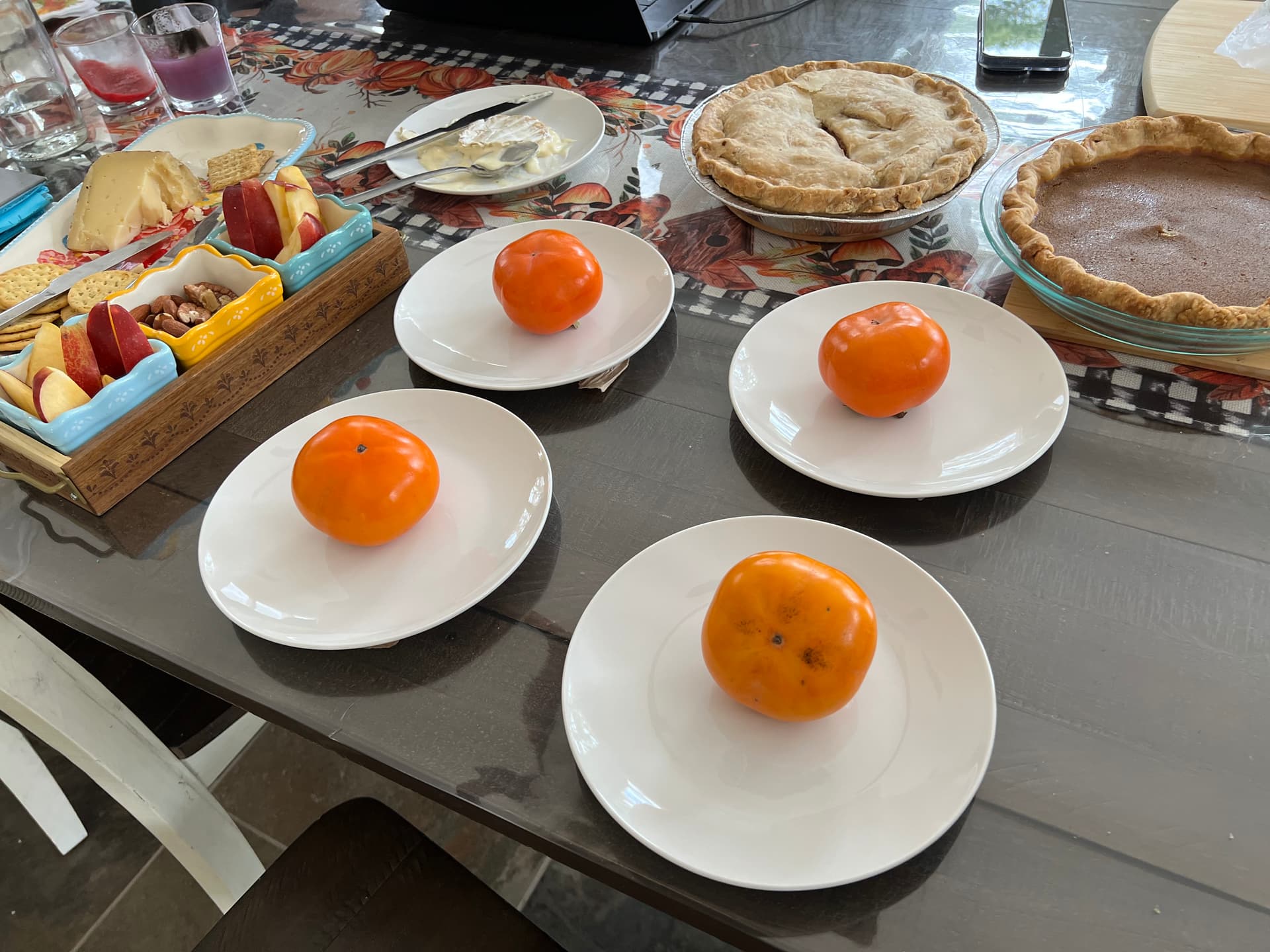
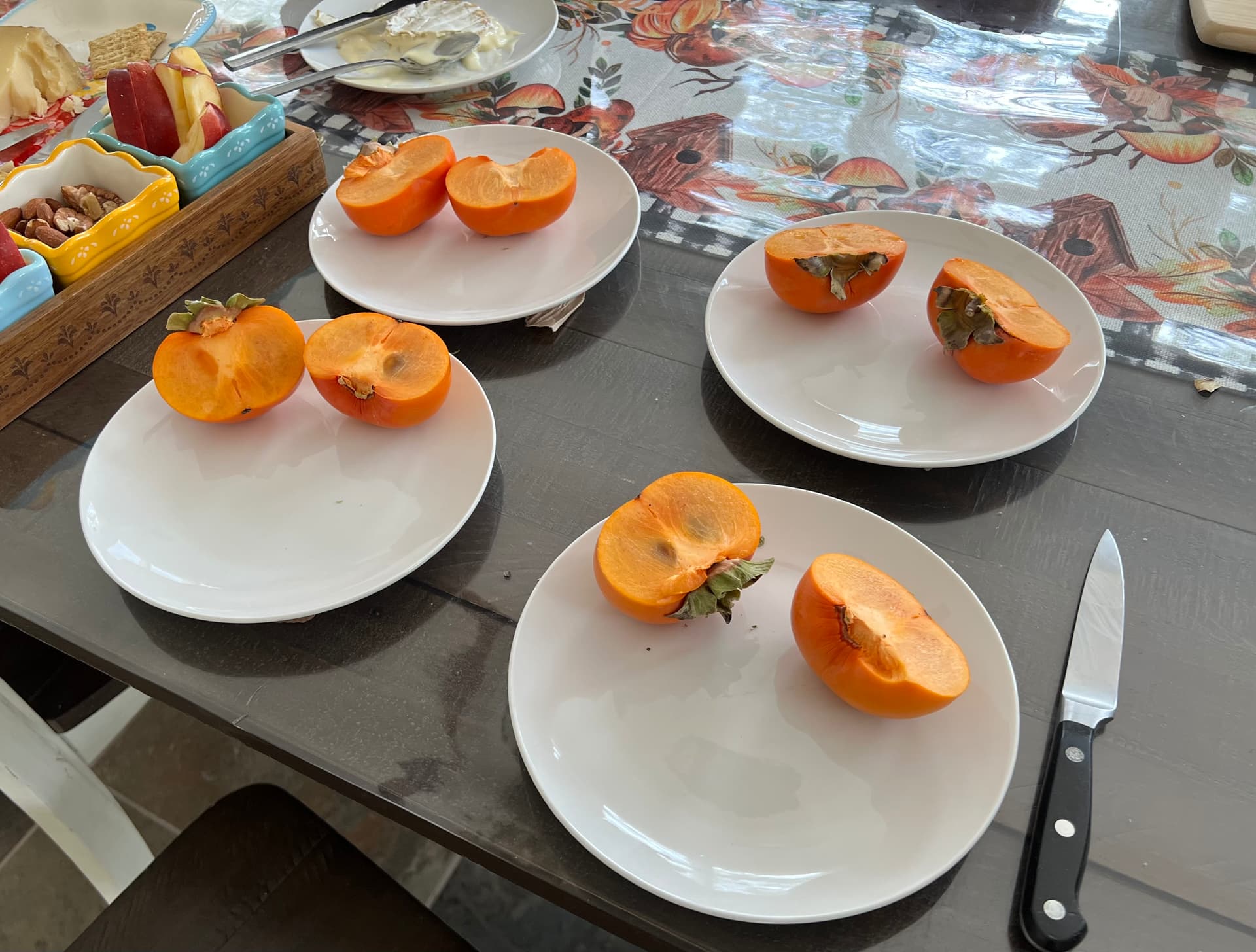
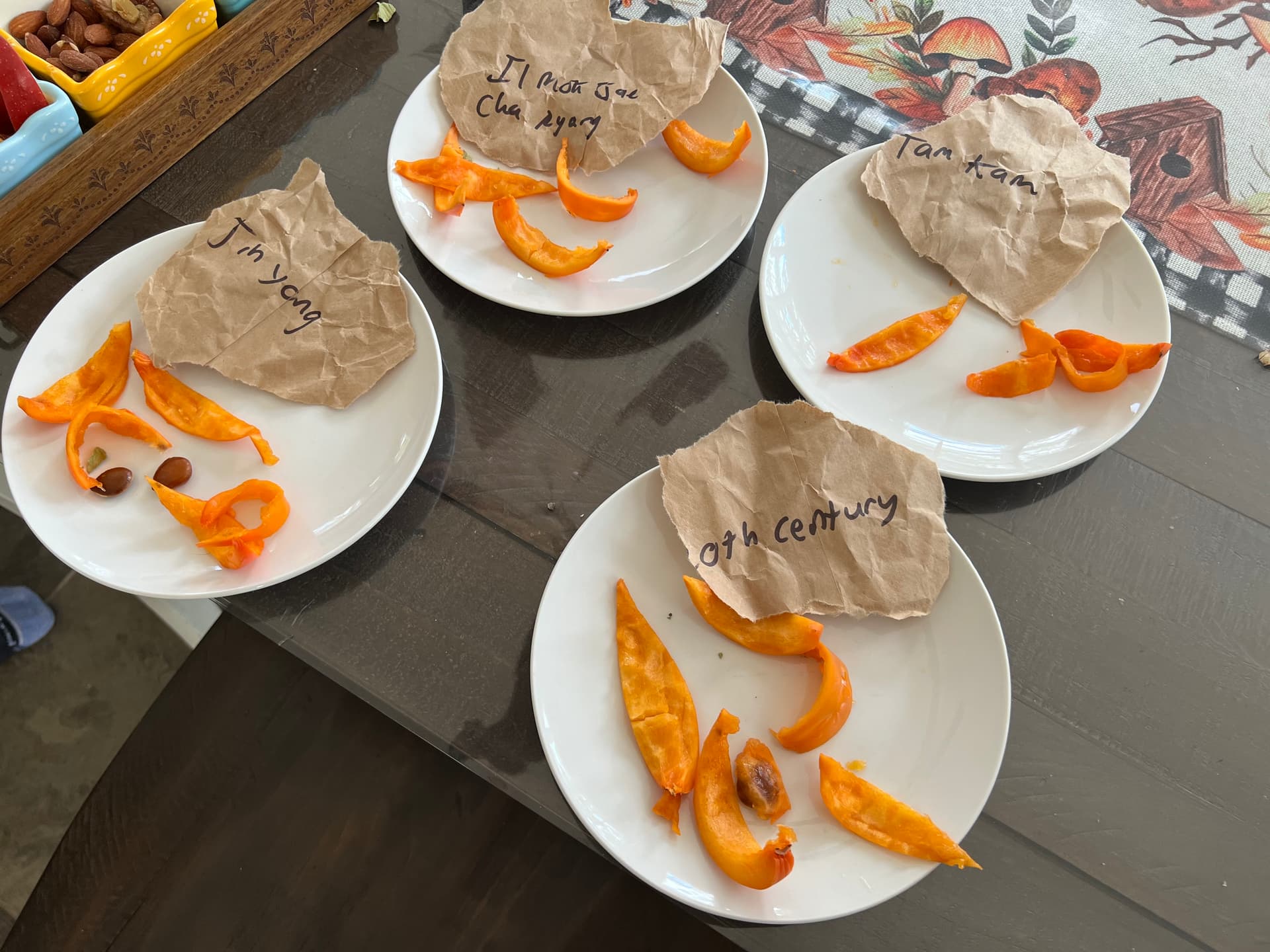
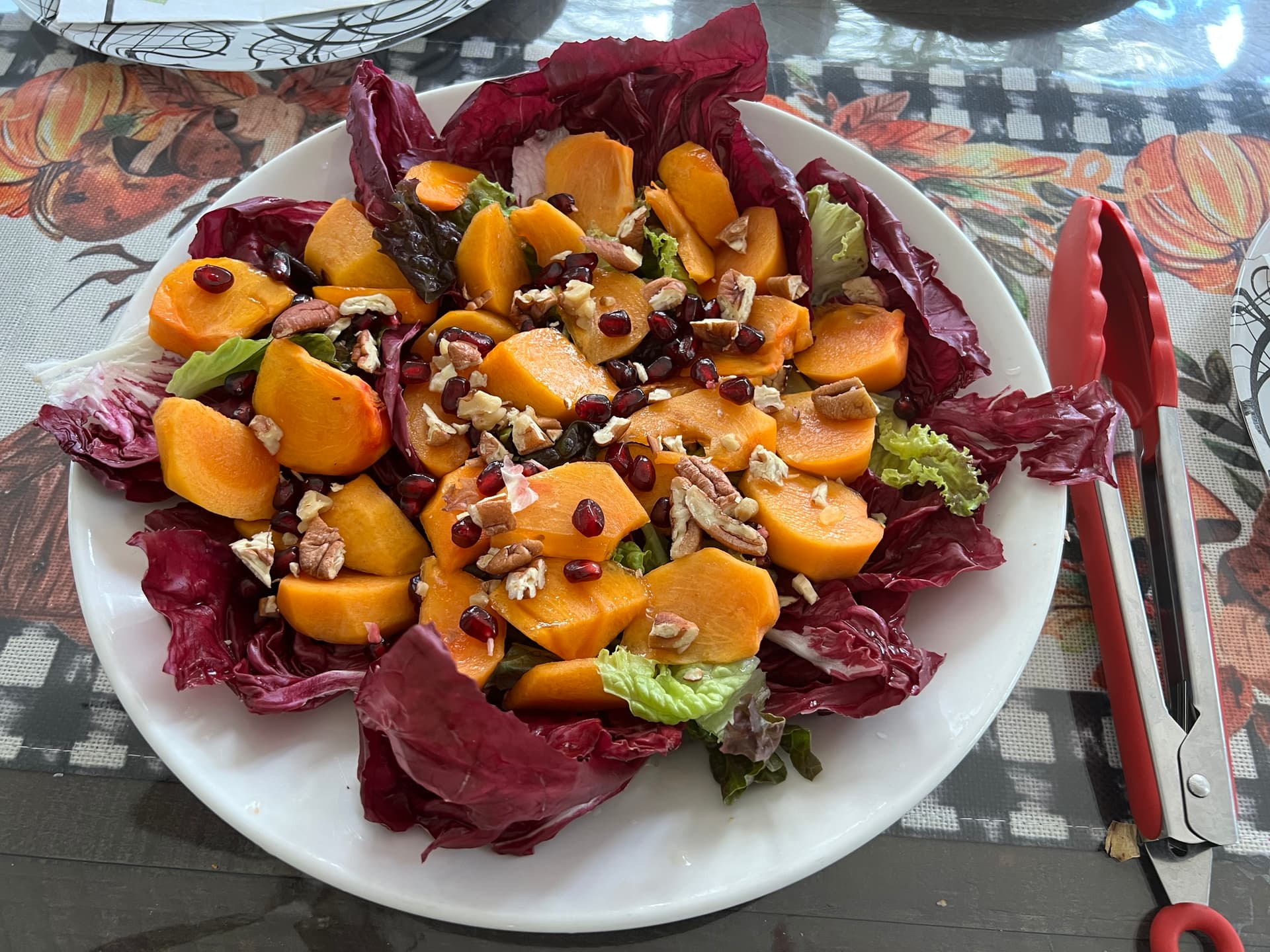
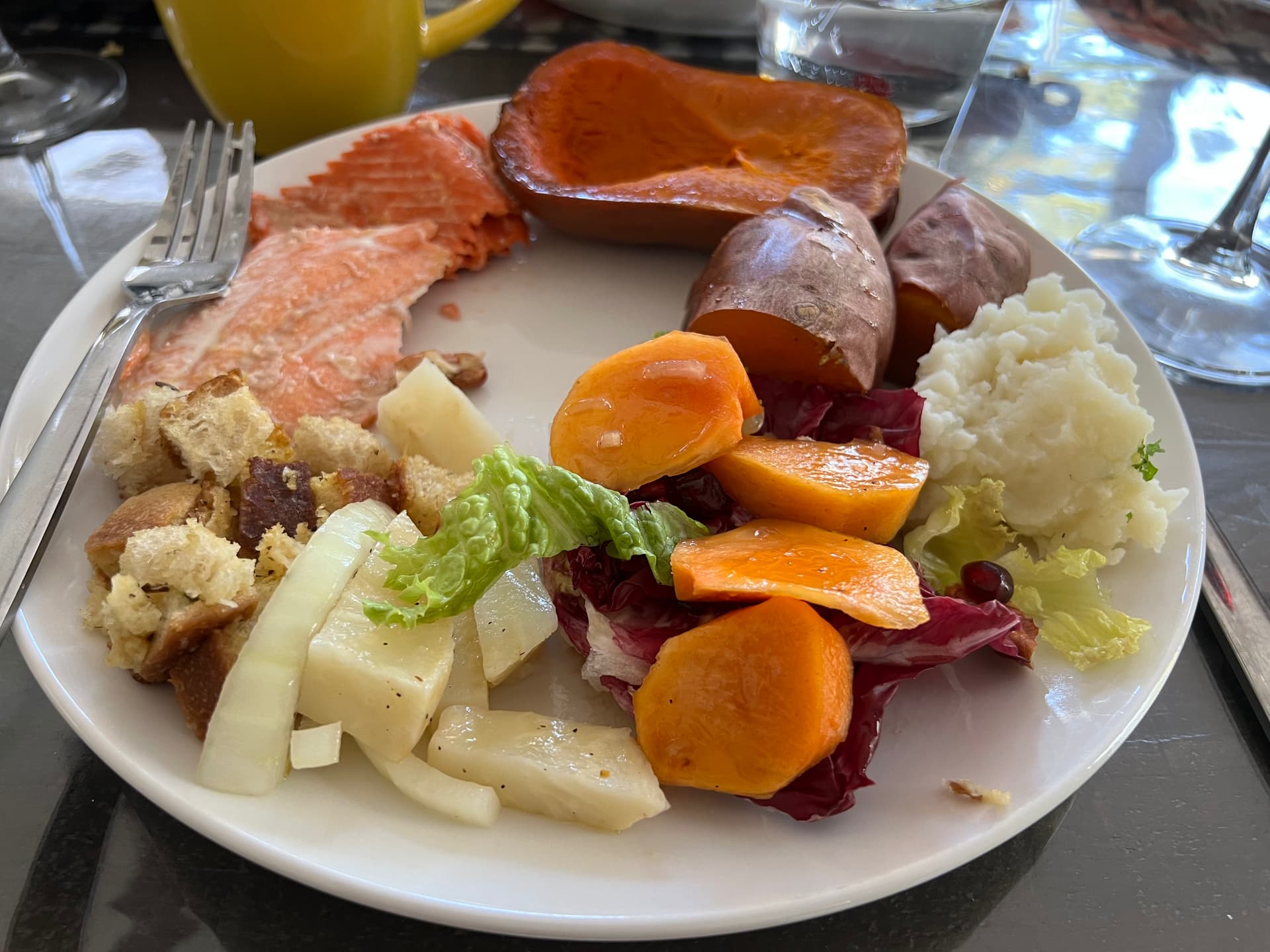
Half of each was used for the taste test with the rest of the fruit going into the persimmon/pomegranate, candied walnut, and radicchio salad for the Thanksgiving meal. And of course, I’m very thankful to be given these beautiful fruit to add to our day.
27 Likes