sounds and looks like a wonderful blend of colors, flavors, and textures.
4 Likes
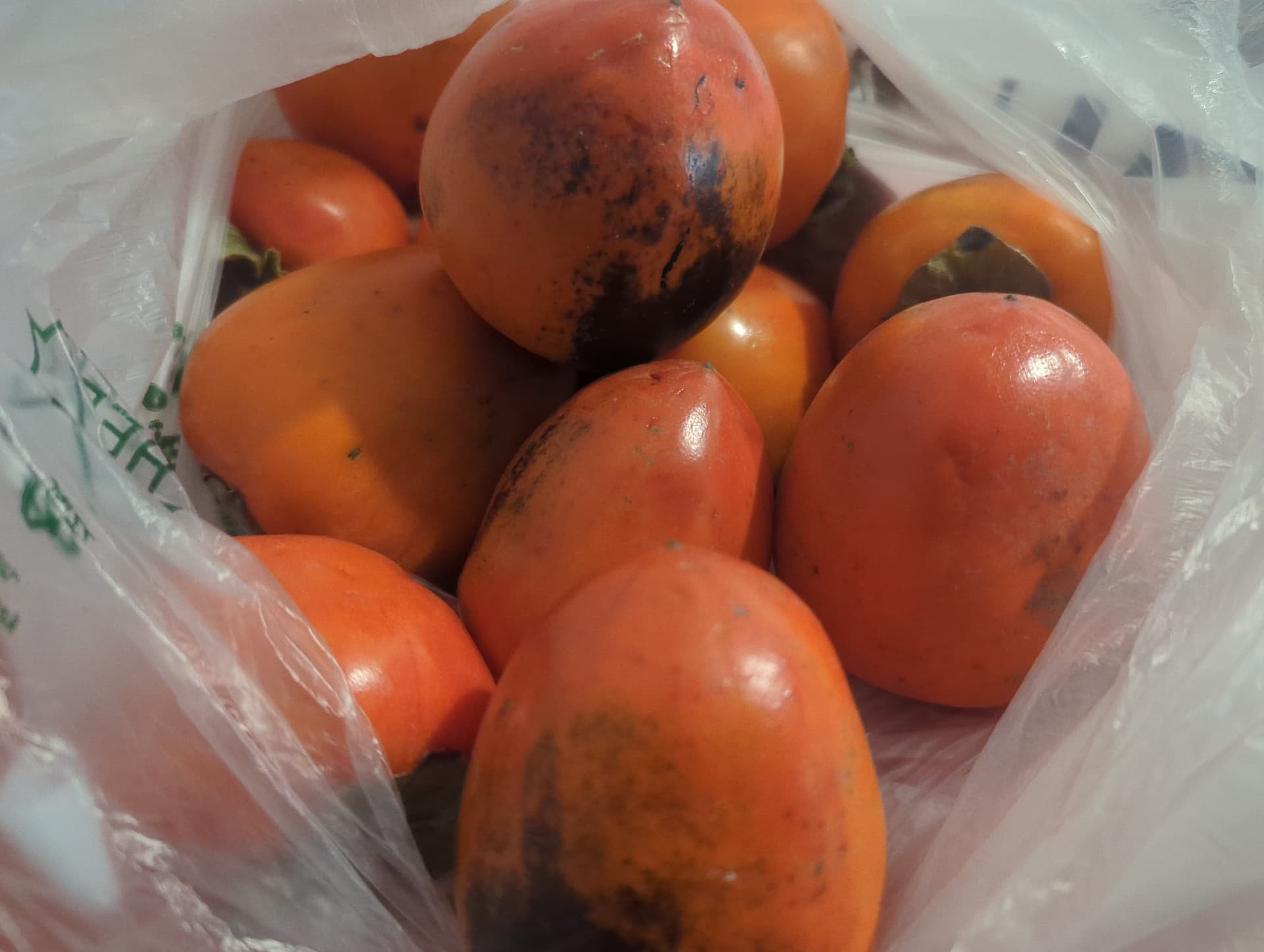
I bought a bag of Hachiya at $1.29 a pound at the Asian market to get my persimmon fix for now and waiting for the 7 Saijo to ripen.
Tony
14 Likes
Your Asian Market sells Hachiya at a better price than stores around my area. Yours have more orange color, too. Some of mine still have greenish color on the skin.
The cheapest I could find is $1.99 a lb. I bought 8 lbs.
I put half in a container with bananas and the other half I plan to dry them in a dehydrator.
6 Likes
I agree those look great. My local stores usually have a bit of green as well and often don’t ripen very well unless nudged along with the banana treatment or other treatment.
2 Likes
I have a chocolate persimmon near my Giboshi, mostly planted as a pollen source since I haven’t heard the highest praise for chocolate compared to other PVNA types.
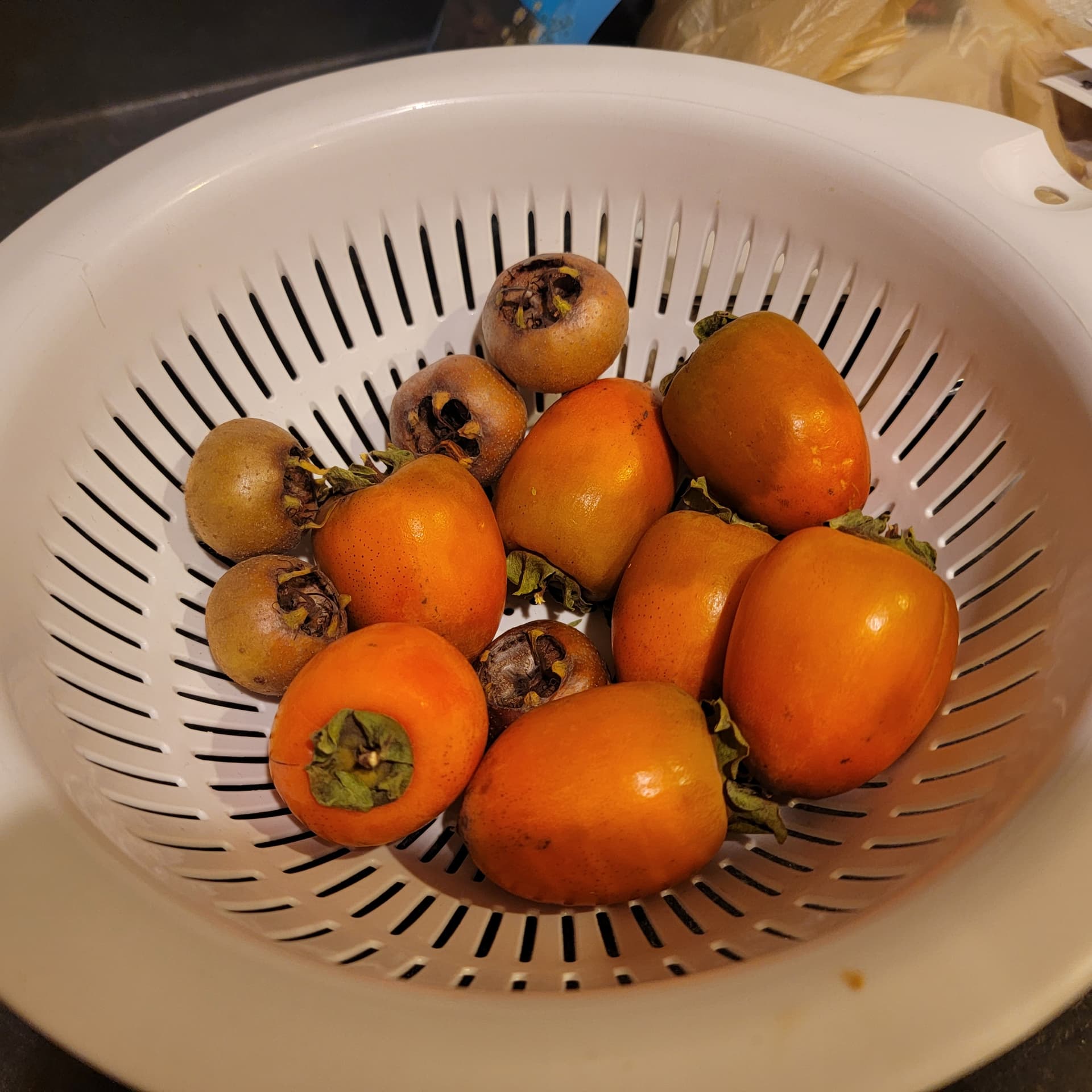
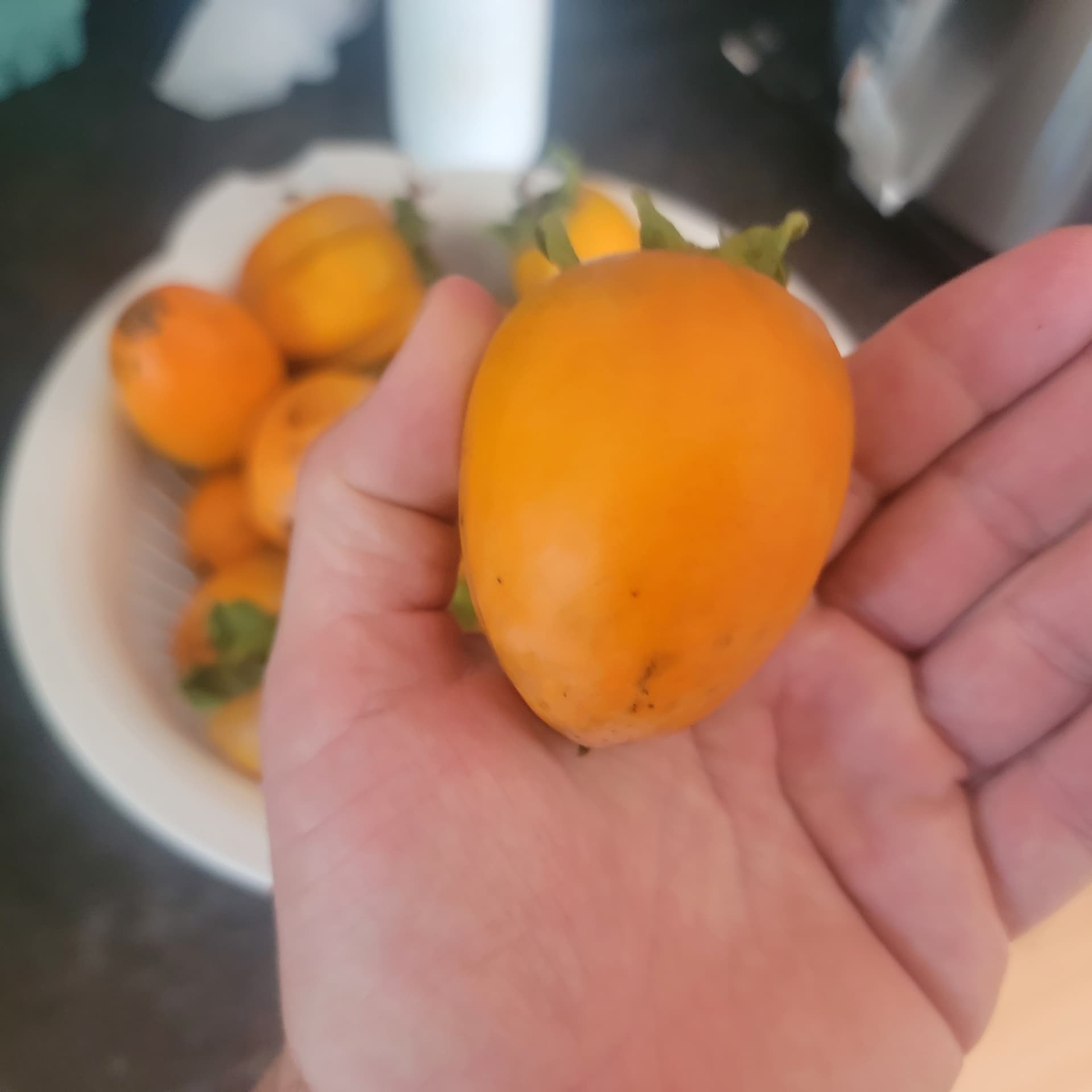
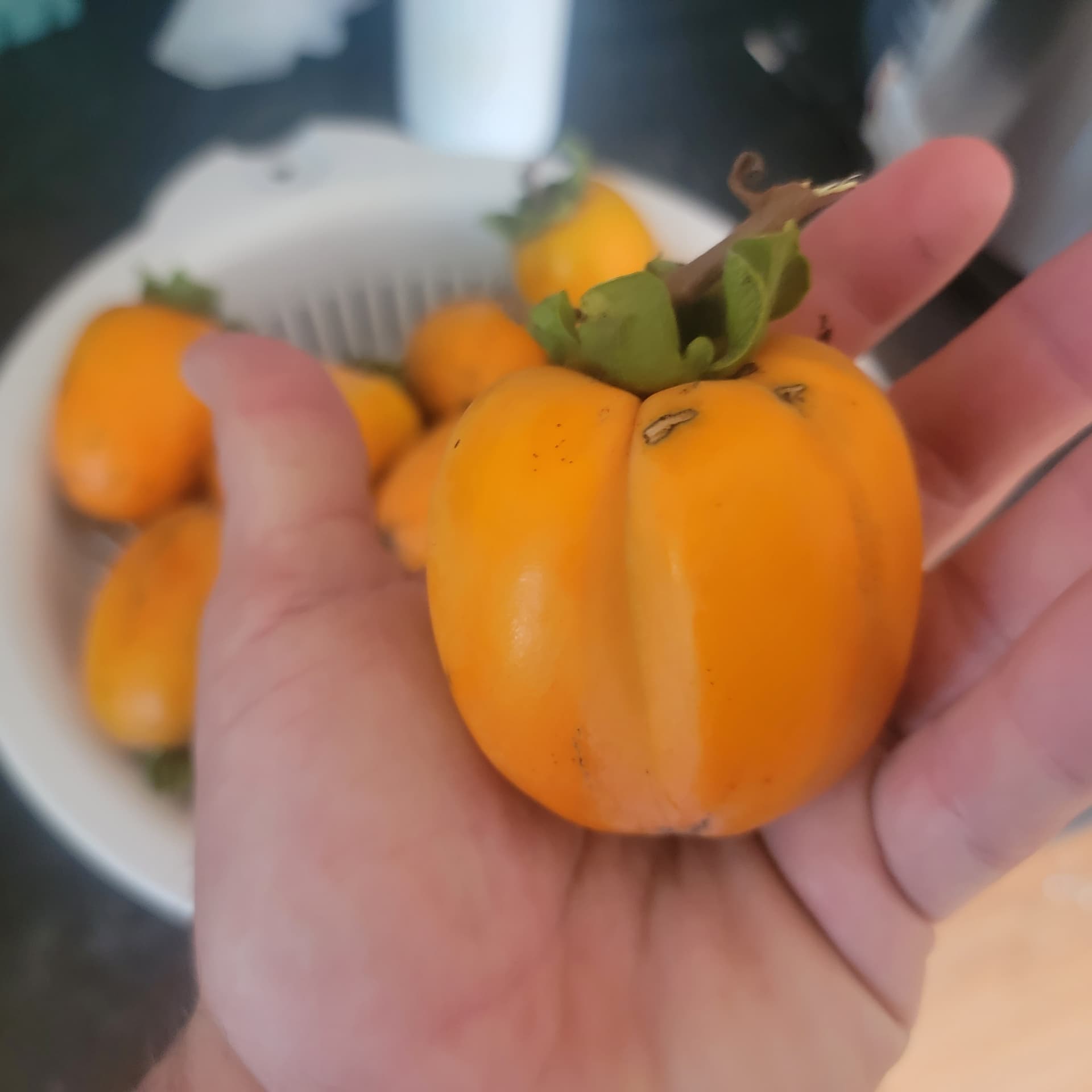
It was a tiny tree this spring, but flowered quite a bit and set some fruit, which I pulled off to get it to focus on growing. It grew fairly strongly and around June it had another growth spurt, flowered again and by early July set about a half dozen new fruit. I removed all except one which I left just to see what would happen. I was pretty sure that fruit really didn’t have enough of a season left to mature, so I was quite surprised when I noticed it had gotten about half-yellow by the weekend before Thanksgiving. The tree had lost all its leaves and I didn’t expect it to ripen much more on the tree, so I picked it. Inside it slowly got a little yellower but still had a fair amount of green near the stem side, so I put it in a bag with a banana for 3 days and it got mostly yellow/orange but still had a little greenish blush at the top. The greenish doesn’t really show in the picture.
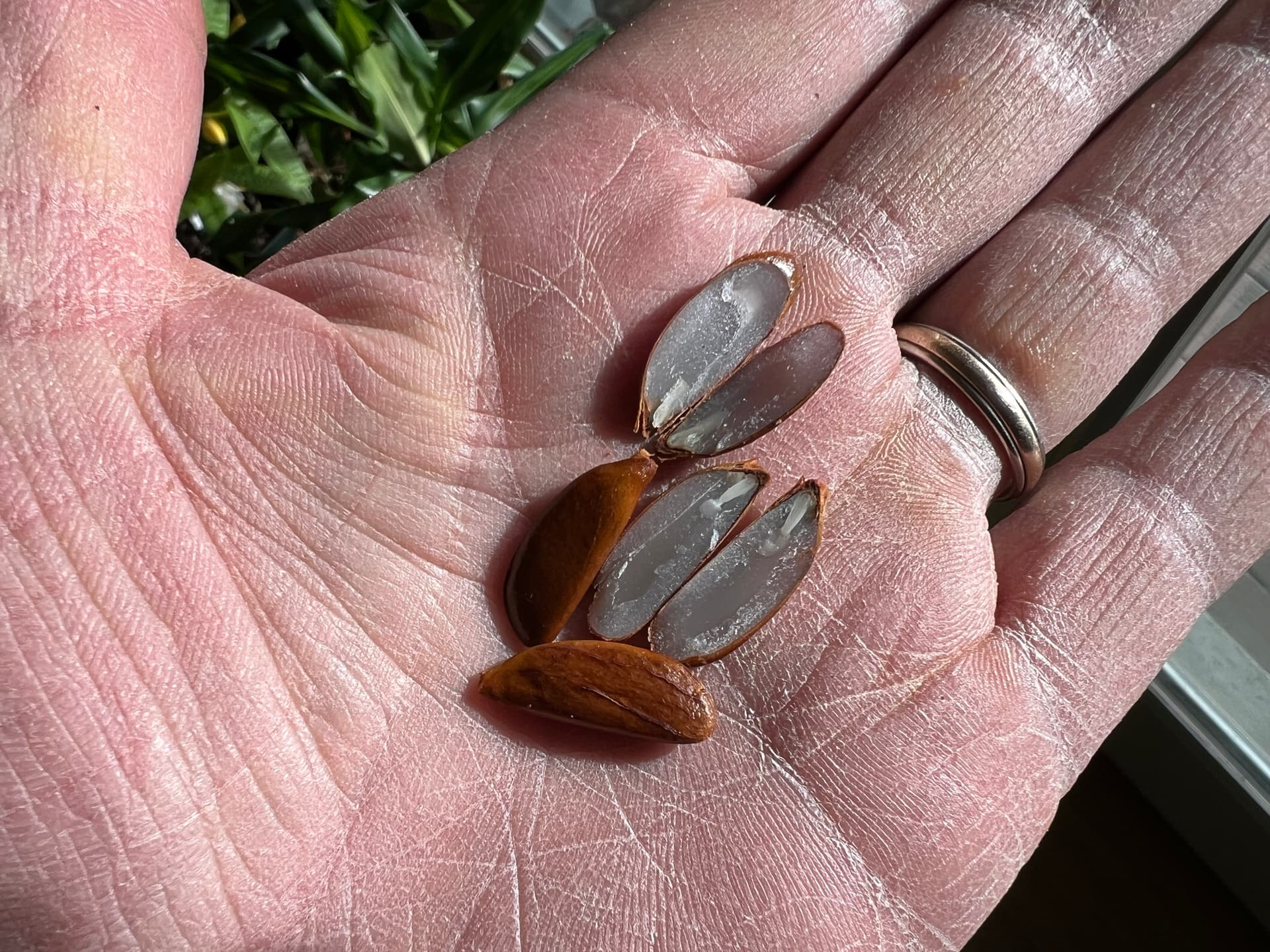
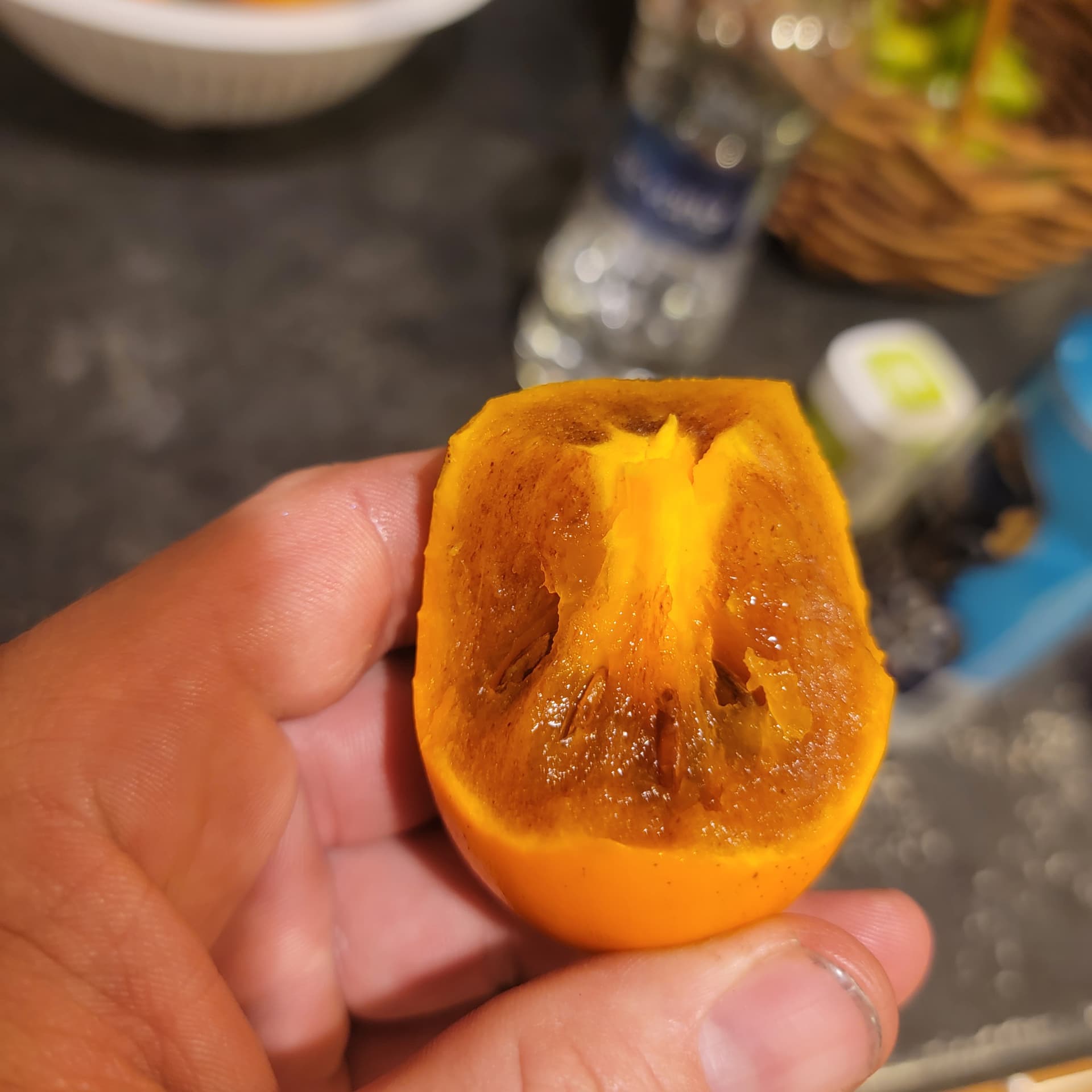
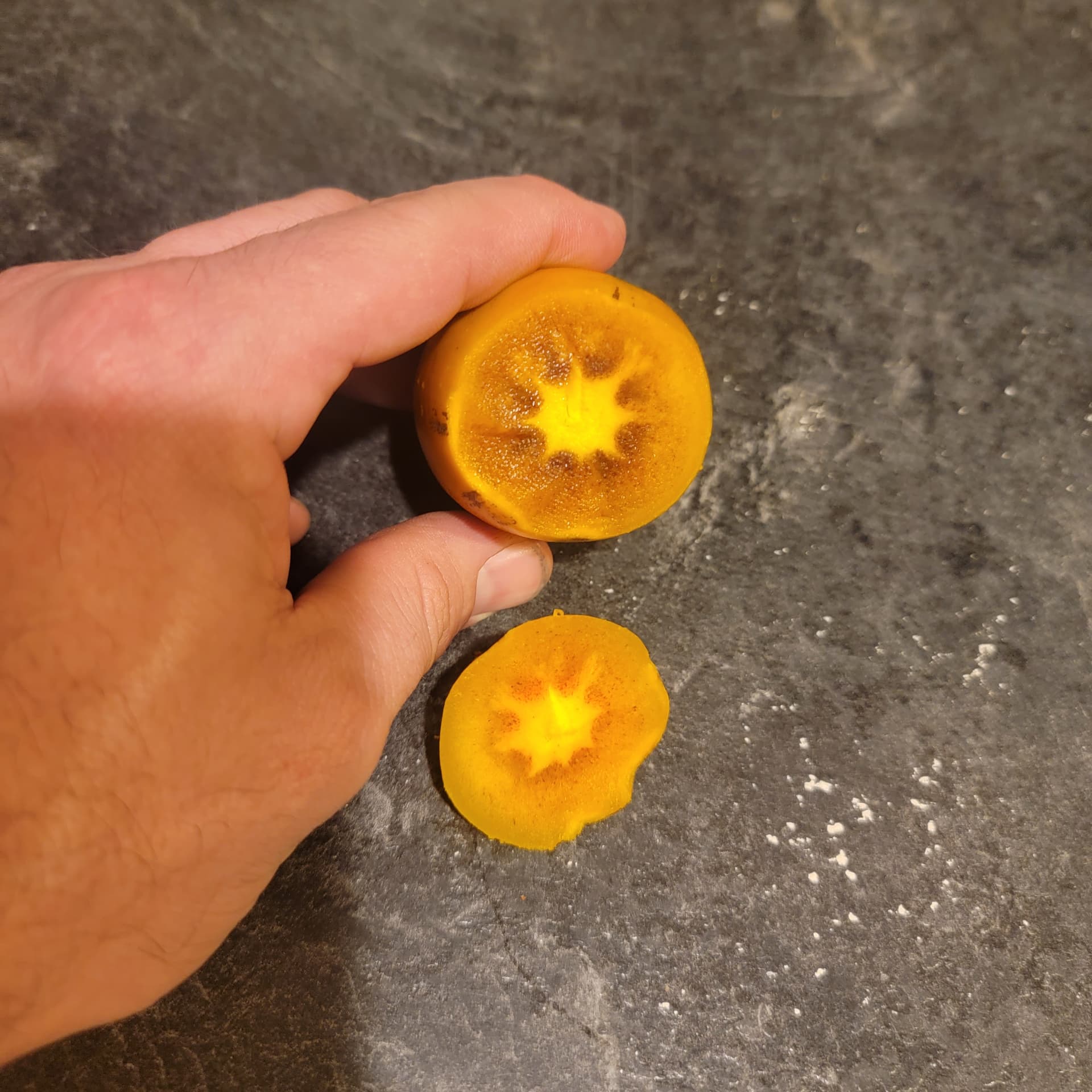
Thinking something forming so late and picked early probably wouldn’t be any good, I decided to cut it open today since I was losing patience. Quite interestingly it was mostly seeded (4 seeds and one unfilled seed), but none of the flesh showed any brown.
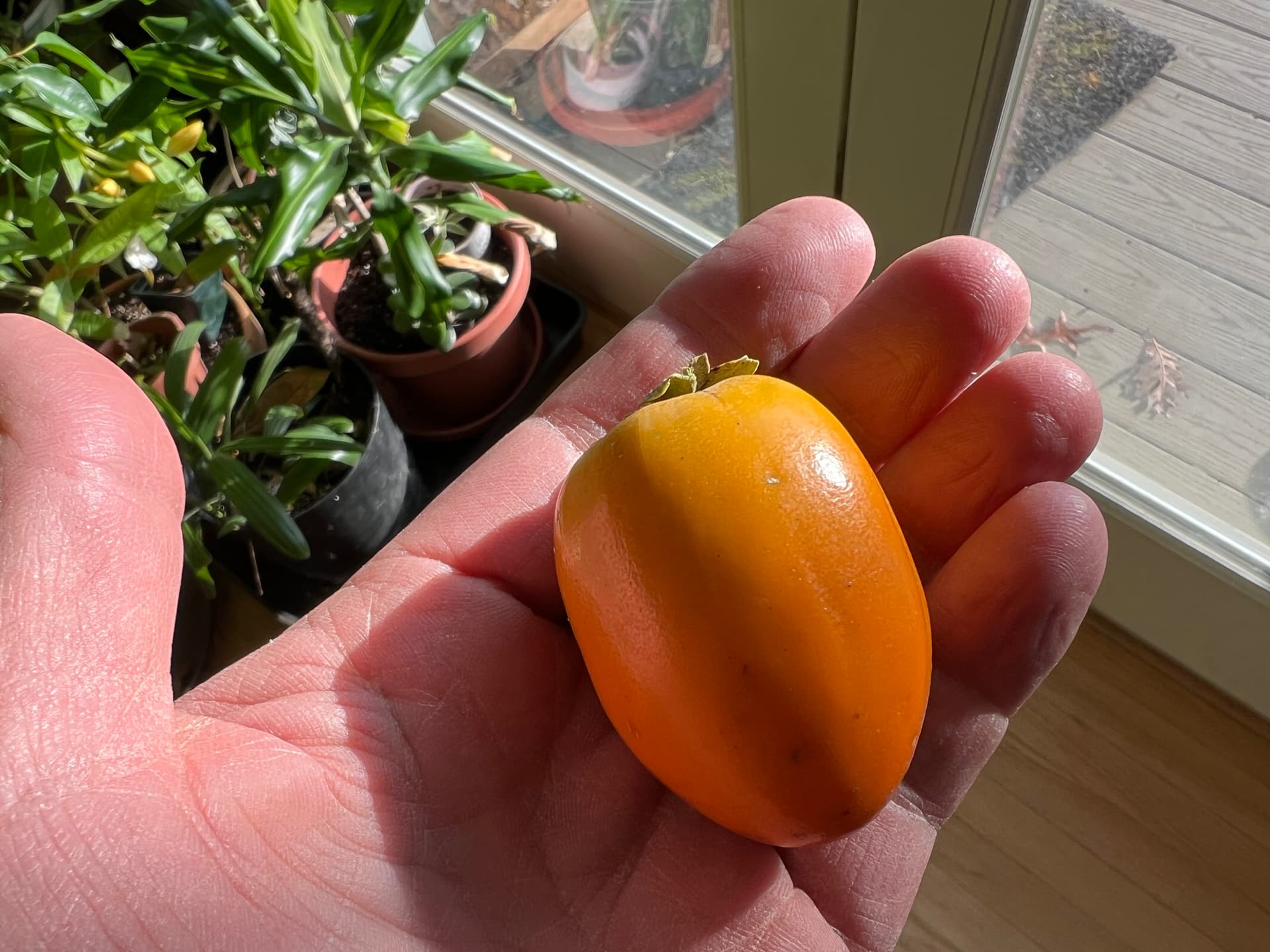
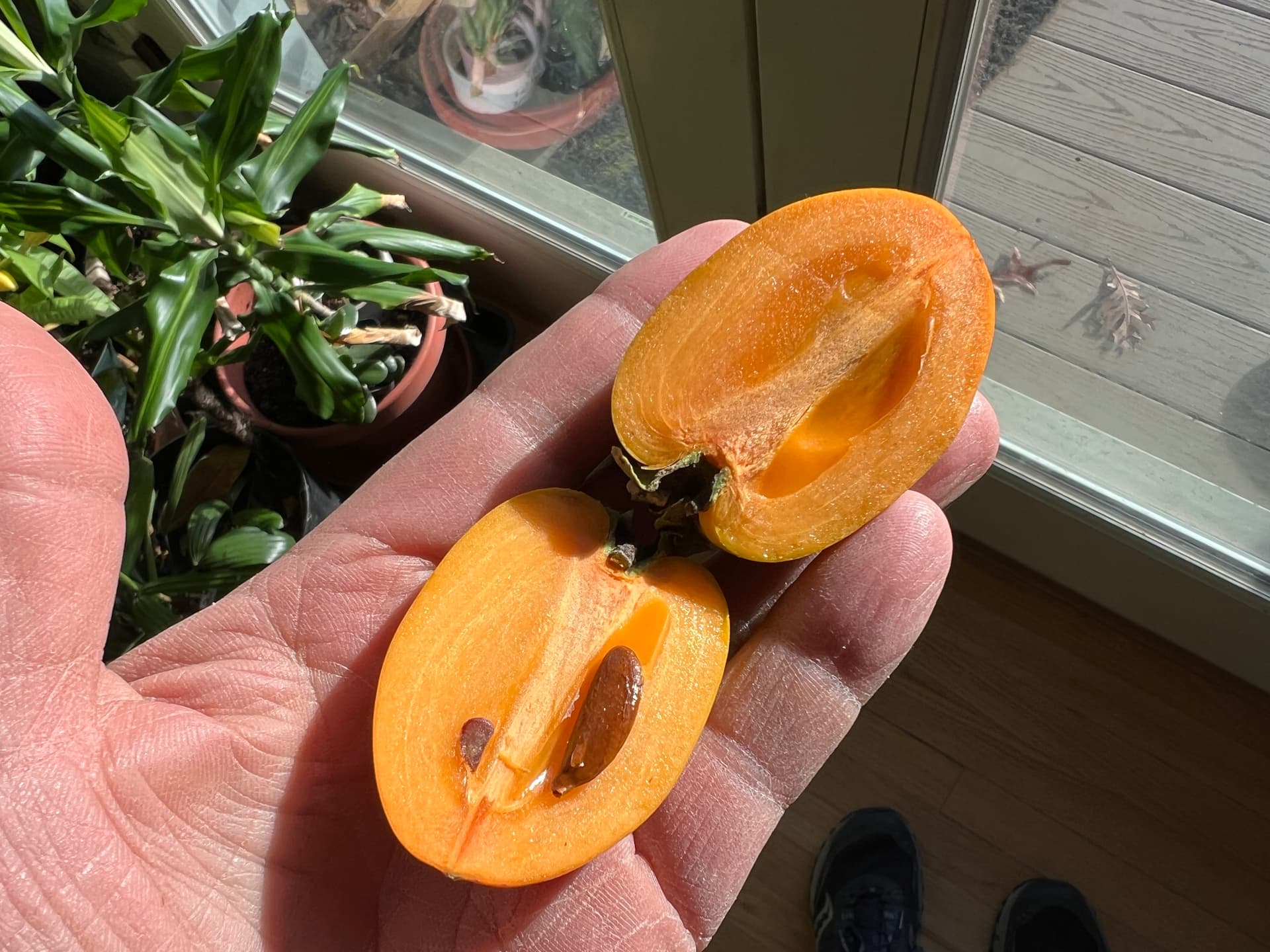
I always thought brown was the sign that astringency had gone away in a PVNA fruit. So it was with the expectation of a mouthful of astringency that I bit into it. Surprisingly it was crisp and fairly sweet, like a regular non-astringent type, but with a little bit more “something” to the taste. It wasn’t as good as the pollinated Giboshi I had early in the season, and not as good as a well-ripened Nishimura Wase, but for a small fruit, forming a month after my other fruit had set and not fully ripening on the tree, I was actually very pleased. It had a nice crispy texture and probably would have been even better if I had given it more time to ripen. There was just a bit of astringency at the very top near the stem where it still had some greenish color on the outside skin, but otherwise was non-astringent throughout.
I cut open a few of the seeds to see if they looked complete inside and were fully formed and they appeared to be.
16 Likes
My only surviving persimmon tree is a chocolate on D.virginiana. last year it set maybe 4 fruits that all dropped. This year i had between 30 and 40. My tree must have had both male and female flowers as the fruit was fertilized and non astringent. I found them to be quite delicious crunchy, or bletted.
14 Likes
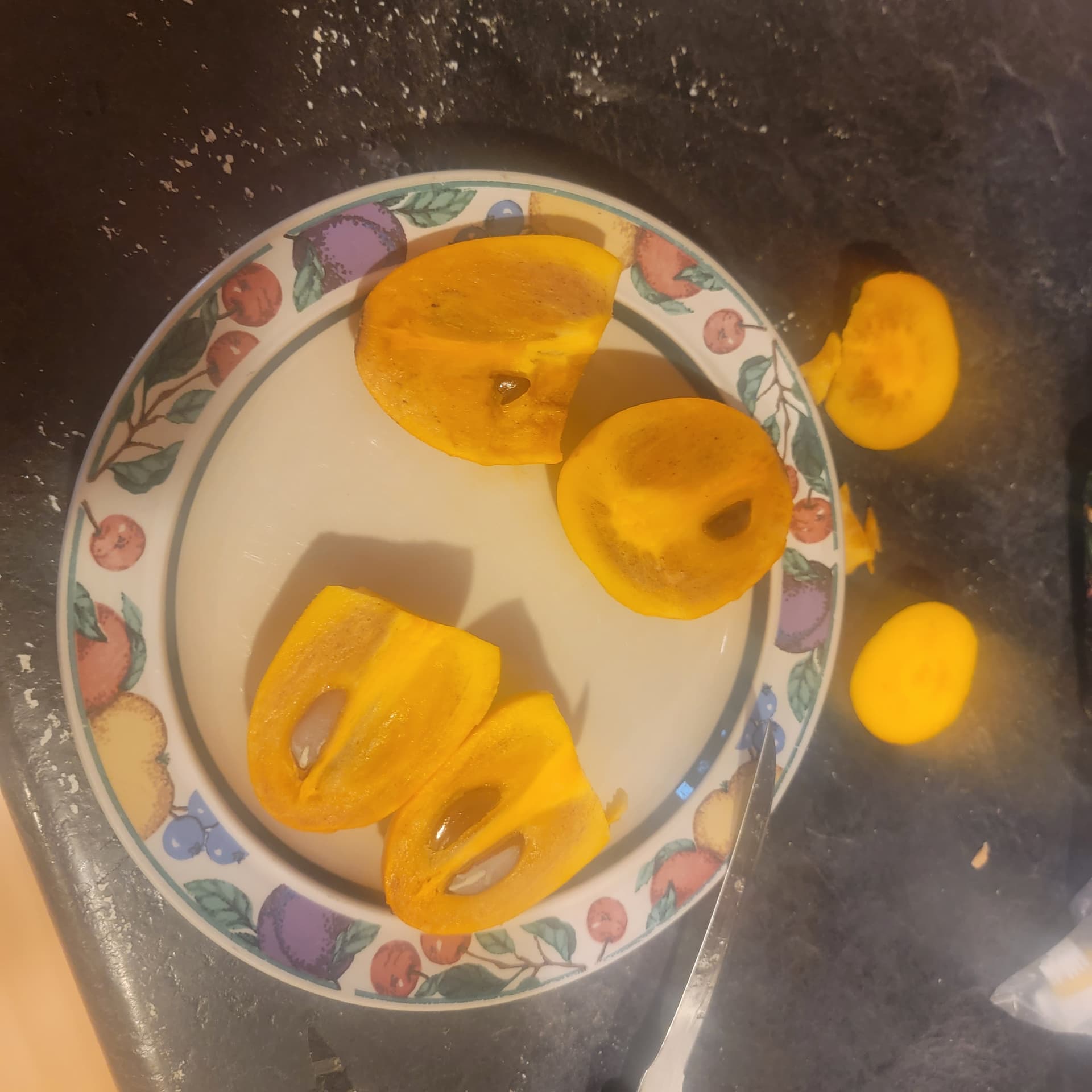
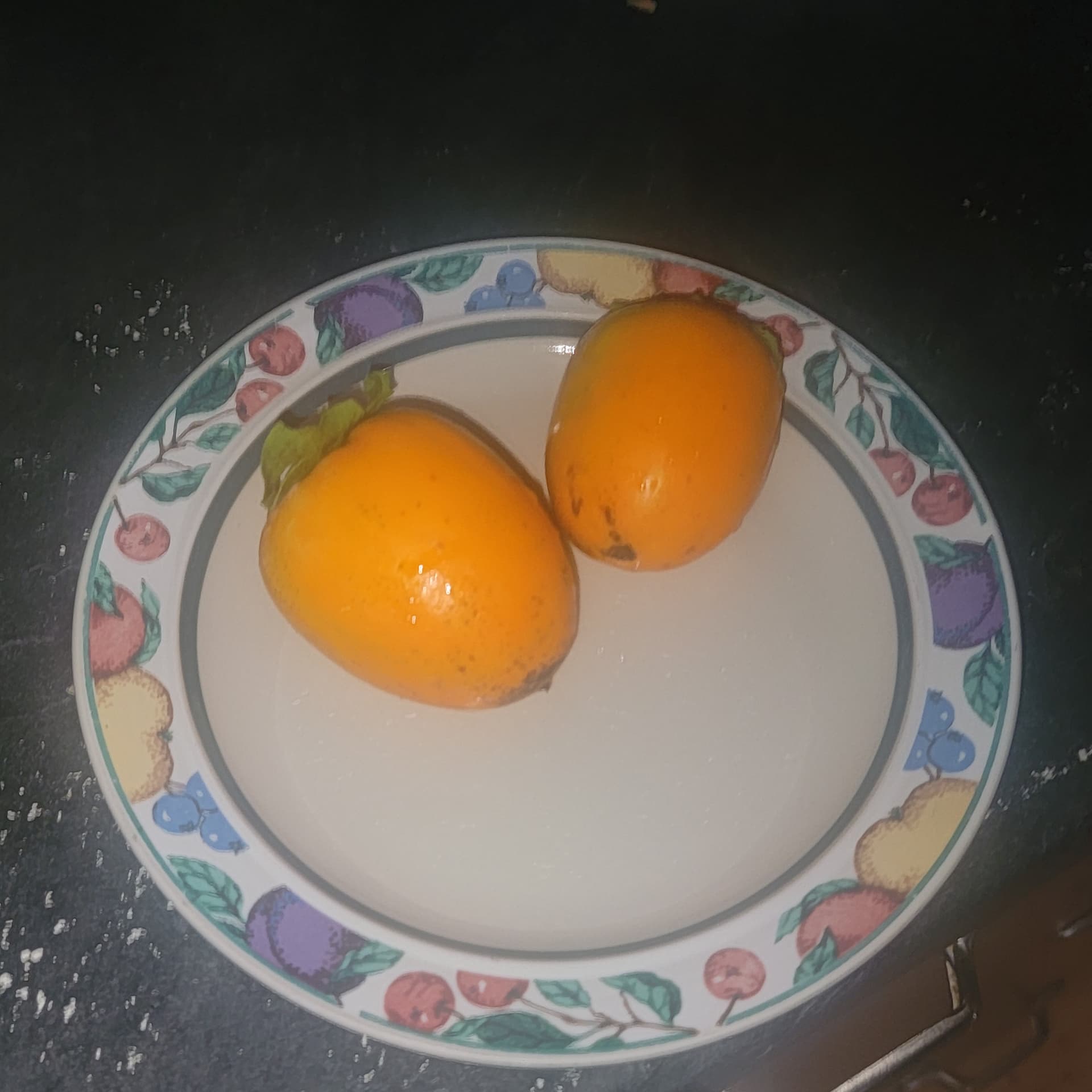
Tam Kam (left) vs supermarket Fuyu (right)
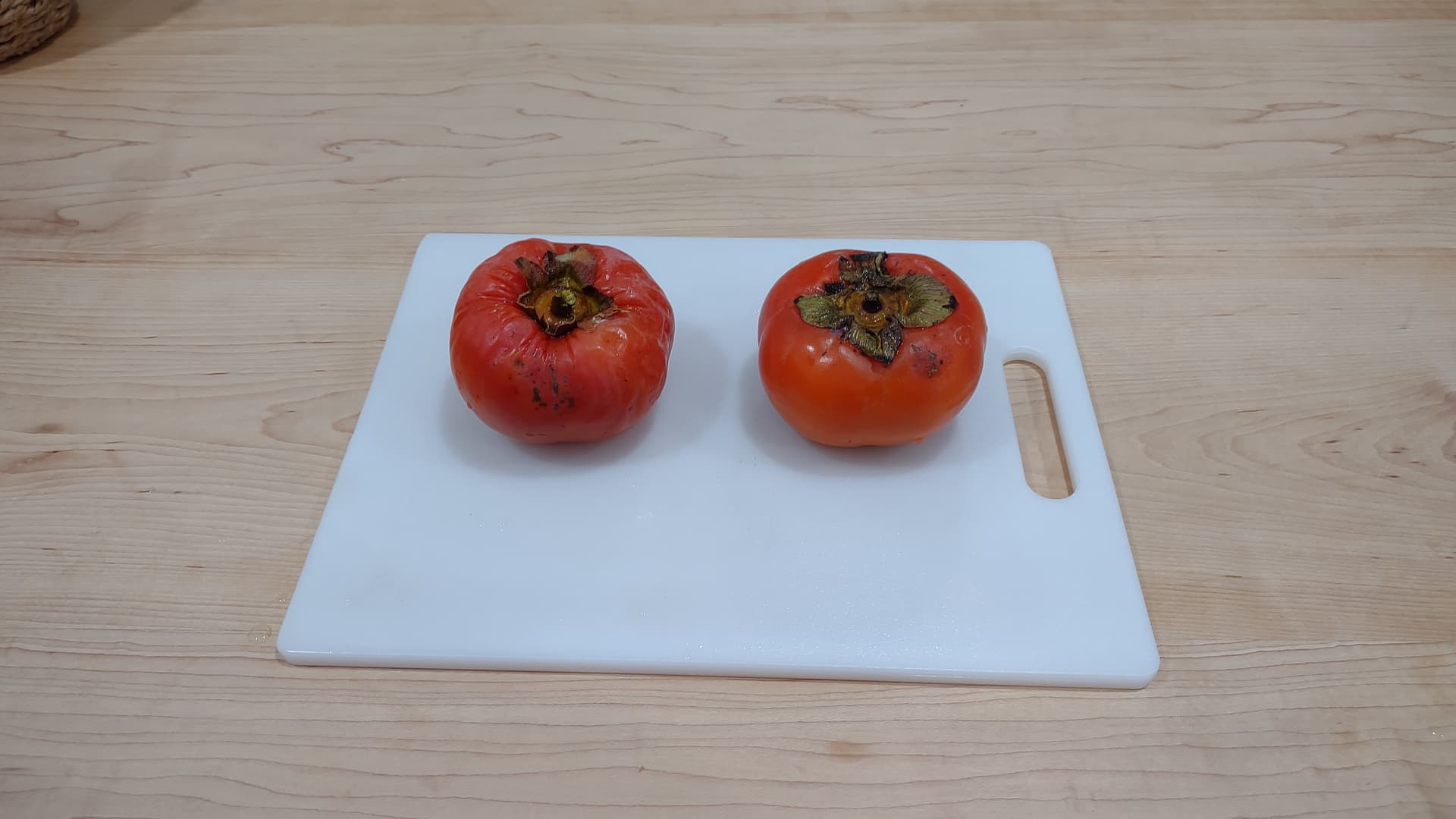
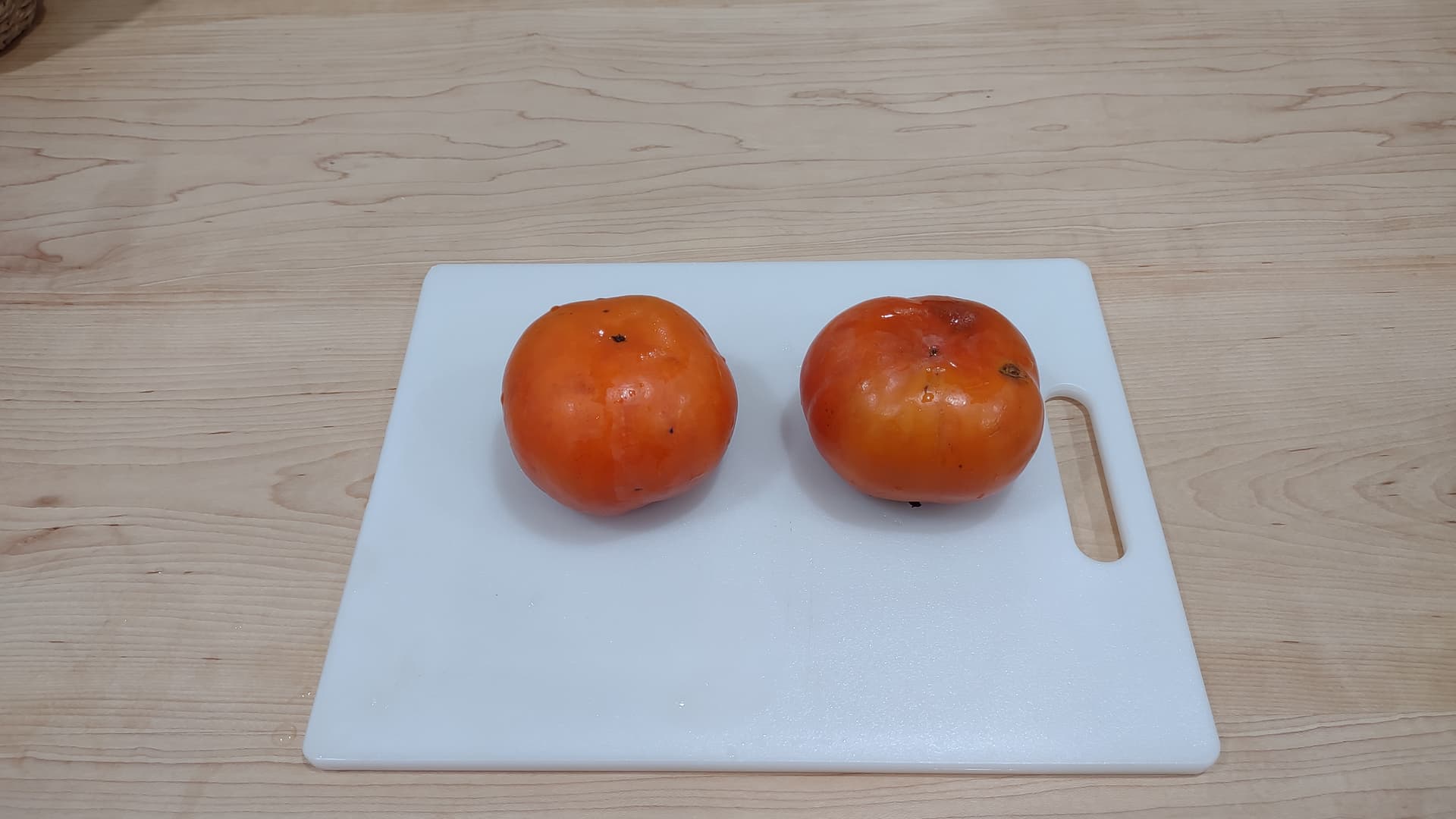
Both seedless. This particular Tam Kam was a little smaller than my other, but still a little larger than a fairly good sized Fuyu. Ripeness for Tam Kam was halfway soft, the top was soft, the bottom still crunchy, I’m guessing last night’s mostly radiative freeze to the low twenties had a hand in that. Fuyu was fully soft, but not quite melting.
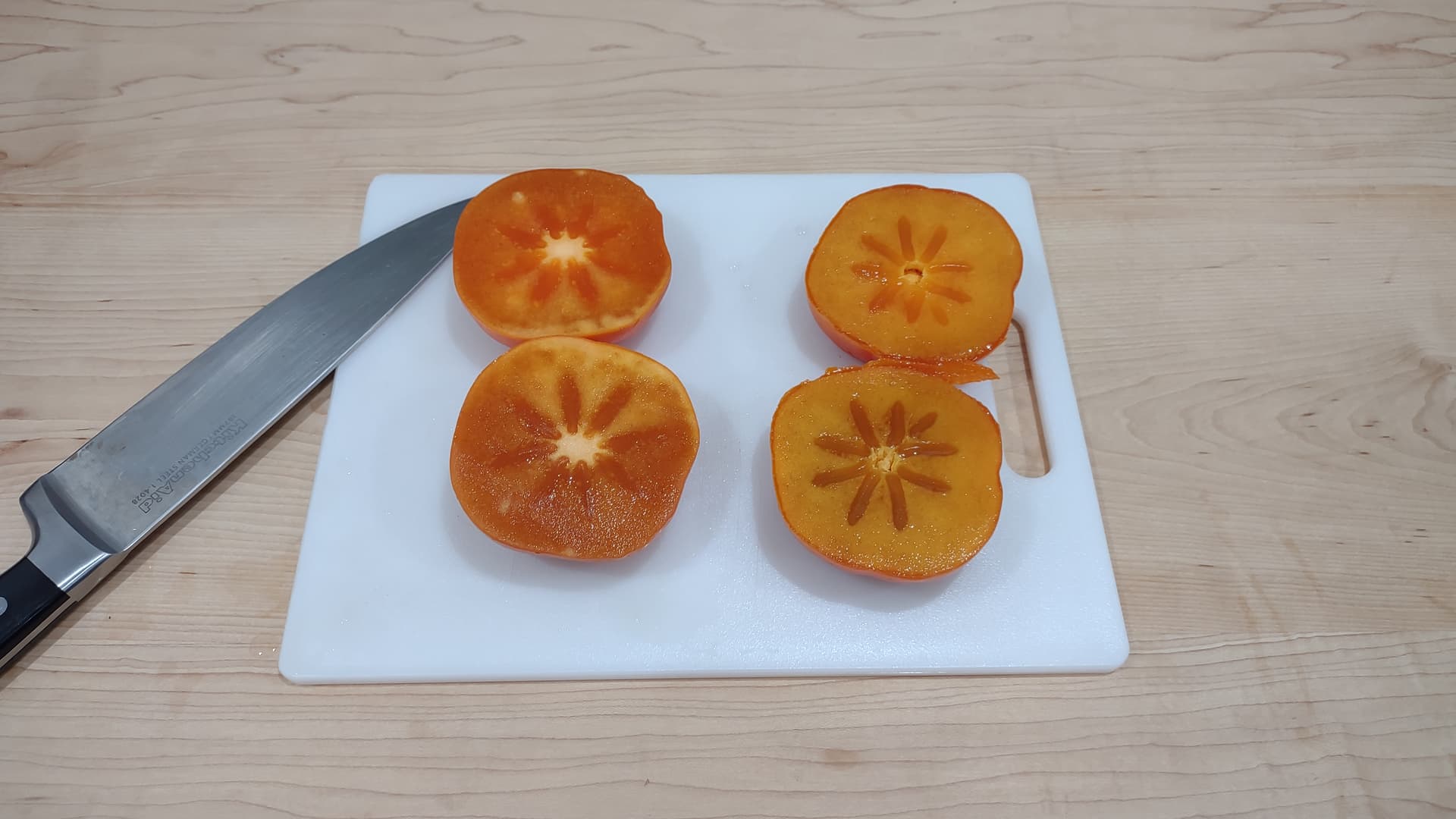
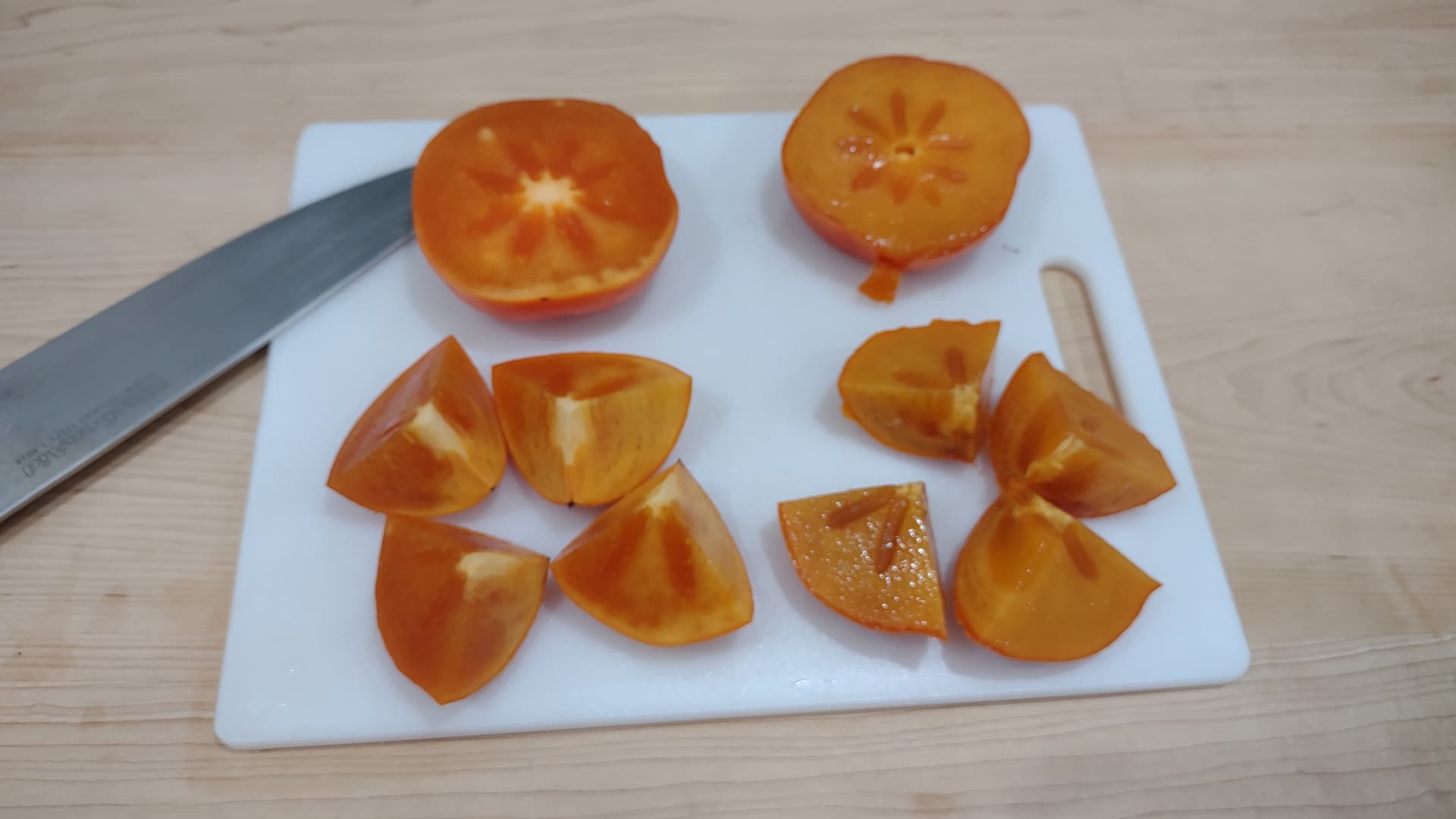
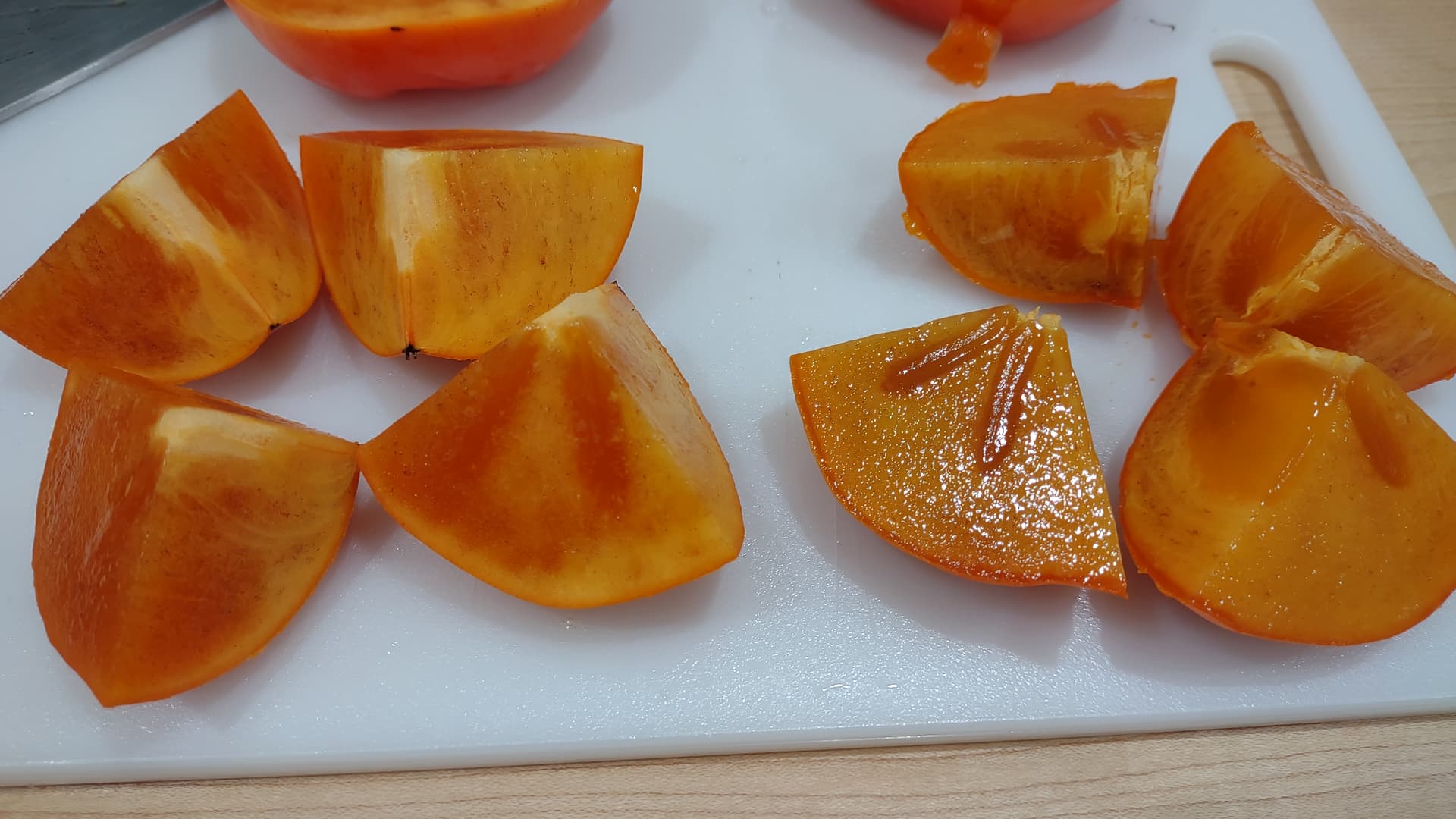
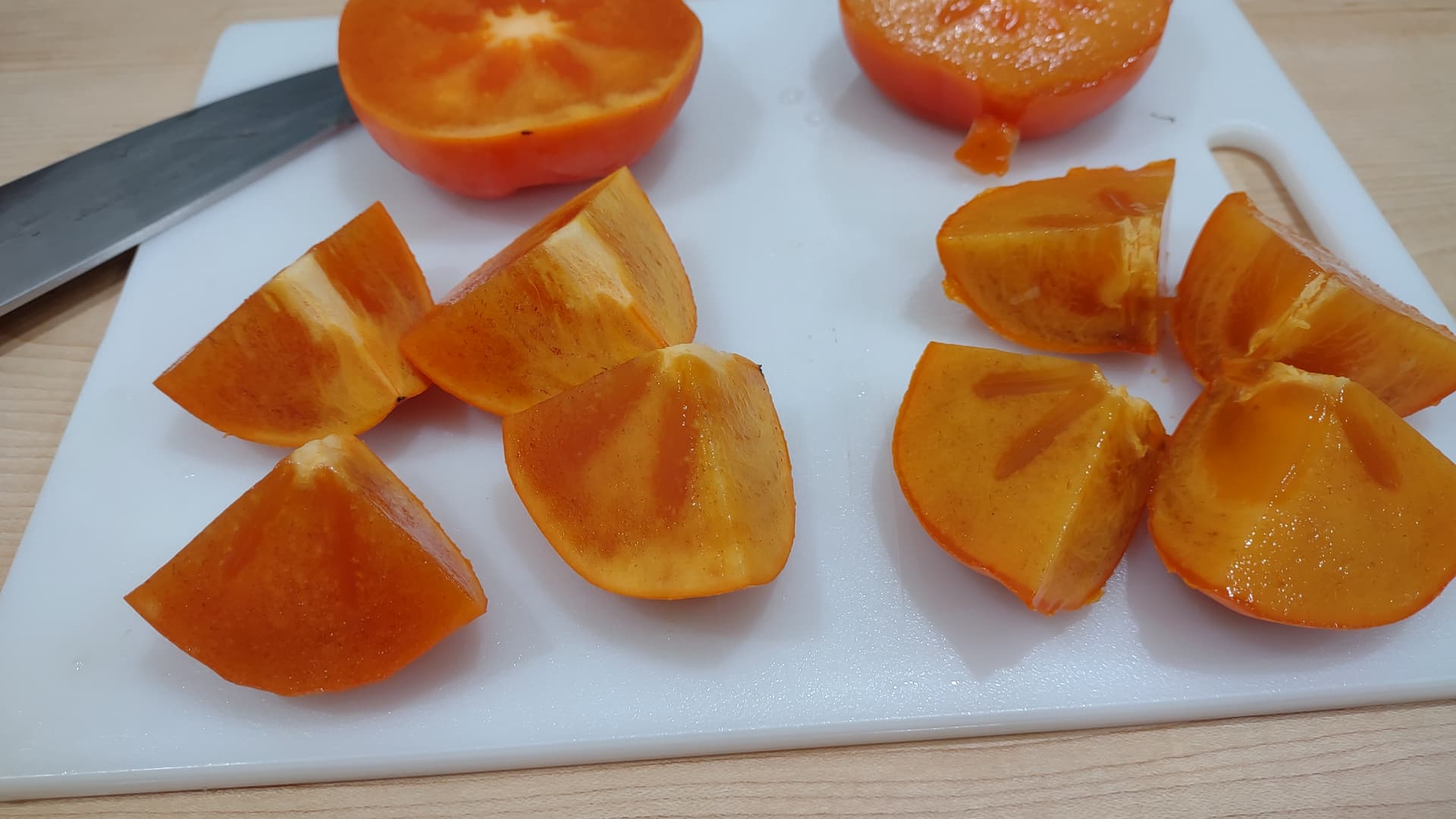
The riper Fuyu tasted marginally sweeter. Tam Kam was more flavorful, but not hugely so. Flavor profiles were similar, Tam Kam being a bit more brown sugar and spice while Fuyu leaned more into a more persimmon fruit flavor. Fuyu flesh was very soft, so juicy but a bit boring, though the seed pockets had a nice “packet of gel” pop, the skin was slightly leathery and toothsome. Tam Kam, especially on the bottom, was nice, a crunchy texture that gave way to rich and juicy, the seed pockets not markedly different, the skin was a bit thicker but much more snappy and crisp.
I like Tam Kam.
12 Likes
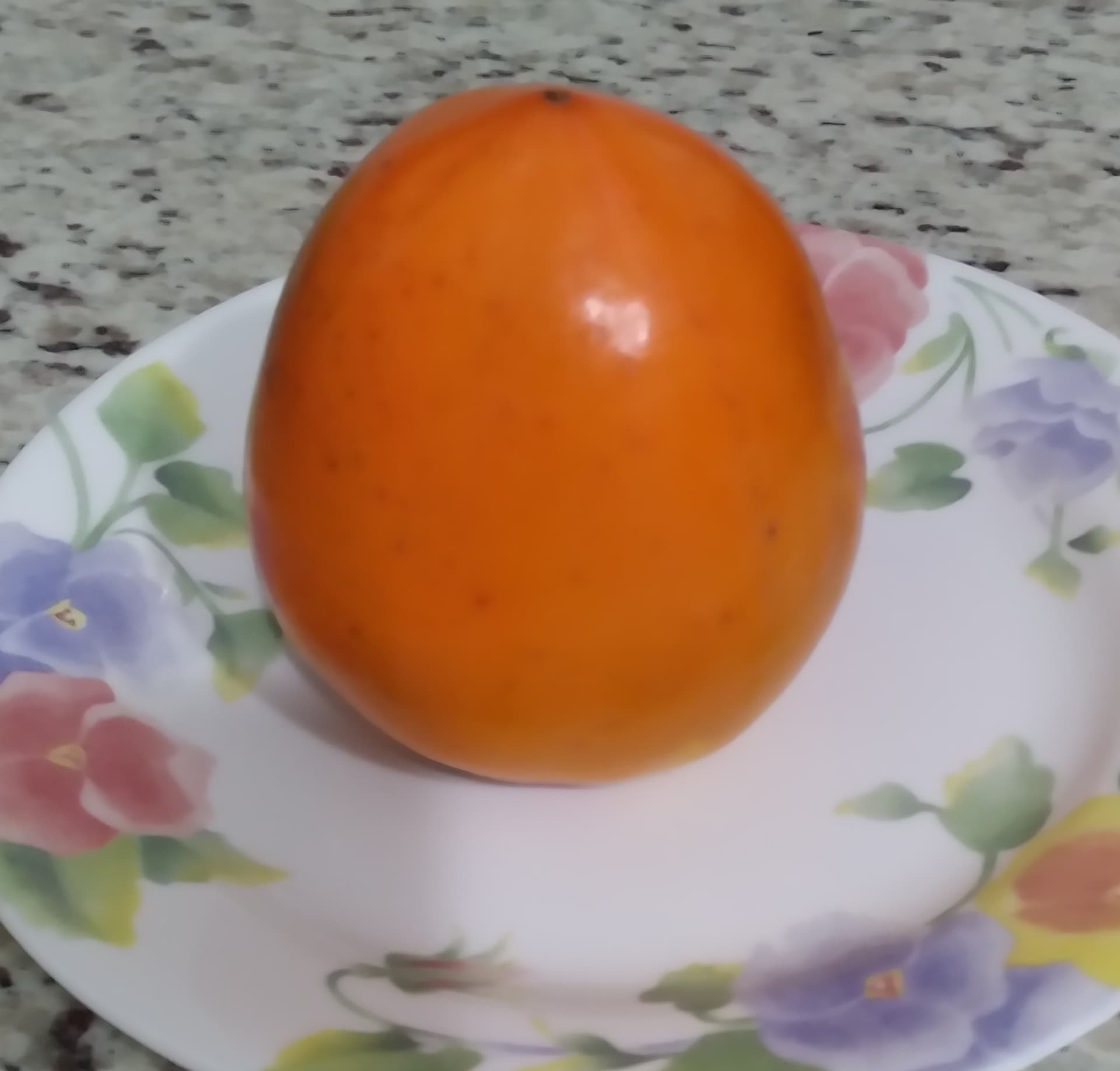
Soft to touch and give in evenly all around the fruit.
Tony
5 Likes
I have never tried to let it sit around until soft because I don’t trust that it could lose astringency that way. I put them in a closed bag with apples or ripe bananas for a several days to get rid of astringency before eating them.
4 Likes
Thanks
3 Likes
Thank you
3 Likes
I wait until it feels like a water balloon.
5 Likes
Do any of the good quality hybrids today produce male flowers?
I think that would be interesting from a breeding perspective.
3 Likes
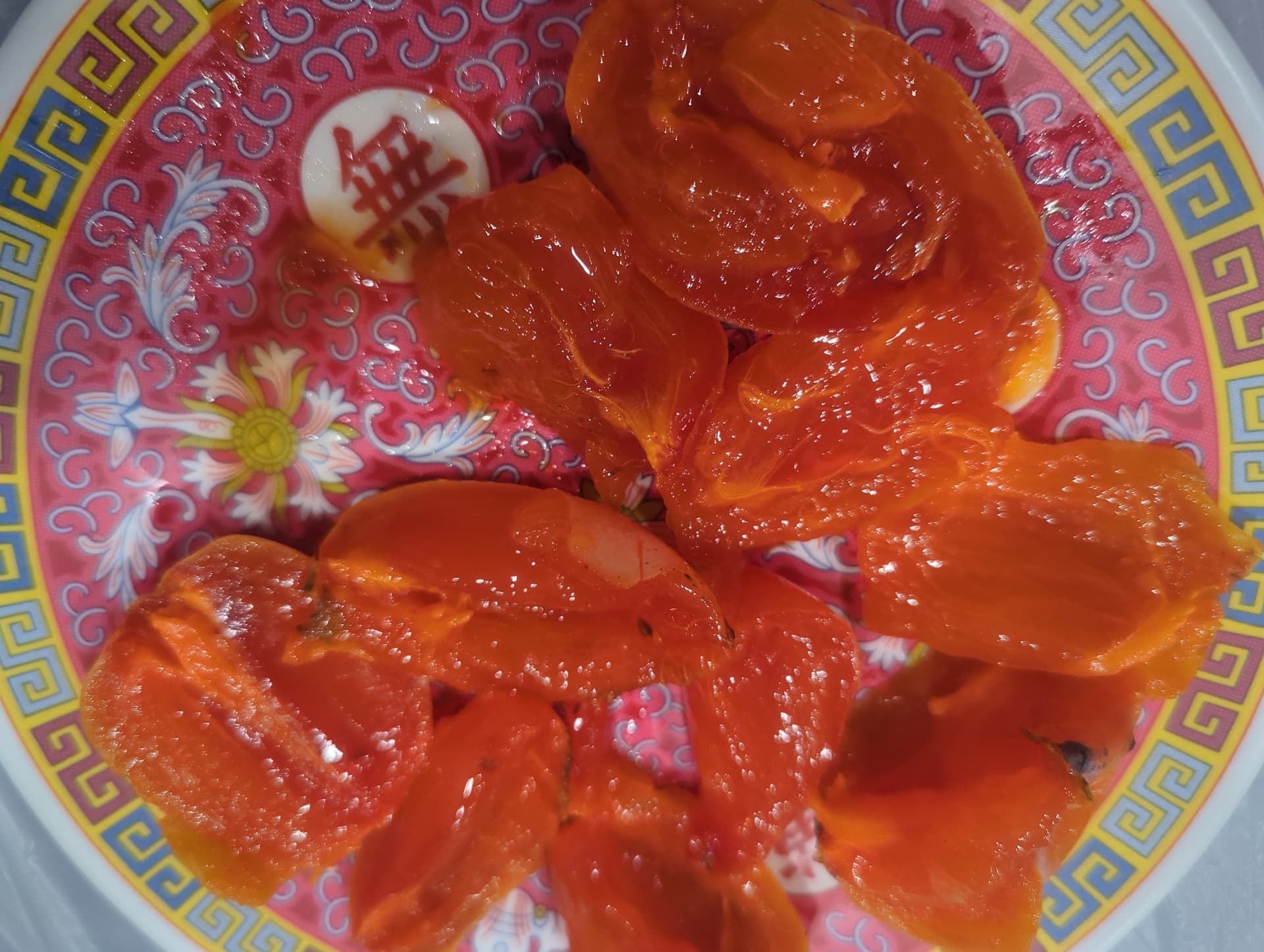
Saijo as good as advertised. Honey sweet with somewhat similar to Hachiya flavor. A keeper if you can grown in your Zone of hardiness. I got 8 seeds crossed with the hardy Kaki male Cheong Pyong.
Tony
15 Likes
Years ago I bought 4 different persimmons. Years later I found out I had 4 Saijo. Think saijo translates to The Very Best. Can’t argue with that. I only grafted one of the four over to something else.
4 Likes
Slice then dehydrate and they will lose astringency . Nature’s candy
4 Likes
Universal is supposed to fit that bill. I don’t think it’s stateside, though, as is it hasn’t seemed to garner much interest from anyone but me.
3 Likes
I dehydrated Hachiya for the first time. Set temperature at 135 F for 10 hours. It came out too dry and too chewey. It was a big disappointment.
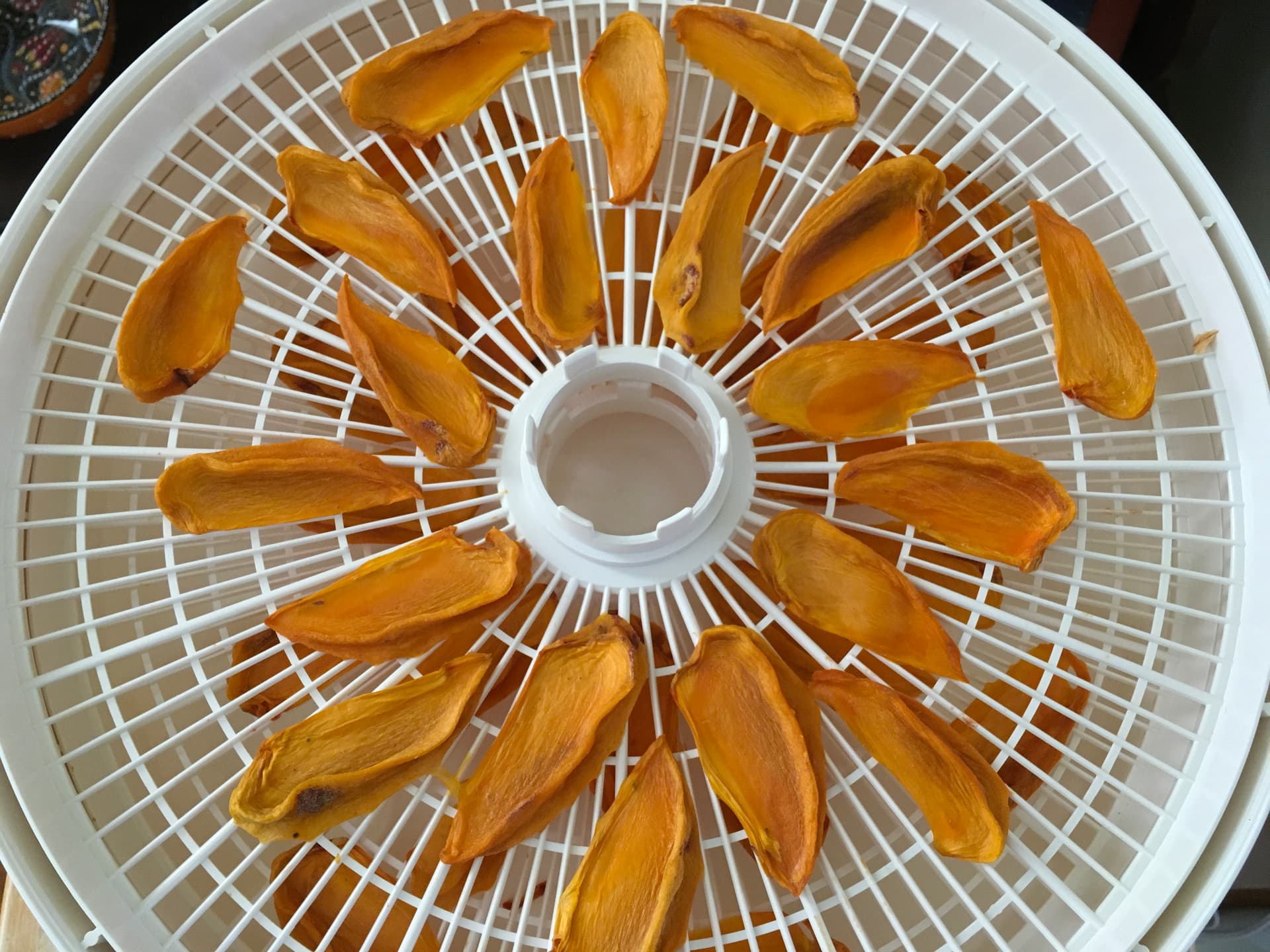
If I buy more Hachiya and want to preserve them, making hoshigaki will be a way to go. Did it in the past. The result was soft, chewy and delicious fruit.
7 Likes