The internet was in need of orchard harvest time schedules, calendars, guides, or charts for USDA growing zone 4. So I made one. This shows the approximate harvest date / ripen time for your home orchard or backyard orchard produce grown in USDA Zone 4.
Tree and Shrub Orchard Harvest Window guide for Zone 4 Minnesota & Wisconsin:
- May: Ramps. Rhubarb (thru Sep). Foraging finds include: Dames Rocket. Garlic Mustard 2nd year (1st white flowers appearing in the woods). Black Locust flowers (other parts toxic). Ostrich Fern fiddleheads. Wintercress aka Yellow Rocket (distinguish from native look-alikes).
- Late June: Strawberry. Nanking Cherry. Goumi Berry. Haskap aka Honeyberry. Sweet Cherry. Serviceberries (termed “Juneberry” in Minnesota – subtypes include Allegheny, Downy, Apple, Saskatoon, Shadblow, Roundleaf).
- July: Summer-bearing Raspberry (“floricane”). Mulberry (everbearing Jul thru Sep). Sour Cherry. Bush Cherry. Sand Cherry. Gooseberry (into Aug). Early Blueberry. Currants. Lingonberry 1st crop. Bilberry. Black Walnuts if picked green without shell.
- July - August: Mid Blueberry. Earliest Plums and Cherry plum. Michigan Huckleberry. Foraging finds: Stinging Nettle.
- August: Peach. Apricot. Most hybrid & Japanese Plums. Early Pear. Early Seaberry. Buffaloberry. Silverberry. Foraging finds: Amaranth.
- August - September: Fall Raspberry (“primocane”). European Plum. Early season Apple. Hardy kiwi. Elderberry. Late Seaberry. Cornelian Dogwood. Wintergreen (berries persist, hanging into winter). Thimbleberry.
- September: Late Pear. Aronia (early Sep). Hazelnut. Hawthorn. Siberian C (specialty) Peach. Grapes (e.g. “prairie star”). Shipova. Butternut. Pine Nuts (thru Nov). Foraging finds: Ground Cherry (consult multiple references for safety).
- September - October: Mid apple. Crabapple. Quince. Shagbark Hickory nuts. Butterheart aka Buartnuts (in WI not MN). Lingonberry 2nd crop (hangs thru Christmas).
- October: Late Apple. Apios americana Groundnut (throughout summer). Nannyberry (fruit is soft at leaf drop, persists hanging dry into snowfalls). Black Walnut (can collect to process later). Early and mid Chestnuts. Experimentally, a limited set of early Persimmons if near zone 5. Experimentally, Hardy English Walnut (Carpathian/Manregion/Russian types).
- October - November: Northern Pecan.
- November: Mid-late season Chestnuts produce some years. Medlar. Highbush Cranberry (fruit persists hanging thru Feb). Foraging finds: Garlic mustard 1st year rosettes (green until Thanksgiving like Motherwort). Note: invasive Buckthorn seedlings hold green leaves Nov 01 thru Nov 10 after natives drop leaves, easiest time to pull.
- December: Eat the Medlar.
- January: Highbush Cranberry.
Additional things grown in Zone 5: Blackberry cultivated varieties (Aug-Sept). Goji Berry (Sept). Pawpaw (Sept, UW Madison has a collection). Heartnut (fall, not in MN). Cumberland Rosemary. Water-shield (Brasenia schreberi). Experimentally: Jujube (Oct, select cultivars). Che aka Mandarin Melon Berry (Oct, zone 5b). Almond varieties. Service Tree. Kousa Dogwood (autumn persisting to late fall).
Notes:
Foraging above begins a list of edible “weeds” that weren’t intentionally planted.
Links to forum discussion threads covering specific cultivars appear below.
Annuals calendars:
The internet really needs this kind of document for each USDA growing zone. It’s not something found in a general-purpose book on Amazon because the publisher wouldn’t dedicate 10 pages to lists where 9 of 10 pages don’t apply to each consumer. A nursery wouldn’t have this because the varieties wouldn’t be coming from just one nursery – invasive weeds, the perennial rhubarb, and natives are in there with cultivated trees.
— ADVICE FOR THOSE NEWLY PLANTING IN ZONE 4 —
Before Planning:
Before planning your orchard or garden, learn what type of septic you have and where it is. Upper Midwest septic tanks often have septic “drain fields” aka “septic leach fields” that occupy 1200 (30 * 40) square feet of yard; only lawn grass (not even prairie plants) can be planted over it per design.
You could spend a whole 1-2 years preparing, maybe growing some early-producing fruit shrubs in containers set into the ground while you prepare.
In the year before planting:
- Buy an orcharding book and read it. The book will give general concepts on how to plan. Once you have the plants, each variety of plant has specific pruning needs that you will need to reference. Each has diseases and disease interactions with other plants. The book “The Fruit Gardener’s Bible” by Hill and Perry was written by someone who has lived in northern snowy climates where the ground freezes, unlike many other books.
- Examine sunlight patterns across the months (more below).
- Call to have underground utilities marked, dial 811 (USA), or this website https://www.clickbeforeyoudig.com/ (USA and Canada, active in 2026). If not in busy spring season, ask them to take extra time to be more precise and estimate utility line depth. Photograph the paths. Digging with foot shovel or adze can pierce a gas home service line. So can fenceposts being pounded down.
- Take lots of measurements of your yard from fixed objects visible both in summer and in snow, including to the utility lines.
- Draw a scale layout of your yard and orchard on graph paper or diagramming software. Also draw underground utilities and any septic systems on your map.
- Fell or trim trees that block sunlight.
- Fell trees nearing end of life that would be harder, costlier to drop after new fruit trees are growing in the direction they need to fall.
- Examine your soil composition and learn how to augment it following instructions from orcharding books or local experienced gardeners.
- Examine your soil nutritional characteristics using soil test kits and instructions from orcharding books.
- Cottontail rabbits on snow can slip through the spacing of many deer fences up to 4’ above ground (or 2’ above the snowline) to eat the bark off fruit trees. Hence you will additionally need chickenwire or “hardware cloth” sometimes sold as “rabbit wire” to stop rabbits in winter if you use many types of deer and wildlife wire fencing.
- On the east coast, voles eat the bark off trees, killing them by “girdling.” They girdle up to the top of the snowline in any year. If the snow overtops your vole protection in winter, the tree could be killed and you wouldn’t know it happened until the snow melted in spring. Wire mesh “hardware cloth” with openings 1/4” is the recommended physical barrier protection for the trunk.
- For deer & rabbit protection around a few trees or scattered trees, having individual tree cages at least 4’x4’ along sides can ascetically look nice. Out in a wild setting for trees growing tall, tree sleeves 5’ or 6’ can protect and help trees grow above deer browsing height sooner. Plan to seal tree cages in a way that can be re-opened for pruning, e.g. by 2-3 ties of wire on top, middle, bottom of the fencing. As a head start, you could start building tree cages on the floor of your garage for ordered trees, as early as Jan-Feb.
- For a home orchard with a dozen trees pruned to stay low at a height within reach of a stepstool or small ladder, the orchard tends to need a fence to >= 8’ to stop white-tailed deer. Though their shoulders are only 4’ high, white-tailed deer raise their neck and go on their hind legs or jump for fruit. Example building instructions: pound steel 8’ (or better 10’) T-posts 2 to 2.5 feet into ground (about 25% their length is standard depth for posts). Lash additional non-biodegradable garden posts or treated 2x4’s to the T-posts as an extension to complete posts standing a finished height >= 8’ above ground. Run fencing around the lower ~6’. Run wire at 8" to 12" intervals above the fencing. To dissuade rabbits from burrowing underneath the fence, consider an extra 1-2’ of chickenwire laid as a carpet around the outside of the fence (they tend to give up if they cannot dig just in front of the fence), which can be staked down. Or alternatively bury a layer of fencing 8-12" deep along front of the fence. More information on deer: How to manage deer damage on trees and other plants | UMN Extension
- To drive T-posts easier, wet the ground with 1-2 gallons of water and let soak in for 10 min.
- You can make stakes for staking down your tree cages or chickenwire from 12 gauge galvanized steel wire, available on amazon. Or you make stakes from old wire coat hangers, particularly to get a feel for how deep you need a stake to go to hold into your soil.
- Visualizations of the sun position across the months is available at the website SunCalc.org. A table is at the US Navy Sun Altitude and Azimuth calculator, available via google. It will ask for your location and day of the year. Altitude is the angle of the sun measured above ground. Azimuth is the compass heading of the sun. In midsummer in the northern hemisphere on the longest days, the sun rises in the northeast, gets pretty high before it crosses a due east compass heading, and eventually clocks around to set in the northwest. But past September 21, the sun will generally only be in the south. The most intense light is still midday from the south. A full moon (only on the day of the full moon) imitates the sun’s path 6 months later. The length of a shadow on the ground cast by a tree is given by the formula: (tree height) / tan(sun altitude in degrees). The percent of tree’s height that its shadow casts in Minneapolis (45 degrees north latitude) at solar noon, on a day is: June 01 43%, July 01 42%, Aug 01 51%, Sep 01 75%, Oct 01 115%; so for example, a 65 ft tall maple tree on Sep 01 casts a shadow 65 ft * 75% = 48.75 ft horizontally. A smartphone App called Sun Position (paid version) uses your phone’s camera to show you a live estimate of the sun and moon position on a selected day. In my testing it was accurate to within a few degrees.
- The website weatherspark.com gives general climate info for major cities, including predominant wind directions and daylight hours across the seasons.
Other Notes:
- Tree sizes are written in this order: height x spread. So a Summercrisp pear allowed to grow out to 20x15’ looks a little taller and narrower than a ball.
- In the 2020’s it’s common for new home orchards to use a battery operated pole saw to maintain the height of fruit-trees within reach of a step stool or small ladder or just arm’s reach.
- What orcharding books from California call “Winter Pruning” or (worse) “January Pruning” is done in Zone 4 after sub-zero weather has completely passed, typically starting when ice starts softening on lakes and lows are in the 20’s Fahrenheit, around March 15-31. Pruning before then has a high risk of causing winter dieback.
- Winter dieback is when some parts of branches die back (often the very ends of new shoots), but sometimes entire branches or (worse) even the whole tree above ground (which would kill the graft on top of rootstock).
- Semi-dwarfing rootstock combined with late March pruning (see a reference book for pruning times) tends to work better than dwarfing rootstock in a Zone 4 home orchard setting for controlling height, if higher fruit yield and tree vigor is desired. (Dwarfing rootstock is acceptable if low maintenance is a primary concern.)
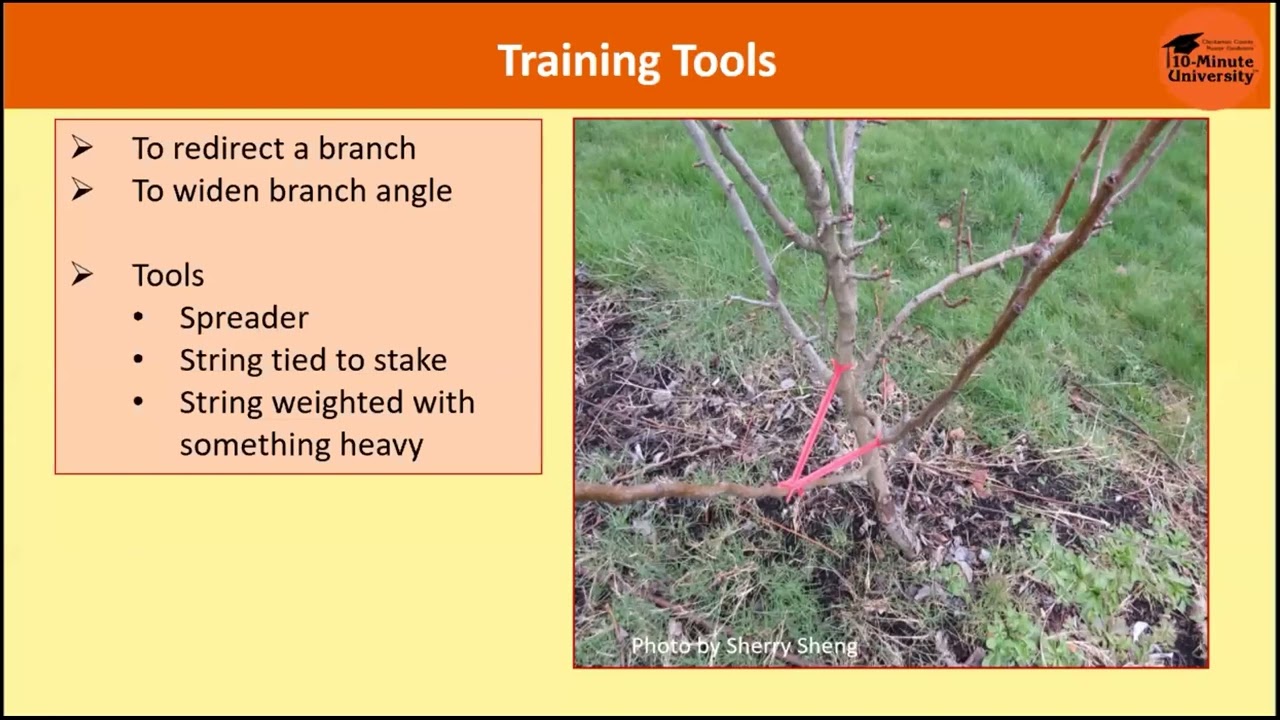
- Orchards will tell you the Dave Wilson backyard orchard techniques developed for zone 10 Southern California are not recommended for zone 4. However keeping trees short to within arm’s reach of pruners is becoming common for ease of harvesting, pruning, spraying. In that case the size and shape control method that is becoming common in the 2020s is to start an “open vase” shorter than traditionally mentioned in books by cutting new whips at knee high or 18-24” to force next year’s branches to start below that height. For an “open vase” shape, ideally ~4 low branches are trained by gently tying to wire or stakes with soft cloth or yarn to grow out at 60 degrees from vertical in the very early years; competing branches are pruned to maintain the tree’s energy going primarily to the selected scaffold branches. During late winter pruning, the ends of branches are pruned back to a point < 1 cm distal from outward/downward facing buds to encourage new branch growth to start there; not all trees will grow in an open vase shape, so check your reference book and re-read the pruning instructions.
- Some fruit (certain Apples, Quince) are tip-bearing, so heading (pruning back) branch tips prevents fruiting during bearing years. Check a reference for each variety before pruning.
- In orchard catalogs, “Full Sun” usually means 6+ hours direct sunlight per day. Full-to-Part sun means 4-6 hours including afternoon sun. Part shade means 4-6 hours, mostly before midday. In Zone 4, some fruit that particularly needs 8+ hours direct sun a day: Apple, Pear, Cherry, Persimmon, Seaberry, Shipova, probably Peach (because so far north).
- Shade plants: A list of few plants that can produce light yield in broken dappled sunlight – usually being native understory plants: Black Cap Raspberry, native Gooseberry, Michigan Huckleberry, wild Lowbush Blueberry, Alpine Strawberry (Fragaria vesca), Rhubarb, Mayapples (Podophyllum peltatum, consult reference because poisonous until ripe, remove poisonous seeds), Downy Serviceberry (A. arborea) for drier spots, Allegheny Serviceberry (A. laevis) for better fruit, Saskatoon Serviceberry (A. alnifolia) but highly susceptible to Cedar-Apple Rust, Canadian Serviceberry (A. canadensis).
- Nuts in zone 4’s cold are susceptible to delayed graft failure, so the U of MN recommends cuttings and layered clones as opposed to grafted plants.
- For those following a practice of planting nitrogen fixers, some lists. Edible Nitrogen Fixers: Buffaloberry, Silverberry, Goumi, Seaberry. Or use Bush Beans. Non-edible Nitrogen Fixers: Sundial Lupine (please only buy the midwest native type), some types of native prairie Indigos. Note Lead Plant puts tough roots in the ground.
- For each of your plants, check if it needs acidified soil. For Blueberries it’s well-known, but others do too such as: Lingonberries, Huckleberry, and (surprise!) Chestnut trees, and likely more. Big box stores sell sulfur-based soil acidifier that help bring the pH to a neutral or acidic level many plants like. Sulfur-based soil acidifier takes 3-6 months to start changing the pH.
- In the upper midwest, city water can be a bit alkaline due to being drawn from layers of limestone. Rough measurement of pH can be performed with colored test strips (available cheaply online) or with a meter. A consumer-priced garden soil meter with a pH setting (e.g. from a big box store) will require scratching the shaft – but not the tip – with something like a scouring pad or emory paper just before use to get an actual pH reading.
- Fireblight can persist in root fragments of most rootstocks for a couple years, so if your tree dies from fireblight you will need to remove the roots. Then plant something not susceptible to fire blight in its place or wait a few years before replanting or seek solutions from an arborist.
- Apples and plums tend to require the most chemical sprays. If important to you, search this document for the words “low spray” and “no spray” for a link about plants requiring the least spraying.
- For those with digestive disorders like IBS, SIBO, and Crohns, plants in the family Rosaceae tend to the most likely to cause gas (health information space term: FODMAP). Two main reasons are via storing energy as sorbitol, an indigestible sugar alcohol, and via high fructose-to-glucose ratios leading to fructose passing unabsorbed into the large intestine. Cooking reduces the effect. Individual cultivars vary in their contents. Lower FODMAP fruits coincidentally have lower spraying requirements.
As the orchardist, you are allowed to choose the shape of your trees:
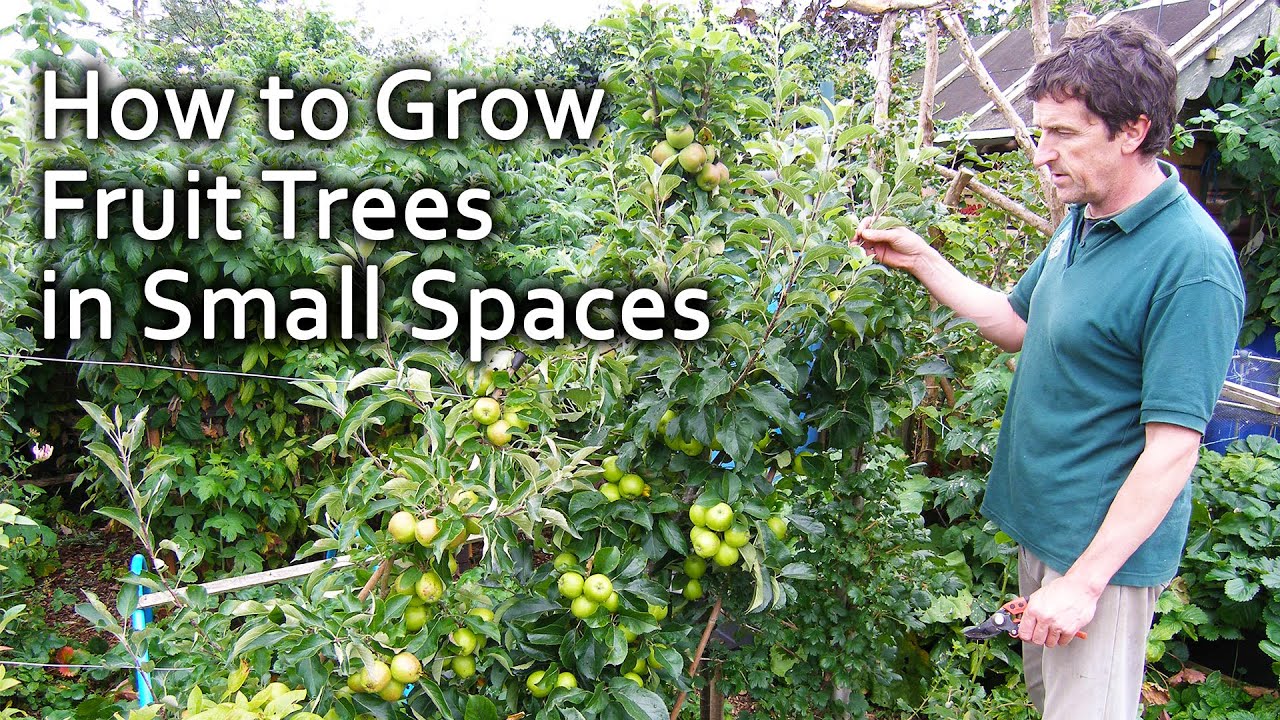
How to Grow Fruit Trees in Small Spaces
— SOME GREAT THREADS FOR PLANNING —
Ranking by Sunlight Requirements:
— GOOD VIDEOS —
Spacing and Sizing for Easy Maintenance in a Home Orchard, with Yield Exhibit; says a tree pruned to 6’ high yields all the fruit a single home needs:
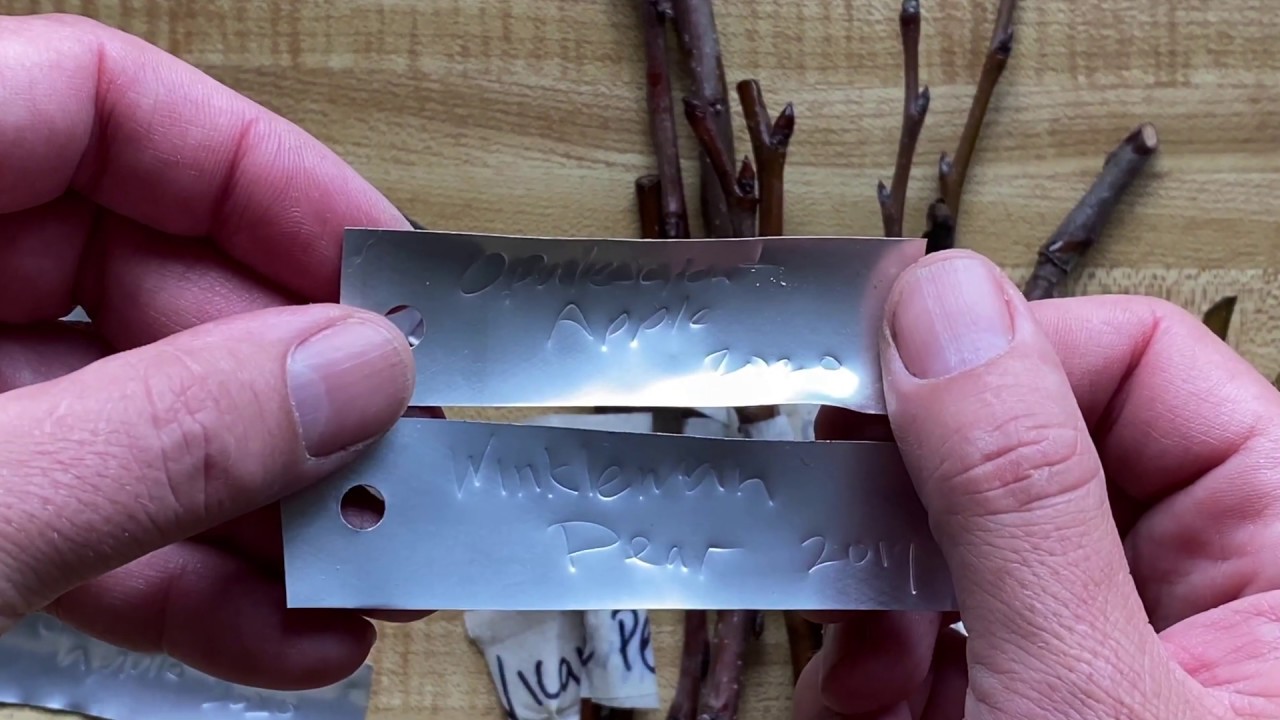
Making labels;
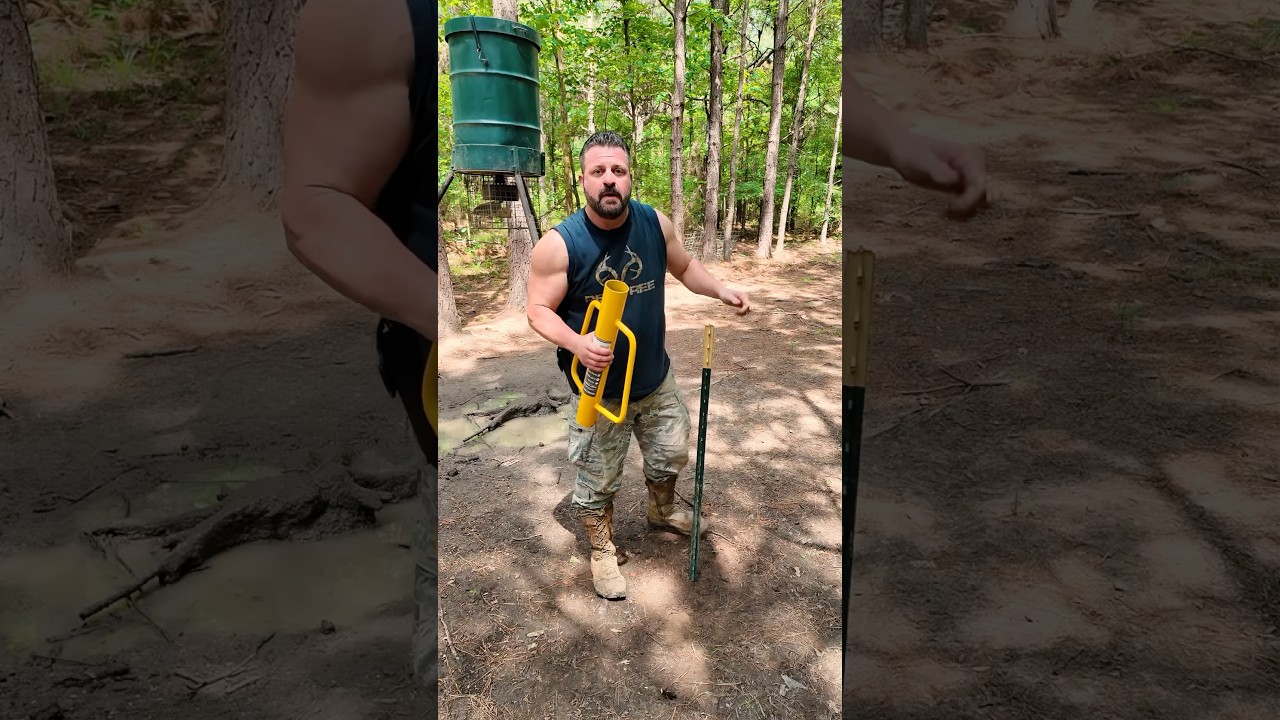
Attaching fencing to T-posts:
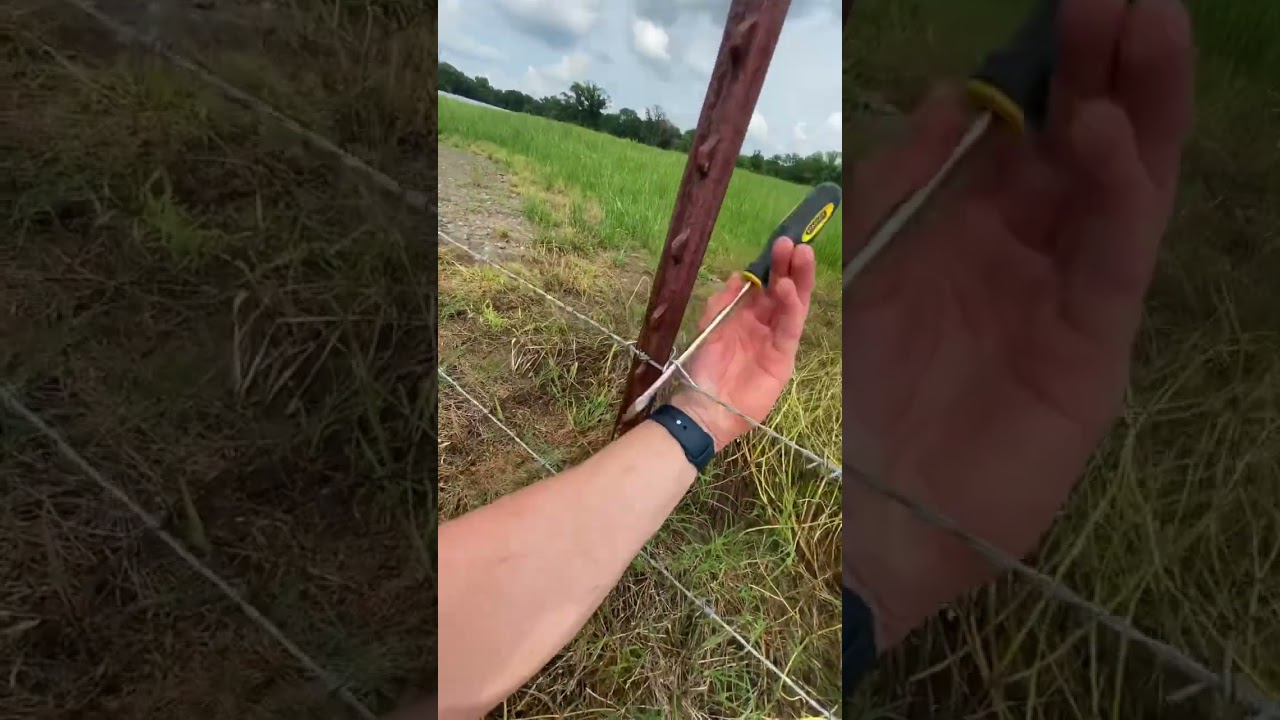
Removing T-posts:
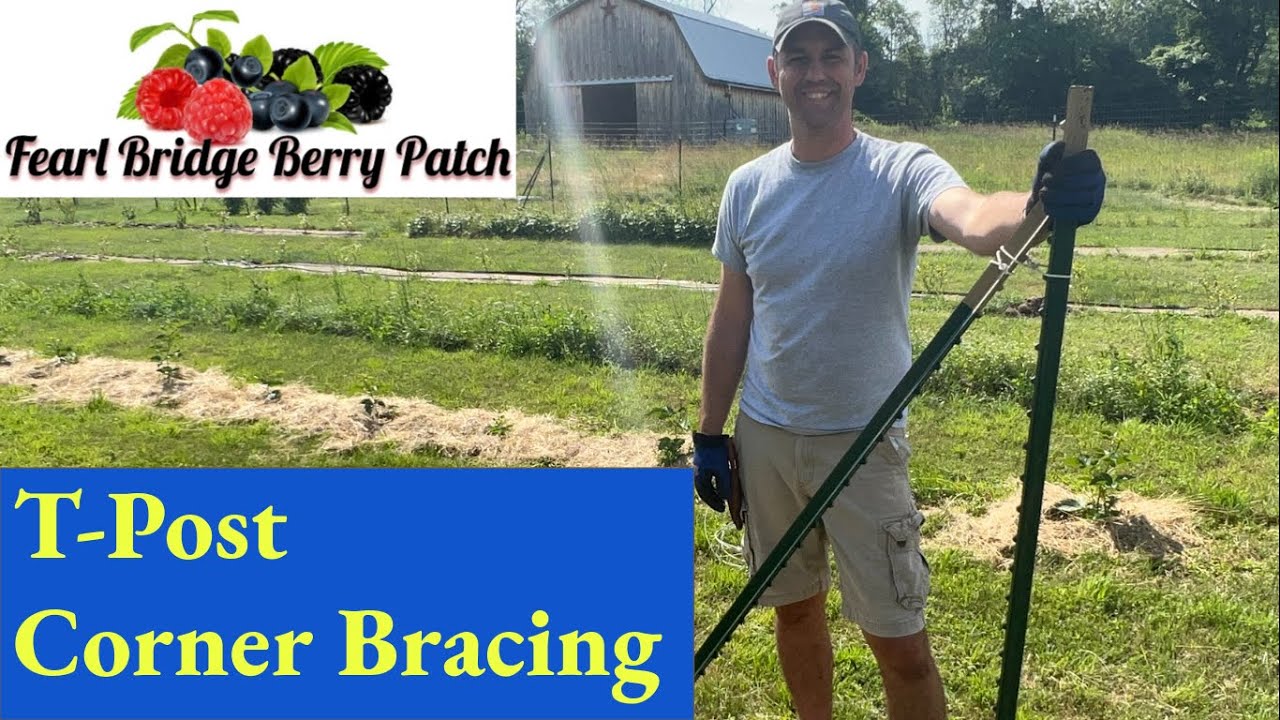
Bracing corners of T-posts or trellising, could use 12 gauge galvanized steel wire to tie:
— VIDEOS AND TRAINING ON PLANTING, PRUNING, SOIL NUTRITION, AND MORE FROM MASTER GARDENER PROGRAMS —
I recommend reading a general orcharding book first to get a understanding of all the concepts before watching these videos specific to northern USA growing.
Wisconsin Master Gardeners (many orchard and gardening videos):
Minnesota Master Gardeners section on Fruit:
Minnesota Master Gardeners on all Gardening Topics:
Oregon Community Colleges:
Maintaining Multigrafted Trees:
Adding a notch above buds to encourage the bud to start a branch (blocks hormone auxin released at tips from preventing branch formation):
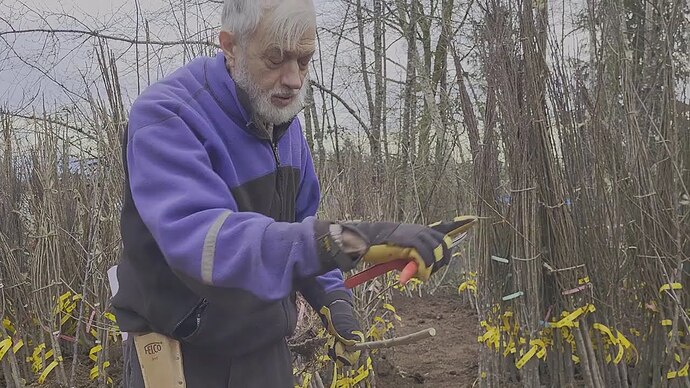
Planting non-fruit seedlings in large plantings, mentions deer and vole protection:
— LINKS TO OTHER FORUM THREADS REGARDING ZONE 4 HOME ORCHARD CHOICES —
Apples:
Plums:
Also just this paragraph on rootstock hardiness:
Pears:
Apricots:
Cherries:
Haskap / Honeyberry:
Peach:
Contender, Madison, Siberian C, and Reliance might survive in Minneapolis / St. Paul. Contender has positive reviews in several Twin Cities locations. Peach trees are fast growing but not long-lived anywhere. In Zone 4b a one-every-10-year polar vortex is likely to kill the tree. Those in Zone 5 interested in the newest varieties could try cold-hardy varieties bred in Michigan such as Paul Friday’s Flaming Fury(R) series or the Stellar(R) series.
Nuts:
For trying hazelnuts in zone 4, cultivars with pure European genetics (Corylus avellana) are not expected to be hardy enough; hybrid northern hazelnut cultivars with at least part American genetics will be more hardy. Pure American Hazelnuts are typically hardy through zone 3. As of 2026, the University of Minnesota and University of Saskatchewan are trying to develop improved American cultivars.
Named selections of natives Black Walnut and Shagbark Hickory do exist. Seedlings would be more hardy than grafted varieties of nut trees at their hardiness limits. Depending on the species, winter protection of grafts may be required for a few years. Examples of winter protection include: piling snow or mulch over the young tree during only the very coldest months and removing the piled mulch promptly in late winter before it encourages damaging fungal growth; possibly starting the tree in a large planter on casters then rolling into a garage against the wall of a heated house in winter. Furthermore a phenomenon called “delayed graft failure” refers death at the graft union that sometimes occurs during winter polar vortex conditions in grafted trees up to ~10 years old when grown in their lowest ~2 hardiness zones.
Shagbark Hickory trees advertised as having an usually thin shell are often recent descendants of interspecies breeding with Pecan or other nut trees and may not produce pollen in a manner viable to pollinize other trees for nut production. Such trees are called “pollen sterile.” If only planting a small handful of trees, you will need to verify pollinizer status of each parent of seedlings you are buying or each grafted cultivar you are buying. Seedlings of a pollen-sterile cultivar would be expected to still have an undetermined increased chance of being pollen sterile. There is no authoritative research on exact quantifiable figures but the phenomenon occurs with other interspecies hybrids.
In 2021 Minnesota removed the prohibition on importing Black Walnuts and Walnuts that had been in place due to possible spread of Thousand Cankers Disease.
For experimentally trying chestnuts in zone 4b, cultivars with majority Chinese genetics (Castanea mollissima) sometimes with part-American are usually the most hardy. A group of complex hybrids with mixed genetics developed specifically for cold hardiness and blight resistance in Minnesota zone 4b were created under the name “Badgersett” and are now sold with names like “Large Badger” or “Giant Badger”; a cross with the hardy Chinese Qing is sold as “Badgerqing”. Growers are also trying seedlings of hybrid Chinese-American chestnut “Dunstan.” Because zone 4b is pushing the limits of hardiness, growing with seeds or seedlings from known hardy named cultivars (not grafts) is the recommended approach. Anticipating 50% early mortality means for example: (backyard setting) starting in containers set in the ground; or (field setting) initially planting twice as many at half the intended final spacing then years later culling unneeded survivors to achieve the final spacing.
Pine Nuts:
Pine Nut Trees that can grow in Minnesota and Wisconsin include: Korean Stone Pine (Pinus koraiensis), Swiss Stone Pine (Pinus cembra), Siberian Stone Pine (Pinus cembra ssp. Siberica), Siberian Cedar (Pinus siberica). A few Ponderosa pine are found in urban plantings in Minneapolis. Online sources say the native upper-Midwest trees have nuts so small they are not considered worth the effort of harvesting. Pinyon pine (Piñon pine, Pinus monophylla) does not grow in Minnesota nor in Wisconsin; Pinyon pine (Piñon pine) only grows natively in the American southwest.
Persimmons:
American Persimmons are at best an experimental trial in zone 4b such that you should expect a high rate of failure until proven otherwise. Persimmons have a native range south of zone 4b and would require winter protection to survive during their first 4-5 years, such as: burying under snow or wood chip mulch or straw; starting in a large pot on casters and wheeling into an attached garage for winter; starting in a greenhouse for a few years. Having a persimmon complete edible fruit in years with longer summers is still questionable due to the number of appropriate growing degree days, which is species specific and usually unknown. Seedlings are more likely to survive than grafted. Asian Persimmons do survive in the cold winters of zone 4 and 5 where winter temperatures can fall to -30 F and -20 F, respectively.
Unusual:
Hedge Rows:
— SPRAY GUIDES AND SCHEDULES —
UW Madison:
U of MN:
https://conservancy.umn.edu/server/api/core/bitstreams/ec31340c-0611-4f09-abe3-fd2bb03c7484/content
