From flowering to harvest…
How early/late is this variety compared with Jiro?
I purchased a tree this year that arrived in extremely poor shape and died. I’ll have to look for scionwood next season.
1 Like
That’s cool. Do the male flowers produce fruit as well?
Taishu tends to be either male or female and not hermaphrodite. Male flowers do not produce an ovule therefore do not produce fruit.
4 Likes
I bought a tree also this year, it never grew any buds, I think it was in bad shape when it was shipped to me. I had problems with getting bad rootstock loquats also and when I complained about it, the seller was nice enough to send me a few scionwood which took and is doing fine. I may need to contact the seller of my Taishu bareroot tree, you should do the same, so they get the feedback about their bad rootstock they are selling.
3 Likes
we are talking about the same seller. I think others need to be alerted to the poor quality trees she sells.
I will start a thread to get input.
2 Likes
Yup, it sounds like there is something wrong with the bareroot trees since I didn’t get any to grow, just dried up and died. The grapes did fine.
1 Like
Think I know the seller too. Poor customer service
1 Like
@Harbin Does your Taishu tree have male flowers regularly?
3 Likes
Yes, every year since it started flowering.
7 Likes
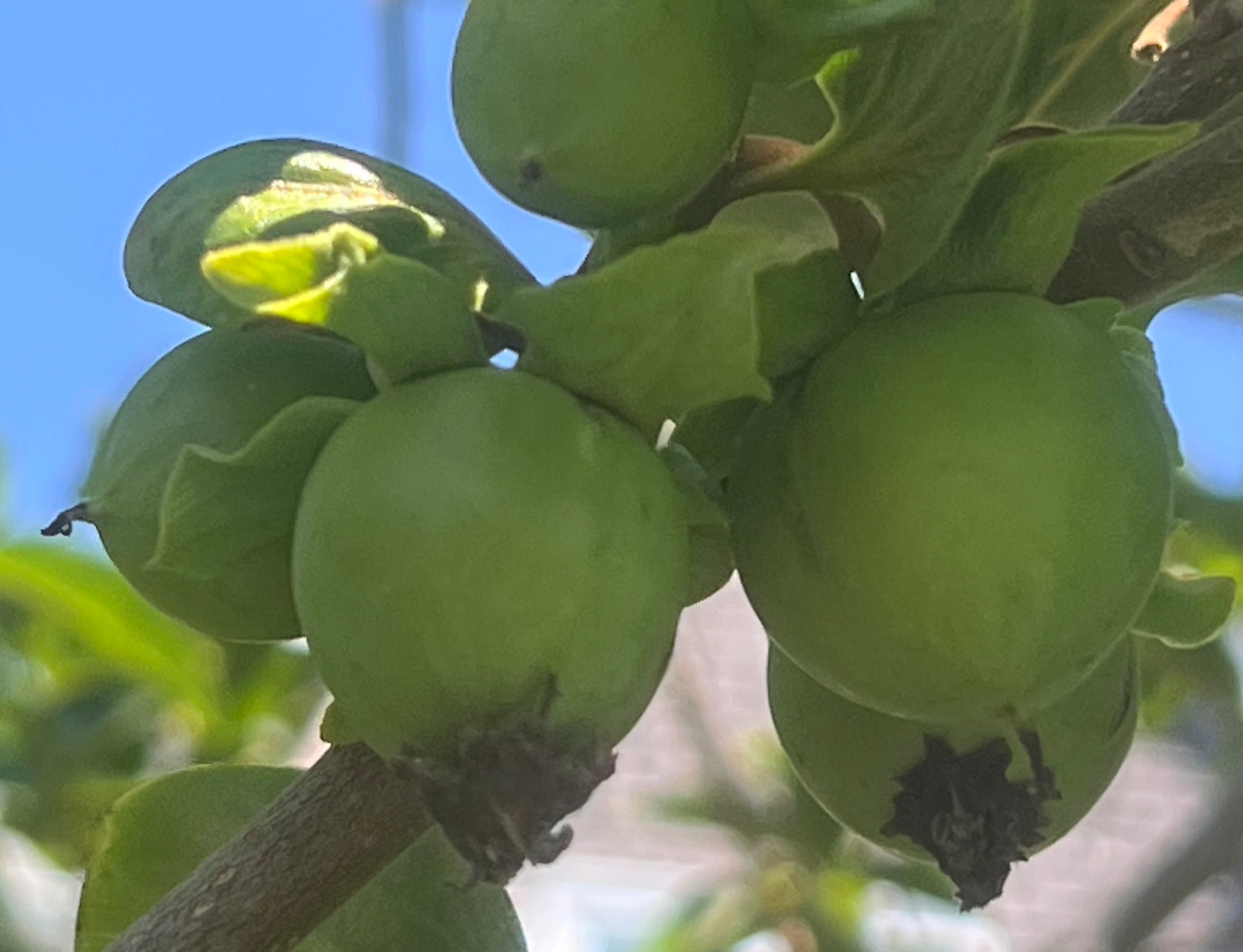
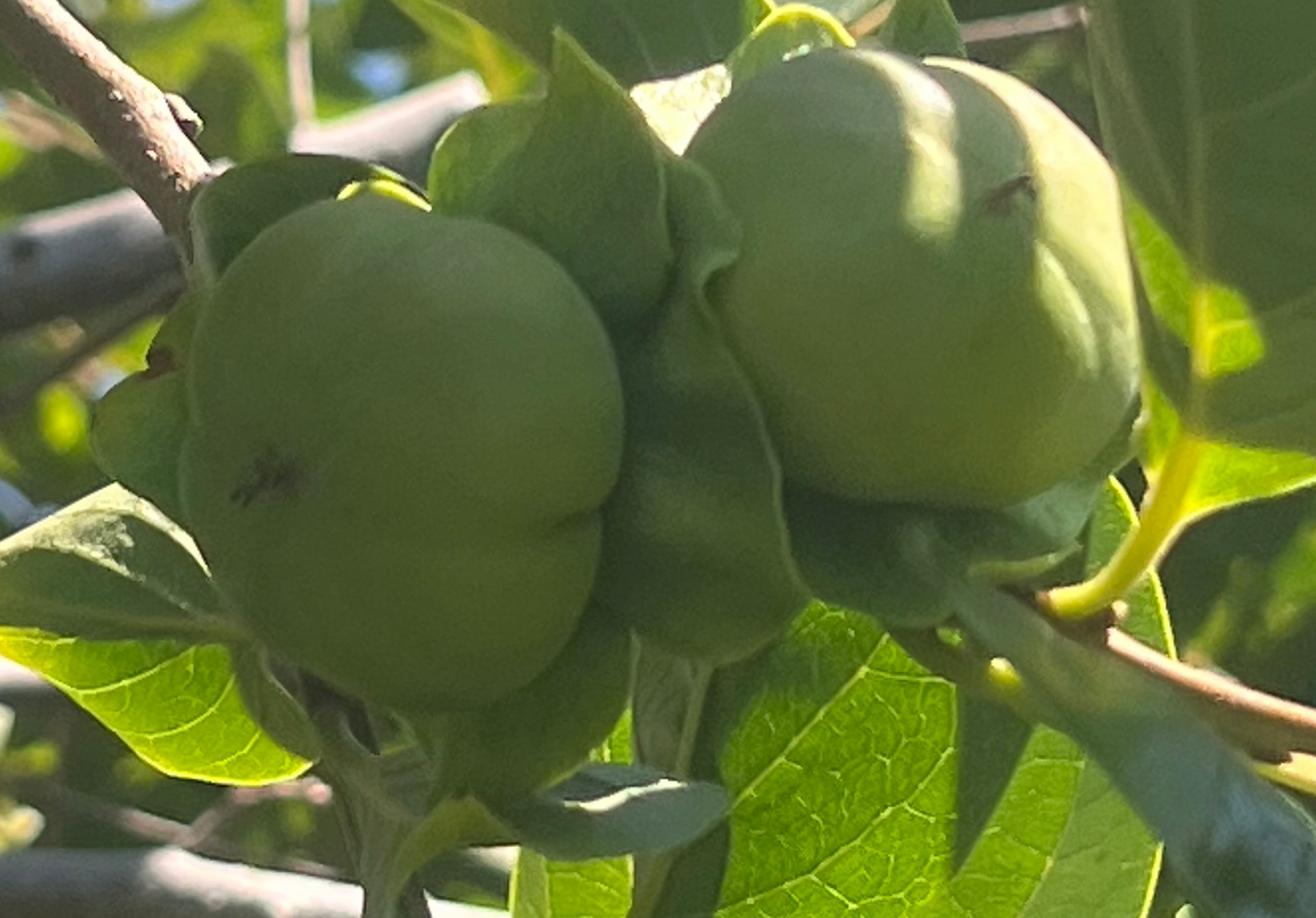
Last year I grafted Taishu to an established IKKJ. This year there are fruit. There seems to be both relatively large fruit from female flowers and relatively small fruit from hermaphroditic flowers.
It’s hard to judge relative size from the photos so I’ll just testify that the fruits in the 2nd photo are roughly 1/3 the size of the fruits in the 1st photo. And the shape is different. Most of the fruits on these grafts and all of the Taishu fruits on my stand-alone tree have a typical PCNA shape. The fruits in the 2nd photo are narrower but longer, somewhat plum-like.
5 Likes
Taishu does not produce bisexual flowers that would form fruits. Also the fruit has no prominent side ribs…compare with above. What you have is not Taishu but something else.
3 Likes
Well that would be disappointing. The fruit is PCNA. It is delicious. What are the alternative identities?
I purchased my original “Taishu” tree ($70) from a forum member named Yujuan Wang, screen name Sophia 2017. As I understand it, other people bought trees from her – but those other trees mostly died (see above). My tree was large, bare root; it nearly died too. Maybe #Sophia2017 can provide some insight such as the source of her “Taishu.”
Edit: I just reviewed an old correspondence with another forum members who bought a “Taishu” from the same source, one of those that died. He suspected that the seller was a fraud and he alerted forum moderators.
At this point I feel obliged to apologize to all the other forum members to whom I have sent “Taishu” scions. Evidently it is not what I was led to believe.
4 Likes
@Harbin –
I’ve done some further digging. The attached research article published by Japanese breeders shows PICTURES of female, male, and hermaphroditic fruit on Taishu (see Fig 2, p. 46). Also, there is a picture of the fruit displaying the exact same indentation as seen on mine (see Fig. 1B, p. 45).
Thoughts?
JJPS_1242-62.pdf (5.1 MB)
3 Likes
My plants never produced fruit with elongated shape. I have never seen that among japanese growers either.
1 Like
You can see the true Taishu persimmon here:
3 Likes
That’s not proof of anything, except perhaps that Taishu’s hermaphroditism is unreliably expressed. We know from the Japanese breeders that Taishu does produce female, male, and hermaphroditic flowers. They provide pictures – so, cased closed. I hope you’re not saying that the Japanese breeders are wrong?
Yes, I get that your “Taishu” has never produced small, plum-like fruit. That doesn’t mean that Taishu as a variety never produces such fruit. You can’t “prove the negative.” There can be many other explanations:
- Your variety is mislabeled.
- Your variety is correctly labeled but expression of the trait is variable. Your Taishu simply hasn’t done it yet.
- Your variety has produced hermaphroditic flowers or fruit that you haven’t see.
Etc.
Honestly I doubt that your tree is mislabeled. But it seems very plausible that it simply has not exhibited hermaphroditism yet.
Now turn to my tree. We know (I think) that small, plum-like fruit is produced by hermaphroditic flowers. So the fruit that I observed is consistent with the evidence of hermaphroditic flowers in published scientific reports. My fruit looks like we’d expect based on the Japanese reports.
Moreover, from what I can see in public discussions, no other Japanese PCNA is described as a producer of hermaphroditic flowers. We know it’s a genetic option, but as far as I can see no other PCNA is actually identified as displaying this trait. In the case of Taishu, it seems that cross-breeding may have altered the genotype just enough to affect the phenotype.
Nevertheless, let me play along . . . . If my persimmon isn’t Taishu, then what is it? Show me comparable photos of hermaphroditic flowers on any other PCNA variety. Or even oral or written reports.
Finally, regarding your comments on my female-flower fruit: See Luisport’s photos. To my admittedly untrained eye, the fruit seem just like mine – squarish, flattish, with occasional small creases in the base and occasional slight indentations on the four sides. But these traits are variable – some fruits seem more rounded. I don’t think very subtle and unreliable differences among fruits is sufficient to differentiate varieties.
All this said, I’ll circle back to the main points: (1) Japanese experts say that Taishu produces hermaphroditic flowers. The fact that you have not observed them is not proof of anything. (2) There seem to be no other Japanese PCNAs that produce hermaphroditic flowers. If my tree is not Taishu, then what is it? (3) The fruit on my tree looks very similar to the fruits published by Luisport, showing Taishu grown in Japan.
1 Like